
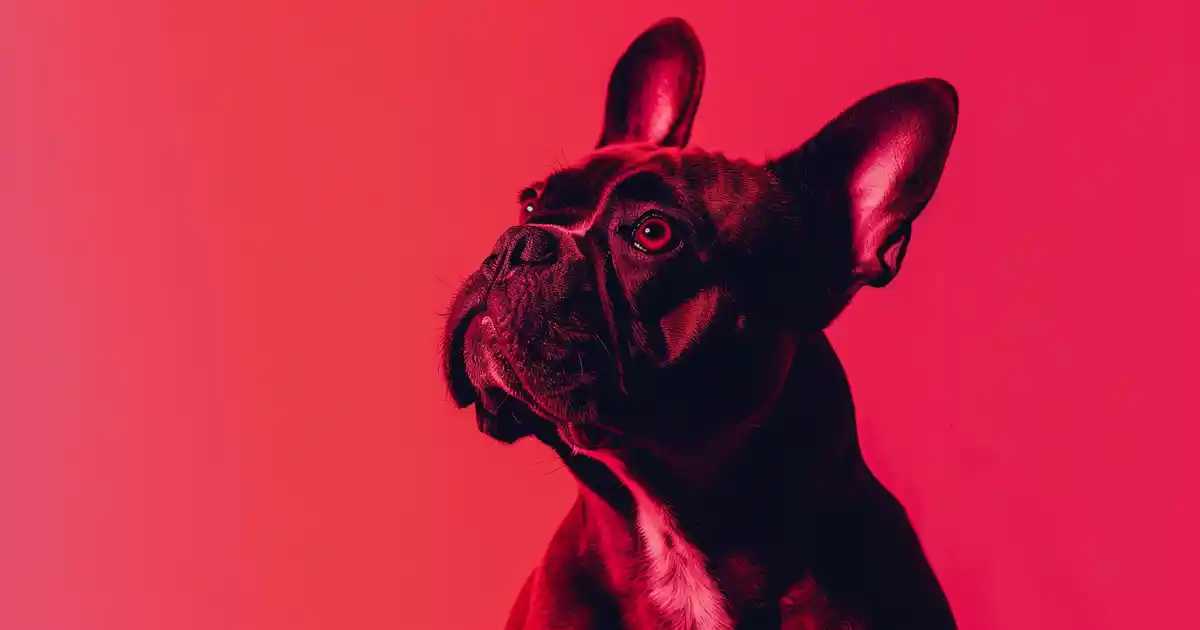
Have you ever watched your dog stare intently at a television screen, track a ball across a field with breathtaking precision, or completely fail to notice a bright orange toy sitting in plain sight and wondered what the world actually looks like through their eyes — whether the colors are the same, the details as sharp, the darkness as limiting? I have spent more time than I probably should have crouching at my dog’s eye level in my living room trying to imagine what he sees from down there, and it wasn’t until I actually dove into the primary research on canine visual biology that I realized how different — and in some genuinely remarkable ways how superior — my dog’s visual experience of the world is from mine. The science of how dogs see is one of the most fascinating areas of comparative sensory biology available, full of surprises that challenge almost every assumption most dog owners bring to the topic, and understanding it completely changes how you think about your dog’s daily experience, why they behave the way they do in visual situations, and what choices you can make to better align their world with how they actually perceive it. If you’ve been operating on the common but deeply incomplete understanding that dogs see in black and white and have poor eyesight, this guide is going to replace that outdated picture with something far more interesting, more accurate, and more useful for understanding the animal you share your life with.
Here’s the Thing About How Dogs See
Here’s the thing that immediately transforms this conversation — the black-and-white myth, which is probably the single most widely repeated piece of misinformation in popular dog science, is not just slightly wrong but comprehensively wrong in a way that has been settled in the scientific literature for decades while continuing to circulate in popular culture with remarkable persistence. The secret to understanding canine vision correctly is recognizing that dogs experience a color world that is genuinely different from human color experience rather than absent — a world that has been compared most accurately to what a human with red-green color blindness sees, rich in blues and yellows while lacking the red-green discrimination that humans take for granted. What makes this more than just a curiosity correction is that understanding the actual color world your dog inhabits has direct practical implications for everything from toy selection to training marker colors to how you design your dog’s living environment to support their visual experience rather than work against it. I never knew that the specific photoreceptor differences between dog and human eyes — two types of cone cells in dogs versus three in humans, with sensitivity peaks shifted significantly toward the blue and yellow spectrum — produced such a precisely characterizable color experience until I read the research, and that knowledge made me immediately reconsider the bright red toys I had been buying under the assumption that high visibility for me meant high visibility for my dog. It’s honestly more practically relevant than the myth-correction framing suggests. According to research on color vision, the number and spectral sensitivity of cone photoreceptors in the retina determines the color space an animal can perceive, and the two-cone dichromatic system of dogs produces a color experience that is mathematically characterizable and significantly different from the three-cone trichromatic system that gives humans our full color range.
What You Need to Know — Let’s Break It Down
Understanding canine vision in a way that is genuinely useful requires building a complete picture from five distinct components that each reveal something different about how your dog experiences the visual world. Don’t skip this foundational section in favor of jumping to the practical applications — the applications only make full sense when you understand the biology they’re derived from, and the biology is interesting enough to be worth understanding on its own terms. The framework breaks down into five essential components that together constitute a complete picture of dog vision. The first component is photoreceptor biology — the specific types and distributions of light-detecting cells in dogs’ retinas, including the rod-to-cone ratio that dramatically favors rods in dogs compared to humans and the two-cone versus three-cone distinction that determines color space — which is the foundation everything else builds on. The second component is color perception — what the dichromatic two-cone system means for the specific colors dogs can and cannot distinguish, and how this translates into the actual visual experience of living in a dog’s color world (game-changer for toy selection and training equipment choices, seriously). The third component is low-light and motion vision — where dogs dramatically outperform humans, with a rod density, tapetum lucidum reflective layer, and pupil size that together produce twilight and motion-detecting capability that reflects the crepuscular hunting heritage of dog ancestors. The fourth component is visual acuity — the sharpness and detail resolution of dog vision, which is genuinely lower than human acuity at distance in ways that have practical implications for how dogs recognize people and objects at range. The fifth component is field of view and depth perception — how the positioning of dogs’ eyes on their heads affects peripheral vision breadth and the stereoscopic overlap that allows depth judgment, both of which vary significantly by breed in ways that matter for understanding individual dogs. If you’re building a comprehensive understanding of how your dog perceives the world across all sensory modalities, check out my complete guide to dog senses and perception for a framework that puts visual biology in the context of dogs’ extraordinary olfactory, auditory, and tactile sensory systems. Working in genuine scientific understanding of how do dogs see alongside knowledge of the full canine sensory profile creates the richest possible picture of what it is actually like to be your dog moving through the world.
The Science and Psychology Behind Why This Works
The retina of the canine eye contains two types of photoreceptors that work in complementary ways to produce the complete visual experience — rods, which are sensitive to low light levels and are primarily responsible for vision in dim conditions and detection of movement, and cones, which require more light to activate and are responsible for color discrimination and fine detail resolution. Dogs have a rod-to-cone ratio of approximately 20 to 1 across the central retina, compared to the much higher cone concentration that characterizes the human fovea, and this difference is the structural basis for dogs’ superior low-light performance and motion sensitivity relative to their inferior fine-detail resolution compared to humans. The two cone types in dogs have sensitivity peaks at approximately 429 nanometers, in the violet-blue range, and approximately 555 nanometers, in the yellow-green range — compared to the human trichromatic system with sensitivity peaks at 420, 530, and 560 nanometers. This dichromatic system means dogs can distinguish colors along a blue-to-yellow axis but cannot discriminate between red and green, which appear to them as similar shades of yellow-brown, explaining why a red toy on green grass — a combination that seems visually obvious to humans — can be genuinely difficult for a dog to locate. The tapetum lucidum — the reflective layer of tissue behind the retina that is responsible for the eyeshine seen in dogs photographed with flash — effectively doubles the chance of light striking a photoreceptor by reflecting unabsorbed light back through the retinal layer, contributing significantly to dogs’ ability to function in extremely low light conditions. Research from leading comparative vision scientists including Jay Neitz at the University of Washington, who conducted some of the definitive behavioral and physiological studies confirming dichromatic color vision in dogs, demonstrates that dog color vision is not a degraded version of human color vision but a differently specialized system optimized for the visual priorities of a crepuscular predator rather than a diurnal primate.
Here’s How to Actually Make This Happen
Start by systematically reconsidering every visual assumption you’ve been making about your dog’s perceptual world — not to feel guilty about past choices but to identify the specific practical changes that will genuinely improve the alignment between your dog’s visual environment and how they actually see. Here’s where I most consistently made avoidable errors: I selected training equipment, toys, and visual markers based entirely on what was visually salient to me without any consideration of whether my color choices were salient to my dog, which meant years of using red training markers and orange toys while wondering why my dog seemed less visually responsive to certain cues than I expected. Now for the important part — here is the practical framework for applying canine vision science to real decisions that affect your dog’s daily life. Begin with toy and training equipment color selection — the single most immediately impactful application of this knowledge for most dog owners. Blue and yellow toys are significantly more visually salient to dogs against most common backgrounds than red, orange, or green toys, which fall in the yellow-brown region of dog color space where contrast is poor. A bright yellow ball on green grass is high contrast for your dog. A bright red ball on green grass is low contrast for your dog and this difference is real enough to affect retrieve enthusiasm and search behavior in measurable ways. Here’s my secret for testing this practically: place toys of different colors at equal distances from your dog in good lighting and observe retrieval preference without any cue from you — the pattern of choices will often reflect color salience in a way that directly demonstrates your dog’s visual priorities. For training marker colors — the flags, cones, and targets used in agility, obedience, and other training contexts — blue and yellow are the evidence-based choices, and this is a particularly high-leverage change because training relies on dogs tracking visual information accurately. Don’t be me — I used red traffic cones for agility training for two years before learning that red is one of the worst possible choices for dog-facing visual equipment and that the variability I was attributing to my dog’s attention was partly a visual salience problem I had created.
Common Mistakes (And How I Made Them All)
My most persistent and most practically consequential mistake was the color selection error I’ve already described, but its roots went deeper than just buying the wrong colored toys — I was operating from the black-and-white myth framework, which meant I thought color was irrelevant to my dog’s visual experience entirely rather than understanding that the relevant question was which colors, not whether color mattered at all. I’ve also made the mistake of underestimating my dog’s motion sensitivity in contexts where I expected him to be distracted by a stationary object he appeared not to notice, not understanding that dogs’ visual system is specifically tuned to detect movement and that a stationary novel object in a familiar environment may genuinely not attract attention the way the same object moving would. Another mistake I see constantly is owners assuming that because their dog seemed not to recognize them at a distance, the dog doesn’t know who they are — when in fact dogs’ lower visual acuity at distance means they may not identify a person visually until they are within thirty to sixty feet even in good lighting, after which olfactory and auditory recognition often handles the identification work at range. The visual acuity mistake in training contexts is particularly worth flagging — I used to use hand signals at distances where my dog’s acuity made them genuinely difficult to resolve, then attribute the lack of response to training failure rather than visual biology. And the television assumption mistake: for a long time I assumed my dog’s interest in watching television was identical to human television watching, not knowing that dogs see standard frame-rate television differently from humans due to their higher flicker fusion rate — newer high-refresh-rate screens are genuinely more visually coherent for dogs than older standard displays.
When Things Don’t Go as Planned
Feeling puzzled because your dog seems to have difficulty with specific visual tasks that seem straightforward to you, or shows unusual visual behavior that you can’t explain through the standard vision framework? The canine vision biology provides explanations for many behaviors that otherwise seem mysterious. A dog who loses a thrown ball in mid-air and then searches the area where it landed rather than tracking its arc may be experiencing the acuity limitations that make tracking a small object at distance genuinely difficult. A dog who reacts intensely to something moving at the edge of their peripheral vision but ignores the same object when it stops moving is demonstrating the rod-mediated motion sensitivity that is biologically expected rather than behaviorally unusual. A dog who seems to struggle with visual discrimination tasks in red-green color contexts during training is likely experiencing exactly the color vision limitation that the dichromatic biology predicts, and the solution is redesigning the task with blue-yellow color contrasts rather than attempting to train through a genuine perceptual limitation. When visual behavior changes suddenly — a dog who starts bumping into objects, showing unusual reluctance in low-light environments, or demonstrating changes in visual tracking — these are signs that warrant veterinary ophthalmological assessment rather than behavioral interpretation, because progressive retinal atrophy and other acquired visual conditions do occur in dogs and early identification significantly affects management options.
Advanced Strategies for Next-Level Results
Once you’ve applied the foundational color and acuity knowledge to your dog’s immediate environment, you can move into more sophisticated applications that leverage the full picture of canine visual biology for specific training and enrichment goals. Advanced trainers in performance dog sports have developed entire visual environment design frameworks that apply the blue-yellow salience principle systematically to equipment, markers, and obstacle differentiation in agility and other visual-dependent sports, and the performance improvements from this alignment are measurable rather than merely theoretical. The motion sensitivity insight, applied positively, suggests that visual enrichment for dogs should emphasize moving stimuli — bird feeders visible from windows, video content featuring moving animals, and toys that move unpredictably — over static visual elements that dogs’ visual systems are less tuned to engage with. Understanding the specific field of view characteristics of your dog’s breed — the wide panoramic vision of sighthounds like greyhounds compared to the more forward-focused binocular vision of breeds with shorter muzzles — allows you to optimize your positioning in training contexts to take advantage of where in your dog’s visual field your signals are most salient. The research on dogs and screens has advanced enough that there is now purpose-designed video content for dogs that takes their specific color space, flicker fusion rate, and motion preferences into account, and while this remains a niche application, it illustrates how detailed the practical application of vision science can become when taken seriously.
Ways to Make This Your Own
When I want the most immediately impactful single application of canine vision science to my dog’s daily life, my go-to is what I call the “Blue-Yellow Audit” — systematically replacing the highest-use toys, training markers, and visual targets in my dog’s environment with blue and yellow alternatives, which takes an afternoon and produces noticeable improvements in visual engagement and retrieve enthusiasm that are immediately observable. For the budget-conscious pet parent, this is genuinely one of the lowest-cost high-impact changes available — a set of blue and yellow fetch toys costs the same as the red and orange ones you might have been buying, and the improvement in your dog’s visual access to those toys requires no additional investment. My training-optimized version extends the color audit to every piece of equipment used in training contexts — jump poles, target sticks, cone markers, reward delivery containers — and consistently reorients hand signal positions to account for the specific field of view characteristics of my individual dog’s breed. For senior dogs whose vision may be declining due to age-related changes including nuclear sclerosis and progressive retinal conditions, my “Senior Vision Support Protocol” emphasizes maintaining consistent visual environments without sudden rearrangements of familiar spaces, using scent marking on objects dogs need to locate visually, and increasing contrast in important visual targets to compensate for reduced acuity. My advanced version includes tracking my dog’s visual behavior systematically across different lighting conditions, distances, and color environments to build an individualized picture of his specific visual capabilities that goes beyond general species-level predictions. Each variation works beautifully with different lifestyle needs and different dogs, and the underlying vision science applies consistently enough that every application produces genuine benefit for your dog’s visual experience.
Why This Approach Actually Works
Unlike the outdated black-and-white myth that leaves dog owners making visual environment decisions based on completely wrong assumptions, this evidence-based framework for understanding how dogs see gives you the specific biological knowledge to make choices about color, lighting, distance, and motion that are genuinely aligned with your dog’s actual visual experience rather than your projection of it onto them. The reason this approach produces better outcomes — better toy engagement, more reliable visual cue responses in training, better understanding of visually driven behaviors — is that it is grounded in the actual photoreceptor biology and optical characteristics of the canine eye rather than in folk belief that has been definitively contradicted by research for decades. What sets this apart from the single corrective fact of “dogs aren’t color blind, they see blue and yellow” is the complete framework that connects the specific biology to specific practical applications across the full range of situations where your dog’s visual experience matters. I remember the exact moment this topic transformed from interesting trivia to practically significant knowledge for me — it was when I replaced my dog’s red training targets with yellow ones and watched his visual tracking of those targets become noticeably more consistent and immediate, and I realized that I had been inadvertently making his training environment harder to see for however long I had been using the wrong colors.
Real Success Stories (And What They Teach Us)
A friend of mine competes in agility with her border collie and had been experiencing inconsistent performance on specific obstacle sequences that she attributed to her dog’s focus and drive on certain days. After learning about canine color vision and auditing her training equipment, she discovered that the specific obstacle combinations where her dog’s performance was most variable were exactly the ones that used red and orange markers against a green grass background — the combination that produces minimum visual contrast in dog color space. Replacing those specific markers with blue and yellow equivalents produced a consistency improvement that she described as dramatic enough to be immediately noticeable even to observers who didn’t know what change had been made. The behavioral inconsistency she had been attributing to motivation and focus was substantially a visual access problem that a color audit resolved. Another member of my community shared that her rescue dog had been labeled as having “poor ball drive” by her previous owner and was considered difficult to motivate with fetch games. After switching from a standard red tennis ball to a bright yellow ball and playing in conditions of good lighting, the dog’s fetch enthusiasm transformed completely — what had been interpreted as a personality trait was substantially a visual salience problem that the original owner had never thought to examine. Their experiences align with research on the behavioral effects of color-appropriate versus color-inappropriate visual targets in canine training and sport contexts, consistently showing that color alignment with canine visual biology produces measurable performance improvements. The lesson in both stories is the same — understanding your dog’s visual biology rather than projecting your own visual experience onto them removes invisible barriers to performance and enjoyment that you cannot see because they are not limitations of your visual system.
Tools and Resources That Actually Help
The most immediately useful tool for applying canine vision science practically is a color conversion tool — several are available as free web applications — that allows you to input an image and see an approximation of how the colors in that image appear in dichromatic blue-yellow color space, giving you a visual sense of how your dog perceives the colors in their environment. A set of blue and yellow training markers, fetch toys, and target objects represents the minimal physical toolkit for aligning your dog’s training and play environment with their actual visual capabilities. For deeper reading on the specific science of canine color vision and the behavioral and neurophysiological research that established it, the best resources come from peer-reviewed comparative vision science research documenting photoreceptor biology, behavioral color discrimination testing, and the specific characteristics of dichromatic vision in domestic dogs. Jay Neitz’s research group at the University of Washington has produced some of the most definitive work on canine color vision specifically, and their publications are accessible enough for motivated non-specialists to engage with directly. Alexandra Horowitz’s books on dog cognition and perception, particularly her work on the dog’s sensory world, provide the most readable and scientifically rigorous popular treatment of how dogs experience their environment across all senses including vision. A veterinary ophthalmologist — a board-certified specialist in animal eye health distinct from a general practice veterinarian — is the most important professional resource for any dog owner concerned about their dog’s visual health, particularly for breeds with known predispositions to progressive retinal atrophy, cataracts, or other heritable eye conditions where early monitoring produces significantly better management outcomes.
Questions People Always Ask Me
Do dogs really see in black and white or is that a myth? It is definitively a myth, and one that has been contradicted by scientific evidence for decades. Dogs have two types of cone photoreceptors with sensitivity peaks in the blue-violet and yellow-green ranges, giving them genuine color vision that spans a blue-to-yellow spectrum. The accurate comparison is to human red-green color blindness — dogs experience a color world that is real and rich but different from human color experience, missing the red-green discrimination axis while retaining full blue-yellow discrimination. The black-and-white characterization is completely wrong and has no basis in the research that has examined canine color vision.
What colors can dogs actually see clearly? Dogs see blues and yellows most clearly and with greatest discrimination. True blues appear blue to dogs, yellows appear yellow, and the range between them including blue-green shades can be distinguished along a gradient. The colors that fall into confusion for dogs are reds, oranges, and greens — all of which appear as variations of yellow-brown in dog color space because they fall between the sensitivity peaks of dogs’ two cone types where discrimination is poor. A bright red object and a dark green object of similar luminance are genuinely difficult for dogs to distinguish from each other.
Can dogs see better than humans in the dark? Yes, significantly better, and this represents one of the clearest ways in which dogs’ visual system outperforms humans’ rather than simply differing from it. The combination of higher rod density in the retina, larger pupils that admit more light, and the tapetum lucidum — the reflective layer behind the retina that bounces unabsorbed light back through the photoreceptor layer — gives dogs visual capability in dim light conditions that is estimated to be five to six times greater than human capability in equivalent lighting. This superior low-light vision reflects the crepuscular activity patterns of dogs’ ancestral hunting ecology.
How sharp is dog vision compared to human vision? Dog visual acuity is approximately 20/75 on the human eye chart scale, meaning a dog needs to be at 20 feet to see clearly what a human with normal vision can see clearly at 75 feet. This is lower acuity than human normal vision but considerably better than the complete functional blur that low acuity implies in popular imagination — dogs see a clear though less detailed world rather than a foggy or indistinct one. The practical implication is that dogs identify people and objects reliably by visual detail at shorter distances than humans, relying on other sensory modalities including smell and hearing for recognition at greater distances.
Do dogs have better peripheral vision than humans? Most dogs have a wider total visual field than humans — approximately 240 degrees compared to the human 180 degrees — because their eyes are positioned more laterally on the head, providing greater peripheral coverage. The trade-off is that the zone of binocular overlap where both eyes’ fields coincide to allow depth perception through stereopsis is narrower in most dogs than in humans, whose more frontally positioned eyes produce greater binocular overlap. There is significant breed variation in this balance — sighthound breeds like greyhounds have extremely wide panoramic fields optimized for detecting peripheral motion at the cost of forward depth perception, while shorter-muzzled breeds with more forward-positioned eyes have greater binocular overlap at the cost of peripheral breadth.
Why do dogs sometimes miss seeing a stationary object that seems obvious? This is a direct consequence of dogs’ rod-dominated visual system, which is highly optimized for detecting motion but relatively poor at identifying stationary objects that don’t contrast strongly with their background, particularly in the red-green color range where dogs have poor discrimination. A stationary red ball on green grass is both a motion detection failure — no movement to trigger rod response — and a color discrimination failure — poor red-green contrast in dog color space. The same ball in motion would be detected immediately through rod-mediated motion sensitivity. This is why retrieving dogs who lose a ball often search the landing area by scent rather than continuing to track visually.
Can dogs watch television and actually see what’s on the screen? Dogs can see television screens, but their experience of screen content depends significantly on the display technology. Older CRT and lower-refresh-rate LCD screens flicker at rates that humans cannot perceive but that fall below the critical flicker fusion threshold of many dogs, causing the image to appear as a series of flashing stills rather than smooth motion. Modern high-refresh-rate screens above 60 Hz generally appear as coherent moving images to dogs. Dogs’ color vision also means that television content will appear in their limited blue-yellow color space rather than in human full color, and their preference for channels featuring animals and movement reflects both their motion sensitivity and the specific content types that are most visually salient to their perceptual system.
How does breed affect dog vision? Breed affects vision in several significant ways related to head and muzzle morphology. Brachycephalic breeds with flat faces and forward-positioned eyes — pugs, bulldogs, French bulldogs — tend to have greater binocular overlap and therefore better forward depth perception but narrower peripheral fields. Dolichocephalic breeds with long narrow heads and laterally positioned eyes — greyhounds, salukis, collies — tend to have the widest peripheral fields, sometimes approaching 270 degrees, but the smallest binocular overlap zones. Mesocephalic breeds with moderate skull proportions fall between these extremes. Some breeds also have known genetic predispositions to specific vision-affecting conditions including progressive retinal atrophy that are independent of skull morphology.
What is the tapetum lucidum and why do dogs’ eyes glow in photos? The tapetum lucidum is a reflective layer of tissue located behind the retina in dogs’ eyes that is absent in humans. Its function is to reflect light that has passed through the retina without being absorbed back through the photoreceptor layer a second time, effectively doubling the opportunity for photons to interact with rod and cone cells in low light conditions. This significantly improves dogs’ ability to see in dim lighting. The eyeshine seen in flash photographs of dogs — typically appearing as a greenish-yellow glow — is this reflective layer returning light from the camera flash directly back toward the lens, which is also the explanation for the bright eyeshine that dogs’ eyes produce when illuminated by headlights at night.
How do dogs’ eyes differ from cats’ eyes in terms of vision? Both dogs and cats have dichromatic color vision and tapeta lucida, reflecting their shared heritage as predatory carnivores with crepuscular hunting activity. Cats generally have an even more extreme rod-to-cone ratio than dogs, suggesting even greater low-light capability at the cost of color discrimination. Cat pupils are slit-shaped rather than round, allowing them to constrict to a much smaller aperture in bright light, providing a greater dynamic range of light control. Dogs’ visual acuity is generally considered slightly better than cats’ based on behavioral testing, though both fall well below human acuity in photopic conditions. Both species have larger pupil-to-eye-size ratios than humans and greater motion sensitivity.
Should I choose toys and training equipment in specific colors for my dog? Yes, and this is one of the most immediately practical applications of canine vision science. Blue and yellow toys and training equipment are significantly more visually salient to dogs than red, orange, or green alternatives against most common backgrounds. A blue or yellow fetch toy on green grass presents high contrast in dog color space. A red or orange toy on the same grass presents low contrast and can be genuinely difficult for your dog to locate visually. For training specifically, using blue or yellow visual markers, targets, and signals against contrasting backgrounds produces more reliable visual cue responses than red-green combinations that fall in the poor-discrimination zone of dog color space. This single change — auditing the colors of training and play equipment — represents one of the most cost-effective and immediately testable improvements available to any dog owner or trainer.
Before You Get Started
I couldn’t resist putting this guide together because it proves that understanding how dogs see is not just scientifically fascinating but immediately and practically relevant to every visual interaction you have with your dog — from the colors of the toys you buy to the signals you use in training to the screens you share your evenings in front of — and that the gap between what most people assume about dog vision and what the science actually shows is large enough that closing it produces genuinely observable improvements in your dog’s visual engagement with their world. The best how do dogs see journeys end not with the simple myth correction that dogs aren’t color blind but with a complete, practical, evidence-grounded understanding of your dog’s visual experience that makes you a more knowledgeable, more effective, and more genuinely connected partner for the animal who sees you every day through those remarkable eyes. Start with the blue and yellow toy swap, watch the difference it makes, and let that evidence anchor everything else in this guide as something real rather than theoretical.




