
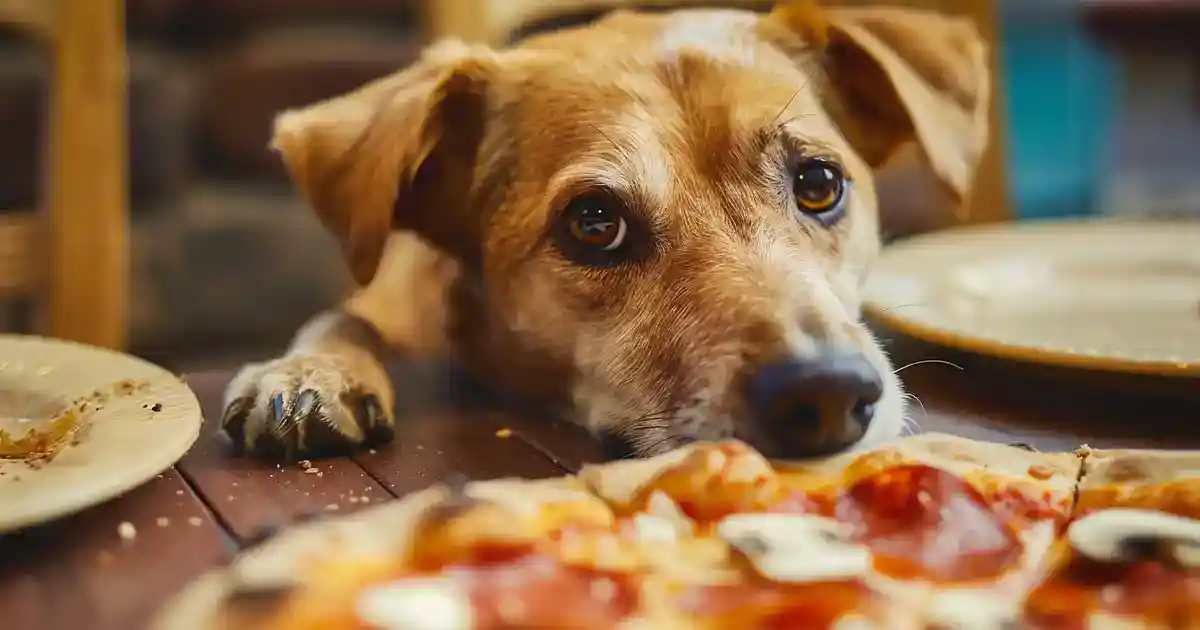
Do you ever feel like those big brown eyes staring up at you from below the dinner table are completely impossible to say no to — especially on pizza night? I’ve been there more times than I can count, holding a piece of leftover crust and genuinely debating whether tossing it to my dog was really all that different from giving him a dog biscuit. It looks harmless enough, right? Just baked bread, basically. It wasn’t until I started digging into what actually goes into pizza crust — and how dogs process those ingredients — that I realized the answer was a lot more complicated than I expected. If you’ve been casually sharing pizza crust with your pup or you’re trying to figure out once and for all whether it’s safe, this guide is going to walk you through everything you need to know with total honesty and zero judgment.
Here’s the Thing About Pizza Crust and Dogs
Here’s the thing — pizza crust exists on a spectrum when it comes to dog safety, and where your specific crust lands on that spectrum depends on a surprisingly large number of factors. The secret to understanding this topic is recognizing that plain baked pizza crust in a very small amount is unlikely to cause acute toxicity in most healthy adult dogs, but that doesn’t come anywhere close to making it a good treat choice. What makes this genuinely complicated is that pizza crust rarely exists in a vacuum — it’s almost always seasoned, oiled, topped with residual sauce, or made with ingredients like garlic powder and onion that are independently toxic to dogs. I never knew that something as seemingly innocent as the crispy edge of a pizza slice could be carrying a hidden payload of garlic-infused olive oil until I started actually reading pizza dough recipes. It’s honestly more nuanced than most pet owners expect. According to research on gastrointestinal health in companion animals, regularly feeding dogs refined flour-based human foods contributes to digestive disruption and long-term weight management challenges that compound over time.
What You Need to Know — Let’s Break It Down
Understanding exactly what pizza crust contains is absolutely crucial before you decide whether that leftover piece is going anywhere near your dog’s mouth. Don’t skip this breakdown — the details here are what separate an informed decision from a lucky guess. The core components of pizza crust and how dogs handle each one tell a really important story. Plain white or wheat flour forms the base of most pizza doughs, and while it isn’t toxic to dogs, it offers essentially zero nutritional value for them and contributes empty calories that can add up fast, especially in smaller breeds. Yeast is the ingredient that causes the most acute concern when it comes to raw or undercooked dough (game-changer, seriously) — active yeast continues fermenting in a dog’s warm stomach, producing carbon dioxide gas that causes dangerous bloating and ethanol that can lead to alcohol toxicity. Baked crust no longer carries the active yeast risk, but it’s worth knowing this if your dog ever gets into raw dough. Salt is present in virtually every pizza crust recipe and dogs process sodium very differently than humans do — even moderate amounts can contribute to excessive thirst, urination, and in larger quantities, sodium ion poisoning. Garlic and onion powder are the ingredients I lose sleep over, because they are both independently toxic to dogs and they appear in pizza crust recipes and store-bought dough far more often than most people realize. If you’re just starting to think carefully about which human foods are appropriate for your dog, check out my complete guide to human foods that are safe and unsafe for dogs for a thorough breakdown that goes well beyond pizza. The beginner’s guide to can dogs eat pizza crust really starts with understanding that the question isn’t just about the crust — it’s about everything that rode along with it.
The Science and Psychology Behind Why This Works
Dogs are biologically classified as omnivores, which means their digestive systems can process a broader range of foods than strict carnivores, but that flexibility has hard limits that are easy to exceed with heavily processed human foods. The refined carbohydrates in pizza crust are metabolized rapidly, causing blood sugar spikes that are harder for dogs to regulate efficiently compared to the complex carbohydrates found in whole food sources. From a caloric density standpoint, even a single standard pizza crust edge can represent a significant percentage of a small dog’s daily caloric requirement, which makes seemingly minor treat habits quietly significant over weeks and months. Research from leading veterinary nutrition programs demonstrates that diets high in refined flour and sodium contribute meaningfully to obesity, pancreatitis risk, and cardiovascular stress in dogs over time. The psychological dimension of this topic is also worth acknowledging — we share food with our dogs because it feels like an act of love and bonding, and that impulse is completely understandable. What makes this approach different is recognizing that genuine love for your dog means making choices based on their biology rather than their enthusiasm, because a dog will beg just as eagerly for a piece of carrot as for a pizza crust once that becomes the established reward pattern in their world.
Here’s How to Actually Make This Happen
Start by making a honest assessment of how often pizza crust or similar table scraps are finding their way into your dog’s diet — not to feel guilty about it, but because awareness is genuinely the first step toward making better choices. Here’s where I used to mess up: I operated on a loose mental policy of “just a little bit can’t hurt” without ever actually defining what “a little bit” meant in practice, which meant the portion crept upward week by week without me noticing. Now for the important part — here’s a practical framework for navigating pizza night with your dog. If you’ve decided you want to occasionally offer your dog a very small piece of plain pizza crust as a rare treat, here’s how to do it with the least risk: first, make sure the crust is fully baked with no doughy or undercooked sections. Second, inspect it carefully for any garlic oil, seasoning, sauce residue, or cheese on the surface — if it has any of those, it doesn’t go to the dog, full stop. Third, keep the portion genuinely small — for a medium-sized dog, a piece roughly the size of your thumbnail is sufficient to satisfy the social moment without contributing meaningfully to caloric excess. Here’s my secret for making pizza night easier: I keep a small container of dog-safe treats in the kitchen specifically for these moments, so when my dog comes looking during dinner I have something genuinely appropriate to offer without the negotiation. This step takes about thirty seconds of preparation and completely eliminates the awkward pizza crust deliberation in real time. Don’t be me from three years ago — I used to hand over a full crust edge thinking I was being generous, not realizing I was delivering the canine equivalent of a fast food meal as a casual snack.
Common Mistakes (And How I Made Them All)
My biggest mistake was conflating “won’t kill him immediately” with “is fine to give him regularly,” and I held onto that logic for an embarrassingly long time. The fact that my dog ate pizza crust dozens of times without an acute reaction convinced me it was a non-issue, and I completely failed to consider the cumulative impact of refined carbs, salt, and trace seasonings building up over months and years. I’ve also made the mistake of not checking store-bought pizza dough ingredients before leaving raw dough unattended on the counter to rise — active yeast dough is genuinely dangerous if a dog gets into it, and it happened to a neighbor of mine whose dog required emergency treatment for bloat and ethanol toxicity after eating a bowl of rising dough. Another mistake I see constantly is people removing their own toppings from a pizza slice and handing over what they think is now a “plain” crust, not realizing that the oils, garlic, and salt have already soaked into the bread itself during baking. And honestly, the sneakiest mistake of all is forgetting about the guests — pizza nights with company are high-risk moments because someone who doesn’t know your household rules will almost always slip the dog “just one little piece” without thinking twice.
When Things Don’t Go as Planned
Feeling worried because your dog just snatched an entire pizza crust off the plate before you could stop them? Take a breath — for most healthy adult dogs, a single piece of plain baked crust is unlikely to cause serious harm, though it may cause some digestive upset. I’ve learned to handle this scenario by assessing exactly what was on the crust before panicking. If the crust had garlic, onion, or significant seasoning on it, that changes the calculus considerably and warrants a call to your vet especially if your dog is small. When this happens (and it absolutely will happen at least once in every dog owner’s life because dogs are fast and opportunistic), watch for signs of gastrointestinal distress over the following few hours — vomiting, diarrhea, excessive drooling, or abdominal bloating. If your dog got into raw pizza dough specifically, that is a more urgent situation that warrants immediate veterinary contact because of the yeast fermentation risk. Don’t stress about a one-time incident with plain crust, but do use it as motivation to tighten up your pizza night protocol going forward.
Advanced Strategies for Next-Level Results
Once you’ve got the basics under control, you can take your approach to the next level by actually making dog-friendly pizza alternatives that let your pup participate in pizza night without any of the concern. Advanced pet parents in the homemade dog treat community have perfected recipes for dog-safe mini pizzas using rice flour or oat flour crusts, unseasoned tomato paste in very small amounts, and dog-safe toppings like plain cooked chicken, mozzarella in tiny quantities, and fresh basil. These homemade alternatives give your dog the full social experience of pizza night — the smell, the ritual, the shared moment — without refined flour, excess salt, or any toxic ingredients. Another advanced strategy is training a solid “place” or “go to your mat” behavior specifically for mealtimes, which removes the begging dynamic entirely and actually reduces your dog’s stress around human mealtimes rather than just suppressing the begging symptom. Long-tail safety strategies also include reading ingredient labels on every frozen or store-bought pizza you bring into the house, because some commercial doughs contain xylitol as a sweetener — a compound that is acutely and severely toxic to dogs even in small amounts.
Ways to Make This Your Own
When I want to give my dog the full pizza night experience without any compromise on safety, my go-to is what I call the “Pup Pizza Treat” — a small rice cake topped with a tiny smear of plain pumpkin puree and a sprinkle of shredded plain chicken, served ceremonially at the same time the human pizza arrives. For the busy professional pet parent, keeping a bag of dog-safe crunchy treats in the kitchen drawer nearest the dining table means you always have an immediate redirect ready without any prep work. My budget-conscious version is simply a plain rice cake broken into small pieces — it has the same satisfying crunch that dogs seem to love about pizza crust without a single problematic ingredient. For households with large dogs who are less sensitive to caloric density, a small piece of plain homemade bread made without garlic, onion, or excessive salt can serve as an occasional pizza night stand-in. My advanced version includes full homemade dog pizza nights where my dog gets his own specially made treat while we have ours, which has become genuinely one of our favorite shared rituals. Each variation works beautifully with different lifestyle needs, and every single one keeps your dog safe while honoring that instinct to include them in the meal.
Why This Approach Actually Works
Unlike the reactive approach of figuring out the rules after something goes wrong, proactively understanding the can dogs eat pizza crust question means you’re making confident decisions in real time rather than panicked ones after the fact. The evidence-based framework here — assessing ingredients, understanding cumulative impact, and having safe alternatives ready — is sustainable in a way that blanket restriction rules rarely are, because it gives you flexibility while maintaining clear boundaries. What sets this apart from generic advice like “don’t feed your dog table scraps” is that it gives you the actual reasoning behind the recommendation, which makes it dramatically easier to apply in novel situations beyond just pizza. I remember the moment this philosophy clicked for me: I realized I didn’t need a rule for every specific food if I understood the underlying principles well enough to evaluate any food on the fly. That shift made me a genuinely more confident and effective dog parent across the board.
Real Success Stories (And What They Teach Us)
A friend of mine had a beagle — a breed that is legendarily indiscriminate about what goes in their mouth — who had been getting pizza crust scraps regularly for years before she connected his chronic soft stool and persistent low-grade digestive issues to the accumulated effect of the refined flour and salt. When she eliminated all table scraps including pizza crust and replaced them with species-appropriate treats, his digestion normalized within three weeks and her vet noted meaningful improvement at his next checkup. Another pet parent in my community shared that their dog got into an entire raw pizza dough ball that had been left to proof on the counter, resulting in an emergency vet visit for suspected yeast toxicity — the dog recovered fully but the bill and the scare were significant enough that they now proof dough exclusively in the oven with the light on, completely inaccessible to their dog. Their success aligns with research on preventive pet safety that shows environment modification is consistently more reliable than behavior management alone. The common thread in every story is the same — small changes in human habits produce enormous improvements in dog health and safety outcomes.
Tools and Resources That Actually Help
The single most useful tool I’ve added to my pizza night routine is a designated dog treat jar on the kitchen counter that gets refilled every Sunday — having appropriate treats literally within arm’s reach at all times removes the friction that leads to lazy pizza crust decisions in the moment. A printed list of toxic pizza ingredients — garlic, onion, xylitol, excessive salt — posted somewhere visible in the kitchen serves as a quick reference that requires zero mental effort to use. For deeper reading on canine nutrition and the specific risks of refined carbohydrates in dog diets, the best resources come from peer-reviewed veterinary nutrition research that documents the long-term health impacts of high-glycemic foods in companion animals. If you want to make dog-safe pizza alternatives at home, a simple silicone mini muffin pan is the perfect tool for making bite-sized dog pizza crusts using oat or rice flour — they bake quickly, freeze beautifully, and your dog will lose their mind over them. And as always, a strong relationship with a vet you trust and can call with quick questions is worth more than any article or resource list when you’re dealing with your specific dog’s specific situation.
Questions People Always Ask Me
Can dogs eat pizza crust if it’s just plain with no toppings? Plain baked pizza crust in a very small amount is unlikely to cause acute toxicity in most healthy adult dogs, but it still offers no nutritional value and contributes empty calories and excess sodium. An occasional tiny piece of genuinely plain crust is a much lower-risk situation than seasoned or sauce-covered crust, but it still shouldn’t become a regular habit.
What if my dog ate pizza crust with garlic on it? The severity of concern depends on how much garlic and how small your dog is. Garlic is toxic to dogs and affects red blood cell function — a small dog who ate a heavily garlic-seasoned crust warrants a call to your vet, while a large dog who got a trace amount is likely fine but worth monitoring. When in doubt, call your vet rather than waiting.
Is pizza crust worse for dogs than other bread products? In many cases yes, because pizza crust tends to carry additional ingredients like garlic powder, onion powder, and olive oil infusions that plain sandwich bread typically doesn’t. The base flour and salt content is similar, but the seasoning profile of pizza dough makes it a higher-risk bread product on average.
What happens if a dog eats raw pizza dough? This is a genuinely urgent situation. Raw yeast dough continues to ferment in your dog’s stomach, producing gas that causes bloating and can lead to a life-threatening condition called gastric dilatation-volvulus, as well as ethanol that causes alcohol toxicity. If your dog eats raw dough, contact your vet immediately rather than waiting for symptoms.
Is this approach suitable for all dog breeds and sizes? The core guidance applies universally, but the risk calculus scales with body weight. A toy breed who eats even a small piece of garlic-seasoned crust faces a proportionally higher exposure than a large breed dog, so smaller dogs warrant extra caution around any pizza-related food.
How do I stay consistent about not feeding pizza crust when my family doesn’t follow the same rules? This is genuinely one of the hardest parts of responsible pet ownership. A household conversation backed up by visible reminders — a note on the fridge, a laminated card at the table — works better than relying on everyone to remember a verbal discussion. Make it easy for everyone to do the right thing by having safe dog treats accessible and visible so there’s always an appropriate alternative ready.
What mistakes should I avoid when deciding what to feed my dog from the table? Never use your dog’s lack of immediate reaction as evidence that something is safe for regular feeding. Never assume that removing your toppings from a slice makes the crust safe — oils and seasonings penetrate the bread during baking. Never leave raw dough unattended at counter height.
Can I make a dog-safe pizza crust at home? Absolutely, and this is honestly one of the most fun things you can do with your dog in mind. Use oat flour or rice flour, skip the salt entirely, skip the yeast or use a minimal amount, and avoid all garlic and onion derivatives. Top with plain unseasoned meat and a tiny amount of plain tomato paste for a genuinely dog-safe pizza experience.
What if my dog has been eating pizza crust for years with no obvious problems? No obvious acute problems doesn’t mean no cumulative impact. It’s worth scheduling a routine vet checkup with bloodwork to assess kidney function, blood sugar regulation, and weight-related health markers. Many of the effects of a high-refined-carb, high-sodium diet accumulate slowly and aren’t visible until they’ve been building for a significant period.
How much pizza crust is too much for a dog? There’s no precise formula here, but the guiding principle is that any amount of seasoned or sauce-touched crust is too much, and even plain crust should be genuinely rare and tiny rather than a regular weekly treat. For context, treats of all kinds combined should not exceed ten percent of a dog’s daily caloric intake.
What’s the difference between pizza crust and other bread products in terms of dog safety? The main difference is the seasoning profile. Most pizza dough recipes include garlic powder, onion powder, Italian herb blends, and generous salt in quantities that plain sandwich bread doesn’t typically contain. Some commercial pizza doughs also include sugar or sweeteners that may include xylitol, which is severely toxic to dogs. Always read the label on store-bought dough.
How do I know if my dog had a bad reaction to pizza crust? Signs to watch for include vomiting, diarrhea, excessive gas, lethargy, loss of appetite, excessive thirst or urination, and abdominal bloating or tenderness. Symptoms can appear anywhere from one to twenty-four hours after ingestion depending on what was in the crust. If you observe any of these signs after your dog ate pizza crust, contact your vet.
Before You Get Started
I couldn’t resist sharing everything in this guide because it proves that pizza night and responsible dog ownership don’t have to be in conflict — you just need the right information and a slightly better treat jar strategy. The best can dogs eat pizza crust journeys end with a dog who gets to participate in the ritual in their own safe way, and a pet parent who enjoys dinner without a side of guilt. Your dog doesn’t need your pizza crust to feel loved, but they absolutely need you to know the truth about what’s in it.




