
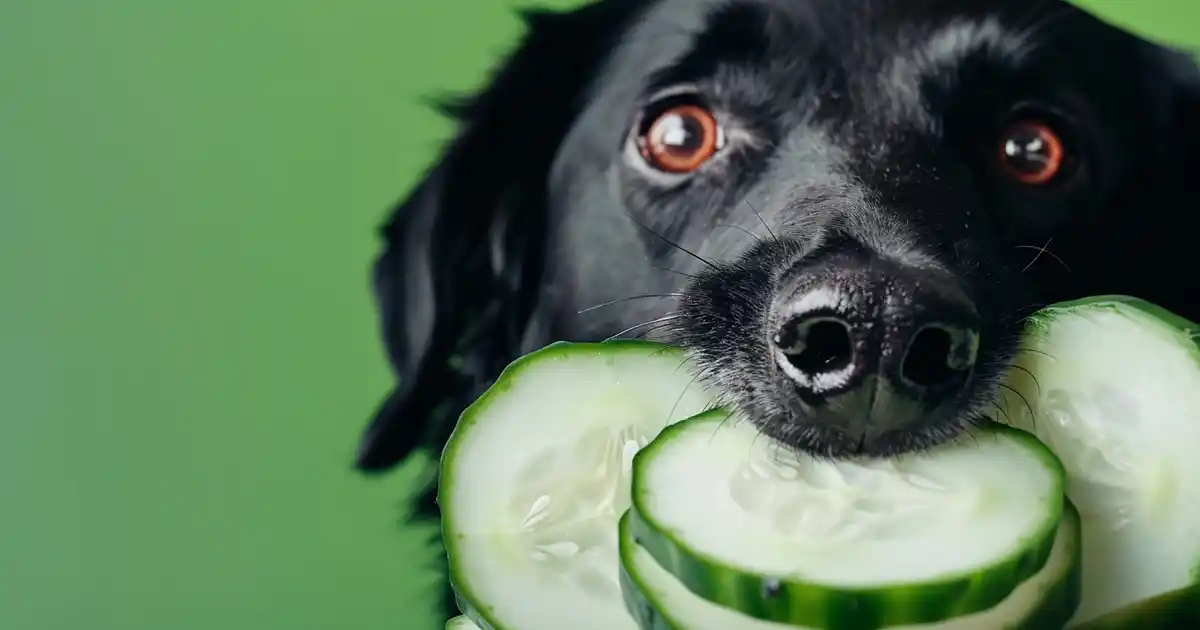
If you have ever been slicing cucumbers for a salad on a hot summer afternoon and found your dog watching the preparation with the focused, hopeful attention that communicates absolute certainty that whatever you are making is something they need to be part of, or if you have ever wondered whether the cool, crunchy vegetable that makes such a refreshing snack for you might offer something genuinely beneficial to the dog sitting beside you rather than simply being a safe thing to share without consequence, you have encountered one of the most pleasant discoveries available in the entire landscape of dogs and human food. I had that exact experience of genuine surprise when I started researching cucumbers as a treat option for a dog owner friend who was looking for low-calorie alternatives to the commercial treats that were undermining her dog’s weight loss program, and found not just the expected safety confirmation but a genuinely interesting nutritional and functional profile that made cucumbers not simply an acceptable sharing choice but an actively useful addition to the treat rotation of dogs across a wide range of health contexts — from the overweight dog who needs volume and satisfaction without caloric cost to the senior dog who benefits from hydration support to the puppy who needs crunchy enrichment without the sugar of fruit-based treats. Understanding the complete picture of whether dogs can eat cucumbers — what cucumbers actually provide nutritionally and how those nutrients support canine health, why the specific characteristics of cucumbers make them uniquely well-suited as a dog treat in ways that go beyond simple safety, how to prepare and portion cucumbers to maximize their benefit for your specific dog, and which considerations prevent cucumbers from being a completely unlimited free-for-all despite their exceptional safety profile — is exactly what this guide delivers with the evidence-based specificity and practical enthusiasm that this genuinely excellent vegetable treat option deserves.
Here’s the Thing About Cucumbers and Dogs
Here is the foundational reality that makes cucumbers genuinely exceptional in the dog treat landscape — cucumbers represent one of the most complete intersections of safety, nutritional value, practical accessibility, low caloric cost, and universal palatability available in the entire category of whole food dog treats, and the gap between how infrequently most dog owners incorporate them deliberately and how consistently the evidence supports their inclusion reflects a knowledge deficit about what cucumbers actually offer rather than a considered nutritional decision in most households. The cucumber’s nutritional profile is anchored by its remarkable water content — approximately ninety-six percent water by weight — which positions it as one of the most hydrating whole foods available for dogs while simultaneously explaining why its caloric density is among the lowest of any treat option at approximately eight calories per half cup of sliced cucumber, a caloric profile so modest that portion anxiety for healthy dogs is essentially eliminated. Beyond the hydration and caloric characteristics that alone would justify cucumber incorporation for many dogs, cucumbers provide vitamin K supporting blood clotting and bone metabolism, vitamin C contributing to immune function and collagen synthesis, potassium supporting muscle function and fluid balance, magnesium supporting enzyme function and energy metabolism, manganese contributing to bone formation and antioxidant enzyme activity, molybdenum supporting amino acid metabolism, and silica — a trace mineral that supports joint connective tissue health and skin integrity — in a nutritional package delivered at negligible caloric cost that no commercial treat product approaches in its combination of nutritional relevance and caloric efficiency.
I never knew until I engaged seriously with the specific nutritional composition research on cucumbers that the silica content — a component almost never mentioned in casual discussions of cucumber nutrition for dogs — has specific relevance to joint connective tissue health through its role as a structural component of glycosaminoglycans and collagen in cartilage and synovial tissue, positioning cucumbers as a potential dietary contributor to joint health support in ways that overlap interestingly with the joint supplement strategies that veterinary medicine more formally employs for dogs with arthritis or connective tissue concerns. This single nutritional detail — that cucumbers contain a mineral with documented relevance to the specific tissue types most affected by the most common orthopedic disease in dogs — transformed my understanding of cucumbers from a safe, low-calorie treat with pleasant hydration characteristics to a vegetable with specific mechanistic connections to health domains that matter for a wide range of dogs, and it exemplifies how engaging with the actual nutritional science rather than the superficial safe-to-share assessment produces a genuinely richer and more actionable understanding of what whole food additions to a dog’s diet can actually deliver.
What You Need to Know — Let’s Break It Down
Understanding the specific nutritional components of cucumbers and the distinct biological functions each supports in dogs gives you the evidence-grounded foundation that makes cucumber incorporation a deliberate, informed health investment rather than simply an impulsive sharing of a food whose specific benefits you cannot articulate but whose safety you have confirmed. The ninety-six percent water content is the most immediately practical nutritional characteristic of cucumbers for most dog owners because it creates a treat option that simultaneously delivers snack satisfaction and meaningful hydration support — a combination that no commercial treat achieves and that is particularly valuable for dogs who are inadequate water drinkers, dogs exercising in warm weather, dogs in heated indoor environments during winter months when ambient humidity and activity-driven thirst are both reduced, and senior dogs whose thirst perception often diminishes with age in ways that create chronic mild dehydration without obvious clinical signs.
The vitamin K content of cucumbers deserves specific attention because it supports two distinct biological functions whose relevance to canine health is direct and meaningful — blood coagulation cascade function and the bone mineralization process that determines skeletal density and structural integrity. Vitamin K is the essential cofactor for the carboxylation of several coagulation proteins that enable normal blood clotting, and while vitamin K deficiency serious enough to produce clinical coagulopathy is not common in dogs eating complete and balanced commercial diets, the vitamin K contribution of regular cucumber feeding adds a meaningful dietary source of this fat-soluble vitamin that supports the coagulation system function that injury or surgical recovery may stress. The role of vitamin K in bone health — specifically in the carboxylation of osteocalcin, the protein that binds calcium into bone mineral matrix — is relevant to the skeletal health of dogs across all life stages and particularly for growing puppies and senior dogs whose bone metabolism is most active in the directions of formation and maintenance respectively.
Potassium is the electrolyte mineral in cucumbers with the most immediately recognizable function for most dog owners — supporting the muscle contraction and relaxation cycle, nerve signal transmission, and fluid balance regulation that healthy cardiovascular and neuromuscular function requires. While potassium deficiency is not a common concern in dogs eating complete commercial diets, the potassium contribution of regular cucumber feeding supports the electrolyte balance that exercise, heat stress, and gastrointestinal illness can all disrupt, and represents a meaningful dietary contribution for active dogs whose potassium demands are elevated by regular muscular activity. The combination of potassium and the high water content of cucumbers makes them particularly relevant as a post-exercise treat for active dogs — providing simultaneous electrolyte and hydration support in a format that is cool, refreshing, and universally palatable at negligible caloric cost.
The Science Behind Cucumbers for Dogs
What research on cucumber nutritional composition, dietary hydration contributions, silica and connective tissue health, cucurbitacin compounds and their effects, and the comparative caloric density of cucumber versus commercial treats actually shows helps explain why cucumbers occupy a genuinely special position in the dog treat landscape and why the evidence for their inclusion as a regular dietary component goes beyond simple safety assessment to specific functional health support that the nutritional science makes coherent and the practical accessibility of cucumbers as a universally available, low-cost vegetable makes immediately actionable. The dietary hydration research in dogs has established that moisture content of food consumed is a meaningful contributor to total daily water intake alongside water bowl consumption — an insight with practical implications for dog owners managing the health of dogs who drink inadequately from their water bowls, because increasing the moisture content of the diet through high-water-content foods like cucumber can meaningfully supplement water bowl intake without requiring the dog to develop different drinking habits.
The silica research in joint connective tissue biology is the nutritional science dimension of cucumber that most directly connects the vegetable to one of the most common and most significant health challenges in the dog population — osteoarthritis, which affects an estimated twenty to thirty percent of adult dogs and whose tissue-level changes are rooted in the degradation of the collagen and glycosaminoglycan matrix of articular cartilage that silica contributes to structurally building and maintaining. Silica functions as a cross-linking agent in the collagen triple helix structure and as a component of the glycosaminoglycan chains that give cartilage its compressive resistance and synovial fluid its lubricating viscosity — biological roles that make dietary silica a structural contributor to the joint tissue health that osteoarthritis progressively erodes. The research establishing this connection is primarily from human and laboratory animal studies rather than dog-specific clinical trials, which appropriately moderates the confidence with which silica from cucumber can be claimed to directly benefit arthritic dogs — but the mechanistic plausibility and the zero-cost, zero-risk nature of cucumber incorporation for arthritic dogs makes the potential joint health contribution of regular cucumber feeding an interesting dietary complement to the primary veterinary management of osteoarthritis rather than a reason to defer cucumber recommendation pending dog-specific silica trials.
The cucurbitacin compounds that are present in cucumber plants — bitter triterpenoids concentrated primarily in the skin, stem end, and leaves of the cucumber plant that have evolved as herbivore deterrents — deserve specific mention because they represent the primary constituent in cucumber that can cause gastrointestinal upset in dogs when present at sufficient concentration. Modern commercially cultivated cucumber varieties have been selectively bred for minimal cucurbitacin content, which is why the cucumbers available in grocery stores are uniformly mild rather than bitter, and the cucurbitacin concentration in commercially cultivated cucumbers is sufficiently low that gastrointestinal upset from this compound is not a practical concern for dogs eating appropriately prepared commercial cucumber. The cucurbitacin concern applies most specifically to ornamental gourds, wild cucumbers, and bitterly flavored cucumber varieties that dog owners might encounter in garden settings — these should be distinguished from grocery-store cucumbers and treated with more caution about offering to dogs given their potentially higher cucurbitacin content.
Here’s How to Actually Prepare and Serve Cucumbers for Dogs
Start with washing the cucumber thoroughly under running water using a vegetable brush to remove surface pesticide residue and environmental contaminants — applying the same food safety standard to dog-destined cucumber that you apply to your own food preparation. The skin of commercially cultivated cucumbers is safe for dogs and provides additional fiber, vitamin K, and silica compared to peeled cucumber, making skin-on preparation the more nutritionally complete choice for dogs who tolerate it without digestive sensitivity. Dogs who show digestive sensitivity to cucumber skin — loose stool or mild gastrointestinal discomfort after skin-on cucumber — are better served by peeled cucumber whose lower fiber content and absence of the wax coating applied to some commercially distributed cucumbers eliminates the components most likely to create digestive variation in sensitive individuals.
Seed removal is optional for most dogs but worth considering for dogs with particularly sensitive digestive systems — cucumber seeds are not toxic and contribute minimal volume relative to the total cucumber flesh, but some owners and veterinarians prefer seed removal for dogs with histories of gastrointestinal sensitivity as a precautionary practice that costs nothing in terms of preparation difficulty while providing marginal additional digestive comfort for sensitive dogs. For the vast majority of healthy dogs with no digestive sensitivity history, skin-on, seed-in cucumber slices or spears are the simplest and most complete preparation without any meaningful downside.
Here is the specific size and format guidance that maximizes both safety and the eating experience across different dog sizes because piece size relative to dog size determines choking risk and influences how much the dog engages with the cucumber as a crunchy treat experience versus how quickly they dispatch it without meaningful chewing interaction. For small dogs under twenty pounds, thin cucumber rounds or small spear pieces of one to two inches in length provide a manageable piece size that requires chewing without creating whole-piece swallowing risk — the specific choking hazard that arises when small dogs encounter pieces sized for medium or large dogs and attempt to swallow them whole rather than chewing through them. For medium dogs between twenty and fifty pounds, cucumber spears of two to three inches, halved rounds, or baby cucumber segments offered whole provide the right size range for meaningful crunching engagement. For large dogs over fifty pounds, longer cucumber spears, whole baby cucumbers, or even sections of a full-sized cucumber can be offered as extended crunching challenges that engage the dog for a satisfying duration without any size-related safety concern.
Frozen cucumber represents one of the most creative and functionally useful cucumber preparation variations — slicing cucumber into rounds or spears, arranging them on a baking sheet, freezing until solid, and storing in a sealed container in the freezer creates a ready-to-serve summer treat that combines the hydration and nutritional benefits of fresh cucumber with the gum-cooling effect of cold temperature and the extended crunching time that frozen texture requires. Frozen cucumber rounds are particularly valuable on hot days when dogs are prone to heat stress, as the cooling effect of the frozen treat works alongside the hydration contribution of the cucumber’s water content to provide a double cooling benefit that no commercial treat replicates. For teething puppies specifically, frozen cucumber pieces provide the same gum-soothing cold temperature benefit that frozen carrots offer with the additional advantage of cucumber’s virtually nonexistent caloric contribution — making frozen cucumber the lowest-calorie teething relief option available for puppies whose owners are conscious of caloric management even during the teething period.
Common Mistakes Dog Owners Make With Cucumbers and Dogs
The most practically limiting mistake dog owners make with cucumbers is treating them as a food to share occasionally when it occurs to them rather than incorporating them as a regular deliberate component of the treat routine — an approach that prevents the accumulation of the hydration, nutritional, and enrichment benefits that consistent cucumber offering provides while leaving the exceptional treat potential of cucumbers largely unrealized. The barrier to regular cucumber incorporation is minimal — cucumbers are available year-round in virtually every grocery store at low cost, require washing and slicing as the entirety of preparation, and are palatable to the vast majority of dogs without any coaxing or palatability engineering — making the occasional-impulse rather than regular-deliberate pattern of offering a missed opportunity rather than an acceptable baseline.
Offering whole cucumbers or very large cucumber pieces to small dogs without size-appropriate preparation is the preparation mistake whose consequence is choking risk from pieces that small dogs may attempt to swallow without adequate chewing — not a frequent emergency but an entirely preventable one that size-appropriate slicing eliminates. The same piece that a large dog dispatches with a single satisfying crunch requires multiple chewing cycles from a small dog to reduce to swallowable size, and a piece that is too large for a small dog to manage through chewing becomes the swallow-whole attempt that creates choking risk. Matching piece size to dog size is the single preparation step that converts cucumber from a theoretically safe treat to a practically safe one for dogs at all size ranges.
Offering pickled cucumbers — pickles — rather than fresh cucumbers is a mistake that substitutes a high-sodium, vinegar-acidified, often garlic-and-spice-containing preserved product for the fresh vegetable whose nutritional profile makes it beneficial, creating a sodium exposure and potentially garlic exposure that are directly harmful rather than simply nutritionally neutral. Pickles share the cucumber’s base vegetable but add preservation ingredients whose health implications for dogs are meaningfully different from fresh cucumber — regular pickle feeding contributes to sodium excess and potentially to the gastrointestinal upset that garlic compounds produce, making pickles categorically inappropriate as a dog treat regardless of the cucumber base they are made from.
When Things Don’t Go as Planned
Your dog consumed a large quantity of cucumber — perhaps getting into a bag of cucumbers left accessible, helping themselves to a garden cucumber, or receiving much more than intended through enthusiastic treat sharing — and is now showing loose stool or mild diarrhea that appeared within a few hours of consumption? This presentation is consistent with the fiber and water overload that excessive cucumber consumption produces in dogs whose gastrointestinal systems are not accustomed to the volume of insoluble fiber and water that large cucumber quantities introduce — a self-limiting digestive response that typically resolves within twenty-four hours without intervention beyond withholding further cucumber and ensuring adequate water access. The high water content of cucumbers can contribute to temporarily looser stool simply through the increased moisture content introduced into the gastrointestinal system, and this effect is dose-dependent and resolves as the cucumber passes through without requiring veterinary intervention in otherwise healthy dogs. Contact your veterinarian if symptoms include significant abdominal pain, blood in stool, persistent vomiting, or lethargy beyond mild reduction that gastrointestinal discomfort produces.
Your dog ate cucumber from the garden including leaves, stems, or sections close to the stem end where cucurbitacin concentration is highest in cucumber plants — including potentially ornamental gourd plants that may be growing in the same garden — and is showing gastrointestinal upset more significant than typical cucumber overconsumption produces? Contact your veterinarian for guidance, because ornamental gourds and some garden cucumber varieties contain significantly higher cucurbitacin concentrations than commercial cucumbers and the gastrointestinal irritation they produce can be more severe than the simple fiber and water overload of commercial cucumber excess. The distinction between commercial grocery cucumber overconsumption — a minor self-limiting digestive event — and significant consumption of high-cucurbitacin plant material from garden sources is worth communicating clearly to your veterinarian so that the appropriate assessment of urgency can be made based on the specific plant involved.
Advanced Considerations for Specific Dogs and Situations
Overweight dogs represent the population for whom cucumber incorporation as a deliberate dietary strategy has the most immediately impactful practical benefit — cucumber’s eight calories per half cup serving creates a treat option that can be offered in volumes that provide genuine satiety, snack satisfaction, and the human-dog bonding experience of treat giving at a caloric cost so low that even generous daily cucumber offerings represent a trivial addition to the total dietary caloric calculation. The behavioral component of this benefit is as important as the caloric one — dogs in weight loss programs who experience reduced treat frequency or treat volume reduction often show the food-seeking behavior changes, attention demands, and apparent dissatisfaction that make weight management challenging for both the dog and the owner, and replacing calorie-dense commercial treats with high-volume cucumber offerings maintains the treat frequency and volume that satisfies the dog’s treat expectations while reducing total caloric intake by the amounts that weight loss programs require. A dog who receives ten commercial treats per day at thirty calories each and is switched to ten cucumber pieces per day at one calorie each experiences a two hundred ninety calorie per day reduction in treat-associated caloric intake — a reduction that over weeks produces meaningful weight loss without any change in the treat frequency that maintains the behavioral and relational dynamics of the treating relationship.
Diabetic dogs represent another population for whom cucumber’s exceptionally low glycemic impact — attributable to the minimal sugar content, high water content, and fiber that all work together to produce negligible blood glucose response from cucumber consumption — makes it a specifically appropriate treat option. The concentrated sugar content of many fruits and the starch content of many commercial treats make treat management a significant challenge in diabetic dog dietary management, and cucumber’s glycemic neutrality allows it to be incorporated without meaningful impact on insulin management calculations — a practical dietary tool for diabetic dog owners whose treat options are severely constrained by the glycemic management requirements of their dog’s condition.
Dogs with chronic kidney disease require careful dietary management of protein, phosphorus, and potassium — and the potassium content of cucumber is relevant to this last consideration, because hyperkalemia is a potential complication of advanced kidney disease and dietary potassium management is a component of renal diet formulation. The potassium content of cucumber at approximately one hundred fifty milligrams per half cup is meaningful enough that veterinary consultation before regular cucumber feeding in dogs with kidney disease is appropriate — particularly in dogs with advanced disease where potassium management is already a clinical focus — rather than automatic incorporation based on the general healthy-dog cucumber guidance.
Senior dogs with reduced thirst perception represent a population for whom cucumber’s hydration contribution is specifically relevant and whose incorporation of cucumber as a regular treat may meaningfully support the overall hydration status whose deterioration in senior dogs contributes to urinary tract health challenges, cognitive function changes, and the general systemic vulnerability that chronic mild dehydration creates. The palatability of cucumber for most dogs — combined with the fact that its consumption delivers water content directly rather than requiring the dog to seek and consume water from a bowl — makes it a practical hydration support strategy that does not depend on modifying the water-seeking behavior whose reduction is precisely what creates the hydration challenge in senior dogs.
Ways to Make Cucumber Feeding Work for Your Dog
When I want to maximize both the enrichment value and the hydration benefit of cucumber treats simultaneously for a dog in warm weather, I use cucumber spears as the base for homemade frozen enrichment treats — filling a Kong or other hollow enrichment toy with cucumber chunks, a small amount of plain yogurt or peanut butter for palatability anchoring, and other dog-safe vegetables, then freezing until solid to create an extended-engagement treat that provides enrichment, hydration, cooling, and nutritional value in a single preparation that takes three minutes to assemble and requires no supervision during consumption. The cucumber base keeps the total caloric content of the enrichment treat dramatically lower than the same toy stuffed with commercially purchased treats, which matters for dogs whose weight management requires caloric consciousness in every treat context.
For dogs whose regular treat routine involves training reinforcement, small cucumber pieces cut to pea-sized portions function as low-value reinforcers appropriate for reward-dense training sessions where the goal is high repetition at minimal caloric cost — allowing the training session to continue longer and with more repetitions than higher-calorie treats support before the caloric budget for treat-based training is exhausted. Using cucumber as the low-value reinforcer while reserving higher-value treats for particularly challenging training moments creates a reinforcement hierarchy that makes training sessions more efficient and maintains caloric management without eliminating the food-based motivation that positive reinforcement training depends upon. Each cucumber incorporation approach works within different household routines, individual dog health contexts, and treat-giving philosophies as long as the core commitments to appropriate size preparation relative to dog size, fresh rather than pickled cucumber selection, skin-on preparation for maximum nutritional value in dogs without digestive sensitivity, and regular consistent incorporation rather than occasional impulse sharing stay maintained.
Why This Approach to Cucumbers Actually Works
Unlike the minimal engagement that cucumbers typically receive in dog nutrition conversations — usually a brief mention that they are safe and low in calories before the discussion moves on to more dramatically beneficial or more dramatically risky foods — building a complete, evidence-grounded understanding of what cucumbers actually contain nutritionally, how those nutrients support canine health through specific biological mechanisms, how the preparation and portion guidance affects both the safety and the benefit delivery of cucumber feeding, and how individual dog health contexts modify the general guidance creates the owner capability that converts cucumber from an occasional afterthought into a deliberately incorporated health tool whose consistent use produces the hydration support, nutritional contribution, enrichment value, and weight management utility that this genuinely exceptional vegetable treat delivers. What makes this approach sustainable is that the framework — fresh commercial cucumbers, size-appropriate preparation, skin-on for maximum nutrition in tolerant dogs, regular incorporation as a deliberate component of the treat routine rather than an occasional impulse, frozen variations for summer enrichment and teething support — is a simple, low-barrier practice that requires almost no effort relative to the benefit it delivers.
The practical wisdom here is that cucumbers are one of the most underutilized genuinely beneficial treats in the dog owner’s toolkit — safe enough that portion anxiety is essentially eliminated for healthy dogs, nutritionally interesting enough that regular incorporation delivers real health value across hydration, vitamin, mineral, and silica dimensions, practically accessible enough that implementation requires nothing more than a grocery store cucumber and a knife, and palatable enough that dog acceptance is essentially universal — a combination of characteristics that makes the gap between how rarely cucumbers are deliberately incorporated into dog treat routines and how consistently the evidence supports their inclusion one of the most easily corrected nutrition knowledge gaps available to dog owners right now. I had a genuine moment of enthusiasm for cucumber as a dog health tool the first time I watched a friend’s overweight Beagle — who had been showing the food-seeking behavior changes and apparent treat dissatisfaction that accompanied her weight loss program’s reduced-treat protocol — receive a generous pile of cucumber slices with the full-engagement enthusiasm that the dog had previously reserved only for commercial treats, consuming the entire pile with apparent complete satisfaction at a caloric cost of approximately fifteen calories that the weight loss program absorbed without any caloric offset required.
Real Success Stories and What They Teach Us
A veterinary nutritionist I know shared that cucumber has become one of her most reliable recommendations for clients struggling with the behavioral management challenges of canine weight loss programs — specifically the owner compliance challenge of maintaining the reduced treat frequency and volume that caloric restriction requires when the dog’s behavioral response to reduced treats creates sufficient distress for the owner that the weight loss program is abandoned before it produces results. Her clinical experience with the behavioral outcome of cucumber-for-treats substitution in weight loss patients is that the volume equivalence of cucumber — the ability to give the same number of treats of the same physical size at the same frequency while dramatically reducing caloric contribution — addresses the owner compliance challenge that caloric restriction without treat substitution cannot solve, and that the weight loss programs of clients who implement cucumber substitution show meaningfully higher completion rates than those of clients who attempt caloric restriction without a high-volume, low-calorie treat alternative.
A friend who competes with her Labrador in competitive obedience shared that cucumber pieces have become her primary low-value reinforcer in high-repetition training sessions specifically because of their negligible caloric contribution and universal palatability for her dog — allowing her to conduct longer, higher-repetition training sessions than higher-calorie treats support before hitting the caloric ceiling that good training practice imposes on food-based reinforcement. Her training outcome observation is that sessions using cucumber as the primary reinforcer with occasional high-value treat jackpots for exceptional performance produce training speed and retention comparable to sessions using consistently high-value treats while maintaining the caloric discipline that her competitive dog’s body condition requires — a practical training management insight that the exceptional caloric profile of cucumbers makes possible in a way that no other treat of equivalent palatability allows.
Questions People Always Ask About Cucumbers for Dogs
Can dogs eat cucumbers safely? Yes, cucumbers are safe and genuinely beneficial for dogs. They provide meaningful hydration through their ninety-six percent water content, vitamin K for blood clotting and bone health, potassium for muscle and cardiovascular function, silica for connective tissue support, and additional vitamins and minerals — all at approximately eight calories per half cup serving. Fresh commercial cucumbers without pickling, seasoning, or added ingredients are appropriate for dogs of all sizes with preparation scaled to individual dog size.
Are cucumbers good for dogs? Yes, cucumbers offer genuine health benefits beyond simple safety — hydration support particularly valuable for inadequate drinkers and senior dogs, joint connective tissue support through silica content, immune and coagulation function support through vitamin K and C, and electrolyte support through potassium. Their exceptional caloric profile makes them one of the most weight-management-friendly treat options available.
How much cucumber can dogs eat? Cucumbers are low enough in calories that portion anxiety is largely unnecessary for healthy dogs — one to several slices for small dogs and proportionally more for medium and large dogs as regular treat servings are appropriate. The primary portion consideration is fiber tolerance — introducing gradually for dogs unaccustomed to vegetable fiber and monitoring for loose stool that indicates more fiber than the individual dog’s digestive system handles comfortably.
Can dogs eat cucumber skin? Yes, cucumber skin is safe for most dogs and provides additional fiber, vitamin K, and silica compared to peeled cucumber. Dogs with digestive sensitivity to vegetable fiber or wax-coated commercially distributed cucumber skin may do better with peeled cucumber. For most healthy dogs, skin-on cucumber is the more nutritionally complete preparation without meaningful downside.
Are pickles safe for dogs? No. Pickles are cucumbers preserved in solutions containing high sodium, vinegar, and typically garlic, onion, dill, or other seasonings that are harmful or inappropriate for dogs. The pickling process transforms the safe fresh cucumber into a product with a meaningfully different and dog-inappropriate ingredient profile. Only fresh, plain, unseasoned cucumber is appropriate for dogs.
Can dogs eat cucumber seeds? Yes, cucumber seeds from commercially cultivated cucumbers are safe for dogs. They are not toxic and contribute minimal volume. Some owners remove seeds as a precautionary practice for dogs with particularly sensitive digestive systems, but for the vast majority of healthy dogs, seeds-in cucumber preparation is appropriate.
Are cucumbers good for dogs with diabetes? Yes, cucumbers are among the most appropriate treats for diabetic dogs because their negligible sugar content, high water content, and fiber combine to produce essentially no glycemic response — allowing cucumber to be incorporated into diabetic dog treat routines without meaningful impact on insulin management calculations. Veterinary consultation remains appropriate for any dietary addition in diabetic dogs.
Can cucumbers help with dog hydration? Yes, cucumber’s ninety-six percent water content makes it a meaningful contributor to total daily water intake alongside water bowl consumption — particularly valuable for dogs who drink inadequately, dogs exercising in warm weather, and senior dogs whose thirst perception diminishes with age. Regular cucumber treats provide hydration support in a format that does not depend on the dog seeking water from a bowl.
One Last Thing
Every nutritional framework, every preparation guideline, every population-specific consideration, every enrichment application, and every practical implementation strategy in this complete guide exists because understanding whether dogs can eat cucumbers with genuine nutritional science grounding and honest engagement with both the exceptional benefits and the modest considerations that complete the picture proves that the difference between cucumber as an occasional impulsive sharing and cucumber as a deliberately incorporated health tool that delivers consistent hydration support, nutritional contribution, weight management utility, and enrichment value is almost entirely determined by the specific, evidence-grounded knowledge the owner brings to the treat decision. The best cucumber outcomes for dogs happen when owners incorporate cucumbers regularly rather than occasionally, prepare them in sizes appropriate for their individual dog without the choking risk that oversized pieces create for small dogs, choose fresh over pickled without exception, use frozen preparations for summer enrichment and teething relief, and approach cucumber incorporation as the deliberate, evidence-justified health investment it actually is rather than the casual harmless sharing it usually begins as. You now have every nutritional framework, every preparation standard, every population-specific consideration, and every practical implementation approach you need to make cucumbers a genuine, consistent, evidence-grounded component of your dog’s treat routine — wash a cucumber, slice it to the right size for your dog, offer it with the confident knowledge that you are providing hydration support and genuine nutritional value at approximately one calorie per slice, and watch the enthusiastic crunching that represents one of the simplest and most accessible whole food health investments available for your dog right now.




