
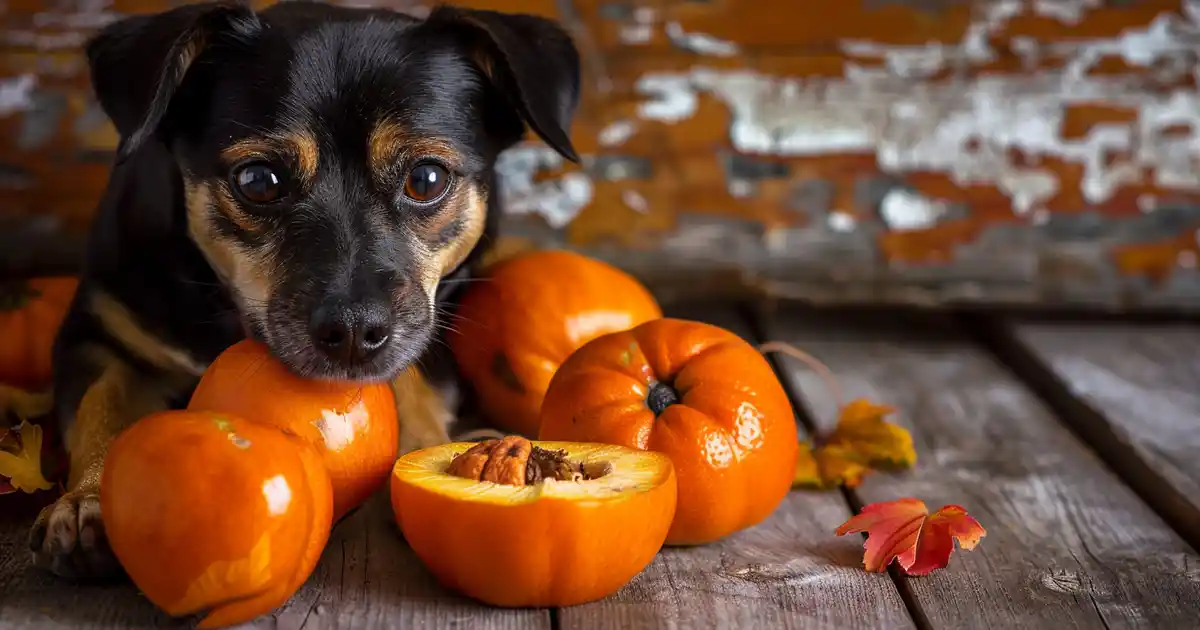
If you have ever come home with a bag of persimmons from the farmers market in autumn and found your dog investigating the unfamiliar orange fruit with the focused curiosity that dogs reserve for foods that smell interesting and potentially worth pursuing, or if you have an Asian persimmon tree in your yard and discovered that your dog has been helping themselves to the fallen fruit before you noticed what was happening, you have encountered one of the more genuinely nuanced food safety questions in the entire landscape of dogs and human food — a question whose honest answer requires more than a simple yes or no and whose complete picture spans real nutritional benefits, specific preparation requirements, one component that creates a genuine gastrointestinal hazard, and a set of individual dog considerations that modify the general guidance in ways that matter for specific health contexts. I had that exact experience of discovering how genuinely layered the persimmon question was when a friend in California asked me whether her Labrador’s habit of eating fallen persimmons from her backyard tree was something she needed to worry about, and the research I conducted to give her an honest answer revealed a food whose safety profile is more conditional and more preparation-dependent than the general fruit-safety frameworks most dog owners apply would suggest — not because persimmons are categorically dangerous but because the specific parts of the persimmon that create risk are genuinely different from the parts that offer benefit, and the preparation choices that separate safe from hazardous are specific enough to require explicit knowledge rather than general intuition. Understanding the complete picture of whether dogs can eat persimmons safely — what the persimmon’s nutritional profile actually delivers and how those nutrients support canine health, which specific parts of the persimmon create real risks and through what mechanisms, how preparation method determines whether persimmon becomes a nutritionally interesting treat or a gastrointestinal emergency, and how to navigate the specific situations including backyard tree access and accidental seed consumption that make this question more than theoretical for many dog owners — is exactly what this guide delivers with the evidence-based specificity and practical honesty that actually resolves the question rather than restating it with more elaborate hedging.
Here’s the Thing About Persimmons and Dogs
Here is the foundational reality that reframes every persimmon-related decision you will make for your dog — persimmons are a food that occupies a genuinely interesting middle position in the canine food safety landscape, being simultaneously a fruit with a real and compelling nutritional profile whose flesh can be safely shared with dogs in appropriate preparation and portions and a fruit with specific components — the seeds and the unripe astringent varieties specifically — that create risks ranging from gastrointestinal obstruction through the inflammatory intestinal response that persimmon tannins can produce, risks that are specific enough in their mechanism and their prevention to make general persimmon-is-safe or persimmon-is-dangerous answers both incomplete in ways that could either deprive dogs of a genuinely beneficial treat or expose them to an avoidable hazard depending on which incomplete answer the owner encounters and applies. The persimmon fruit comes in two primary varieties that behave completely differently in terms of their safety profile for dogs — the Hachiya persimmon, an elongated acorn-shaped variety that is intensely astringent when unripe and must be fully soft and ripe before its tannin content drops to levels that do not cause the astringency-related intestinal inflammation and diarrhea that unripe Hachiya consumption produces, and the Fuyu persimmon, a squat tomato-shaped variety that can be eaten when firm like an apple without the astringency problem that makes Hachiya ripeness so critical.
I never knew until I engaged with both the food science of persimmon tannin chemistry and the veterinary literature on tannin effects in canine gastrointestinal physiology that the astringency of unripe Hachiya persimmons is not simply a palatability characteristic that dogs might find unpleasant but a biological effect of soluble tannin concentrations that are high enough in unripe Hachiya fruit to cause the protein precipitation in gastrointestinal mucosal tissue that produces the inflammation, diarrhea, and in significant exposures the intestinal obstruction from the gelatinous tannin-protein complex that forms when high-tannin material contacts the intestinal mucosa in concentrated amounts. The distinction between ripe Hachiya whose tannin content has converted to insoluble bound tannins during ripening and is therefore safe, unripe Hachiya whose soluble tannin content is genuinely hazardous, and Fuyu whose tannin chemistry allows firm-ripe consumption without the astringency risk — is the specific botanical and chemical knowledge that transforms the general question of whether dogs can eat persimmons into the specific, actionable guidance that actually protects dogs while allowing them to benefit from what persimmons genuinely offer when properly prepared.
What You Need to Know — Let’s Break It Down
Understanding the specific nutritional components of persimmons and the distinct health benefits each supports in dogs gives you the evidence-grounded appreciation for why persimmons are worth incorporating deliberately when properly prepared rather than avoided entirely based on the risk components that specific preparation eliminates. The persimmon’s nutritional profile is anchored by an exceptional antioxidant concentration that spans multiple distinct antioxidant compound classes — beta-carotene and other carotenoids including lycopene and zeaxanthin, vitamin C, vitamin E, and the catechin and gallocatechin flavonoids that are the primary antioxidant compounds in ripe persimmon flesh — creating a total antioxidant capacity that ranks persimmons among the most antioxidant-dense fruits available and that translates to genuine free radical scavenging and oxidative stress reduction benefits in dogs who consume them as part of a balanced diet.
Beta-carotene in persimmons supports the same vision health, immune function, and skin and coat condition benefits through vitamin A conversion that makes beta-carotene in carrots and sweet potatoes valuable for dogs — with persimmons providing beta-carotene at concentrations comparable to carrots on a dry weight basis, making the antioxidant contribution of persimmon flesh genuinely meaningful rather than trace amounts whose effect is imperceptible. The vitamin C content supports immune system function and collagen synthesis while acting as an additional water-soluble antioxidant whose complementary action with the fat-soluble carotenoid and vitamin E antioxidants creates the synergistic antioxidant network that whole food antioxidant sources provide more completely than any individual antioxidant supplement. Vitamin A from beta-carotene conversion supports retinal health, immune cell development and activation, and the epithelial tissue integrity that determines both skin barrier function and the mucosal barrier health of the gastrointestinal tract.
The fiber content of persimmon flesh includes both soluble and insoluble components that together support digestive health through complementary mechanisms — soluble fiber supporting the intestinal microbiome through fermentation to short-chain fatty acids that nourish colonocytes and maintain intestinal barrier integrity, and insoluble fiber providing the bulk and transit support that maintains healthy bowel movement regularity. The potassium content supports muscle function, nerve transmission, and the fluid balance regulation that cardiac and renal health depend upon, while the manganese content contributes to bone formation, antioxidant enzyme function, and carbohydrate metabolism. The combination of these nutritional contributions at the caloric density of a fruit — approximately seventy calories per one hundred grams — creates a moderately caloric treat whose nutritional value per calorie is genuinely interesting for dogs across a range of health contexts.
The Science Behind Persimmon Safety for Dogs
What food science research on persimmon tannin chemistry, veterinary research on tannin effects in canine physiology, and the botanical distinction between astringent and non-astringent persimmon varieties actually shows explains why the preparation requirements for persimmon safety are specific and non-negotiable rather than precautionary suggestions that can be relaxed when the fruit looks ripe enough, and why the seed and pit hazards deserve specific mechanistic understanding rather than the general small-piece-might-be-fine dismissal that some dog owners apply to fruit seeds generally. Tannins are polyphenolic compounds that plants produce as a chemical defense against herbivory — the astringent sensation that unripe persimmons produce in the human mouth is the tannin-induced protein precipitation in saliva and mucosal tissue that is the tannin’s biological purpose, and the same precipitation chemistry that produces astringency in the mouth produces the same mucosal protein precipitation in the gastrointestinal tract when concentrated tannin-containing material is consumed.
In the gastrointestinal context, soluble tannin concentration above a threshold produces a gelatinous tannin-protein precipitate that can form a bezoar — a concretion of material in the gastrointestinal tract that accumulates rather than passing normally and that can produce obstruction requiring surgical intervention in severe cases. The persimmon phytobezoar is a documented clinical entity in human gastroenterology and has been described in veterinary literature as well — produced specifically by the consumption of high-tannin persimmon material, most commonly the seeds, the calyx, and unripe Hachiya flesh whose soluble tannin concentration has not yet reduced through ripening. The mechanism is not a toxicity in the conventional sense but a physical chemistry event whose consequences range from mild gastrointestinal irritation and diarrhea in minor exposures through obstruction requiring surgical intervention in significant exposures from high-tannin material.
The seed hazard in persimmons encompasses both the tannin-related bezoar risk and the physical obstruction risk from the seeds themselves — persimmon seeds are hard, smooth, and sized in a range that creates obstruction risk at the pylorus, in the small intestine, and at the ileocecal junction for dogs of various sizes whose intestinal diameter determines what size seed or seed fragment can or cannot pass normally. The seeds do not contain cyanogenic glycosides in the way that apple seeds and stone fruit pits do — the persimmon seed hazard is primarily physical and tannin-chemical rather than cyanide-toxicological — but the physical obstruction and tannin bezoar risks are real enough and serious enough to make seed removal a non-negotiable preparation step rather than an optional precautionary measure for dogs.
Here’s How to Actually Prepare Persimmons for Dogs
Start with variety identification before any other preparation step because the variety of persimmon you are working with determines both the ripeness requirement and the preparation approach that makes it safe for dogs. Fuyu persimmons — the squat, flat-bottomed, tomato-shaped variety — can be offered when firm-ripe with skin on and seeds removed, without waiting for the full softness that Hachiya requires, making them the more practically convenient persimmon variety for dog treats and the one whose preparation requirement is most similar to the apple or pear preparation that dog owners are accustomed to managing. Hachiya persimmons — the elongated, acorn-shaped variety — must be fully ripe to the point of being soft and almost jelly-like in texture before any portion is offered to dogs, because the soluble tannin concentration that makes unripe Hachiya astringent and hazardous does not reduce to safe levels until the ripening process is essentially complete and the flesh has achieved the custardy softness that characterizes fully ripe Hachiya.
Here is the specific preparation sequence that makes persimmon a safe and beneficial treat for dogs regardless of variety. Wash the persimmon thoroughly to remove surface pesticide residue and environmental contaminants. Remove the calyx — the green leafy cap at the top of the fruit — completely because it contains higher tannin concentrations than the flesh and provides no nutritional benefit that justifies its inclusion. Remove all seeds — cutting the flesh away from the seeds rather than attempting to work around them — and discard the seeds rather than allowing them to remain accessible to your dog. For Fuyu, cut the flesh into appropriately sized pieces based on your dog’s size. For Hachiya, confirm full ripeness through the softness test before portioning — a Hachiya that still has any firmness to its flesh is not safe for dogs regardless of its orange color. Remove skin from Fuyu if your dog has digestive sensitivity to fruit skin — the skin is not toxic but its fiber content is higher than the flesh and some sensitive dogs react to it with loose stool.
The portioning framework for persimmon is more conservative than for lower-calorie fruits because persimmon’s sugar content — approximately thirteen to nineteen grams of sugar per one hundred grams depending on variety and ripeness — creates a meaningful glycemic load that warrants portion discipline for health-maintaining rather than health-undermining treat incorporation. For small dogs under twenty pounds, one to two tablespoons of prepared persimmon flesh represents an appropriate occasional serving. For medium dogs between twenty and fifty pounds, two to four tablespoons offered as an occasional treat rather than a daily addition represents a reasonable serving. For large dogs over fifty pounds, up to a quarter cup of prepared persimmon flesh in an occasional treat context provides the nutritional benefit without the sugar load that daily feeding at this level would accumulate. The word occasional is doing meaningful work in this guidance — persimmon is best approached as a several-times-per-week special treat rather than a daily dietary addition, both to keep sugar contribution within appropriate ranges and to prevent the overenthusiastic incorporation of a novel palatable food from creating a dietary imbalance through sheer enthusiasm.
Common Mistakes Dog Owners Make With Persimmons and Dogs
The most consequential mistake dog owners make with persimmons specifically — as opposed to fruit feeding generally — is failing to recognize that the variety distinction between Fuyu and Hachiya creates a preparation difference whose medical importance is not obvious from casual inspection and that casual fruit-sharing practices do not reliably account for. An owner who knows that persimmons are safe for dogs and applies that knowledge to offer a firm Hachiya — which looks similar to a ripe Fuyu from the outside but whose tannin content is still at the astringent, potentially hazardous level — is making a mistake that the specific variety knowledge in this guide prevents. The orange skin color and reasonable size of a firm Hachiya do not communicate the tannin chemistry that makes its interior hazardous until the softness test reveals whether the ripening process that reduces soluble tannin concentration has been completed.
Allowing dogs to access fallen persimmons from backyard trees without the preparation steps that remove seeds and assess ripeness is a mistake whose frequency is higher than owners who are aware of it would expect — persimmon trees in California, the southern United States, and other temperate regions drop fruit that dogs find highly attractive, and the fallen fruit includes both seeds and varying ripeness levels in Hachiya varieties that make uncontrolled backyard access a meaningful hazard rather than a harmless natural grazing experience. Owners of persimmon trees who allow their dogs yard access during fruit drop season need either physical barrier management of the tree’s fall zone or the consistent monitoring and collection practice that prevents accumulated fallen fruit from becoming an accessible, uncontrolled, seed-containing, ripeness-variable persimmon source for their dogs.
Applying the general-fruit-sharing intuition that seeds in small quantities are probably fine — an intuition that is approximately correct for some fruits but specifically wrong for persimmon seeds given the tannin bezoar and physical obstruction risks — is a mistake that the fruit-by-fruit seed hazard assessment that informed dog owners apply would prevent. Persimmon seeds are not apple seeds whose cyanide content makes them a dose-dependent poison — persimmon seeds create physical and chemical obstruction risks that make even a few seeds in a small dog a meaningful concern worth veterinary contact rather than the watch-at-home situation that apple seed exposure typically represents.
When Things Don’t Go as Planned
Your dog accessed fallen persimmons from a backyard tree and you are uncertain how many they consumed, whether seeds were ingested, and whether the fruit was fully ripe Fuyu or firm unripe Hachiya? Contact your veterinarian for guidance rather than monitoring at home without veterinary input, because the uncertainty about seed ingestion and tannin level creates a risk profile whose appropriate assessment requires veterinary information about the specific fruit type, estimated quantity, and your individual dog’s size and health history. A large dog who consumed two or three ripe Fuyu persimmons from the ground — seeds and all — is a different situation from a small dog who consumed multiple firm Hachiya persimmons with seeds, and the veterinary assessment of which scenario warrants monitoring versus which warrants intervention depends on those specifics rather than a general persimmon safety answer.
Your dog ate a confirmed Fuyu persimmon including seeds that fell from a tree and is now showing vomiting, abdominal discomfort, or reluctance to eat that developed over the twelve to twenty-four hours following consumption? Contact your veterinarian for same-day evaluation rather than continued home monitoring because these symptoms in the context of known seed consumption are consistent with the early presentation of either intestinal obstruction from seed physical blockage or developing tannin-related gastrointestinal inflammation — both of which benefit from earlier veterinary assessment rather than later when symptoms have progressed further. Do not offer food pending veterinary evaluation as continued feeding may advance a partial obstruction to a complete one and adding more material to an inflamed or partially obstructed intestinal tract is not beneficial while the situation is being assessed.
Your dog consumed a small amount of fully ripe, seeded, calyx-removed persimmon flesh that you offered deliberately as a treat and is showing mild loose stool the following day without vomiting, abdominal pain, or other signs? This presentation is consistent with the temporary digestive adjustment that any new fruit addition produces in dogs whose dietary fiber intake does not regularly include persimmon, and it typically resolves within twenty-four to forty-eight hours without intervention beyond withholding further persimmon and ensuring adequate water access. Monitor for any progression to more significant symptoms and contact your veterinarian if loose stool is severe, contains blood, or does not improve within forty-eight hours of discontinuing the persimmon.
Advanced Considerations for Specific Dogs and Situations
Diabetic dogs require dietary management that specifically accounts for the glycemic impact of all food additions including treats, and persimmon’s sugar content — among the higher of the commonly available fruits at thirteen to nineteen grams per one hundred grams — makes it a treat whose glycemic contribution requires specific accounting within the diabetic dietary management plan rather than automatic inclusion based on the general fruit-safety framework that applies to non-diabetic dogs. The fiber content of persimmon moderates its glycemic impact somewhat — soluble fiber slows glucose absorption in ways that reduce the post-meal glucose spike relative to equivalent pure sugar consumption — but the moderation is partial rather than complete and does not eliminate the need for veterinary dietary guidance before persimmon incorporation in diabetic dogs. Any persimmon feeding for a diabetic dog belongs within the individualized dietary management conversation with the veterinarian overseeing diabetes management rather than the general healthy-dog persimmon guidance.
Dogs with inflammatory bowel disease or chronic gastrointestinal conditions represent a population for whom the tannin content of persimmon — even fully ripe persimmon with appropriate preparation — warrants specific caution because the tannin-protein precipitation chemistry that is inconsequential in healthy gastrointestinal tissue has meaningfully greater potential for irritation in inflamed mucosal tissue whose protective barrier function is already compromised. The gastrointestinal specialist or internist managing a dog with IBD is the appropriate source for guidance about whether persimmon inclusion is appropriate in that specific dog’s dietary management rather than general healthy-dog persimmon guidance whose application to IBD-affected dogs requires the individualization that disease-specific veterinary guidance provides.
Overweight dogs benefit from the fiber content of persimmon for its satiety-supporting effects but face the challenge of persimmon’s moderate caloric and sugar density relative to the lower-calorie fruit options — cucumbers, blueberries, and watermelon — that provide treat satisfaction at dramatically lower caloric cost. For overweight dogs in active weight management programs, persimmon can be incorporated as an occasional special treat rather than a regular addition, reserving the treat frequency and volume for the ultra-low-calorie options that support caloric restriction without requiring the careful portioning that persimmon’s sugar density demands.
Ways to Make Persimmon Feeding Work for Your Dog
When I want to incorporate persimmon as a genuinely enriching treat experience for my dog rather than simply offering sliced flesh, I use fully ripe Hachiya persimmon — whose custardy texture lends itself naturally to the purpose — as a Kong or puzzle feeder stuffing ingredient, mixing the ripe flesh with a small amount of plain yogurt or pumpkin puree and freezing the stuffed toy for an enrichment treat whose extended engagement time and temperature contrast create a more satisfying treat experience than direct flesh offering. The freezing step also transforms the ripe Hachiya texture from its somewhat unusual consistency to a firmer frozen format that many dogs find more engaging as a lick-and-work enrichment experience.
For owners who enjoy the seasonal availability of backyard persimmon trees, harvesting ripe Fuyu fruit specifically for dog treats — cutting away the calyx, removing all seeds, and portioning the flesh into serving-sized pieces that go directly into the refrigerator or freezer — creates a ready-to-serve format that makes each persimmon serving a thirty-second preparation task rather than a fresh preparation project and eliminates the impulsive fallen-fruit-sharing that produces the preparation shortcuts whose consequences this guide is designed to prevent. Each persimmon incorporation approach works within different household routines and individual dog health contexts as long as the core commitments to variety identification before preparation, complete seed removal without exception, calyx removal, Hachiya ripeness confirmation before any offering, appropriate portioning relative to dog size and sugar tolerance, and complete physical prevention of fallen-fruit access stay consistently maintained.
Why This Approach to Persimmon Safety Actually Works
Unlike the frustrating experience of encountering persimmon safety questions with either the oversimplified yes-they-are-safe answer that fails to account for the variety, ripeness, and seed considerations that determine whether persimmon is actually safe or the overcautious never-feed-persimmons answer that denies dogs access to a genuinely nutritious fruit based on risks that appropriate preparation eliminates, building a complete, variety-specific, preparation-dependent understanding of persimmon safety and nutrition creates the owner capability that produces genuinely appropriate decisions — neither avoiding a beneficial fruit based on misapplied caution nor feeding it without the specific preparation knowledge that makes it safe. What makes this approach sustainable is that the decision framework — identify variety, confirm Hachiya ripeness, remove calyx and seeds completely, portion appropriately for individual dog size and health context, and prevent uncontrolled fallen-fruit access — is a specific, repeatable preparation protocol that applies consistently to every persimmon feeding decision without requiring you to reconstruct the safety assessment from general principles each time.
The practical wisdom here is that persimmons are a genuinely interesting nutritional addition for dogs when the specific preparation requirements are met — providing antioxidant compounds including beta-carotene, vitamin C, vitamin E, and catechin flavonoids in concentrations that make them among the more antioxidant-rich fruit treat options available, alongside fiber, potassium, and manganese that contribute to digestive, cardiovascular, and metabolic health in ways that are nutritionally coherent rather than negligible. I had a genuine appreciation for the value of this complete, specific framework the first time I was able to give my California friend a complete, honest answer about her Labrador’s backyard persimmon access — helping her understand that the issue was not persimmons in general but fallen Hachiya persimmons specifically, with seeds, at various ripeness levels, in uncontrolled quantities, and guiding her toward the physical barrier management that eliminated the hazardous uncontrolled access while preserving the option for occasional deliberate treats from ripe Fuyu she could prepare properly — a response that the general safe-or-not framing she had previously encountered had completely failed to provide.
Real Success Stories and What They Teach Us
A veterinary internal medicine specialist I know shared that persimmon-related gastrointestinal presentations — the tannin bezoar and intestinal obstruction cases that make persimmon a more medically interesting fruit than its casual reputation suggests — almost exclusively involve either unripe Hachiya consumption, seed ingestion, or both, and that the properly prepared ripe persimmon flesh cases she encounters are either non-events or the mild temporary diarrhea that any new fruit introduction produces. Her clinical observation reinforces that the preparation requirements this guide emphasizes are not theoretical precautions but the specific interventions that separate the persimmon presentations she manages as medical cases from the ones she never sees because proper preparation eliminated the hazardous components before the dog encountered the fruit.
A friend who grows both Fuyu and Hachiya persimmons in her Southern California backyard shared that after implementing a fallen-fruit collection routine during persimmon season — walking the yard each morning and evening during the dropping period to collect fallen fruit before her dogs accessed it — and transitioning her deliberate persimmon sharing to ripe Fuyu flesh with seeds removed rather than the casual varied-variety shared-from-hand approach she had previously used, she eliminated the intermittent loose stool and occasional more significant digestive upset episodes that had accompanied her dogs’ previous uncontrolled persimmon access while maintaining the clearly enjoyed persimmon treat experience that her dogs responded to with enthusiastic appetite. Her practical experience illustrates exactly the difference between uncontrolled backyard access and deliberate prepared feeding that the preparation-specific framework this guide delivers is designed to produce.
Questions People Always Ask About Persimmons and Dogs
Can dogs eat persimmons safely? Dogs can eat properly prepared ripe persimmon flesh safely and beneficially. Fully ripe Fuyu persimmons with calyx and seeds removed are the most preparation-straightforward option. Fully ripe Hachiya with calyx and seeds removed is safe when completely soft. Unripe Hachiya persimmons are not safe for dogs due to high soluble tannin content. Persimmon seeds are not safe for dogs due to physical obstruction and tannin bezoar risks.
What parts of persimmons are dangerous for dogs? The seeds create physical obstruction risk and tannin bezoar formation risk. The calyx contains higher tannin concentrations than the flesh. Unripe Hachiya flesh contains high soluble tannin concentrations that cause gastrointestinal irritation and risk bezoar formation. Fully ripe persimmon flesh from either variety with seeds and calyx removed is the safe component.
What is the difference between Fuyu and Hachiya persimmons for dogs? Fuyu persimmons are the squat, tomato-shaped variety that can be offered when firm-ripe without astringency concerns, making them the more practical dog treat variety. Hachiya persimmons are the elongated, acorn-shaped variety that must be completely soft and fully ripe before offering because their unripe soluble tannin content causes gastrointestinal harm. Both varieties require seed and calyx removal before dog feeding.
What should I do if my dog ate persimmon seeds? Contact your veterinarian for guidance specific to your dog’s size, the estimated number of seeds consumed, and any symptoms present or developing. Persimmon seeds can cause physical intestinal obstruction and tannin bezoar formation whose risk assessment depends on these individual factors. Do not adopt a wait-and-see approach without veterinary input for confirmed seed consumption.
Are persimmons nutritious for dogs? Yes, properly prepared persimmon flesh provides meaningful nutritional value — beta-carotene and multiple carotenoids supporting immune function and vision health, vitamin C supporting immune and collagen synthesis, vitamin E as an antioxidant, catechin flavonoids with antioxidant properties, dietary fiber supporting digestive health, potassium supporting muscle and cardiovascular function, and manganese contributing to enzyme function and bone health.
Can dogs eat persimmons from backyard trees? Uncontrolled access to fallen persimmons from backyard trees is not safe for dogs because fallen fruit includes seeds, calyx, and in Hachiya varieties varying ripeness levels whose tannin content the dog cannot assess before consumption. Physical prevention of fallen-fruit access during persimmon season combined with deliberate prepared treat feeding from harvested ripe Fuyu is the appropriate management for homes with persimmon trees.
How much persimmon can I give my dog? One to two tablespoons for small dogs, two to four tablespoons for medium dogs, and up to a quarter cup for large dogs as an occasional treat rather than a daily addition represents appropriate persimmon portioning. Persimmon’s moderate sugar content warrants treat-level rather than daily-addition incorporation for most dogs, with more conservative portioning for diabetic dogs and dogs in weight management programs.
Can persimmons cause diarrhea in dogs? Unripe Hachiya persimmons, persimmon seeds, and persimmon calyx can cause diarrhea through tannin-induced gastrointestinal irritation. Even properly prepared ripe persimmon flesh can cause temporary loose stool in dogs unaccustomed to fruit fiber during initial introduction. Persistent or severe diarrhea following persimmon consumption warrants veterinary contact.
One Last Thing
Every variety distinction, every preparation requirement, every tannin chemistry explanation, every seed hazard mechanism, every portioning guideline, and every individual dog consideration in this complete guide exists because understanding whether dogs can eat persimmons safely with genuine food science grounding and honest engagement with both the nutritional benefits and the specific preparation-dependent risks that complete the picture proves that the difference between persimmon as a genuinely beneficial, safely enjoyed seasonal treat and persimmon as a source of avoidable gastrointestinal emergency is almost entirely determined by the specific, preparation-grounded knowledge the owner brings to the fruit selection, ripeness assessment, and serving preparation decisions that persimmon feeding requires. The best persimmon outcomes for dogs happen when owners identify the variety before preparing, confirm Hachiya ripeness through the softness test without exception, remove calyx and all seeds completely from every serving, portion appropriately for individual dog size and health status, prevent uncontrolled backyard tree access during fruit drop season, and approach persimmon as the thoughtfully prepared occasional treat that this nutritionally interesting but preparation-specific fruit warrants rather than the casually shared snack that its attractive appearance and good palatability might otherwise invite. You now have every food science framework, every variety distinction, every preparation standard, every seed hazard assessment, every portioning principle, and every individual consideration you need to make persimmon feeding decisions for your dog with the confident, specific, evidence-grounded competence that gives your dog access to the genuine antioxidant and nutritional benefits that properly prepared persimmon delivers — identify your variety, confirm your ripeness, remove every seed, skip the calyx, and share with the informed intentionality that turns a beautiful autumn fruit into a genuinely beneficial treat experience for your dog.




