
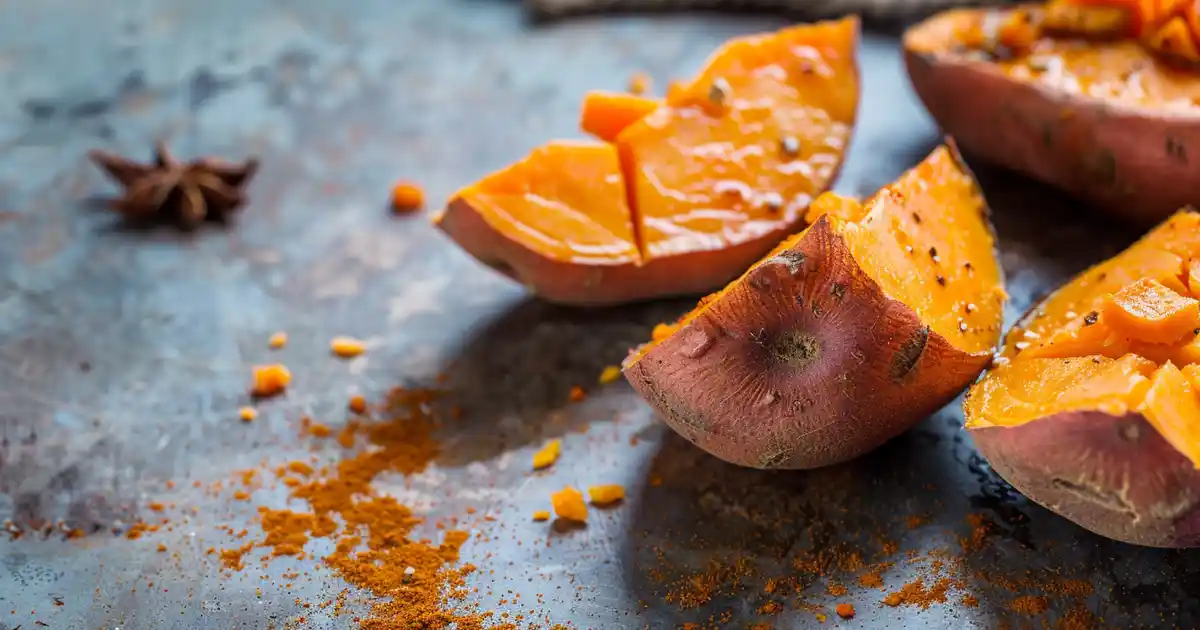
If you have ever been preparing sweet potatoes for dinner — peeling them over the sink or slicing them with the skin on for roasting — and found your dog stationed hopefully at your feet waiting for anything that might fall within reach, or if you have ever offered your dog a piece of sweet potato and immediately wondered whether the skin you left on was fine or something you should have removed before sharing, you have encountered one of those food safety questions that sits in the uncomfortable middle ground between clearly safe and clearly dangerous and requires a more specific answer than casual reassurance or blanket caution can provide. I had that exact experience of genuine uncertainty when I started incorporating sweet potato into my dog’s diet as a digestive health addition after reading about its fiber and nutritional benefits, and quickly discovered that the sources addressing whether sweet potato was good for dogs were abundant and consistent while the sources specifically addressing the skin — whether it changed the safety calculation, whether it should always be removed, whether preparation method mattered, and why the skin question deserved different consideration than the flesh question — were sparse, contradictory, and rarely specific enough to actually resolve the question for a dog owner trying to make an informed decision. Understanding the complete picture of sweet potato skins and dogs — what the skin contains that makes it different from the flesh in ways that matter for canine digestion and safety, how preparation method changes the risk profile of sweet potato skin specifically, what the real concerns are versus the overcautious generalizations that treat all vegetable skins as equivalent hazards, and how to incorporate sweet potato into your dog’s diet in the form that delivers the maximum nutritional benefit with the minimum avoidable risk — is exactly what this guide delivers with the evidence-based specificity and practical honesty that actually resolves the question rather than restating it more elaborately.
Here’s the Thing About Sweet Potato Skins and Dogs
Here is the foundational reality that reframes every sweet potato skin decision you will make for your dog — the question of whether sweet potato skins are safe for dogs is not a yes or no question but a preparation-dependent, quantity-dependent, and individual-dog-dependent question whose honest answer requires understanding what specifically makes the skin different from the flesh, how those differences interact with canine digestive physiology, and under what circumstances those differences create meaningful risk versus manageable consideration. Sweet potato flesh is one of the most consistently and enthusiastically recommended vegetables in veterinary nutrition contexts for dogs — a dense source of dietary fiber, beta-carotene, vitamin A, vitamin C, vitamin B6, potassium, and manganese that supports digestive health, immune function, eye health, and skin and coat condition in dogs in ways that are well-supported by both the nutritional science and the clinical observations of veterinarians who recommend it regularly. The skin of that same sweet potato is a more complicated story — not because it is toxic in the way that some foods are toxic to dogs, but because it introduces specific characteristics that the flesh does not carry in the same degree and that require specific management to prevent them from creating the problems that turn a nutritious food into a digestive disruption or physical hazard.
I never knew until I actually engaged with both the nutritional composition research on sweet potato skin and the veterinary guidance on fiber and roughage in canine diets that the skin of a sweet potato differs from the flesh not just in texture but in the specific type and concentration of fiber it contains, in the presence of oxalates at levels that are relevant for certain dogs with specific health histories, in the pesticide and contaminant concentration patterns that follow the surface exposure of any root vegetable grown in or near soil, and in the physical characteristics that determine how difficult it is for canine digestive systems to break down and pass without creating obstruction or irritation risks. None of these characteristics makes sweet potato skin categorically dangerous for every dog in every circumstance — but each of them explains why the skin question deserves specific consideration rather than the default assumption that whatever is true of the sweet potato flesh is equally true of the skin that surrounds it, and why preparation method is the single most important variable in whether sweet potato skin represents a nutritional contribution or an avoidable risk.
What You Need to Know — Let’s Break It Down
Understanding the specific characteristics of sweet potato skin that differentiate it from the flesh — the fiber composition, the oxalate content, the surface contaminant considerations, and the physical digestibility factors — gives you the analytical framework that makes preparation decisions straightforward and individually appropriate rather than requiring you to follow general rules whose underlying logic you do not understand well enough to adapt to specific circumstances. The fiber content of sweet potato skin is the most nutritionally relevant differentiating characteristic, and the specific type of fiber concentrated in the skin is what makes the skin both potentially beneficial and potentially problematic depending on the quantity consumed and the individual dog’s digestive tolerance. Sweet potato skin contains significantly higher concentrations of insoluble fiber than the flesh — the type of fiber that adds bulk to stool and accelerates intestinal transit rather than the soluble fiber that ferments in the colon to produce the short-chain fatty acids that support the intestinal microbiome and the gradual stool-softening effect that makes sweet potato flesh so consistently helpful for dogs with constipation or digestive irregularity.
Insoluble fiber in appropriate quantities supports healthy intestinal motility and prevents the sluggish transit that contributes to constipation, but insoluble fiber in excess relative to a dog’s digestive system capacity and current dietary baseline creates the accelerated motility that produces loose stool, diarrhea, and the gastrointestinal cramping that accompanies more rapid than normal intestinal transit. A dog who is not accustomed to significant dietary fiber and who consumes sweet potato skin in meaningful quantity — particularly raw sweet potato skin with its tough, largely intact cell wall structure that makes the insoluble fiber even less digestible than cooked skin — is at meaningful risk for the digestive upset that excessive insoluble fiber loading produces, regardless of the fact that insoluble fiber itself is not toxic and that the same fiber in smaller quantities or more digestible forms would have been entirely beneficial.
The oxalate content of sweet potato skin is a consideration that applies specifically rather than universally — relevant primarily for dogs with histories of calcium oxalate bladder or kidney stones and for dogs with kidney disease where oxalate management is part of the broader dietary management strategy, rather than a concern for the general healthy dog population where dietary oxalate from sweet potato skin at normal serving sizes does not represent a meaningful accumulation risk. Sweet potatoes contain oxalates throughout the flesh and skin, with the skin containing somewhat higher concentrations, and for dogs with no calcium oxalate stone history and normal kidney function this oxalate content is processed and excreted without clinical consequence. For dogs with documented calcium oxalate stone history, the additional oxalate load of regular skin consumption warrants a veterinary nutrition conversation rather than automatic inclusion based on the general-population safety of sweet potato.
The Science Behind Sweet Potato Skin Safety for Dogs
What research on canine digestive physiology, dietary fiber processing, and root vegetable nutrition actually shows about how dogs handle sweet potato skin helps explain why the preparation method matters so specifically and why the same skin that creates digestive problems when raw and in excess can be a genuinely beneficial nutritional addition when properly prepared and portioned. The canine digestive system processes plant-based foods differently than the human digestive system in ways that are directly relevant to sweet potato skin safety — dogs have shorter intestinal transit times than humans, lower baseline amylase activity in saliva, and less capacity for the extended fermentation of complex plant fibers that allows some animals to extract significant nutrition from tough plant cell walls. These digestive characteristics mean that raw sweet potato skin — with its intact, tough cell structure and concentrated insoluble fiber — passes through the canine digestive system with less breakdown than it would experience in human digestion, creating both the physical bulk and transit acceleration that produces digestive upset when the fiber load exceeds what the system can comfortably manage.
Cooking sweet potato skin — specifically boiling, steaming, or baking without added fats, seasonings, or salt — breaks down the tough cell wall structure of the skin in ways that meaningfully change its digestibility profile for dogs. Heat treatment softens the insoluble fiber into a form that, while still providing the motility-supporting bulk of insoluble fiber, is physically easier for the canine digestive system to move through the intestinal tract without the irritation and transit acceleration that raw tough skin creates. The cooking process also reduces the concentration of surface contaminants and breaks down the cell structures that can make raw vegetable skin physically difficult for dogs to chew and swallow without creating the choking and obstruction risks that tough raw food pieces create particularly in dogs who eat quickly or without thorough chewing.
The pesticide and surface contaminant consideration for sweet potato skin is grounded in the same logic that applies to any root vegetable grown in soil — the skin that surrounds the flesh represents the primary barrier between the growing environment and the edible interior, and it accumulates surface pesticide residues, soil contaminants, and microbial populations at higher concentrations than the flesh it protects. Thorough washing reduces but does not eliminate surface pesticide residue on conventionally grown sweet potato skin, and for dogs who will be consuming the skin rather than having it removed before serving, the choice between conventionally grown and organically grown sweet potato is more practically relevant than it is for preparations where the skin is discarded. This is not a reason to treat sweet potato skin as toxic — it is a reason to apply the same food safety thinking to dog-destined sweet potato skin that thoughtful humans apply to their own consumption of root vegetable skin.
Here’s How to Actually Prepare Sweet Potato Skin for Dogs
Start by washing the sweet potato thoroughly under running water using a vegetable brush to physically remove surface soil, residue, and contaminants before any preparation — a step that is important for human sweet potato consumption and more important for dog consumption because you are making a deliberate decision about whether to include or exclude the skin based partly on how it has been prepared, and proper washing is the foundation of any preparation decision. If you are purchasing sweet potatoes specifically for your dog and plan to include the skin, selecting organically grown sweet potatoes reduces the pesticide residue consideration to a level that makes skin inclusion more straightforwardly appropriate than conventionally grown sweet potatoes where that consideration carries more weight.
Here is the specific preparation approach that makes sweet potato skin the most appropriate and digestible form for dog consumption, because the difference between a sweet potato skin preparation that supports your dog’s digestive health and one that disrupts it is almost entirely a function of how it is cooked and how it is portioned. Cook the sweet potato completely — baking at three hundred fifty degrees until thoroughly soft throughout, or boiling until a fork passes through the skin and flesh without resistance — without any added salt, butter, oil, sugar, cinnamon, nutmeg, or other seasonings that are appropriate for human sweet potato preparation but that introduce unnecessary or harmful additions to a dog’s serving. Allow the cooked sweet potato to cool completely before offering it to your dog, both because hot food creates burn risk and because the cooling period allows the texture to stabilize into the form that is easiest for dogs to consume and digest.
Portion the sweet potato including skin in amounts appropriate for your dog’s size and dietary context, because the insoluble fiber in the skin means that appropriate portions are more conservatively defined than they might be for sweet potato flesh alone. For small dogs under twenty pounds, one to two tablespoons of cooked sweet potato including skin represents an appropriate occasional serving. For medium dogs between twenty and fifty pounds, two to four tablespoons represents a reasonable serving. For large dogs over fifty pounds, up to a quarter cup of cooked sweet potato with skin included represents a generous but digestively appropriate portion. Offer sweet potato with skin as an occasional dietary addition rather than a daily feeding, particularly during initial introduction when you are establishing your individual dog’s digestive tolerance for the higher insoluble fiber content that skin inclusion adds to the serving.
Introduce sweet potato skin gradually following the same new food introduction protocol that applies to any novel dietary addition — small initial serving, twenty-four to forty-eight hour observation for digestive response including stool consistency changes, gas production, and any signs of gastrointestinal discomfort, and gradual increase to the intended regular portion only after confirming that the initial introduction produced no adverse response. Dogs who have never consumed significant dietary fiber before may experience temporary loose stool during the initial introduction period that resolves as the digestive system adjusts to the new fiber load — distinguish this temporary adjustment response from ongoing digestive disruption that indicates the fiber level is genuinely too high for your individual dog’s digestive capacity.
Common Mistakes Dog Owners Make With Sweet Potato Skins and Dogs
The most common and directly harmful mistake dog owners make with sweet potato skin specifically is offering raw sweet potato skin — either as a piece broken off a raw sweet potato or as a peel removed during human food preparation — to their dog under the reasoning that it is natural, vegetable-based, and therefore harmless in any form. Raw sweet potato skin is tough, resistant to canine chewing and digestion, high in concentrated insoluble fiber that the unprocessed cell wall structure makes even less digestible than cooked skin, and a genuine physical hazard for dogs who swallow large pieces without adequate chewing — creating the combination of intestinal obstruction risk, digestive upset from insoluble fiber overload, and choking hazard that makes raw sweet potato skin the preparation form that veterinary guidance most consistently cautions against. The same skin that is a reasonable cooked addition becomes a meaningfully problematic raw feeding choice, and the preparation distinction is the single most important variable in the entire sweet potato skin safety question.
Offering sweet potato skin prepared with human-appropriate seasonings — butter, salt, brown sugar, cinnamon, nutmeg, or the marshmallow and other toppings that make sweet potatoes a holiday favorite for human tables — is a mistake that adds entirely unnecessary harm vectors to a food that is genuinely beneficial in its plain form. Butter and oils add fat that can trigger pancreatitis in susceptible dogs. Salt in quantities appropriate for human palate preferences is excessive for dogs and contributes to sodium overload, increased thirst, and in larger amounts to sodium toxicity. Nutmeg is actually toxic to dogs and causes neurological symptoms including disorientation, increased heart rate, and seizures at meaningful doses — making the nutmeg-seasoned sweet potato preparation that appears on many holiday tables genuinely dangerous rather than simply inappropriate. Offering a dog the seasoned sweet potato from your plate rather than a plain-cooked portion prepared specifically for them is a convenience that trades real safety for minimal effort savings.
Allowing unrestricted access to sweet potato skin in quantities driven by the dog’s enthusiasm rather than the owner’s portion management is a mistake that the genuinely good palatability of sweet potato for most dogs makes particularly easy to fall into — dogs who enjoy sweet potato will consume as much as is available, and the amount that their enthusiasm would lead them to consume given free access often substantially exceeds the amount that their digestive systems can process without upset. Owner portion management rather than dog self-regulation is the appropriate quantity control mechanism for sweet potato in any form, and particularly for the higher-fiber skin that creates digestive disruption more readily than the flesh at equivalent excess quantities.
When Things Don’t Go as Planned
Your dog consumed a large piece of raw sweet potato skin — perhaps grabbed from the counter during preparation or found a discarded peel — and you are monitoring for signs of digestive disturbance or obstruction concern? Watch for vomiting, retching without productive vomiting, abdominal distension, lethargy, loss of appetite, and straining to defecate over the twenty-four to forty-eight hours following consumption, because these signs can indicate that a tough raw skin piece is creating partial obstruction or significant intestinal irritation rather than passing normally. A single small piece of raw skin in a large dog is unlikely to create serious problems and will most likely pass with only mild digestive upset at worst — a large piece in a small dog warrants veterinary contact to assess obstruction risk, particularly if the dog is showing any of the signs above within a few hours of consumption.
Your dog ate cooked sweet potato skin in appropriate quantities for the first time and has developed loose stool that appeared the following day? This presentation is consistent with the temporary digestive adjustment to new dietary fiber that many dogs experience when insoluble fiber is introduced to a diet that has not previously included significant vegetable fiber, and it typically resolves within one to two days as the digestive system processes the new fiber load and adjusts transit speed accordingly. Withhold further sweet potato, ensure adequate water access to compensate for fluid loss from loose stool, and consider a bland diet — plain cooked chicken and white rice — for a day to support digestive recovery before attempting reintroduction at a smaller portion. Contact your veterinarian if loose stool is severe, contains blood, or has not improved within forty-eight hours.
Your dog has been consuming cooked sweet potato skin regularly as part of their diet and you have noticed gradually increasing episodes of loose stool that you are now connecting to the sweet potato addition? Reduce or eliminate the skin from the sweet potato servings you offer — sweet potato flesh without skin provides the soluble fiber and nutritional benefits that make sweet potato valuable for dogs with digestive sensitivity while removing the concentrated insoluble fiber load that the skin contributes — and observe whether the digestive pattern improves over the following week. Some dogs tolerate sweet potato flesh very well while showing ongoing digestive sensitivity to the skin specifically, and for these dogs flesh-only sweet potato is the appropriate form rather than persisting with skin inclusion that their individual digestive system cannot comfortably accommodate.
Advanced Considerations for Specific Dogs and Situations
Dogs with inflammatory bowel disease, chronic colitis, or other diagnosed gastrointestinal conditions represent a population for whom the insoluble fiber concentration in sweet potato skin warrants specific veterinary guidance before inclusion rather than application of general healthy-dog sweet potato guidance. The motility-accelerating effect of insoluble fiber that is generally beneficial for healthy dogs can exacerbate the accelerated transit, loose stool, and intestinal irritation that are already primary symptoms of inflammatory bowel conditions — making the form of sweet potato offered to these dogs a medically relevant decision rather than a simple palatability and preparation choice. Veterinary guidance for dogs with diagnosed gastrointestinal conditions may support sweet potato flesh as a highly digestible fiber source while recommending skin removal specifically to reduce the insoluble fiber load that their compromised intestinal function cannot tolerate without symptom exacerbation.
Dogs with kidney disease require dietary management that accounts for potassium and phosphorus content of all food additions including treats and supplements, and sweet potato — both flesh and skin — contains meaningful potassium levels that may be relevant for dogs whose kidney disease management includes potassium restriction. The skin contains somewhat higher mineral concentrations than the flesh, which makes the skin specifically relevant in the kidney disease dietary management context even if the flesh is being offered under veterinary guidance. Any sweet potato inclusion for a dog with diagnosed kidney disease, including decisions about whether to include or exclude the skin, belongs within the individualized dietary management conversation with the managing veterinarian rather than general healthy-dog sweet potato guidance.
Diabetic dogs benefit from the fiber content of sweet potato for its glycemic modulating effects — dietary fiber slows glucose absorption from the gastrointestinal tract in ways that reduce the post-meal blood glucose spikes that are the primary management challenge in canine diabetes — but the sugar content of sweet potato including both flesh and skin is relevant in the overall carbohydrate management strategy for diabetic dogs. The specific inclusion of sweet potato skin for diabetic dogs should be part of the dietary management conversation with the veterinarian overseeing diabetes management, accounting for the total carbohydrate and sugar contribution of sweet potato including skin within the individualized dietary plan that diabetes management requires.
Ways to Make Sweet Potato Work for Your Dog
When I want to maximize both the nutritional benefit and the practical utility of sweet potato as a dog food addition, I batch-cook sweet potatoes at the beginning of the week — baking several at once until thoroughly soft, cooling them completely, and storing them in the refrigerator for up to five days — which makes the daily portioning of plain cooked sweet potato a thirty-second preparation task rather than a cooking project that requires advance planning. For dogs who enjoy sweet potato but whose digestive tolerance for the skin is limited, offering flesh-only sweet potato as the regular addition while occasionally including a small amount of well-cooked skin tests and maintains tolerance without making the skin a daily fiber load the digestive system must manage consistently.
Dehydrated sweet potato — prepared at home by thinly slicing cooked sweet potato including or excluding skin based on your individual dog’s tolerance and dehydrating at low temperature until completely dry and chewy — creates a shelf-stable treat format that delivers sweet potato nutrition in a high-value reward format appropriate for training use. The dehydration process concentrates both the nutrients and the fiber of the sweet potato including the skin, which means portion discipline is even more important for dehydrated sweet potato treats than for fresh cooked sweet potato — a thin slice of dehydrated sweet potato with skin represents more concentrated fiber than the equivalent volume of cooked sweet potato and should be portioned accordingly. Each sweet potato preparation approach works within different feeding contexts and individual dog digestive tolerances as long as the core commitments to thorough cooking before skin inclusion, plain preparation without added seasonings, appropriate portioning relative to dog size and digestive history, and gradual introduction with individual response monitoring stay consistently maintained.
Why This Approach to Sweet Potato Skin Actually Works
Unlike the frustrating experience of receiving either blanket reassurance that sweet potato is great for dogs without any skin-specific guidance or overcautious blanket advice to always remove the skin without explanation of what specifically the skin introduces that warrants removal, building a complete understanding of what makes sweet potato skin specifically different from the flesh — the insoluble fiber concentration, the oxalate consideration, the surface contaminant factors, and the physical digestibility difference between raw and cooked forms — creates an owner capability that translates directly into preparation decisions that are genuinely appropriate for your individual dog’s health status, digestive history, and dietary context rather than generic rules that may or may not apply to your specific situation. What makes this approach sustainable is that the decision framework — cook thoroughly, season plainly, portion appropriately for size, introduce gradually, observe individual response, and adjust form between skin-on and skin-off based on your specific dog’s demonstrated digestive tolerance — is a repeatable evaluation process that applies consistently to every sweet potato feeding decision without requiring you to reconsider the fundamental safety question each time.
The practical wisdom here is that sweet potato skin is neither the nutritional bonus that unreserved enthusiasm suggests nor the hazard that blanket removal advice implies — it is a preparation-dependent addition that delivers meaningful insoluble fiber and nutritional contribution when properly cooked and appropriately portioned for dogs whose digestive systems handle it well, and an avoidable source of digestive disruption when raw, excessively portioned, or offered to dogs whose individual digestive profiles are not well-suited to concentrated insoluble fiber. I had a genuine clarifying moment when I understood that the dogs who experience digestive problems from sweet potato skin are almost always encountering it in the raw form, the improperly large quantity, or without the gradual introduction that allows digestive adjustment — and that those problems are almost entirely preventable through the specific preparation and portioning knowledge that this guide delivers.
Real Success Stories and What They Teach Us
A canine nutritionist I know shared that sweet potato — prepared plainly and portioned appropriately — is among the vegetables she most frequently incorporates into home-cooked diet formulations for dogs with chronic digestive irregularity, specifically because the combination of soluble and insoluble fiber in the flesh and skin respectively provides a complementary fiber profile that supports both the microbiome-nourishing fermentation that soluble fiber enables and the motility-supporting bulk that insoluble fiber provides. Her clinical experience with dogs consuming appropriately prepared sweet potato including skin as part of formulated home-cooked diets reinforces that the skin is a genuinely valuable component when preparation and portioning are managed correctly — not an automatically removed risk but a nutritionally meaningful addition whose value is realized through informed preparation rather than eliminated through reflexive caution.
A dog owner in a nutritionally focused community forum I follow documented her experience transitioning her senior Labrador — who had been experiencing chronic constipation despite adequate hydration and regular exercise — to a diet supplemented with cooked sweet potato including skin as a fiber addition, sharing a detailed record of the gradual improvement in bowel regularity over six weeks that the dietary change produced. Her documentation of the transition, including the initial loose stool adjustment period she managed by temporarily reducing the skin portion before gradually increasing back to the full serving, illustrates exactly the individual response monitoring and flexible portion management approach that makes sweet potato skin a successful addition for some dogs — and provides a realistic template for the introduction process that produces sustainable benefit rather than initial enthusiasm followed by digestive disruption that causes owners to abandon a genuinely helpful dietary addition.
Questions People Always Ask About Sweet Potato Skins and Dogs
Are sweet potato skins safe for dogs? Cooked sweet potato skin in appropriate portions is generally safe for healthy dogs and provides insoluble fiber that supports intestinal motility. Raw sweet potato skin is not recommended because its tough cell structure makes it physically difficult to digest and creates choking and obstruction risks. Preparation method is the most important safety variable — thoroughly cooked, plainly prepared skin is meaningfully different in safety profile from raw skin.
Can dogs eat sweet potato skin raw? Raw sweet potato skin is not recommended for dogs. The tough, fibrous structure of uncooked sweet potato skin is difficult for dogs to chew thoroughly and even more difficult for the canine digestive system to break down, creating risks of gastrointestinal obstruction, intestinal irritation from concentrated insoluble fiber, and choking in dogs who do not chew thoroughly before swallowing.
Should I peel sweet potatoes before giving them to my dog? For dogs being introduced to sweet potato for the first time, for dogs with sensitive digestive systems or gastrointestinal conditions, for dogs with calcium oxalate stone history, and for any dog receiving raw sweet potato, peeling before offering is the most conservative and broadly appropriate approach. For healthy dogs with established tolerance for cooked sweet potato, offering thoroughly cooked sweet potato with skin included in appropriate portions is reasonable and adds insoluble fiber benefit.
What are the benefits of sweet potato for dogs? Sweet potato provides dietary fiber including both soluble fiber that supports the intestinal microbiome and insoluble fiber that supports motility, beta-carotene and vitamin A that support eye health and immune function, vitamin C and B6, potassium, and manganese. The skin adds concentrated insoluble fiber and slightly higher mineral concentrations compared to the flesh alone.
Can sweet potato skin cause digestive problems in dogs? Yes, sweet potato skin can cause digestive problems when offered raw, in excessive quantities, without gradual introduction, or to dogs with individual digestive sensitivity to concentrated insoluble fiber. Loose stool, diarrhea, and intestinal cramping are the most common presentations, and they are almost always preventable through appropriate preparation, portioning, and introduction protocols.
Is sweet potato good for dogs with diarrhea? Cooked sweet potato flesh — without skin — is frequently recommended for dogs with mild diarrhea because its soluble fiber content helps firm stool and its gentle nutritional profile is easy on inflamed intestinal tissue. Sweet potato skin is not recommended during active diarrhea episodes because its concentrated insoluble fiber can exacerbate loose stool rather than helping resolve it.
How much sweet potato can I give my dog? Cooked sweet potato should be offered as an occasional dietary addition representing no more than ten percent of total daily caloric intake. Practical portion guidance for sweet potato including skin is one to two tablespoons for small dogs, two to four tablespoons for medium dogs, and up to a quarter cup for large dogs, offered several times per week rather than as a daily staple during initial introduction.
Can dogs with kidney disease eat sweet potato skin? Dogs with kidney disease require individualized dietary management that accounts for potassium and phosphorus content of all food additions. Sweet potato skin contains somewhat higher mineral concentrations than the flesh and should be discussed specifically with the managing veterinarian as part of the individualized dietary management plan rather than assumed safe based on general healthy-dog sweet potato guidance.
One Last Thing
Every preparation framework, every portioning guideline, every individual consideration, and every troubleshooting protocol in this complete guide exists because understanding whether sweet potato skins are safe for dogs with genuine nutritional science grounding and honest practical methodology proves that the difference between sweet potato skin as a genuinely beneficial dietary addition and sweet potato skin as a source of avoidable digestive disruption or physical hazard is almost entirely determined by the preparation knowledge, portioning discipline, and individual dog awareness that the owner brings to the feeding decision. The best sweet potato outcomes for dogs happen when owners cook the sweet potato thoroughly before including the skin, season it plainly without any additions that serve human palatability at the cost of canine safety, portion it appropriately for their dog’s size and digestive history, introduce it gradually with honest observation of individual digestive response, and adjust the form — skin-on or skin-off — based on what their individual dog’s digestive system demonstrates it can comfortably accommodate. You now have every nutritional framework, every preparation standard, every portioning principle, every individual consideration, and every troubleshooting approach you need to make sweet potato skin feeding decisions for your dog with the confident, specific, evidence-grounded competence that gives your dog access to the genuine digestive and nutritional benefits that properly prepared sweet potato in the right form delivers — wash it thoroughly, cook it completely, skip the seasoning, measure the portion, and share it with the informed intentionality that every feeding decision your dog depends on you to make deserves.




