
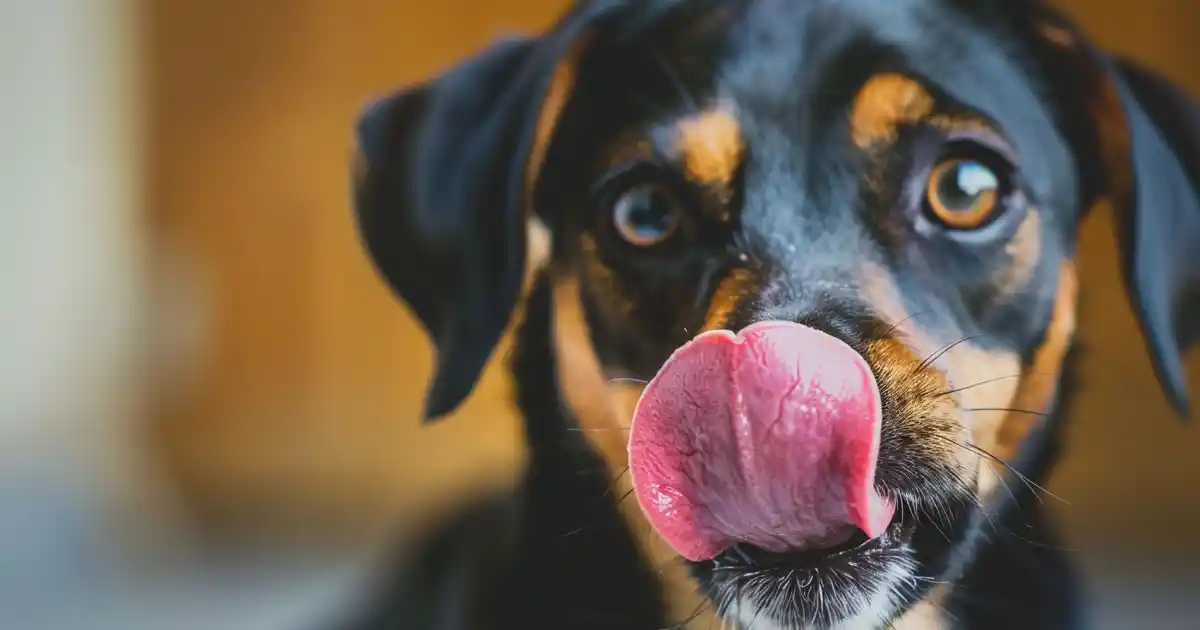
Have you ever wondered why your dog keeps licking their lips when there’s no food around, and what this repetitive behavior actually reveals about their emotional state? I used to think my dog was just being quirky or maybe had something stuck in his mouth when he’d constantly lick his lips during certain situations, until I discovered these eye-opening insights that completely changed how I recognize his stress, anxiety, and attempts to communicate discomfort before situations escalate. Now my friends constantly ask how I know their dogs are uncomfortable at the vet or during training sessions before any obvious signs appear, and my family (who thought lip licking was meaningless) keeps asking for advice after I explained why this subtle signal predicts so many behaviors. Trust me, if you’re worried about missing critical stress indicators or not understanding what your dog is trying to tell you through these repetitive lip licks, this approach will show you it’s more doable than you ever expected.
Here’s the Thing About Lip Licking in Dogs
Here’s the magic: lip licking is one of the most frequent and reliable stress signals dogs use to communicate discomfort, anxiety, uncertainty, or attempts to defuse tension in their environment. What makes understanding lip licking actually work is recognizing that this behavior appears in specific contexts that have nothing to do with food or thirst, and almost always indicates emotional processing or social communication that most people completely miss. I never knew this seemingly simple gesture could reveal everything from mild uncertainty to significant anxiety until I started tracking when it appeared and what typically happened next. This combination creates amazing results because once you understand what triggers lip licking in your dog and what it signals, you can adjust your approach, reduce stress, prevent escalation, and respond to your dog’s needs before they become overwhelming. It’s honestly more doable than I ever expected—no complicated systems needed, just awareness of this single behavioral cue and what drives it. According to research on dog behavior, lip licking represents one of the most commonly observed calming signals dogs use to self-soothe during stress and to communicate peaceful intentions to others, appearing consistently across breeds when dogs experience uncertainty or discomfort.
What You Need to Know – Let’s Break It Down
Understanding the fundamentals of lip licking is absolutely crucial, and I’m going to break this down into clear categories (took me forever to realize this). Don’t skip learning the difference between food-related lip licking and stress-related lip licking—this is the foundation everything else builds on. Food-related licking happens around meals, treats, or after eating, while stress-related licking appears during social interactions, training, veterinary visits, or uncertain situations, and I finally figured out that context determines meaning more than the behavior itself after documenting hundreds of lip licks.
Stress-related lip licking is your primary focus for behavior reading (game-changer, seriously). This rapid, repetitive tongue flick appears when dogs feel anxious, uncertain, uncomfortable, or are attempting to self-soothe. My ability to recognize stress lip licking transformed how I respond to my dog’s needs, and learning this distinction has prevented countless anxiety-driven behaviors from escalating.
Calming signal lip licking works beautifully as social communication. I always recommend understanding this function because everyone sees the relationship implications faster when they realize dogs lick their lips to communicate “I’m not a threat” or “let’s stay calm” to other dogs or humans in tense situations.
Medical lip licking indicates nausea, dental pain, gastrointestinal discomfort, or other physical issues. Yes, persistent lip licking can signal health problems rather than stress, and here’s why: dogs experiencing nausea or mouth pain will lick repeatedly even in calm, familiar environments without obvious stressors present (absolutely crucial to distinguish this from behavioral lip licking).
Anticipatory lip licking appears when dogs expect something—either positive (treats coming) or negative (bath time approaching). The context determines whether this reflects excitement or dread.
The frequency and intensity patterns reveal stress severity. Occasional lip licks during mildly uncertain situations differ dramatically from rapid, constant lip licking during high-stress encounters.
If you’re just starting out with understanding comprehensive canine stress signals and calming behaviors, check out my essential guide to recognizing dog anxiety signs and communication for foundational techniques that complement lip licking interpretation.
The Science and Psychology Behind Why This Works
Lip licking in dogs serves multiple biological and psychological functions simultaneously. Physiologically, stress triggers changes in salivation and mouth dryness, prompting licking as a reflexive response. Psychologically, lip licking serves as a displacement behavior—an action that helps dogs self-soothe during internal conflict or uncertainty, similar to how humans might bite their nails or fidget when anxious.
Traditional approaches to understanding dogs often fail because people either ignore lip licking entirely as meaningless behavior or only notice it when it becomes excessive and compulsive. The subtle, single lip licks that appear during everyday stress go completely unnoticed, yet these early signals provide the best intervention opportunities.
The psychological aspect is fascinating: Norwegian dog trainer Turid Rugaas identified lip licking as a “calming signal”—a behavior dogs use intentionally to reduce tension, both in themselves and in others around them. When you start reading these signals accurately, you’re accessing your dog’s emotional state and their attempts to manage that state before obvious distress appears.
Studies from veterinary behaviorists demonstrate that dogs displaying lip licking during stressful situations show elevated cortisol levels, increased heart rates, and other physiological stress markers. Research from leading animal behavior scientists demonstrates that recognizing and responding to lip licking reduces stress duration and intensity, preventing escalation to more serious anxiety behaviors like aggression, escape attempts, or shutdown.
Here’s How to Actually Make This Happen
Start by observing your dog during clearly calm situations to establish baseline lip licking frequency. Here’s where I used to mess up: I tried to identify abnormal lip licking without knowing what “normal” looked like for my specific dog. Spend several days noting how often your dog licks their lips during relaxed home time when nothing stressful is occurring—this baseline helps you recognize increases during other situations.
Now for the important part: learn to identify the rapid, repetitive stress lip lick versus the slower, single lick that’s unrelated to stress. My mentor taught me this trick: stress lip licking looks like quick tongue flicks, often multiple times in succession, appearing suddenly when something changes in the environment. When it clicks, you’ll know, because you’ll start seeing these rapid flicks constantly in situations you previously thought were fine.
Step three is creating a lip licking trigger log for your dog. This step takes one week of documentation but creates lasting change in your understanding and management strategies. Don’t worry if you’re just starting out—begin by simply noting every situation where you observe lip licking. Common triggers include: veterinary visits, grooming appointments, meeting strangers, children approaching, training sessions, being hugged or restrained, nail trims, loud noises, other dogs approaching, being stared at, or unfamiliar environments.
Here’s my secret: I video my dog during various activities specifically to catch lip licking I miss in real-time. Results can vary, but this technique reveals patterns and frequency that in-person observation misses because you’re focused on other aspects of the situation. Until you feel completely confident recognizing lip licking as it happens, video review provides invaluable learning opportunities.
Learn the typical progression from lip licking to more obvious stress behaviors. Don’t be me—I used to see lip licking but not understand it often preceded avoidance, freezing, or reactive behaviors. The typical sequence looks like: lip licking appears → yawning or sniffing ground → body tension increases → avoidance attempts → if trapped, escalation to growling or snapping. Just like watching early storm warnings before severe weather, but completely different from the sudden reactions people expect, this progression provides multiple intervention points.
Master appropriate responses when you spot lip licking. Every situation has its own challenges, but universal strategies include: reduce intensity of interaction, create more space, slow your movements, soften your voice, redirect to a familiar activity, or end the session entirely. Never punish lip licking since it’s communication and self-soothing, not misbehavior.
Practice prevention strategies based on identified triggers. If your dog lip licks during specific situations, gradual desensitization and counter-conditioning address the underlying anxiety. This creates lasting habits you’ll actually stick with because addressing root causes feels better than repeatedly managing symptoms.
Common Mistakes (And How I Made Them All)
My biggest mistake? Ignoring lip licking as “just a thing my dog does” without recognizing it predicted anxiety-driven behaviors. I learned this the hard way when my dog’s accumulated stress from ignored lip licking signals eventually resulted in a fear-based snap during a grooming session. Don’t make my mistake of treating lip licking as meaningless—it’s your dog’s early communication that they’re uncomfortable.
Another epic failure: continuing training sessions despite constant lip licking because I thought “pushing through” would build confidence. When my dog lip licked repeatedly during training, I interpreted it as distraction rather than stress. That pressure actually increased his anxiety and slowed learning. Respecting lip licking by reducing difficulty or taking breaks would have been far more effective.
I also ignored the medical possibilities for way too long. When my friend’s dog began excessive lip licking at home with no obvious stressors, I assumed it was behavioral. Turns out the dog had dental disease causing significant pain. Learn from this experience: sudden increases in lip licking frequency, especially in calm environments, warrant veterinary examination to rule out medical causes.
The trap of anthropomorphizing lip licking as “guilt” nearly caused misunderstanding. When my dog lip licked after I discovered accidents in the house, I thought he “knew he’d done wrong.” Actually, he was responding to my frustrated body language and tone with stress signals, not experiencing guilt about the accident.
The mistake of not recognizing that some dogs lick their lips more frequently as part of their normal repertoire led to unnecessary concern. Individual baseline matters—some dogs naturally lick their lips more often than others. Focus on increases from baseline rather than absolute frequency.
When Things Don’t Go as Planned
Feeling overwhelmed by how frequently lip licking appears once you start noticing it? You probably need to focus on high-priority situations first before tracking every instance. That’s normal, and it happens to everyone learning this skill. I’ve learned to handle this by initially monitoring lip licking only during known stressors (vet visits, training, grooming), then gradually expanding awareness to everyday situations.
Progress stalled on distinguishing stress lip licking from other types? When this happens (and it will), focus on context as your primary guide. This is totally manageable—if lip licking appears during social interactions, training, or unfamiliar situations without food present, it’s almost certainly stress-related. If it appears immediately after eating or during treat anticipation, it’s likely food-related.
Your dog lip licks constantly even in seemingly calm situations? Don’t stress, just remember that some triggers aren’t obvious from human perspective. What seems calm to you might contain stressors your dog perceives—distant sounds, subtle environmental changes, physical discomfort, or remembered negative associations. Also consider medical evaluation if frequency seems excessive without clear behavioral triggers.
If you’re losing steam, try focusing on one practical application: using lip licking recognition to make training more effective and less stressful. When lip licking awareness helps you adjust training intensity before your dog shuts down or becomes reactive, that improved learning and relationship quality reignites motivation better than abstract observation practice.
Advanced Strategies for Next-Level Results
Once you’ve mastered basic lip licking recognition, start analyzing frequency patterns and intensity variations. Advanced practitioners often implement specialized observation techniques that reveal stress accumulation over time. For instance, increasing lip licking frequency during a single training session indicates rising stress, signaling the need for breaks, reduced difficulty, or session termination.
Study your individual dog’s lip licking “vocabulary” for next-level communication understanding. My advanced version includes recognizing that my dog’s single, slow lip lick means mild uncertainty, while rapid, repeated licks indicate significant stress. Some dogs also show different lip licking patterns for different stressors—social anxiety versus environmental fears versus anticipatory anxiety.
Learn to identify the earliest, subtlest lip licks that appear when stress first begins. For next-level results, I love catching that very first lip lick when a trigger appears at a distance, allowing intervention before stress builds. The earlier you catch it, the easier the management and the better the learning opportunity.
Master reading lip licking in combination with other calming signals like yawning, sniffing, looking away, or slow movements. Taking this to the next level means recognizing when dogs deploy multiple calming signals simultaneously, indicating higher stress levels requiring more significant intervention.
Combine lip licking recognition with systematic desensitization protocols where you specifically monitor lip licking as your gauge for training intensity. Advanced anxiety treatment includes working at distances or intensities that don’t produce lip licking, gradually progressing only when the dog maintains calm facial expressions.
Ways to Make This Your Own
The Stress-Prevention Method: When I want to prioritize anxiety reduction, I treat any lip licking during training or socialization as an immediate signal to reduce intensity, regardless of what else is happening. This makes it more intensive on observation but definitely worth it for dogs with anxiety histories or fear-based behaviors.
The Medical-First Approach: For dogs with sudden increases in lip licking frequency, I systematically rule out medical causes before addressing behavioral factors. My health-check protocol includes veterinary examination for dental disease, gastrointestinal issues, and nausea before implementing behavior modification.
The Video Analysis Track: Sometimes I film entire training sessions or social interactions specifically to count lip licking frequency and identify patterns. For next-level results, I love creating frequency graphs showing lip licks per minute across different activities, revealing which situations cause most stress.
The Child-Education Version teaches kids the simple rule: “If the dog is licking their lips when you’re petting them, stop and step away—they’re telling you they’re uncomfortable.” Each variation works beautifully for different age groups, keeping both children and dogs safer through early stress recognition.
The Professional Trainer Application includes systematic lip licking monitoring during behavior modification protocols, documenting frequency changes as interventions progress, and using lip licking appearance as a primary indicator that training intensity needs reduction or that the dog needs environmental management changes.
Why This Approach Actually Works
Unlike ignoring subtle stress signals until obvious problems develop, this approach leverages the early warning system dogs provide through displacement behaviors like lip licking. What makes this different is that you’re recognizing and responding to internal emotional states before external behaviors escalate, allowing stress prevention rather than crisis management.
The science backs this up: behavioral research demonstrates that dogs whose stress signals (including lip licking) receive appropriate responses show decreased anxiety, improved learning, reduced aggression, and better stress recovery compared to dogs whose signals are ignored. This isn’t permissive—it’s responsive communication that improves emotional regulation.
My personal discovery about why this works came when I realized that acknowledging my dog’s lip licking and adjusting my approach actually decreased how frequently he displayed it over time. He learned that mild communication (lip licking) was heard and respected, so he didn’t need to escalate to more dramatic signals. That positive feedback loop proves lip licking recognition improves both immediate situations and long-term emotional wellness.
Real Success Stories (And What They Teach Us)
One client completely transformed their dog’s veterinary visits by recognizing lip licking in the parking lot and implementing a systematic desensitization program. Previously, they’d only noticed obvious panic once inside the clinic. By responding to lip licking at greater distances—first just seeing the building, then in the parking lot, then at the door—they gradually reduced anxiety before it peaked. Within three months, the dog entered the vet with minimal lip licking and no panic behaviors.
Another success story involved a family who learned to recognize their dog’s lip licking during interactions with their toddler. That recognition allowed them to supervise more effectively, redirect the child before stress escalated, and teach appropriate interaction patterns. As the child learned to stop when the dog lip licked, the dog’s stress decreased and tolerance improved. What could have ended with a defensive bite instead became a safe, positive relationship.
A particularly inspiring example was someone working with a rescue dog who lip licked constantly during the first weeks in their new home—during meals, walks, quiet time, everything. By recognizing this as generalized anxiety rather than specific fears, they implemented a comprehensive confidence-building program including predictable routines, positive reinforcement, and stress-reduction techniques. Within two months, lip licking decreased by 80% and appeared only during genuinely novel situations rather than everyday activities. Their success aligns with behavioral research showing that responsive caregiving based on stress signal recognition accelerates adjustment and reduces chronic anxiety in rehomed dogs.
Tools and Resources That Actually Help
“On Talking Terms With Dogs: Calming Signals” by Turid Rugaas remains the definitive resource on lip licking and other calming signals, with extensive photo documentation and context explanations that make recognition significantly easier.
High-quality video recordings of your own dog provide the most valuable personalized learning tool. Create a reference library showing your dog’s lip licking during various situations, labeled by trigger and stress level. This individualized guide surpasses generic examples because you’re learning your specific dog’s patterns.
Lip licking frequency tracking apps or simple tally counters help quantify what might otherwise feel subjective. Counting lip licks per minute during training or social situations provides objective data about stress levels and progress.
“The Language of Dogs” DVD by Sarah Kalnajs includes excellent video examples of lip licking in real-time interactions, showing how quickly it appears and disappears, and what typically triggers it across different contexts.
Professional consultation with certified behaviorists who can observe your dog and point out lip licking in context provides personalized training. The best resources come from veterinary behaviorists and certified behavior consultants who maintain scientifically accurate understanding of stress signals and appropriate intervention strategies.
Questions People Always Ask Me
How long does it take to become proficient at recognizing lip licking?
Most people start identifying obvious, repeated lip licking within 1-2 weeks of focused observation. Catching single, subtle lip licks in real-time typically takes 3-4 weeks of practice. I usually recommend starting by watching specifically for lip licking during known stressors (vet visits, nail trims) where you expect to see it, then expanding to everyday situations. The basics come quickly—lip licking is one of the most visible stress signals once you know to look for it.
What if my dog licks their lips constantly even at home with no stressors?
Medical evaluation should be your first step—persistent lip licking in calm environments often indicates nausea, dental pain, gastrointestinal issues, or other physical discomfort. If veterinary examination rules out medical causes, consider less obvious stressors like chronic pain, generalized anxiety disorder, or environmental triggers you’re not recognizing. Some dogs also develop compulsive lip licking from past chronic stress even after triggers are removed.
Is recognizing lip licking suitable for complete beginners with no dog experience?
Yes, and honestly, lip licking is one of the easier stress signals to learn because it’s visually obvious once you start watching for it. Start by deliberately watching your dog’s mouth during various activities—you’ll quickly notice the tongue flicks. Don’t stress about meaning initially—just practice recognition. Understanding context and appropriate responses builds naturally from recognition ability.
Can lip licking frequency differ significantly between individual dogs?
Definitely, and you’ll need to establish individual baselines. Some dogs naturally lick their lips more frequently as part of their normal behavioral repertoire. What matters is recognizing increases from that dog’s baseline during specific triggers. A dog who never lip licks suddenly showing the behavior is more significant than a dog who frequently lip licks showing slight increases.
What’s the most critical thing to do immediately when I spot stress-related lip licking?
I always recommend reducing the intensity of whatever is happening—slow down, create more space, soften your approach, or take a break. Don’t ignore it hoping things improve, don’t push through thinking they’ll “get used to it,” and never punish the behavior. Lip licking is your dog saying “I’m uncomfortable”—respect that communication by making the situation less stressful immediately.
How do I stay motivated when lip licking seems to appear constantly once I start noticing it?
Keep a success journal documenting times when recognizing lip licking allowed you to prevent escalation or adjust your approach beneficially. Took me forever to realize this, but tracking positive outcomes—”noticed lip licking during training, took a break, session ended positively” versus past experiences—”missed stress signals, pushed through, dog shut down”—provides concrete motivation. Seeing real-world benefits maintains commitment better than abstract observation practice.
What mistakes should I avoid when starting to recognize lip licking?
Don’t ignore it assuming it’s meaningless or “just what they do.” Avoid continuing stressful activities despite repeated lip licking. Never punish lip licking since it’s communication and self-soothing, not misbehavior. Don’t assume all lip licking is stress—context determines meaning. And please, don’t overlook sudden increases in frequency that might indicate medical issues requiring veterinary attention.
Can I combine lip licking recognition with training approaches I’m already using?
Absolutely, and you should! Lip licking recognition enhances every training method by providing real-time stress feedback. This works beautifully with positive reinforcement training, where you can immediately reduce difficulty, increase reinforcement value, or take breaks when lip licking appears. Using lip licking as your training gauge prevents pushing dogs beyond their stress threshold, dramatically improving learning outcomes and preventing negative associations.
What if I’ve tried recognizing lip licking but still struggle to see it in the moment?
Most people struggle initially because they’re watching overall behavior rather than specifically watching the mouth area. Try this different approach: for three days, deliberately watch only your dog’s mouth during all interactions, ignoring everything else. This focused attention trains your eyes to catch tongue movements you’d otherwise miss. Once mouth-watching becomes habitual, expanding awareness to include other signals becomes natural.
How much does learning to recognize lip licking typically cost?
The basics cost nothing except observation time and attention. Free resources include YouTube videos showing lip licking examples, Turid Rugaas’s articles on calming signals, and observing your own dog’s mouth during various situations. If you want structured learning, books on calming signals cost $15-25, online body language courses range from $40-120, and private consultations with behaviorists cost $100-350+ per session depending on expertise and location.
What’s the difference between lip licking during stress versus lip licking after eating?
Context provides the clearest distinction. Post-eating lip licking happens immediately after meals or treats, involves slower, more thorough tongue movements around the entire muzzle, and occurs in calm, positive contexts. Stress lip licking appears during social interactions, training, unfamiliar situations, or encounters with triggers, involves rapid tongue flicks (often multiple in succession), and occurs alongside other stress indicators like body tension or avoidance. The speed and context make the difference obvious.
How do I know if I’m making real progress recognizing lip licking?
You’ll notice you’re adjusting your approach in real-time based on lip licking observation—slowing training, creating space, taking breaks—before other stress signals appear. You’ll catch yourself thinking “there’s lip licking, time to ease up” during interactions that previously would have continued unchanged. Friends might comment that your dog seems less stressed or that you seem especially attuned to your dog’s needs. Progress shows in prevention, appropriate responsiveness, and decreased stress escalation.
Before You Get Started
I couldn’t resist sharing this because it proves that recognizing lip licking transforms your role from causing unintentional stress to becoming your dog’s most reliable advocate and safe haven. The best lip licking recognition journeys happen when you approach this as learning your dog’s emotional language rather than looking for problem behaviors, allowing yourself to become fluent in reading discomfort at the earliest possible moment when intervention creates the most positive impact. Remember, your dog has been lip licking as communication all along, trying to tell you “I’m uncertain,” “I need help,” or “this is too much” long before escalating to more dramatic signals—now you’re finally learning to see and honor that vulnerable communication. Start this week by simply watching your dog’s mouth during various activities, noting when lip licking appears without judgment or immediate action. Just observe and learn your dog’s patterns first. Build momentum from there. Your dog will thank you in the language of reduced stress—fewer anxiety behaviors, better learning, stronger trust, and the profound relief that comes from having someone who truly listens to even the quietest communication.




