
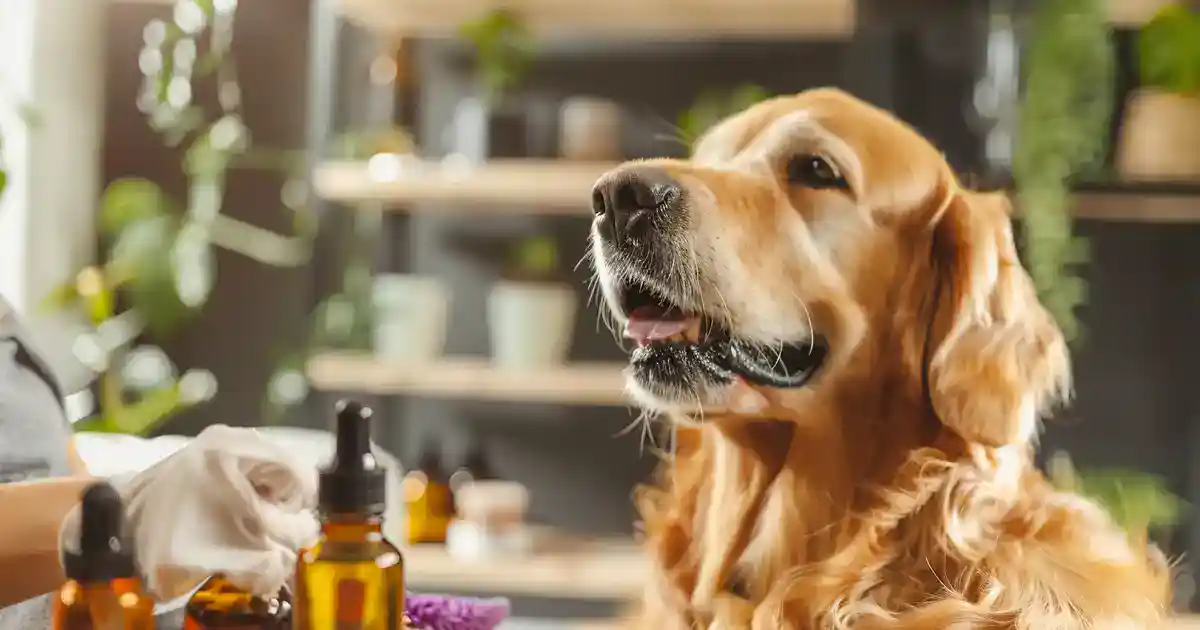
Have you ever wondered why using essential oils around dogs seems so complicated until you discover what actually works safely? I used to think aromatherapy for pets was only for those super-crunchy dog parents with unlimited budgets and time, until I discovered which oils are genuinely safe and how simple proper use really is. Now my fellow dog owners constantly ask how I manage to create a calm environment for my anxious rescue without risking his health, and my vet (who was initially skeptical) keeps asking what I’m doing differently. Trust me, if you’re worried about accidentally harming your furry friend with the wrong oils, this approach will show you it’s more straightforward than you ever expected.
Here’s the Thing About Essential Oils and Dogs
Here’s the magic: not all essential oils are dangerous for dogs, but the key is understanding which ones are safe, how to dilute them properly, and when to avoid them entirely. According to research on animal aromatherapy, certain essential oils can provide genuine benefits for dogs when used correctly, but the concentration and application method make all the difference. What makes this work is respecting your dog’s incredibly sensitive sense of smell (10,000 to 100,000 times more acute than ours) and their unique metabolism that processes compounds differently than humans. I never knew supporting my dog’s wellbeing with essential oils could be this simple once I learned the fundamental safety rules. This combination of knowing which oils are dog-friendly, proper dilution techniques, and understanding when to skip oils altogether creates amazing results. It’s honestly more doable than I ever expected—no complicated diffusion schedules or expensive equipment needed.
What You Need to Know – Let’s Break It Down
Understanding which essential oils are genuinely safe for dogs is absolutely crucial, and honestly, the list is shorter than most people realize. The safest options include lavender, chamomile, frankincense, and cedarwood—these are the foundation I always recommend starting with because everyone sees positive results with minimal risk. Don’t skip learning about proper dilution ratios (took me forever to realize this matters more than which oil you choose). For topical application, you’ll need a 0.25% dilution or less, which means one drop of essential oil per four teaspoons of carrier oil like coconut or sweet almond oil. That’s significantly more diluted than what humans use.
I finally figured out that diffusion is actually the safest application method for dogs after months of trial and error with different approaches. When you diffuse, keep sessions short (30 minutes maximum), ensure your dog can leave the room freely (game-changer, seriously), and never diffuse directly near their face or sleeping area. Passive diffusion works beautifully, but you’ll need to watch for signs of distress like excessive drooling, difficulty breathing, or trying to escape the room.
Here’s what changed everything for me: realizing that some popular essential oils are genuinely toxic to dogs, regardless of dilution. Tea tree oil, wintergreen, pine, citrus oils (especially concentrated ones), ylang ylang, cinnamon, pennyroyal, and sweet birch should never be used around dogs. Yes, even small amounts can cause serious problems, and here’s why—dogs metabolize certain compounds through their liver differently than humans, making some oils hepatotoxic for them.
If you’re just getting started with creating a calming environment for anxious dogs, check out my beginner’s guide to natural pet wellness for foundational techniques that complement essential oil safety.
The Science and Psychology Behind Why This Works
Dive deeper into the evidence and you’ll find that dogs process aromatic compounds through their olfactory system in ways that can genuinely impact their nervous system and behavior. Research from veterinary aromatherapy experts demonstrates that certain essential oils contain chemical constituents like linalool (in lavender) and alpha-pinene (in frankincense) that interact with neurotransmitter receptors, potentially promoting relaxation without sedation.
What makes this different from a human aromatherapy perspective is that dogs have significantly more olfactory receptors—up to 300 million compared to our measly 6 million. This means what seems like a gentle, barely-there scent to us can be overwhelmingly powerful to them. Traditional approaches often fail because people apply human dilution ratios or diffusion intensities, not accounting for this massive sensory difference.
Share what I discovered about the mental and emotional aspects: dogs experiencing anxiety, noise phobias, or stress-related behaviors may benefit from aromatherapy when combined with behavior modification techniques. Studies on animal behavior and aromatherapy show that environmental enrichment through appropriate scent can support overall wellbeing, though it should never replace veterinary care for serious behavioral issues.
Here’s How to Actually Make This Happen
Start by choosing one safe essential oil—I always recommend lavender for beginners because it’s well-researched and versatile. Here’s where I used to mess up: jumping into complex blends before understanding single oils. Don’t be me—I used to think more oils meant better results, but simplicity wins with dogs every single time.
Now for the important part: setting up safe diffusion. Invest in a quality ultrasonic diffuser (not a heat-based one, which can alter chemical composition), and place it in a well-ventilated area where your dog spends time but can easily leave. Add 3-4 drops maximum of your chosen oil to the diffuser with water. Here’s my secret: start with just one drop for the first session to gauge your dog’s reaction. Run it for 15-30 minutes only, then turn it off. This step takes five minutes but creates lasting awareness of your dog’s tolerance.
Watch your dog’s body language carefully during and after diffusion—until you feel completely confident reading their comfort signals. When it clicks, you’ll know: a relaxed dog will maintain normal breathing, stay in the room willingly, and show no signs of agitation. My mentor (a holistic veterinarian) taught me this trick: if your dog leaves the room, don’t bring them back or block their exit—they’re telling you the scent is too strong or unwanted.
For topical application (which I only recommend after mastering diffusion), mix one single drop of essential oil with four teaspoons of carrier oil. Apply a tiny amount to your palm first, let your dog smell it, and watch their reaction. If they seem interested or neutral, you can apply a small amount to areas they can’t easily lick: the back of their neck or between their shoulder blades. Results can vary, but most dogs show behavioral changes within 10-30 minutes if the oil is going to have an effect.
Don’t worry if you’re just starting out—every situation has its own challenges, and what works for one dog might not work for another. This creates lasting habits you’ll actually stick with because it’s based on observation and respect for your individual dog’s preferences, just like positive reinforcement training but with a completely different approach focused on environmental wellness.
Common Mistakes (And How I Made Them All)
My biggest mistake? Using essential oils on my dog without consulting my veterinarian first. I assumed “natural” meant automatically safe, but that’s dangerously wrong. Learn from my epic failure: always discuss essential oil use with your vet, especially if your dog has existing health conditions, takes medications, or is pregnant, nursing, or under 12 weeks old.
Another massive error was not testing for sensitivity before full application. I once diffused chamomile throughout my house assuming it was universally safe, only to discover my dog was sensitive to it (excessive scratching and restlessness). Now I always do a sensitivity test: one drop in the diffuser for 10 minutes while closely supervising.
Here’s why these mistakes happen: we forget that dogs metabolize substances through their skin and respiratory system differently than humans. Don’t make my mistake of ignoring fundamental dilution principles experts recommend—even safe oils become harmful at improper concentrations. I also used to diffuse oils overnight, thinking more exposure meant better results. Wrong. Extended exposure can cause respiratory irritation and sensitization, where your dog becomes increasingly reactive to the oil over time.
When Things Don’t Go as Planned
Feeling like your dog isn’t responding positively to essential oils? You probably need to reassess your dilution ratio or the specific oil you’ve chosen. That’s completely normal, and it happens to everyone because dogs have individual preferences and sensitivities just like humans do.
When this happens (and it will), I’ve learned to handle this by immediately stopping use and ventilating the area. If your dog shows signs of essential oil toxicity—excessive drooling, vomiting, difficulty breathing, tremors, or lethargy—get them to fresh air immediately and contact your veterinarian or pet poison control. Don’t stress, just act quickly and calmly.
Progress stalled or your dog seems indifferent? This is totally manageable. Some dogs simply don’t respond to aromatherapy, and that’s perfectly fine. I always prepare for the possibility that my dog might not benefit from essential oils because every dog is unique. If you’re losing steam or questioning whether this is worth it, try taking a complete break for a week, then reintroduce with a different safe oil at an even lower concentration.
When motivation fails to continue safely using essential oils for dogs, remember that your dog’s wellbeing comes first—if they’re not showing benefits or seem uncomfortable, it’s okay to explore other natural wellness approaches instead.
Advanced Strategies for Next-Level Results
Taking this to the next level means understanding synergistic blending for experienced users who’ve successfully used single oils. Advanced practitioners often create custom blends combining lavender with chamomile and frankincense for dogs with complex anxiety issues, but this requires extensive knowledge of chemical constituents and potential interactions.
My advanced discovery: using essential oils as part of a comprehensive behavioral modification program yields better results than aromatherapy alone. For example, diffusing lavender during counter-conditioning sessions for noise phobias can enhance the dog’s ability to form positive associations. I’ve learned that timing matters enormously—diffusing calming oils 20 minutes before a predicted stressor (like thunderstorms) works better than reactive diffusion after anxiety has already started.
Here’s what separates beginners from experts: understanding that less is genuinely more with dogs, and that consistency at ultra-low concentrations beats occasional strong exposures. Advanced techniques include creating location-specific scent associations (calming oils only in designated relaxation areas) and rotating oils to prevent sensitization.
Share when and why to use these strategies: only after months of successfully using single oils, having veterinary approval, and truly understanding your dog’s unique responses. Different experience levels matter—what works for my dog-savvy household might overwhelm a first-time essential oil user.
Ways to Make This Your Own
Each approach works beautifully with different dog personalities and living situations. When I want faster calming effects for my noise-phobic dog, I’ll combine pre-storm lavender diffusion with his favorite calming music and a compression wrap—this makes the experience more comprehensive but definitely requires more preparation.
For busy professionals, my simplified version focuses on passive reed diffusers (with appropriate dog-safe oils at proper dilution) in rooms your dog can freely exit. Sometimes I add cedarwood to the bedroom diffuser during evening wind-down time, though that’s totally optional and depends on your dog’s preferences.
My summer approach includes frankincense for its grounding properties during travel seasons, while my busy-season version focuses on maintaining consistency rather than experimenting with new oils. For next-level results, I love creating a “scent sanctuary”—one specific room where calming aromatherapy happens consistently, helping my dog associate that space with relaxation.
Give your adaptations specific names that work for your household: “Travel Calm Blend” (lavender and chamomile), “Gentle Evening Routine” (frankincense only), or “Weekend Wellness Sessions” (supervised diffusion during quality time together). Different lifestyle adaptations include senior-dog-friendly approaches (lower concentrations, shorter sessions), multi-dog household modifications (ensuring all dogs can exit the diffusion area), and budget-conscious options (single oils rather than expensive pre-blended products).
Why This Approach Actually Works
Unlike traditional aromatherapy marketing that treats dogs like small humans, this approach leverages proven principles of canine olfaction and metabolism. What makes this different is the emphasis on proper dilution, passive application methods, and respecting individual variation in response.
The underlying scientific principle involves understanding that dogs’ livers process certain chemical compounds differently than ours. Some oils contain phenols and monoterpene hydrocarbons that dogs metabolize slowly, leading to potential accumulation and toxicity. My personal discovery moment came when I realized that essential oil safety for dogs isn’t about which oils are “natural”—it’s about which specific chemical constituents their bodies can safely process.
This approach stands apart from other strategies because it prioritizes your dog’s choice and comfort over achieving specific outcomes. Evidence-based practice shows that forcing aromatherapy on an unwilling dog creates stress that negates any potential benefits. The sustainable, effective method is always dog-led: if they don’t like it, we don’t use it.
Real Success Stories (And What They Teach Us)
My anxious rescue dog who used to hide during thunderstorms now stays in the living room (where I diffuse diluted lavender preventatively) with significantly reduced panting and pacing. His success took three months of consistent, short diffusion sessions paired with positive reinforcement. What made him successful was going incredibly slowly, starting with just 5-minute sessions once weekly and building up as he showed comfort.
A friend’s senior dog with mild cognitive dysfunction showed improved nighttime settling after introducing gentle frankincense diffusion during her bedtime routine. The lesson here: essential oils aren’t a cure but can support quality of life when used appropriately alongside veterinary care. Her timeline was different—she saw changes within two weeks.
Another success story involves a young, hyperactive dog who benefited from pre-training lavender diffusion, which seemed to help him focus during learning sessions. What we learned: the aromatherapy didn’t make him obedient, but it may have supported a calmer mental state that made training more effective. These success stories align with emerging research on environmental enrichment for dogs that shows multi-modal approaches (scent, sound, routine) create better outcomes than any single intervention.
Tools and Resources That Actually Help
The best diffuser I’ve found is a basic ultrasonic model with auto-shutoff and adjustable mist settings—nothing fancy needed, $20-40 range works perfectly. I personally use Plant Therapy’s organic lavender and frankincense because they provide GC/MS testing reports, though any reputable brand with third-party testing is suitable.
For carrier oils, organic fractionated coconut oil is my go-to because it’s shelf-stable and doesn’t stain fabrics. Sweet almond oil works beautifully as an alternative. Share my personal experience: cheap essential oils without proper testing aren’t worth the risk—I always verify that my oils are 100% pure, therapeutic grade, and specifically tested for the compounds I’m looking for.
Essential books include “Holistic Aromatherapy for Animals” by Kristen Leigh Bell, which honestly transformed my understanding of proper veterinary aromatherapy. The limitation is that it’s quite technical, so balance it with your vet’s guidance. Free alternatives include resources from certified veterinary aromatherapists and authoritative databases on essential oil safety.
My must-have tool is honestly just a notebook where I track which oils I’ve used, at what dilution, for how long, and my dog’s response. This simple record-keeping helps identify patterns and prevents overuse.
Questions People Always Ask Me
How long does it take to see results with essential oils for dogs?
Most dogs show noticeable behavioral responses within 10-30 minutes if they’re going to respond to a particular oil. However, building consistent positive associations takes weeks to months. I usually recommend trying an oil consistently (2-3 times weekly) for at least three weeks before deciding if it’s beneficial for your specific dog.
What if I don’t have time for proper dilution and diffusion setup right now?
Absolutely skip essential oils until you can implement them safely. There’s no such thing as a safe shortcut with concentrated plant compounds and your dog’s health. Focus on other stress-reduction techniques like exercise, puzzle toys, and routine until you have time to learn proper aromatherapy protocols.
Is this approach suitable for complete beginners?
Yes, but start with just one safe oil (lavender), ultra-low dilution, short exposure times, and constant supervision. Beginner success comes from going slowly and observing carefully rather than trying everything at once. Most people need several practice sessions to feel confident reading their dog’s comfort signals.
Can I adapt this method for my specific situation like a small apartment or multiple dogs?
Absolutely, just ensure all dogs can exit the diffusion area freely, and start with even lower concentrations in small spaces where scent concentrates quickly. For multi-dog households, watch each dog individually since sensitivities vary. Some dogs will love it while others won’t, and that’s completely fine.
What’s the most important thing to focus on first?
Learning proper dilution ratios and recognizing signs of discomfort in your dog. Everything else is secondary to these two foundational skills. I always recommend spending your first few weeks just practicing with a single safe oil while becoming an expert observer of your dog’s body language.
How do I stay motivated when progress feels slow or my dog seems indifferent?
Remember that essential oils are just one optional tool in your dog wellness toolkit—they’re not necessary for every dog. If your dog doesn’t respond or seems indifferent, that’s valuable information telling you to explore other approaches. Progress in dog wellbeing isn’t always about adding things; sometimes it’s about finding what genuinely works for your individual dog.
What mistakes should I avoid when starting with essential oils for dogs?
Never use oils without veterinary consultation, never assume “natural” means safe, never use undiluted oils on or around dogs, never diffuse in enclosed spaces your dog can’t leave, and never use toxic oils like tea tree regardless of dilution. Also avoid the mistake of continuing use if your dog shows any signs of discomfort.
Can I combine this with other approaches I’m already using for my anxious dog?
Yes, essential oils can complement behavior modification training, calming supplements (with vet approval to avoid interactions), exercise routines, and environmental management. I’ve learned to integrate aromatherapy into existing successful protocols rather than replacing anything that’s already working.
What if I’ve tried similar natural remedies before and they didn’t work?
Essential oils might not work for your dog either, and that’s completely okay. Every dog responds differently to various interventions. If you do try aromatherapy, approach it as a new experiment with fresh perspective, proper protocols, and realistic expectations—it’s a potential support tool, not a miracle cure.
How much does implementing this approach typically cost?
Initial investment is minimal: $20-40 for a basic diffuser, $10-20 per quality essential oil (which lasts months at proper dilution), and $5-15 for carrier oil. The real investment is time learning proper techniques and observing your dog carefully. Budget-conscious approach: start with just lavender oil and coconut oil.
What’s the difference between this and using essential oil products marketed specifically for dogs?
Many pet-specific products are appropriately diluted and formulated, which is convenient, but they’re often more expensive. This approach teaches you to create safe dilutions yourself, giving you more control and knowledge. However, quality pre-diluted pet products from reputable companies can be excellent for people who prefer ready-made solutions.
How do I know if I’m making real progress or if my dog’s behavior changes are coincidental?
Keep detailed notes tracking behavior before, during, and after essential oil use. Look for consistent patterns across multiple sessions rather than one-time changes. Real progress shows up as repeatable improvements in specific situations. When in doubt, do a “washout period” with no oils and see if behaviors revert—this helps confirm whether the aromatherapy was actually contributing to improvements.
Before You Get Started
I couldn’t resist sharing this because it proves that supporting your dog’s wellbeing with safe essential oils is genuinely achievable when you prioritize their comfort and safety over achieving specific outcomes. The best aromatherapy journeys with dogs happen when we approach them with patience, proper education, and deep respect for our dog’s individual preferences and sensitivities. Remember that your dog’s clear communication (through body language and choice) is more valuable than any essential oil benefit—if they’re not comfortable, we adjust or stop entirely.
Ready to begin? Start with a simple first step: research one safe essential oil for dogs, discuss it with your veterinarian, and invest time observing your dog’s natural stress signals before introducing any aromatic changes to their environment. Your mindful, cautious approach will create the safest foundation for potentially supporting your dog’s wellness through appropriate aromatherapy.




