
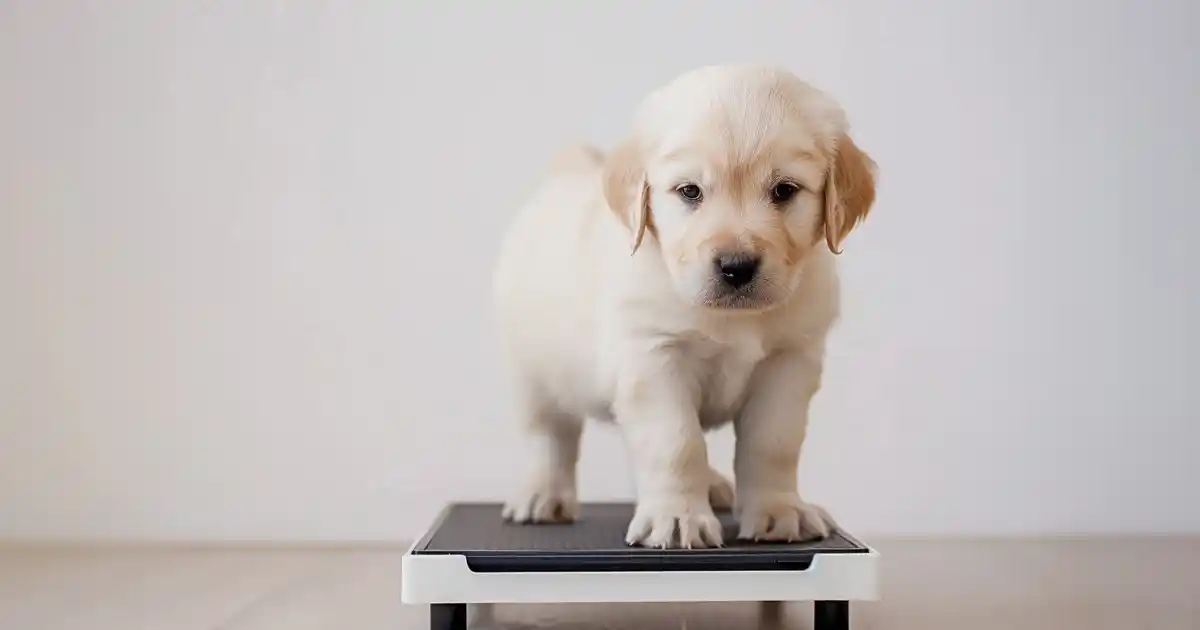
Have you ever wondered why tracking your puppy’s weight seems confusing until you discover the right growth monitoring approach?
I used to obsessively weigh my German Shepherd puppy Luna every single day, panicking when she gained three pounds in a week and then barely anything the next week, convinced something was terribly wrong with her development. I’d compare her weight to random charts online, stress when she didn’t match the numbers exactly, and call my breeder at 10pm asking if Luna’s growth pattern was “normal.” Sound familiar? Here’s the thing I discovered after consulting with veterinary nutritionists and experienced breeders about puppy growth patterns: monitoring puppy weight isn’t about matching generic charts perfectly or maintaining perfectly linear growth—it’s about understanding breed-specific growth curves, recognizing your individual puppy’s pattern, and ensuring healthy development without dangerous extremes of under or overfeeding. Now my friends constantly ask how I confidently track their puppies’ growth without losing my mind over every fluctuation, and my vet (who initially braced for weekly worried calls) praised my understanding that growth happens in spurts rather than steady increments. Trust me, if you’re worried about your puppy growing too fast, too slow, or just differently than expected, this evidence-based approach will show you it’s more manageable than you ever expected.
Here’s the Thing About Puppy Weight Charts
Here’s the magic: puppy weight charts aren’t actually rigid requirements your puppy must match precisely—they’re general guidelines showing typical growth patterns for specific breeds or size categories, helping you identify whether your puppy is developing within healthy ranges versus showing concerning deviations requiring veterinary evaluation. I never knew canine growth monitoring could be this nuanced once you understand that individual variation within breeds is enormous, growth happens in spurts with plateaus between, and factors like genetics, nutrition, and activity level all influence final size and growth rate. What makes this work is using weight charts as reference points while simultaneously monitoring body condition score (visual and tactile assessment of fat coverage and muscle tone) which often matters more than absolute weight numbers for assessing healthy development. According to research on canine growth and development, puppies experience rapid growth phases alternating with consolidation periods, with different breeds reaching adult size at vastly different ages—toy breeds by 9-12 months versus giant breeds at 18-24+ months. This combination of weight tracking and body condition assessment creates amazing results—puppies who grow at appropriate rates for their genetic potential without obesity-related joint problems or underfeeding-related deficiencies. It’s honestly more straightforward than I ever expected once you stop obsessing over exact numbers and focus on overall healthy development patterns.
What You Need to Know – Let’s Break It Down
Understanding breed size categories is absolutely crucial—toy breeds (under 10 pounds adult), small breeds (10-25 pounds), medium breeds (25-50 pounds), large breeds (50-90 pounds), and giant breeds (over 90 pounds) have completely different growth timelines and weight gain patterns. Don’t skip identifying your puppy’s expected adult size category, seriously. I finally figured out that Luna’s large breed status meant her growth chart looked nothing like my friend’s Chihuahua puppy’s chart, and comparing them was completely meaningless (took me forever to realize this).
Growth velocity varies dramatically by size category. Game-changer, seriously. Small breed puppies reach 50% of adult weight by approximately 3-4 months and adult size by 9-12 months. Large and giant breed puppies don’t reach 50% adult weight until 5-6 months and continue growing until 12-24 months. This fundamental difference means feeding strategies, exercise limitations, and health concerns differ enormously across size categories.
Body condition score (BCS) matters more than absolute weight for assessing healthy development. Yes, visual and tactile assessment really provides better health indicators than scale numbers, and here’s why: two puppies of the same breed and age might weigh differently due to genetic variation, but both can be perfectly healthy if their body condition shows appropriate rib coverage, visible waist, and abdominal tuck. I always recommend learning the 9-point BCS system because everyone needs objective assessment tools beyond just weight numbers.
Growth spurts and plateaus represent normal development patterns rather than problems requiring intervention. Puppies typically experience rapid growth spurts followed by consolidation periods where growth slows while their bodies catch up developmentally. This creates the sometimes-alarming pattern of gaining significant weight one week and barely anything the next—completely normal unless accompanied by illness symptoms or extreme body condition changes.
Expected adult weight prediction methods help set realistic expectations. For purebred puppies, breed standards provide excellent adult weight ranges. For mixed breeds, you can estimate adult weight using formulas based on current weight and age, though accuracy varies. Some veterinarians use paw size and parental weights when known as additional predictive factors.
Factors affecting individual growth rates include genetics (parents’ sizes heavily influence offspring), nutrition quality and quantity, parasite loads, health conditions, spay/neuter timing, and activity levels. Be honest about these variables when comparing your puppy to charts—a puppy with recurring illnesses or poor early nutrition may grow more slowly initially even if genetically normal.
If you’re just starting out with understanding puppy development fundamentals, check out my complete guide to puppy growth stages and milestones for foundational knowledge about physical development, teething, sexual maturity, and behavioral changes accompanying growth phases.
The Science and Psychology Behind Why This Works
Research from veterinary nutritionists and growth specialists demonstrates that puppies following breed-appropriate growth curves with proper body condition scores develop significantly fewer orthopedic problems than puppies who grow too rapidly (common in overweight large-breed puppies) or too slowly (indicating nutritional deficiencies or health issues). Studies confirm that maintaining appropriate growth velocity—not maximum growth velocity—produces the healthiest adult dogs with optimal skeletal development, appropriate muscle mass, and reduced risk of developmental orthopedic diseases like hip dysplasia and osteochondrosis.
What makes this different from a scientific perspective is understanding that faster growth isn’t better growth. Experts agree that large and giant breed puppies fed for maximum growth rates show dramatically increased rates of skeletal abnormalities because their bones grow faster than supporting structures can properly develop. The evidence-based approach focuses on controlled steady growth rather than pushing puppies toward their genetic maximum size as quickly as possible.
Here’s the thing I discovered about the mental and emotional aspects: once you understand that your puppy doesn’t need to match generic charts exactly and that healthy development shows in body condition more than scale numbers, the anxiety about growth completely transforms. You’re not comparing your puppy to arbitrary standards—you’re monitoring your individual puppy’s pattern and ensuring healthy development. Research from veterinary teaching hospitals and canine growth specialists shows that owner education about normal growth variation and body condition assessment dramatically reduces unnecessary nutritional manipulation and growth-related anxiety while improving long-term health outcomes through appropriate feeding practices.
Here’s How to Actually Make This Happen
Start by determining your puppy’s breed size category and expected adult weight range—this single factor determines which growth chart and feeding approach you should follow. Here’s where I used to mess up: I’d use random generic “puppy weight charts” without considering that toy, medium, and giant breed puppies have completely different normal growth patterns. Ask your breeder, veterinarian, or research your specific breed standard for realistic adult weight expectations.
Now for the important part: establish a consistent weekly weighing routine at the same time of day under the same conditions (ideally morning before breakfast). This step takes two minutes but creates lasting accurate tracking eliminating variables like full stomach or full bladder affecting numbers. For small puppies, use a baby scale or kitchen scale; for larger puppies, weigh yourself holding the puppy and subtract your weight, or use veterinary scale during regular vet visits.
Create a simple growth tracking chart or use smartphone apps designed for puppy weight monitoring. Here’s my secret: plot your puppy’s actual weight against breed-typical growth curves to visualize whether development follows expected patterns or shows concerning deviations. Until you feel completely confident, this visual representation makes identifying problems much easier than just looking at numbers. When it clicks, you’ll immediately recognize whether growth is appropriate or requires adjustment.
Learn and perform weekly body condition scoring using the 9-point scale where 4-5 represents ideal condition. Don’t be me—I used to obsess over weight numbers without assessing whether Luna looked appropriately proportioned. Run your hands over your puppy’s ribs (should feel easily with slight pressure but not be visibly prominent), view from above (should see waist behind ribs), and view from side (should see abdominal tuck). Every situation has its own challenges, but BCS assessment provides context weight alone can’t offer.
Adjust feeding based on growth rate and body condition rather than rigidly following bag guidelines. My mentor taught me this trick: if your puppy is gaining weight too rapidly and body condition score is climbing toward overweight (6-7 on 9-point scale), reduce portions by 10-15%; if growth seems slow and body condition is too lean (3 or below), increase portions by 10-15% and ensure no health issues are causing poor growth. Results can vary, but this responsive feeding prevents both obesity and undernourishment.
Monitor growth velocity specific to your puppy’s size category. Add context: toy breeds gaining 0.25-0.5 pounds weekly is normal, while giant breed puppies might gain 2-5 pounds weekly during peak growth—these dramatically different rates are just like comparing infant growth across different animal species, but all represent healthy development within their categories.
Consult your veterinarian if growth deviates significantly from expected patterns—growing much faster than breed typical (especially concerning for large breeds), growing much slower than expected, sudden growth cessation, or extreme body condition changes. Don’t worry if you’re just starting out—vets can plot your puppy’s growth against standardized curves and identify whether variations are normal or warrant intervention.
Common Mistakes (And How I Made Them All)
My biggest failure? Weighing Luna daily and panicking over normal day-to-day fluctuations of 0.5-1 pound that meant absolutely nothing in the context of overall healthy growth patterns. I’d frantically adjust her food based on single-day changes, creating inconsistent nutrition that probably caused more problems than it solved. Don’t make my mistake of ignoring fundamental principles experts recommend: track growth weekly or biweekly rather than daily to see meaningful patterns versus meaningless noise.
I also fell into the “my puppy must be exactly average” trap, stressing when Luna was at the high end of the weight range for her age even though her body condition was perfect and her parents were both large for the breed. Learn from my epic failure: charts show averages and ranges, meaning many perfectly healthy puppies fall above or below the midpoint. Genetic variation is real and normal—your puppy’s parents’ sizes matter more than generic breed averages.
Another classic mistake? Comparing Luna’s growth to her littermates and panicking when she weighed less than her brother at 4 months. The vulnerability here is real: even within litters, individual puppies have different growth rates, adult size potentials, and developmental timelines. Males typically grow larger than females, and individual genetic variation means littermates can have 10-20% size differences as adults while all being perfectly healthy.
The “push maximum growth” mentality caught me initially when I thought more food meant healthier bigger puppy. For large breed puppies especially, this creates orthopedic disasters—rapid growth overwhelms developing joints and bones, increasing hip dysplasia, elbow dysplasia, and other developmental orthopedic diseases. Don’t assume faster growth equals better health—controlled appropriate growth produces healthier adults.
When Things Don’t Go as Planned
Feeling overwhelmed by conflicting growth charts showing different expected weights for your puppy’s breed? You probably need to focus on veterinary growth charts plotted during wellness visits rather than random internet charts with questionable sources. That’s normal, and it happens to everyone—different charts use different data sets and methodologies. I’ve learned to handle this by using my veterinarian’s growth curves as primary reference and treating other charts as supplementary context rather than gospel.
Progress stalled or your puppy seems to have stopped gaining weight for 2-3 weeks? When this happens (and it will during normal growth plateaus), don’t stress—verify body condition remains appropriate, ensure your puppy is acting normally (good energy, appetite, elimination), and monitor for another week or two. This is totally manageable since growth plateaus are normal developmental phases. However, if plateau extends beyond 3-4 weeks or body condition deteriorates, consult your vet about potential health issues or nutritional inadequacy.
What about unexpected rapid weight gain creating overweight puppy despite following feeding guidelines? I always prepare for individual variation because life is unpredictable and some puppies have lower metabolic rates or higher food motivation leading to obesity if fed standard amounts. If you’re losing steam battling puppy weight gain, try reducing portions by 10-20%, increasing exercise appropriately for age, eliminating treats or reducing to tiny amounts, and consulting your vet about whether medical issues like hypothyroidism could contribute (rare in puppies but possible).
Concerned about your puppy’s growth being significantly different from breed standards or chart predictions? Mixed breed puppies especially can be difficult to predict accurately. If your puppy appears healthy with good body condition, normal energy, and no veterinary concerns, different-than-expected size may simply reflect mixed genetics. However, extreme deviations—very small (potential dwarfism or growth hormone deficiency) or very large (potential pituitary abnormalities)—warrant veterinary evaluation including possible specialist consultation.
Advanced Strategies for Next-Level Results
Once you’ve mastered basic growth monitoring, consider using precise weight-to-age ratio formulas for different breed categories that provide more accurate predictions than simple charts. Advanced practitioners often implement mathematical models accounting for breed-specific growth curves, sexual dimorphism (males growing larger), and individual variation to predict adult size within narrower ranges. Taking this to the next level means understanding that growth follows logarithmic curves rather than linear patterns, and sophisticated tracking accommodates this.
For show prospects or breeding candidates, look into detailed skeletal maturity assessments beyond simple weight—growth plate closure timing, proportional development (legs versus torso), and structural correctness all matter for conformation evaluation. These specialized considerations benefit from consultation with breed-specific mentors or veterinary sports medicine specialists who understand ideal development for competitive purposes.
Consider implementing performance-based nutrition strategies for puppies intended for athletic careers—adjusting feeding to support muscle development without excessive weight, timing growth to optimize skeletal maturity before intense training, and monitoring body composition (muscle versus fat) rather than just total weight. Here’s what separates beginners from experts: recognizing that puppies destined for different purposes may benefit from slightly different growth trajectories within healthy ranges.
Implement monthly photography from standardized positions (side view, front view, top view) to visually document proportional development beyond weight numbers. Advanced techniques that actually work include comparing photos month-to-month to identify whether your puppy is developing proportionally or showing areas of disproportionate growth that might indicate developmental issues.
For giant breed puppies at highest risk for growth-related orthopedic problems, consider consulting with veterinary orthopedic specialists or nutritionists who can design feeding protocols optimizing slow steady growth that minimizes joint disease risk while ensuring adequate nutrition. I discovered these specialized approaches prevent problems that cost thousands to manage later through proactive controlled growth strategies.
Ways to Make This Your Own
Precise Tracking Protocol (Data-Driven Approach): When I want the most accurate growth monitoring possible, I weigh weekly at exactly the same time, log weights in spreadsheet with graphed curves comparing to breed standards, photograph monthly from standardized positions, assess body condition score weekly, and maintain detailed food intake logs correlating to growth rates. This makes monitoring more intensive but definitely worth it for large breed puppies or those with health concerns requiring vigilant tracking.
Simplified Monitoring (Practical Approach): For special situations with limited time, I’ll weigh biweekly or monthly at vet visits, perform quick visual body condition assessment weekly, and adjust feeding based on overall appearance and energy level rather than detailed numerical tracking. Sometimes I use smartphone photos rather than formal documentation, though that’s totally optional and comprehensive records provide better longitudinal information for veterinary consultations.
Body Condition Priority (Visual Assessment Focus): My approach for owners finding scales stressful or impractical focuses primarily on mastering body condition scoring with weights collected only at veterinary visits providing professional assessment and documentation. For next-level simplicity, I love that this eliminates home-weighing anxiety while maintaining excellent health monitoring through hands-on assessment every pet owner can learn.
Large Breed Specialized Protocol: For giant breed puppies where controlled growth is critical, my advanced version includes weekly weighing, strict body condition maintenance at 4/9 score (slightly lean), feeding specifically formulated large breed puppy foods with controlled calcium, and potential collaboration with veterinary nutritionist for optimized growth curves. Summer approach includes monitoring exercise on hard surfaces that stress developing joints during peak growth periods.
Multi-Puppy Household Tracking: For homes with multiple puppies requiring individual monitoring, parent-friendly options prioritize efficient batch weighing sessions, color-coded tracking charts preventing confusion, and group body condition assessments while maintaining individual feeding plans. Each variation works beautifully with different household situations and available time for monitoring activities.
Why This Approach Actually Works
Unlike traditional methods of randomly checking puppy weight occasionally or obsessively weighing daily without context, this approach leverages proven principles of growth monitoring that veterinary nutritionists and developmental specialists increasingly emphasize. Evidence-based tracking means you’re not guessing whether development is appropriate—you’re systematically documenting growth patterns and body condition enabling early detection of problems while avoiding anxiety over normal variations.
What sets this apart from other strategies is the integration of quantitative weight data with qualitative body condition assessment. The underlying principle is that healthy growth shows in proportional development and appropriate body condition more than hitting specific weight targets at specific ages. Numbers provide useful data points, but visual and tactile assessment reveals whether those numbers represent healthy muscle and bone or problematic fat accumulation.
Personal discovery moment: when I stopped comparing Luna’s weight to generic charts constantly and started focusing on whether she looked and felt appropriately proportioned while following her individual growth curve, everything clicked into place. The sustainable effectiveness comes from understanding that your puppy’s genetic potential determines their adult size, and your role is ensuring they reach that potential healthily rather than forcing them toward arbitrary targets.
Real Success Stories (And What They Teach Us)
One of my training class friends meticulously tracked their Golden Retriever puppy’s growth and noticed gradual slowing at 6 months that seemed concerning compared to charts. However, veterinary evaluation revealed perfectly normal body condition and health—the puppy was simply growing toward the smaller end of breed standard like his parents rather than breed average. What made them successful? Recognizing that deviations from average don’t automatically indicate problems when body condition and health markers are appropriate.
A neighbor with a Great Dane puppy monitored growth carefully and intentionally maintained slightly lean body condition (4/9 score) throughout puppyhood despite pressure from strangers commenting the puppy looked “too skinny.” As an adult, their dog has exceptional hip and elbow scores with zero arthritis at 5 years old while many heavily-fed littermates developed early joint disease. The lesson? Controlled growth producing lean puppies yields healthier adults, especially in giant breeds where obesity during growth causes lasting skeletal damage.
Another success story involves someone whose puppy weight tracking revealed steady gain but increasing body condition score indicating the weight was primarily fat rather than healthy growth. Adjusting feeding prevented obesity while the puppy continued growing appropriately. Their success demonstrates that weight alone doesn’t tell the complete story—body composition matters enormously for determining whether growth is healthy or problematic.
Different monitoring approaches suit different situations—some owners thrive on detailed data while others do better with simpler visual assessment. Be honest with yourself about what system you’ll actually maintain consistently rather than starting elaborate protocols you abandon within weeks.
Tools and Resources That Actually Help
Breed-Specific Growth Charts: Access accurate growth charts from national breed clubs, veterinary teaching hospitals, or reputable sources like the Waltham Petcare Science Institute showing typical weight ranges by age for specific breeds. I reference Luna’s breed club chart as my primary comparison—eliminates confusion from generic charts that don’t account for breed-specific patterns.
Digital Scale: Invest in appropriate scale for your puppy’s size—baby scales for toy breeds ($30-50), bathroom scales for medium/large breeds (weigh yourself holding puppy and subtract), or veterinary scales if your clinic allows drop-in weighing. Be honest about limitations: home scales have accuracy variations, and consistency (same scale each time) matters more than absolute precision for tracking patterns.
Puppy Growth Tracking Apps: Use smartphone apps like Puppy Buddy, 11pets, or similar programs that log weights, plot growth curves, set reminders for weighing, and maintain photo timelines. Works beautifully for visualizing whether your puppy’s actual growth follows expected patterns without manual graphing.
Body Condition Score Chart: Download visual guides from veterinary organizations like WSAVA showing the 9-point body condition scoring system with images and descriptions for each score. Keep posted where you perform weekly assessments for consistent reference eliminating subjective guesswork.
Growth Prediction Calculators: Use online calculators providing estimated adult weight based on current weight, age, and breed for mixed breed puppies or when parental sizes are unknown. These tools help set realistic expectations, though accuracy varies—treat predictions as estimates rather than guarantees.
The best resources come from veterinary nutritionists, breed clubs with decades of growth data, and academic veterinary institutions rather than random internet charts without credible sources or methodology information.
Questions People Always Ask Me
How often should I weigh my puppy to track growth accurately?
Most veterinarians recommend weighing puppies weekly during rapid growth phases (under 6 months for most breeds) to catch problems early while avoiding daily weighing that creates anxiety over meaningless fluctuations. I usually weigh at the same time each week before breakfast for consistency—weekly frequency provides sufficient data points to identify concerning patterns without obsessive monitoring. Once growth slows (typically 6-12 months depending on breed size), you can reduce to biweekly or monthly weighing. Don’t panic if you miss occasional weeks—the overall pattern matters more than every single data point.
What if my puppy’s weight doesn’t match the breed standard chart?
Charts show averages and typical ranges, meaning many perfectly healthy puppies fall above or below midpoints. If your puppy’s body condition score is appropriate (4-5 on 9-point scale), energy level is normal, and veterinarian confirms good health, weight differences from charts often reflect normal genetic variation. Parents’ sizes strongly influence puppies—offspring of large parents grow bigger than offspring of small parents even within the same breed. Focus on whether your individual puppy is developing healthily rather than matching arbitrary averages.
Is rapid weight gain dangerous for my puppy?
It depends entirely on breed size and what’s driving the weight gain. For giant and large breed puppies, rapid weight gain from overfeeding creates serious orthopedic risks including hip dysplasia, elbow dysplasia, and osteochondrosis because bones grow faster than supporting structures can develop properly. These puppies benefit from controlled growth maintaining lean body condition. For small and toy breeds, rapid gain is less concerning orthopedically but can still create obesity. If gain comes from healthy muscle and bone during normal growth spurts, it’s fine; if gain comes from excess fat creating overweight body condition, reduce feeding regardless of breed size.
Can I use weight to predict my mixed breed puppy’s adult size?
Several formulas provide estimates: puppies are typically 75% of adult weight by 6 months (giant breeds) to 9 months (toy breeds), or you can double the weight at 4 months for medium breeds. However, mixed breed predictions are imprecise because genetic combinations are complex. If you know parent breeds/sizes, use those for better estimates. Paw size, bone thickness, and overall build provide additional clues, though nothing guarantees accuracy. Prepare for surprises with mixed breeds—focus on feeding appropriately for current size and body condition rather than trying to force specific adult weights.
What’s the most important factor when monitoring puppy weight?
Body condition score combined with weight trends over time rather than single weight measurements or matching specific numbers. Your puppy should maintain body condition of 4-5 on the 9-point scale (easily feel ribs, visible waist, abdominal tuck) throughout growth. Whether they’re 10th percentile or 90th percentile for breed weight matters far less than whether they’re developing with appropriate body composition. Two puppies can weigh identically but one is appropriately muscled while the other is overweight—body condition reveals this difference that weight alone misses.
How do I stay confident when my puppy grows differently than expected?
Remember that genetic variation within breeds is enormous and charts show averages, not requirements. I stay confident by focusing on objective health indicators (good body condition, normal energy and appetite, veterinary confirmation of health) rather than comparing to arbitrary standards. Keep records showing your puppy’s consistent growth pattern even if different from charts—consistency indicates healthy development regardless of where they fall in ranges. Trust your veterinarian’s assessment of your individual puppy over generic expectations.
What mistakes should I avoid when tracking puppy weight?
Don’t weigh daily—this creates anxiety over normal fluctuations. Avoid comparing your puppy excessively to others or to charts without considering genetic variation and body condition. Never adjust feeding dramatically based on single weigh-ins without considering overall patterns and body condition. Don’t assume faster growth equals better health—controlled appropriate growth produces healthier adults especially in large breeds. Most importantly, don’t focus exclusively on weight while ignoring body condition score, which often provides more meaningful health information than numbers alone.
Can I adjust my puppy’s growth rate through feeding changes?
You can influence growth somewhat through nutrition, but primarily you can prevent unhealthy extremes (obesity from overfeeding or poor growth from underfeeding) rather than controlling final adult size which genetics determine. For large breed puppies, controlled feeding maintaining lean body condition slows growth rate appropriately, reducing orthopedic disease risk. For puppies growing too slowly, ensuring adequate high-quality nutrition and ruling out health problems enables them to reach genetic potential. However, you can’t make genetically small puppies large or vice versa—you can only optimize their development toward their predetermined size.
What if tracking my puppy’s weight makes me anxious?
If detailed tracking increases anxiety rather than confidence, simplify your approach—collect weights only at veterinary visits while performing weekly visual/tactile body condition assessments at home. Many owners successfully monitor health through body condition alone without home weighing. The goal is ensuring healthy development, not creating stress through excessive data collection. Sometimes less monitoring with better understanding of what matters (body condition, overall health) works better than obsessive tracking without context causing constant worry.
How much should my puppy weigh at different ages?
This is completely breed-dependent. Toy breeds might weigh 1-2 pounds at 8 weeks and 5-10 pounds as adults. Giant breeds might weigh 15-25 pounds at 8 weeks and 100-200 pounds as adults. Even within breeds, variation is normal. Rather than specific weights, use formulas: small breeds reach ~50% adult weight by 3-4 months, medium breeds by 4-5 months, large breeds by 5-6 months, giant breeds by 6-7 months. Consult breed-specific growth charts or your veterinarian for relevant expectations rather than generic guidelines.
What’s the difference between growth charts for different breed sizes?
Small breed charts show rapid early growth reaching adult size by 9-12 months with relatively linear curves. Large and giant breed charts show prolonged growth extending 12-24+ months with multiple growth spurts and plateaus creating less linear patterns. Giant breed charts emphasize controlled growth preventing obesity during critical skeletal development periods. These fundamental differences mean you cannot use a Chihuahua chart for a Great Dane—breed size category determines which growth pattern and chart is relevant for your specific puppy.
How do I know if my puppy weight monitoring is effective?
Effective monitoring means you detect problems early (before severe obesity or concerning thinness develops), feel confident about your puppy’s development rather than constantly anxious, can have informed discussions with your veterinarian using data you’ve collected, and make appropriate feeding adjustments based on growth patterns and body condition rather than guessing. If your puppy maintains healthy body condition throughout growth, reaches appropriate adult size for their genetics, and develops no growth-related health issues, your monitoring was successful regardless of whether they matched charts perfectly.
Before You Get Started
I couldn’t resist sharing this because it proves something essential: puppy weight charts are useful tools for monitoring healthy development, but they’re guidelines showing typical patterns rather than rigid requirements every puppy must match precisely. The best puppy growth monitoring happens when you combine regular weighing with body condition assessment, creating comprehensive understanding of whether your individual puppy is developing healthily toward their genetic potential. Every puppy deserves nutrition and care supporting optimal growth—not maximum growth or growth matching arbitrary standards, but controlled appropriate development producing healthy adults with strong bones, appropriate muscle, and minimal obesity-related complications. Ready to begin? Start by identifying your puppy’s breed size category and expected adult weight range this week, establish weekly weighing routine starting this weekend, and learn body condition scoring so you can assess healthy development beyond just numbers. Your puppy’s lifelong skeletal health and wellbeing absolutely depend on appropriate growth during this critical development window, making thoughtful monitoring one of the most valuable things you can do during puppyhood!




