
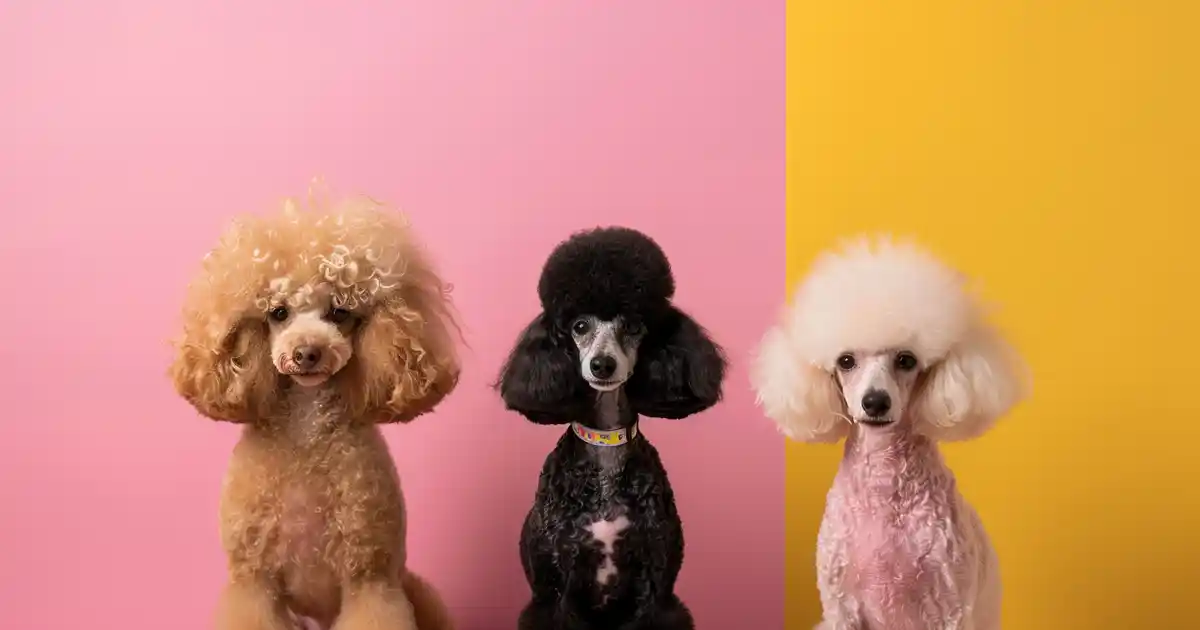
Have you ever wondered why Poodle grooming seems impossibly complicated until you discover the systematic approach that professionals actually use?
I used to think maintaining my Poodle’s coat required either professional groomer skills or accepting a matted, unkempt mess, until I discovered that understanding the unique characteristics of Poodle hair and following proven maintenance routines creates absolutely salon-quality results at home. Now my Poodle’s coat stays perfectly fluffy, mat-free, and beautiful between professional trims, and other Poodle parents constantly ask how I avoid the constant grooming disasters and expensive emergency appointments they’re experiencing. Trust me, if you’re overwhelmed by the seemingly endless brushing, the mysterious matting that appears overnight, and the astronomical grooming bills (I’ve been there calculating if I should just buy my own grooming table), this approach will show you that excellent Poodle grooming is far more achievable than those intimidating YouTube tutorials suggest. The secret isn’t spending hours daily on coat care or having professional equipment—it’s understanding what makes Poodle hair unique, implementing the right techniques with appropriate tools, establishing sustainable routines that actually work with your schedule, and knowing which aspects require professional expertise versus what you can absolutely master at home.
Here’s the Thing About Poodle Grooming
Here’s the magic: Poodles have continuously growing, non-shedding hair rather than typical dog fur, which means their grooming needs are completely different from most breeds but also incredibly predictable and manageable when approached correctly. What makes this knowledge so powerful is understanding that consistent maintenance prevents the nightmarish matting that creates those expensive emergency grooming appointments—an ounce of prevention truly equals a pound of cure with Poodle coats. I never knew grooming could be this straightforward until I stopped treating my Poodle’s coat like normal dog fur and started using techniques designed specifically for their unique hair texture and growth patterns. This combination of proper brushing technique, appropriate bathing frequency, strategic professional grooming timing, and daily maintenance creates incredible results without requiring hours of work or professional training. According to research on dog coat types and genetics, Poodles’ distinctive curly, continuously-growing coat results from specific genetic traits that also make them hypoallergenic but require more intensive grooming than breeds with typical fur that sheds naturally. It’s honestly more manageable than the breed’s high-maintenance reputation suggests—no grooming school diploma needed, just educated understanding of what Poodle hair needs and practical techniques that work in real life with normal schedules and budgets.
What You Need to Know – Let’s Break It Down
Understanding Poodle hair structure is absolutely crucial because their coat is literally hair like humans have, not fur like most dogs, which completely changes grooming requirements (took me forever to realize this). Poodle hair grows continuously without shedding cycles, and I finally figured out that this means dead hair stays trapped in the coat creating mats unless removed through regular brushing after watching how quickly my dog’s coat transformed from fluffy to felted when I skipped brushing for just a few days. Don’t skip learning the difference between brushing technique for Poodles versus other breeds—surface brushing that works for many dogs is completely inadequate for Poodle coats requiring line brushing that reaches the skin. If you’re concerned about overall Poodle health and nutrition supporting coat quality, check out my guide to nutrition for healthy dog coats for foundational strategies ensuring your grooming efforts start with optimal coat health from the inside out.
Tool selection matters tremendously because using wrong equipment makes proper grooming nearly impossible while right tools make it surprisingly manageable. Here’s what surprised me: expensive doesn’t always mean better, but cheap tools absolutely won’t work—there’s a middle ground of professional-quality equipment that’s accessible to home groomers and dramatically outperforms pet store basics. Mental preparation about tool investment prevents so much frustration from trying to groom with inadequate equipment that can’t possibly produce good results.
Grooming frequency requires consistent commitment because Poodle coats mat quickly when maintenance lapses—daily brushing isn’t optional luxury for show dogs, it’s basic necessity for pet Poodles avoiding painful mats and skin problems. Regular professional grooming every 4-8 weeks maintains manageable coat length and style, while daily home maintenance between appointments keeps coats healthy and mat-free.
Bathing protocols specific to Poodles maximize coat health while supporting easier brushing and styling—proper bathing technique, product selection, and drying methods make enormous differences in coat texture, manageability, and appearance. [Systematic grooming approaches] work beautifully for maintaining Poodle coats, but you’ll need to understand that shortcuts don’t exist with this breed—consistent effort is required, though proper technique makes that effort manageable rather than overwhelming.
The Science and Psychology Behind Why This Works
Poodles respond remarkably well to systematic grooming because their hair structure, while requiring more maintenance than typical dog fur, follows predictable patterns that respond to specific techniques. Research from leading universities demonstrates that regular grooming isn’t just cosmetic for Poodles but essential for skin health, temperature regulation, and preventing painful matting that can cause skin infections and restricted movement, showing that grooming is fundamental healthcare rather than optional beautification. These dogs were originally bred as water retrievers with their distinctive coat providing insulation and protection, which means their dense, curly hair serves functional purposes requiring proper maintenance for the dog’s wellbeing.
What makes Poodles different from a scientific perspective is their hair’s continuous growth cycle without natural shedding—dead hairs remain in the coat indefinitely unless mechanically removed through brushing, creating the matting that plagues inadequately maintained Poodles. Understanding this physiological reality transforms vague grooming guilt into concrete understanding of why consistency matters so much.
Traditional approaches often fail because they either underestimate the commitment required treating Poodles like low-maintenance breeds, or they go to opposite extreme assuming only professionals can possibly manage Poodle grooming. The psychological aspect matters tremendously—viewing grooming as bonding time rather than tedious chore makes consistency achievable, while perfectionism that demands salon results from every session creates burnout. I’ve watched balanced approaches create well-groomed Poodles and satisfied owners, while both neglect and obsessive perfectionism produce poor outcomes for different reasons.
Here’s How to Actually Make This Happen
Start by assembling proper grooming tools before attempting any coat maintenance—consistency matters more than expensive equipment here. Here’s where I used to mess up: I’d try grooming with whatever pet store brush I had, then feel frustrated when results were terrible and my dog’s coat stayed matted. Now I invest in appropriate tools knowing they last years and make grooming exponentially easier, which my Poodle’s beautiful coat and our reduced grooming stress prove was worth every dollar. Essential tools include: slicker brush for daily maintenance, metal comb for mat checking, pin brush for fluffing, quality scissors for spot trimming, electric clippers if doing full grooms at home, high-velocity dryer for proper drying, and grooming table or non-slip surface creating appropriate height.
Now for the important part: implementing line brushing technique that actually prevents mats rather than just smoothing the surface. Part the hair in sections, brush from skin outward in layers working systematically through entire coat, use metal comb afterward to verify you’ve reached the skin and removed all tangles. This step takes 15-30 minutes daily depending on coat length but creates lasting mat-prevention that makes grooming manageable rather than constantly fighting established mats. Don’t be me—I used to brush just the surface thinking I was maintaining the coat, then discovered solid mats underneath the fluffy exterior requiring professional removal.
Here’s my secret for bath time success: always brush thoroughly before bathing because water transforms minor tangles into concrete-hard mats that must be shaved out. Use quality dog-specific shampoo diluted according to directions (concentrated product applied directly can cause residue buildup), work systematically from head to tail ensuring you reach the skin, rinse thoroughly until water runs completely clear with no slippery residue remaining. My mentor taught me that improper rinsing causes dull, sticky coat that attracts dirt—most people under-rinse thinking they’re done when significant product remains. Every dog has unique needs—some tolerate frequent bathing while Poodle skin and coat actually benefit from regular baths (every 3-4 weeks) when done properly.
Drying technique matters as much as washing because improper drying creates frizz, tangles, and uneven texture. Never allow Poodles to air dry—the coat will mat horribly and develop that tight, kinky texture rather than maintaining proper curl structure. Use high-velocity dryer blowing air through coat while brush-drying in sections, working until completely dry to the skin. When proper drying clicks, you’ll know—your Poodle’s coat will be fluffy, smooth, and perfectly styled rather than a frizzy disaster.
Professional grooming appointments every 4-8 weeks maintain manageable coat length and proper styling that you maintain between appointments. Frequency depends on desired style (shorter clips need more frequent refreshing, longer styles can go longer between cuts), your home maintenance commitment (excellent daily care extends time between professional grooms), and budget considerations. Don’t worry if you can’t afford monthly appointments; 6-8 week schedules work fine with diligent home maintenance. Results can vary, but most Poodle owners find 6-week intervals provide good balance between cost and coat manageability.
Mat prevention starts with daily attention to high-risk areas: behind ears, under collar, armpits, groin area, and anywhere friction occurs. Check these areas thoroughly during daily brushing, address any tangles immediately before they develop into mats, and consider keeping these areas slightly shorter to reduce matting risk. Consistent prevention prevents the painful mat removal that makes dogs hate grooming and creates expensive emergency appointments.
Common Mistakes (And How I Made Them All)
My biggest mistake was thinking I could skip daily brushing and just brush more thoroughly when I had time, not understanding that Poodle coats mat within days creating problems that hours of later brushing can’t fix. I thought I was being efficient with my time—instead I created mats requiring professional removal and causing discomfort for my dog. Learn from my epic failures: daily 15-minute maintenance prevents problems that hours of later work can’t solve, making consistency the most efficient approach despite seeming time-intensive.
I also bathed my Poodle before brushing thoroughly, thinking water would help loosen tangles. This catastrophically worsened minor mats into solid felt requiring shaving—wet mats tighten dramatically and become essentially permanent. Don’t make my mistake of ignoring fundamental principles experts recommend about always brushing before bathing regardless of how rushed you feel.
Another massive mistake was using inadequate tools trying to save money, then spending far more on emergency grooming when my attempts failed. Cheap slicker brushes with bent pins don’t reach Poodle coat depth, dull scissors create choppy cuts and can injure dogs who move, and low-power dryers take hours producing inferior results. Now I invest in quality tools knowing they last years and actually work, because I understand that proper equipment isn’t luxury—it’s requirement for successful Poodle grooming.
I underestimated how quickly Poodle coats grow, letting my dog’s hair become unmanageably long between grooming appointments because I was trying to stretch time and save money. This created coats so difficult to maintain that daily brushing took an hour and professional grooming became more expensive due to extra time required. Keeping coats at manageable length actually reduces both home maintenance time and professional grooming costs—longer isn’t easier with Poodles.
Finally, I tried learning complicated grooming cuts from YouTube without understanding fundamentals first, creating uneven disasters that required professional correction costing more than if I’d just paid for grooming initially. Starting with basic maintenance and gradually learning simple trimming techniques produces better results than attempting advanced cuts without proper skills or practice.
When Things Don’t Go as Planned (And They Will)
Discovering established mats despite regular brushing? You probably missed high-risk areas or aren’t brushing deep enough to the skin. That’s frustrating, and it happens to everyone learning proper Poodle coat maintenance. I’ve learned to handle this by using detangling spray and working carefully from mat edges inward with slicker brush and metal comb—patience prevents having to shave areas which creates uneven coat length requiring professional correction. When mats are too severe for safe home removal, professional groomers have proper tools and expertise removing them humanely.
Grooming takes way longer than expected? Don’t stress, just evaluate whether your technique needs improvement or your expectations were unrealistic. Poodle grooming genuinely requires significant time commitment—thoroughness matters more than speed, and rushing creates missed areas that develop problems later. This is totally manageable once you accept that proper grooming takes the time it takes, and building skill gradually reduces duration as you develop efficient technique.
If you’re losing motivation because grooming feels like endless work, try breaking tasks into smaller sessions rather than attempting complete grooming marathons. I always prepare for maintenance fatigue because consistent grooming is genuinely demanding—some weeks I can’t maintain perfect routines, so I adapt by prioritizing critical areas (facial furnishings, sanitary areas, feet) while accepting that full-body brushing might be abbreviated. The goal isn’t perfect grooming; it’s consistent enough maintenance preventing serious problems.
Accidental cuts or clipper burns will occasionally happen even with careful technique. When this occurs (and it sometimes will), proper first aid includes cleaning wounds, applying appropriate ointment, and monitoring for infection—serious injuries require veterinary attention. Prevention through going slowly, using sharp blades that don’t pull, and knowing your limits about what to attempt at home prevents most grooming injuries.
When motivation fails, cognitive behavioral techniques can help reset your mindset. Remember that grooming isn’t just cosmetic—it’s essential healthcare preventing painful mats, skin problems, and restricted movement. Every grooming session strengthens your bond and ensures your Poodle’s comfort. Some days are harder than others—that’s completely normal and doesn’t mean you’re failing at Poodle ownership.
Advanced Strategies for Next-Level Results
Advanced practitioners often implement specialized techniques producing professional-quality results at home. Once you’ve mastered fundamental maintenance, consider learning specific trim styles appropriate for your skill level—feet and face trims significantly extend time between professional grooms, while full-body cuts require more extensive training and practice. Starting with simple maintenance trims rather than complicated show cuts prevents disasters and builds confidence gradually.
Professional-grade equipment upgrades create better results once your technique justifies the investment. High-quality clipper systems with multiple blade options, professional shears (straight, curved, thinning), and powerful high-velocity dryers produce results approaching professional salon quality. When to upgrade depends on your commitment level—occasional groomers manage fine with basic tools, while owners grooming regularly benefit from professional equipment.
Coat conditioning treatments enhance texture and manageability beyond basic shampoo and conditioner. Deep conditioning masks, leave-in sprays, and specialized products for Poodle coats improve moisture, reduce static, and support healthy growth. This requires knowledge about product selection and application—wrong products cause buildup or greasiness rather than improvement.
Show grooming techniques take maintenance to artistic level through precise scissoring, perfect proportions, and meticulous finishing. This represents advanced skill requiring extensive practice, professional instruction, and dedication to perfection. What separates pet grooming from show grooming is degree of precision—pets need clean, healthy, neat appearance while show dogs require perfect symmetry and specific proportions adhering to breed standard.
Understanding coat stages (puppy coat transition, seasonal changes, age-related texture changes) allows appropriate technique adjustment. Puppy coat requires gentler tools and shorter sessions building positive associations, while mature coats tolerate more intensive grooming. Adult Poodles transitioning from puppy coat (around 9-18 months) often experience increased matting requiring extra vigilance during this challenging period.
Ways to Make This Your Own
When I want optimal results for coat quality, I’ll implement comprehensive protocols including daily brushing with proper technique, weekly thorough line-brushing sessions checking every area, monthly baths with quality products, professional grooming every 4-6 weeks, and coat supplements supporting healthy growth from within. This makes maintenance more intensive but definitely worth it when you want that perfect fluffy Poodle appearance that turns heads everywhere.
For special situations like showing, therapy work, or photo sessions, I’ll adapt grooming while maintaining health fundamentals. Show preparation requires intensive grooming for weeks before events—daily maintenance plus finishing work creating perfect coat texture and style. My busy-season version focuses on keeping coat clean and mat-free with simpler style requiring less daily styling even if less elaborate than preferred look.
Sometimes I add creative grooming elements like colored ears or tail poms, though that’s totally optional fun rather than necessary care. This might include pet-safe dyes, glitter, or decorative clips for special occasions. For next-level results, I love learning new trim styles gradually—mastering one area thoroughly before attempting next, building skills systematically rather than attempting everything at once.
Each variation works beautifully with different needs:
Full DIY Grooming: For committed owners wanting complete grooming independence—extensive tool investment, professional training or classes, regular practice, video resources, potentially mentorship from experienced groomers.
Maintenance-Only Approach: For owners using professionals for cuts but doing between-visit maintenance—daily brushing, bathing, nail trimming, simple sanitary trims, ear cleaning, professional full grooms every 4-8 weeks.
Simplified Pet Clip: For busy owners prioritizing ease over elaborate style—short all-over clip requiring minimal daily maintenance, longer intervals between professional grooms, focus on health over appearance.
Show Grooming Standard: For competitive exhibitors—extensive daily maintenance, professional handler often doing show preparation, specific clips adhering to breed standard, perfect coat conditioning and presentation.
Senior Dog Adaptation: For older Poodles with health considerations—shorter, easier-to-maintain clips, gentler handling accommodating arthritis or sensitivity, focus on comfort over appearance, modified grooming schedules if health requires.
Why This Approach Actually Works
Unlike approaches that either overwhelm owners with perfectionistic demands or underestimate Poodle grooming needs suggesting it’s easier than reality, this method leverages proven principles about coat maintenance that professional groomers use daily. The breed’s predictable coat characteristics mean systematic approaches targeting known requirements prevent problems that reactive grooming can’t solve after they develop.
What sets this apart from other strategies is recognizing that Poodle grooming exists on a spectrum—perfect show presentation isn’t required for healthy, comfortable pets, but some minimum standard is genuinely necessary preventing matting and skin problems. This explains why some Poodles look immaculate while others are constantly matted messes—the difference is usually owner consistency and technique rather than luck or the individual dog’s coat.
The science behind this method comes from understanding hair growth cycles, mat formation mechanisms, and proper tool usage maximizing effectiveness while minimizing damage. When you use line brushing technique, you’re mechanically removing dead hair that would otherwise tangle with growing hair creating mats—this isn’t cosmetic, it’s preventing painful felting that pulls skin and restricts movement.
Evidence-based approaches consistently show that frequent, shorter grooming sessions produce better results with less stress than occasional marathon sessions attempting to correct neglect. For breeds requiring intensive grooming like Poodles, this isn’t just more pleasant—it’s the difference between manageable maintenance and constant crisis management.
This sustainable approach prevents the overwhelm and expense that grooming neglect creates. By incorporating daily maintenance into routines and preventing problems proactively, you’re making Poodle ownership enjoyable rather than endless frustration with coat disasters and astronomical grooming bills.
Real Success Stories (And What They Teach Us)
One owner I know committed to daily 15-minute brushing from puppyhood despite busy schedule. At age 6, her Poodle’s coat remains mat-free with professional grooming every 8 weeks—the consistency built from day one created both a well-groomed dog and positive grooming associations making maintenance pleasant for both. What made her successful was treating daily grooming as non-negotiable like feeding rather than optional task to do “when she had time.”
Another family inherited an adult rescue Poodle with severe matting requiring complete shave-down. They committed to learning proper grooming, invested in quality tools, and gradually grew the coat back while maintaining it perfectly. Within a year, that dog went from bald rescue to beautiful, well-groomed Poodle—their success came from starting fresh with proper technique rather than perpetuating inadequate maintenance that created the original problem.
A single professional with limited time learned to do basic maintenance herself (brushing, bathing, nail trimming, sanitary trims) while using professionals for full haircuts every 6 weeks. This hybrid approach cost less than monthly full grooms while producing better results than attempting cuts beyond her skill level. What she teaches us is that strategic division of tasks between home and professional care creates practical solutions for busy owners.
A breeder maintaining multiple Poodles developed efficient systems and trained puppies to accept grooming from earliest age. Her dogs stand calmly for extended grooming sessions, making maintenance dramatically easier than dogs who weren’t properly acclimated. What they teach us is that early conditioning and consistent positive experiences create cooperative dogs who make grooming manageable rather than wrestling matches.
Their success aligns with research on grooming and behavior showing consistent patterns: early positive conditioning, regular maintenance preventing problems, appropriate tools and technique, and realistic expectations about time commitment create well-groomed dogs and satisfied owners.
Tools and Resources That Actually Help
Quality slicker brushes make enormous differences in brushing effectiveness and comfort. I personally use Chris Christensen Big G slicker for body brushing and smaller slickers for detailed areas—the angled pins penetrate Poodle coat effectively without scratching skin. These brushes cost $30-60 but last years and work dramatically better than cheap alternatives that barely reach through dense coat.
Metal greyhound-style combs verify your brushing reached the skin and catch any remaining tangles. The combination of wider and closer-spaced teeth in one tool allows checking entire coat thoroughly. Quality metal combs ($10-20) are lifetime purchases that don’t degrade like plastic combs that break easily.
High-velocity dryers designed for dog grooming dry Poodle coats properly in manageable time while supporting proper fluffing and styling. These powerful dryers force water from coat while you brush, creating that salon finish impossible with human hair dryers. Investment ($100-400 depending on model) is substantial but transforms home grooming from hours of work to manageable process.
Professional grooming clippers with multiple blade options allow home haircuts for owners ready to learn cutting skills. Quality clipper systems ($150-400) include various blade lengths, run quietly reducing dog stress, and maintain power through thick Poodle coat unlike consumer-grade clippers that overheat and bog down.
The best resources come from professional grooming organizations and proven educational materials specific to Poodle grooming. Books like “The Poodle Clipping and Grooming Book” by Shirlee Kalstone provide detailed technical instruction, while online platforms like Learn2GroomDogs offer video tutorials showing proper technique clearly.
Grooming tables with non-slip surfaces and grooming arms create proper working height and secure positioning making grooming safer and less physically demanding. Portable tables ($60-150) work well for home groomers, while professional-grade hydraulic tables ($300-800) offer height adjustment and superior stability for serious home groomers.
Questions People Always Ask Me
How long does it take to properly groom a Poodle at home?
Daily maintenance brushing takes 15-30 minutes depending on coat length and your efficiency. Full bath and brush-out requires 2-4 hours including drying time. Complete haircut adds another 2-4 hours for beginners, less as you develop speed and skill. I usually recommend starting with just maintenance tasks between professional cuts rather than attempting everything at once. The timeline decreases dramatically with practice—what takes 4 hours initially might take 90 minutes once you’ve developed efficient technique and your dog has positive associations making them cooperative.
What if I don’t have time for daily Poodle grooming?
Honestly, reconsider whether a Poodle is the right breed match for your lifestyle—daily grooming isn’t optional, it’s fundamental requirement for preventing painful mats and skin problems. Some alternatives include keeping coat very short (reducing daily maintenance to 5-10 minutes), using professional grooming more frequently (every 3-4 weeks maintaining short style), or considering lower-maintenance breeds. Absolutely, just focus on efficient technique and realistic coat length, but some minimum daily attention is genuinely required for Poodle ownership.
Can I learn to do full Poodle haircuts at home?
Yes, but it requires significant time investment learning proper technique, quality equipment, and patient practice starting with simple trims before attempting complex styles. Most people successfully learn feet, face, and sanitary trims relatively quickly, while full body cuts require months of practice developing even, symmetrical results. Taking grooming classes, watching professional tutorials, and practicing on patient dogs (or grooming mannequins) builds skills gradually. Don’t expect salon results immediately—developing competence takes time and repeated practice.
How often do Poodles need professional grooming?
Most pet Poodles need professional grooming every 4-8 weeks depending on desired style length and quality of home maintenance between appointments. Shorter clips require more frequent refreshing (every 4-6 weeks), while longer styles can go 6-8 weeks with excellent daily maintenance. Skipping or stretching appointments creates coats that become difficult to maintain and may require extra charges for dematting or require shaving shorter than desired due to neglect.
What’s the most important grooming task for Poodle health?
Daily brushing preventing mats creates the single greatest impact on physical comfort and skin health. Mats pull skin painfully, trap moisture causing infections, and restrict movement when severe—consistent brushing prevents all these problems while requiring just 15-30 minutes daily. If I could only do one grooming task, thorough brushing would be it because mat prevention affects wellbeing more than any other grooming element.
How do I prevent my Poodle’s coat from matting?
Brush daily using proper line brushing technique reaching all the way to skin, pay special attention to high-friction areas (behind ears, under collar, armpits, groin), keep coat at manageable length for your maintenance commitment, brush thoroughly before every bath, and maintain regular professional grooming schedule. Consistency prevents mats exponentially better than intensive grooming after neglect—15 minutes daily prevents problems that hours of later work can’t fix once mats have formed.
What mistakes should I avoid when grooming my Poodle at home?
Don’t skip daily brushing thinking you’ll catch up later—mats form quickly and can’t be brushed out once established. Avoid bathing before brushing thoroughly as water tightens tangles into permanent mats. Don’t use inadequate tools trying to save money as cheap equipment makes proper grooming impossible. Never cut mats out with scissors as this creates uneven coat and risks cutting skin. Finally, don’t attempt complicated cuts without proper training and practice—start simple and build skills gradually.
Can Poodles with corded coats require less grooming?
Corded Poodle coats (allowing hair to form dreadlock-like cords) are specialty styles requiring different but not necessarily easier maintenance. Cords must be carefully separated and maintained to prevent matting into solid masses, bathing takes longer, and drying can require 24 hours. This is advanced grooming requiring expertise and isn’t lower-maintenance alternative to properly brushing traditional Poodle coat. Most pet owners find brushed coats more practical than cording.
What if my Poodle hates being groomed?
Start positive conditioning gradually using treats, praise, and short sessions building tolerance slowly. Never force grooming creating negative associations that worsen over time. Some dogs need professional training addressing grooming anxiety, while others simply require patient desensitization working at their pace. Beginning grooming conditioning as early as possible (puppyhood ideally) prevents anxiety development, but adult dogs can learn to tolerate and even enjoy grooming with patient positive reinforcement.
How much does DIY Poodle grooming save compared to professional grooming?
Initial tool investment costs $200-500 for quality basic equipment, with clipper systems adding another $150-400 if doing full cuts. Professional grooming costs $50-100+ per appointment for full service depending on size and location. Grooming every 6 weeks costs $400-800+ annually, while DIY grooming saves most of this after initial equipment investment is recouped (typically within 1-2 years). However, time investment is substantial—consider whether money savings justify time commitment and learning curve.
What’s the difference between pet grooming and show grooming for Poodles?
Pet grooming prioritizes health, comfort, and manageable maintenance with styles ranging from practical short clips to longer flowing coats based on owner preference. Show grooming requires specific clips adhering to breed standard (Continental or English Saddle for adult shows), perfect symmetry and proportions, extensive daily conditioning and maintenance, and professional-level precision scissoring. Pet Poodles don’t need show grooming complexity—clean, neat, comfortable coat in any style you prefer is perfectly appropriate for happy, healthy pets.
How do I find a good professional Poodle groomer?
Ask for recommendations from Poodle breeders, veterinarians, and other Poodle owners in your area. Visit grooming facilities observing cleanliness, dog handling, and groomer interaction with animals. Discuss your preferences, ask about their Poodle grooming experience and techniques, and observe how they handle your dog during appointments. Good groomers communicate clearly, handle dogs gently but confidently, educate owners about home maintenance, and produce consistent quality results. Don’t hesitate to change groomers if you’re unsatisfied—finding the right fit matters for both results and your dog’s emotional wellbeing.
Before You Get Started
I couldn’t resist sharing this because it proves that Poodle grooming creates incredibly rewarding relationships when approached with realistic expectations, proper education, and commitment to consistent maintenance. The best Poodle grooming journeys happen when owners accept that this breed genuinely requires significant grooming investment—and decide that their intelligence, personality, non-shedding coat, and companionship make that commitment absolutely worthwhile. Your Poodle doesn’t need perfect show-ring presentation or professional groomer expertise from you—they need consistent daily maintenance preventing mats, regular bathing keeping skin and coat healthy, and either professional grooming or your developing skills maintaining manageable coat length and style. Start with fundamentals, build skills gradually, and trust that the beautiful, comfortable, well-groomed companion you’re creating justifies every minute of grooming time. Every Poodle deserves an owner who understands that their gorgeous coat is high-maintenance by design—sounds like that’s exactly the educated, committed owner you’re becoming through learning proper care techniques.




