
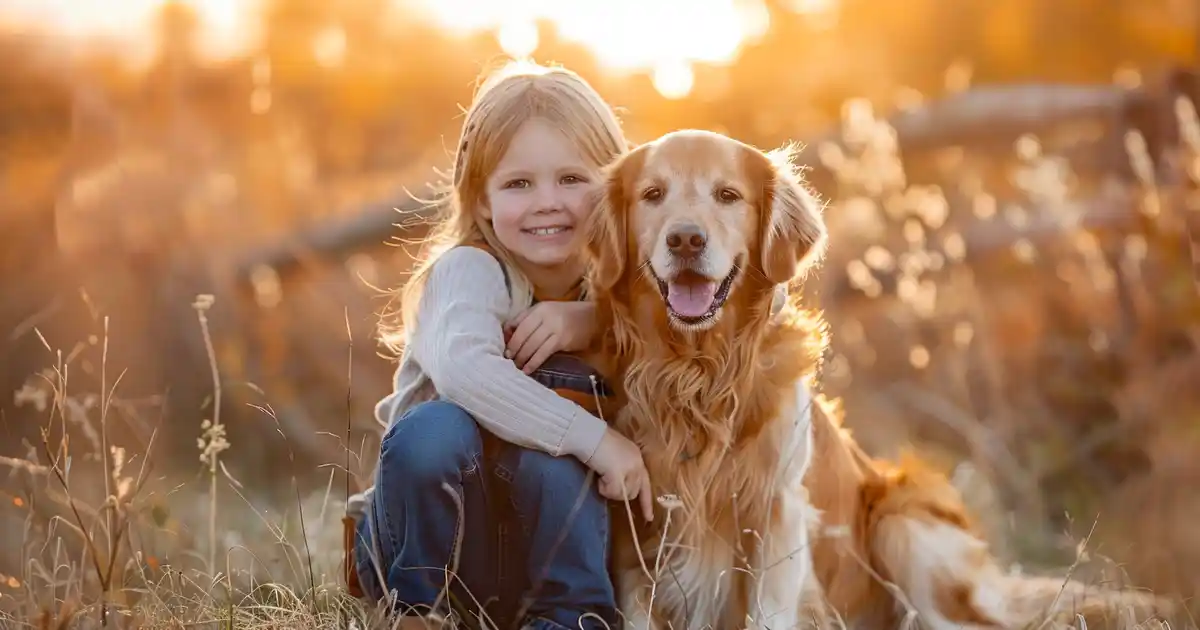
Have you ever wondered why children who grow up with dogs seem more empathetic, responsible, and emotionally resilient than their petless peers? I used to think getting a family dog was just about giving my kids a playmate until I discovered these scientifically-proven developmental benefits and safety strategies that completely transformed our family dynamic. Now my pediatrician friends constantly ask how my children developed such exceptional emotional intelligence and sense of responsibility, and my family (who thought adding a dog to our chaotic household was crazy) keeps asking what made the relationship work so beautifully. Trust me, if you’re worried about safety concerns, behavioral challenges, or whether your kids are ready for a dog, these research-backed approaches will show you it’s more achievable and beneficial than you ever expected.
Here’s the Thing About Dogs and Children Together
Here’s the magic behind why dogs and children create such profound mutual benefits—they naturally teach each other essential life skills through daily interaction, from dogs learning gentle patience to children developing empathy, responsibility, and emotional regulation. I never knew childhood development could be this powerfully influenced until I watched my own kids transform through their relationship with our rescue dog. What makes this combination work so beautifully is the reciprocal learning: children gain social skills, stress resilience, and confidence while dogs receive socialization, gentle handling practice, and consistent routine that benefits their training and wellbeing. According to research on human-animal interaction, this relationship has been proven effective for improving children’s emotional development, reducing anxiety, and building prosocial behaviors across numerous developmental psychology studies. It’s honestly more transformative than most parenting interventions I’ve tried, and the best part? The relationship creates joy, companionship, and magical childhood memories while simultaneously teaching critical life lessons about care, respect, and unconditional love.
What You Need to Know – Let’s Break It Down
Understanding the developmental and safety aspects of dogs and children together is absolutely crucial because success requires intentional strategies, not just hoping they’ll naturally get along. I finally figured out that thriving dog-child relationships depend on multiple factors working simultaneously—proper breed selection, age-appropriate supervision, consistent training, and teaching both species how to interact respectfully (game-changer, seriously).
Safety protocols and supervision are non-negotiable foundations. Dogs and young children should never be left unsupervised together regardless of how trustworthy either seems—period. I always recommend age-appropriate supervision levels because everyone needs clear safety boundaries, plus even the gentlest dog can react unpredictably to accidental rough handling (took me forever to realize this was about setting both up for success, not distrust).
Developmental benefits for children work beautifully across multiple domains. Yes, dogs really do improve children’s emotional intelligence, social skills, and self-esteem, and here’s why: caring for animals teaches empathy through perspective-taking, responsibility through consistent care routines, and emotional regulation through calming companionship. Don’t skip the structured responsibility assignments—that’s where the character-building happens for kids learning cause-and-effect relationships between their actions and another being’s wellbeing.
Breed selection and temperament matching matter enormously for family success. Not all dogs suit households with children—size, energy level, patience tolerance, and genetic temperament all factor into compatibility. My family succeeded because we chose a breed known for gentle patience with children rather than following appearance preferences or trending breeds unsuitable for our situation.
Training requirements for both species create the foundation for harmonious relationships. Children need explicit teaching about gentle handling, respecting boundaries, reading dog body language, and appropriate interaction timing. Simultaneously, dogs need training for impulse control, gentle mouth awareness, and tolerating unpredictable child movements without reactive behavior.
If you’re interested in building comprehensive family routines that integrate dogs successfully, check out my guide to creating family harmony with pets for foundational techniques that work perfectly when introducing dogs to households with children.
The Science and Psychology Behind Why This Works
Research from leading universities demonstrates that dogs and children thrive together consistently because of measurable developmental and psychological mechanisms. A comprehensive study published in Pediatric Research found that children growing up with dogs showed significantly higher scores on empathy assessments, emotional regulation measures, and prosocial behavior scales compared to children without pets. The effects were most pronounced when children participated actively in age-appropriate dog care rather than passive cohabitation.
Developmental psychologists at Tufts University documented that children with dogs demonstrated better stress resilience—they recovered faster from upsetting situations and showed lower cortisol responses during anxiety-inducing tasks. The mechanism involves attachment security; dogs provide non-judgmental emotional support that buffers against developmental stressors, creating safe practice opportunities for emotional regulation skills.
The psychology of responsibility development comes into play beautifully here. Traditional approaches to teaching accountability often fail because consequences feel abstract or delayed. Dogs create what child development experts call “immediate reciprocal feedback”—if you forget to feed your dog, they’re visibly hungry; if you play roughly, they withdraw or communicate discomfort. This real-time cause-and-effect learning consolidates responsibility far more effectively than hypothetical lessons.
What makes the developmental benefits different from a scientific perspective is the multi-domain impact. Experts agree that dog ownership simultaneously addresses social-emotional development, cognitive growth through routine management, physical development through active play, and even academic performance through reading programs where children practice literacy skills by reading to non-judgmental canine listeners. I discovered the emotional aspects firsthand when my shy daughter’s confidence blossomed through training our dog—successfully teaching commands gave her a sense of competence that transferred to school and peer relationships.
Here’s How to Actually Make This Happen
Start by honestly assessing your family’s readiness for the commitment, time requirements, and lifestyle changes dog ownership demands—here’s where I used to mess up by romanticizing the cute moments without preparing for the challenging realities. Don’t be me—I used to think my kids’ enthusiasm meant they’d handle responsibilities independently, but sustainable success required structured parental involvement and realistic expectation-setting.
Step 1: Evaluate family readiness and timing before even considering specific dogs. Now for the important part—children under age 5 require significantly more supervision and aren’t developmentally capable of meaningful care responsibilities, while kids 6-10 can handle simple tasks with reminders, and children 11+ can manage more complex routines with oversight. This assessment takes honest family conversations but prevents setting up failures. When it clicks, you’ll know—everyone genuinely commits to the work involved, not just the fun parts.
Step 2: Choose child-appropriate breeds or mixes by prioritizing temperament over appearance. Here’s my secret: research breeds known for patience, gentle mouths, high tolerance for noise and chaos, and stable temperaments (Golden Retrievers, Labrador Retrievers, Beagles, mixed breeds with calm personalities). Results can vary, but most successful families select medium-sized dogs (not tiny breeds easily injured by clumsy kids, not giant breeds that accidentally knock toddlers over) with proven track records around children. Visit multiple times, observe dog-child interactions before committing, and involve kids in the selection process appropriately.
Step 3: Establish clear rules and responsibilities from day one for both children and dogs. My mentor taught me this trick: create written schedules assigning age-appropriate tasks (young kids help with water bowl filling, older kids handle feeding or brushing), establish non-negotiable safety rules (no disturbing eating or sleeping dogs, no rough play, no hugging without permission), and implement consistent consequences for rule violations. Every situation has its own challenges, but these structures prevent the chaos and safety issues that undermine dog-child relationships.
Step 4: Teach both species appropriate interaction skills through deliberate education. Don’t worry if you’re just starting out—children need explicit instruction on gentle touching, recognizing stress signals (yawning, lip licking, turning away), and when to give space. Dogs simultaneously need training for basic obedience, impulse control around food or toys, and gentle behavior around unpredictable movements. Just like building any healthy relationship but with completely different communication systems requiring translation and teaching.
Step 5: Supervise actively and adjust expectations as relationships develop. Until you feel completely confident in both dog and child reliability (which honestly takes years, not months), maintain age-appropriate supervision levels. Monitor these interactions continuously initially, gradually increasing independence only as both demonstrate consistent safe behavior patterns. This patience creates lasting success rather than premature freedom that risks incidents undermining the entire relationship.
Common Mistakes (And How I Made Them All)
My biggest mistake? Getting a high-energy, mouthy puppy when I had a toddler and preschooler. I fell in love with an adorable Australian Shepherd puppy without considering that herding breeds often nip at running children, and puppies lack the impulse control needed around unpredictable toddlers. Learn from my epic failure—that poor pup needed extensive training to stop herding behavior, and my kids developed fear after several nipping incidents. We eventually rehomed him to an adult-only household where his drives were assets, and the guilt taught me everything about realistic breed matching for family situations.
Another classic error I made was unrealistic responsibility expectations for my kids. I assumed my 7-year-old’s enthusiasm meant she’d independently manage feeding and walking—wrong. Don’t make my mistake of ignoring fundamental principles experts recommend about developmental capabilities; young children need consistent parental support and reminders to maintain care routines, and expecting independence sets everyone up for failure and resentment.
I also neglected training immediately upon bringing our dog home. Waiting months to address jumping, mouthing, and boundary-pushing behavior created bad habits that were harder to fix later and increased risk around my children. Start training from day one—professional help is investment, not expense, when kids are involved.
Finally, I allowed inconsistent rule enforcement. Sometimes I’d let my kids roughhouse with the dog when I was in good moods, then enforce gentle-only rules when stressed. This inconsistency confused both dog and children, preventing them from learning clear behavioral expectations that create safe, respectful relationships.
When Things Don’t Go as Planned
Feeling overwhelmed by the dog-child dynamic? You probably need more structured routines and clearer boundaries—and that’s completely normal. Every family experiences challenges integrating dogs and children, especially during adjustment periods or developmental transitions. That’s normal, and it happens to everyone, even experienced pet-owning families introducing new dynamics.
I’ve learned to handle behavioral challenges by addressing root causes rather than symptoms. When this happens (and it will), examine whether the dog has adequate exercise (tired dogs are calmer around children), whether children are following interaction rules consistently, and whether you’re providing sufficient supervision. Sometimes increasing the dog’s training, reducing forced interactions, or creating safe spaces where the dog can retreat from children solves problems more effectively than punishment or rehoming considerations.
Progress stalled with responsibility development? Don’t stress, just reassess your expectations and task difficulty. Some children naturally embrace caregiving roles while others need years of scaffolded support before independent reliability emerges. I always prepare for developmental variability because individual differences are normal, and flexibility prevents power struggles that make everyone miserable.
If you’re experiencing concerning behaviors—growling, snapping, aggressive resource guarding around children, or excessive fear—seek professional help immediately from certified dog trainers or veterinary behaviorists specializing in family dynamics. These warning signs require expert intervention, not hope they’ll resolve independently. The safety of both your children and dog depends on addressing serious behavioral concerns proactively.
Advanced Strategies for Next-Level Results
Advanced practitioners often implement specialized techniques for accelerated bonding and enhanced developmental benefits beyond basic coexistence. Once you’ve mastered safe interaction fundamentals, consider these next-level approaches I’ve discovered through years of optimizing dog-child relationships.
Structured training programs involving children create powerful competence-building experiences. I’ve found that enrolling in family dog training classes where children actively participate in teaching commands (with parental support) builds their confidence, deepens their bond with the dog, and teaches valuable communication skills. Kids learn that consistent, calm instruction produces reliable responses—lessons transferring beautifully to human relationships and leadership skills.
Therapeutic reading programs leverage the non-judgmental nature of dogs to improve children’s literacy. Children struggling with reading anxiety perform better reading aloud to dogs who provide patient, encouraging presence without correction or judgment. This approach separates families who passively own dogs from those who actively leverage canine companionship for targeted developmental enhancement.
Responsibility progression systems with clear milestones and increasing autonomy motivate children’s growth. Create visual charts tracking completed tasks, implement age-appropriate allowance connections to dog care consistency, or establish privileges (like walking the dog solo) earned through demonstrated reliability. Taking this to the next level means treating dog care as comprehensive life skills education rather than simple chore completion.
Emotional regulation training using dogs as co-regulators teaches children sophisticated coping mechanisms. Practice calming techniques during dog petting (deep breathing synchronized with the dog’s calm respiration, progressive muscle relaxation while stroking fur, mindfulness focusing on sensory experiences of touch and warmth). These skills generalize to other stressful situations where dogs aren’t present, creating lasting emotional intelligence improvements.
Ways to Make This Your Own
When I want faster bonding between my kids and dog, I incorporate structured daily connection rituals—morning greeting routines, after-school play sessions, bedtime story time with the dog present. For special situations like introducing infants to household dogs, I’ll implement gradual desensitization protocols starting during pregnancy. This makes it more intentional but definitely worth it for establishing positive associations from the beginning.
Developmental Focus Approach: Sometimes I add specific skill-building activities aligned with my children’s growth areas—shy kids practice leadership through training commands, hyperactive kids learn impulse control through calm petting exercises, anxious kids build confidence through successful care task completion. My customized version focuses on leveraging the dog relationship to address individual developmental needs rather than one-size-fits-all interaction.
Responsibility Training Method: Families prioritizing accountability development can implement progressive independence systems. The Scaffolded Responsibility Approach includes initial full parental management, gradual introduction of simple tasks with reminders, increasing complexity as reliability demonstrates, and eventual age-appropriate autonomy with periodic oversight. For next-level results, I love connecting task completion to natural consequences (privileges, special activities with dog) that reinforce intrinsic motivation.
Multiple Children Adaptation: My sibling-focused version includes assigning different responsibilities to different children based on age and ability, creating collaborative care where teamwork is essential, and teaching conflict resolution when disagreements about dog interaction arise. Summer approach includes outdoor adventures integrating kids and dog, while school year focuses on routine consistency that provides stability during busy schedules.
Each variation works beautifully with different family structures—single child households focusing on individual responsibility, multiple children families emphasizing cooperation, or special needs situations requiring therapeutic animal interaction—allowing you to customize based on your specific family dynamics and goals.
Why This Approach Actually Works
Unlike traditional character education requiring abstract lessons and delayed gratification, dog ownership with children leverages proven developmental principles that most parenting strategies ignore: immediate natural consequences through living being feedback, intrinsic motivation through emotional attachment, and experiential learning through real-world responsibility rather than hypothetical scenarios.
What sets this apart from other developmental interventions is the multi-domain impact combined with inherent engagement. Children naturally love animals, so lessons embedded in dog care feel enjoyable rather than imposed. Evidence-based research confirms that learning through authentic caregiving produces deeper skill consolidation than classroom instruction or parent lectures about abstract concepts like responsibility, empathy, or gentle behavior.
The sustainable effectiveness comes from the reciprocal relationship benefits motivating consistency. I discovered personally why this works when traditional responsibility charts and reward systems failed—my children’s genuine love for our dog created internal motivation for care that external rewards couldn’t match. That fundamental shift from “I have to do chores” to “I want to take care of my friend” transforms compliance and skill development dramatically.
This approach is effective because it addresses core developmental needs: competence through successful task completion, connection through emotional bonding, autonomy through age-appropriate independence, and purpose through caring for a dependent being. One intervention—thoughtfully integrated dog ownership—creates cascading developmental benefits across cognitive, social-emotional, and behavioral domains simultaneously.
Real Success Stories (And What They Teach Us)
My friend Lisa’s son struggled with ADHD and emotional regulation challenges before they adopted a calm Golden Retriever. Within a year, his teacher reported remarkable improvements in focus, impulse control, and empathy toward classmates. What made their success was implementing structured morning routines where her son fed and walked the dog before school—this consistent responsibility created organization skills and the physical activity helped regulate his hyperactive tendencies. The dog’s calming presence during homework time reduced frustration meltdowns significantly.
Another family I know adopted a rescue dog specifically to help their shy 8-year-old daughter build confidence. Three years later, that timid child runs the school’s pet care club and volunteers at animal shelters. Their success aligns with research on developmental change that shows consistent patterns—mastery experiences in one domain (successfully training and caring for a dog) create generalized self-efficacy that transfers to other areas like academic performance and peer relationships.
I’ve watched my own children transform from self-focused kids into empathetic, responsible young people through their relationship with our rescue mutt. My daughter learned to read dog body language so well that she now mediates peer conflicts by recognizing similar stress signals in classmates. Their success teaches us that skills learned through dog care—patience, observation, gentle communication, consistent routine—become lifelong competencies applicable far beyond pet ownership.
Different outcomes are normal—some children naturally embrace caregiving roles immediately while others need years of scaffolded support. Be honest about your children’s developmental stages and your family’s capacity while remaining open to surprising growth that emerges gradually through consistent, loving interaction between dogs and kids.
Tools and Resources That Actually Help
Training resources: Family Dog Program by Patricia McConnell or “Living with Kids and Dogs” by Colleen Pelar provide research-based strategies for safe, beneficial dog-child relationships. I personally used these to learn how to teach both my kids and dog appropriate interaction skills—professional guidance prevents common mistakes that create safety issues or behavioral problems.
Safety education: “The Blue Dog” program (free online) teaches children ages 3-6 how to interact safely with dogs through interactive scenarios. Older kids benefit from “Be a Tree” programs teaching what to do when approached by unfamiliar dogs. These evidence-based curricula create safety literacy that protects your children around all dogs, not just your own.
Responsibility tracking: Chore charts apps like OurHome or physical visual schedules help children track dog care tasks with parental oversight. I use simple magnetic charts on the refrigerator where my kids move markers after completing feeding, walking, or brushing—the visual accountability reinforces consistency better than verbal reminders alone.
Professional support: Certified Professional Dog Trainers (CPDT) or veterinary behaviorists provide expert guidance when challenges arise. These specialists understand both canine behavior and child development, offering family-specific solutions rather than generic advice.
The best resources come from authoritative child development organizations and proven family-dog research showing that structured, supervised relationships create optimal outcomes. Be honest about limitations—dogs aren’t automatic developmental tools; intentional parenting and training create the benefits research documents.
Questions People Always Ask Me
How old should my child be before getting a family dog?
There’s no magic age, but developmental readiness matters more than chronological age. Children under 5 cannot reliably follow safety rules or handle meaningful responsibilities, requiring intensive parental supervision and management. Ages 6-10 can participate in simple tasks with reminders and oversight. Ages 11+ can manage more complex care with periodic check-ins. However, parents should expect to handle primary responsibility regardless of children’s ages—kids’ contributions are developmental bonuses, not reliable care provision.
What if I don’t have time to supervise every dog-child interaction?
Then honestly, your family isn’t ready for a dog yet. Young children and dogs require active supervision during interactions—period. I usually recommend waiting until your youngest child reaches age where supervision can be periodic rather than constant (typically 8-10 years old) or accepting that you’ll need to manage separation (crates, baby gates, separate spaces) when you can’t actively supervise.
Is getting a dog suitable for teaching children responsibility?
Yes, with realistic expectations. Dogs teach responsibility beautifully when parents provide appropriate scaffolding—modeling care initially, gradually transferring age-appropriate tasks, maintaining oversight and backup, and implementing natural consequences for forgotten responsibilities. However, don’t get a dog solely for this purpose; the dog deserves a family committed to their wellbeing regardless of children’s follow-through on care promises.
Can we adapt our approach if we have both toddlers and older children?
Absolutely! Create different interaction rules and responsibility levels for different ages. Toddlers participate through supervised gentle petting and simple tasks like placing toys in bins, while older children handle feeding, walking, and training. Use baby gates or separate spaces ensuring the dog has toddler-free zones for rest, preventing overwhelm that causes behavioral issues.
What’s the most important safety rule for dogs and children?
Never leave young children and dogs unsupervised together—ever. This non-negotiable rule prevents the majority of dog bite incidents, which typically occur during unsupervised interactions involving resource guarding (toys, food), rough play escalation, or children inadvertently hurting dogs who react defensively. Even the most trustworthy dog can react unpredictably to accidental pain or perceived threats.
How do I maintain consistency when implementing rules for kids and dogs?
Create written family rules posted visibly (on refrigerator, near dog areas) so everyone knows expectations. Implement consistent consequences for violations—children who play too roughly lose interaction privileges temporarily, dogs who jump or mouth go to designated calm spaces. I involve my whole family in rule creation so everyone has buy-in, which dramatically improves compliance compared to parent-imposed mandates.
What mistakes should families avoid when introducing dogs and children?
Avoid choosing inappropriate breeds for family situations, underestimating supervision requirements, expecting young children to manage responsibilities independently, neglecting immediate training, forcing interactions between fearful children or overwhelmed dogs, and rehoming impulsively when challenges arise instead of seeking professional help. Don’t romanticize the relationship—it requires intentional work, not Disney magic.
Can we combine dog ownership with other developmental activities our kids do?
Absolutely! Dogs enhance other childhood experiences beautifully. Combine dog care with nature education during walks, integrate training into STEM learning about animal behavior and learning theory, connect responsibility lessons to academic goal-setting, or use dog interaction as emotional regulation practice transferring to peer conflicts. The flexibility makes dogs complementary to comprehensive child development rather than isolated pet ownership.
What if my child has allergies or sensitivities to dogs?
Consult your pediatrician or allergist before getting a dog. Some children with mild allergies adapt with regular grooming, air purifiers, and keeping dogs out of bedrooms. Severe allergies may require avoiding certain breeds or reconsidering dog ownership entirely. So-called “hypoallergenic” breeds reduce but don’t eliminate allergic reactions—no dog is truly allergen-free, though some produce fewer allergens than others.
How much does implementing this approach cost beyond basic dog ownership?
Expect standard dog costs ($1,500-3,000 annually) plus potential additional expenses: professional training classes involving children ($150-400), safety equipment like baby gates or crates ($50-200), veterinary care if behavioral issues require medical evaluation, and possibly professional behaviorist consultations ($150-300 per session) if challenges arise. The developmental ROI is substantial, but acknowledge the financial commitment required for responsible dog-child integration.
What’s the difference between getting a dog for children versus other pets?
Dogs uniquely require daily care creating routine responsibility opportunities, provide interactive companionship encouraging empathy development, and demand training teaching communication and patience. While smaller pets (hamsters, fish) offer some benefits, dogs produce the most robust developmental outcomes through their complex social nature, need for consistent care, and capacity for bonding that motivates children’s sustained engagement.
How do I know if the dog-child relationship is healthy and beneficial?
Look for positive indicators: children eagerly participate in age-appropriate care, both dog and kids appear relaxed and happy during interactions, children demonstrate improving empathy and responsibility in other life areas, the dog seeks out children’s company voluntarily, and no concerning behaviors (aggression, fear, avoidance) emerge. Trust your instincts—if something feels off, seek professional assessment rather than hoping problems resolve independently.
Before You Get Started
I couldn’t resist sharing this because it proves that dogs and children thriving together isn’t accidental luck—it’s intentional family planning involving breed selection, safety protocols, training commitment, and developmental scaffolding that creates magical relationships benefiting both species profoundly. The best dog-child journeys happen when you approach pet ownership as comprehensive family lifestyle change rather than simple addition of an animal, choosing dogs whose temperament matches your children’s ages and your family’s capacity while establishing clear rules, consistent training, and age-appropriate responsibilities that grow with your kids. Ready to begin? Start with a simple first step: have honest family conversations about commitment levels, research child-appropriate breeds thoroughly, and visit shelters or breeders multiple times with your children to observe interactions before deciding. That special connection between your child and the right dog isn’t just cute—it’s the beginning of a relationship that will teach life lessons about love, responsibility, empathy, and loss that shape who your children become as humans.




