
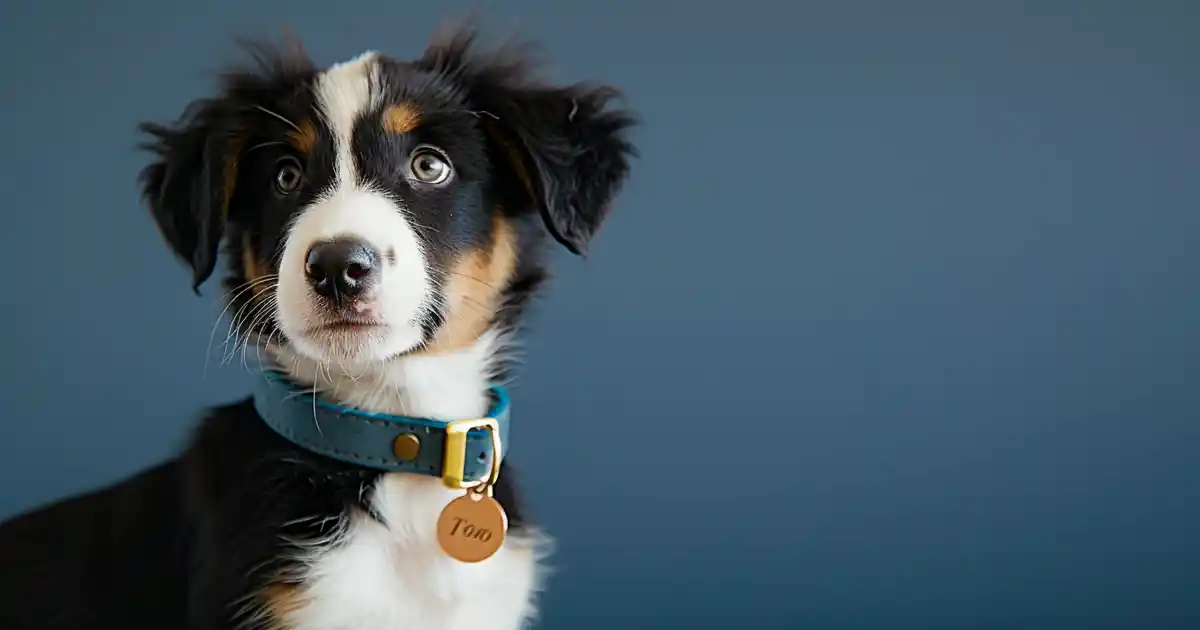
Have you ever wondered why getting the right collar size for your puppy feels like solving a riddle until someone actually walks you through the process? I used to think picking a collar was as simple as grabbing the smallest size on the shelf and hoping for the best. Then one chilly morning, my enthusiastic Beagle puppy wiggled right out of his brand new collar during our walk, bolted toward a busy street, and my heart nearly stopped. After that terrifying moment, I became obsessed with understanding exactly how collar sizing works — and what I learned completely changed how I approach this seemingly simple task. If you’re a new puppy parent who has been eyeballing collar sizes or just grabbing whatever looks cute, this guide is going to save you from a potentially dangerous situation. Trust me, a properly fitted collar is one of the most important investments you’ll make for your puppy’s safety, and getting it right is way easier than you think.
Here’s the Thing About Puppy Collar Sizing
Here’s the magic behind finding a collar that actually keeps your puppy safe and comfortable: it’s not about buying the fanciest collar or the thickest material. It’s about understanding two incredibly simple principles — proper measurement and the right amount of room for growth — and applying them consistently as your puppy develops. What makes this approach so effective is how quickly it becomes second nature once you learn the basics. I never knew how much difference a properly fitted collar made until I experienced both extremes — too loose and too tight — and saw firsthand how each one created real problems. The secret to success is precision combined with patience as your puppy grows. It’s honestly more doable than I ever expected, and once you nail the measurement technique, you’ll feel dramatically more confident every single time you put a collar on your pup. According to research on dog training and equipment, proper collar fit is one of the most fundamental elements of safe leash training and general puppy management.
What You Need to Know — Let’s Break It Down
Understanding the core principles behind puppy collar sizing is absolutely crucial before you start shopping. Don’t skip this part — it completely changes how you think about something most people treat as an afterthought.
Neck size changes rapidly during puppyhood. Unlike adult dogs whose neck size stays relatively stable, puppies can outgrow a collar in as little as two to four weeks during periods of rapid growth. I finally figured out after several rounds of collar shopping that buying a collar and assuming it will last for months is simply not realistic for most puppies. (Took me forever to realize this.) Expect to resize or replace collars multiple times during your puppy’s first year.
The two-finger rule is your best friend. The single most important measurement principle for puppy collars is the two-finger rule: when the collar is fastened, you should be able to slide exactly two fingers beneath it comfortably. If you can’t fit two fingers under, it’s too tight. If your entire hand slides through easily, it’s too loose. Game-changer, seriously — this simple test takes two seconds and tells you everything you need to know about fit.
Collar type matters as much as size. Flat collars, martingale collars, and breakaway collars all fit differently and serve different purposes. I always recommend starting with a basic flat collar for most puppies because everyone sees results faster when they begin with the most straightforward option before experimenting with specialty collars.
Material affects both comfort and safety. Leather, nylon, and cotton collars all sit differently against a puppy’s neck, stretch at different rates, and wear down at different speeds. Yes, puppy collar sizing really does require considering the material alongside the measurement — here’s why: a nylon collar that fits perfectly when new might stretch and become too loose after a few weeks of regular use.
If you’re just starting out with preparing your new puppy for walks and basic leash training, check out my guide to getting your puppy started with leash basics for foundational tips on building confidence and comfort on the leash.
The Science and Psychology Behind Why This Works
Here’s something fascinating that most new puppy parents completely overlook: the psychology behind how a puppy experiences their collar directly impacts their comfort, confidence, and willingness to walk on a leash. A collar that is too tight creates persistent discomfort and can actually make puppies anxious and resistant to walking — the exact opposite of what you want during those critical early training months. A collar that is too loose creates a safety hazard and can also cause frustration during training because it provides inconsistent feedback.
From a physical development perspective, puppies grow at dramatically different rates depending on breed, nutrition, and genetics. Small breeds might reach their adult neck size by six months, while large and giant breeds can continue growing well into their first or even second year. Understanding your specific breed’s growth trajectory helps you plan for collar changes rather than being caught off guard.
The psychology of proper fit also extends to your own confidence as an owner. When you know your puppy’s collar is correctly sized, you walk with more confidence, which directly impacts your puppy’s behavior and energy. Research from veterinary behaviorists consistently confirms that owner confidence creates calmer, more focused dogs. The American Kennel Club’s guidance on puppy equipment reinforces that proper collar fit is a foundational element of safe, comfortable puppy ownership from day one.
Here’s How to Actually Make This Happen
Start by gathering one simple tool: a flexible measuring tape or, if you don’t have one handy, a piece of string and a ruler. Here’s where I used to mess up: I tried to eyeball my puppy’s neck size or use a stiff tape measure that kept slipping around their neck while they wiggled and squirmed. A flexible measuring tape or a simple piece of string makes the whole process dramatically easier and more accurate.
Step one: Measure your puppy’s neck properly. Have your puppy standing in a relaxed, natural position — not stretching their neck up or tucking their chin down. Wrap your measuring tape or string snugly around the base of their neck where a collar would naturally sit, just above where the neck meets the shoulders. Keep it firm but not tight — you want the actual circumference, not a compressed measurement. Now for the important part — add one and a half to two inches to this measurement. This extra length accounts for the two-finger rule and gives your puppy comfortable breathing and movement room. Don’t be me — I used to measure tight and then wonder why my puppy seemed uncomfortable.
Step two: Match your measurement to the right collar size. Most collar manufacturers provide sizing charts on their packaging or websites. Find the chart for the specific collar you’re considering and match your measurement (including the extra inches) to the appropriate size. When it clicks that sizing charts can vary significantly between brands, you’ll know why it’s important to always measure rather than simply buying a size based on your puppy’s breed or age.
Step three: Apply the two-finger test after fastening. Once you have the collar on your puppy, slide two fingers beneath it. They should slide in with a gentle amount of resistance — snug enough that the collar couldn’t slip over your puppy’s head, but loose enough that your puppy can breathe and move comfortably. Results can vary slightly depending on the collar material and construction, but the two-finger rule works consistently across virtually all collar types.
Step four: Check the fit regularly as your puppy grows. Set a reminder on your phone to do a two-finger check every single week. This step takes about five seconds but catches size changes before they become a safety issue. My mentor taught me this trick: keep a small notebook or use your phone to log your puppy’s neck measurements over time — watching the growth progression is genuinely fascinating and helps you predict when a new collar will be needed.
Step five: Have a backup collar ready. Because puppies grow so quickly, having a second collar in the next size up means you’re never caught without a properly fitting option when your puppy suddenly outgrows their current one. This is especially important during rapid growth spurts, which can happen seemingly overnight.
Understanding Different Collar Types and How They Fit
Flat Collars The classic, straightforward collar that works beautifully for the vast majority of puppies. Flat collars come in nylon, leather, cotton, and various other materials, and they fit simply by buckling or using a quick-release clip. They’re easy to size, easy to adjust, and work perfectly for puppies who are learning to walk on a leash in a calm, positive way. This is the collar type I recommend starting with for almost every new puppy.
Martingale Collars These collars have a built-in mechanism that tightens slightly when tension is applied but stops tightening at a preset point, preventing the collar from ever becoming dangerously tight. They’re particularly popular for breeds with narrow heads and wider necks — like Greyhounds and Whippets — because a standard flat collar can slip right over their heads. Sizing a martingale collar requires a slightly different approach: the collar should be loose enough to have some give when your puppy is standing relaxed, but tighten to a snug fit when gently pulled.
Breakaway Collars These collars are specifically designed to release and open if they become caught on something — a fence, a branch, another dog’s collar — preventing the terrifying scenario of your puppy choking while unsupervised. They’re an excellent safety choice for puppies who spend time in yards, off-leash areas, or any situation where they might be without direct supervision. The sizing principle is the same as a flat collar — two fingers of room — but the breakaway mechanism means they should fit slightly snugger than a standard collar to function properly.
Harnesses (Honorable Mention) While technically not a collar, harnesses deserve mention because many puppy parents use them instead of or in addition to a collar. Harnesses distribute leash pressure across the chest and shoulders rather than the neck, making them an excellent option for puppies who pull, puppies with sensitive necks, or certain breeds prone to breathing difficulties. If you’re considering a harness, sizing follows the manufacturer’s specific guidelines and typically requires both a neck and chest measurement.
Common Mistakes (And How I Made Them All)
Don’t make my mistake of buying a collar that’s too big “to give room for growth.” I used to think buying a larger size upfront would save me from having to replace it so quickly. The problem is that a collar that’s too loose is genuinely dangerous — it can slip over your puppy’s head during walks, get caught on things and tangle, or even become a strangulation risk if it catches on a fence or branch.
I also made the classic error of only checking the fit once — right after putting the collar on for the first time — and then assuming it would stay perfect indefinitely. Puppies grow fast, and a collar that was perfect on Monday might be noticeably tight by Friday during a growth spurt.
Another mistake I see constantly is ignoring the collar material’s stretch and wear characteristics. A brand new nylon collar fits perfectly, but after weeks of use, the material can stretch, the buckle can loosen, and the overall fit changes without you noticing gradually. Regular checks catch these changes before they become a problem.
Finally, many puppy parents forget to account for fur thickness. Puppies with thick, dense coats — like Huskies, Golden Retrievers, and Poodles — need slightly more room between the collar and their skin than short-coated breeds. The two-finger rule still applies, but measuring over thick fur requires a bit more care to get an accurate reading.
When Things Don’t Go as Planned
What if your puppy keeps wiggling out of their collar during walks? That’s one of the most common collar-related frustrations, and it almost always comes down to improper sizing. The collar is likely too loose. Tighten it until the two-finger rule gives you a snug, secure fit, and test it by gently trying to slide it over your puppy’s head — it should not come off easily.
What if your puppy seems uncomfortable or scratches at their collar constantly? That’s totally manageable and usually indicates the collar is either too tight or the material is irritating their skin. First, check the two-finger rule. If the fit is correct, the issue is likely the material. I’ve learned to handle this by switching to a softer material — cotton or padded nylon — which sits much more gently against sensitive puppy skin.
What if your puppy has a very narrow or very wide neck that doesn’t match standard sizing? Don’t stress — many collar brands offer adjustable collars with a wide range of sizing, and custom collars are also available for unusually shaped necks. I always prepare for setbacks because every puppy’s body is unique, and the perfect collar might take a little more searching for unusual neck shapes.
What if your puppy has grown out of their collar seemingly overnight? That’s completely normal during rapid growth phases, especially between two and six months of age. Simply measure again, find the next size up, and move on without guilt. Having a backup collar in the next size ready to go makes this transition seamless.
Advanced Strategies for Next-Level Results
Once you’ve mastered the basics of collar sizing, it’s time to think more strategically about your puppy’s collar setup. One advanced technique is maintaining what I call a “collar progression kit” — keeping two or three collars in successive sizes on hand so you can seamlessly transition as your puppy grows without any gaps in properly fitted equipment.
Another advanced approach is understanding the relationship between collar type and training stage. A basic flat collar is perfect for early leash introduction, but as your puppy becomes more confident and starts pulling, transitioning to a martingale or working on harness training opens up new options that better support their development.
Consider also investing in a high-quality ID tag setup from the beginning. A properly fitted collar is only as useful as the identification it carries. Make sure your puppy’s ID tag is current, readable, and securely attached — and that it doesn’t hang so low that it catches on anything or bothers your puppy during movement.
For next-level results, I love incorporating collar checks into my regular puppy routine — doing a quick two-finger test every morning as part of our pre-walk preparation. It becomes completely automatic and ensures your puppy is always wearing a properly fitted collar throughout the day.
Ways to Make This Your Own
When I want the smoothest possible experience during my puppy’s rapid growth phase, I do what I call the “Collar Progression System.” I purchase three collars in successive sizes upfront — current, next, and one beyond — so I never have a gap in properly fitted equipment no matter how fast my puppy grows.
For my “Budget-Conscious Version,” I invest in one high-quality adjustable collar with a wide sizing range rather than buying multiple fixed-size collars. A good adjustable collar can often cover an entire growth phase without replacement, saving both money and hassle.
My “Safety-First Approach” combines a breakaway collar for any time my puppy is unsupervised with a standard flat collar for supervised walks and training sessions. This layered approach addresses both the everyday sizing needs and the worst-case safety scenarios.
For the “Sensitive Skin Version,” I choose collars made from soft, padded, hypoallergenic materials and check the fit even more frequently than usual, since skin irritation can develop quickly and subtly under a collar that fits correctly but uses an irritating material.
Each variation works beautifully with different lifestyle needs, and there is genuinely no single right way to manage your puppy’s collar situation.
Why This Approach Actually Works
Unlike the traditional approach of simply grabbing a collar off the shelf and hoping it works, this method leverages proven principles of proper fit assessment and developmental awareness that most new puppy owners completely overlook. The evidence-based strategy is simple: measure accurately, apply the two-finger rule consistently, and reassess regularly as your puppy grows — and you eliminate virtually all collar-related safety and comfort issues.
What sets this apart from simply buying a collar and adjusting it when something feels wrong is the proactive, systematic approach to an aspect of puppy care that most people treat as an afterthought. Every sizing decision is informed by clear, reliable principles, every collar serves its intended safety and comfort purpose, and the entire system evolves naturally alongside your growing puppy. This sustainable approach builds genuine confidence and transforms collar management from something stressful into something completely routine.
Real Success Stories (And What They Teach Us)
A friend of mine, a first-time puppy parent with a fast-growing young Labrador, told me she used to replace collars reactively — only buying a new one after her puppy had already outgrown the current one. After implementing the collar progression system and weekly measurement checks, she never again had a moment where her puppy was wearing an ill-fitting collar. The peace of mind alone was worth the small investment in planning ahead. Her success aligns with research on behavior change that shows proactive planning creates consistently better outcomes than reactive problem-solving.
Another person I know struggled for weeks with a Greyhound puppy whose narrow head kept slipping right out of a standard flat collar. After learning about martingale collars and how they’re specifically designed for narrow-headed breeds, the problem was solved immediately. The lesson? Matching collar type to your puppy’s specific body shape is just as important as getting the size right.
Tools and Resources That Actually Help
A flexible measuring tape is the single most important tool for accurate neck measurement. The soft, bendable kind used for sewing works perfectly and costs just a few dollars at any craft or department store. I keep one hanging right next to where I store my puppy’s collars for quick, easy access.
A sizing chart reference card printed out and kept near your collar storage area saves you from having to look up sizing information every time you need to check or replace a collar. Most collar brands include one, or you can easily find universal sizing guides online.
A collection of adjustable collars in different materials gives you options to experiment with different feels, textures, and fit styles as your puppy grows and as you learn what works best for their specific neck shape and skin sensitivity.
A simple logbook or phone notes app for tracking your puppy’s neck measurements over time helps you spot growth patterns, predict when collar changes will be needed, and gives you a fascinating record of your puppy’s development.
Reputable pet supply retailers with knowledgeable staff can be incredibly helpful resources for in-person collar fitting, especially if you’re unsure about sizing for your puppy’s specific breed or body type. The best resources come from experienced pet professionals and breed-specific owner communities.
Questions People Always Ask Me
How do I know if my puppy’s collar is the right size? The two-finger rule is your most reliable test. Slide two fingers beneath the collar when it’s fastened — they should fit snugly with a gentle amount of resistance. If two fingers slide in easily with room to spare, it’s too loose. If you can barely fit one finger, it’s too tight. I usually recommend checking this every single week as your puppy grows.
What if I don’t have a measuring tape at home right now? Use a piece of string, a strip of paper, or even a flexible cord. Wrap it around your puppy’s neck where the collar would sit, mark where it meets itself, and then measure that length against a ruler. Add one and a half to two inches for the two-finger rule allowance, and you have your collar size. I usually recommend grabbing a proper flexible measuring tape soon after — they cost just a few dollars.
Is this guide suitable for puppies of all breeds and sizes? Absolutely, just focus on adjusting your expectations for growth rate based on your specific breed. Small breeds reach adult size faster, while large and giant breeds continue growing well into their first or second year. The measurement and fitting principles remain exactly the same regardless of breed.
Can I use the same collar for walks and for wearing around the house? Definitely, as long as the fit is correct and the collar is comfortable for your puppy. Many owners choose to remove the collar when their puppy is home unsupervised as an additional safety precaution, especially for puppies who might get the collar caught on something while playing or exploring alone.
What’s the most important thing to focus on first? Getting the two-finger rule down and checking it consistently. If you can only take one thing away from this entire guide, make it the habit of sliding two fingers under your puppy’s collar every week to verify the fit is still correct.
How do I know when it’s time to buy a new collar? If the two-finger test shows the collar is too tight, or if you can no longer adjust it to a snug fit, it’s time for the next size up. Also replace any collar that shows significant wear — fraying, cracking, a loose buckle, or a damaged quick-release clip.
What mistakes should I avoid when sizing a puppy collar? Never buy too big “for room to grow” — a loose collar is a genuine safety hazard. Never measure over bunched-up fur without smoothing it first. And never assume the fit will stay perfect indefinitely — puppies grow fast and collars wear down.
Can I combine a collar with a harness for extra safety? Absolutely. Many experienced puppy parents use both — a collar for ID and identification purposes and a harness for leash walking. This combination gives you the best of both worlds: secure identification even without a leash attached, and comfortable, safe leash pressure distribution during walks.
What if my puppy hates wearing a collar at all? That’s more common than you’d think, especially in the first few days. I usually recommend introducing the collar gradually — putting it on for short periods during positive experiences like treats and play, and slowly increasing the wearing time. Most puppies adjust completely within one to two weeks.
How much does a good puppy collar typically cost? A quality collar for a puppy runs anywhere from ten to thirty dollars depending on material, brand, and features. Investing in a well-made collar is absolutely worth it compared to buying cheap collars that wear out quickly or fail when you need them most.
What’s the difference between a collar for a puppy and one for an adult dog? The main differences are size, material softness, and growth accommodation. Puppy collars are smaller and often made from softer materials to be gentle on developing skin. Adult collars are sized for a stable, full-grown neck and are built to last longer without frequent replacement.
How do I know if my puppy’s collar is causing skin irritation? Watch for scratching at the neck area, redness or hair loss under the collar, or your puppy persistently trying to remove it. If any of these signs appear and the fit is correct per the two-finger rule, the issue is likely the material. Switching to a softer, hypoallergenic option usually resolves the problem quickly.
Before You Get Started
I couldn’t resist sharing this because it proves that getting your puppy’s collar right is one of the simplest yet most impactful things you can do for their safety and comfort — and it takes almost no time once you know what you’re doing. The best puppy collar journeys happen when you start with accurate measurements, stay consistent with your weekly checks, and grow your collar setup alongside your rapidly developing fur baby. Your puppy deserves to feel safe, comfortable, and secure every single time they step out the door with you. Now you have everything you need to make that happen. So grab your measuring tape, wrap it around that adorable little neck, and find the perfect fit. Ready to begin? Start with a simple first step and build momentum from there. Your well-fitted, happy, safe puppy is just one measurement away.




