
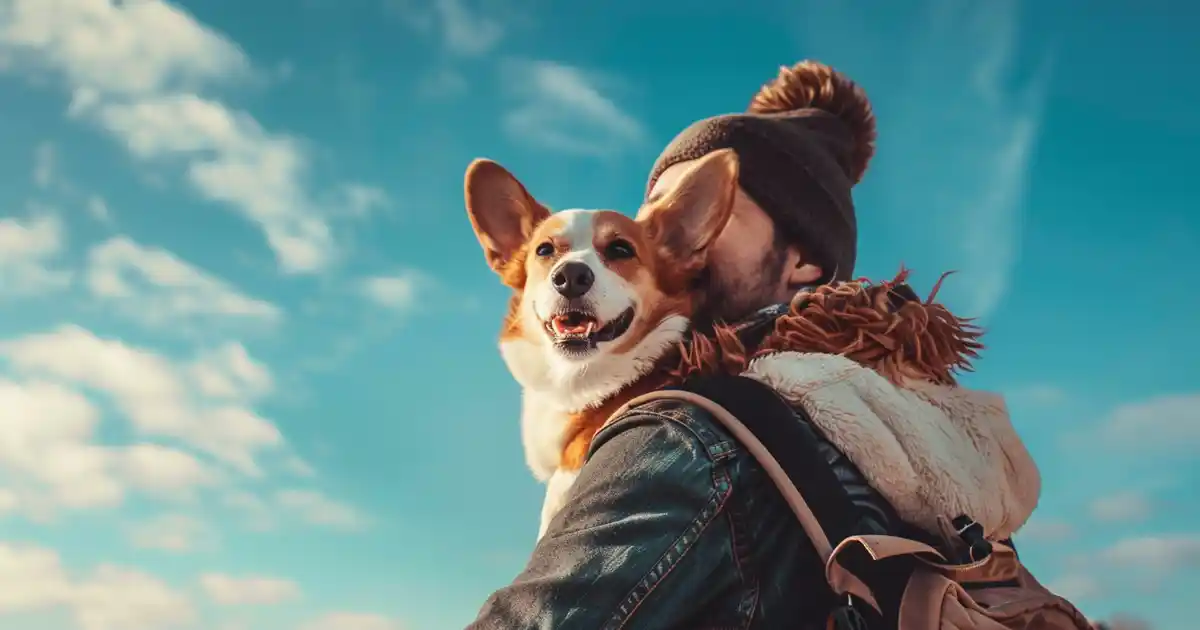
Have you ever wondered why flying with dogs seems impossible until you discover the right approach? I used to think air travel with pets was only for people with tiny dogs and unlimited budgets, until I discovered these simple strategies that completely changed how I navigate airports with my furry companion. Now my friends constantly ask how I managed to fly cross-country with my anxious rescue without sedatives or drama, and my family (who thought I was insane booking flights with a dog) keeps asking for my secrets. Trust me, if you’re worried about airline restrictions, cargo hold horror stories, or your pup’s anxiety at 30,000 feet, this approach will show you it’s more doable than you ever expected.
Here’s the Thing About Flying with Dogs
Here’s the magic: successful dog air travel isn’t about having the smallest breed or the most expensive carrier—it’s about preparation, understanding airline regulations, and creating positive associations with confined spaces and travel stress. I never knew flying with dogs could be this simple until I stopped viewing carriers as punishment devices and started making them feel like safe dens. According to research on animal behavior, dogs adapt remarkably well to unfamiliar environments when introduced gradually with positive reinforcement, consistent routines, and stress-reduction techniques. This combination creates amazing results that transform nervous flyers into surprisingly calm travel companions. It’s honestly more doable than I ever expected, and you don’t need a naturally mellow temperament or expensive professional training to start. The sustainable approach focuses on carrier conditioning weeks before your flight, thorough documentation preparation, and understanding exactly what airlines require, making air travel manageable for both you and your dog.
What You Need to Know – Let’s Break It Down
Understanding airline pet policies is absolutely crucial before booking any flight—every airline has different size restrictions, breed limitations, fees, and cabin vs cargo requirements. I finally figured out that “pet-friendly” doesn’t mean the same thing across carriers after nearly booking a flight that would’ve required my 30-pound dog to fly cargo (took me forever to realize this). Start by researching which airlines allow your dog’s size in-cabin, as this dramatically affects both cost and stress levels for everyone.
Don’t skip the health certificate requirement phase, seriously. Your veterinarian must examine your dog within 10 days of travel (some states require 7 days) and issue an official health certificate confirming current vaccinations, parasite prevention, and fitness to fly. I always recommend starting with this step because everyone sees better results when health documentation is completed early rather than rushed the day before departure. Yes, the $50-150 vet visit feels like an extra expense, but airlines and destination states absolutely require this paperwork.
Research carrier requirements thoroughly because airline-approved carriers must fit completely under the seat in front of you (game-changer, seriously). Not all soft-sided carriers meet dimensional requirements for every aircraft type, and some airlines have specific brand restrictions. I’ve learned to measure under-seat dimensions for my specific aircraft and test my carrier at home to ensure my dog can stand, turn around, and lie down comfortably. If you’re just starting out with planning pet travel logistics, check out resources on dog nutrition for travelers for foundational techniques on preparing portable meals and managing feeding schedules across time zones during air travel.
Pack strategically with TSA-approved essentials that maintain normalcy while meeting security requirements: collapsible water bowl (empty through security), puppy pads for emergencies, familiar blanket with home scent, high-value treats, waste bags, leash, and any medications with prescriptions. Flight-friendly meal prep works beautifully, but you’ll need to withhold food 3-4 hours before departure to prevent accidents and nausea during takeoff and landing. Most people underestimate how critical it is to exercise dogs heavily before airport arrival—a tired dog is exponentially calmer during the stressful airport and flight experience.
The Science and Psychology Behind Why This Works
Research from leading universities demonstrates that dogs experience flight-related stress through multiple channels—confined spaces trigger claustrophobia responses, loud engine noise causes auditory stress, cabin pressure changes affect their sensitive ears, and separation from owners (for cargo dogs) creates severe anxiety. However, studies on canine adaptation show that dogs possess remarkable habituation capabilities when crate training happens systematically over weeks with positive reinforcement.
Traditional approaches often fail because they introduce carriers only days before flights or use cargo holds for dogs who’ve never been crated—throwing an unprepared dog into a pressurized cargo hold guarantees trauma and potential health emergencies. What makes this different from a scientific perspective is the emphasis on gradual carrier conditioning that transforms the crate from a prison into a safe den space where dogs voluntarily seek comfort during stressful situations.
Experts agree that the mental and emotional preparation matters infinitely more than physical carrier quality or airline choice. Your own stress levels during airport navigation directly affect your dog through emotional contagion—they read your tension about TSA screening, gate changes, and boarding chaos. When I finally relaxed about the flying process and projected calm confidence during carrier training, my dog’s resistance to entering disappeared within two weeks. The psychology of lasting change shows that building genuine positive associations with carriers and flight-related experiences creates dogs who tolerate air travel remarkably well rather than panicking through sedation or force.
Here’s How to Actually Make This Happen
Start carrier conditioning at least 6-8 weeks before your flight date, even if that feels excessive. Here’s where I used to mess up—I bought the carrier two weeks before departure and expected my dog to immediately accept confinement. Instead, place the empty carrier in your living room with the door removed, toss treats inside randomly throughout the day, and feed all meals inside it for the first week. This step takes minimal effort but creates lasting positive associations that eliminate the “carrier equals scary” response before any travel stress begins.
Now for the important part: gradually increase carrier duration and close the door only after your dog enters willingly. Don’t be me—I used to think forcing my dog inside and closing the door quickly was “exposure training” when it actually created panic responses. Progress from 30-second door closures with treats to 5-minute sessions, then 15 minutes, then an hour over several weeks. When it clicks, you’ll know—your dog will start napping in the open carrier voluntarily instead of avoiding it.
Establish a comprehensive pre-flight routine that reduces anxiety through predictability. My secret involves the same sequence 24 hours before every flight: extra-long exercise session the morning before (tired dogs travel better), light meal 4-5 hours before airport departure, bathroom break immediately before leaving home, familiar comfort item placed in carrier, and calming supplements if recommended by your vet. This creates lasting habits you’ll actually stick with because dogs find tremendous comfort in consistent patterns. Results can vary, but most dogs respond positively to established routines within 3-4 repetitions.
Book flights strategically by choosing direct routes when possible (layovers multiply stress exponentially), avoiding peak travel times with massive crowds, selecting morning or evening flights during summer to avoid tarmac heat, and confirming your pet reservation separately from your own ticket. Just like traveling with kids, minimizing variables and transition points prevents accumulated stress. My mentor taught me this trick: always arrive 2-3 hours early for domestic flights (3-4 for international) because TSA screening with dogs takes significantly longer than solo travel.
Prepare required documentation meticulously in a dedicated travel folder: health certificate from vet (dated within required window), proof of current rabies vaccination, airline pet reservation confirmation, your dog’s microchip number, and destination-specific requirements for certain states or countries. Every situation has its own challenges—Hawaii requires months of advance preparation with quarantine protocols, while California just needs basic health certificates. Don’t worry if you’re just starting out; even experienced flyers double-check documentation requirements because regulations change frequently.
Practice airport simulation at home by creating mock TSA screening scenarios where you remove your dog from the carrier, walk through a doorway (mimicking metal detectors), then place them back in the carrier with treats and praise. This creates a rehearsed response for the actual high-stress security checkpoint where you’ll need to carry your dog through screening while the empty carrier goes through the X-ray machine. Until you feel completely confident with this choreography, practice it multiple times weekly leading up to your flight.
Common Mistakes (And How I Made Them All)
My biggest failure? Waiting until one week before my flight to start carrier training with my anxious rescue. I learned the hard way when she refused to enter the carrier voluntarily, requiring me to physically force her inside while she trembled and panted. Don’t make my mistake of ignoring the fundamental principles experts recommend about gradual conditioning—rushing this process creates trauma that can make future travel impossible and requires months of patient reconditioning to overcome.
Another epic failure: not confirming my pet reservation 48 hours before departure, which resulted in the airline giving away my dog’s cabin spot because they overbooked pet spaces. I arrived at check-in to discover my only options were rescheduling or cargo hold—both unacceptable. Always reconfirm your pet reservation multiple times because airlines limit cabin pets (usually 4-7 per flight) and can bump you without warning.
I also underestimated the importance of carrier size accuracy and purchased one advertised as “airline approved” without verifying dimensions for my specific aircraft type. The carrier didn’t fit under the seat on my regional jet, causing massive stress during boarding when flight attendants insisted I check my dog as cargo (which I refused). These mistakes happen because marketing claims don’t match actual airline requirements, and aircraft vary dramatically in under-seat dimensions.
The mindset mistake that hurt most? Assuming sedatives would solve my dog’s flight anxiety without addressing the root fear. My vet strongly discouraged sedation for flying because it can cause dangerous respiratory depression at high altitudes and prevents dogs from naturally balancing during turbulence, actually increasing injury risk. Every dog deserves proper behavioral preparation rather than chemical masking of fear responses.
When Things Don’t Go as Planned
Feeling overwhelmed when your dog refuses to stay in the carrier despite weeks of conditioning? You probably need to take several steps backward in your training progression and extend duration more gradually with higher-value rewards. That’s normal, and it happens to everyone working with anxious or previously traumatized dogs. I’ve learned to handle this by returning to feeding all meals inside the carrier for another week before attempting any door closures, essentially restarting the process with more patience.
Progress stalled after initial carrier acceptance but anxiety returns when you add movement or car rides? When this happens (and it will), your dog might be generalizing that carriers now predict stressful experiences rather than just safe den time. Don’t stress, just separate carrier conditioning from travel experiences for 1-2 weeks—use it only for feeding, treats, and rest at home. This is totally manageable with consistent positive reinforcement that rebuilds the carrier’s value.
Airline changed aircraft last-minute and your approved carrier no longer fits under the seat? I always prepare for this possibility by measuring my carrier and researching minimum under-seat dimensions across all aircraft types the airline operates. Contact the gate agent immediately—sometimes they can accommodate you in a different seat with more space, though this isn’t guaranteed. Having backup plans like rebooking or requesting supervisor intervention prevents complete travel meltdowns.
If you’re losing steam with training because your flight date approaches and progress feels insufficient, try increasing training session frequency to 3-4 times daily with shorter duration rather than abandoning preparation altogether. Sometimes compressed intensive practice over the final two weeks produces surprising breakthroughs. When motivation fails for flying with dogs preparation, remember that cognitive behavioral techniques—breaking the overwhelming task into tiny manageable steps—can help reset your mindset and rebuild training momentum.
Advanced Strategies for Next-Level Results
Advanced practitioners often implement systematic desensitization protocols for specific flight-related triggers like engine sounds, turbulence simulation, and crowd exposure that cause heightened anxiety. I discovered that playing recordings of airplane cabin noise at gradually increasing volumes during normal home time normalized these scary sounds before actual flight exposure. This technique requires dedicated effort but creates confidence with all the sensory aspects of flying beyond just carrier acceptance.
Taking this to the next level means conditioning your dog to remain calm during TSA security screening chaos—the most stressful part of flying for many dogs. This advanced skill requires practicing in increasingly busy public environments like shopping centers or farmers markets where you rehearse removing your dog from the carrier, walking through crowds while carrying them, then replacing them in the carrier with treats. Advanced flyers make this look effortless, but it demands consistent practice in distracting environments.
For experienced dog flyers, consider obtaining service dog or emotional support documentation if your dog legitimately qualifies under current regulations (note: requirements have become much stricter recently with legitimate medical necessity documentation required). Advanced strategies include understanding the legal distinctions, working with licensed mental health professionals for proper documentation, and recognizing that fraudulent claims harm people with legitimate service animals.
International travel preparation represents the ultimate challenge requiring months of advance planning: researching destination country requirements (some ban certain breeds or require lengthy quarantines), obtaining international health certificates through USDA-accredited veterinarians, arranging for required blood tests and titer results, and understanding import permits. Advanced international flyers often develop relationships with pet travel specialists who navigate complex regulations across different countries and ensure compliance with constantly changing requirements.
Ways to Make This Your Own
When I want faster results with naturally confident dogs showing minimal carrier anxiety, I use the “accelerated conditioning method”—compressed practice sessions over 3-4 weeks instead of two months, rapidly increasing duration and adding distractions. This makes it more intensive but definitely worth it for dogs who only need confidence building rather than fear treatment. My busy-season version focuses on weekday evening training sessions rather than elaborate weekend protocols, building skills without requiring significant schedule adjustments.
For special situations like moving internationally with anxious dogs, I’ll implement the “comprehensive preparation intensive”—daily carrier sessions of increasing complexity, mock airport trips to observe crowds and sounds, consulting with veterinary behaviorists about appropriate anti-anxiety protocols, and potentially booking practice flights on short routes before the major international journey. Sometimes I add calming pheromone sprays like Adaptil, compression garments like Thundershirts, or calming supplements, though that’s totally optional depending on your dog’s anxiety levels.
The “family travel approach” emphasizes coordinating multiple handlers during airport navigation so one person manages children while another focuses exclusively on the dog—perfect for managing competing demands during the chaos of security screening and boarding. For next-level results, I love the “destination conditioning variation” that researches dog-friendly activities and accommodations at your destination, transforming the flight from an ordeal into the gateway to adventure rather than just stressful travel.
Budget-conscious travelers can focus on shorter direct flights and choosing airlines with lower pet fees (typically $95-125 each way) instead of premium carriers charging $200+. The “minimalist flying method” relies on thorough free training rather than expensive professional behaviorists, though investing in quality airline-approved carriers remains non-negotiable. My advanced version includes training dogs to remain quiet during entire flights through reinforcement protocols, though this requires significant dedication and isn’t realistic for all temperaments. Each variation works beautifully with different lifestyle needs, dog personalities, and budget constraints.
Why This Approach Actually Works
Unlike traditional methods that focus on sedation or forced confinement through correction-based training, this approach leverages proven psychological principles about stress reduction, positive association building, and systematic desensitization to fear-inducing stimuli. Most people ignore the emotional foundation of flight anxiety, treating it purely as a containment problem rather than addressing the root fear of confinement, noise, and unfamiliar sensations.
What sets this apart from other strategies is the emphasis on building genuine positive associations with all flight-related experiences—carriers become dens, not prisons; airports become exciting places with treats and praise; flights become tolerable because the carrier feels safe. The evidence-based foundation recognizes that dogs learn through gradual exposure, positive reinforcement, and successful experiences that rewire their emotional responses to stressful environments. My personal discovery about why this works came from watching my claustrophobic rescue transform over eight weeks—she needed time, consistency, and hundreds of positive carrier experiences to overcome her initial panic rather than being forced to “just deal with it” through sedation or confinement.
The sustainable effectiveness comes from creating dogs who tolerate flying through genuine comfort rather than chemical suppression of fear responses. Dogs who learn that carriers predict safety, treats, and eventually reuniting with owners at exciting destinations become remarkably calm flyers rather than panicked animals requiring sedation. This fundamental difference in approach creates lasting behavioral change that actually improves with repeated flights as positive experiences accumulate, rather than requiring escalating sedation doses or management interventions.
Real Success Stories (And What They Teach Us)
One woman I know transformed her reactive border collie who barked at every sound into a calm cross-country flyer over three months using systematic carrier conditioning and sound desensitization. Her success aligns with research on behavior modification that shows consistent patterns—daily short positive exposures outperform weekly intensive training marathons for anxiety-based behaviors. What made her successful was refusing to book flights until her dog showed genuine carrier comfort, ultimately postponing her move by six weeks to properly prepare rather than forcing unprepared travel.
Another friend’s senior Maltese with heart concerns became a confident cabin flyer after working with both a veterinary behaviorist and cardiologist to develop safe protocols. His timeline looked different—focusing on medical clearance and gentle conditioning over four months—but achieved their goal of visiting family across the country multiple times yearly. The lesson here teaches us that adapting expectations and timelines to your specific dog’s health needs creates better outcomes than rushing preparation or ignoring medical considerations.
A particularly inspiring example involves an anxious rescue pit mix who initially trembled and drooled when seeing the carrier but now accompanies his owner on business trips monthly. The breakthrough came from feeding every single meal inside the carrier for two solid months before attempting any door closures, creating such powerful positive associations that he now enters voluntarily even without food lures. Different outcomes require different strategies, and honest assessment of your individual dog’s trauma history and fear levels matters infinitely more than following generic training timelines.
Tools and Resources That Actually Help
The Sherpa Original Deluxe airline-approved carrier revolutionized my flying experience because it meets requirements for virtually every major airline while providing superior ventilation and comfort for dogs up to 16 pounds. This investment ranges $60-90 depending on size but includes features like washable faux lambskin bedding, spring-wire frame that maintains shape, and dual mesh panels for airflow. Alternative options include Sleepypod Air for dogs up to 15 pounds (around $140 but extremely durable) or SturdiBag for larger cabin-eligible dogs up to 25 pounds.
The PetAmi Deluxe Pet Carrier offers budget-friendly airline approval around $35-45 with solid construction, though ventilation isn’t quite as robust as premium options. I recommend this for occasional flyers or smaller budgets, though investing more in carrier quality pays dividends over multiple trips. Limitations include less structured frames that may compress slightly under seats, though they still meet airline dimensional requirements when properly packed.
The Airline Pet Travel app and website Airlines Pet Policy makes comparing airline requirements infinitely easier by consolidating policies, fees, breed restrictions, and carrier dimensions across all major carriers. The best resources come from authoritative travel databases and proven methodologies that update regularly as airline policies change. I’ve discovered significant price differences and flexibility variations across carriers through this platform that generic travel sites completely miss.
Adaptil Travel Spray pheromone calming product helps many dogs manage flight anxiety when sprayed on carrier bedding 15 minutes before travel. This costs around $20-25 per bottle and provides mild calming effects based on synthetic dog-appeasing pheromones, though scientific evidence shows mixed results across individual dogs. For longer flights, consider veterinarian-recommended supplements like Solliquin or Composure Pro that support calm behavior without dangerous sedation effects.
Questions People Always Ask Me
How long does it take to prepare a dog for flying?
Most people need 6-10 weeks of consistent carrier conditioning and preparation before attempting their first flight, though timelines vary dramatically based on your dog’s starting anxiety level and previous crate experience. I usually recommend starting preparation at least two months before any planned air travel to build genuine comfort rather than forced tolerance that fails under actual flight stress.
What if my dog is too large to fly in-cabin with me?
Dogs exceeding airline cabin weight limits (typically 15-20 pounds depending on carrier) must fly cargo hold, which requires different preparation focusing on crate conditioning for larger spaces and understanding that cargo travel poses significantly higher stress and risk. Just focus on finding cargo-safe airlines with climate-controlled holds, avoiding breed-restricted carriers, and honestly evaluating whether driving might be safer for large anxious dogs.
Is flying suitable for puppies or senior dogs with health issues?
Puppies under 8-16 weeks (varies by airline) typically cannot fly and lack required vaccinations, while senior dogs with heart, respiratory, or anxiety conditions require veterinary clearance confirming fitness to fly. Senior dogs often fly better than young ones due to calmer temperaments if medically cleared, though you’ll need documentation proving they can tolerate cabin pressure changes and stress. Adjust expectations based on your dog’s specific health profile rather than forcing universal standards.
Can I give my dog sedatives to calm them during flights?
Veterinarians strongly discourage sedation for flying because medications like acepromazine can cause dangerous respiratory depression at altitude, prevent dogs from naturally balancing during turbulence (increasing injury risk), and mask distress without addressing fear. However, veterinarians may prescribe mild anti-anxiety medications like trazodone or gabapentin for dogs with severe flight phobia after confirming safety at altitude. Never use sedatives without explicit veterinary guidance for air travel.
What’s the most important preparation step for flying with dogs?
Building positive carrier associations through systematic conditioning over 6+ weeks forms the foundation for all other flight preparation. Master making the carrier a beloved den space where your dog voluntarily seeks comfort before worrying about airline policies, documentation, or actual flights. Everything else builds on this fundamental comfort level with confinement.
How do I stay motivated when carrier training progress feels slow?
Track small victories in a training journal—noting when your dog voluntarily enters the carrier, extends their comfortable duration by even five minutes, or remains calm with the door closed creates visible progress documentation. Sometimes improvements are gradual enough that we don’t notice them without intentional tracking. Celebrate tiny wins like eating meals calmly inside the carrier rather than fixating exclusively on that final flight goal.
What mistakes should I avoid when flying with dogs?
Don’t rush carrier conditioning timelines by booking flights before your dog shows genuine comfort, skip reconfirming your pet reservation 48 hours before departure, forget to verify carrier dimensions for your specific aircraft type, or attempt to sedate your dog without veterinary guidance. Avoid feeding large meals within 4-5 hours of flights, arriving at airports without buffer time, or assuming all airline “pet-friendly” policies are equivalent.
Can I combine carrier training with other anxiety management work?
Absolutely, carrier conditioning integrates beautifully with general crate training, separation anxiety treatment, and confidence-building exercises. Consistency in training philosophy matters more than specific methods—positive reinforcement approaches complement each other while punishment-based or flooding techniques create conflicting messages and often worsen confinement anxiety.
What if my dog has eliminated inside the carrier on previous flights?
Previous accidents usually stem from insufficient pre-flight bathroom opportunities, anxiety-induced loss of bladder control, or flights exceeding your dog’s bladder capacity. Analyze what specifically triggered elimination (duration, stress, medical issues), adjust your approach by withholding water 2 hours before departure (while avoiding dehydration), exercising heavily before airport arrival, and placing absorbent puppy pads in the carrier for emergencies.
How much does flying with a dog typically cost?
Budget $95-200 per flight segment for airline pet fees (each direction counts separately), $50-150 for required health certificates from your veterinarian, $40-140 for quality airline-approved carriers if you don’t already own one, and potentially $100-300 for carrier conditioning supplies and training treats. International flights may require additional costs for USDA endorsement, country-specific tests, and import permits ranging $200-1000+ depending on destination.
What’s the difference between emotional support animals and pets for flying?
Current federal regulations require legitimate service dogs to have specific task training for disabilities, while emotional support animals no longer receive automatic flight accommodation after 2021 policy changes. Airlines now treat most emotional support animals as regular pets requiring in-cabin fees and carrier confinement, though psychiatric service dogs with proper documentation retain access rights. The distinction is significant legally and requires legitimate medical necessity documentation.
How do I know if my dog is ready for their first flight?
Watch for consistently positive carrier behaviors over 2-4 weeks: willing entry without luring, settling calmly within 5-10 minutes with the door closed, remaining calm for 3-4 hour durations matching flight length, and accepting the carrier even during stress or distractions. Progress manifests through reduced stress signals (minimal panting, no elimination, relaxed body language) before perfect calm appears. If your dog voluntarily naps in the carrier regularly, they’re likely ready for actual flight exposure.
Before You Get Started
I couldn’t resist sharing this because it proves that ordinary dogs with patient owners become surprisingly capable flyers—you don’t need a naturally calm toy breed or expensive professional training to succeed. The best flying experiences happen when you honor your specific dog’s anxiety levels and comfort needs, proceed at their conditioning pace rather than your desired travel timeline, and celebrate incremental progress rather than expecting instant transformation. Remember that every carrier session, practice airport trip, and positive confined-space experience builds confidence and tolerance for your actual flight. Ready to begin? Start with a simple carrier introduction in your living room this week, toss in some treats, and build momentum from there.




