
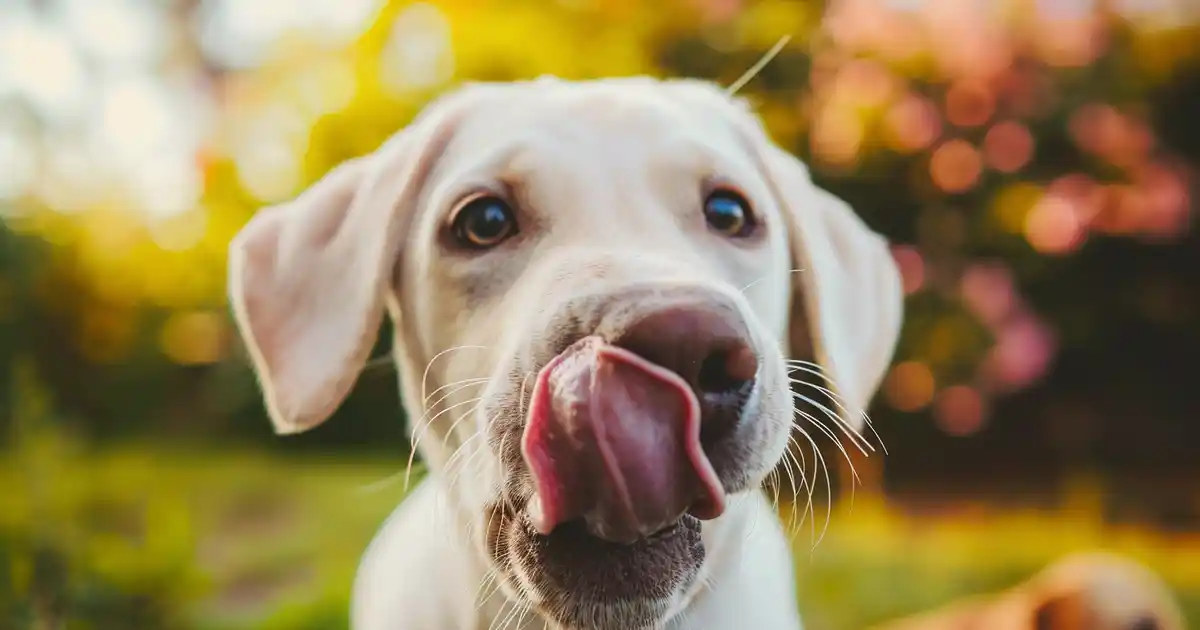
Have you ever wondered why dogs lick everything in sight — your face, your feet, the couch cushions, the kitchen floor, the air itself — and found yourself genuinely uncertain whether this behavior is completely normal, mildly concerning, or a sign that something is seriously wrong with your dog’s health or emotional state? I spent years assuming my dog Bruno’s relentless licking was just an endearing quirk until the afternoon my veterinarian pointed out during a routine visit that the worn patch of fur on Bruno’s left foreleg was the result of compulsive licking that had been quietly intensifying for months without my connecting the behavioral dots. Here’s the thing I discovered after that wake-up call and the deep research it launched: dogs lick for a genuinely fascinating spectrum of reasons that range from ancient evolutionary instinct through complex emotional communication to specific medical conditions that licking helps them manage or signal, and understanding where on that spectrum your dog’s licking falls is one of the most practically useful things you can do for their wellbeing. If you’ve been dismissing your dog’s licking habit as just a personality quirk or, conversely, worrying about every lick without knowing which ones actually warrant attention, this guide is going to give you the complete, science-grounded picture you’ve been missing.
Here’s the Thing About Why Dogs Lick Everything
Here’s the magic of understanding canine licking behavior at its real depth — once you see how many completely different biological, psychological, and communicative functions licking serves simultaneously, the behavior transforms from a simple or slightly annoying habit into a remarkably rich window into your dog’s inner world. What makes this genuinely compelling is that licking is one of the oldest and most deeply embedded behaviors in canine biology — it predates domestication by millions of years, serves functions ranging from neonatal survival through social bonding through pain management through environmental exploration, and is wired into a dog’s nervous system at a level that makes it genuinely impossible to understand your dog fully without understanding why they lick. I never knew that the act of licking actually triggers the release of endorphins in a dog’s brain — creating a self-reinforcing neurochemical feedback loop that explains why excessive licking can develop into something resembling a compulsive disorder — until Bruno’s diagnosis forced me into the veterinary behavioral literature that most casual dog advice never touches. It’s honestly more scientifically interesting than I ever expected, and understanding it changed the way I read Bruno’s behavior in ways that meaningfully improved his care. According to research on canine communication and behavioral evolution, licking behaviors in domestic dogs retain deep roots in wolf pack social dynamics and neonatal care behaviors, with significant additional layers of meaning and function added through thousands of years of coevolution with humans. No behavioral science degree required to understand and apply this — just the right framework for reading what your dog is actually telling you.
What You Need to Know — Let’s Break It Down
Understanding the full taxonomy of why dogs lick everything is absolutely crucial before you can accurately assess whether your dog’s specific licking is normal, emotionally meaningful, or medically significant — so don’t skip this foundation even if you just want to know whether to be worried. Licking in dogs operates across at least five distinct functional categories that can occur independently or in combination: exploratory licking driven by the extraordinary olfactory and taste information a dog’s tongue collects from surfaces; social and communicative licking directed at humans and other animals as a bonding and appeasement gesture; self-grooming licking that maintains coat and skin condition; stress-relief and self-soothing licking that manages anxiety through the endorphin release that licking triggers; and symptom-driven licking that signals or responds to underlying medical conditions including pain, nausea, skin conditions, neurological issues, and gastrointestinal problems. I finally figured out after months of observing Bruno more carefully and consulting with a veterinary behaviorist that his foreleg licking was primarily anxiety-driven with a secondary skin irritation component — two interacting causes that required two different interventions — and that I’d been missing the anxiety signal completely because I didn’t have the framework to distinguish it from normal grooming behavior (took me an embarrassingly long time to connect his licking intensification to the period when our household routine changed significantly). Don’t make the mistake of assuming that all licking looks different from the outside — distinguishing between normal and concerning licking requires attention to context, target, intensity, duration, and pattern over time rather than any single observation. If you’re building a broader understanding of your dog’s behavioral communication, check out our complete guide to reading dog body language and behavior signals for the full context that makes individual behavioral signals like licking much easier to accurately interpret. Why dogs lick everything makes complete sense once you understand the layered functions that licking simultaneously serves.
The Science and Psychology Behind Why This Works
What research actually shows is that licking behavior in dogs is neurologically complex in ways that parallel other repetitive, self-soothing behaviors across mammalian species — the endorphin and serotonin release that accompanies licking creates genuine neurochemical reward that explains both why dogs lick so frequently under normal circumstances and why licking can escalate into compulsive behavior under conditions of chronic stress, anxiety, pain, or boredom. Studies in veterinary behavioral medicine confirm that the tongue itself is one of the most sensory-rich organs in a dog’s body — containing not just taste receptors but specialized mechanoreceptors that provide detailed textural information, thermoreceptors that detect temperature variations with remarkable sensitivity, and chemoreceptors that extend the olfactory information gathering that dogs rely on so heavily to understand their environment. The reason the simple explanation of “dogs just like to lick” fails dog owners so significantly is that it stops the inquiry at the surface level and prevents the more nuanced reading of licking behavior that actually allows owners to distinguish between a dog exploring their environment, a dog communicating affection, a dog self-soothing anxiety, and a dog signaling that something is physically wrong. Research from veterinary behavioral specialists consistently demonstrates that excessive licking, particularly licking directed at specific body locations or occurring at specific times and contexts, is among the more reliable behavioral indicators of underlying conditions that benefit from professional evaluation — and that owners who understand this distinction catch treatable conditions earlier and with better outcomes.
Here’s What’s Really Behind Your Dog’s Licking — A Complete Breakdown
Your Dog Is Gathering Information Start with the most fundamental reason why dogs lick everything, because this one underlies almost all other licking behaviors and understanding it reframes everything else. A dog’s tongue is essentially a sophisticated chemical sampling instrument — when Bruno licks the kitchen floor after I’ve been cooking, he isn’t displaying odd behavior, he’s reading a detailed chemical narrative of everything that has happened in that space recently. Here’s where I used to completely misunderstand what I was observing: what looks to us like indiscriminate licking of floors, furniture, and random objects is actually systematic environmental data collection using a sensory system that is in some dimensions more sophisticated than our own. Don’t dismiss floor licking and object licking as meaningless or gross before considering that your dog may be processing genuinely rich information from surfaces that appear blank and uninteresting to your comparatively limited sensory apparatus. Your Dog Is Communicating With You Now for the dimension of licking that most dog owners are most aware of but often least accurately interpret. When a dog licks a human’s face, hands, or feet, they are drawing on an ancient communicative vocabulary that originates in wolf pack social dynamics — licking the face of a more dominant pack member is a gesture of deference, affiliation, and social bonding that puppies direct toward their mothers and that adult dogs retain as a primary social communication tool. Here’s my secret insight that changed how I read Bruno’s greeting licks: the intensity, location, and context of social licking all carry specific communicative content — brief face licking during greetings communicates something different from persistent hand licking during calm moments, which in turn differs from frantic licking during stressful situations, and reading those distinctions tells you far more about your dog’s emotional state than simply registering “my dog is licking me again.” Your Dog Is Self-Soothing Anxiety Here’s where licking behavior transitions from charming to potentially concerning, and where Bruno’s story becomes most relevant. Licking triggers the release of endorphins and activates the parasympathetic nervous system in ways that produce genuine physiological calming — for a dog experiencing anxiety, stress, frustration, or boredom, licking provides reliable neurochemical relief that the dog learns to seek deliberately. My vet explained this framework to me as the canine equivalent of stress eating or nail biting — a behavior that starts as a response to genuine emotional discomfort and through repetition becomes a conditioned coping mechanism that the nervous system reaches for automatically in response to stress cues. The critical transition to watch for is when anxiety-driven licking becomes compulsive — occurring in response to minor triggers, difficult to interrupt, leaving physical marks on the skin, or taking up significant portions of your dog’s day — because at that point the behavior has crossed from emotional communication into something that requires intervention to prevent both psychological and physical harm. Your Dog Is Responding to a Physical Sensation or Medical Condition Results vary widely in how dogs express physical discomfort, but licking directed persistently at a specific body location is one of the most reliable behavioral indicators that something is physically wrong in that area. Dogs lick painful joints, infected skin, wounds, and areas of allergic inflammation with the same instinctive behavior that drives wolves to lick injuries in the wild — the behavior serves both as pain management through endorphin release and as actual wound care through the mild antiseptic and cleaning properties of saliva. Here’s the part that most owners miss because it seems counterintuitive: persistent licking of body locations that appear normal on visual inspection — no visible wound, no obvious rash — can still signal underlying pain, nerve irritation, or allergic inflammation that is real and significant even when not visually apparent. Bruno’s foreleg looked completely normal to me for months before I noticed the fur loss, because the inflammation driving his licking was subclinical and invisible on the surface. Your Dog Is Experiencing Nausea or Gastrointestinal Distress This is one of the most practically useful connections in the entire licking behavior picture, and one of the least widely known among dog owners. Excessive licking of floors, carpets, furniture, and other surfaces — particularly when it occurs in episodes rather than continuously and is accompanied by grass eating, excessive swallowing, lip smacking, or other oral behaviors — is a well-documented behavioral indicator of nausea in dogs. My vet described this to me as dogs attempting to trigger the swallowing reflex and stimulate saliva production in response to the nausea sensation, in the same way that humans salivate heavily immediately before vomiting. If your dog goes through episodes of frantic floor and surface licking that resolve after a period of time or after they eat grass and vomit, a veterinary evaluation for gastrointestinal conditions including acid reflux, inflammatory bowel disease, and foreign body obstruction is genuinely warranted. Your Dog Is Expressing Affection and Reinforced Social Behavior Finally, some licking is simply what it appears to be — an expression of social affiliation that has been reinforced by human responses. Dogs are extraordinarily sensitive readers of human reaction, and a dog who discovered early in their relationship with their owner that licking produced positive responses — laughter, attention, petting, verbal engagement — has learned through operant conditioning that licking is an effective strategy for generating social interaction. This category of licking is the least medically concerning but the most owner-controllable, since the behavior is maintained by the attention it receives and can be modified through consistent redirection and reward for alternative attention-seeking behaviors.
Common Mistakes (And How I Made Them All)
Don’t make my mistake of attributing all of Bruno’s licking to affection and personality for months after it had actually shifted into anxiety-driven compulsive territory — I was so charmed by his apparent affection that I missed the behavioral escalation that my vet caught immediately on visual examination of the fur loss pattern. Veterinary behaviorists consistently recommend that dog owners pay attention to the pattern and progression of licking over time rather than evaluating individual instances in isolation, because the shift from normal to concerning licking is almost always gradual and easy to miss when you’re in daily contact with the dog. Another significant mistake I made was intermittently trying to stop Bruno’s licking by physically interrupting it without addressing the underlying anxiety driving it — this approach reduced the visible behavior temporarily while the anxiety continued unaddressed, which actually worsened his overall stress level and ultimately increased the intensity of the licking when it resumed. A third mistake many owners make is assuming that licking directed at humans is always communicative affection when it can also be a self-soothing behavior that the dog performs in proximity to humans rather than directed at them — the distinction matters for assessment even when it’s not always obvious from the behavior’s external appearance.
When Things Don’t Go as Planned
Feeling concerned because your dog’s licking seems to have escalated recently or because you’ve noticed physical changes like fur loss, skin redness, or sores at licking sites? Don’t dismiss these observations as overreaction — changes in licking intensity, pattern, or physical consequence are exactly the signals worth discussing with your veterinarian, and catching the underlying cause early almost always produces better outcomes than waiting for symptoms to become unmistakable. I’ve learned to handle my own uncertainty about Bruno’s licking by using a simple documentation approach — noting when licking episodes occur, how long they last, what preceded them, and what body locations or objects are involved — because this pattern data is genuinely useful for veterinary assessment in ways that general descriptions of “he licks a lot” are not. When licking has already produced physical changes like hot spots, open sores, or significant fur loss, that is a veterinary appointment situation rather than a wait-and-watch situation, both because the physical damage needs treatment and because identifying and addressing the underlying driver prevents the cycle from continuing. If your dog’s licking appears truly compulsive — difficult to interrupt, occurring in response to minimal triggers, taking up significant portions of their day — a referral to a veterinary behavioral specialist is genuinely warranted rather than something to pursue only as a last resort after trying everything else.
Advanced Strategies for Addressing Excessive Licking
Advanced dog owners who truly understand why dogs lick everything implement what I think of as a root-cause-first approach — resisting the instinct to manage the licking behavior itself and instead investing the effort to accurately identify which of the functional categories is driving the behavior before choosing any intervention. I discovered after Bruno’s diagnosis that the topical skin treatment his vet prescribed worked dramatically better once we also addressed the anxiety component through environmental enrichment and a short course of veterinary-prescribed anti-anxiety support — treating only one of the two interacting causes had produced partial improvement at best, while addressing both simultaneously produced the complete resolution that single-approach treatment never had. What separates experienced dog owners from beginners on this topic is understanding that behavioral interventions for licking — puzzle feeders, increased exercise, enrichment activities, redirection training — address anxiety-driven and boredom-driven licking effectively but do nothing for medically-driven licking, while medical treatments address physical causes but do nothing for the conditioned behavioral component that often persists after the physical trigger resolves. For dogs with a confirmed anxiety component to their licking, working with a certified applied animal behaviorist or veterinary behavioral specialist on a comprehensive behavior modification program produces substantially better long-term outcomes than management strategies alone, particularly when the anxiety is generalized rather than situationally specific.
Ways to Make This Your Own
When I want to give Bruno the most comprehensive support for his anxiety-driven licking, I combine his daily enrichment routine — puzzle feeders at mealtimes, a morning sniff walk that prioritizes his nose-led exploration over distance covered, and rotating chew options that provide the oral stimulation and endorphin release that licking provides without the physical consequences — into what I think of as his “Full Tank” protocol, because a dog whose enrichment needs are thoroughly met has dramatically less need to self-soothe through compulsive licking. For busy professionals whose dogs spend long periods home alone, food-stuffed frozen enrichment toys left for the dog during absences address the boredom and mild separation anxiety that drives a significant portion of excessive licking in home-alone dogs — this single intervention consistently produces meaningful improvements in licking behavior for this specific driver. My approach for dogs with medically-driven licking is what I think of as the “Document and Describe” method — keeping a simple phone note with dates, times, licking locations, and any preceding events that builds a pattern record your vet can actually use for diagnosis rather than the general descriptions that make precise assessment difficult. For households with children who enjoy being licked by the family dog, teaching children to redirect licking to hand targets rather than faces reduces both the social reinforcement that maintains attention-seeking licking and the genuine hygiene concerns associated with facial licking, while preserving the positive social interaction that both the child and dog enjoy. Each of these variations works for different dogs, different licking drivers, and different household dynamics.
Why This Approach Actually Works
Unlike the instinctive response of simply trying to stop a dog from licking through interruption, deterrent sprays, or physical barriers — all of which address the behavior without addressing its driver and therefore produce at best temporary results and at worst increased anxiety and behavioral substitution — understanding why dogs lick everything at the level of specific functional categories allows you to match your response precisely to what’s actually driving the behavior in your specific dog. What makes this approach genuinely different from standard dog training advice on licking is that it treats licking as information rather than simply as behavior to be managed, which produces both better outcomes for the dog and a richer, more accurate understanding of what your dog is actually communicating through a behavior they cannot choose to stop using any more than we can choose to stop using facial expressions. Evidence-based identification of licking drivers combined with root-cause-matched interventions covers every realistic licking scenario rather than offering one-size-fits-all solutions that work for some dogs and fail others without explanation. The difference between dog owners who successfully reduce problematic licking and those who cycle through interventions without lasting improvement almost always comes down to whether they accurately identified the functional driver before choosing their response.
Real Success Stories (And What They Teach Us)
A neighbor of mine has a five-year-old rescue Whippet named Greta who arrived from the shelter with severe anxiety-driven licking that had produced significant fur loss on both forelegs and chronic skin infections that required repeated veterinary treatment — after working with a veterinary behavioral specialist who implemented a comprehensive anxiety management protocol including behavior modification, environmental enrichment, and short-term pharmacological support, Greta’s licking reduced by approximately 80 percent within twelve weeks and her skin healed completely within four months, remaining healthy for the two years since. Another dog owner I connected with through an online community had a seven-year-old Golden Retriever named Chester who developed sudden-onset frantic floor and carpet licking that his owner initially attributed to behavioral causes before a veterinary evaluation identified significant acid reflux as the driver — treatment with veterinary-prescribed acid suppression medication resolved the licking episodes completely within ten days, and Chester’s owner told me she would never again assume a licking behavior change was purely behavioral without ruling out gastrointestinal causes first. Both stories align with veterinary behavioral research showing that accurate driver identification before intervention selection consistently produces better outcomes than behavioral management approaches applied without diagnostic evaluation.
Tools and Resources That Actually Help
A veterinary-grade bitter apple spray applied to furniture and body locations targeted by licking provides a useful deterrent for conditioned and attention-seeking licking but should always be understood as a management tool rather than a treatment — it addresses the behavior without addressing its driver and works best as part of a broader intervention plan rather than as a standalone solution. Puzzle feeders, lick mats, and food-stuffed frozen enrichment toys represent some of the most evidence-supported interventions for anxiety-driven and boredom-driven licking because they redirect the oral stimulation need toward appropriate outlets while simultaneously providing mental enrichment that reduces the underlying anxiety or boredom driving the behavior. For dogs with confirmed anxiety components to their licking, veterinary-approved calming supplements containing ingredients like L-theanine, melatonin, or casein-derived peptides have reasonable evidence supporting their effectiveness as part of a broader management approach — though they work best in combination with behavioral intervention rather than as replacements for it. A certified applied animal behaviorist or veterinary behavioral specialist is your most valuable resource for persistent or compulsive licking that hasn’t responded to basic management strategies — board-certified veterinary behaviorists specifically can both prescribe behavioral medication when warranted and provide the behavior modification protocols that address the psychological drivers comprehensively.
Questions People Always Ask Me
Why does my dog lick my feet specifically more than any other body part? Feet are among the most information-rich body parts from a dog’s chemical sampling perspective — they carry concentrated scent information about where you’ve been, what surfaces you’ve contacted, and your physiological state, making them irresistible targets for a dog engaged in olfactory-driven licking. Feet also frequently have residual food, lotion, or sweat that provides direct taste reward reinforcing the behavior.
Is it safe to let my dog lick my face? Dog saliva contains bacteria that are generally harmless to healthy adults but can cause infections in people with compromised immune systems, open wounds on facial skin, or around the eyes and mouth — the genuine hygiene risk is low for most healthy adults but non-trivial for vulnerable individuals, and the consistent message from infectious disease specialists is that facial licking carries more risk than hand licking and is worth redirecting for hygiene reasons regardless of its emotional appeal.
Why does my dog lick the air or lick without any apparent target? Air licking and targetless licking are among the more concerning licking presentations and warrant veterinary evaluation — they are associated with partial seizure activity, nausea, severe anxiety, and certain neurological conditions, and should not be dismissed as quirky behavior without professional assessment when they occur with any regularity.
How do I know if my dog’s licking is compulsive rather than normal? Compulsive licking typically shows one or more of these characteristics — it occurs in response to minor or no apparent triggers, it’s difficult or impossible to interrupt through normal distractions, it produces physical changes like fur loss or skin damage, it takes up significant portions of the dog’s day, or it has intensified progressively over weeks or months. Any of these patterns warrants veterinary evaluation.
Can I train my dog to stop licking people? Yes — attention-seeking and socially reinforced licking responds well to consistent training that involves completely withdrawing attention when licking occurs and redirecting to an incompatible behavior like sitting that is then rewarded. The key is absolute consistency from all household members and visitors, since intermittent reinforcement actually strengthens the behavior rather than extinguishing it.
Why does my dog lick other dogs constantly? Inter-dog licking serves primarily social and communicative functions — it signals affiliation, appeasement, and social bonding in the same way that it does in wolf pack dynamics. Excessive licking of other dogs can sometimes reflect anxiety in the licking dog rather than purely social motivation, particularly when the recipient dog shows signs of being bothered by the attention.
My dog licks everything after eating — is this normal? Post-meal licking of floors, bowls, and surfaces is generally normal food-seeking and scent-following behavior driven by the heightened olfactory engagement that follows eating. If post-meal licking is frantic, prolonged, or accompanied by lip smacking and swallowing, it can indicate nausea or acid reflux and warrants veterinary discussion.
Why has my dog’s licking suddenly increased without any obvious trigger? Sudden increases in licking without obvious behavioral triggers are among the more medically significant presentations — pain, gastrointestinal conditions, hormonal changes, neurological issues, and skin conditions can all manifest as sudden licking behavior increases before other symptoms become apparent, making veterinary evaluation the appropriate response to unexplained sudden onset or sudden intensification.
Does licking actually help dogs heal wounds? Dog saliva contains compounds including lysozyme and defensins that have modest antimicrobial properties, giving the behavior a genuine evolutionary function in wound care. However, licking wounds in domestic dogs introduces bacteria, prevents proper wound closure, and physically damages healing tissue in ways that outweigh the modest antimicrobial benefit — which is why veterinary wound care invariably involves preventing licking rather than encouraging it.
Why does my dog lick me more when I’m sad or upset? Dogs are remarkably sensitive readers of human emotional state through a combination of olfactory cues from stress hormones, postural and facial expression reading, and vocal tone analysis — increased licking during human emotional distress reflects genuine social sensitivity and likely functions as both comforting behavior toward the human and self-soothing behavior for the dog, who is also affected by their owner’s emotional state.
Is there any benefit to letting dogs lick themselves during grooming? Normal self-grooming licking serves legitimate hygiene functions and is entirely appropriate behavior — the line between normal grooming and problematic self-licking is drawn by frequency, intensity, location specificity, and physical consequences rather than by the behavior itself, which means normal grooming licking should not be discouraged or interrupted.
When should I be genuinely worried about my dog’s licking behavior? Seek veterinary evaluation when licking produces physical changes like fur loss, skin damage, or sores; when licking appears compulsive and difficult to interrupt; when licking occurs in atypical patterns like air licking or sudden onset floor licking episodes; when licking is accompanied by other symptoms like lethargy, appetite changes, or gastrointestinal signs; or when licking has intensified progressively without obvious behavioral explanation.
Before You Get Started
I couldn’t resist sharing this guide because it proves that understanding why dogs lick everything — not just knowing it happens but genuinely understanding the layered biological, emotional, and medical functions licking serves — transforms one of the most common and overlooked dog behaviors into one of the most informative windows into your dog’s physical health and emotional wellbeing that you have access to every single day. The best thing you can do with what you’ve learned here is start observing your dog’s licking with genuinely informed attention — noting the context, target, timing, and intensity of their licking over the coming weeks — because that observation, guided by the framework in this guide, will tell you things about your dog’s inner life and physical health that you simply couldn’t read before today.




