
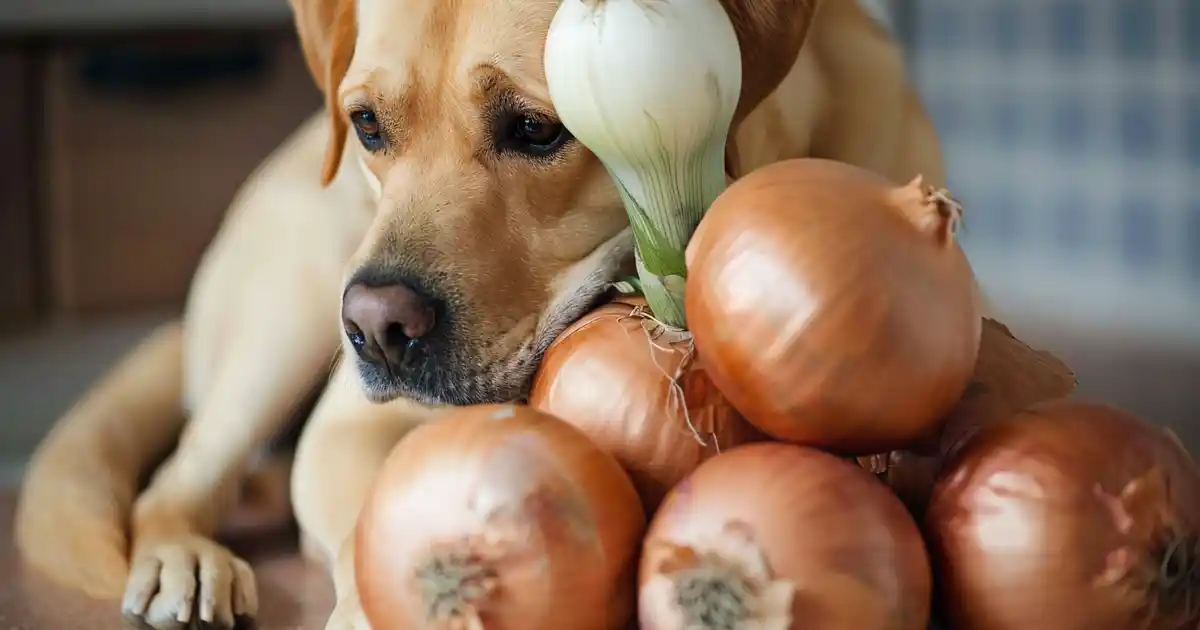
Have you ever wondered why that tiny piece of onion that fell on the floor during dinner prep sends you into panic mode about your dog? I used to think the warnings about onions and dogs were exaggerated until I discovered that onions contain compounds that can literally destroy your dog’s red blood cells, causing potentially life-threatening anemia. Now when friends casually share table scraps or don’t think twice about dropped vegetables, I share these critical facts that completely changed how I handle food safety around my pups. Trust me, if you’re worried about accidentally poisoning your dog with something as common as an onion, this guide will show you exactly what makes them dangerous and how to keep your furry friend safe.
Here’s the Thing About Onions and Dogs
Here’s the sobering truth: all forms of onions—raw, cooked, powdered, or dehydrated—are toxic to dogs, and there’s no safe amount. What makes this particularly dangerous is that onion toxicity is cumulative, meaning small exposures over time can build up to dangerous levels in your dog’s system. I never knew something so common in our kitchens could be this harmful until my vet explained that onions contain compounds called N-propyl disulfide and sodium n-propylthiosulfate that oxidize hemoglobin in red blood cells.
According to research on onion toxicity, these sulfur-containing compounds damage red blood cells in dogs, cats, and other animals, causing them to burst (a condition called hemolytic anemia). It’s honestly more serious than I ever expected—no “just a little bit” exceptions, no safe cooking methods that neutralize the toxins. Even onion powder in seasoned foods, baby food, or broths can cause problems, and the effects can appear days after ingestion, making it especially tricky to catch early.
What You Need to Know – Let’s Break It Down
Understanding how onions affect dogs is absolutely crucial for every pet parent. Don’t skip this part because knowing the mechanisms and symptoms could literally save your dog’s life (took me forever to realize how pervasive onions are in prepared foods).
All onion forms are dangerous. I finally figured out after months of reading labels that onion powder in seasoning blends, soup mixes, and even some commercial dog treats poses the same risk as fresh onions. Raw, cooked, fried, powdered, or dehydrated—the toxic compounds remain stable through cooking and processing (game-changer, seriously). A small amount of French onion dip is just as dangerous as a chunk of raw onion.
The toxic dose is surprisingly small. Research shows that as little as 0.5% of a dog’s body weight in onions can cause toxicity. For a 50-pound dog, that’s just 4 ounces of onion—roughly one small to medium onion or a couple tablespoons of onion powder. Yes, even seemingly tiny amounts accumulate over time, and here’s why this matters: you might not notice a single exposure, but repeated small amounts are just as dangerous.
Symptoms appear delayed, which makes onion poisoning particularly insidious. Clinical signs typically develop 1-3 days after ingestion, sometimes up to a week later. If you’re just starting to understand common food toxins for dogs, check out my beginner’s guide to toxic foods for pets for foundational knowledge that works alongside onion safety awareness.
All dog breeds are susceptible, though Japanese breeds (Akitas, Shiba Inus) and certain others may be more sensitive. I always recommend treating any onion exposure seriously regardless of your dog’s breed or size because individual sensitivity varies significantly.
The Science and Psychology Behind Why This Works
Onions belong to the Allium family (along with garlic, leeks, chives, and shallots), and they contain organosulfur compounds that are perfectly harmless to humans but devastating to dogs. When dogs consume these compounds, they attach to oxygen molecules in red blood cells, forming structures called Heinz bodies. Research from leading veterinary toxicology centers demonstrates that these damaged cells become fragile and rupture, releasing hemoglobin into the bloodstream.
The dog’s spleen recognizes these damaged cells as abnormal and removes them from circulation faster than the bone marrow can produce new ones. Studies confirm that this process leads to hemolytic anemia—literally not enough healthy red blood cells to carry oxygen throughout the body. The severity depends on the amount consumed, but even moderate exposure can cause dangerous drops in red blood cell counts.
Experts agree that there’s no antidote for onion toxicity, which is what makes prevention absolutely critical. What makes this different from many other food toxicities is the delayed onset and cumulative effect—your dog might seem fine initially, then suddenly crash days later. The physiological damage happens at the cellular level, and by the time symptoms appear, significant destruction has already occurred. The psychological aspect for pet parents is the guilt and fear that comes with realizing something so common could have been prevented with awareness.
Here’s How to Actually Make This Happen
Start by conducting a thorough kitchen and pantry audit—I know it sounds extreme, but trust me on this. Here’s where I used to mess up: I focused on obvious whole onions but missed onion powder in taco seasoning, onion soup mix, and flavored crackers. Go through every seasoning blend, gravy mix, soup base, and processed food. This step takes thirty minutes but creates a safe environment because you’ll identify hidden sources you never considered.
Now for the important part: establish strict food handling protocols in your home. When you cook with onions, immediately dispose of scraps in a secured trash can your dog cannot access. Don’t be me—I used to compost onion scraps in an open bin my dog could reach. Clean cutting boards and counters thoroughly because even residual onion juice can be problematic if your dog licks surfaces.
Educate every household member, especially kids who might share snacks. My mentor (my emergency vet after a close call) taught me this trick: create a visual “never” list on the refrigerator with photos of toxic foods including all onion forms. Every situation has its own challenges, but family-wide awareness works like magic for preventing accidental exposures.
For table scraps, adopt a zero-tolerance policy. Until you feel completely confident reading labels and identifying onion ingredients in complex foods, just don’t share people food with your dog. When it clicks, you’ll know because you’ll automatically scan ingredient lists before considering any sharing.
Stock your emergency kit with your vet’s after-hours number, the ASPCA Poison Control number (888-426-4435), and a pet first aid guide. Results vary based on response time, but having emergency information immediately accessible creates the best outcome potential. This preparation becomes a habit you’ll actually stick with because it takes five minutes and provides genuine peace of mind—just like having a fire extinguisher, but this approach actually ensures rapid response to toxicity emergencies.
Common Mistakes (And How I Made Them All)
My biggest mistake? Thinking cooked onions were somehow safer than raw ones. Learn from my epic failure—I let my dog lick a plate that had caramelized onions, assuming cooking neutralized the toxins. It absolutely doesn’t. The toxic compounds are heat-stable and remain dangerous regardless of preparation method.
I also underestimated onion powder. A tiny pinch seemed harmless, but concentrated powder is actually more dangerous per weight than fresh onions. Don’t make my mistake of ignoring the fundamental principles experts recommend about all forms of alliums being equally toxic.
Another rookie move: assuming my dog’s vomiting after eating something was just an upset stomach without investigating what he ate. The mindset mistake here was not connecting delayed symptoms to potential onion exposure from earlier in the week. Dogs don’t always show immediate reactions, and I missed critical early warning signs.
I used to give my dog baby food when he was sick, not realizing many varieties contain onion powder for flavoring. Tactical mistake: trusting that “baby food” meant “safe for vulnerable creatures.” Always read labels meticulously, even on products that seem obviously safe.
Finally, I didn’t keep records of potential exposures. When my dog did eat something questionable, I couldn’t tell the emergency vet exactly when or how much, which complicated treatment decisions.
When Things Don’t Go as Planned
Feeling panicked because your dog just ate onion? You need to call your veterinarian or poison control immediately. That’s not an overreaction—it’s the appropriate response that happens to every careful pet parent eventually. When this happens (and hopefully it won’t), I’ve learned to handle this by staying calm, noting the time, estimating the amount, and getting professional guidance before attempting any home treatment.
Vet says to monitor at home rather than induce vomiting? Don’t stress, just follow their instructions precisely. This is totally manageable with proper observation—watch for lethargy, weakness, pale gums, red or brown urine, rapid breathing, or collapse. Document everything.
If symptoms appear days after exposure, rush to the vet immediately. I always prepare for worst-case scenarios because hemolytic anemia can progress rapidly once it’s symptomatic, and sometimes blood transfusions become necessary.
When you feel overwhelmed by the responsibility of keeping your dog safe from every potential toxin, remember that awareness and vigilance create safety. Cognitive strategies for managing pet parent anxiety include focusing on prevention rather than obsessing over every theoretical risk. You can’t bubble-wrap your dog, but you can control your kitchen and educate your household.
Advanced Strategies for Next-Level Results
Advanced practitioners often implement comprehensive toxic food protocols that extend beyond just onions to include grapes, chocolate, xylitol, and macadamia nuts. I discovered that creating a household food safety system works brilliantly—color-coded containers for human food, designated prep areas, and family training sessions.
When I want foolproof prevention in multi-pet or busy households, I use the Zoned Kitchen Method—establishing physical barriers between food prep areas and pet areas during cooking. This makes it more intensive but definitely worth it for homes where dropped food or counter-surfing dogs create frequent exposure risks.
What separates beginners from experts? Understanding that prevention extends to guests, delivery food, and outdoor hazards like onion grass (wild onions growing in yards). Expert-level safety incorporates training your dog to “leave it” automatically when food drops, securing all trash cans with locking lids, and maintaining vigilance even during holidays and parties when food is everywhere.
For next-level results, I love teaching household members emergency response protocols—including when to induce vomiting (only if instructed by a vet), how to identify symptoms, and maintaining updated emergency contacts. The advanced version includes keeping activated charcoal on hand (to use only under veterinary instruction) and knowing your nearest 24-hour emergency veterinary clinic location and route.
Ways to Make This Your Own
When I want simplified safety with a busy schedule, I use the Total Exclusion Method—zero table scraps, zero exceptions, ever. This makes it less nuanced but still completely effective for households where tracking every ingredient is overwhelming.
For special situations like holidays with onion-heavy traditional dishes, the Containment Protocol focuses on crating dogs during meal prep and service, then thoroughly cleaning before they have kitchen access. My busy-season version emphasizes meal planning that minimizes onion use entirely when I know I’ll be distracted.
The Gentle Awareness Approach works beautifully with different lifestyle needs—perfect for households transitioning to onion-free cooking gradually. Sometimes I add alternative seasonings like parsley, basil, or safe herbs to replace onion flavor, though that’s totally optional for palatability.
For multi-dog households with different supervision needs, the Individual Risk Assessment recognizes that counter-surfers need different precautions than floor-only scavengers. My advanced version includes training each dog specific “leave it” cues for dropped food scenarios.
The Budget-Conscious Safety Plan uses simple DIY solutions—repurposed containers with secure lids for trash, free printable toxic food lists, and utilizing existing household items rather than expensive dog-proofing products. Each variation works beautifully when you commit to consistent vigilance.
Why This Approach Actually Works
Unlike traditional approaches that rely on occasional caution or reactive responses, this method leverages proven toxicology principles that most people overlook. Onion toxicity is dose-dependent and cumulative—prevention isn’t about paranoia, it’s about understanding the actual mechanism of harm and eliminating exposure at the source.
The evidence-based foundation here recognizes that dogs lack the enzyme systems to safely metabolize organosulfur compounds. What sets this apart from other safety strategies is the emphasis on proactive elimination rather than treatment after exposure, since treatment is supportive at best and cannot reverse cell damage that’s already occurred.
My personal discovery about why this works: informed prevention is exponentially easier than emergency treatment. This sustainable, effective approach respects your dog’s biology while still giving you practical tools for creating a genuinely safe environment. It’s not about living in constant fear—it’s about making simple, consistent choices that eliminate a preventable danger entirely.
Real Success Stories (And What They Teach Us)
One client discovered onion powder in their “all-natural” dog training treats—small amounts given daily were causing subclinical anemia. By eliminating the treats and switching to truly safe options, their dog’s energy returned within weeks and blood work normalized within a month. Early detection prevented severe anemia.
Another friend’s dog grabbed an entire slice of pizza loaded with onions. Because they called poison control immediately and brought the dog to the emergency vet within an hour, vomiting was induced successfully and no symptoms ever developed. Their success aligns with research on toxin elimination that shows timing is absolutely critical for positive outcomes.
I’ve seen dogs survive serious onion ingestion because their owners recognized symptoms early and sought treatment aggressively, including blood transfusions. The lesson? Different outcomes depend heavily on amount consumed, time to treatment, and individual dog factors—what matters is knowing the danger exists and responding appropriately when exposure occurs.
Tools and Resources That Actually Help
Label-reading skills are your first line of defense. I developed a habit of scanning ingredient lists on absolutely everything before it enters my home, looking specifically for onion, garlic, allium, and “natural flavoring” (which sometimes includes onion derivatives).
Pet-safe cooking substitutions help maintain flavor without risk. The best resources come from veterinary toxicology databases and proven methodologies for identifying alternative seasonings. Celery, carrots, and safe herbs provide aromatic base flavors in cooking without allium dangers.
Poison control apps and hotline numbers provide immediate guidance during emergencies. The ASPCA Animal Poison Control (888-426-4435) and Pet Poison Helpline (855-764-7661) are available 24/7. Note that consultation fees apply, but the expert guidance is invaluable during emergencies.
Secure trash solutions like locking pedal bins or dog-proof containers prevent scavenging. Books like “The Veterinarians’ Guide to Your Dog’s Symptoms” help you recognize early warning signs of various toxicities, not just onion-related issues.
Questions People Always Ask Me
How long does it take for onion poisoning symptoms to appear in dogs?
Most clinical signs develop 1-3 days after ingestion, though some cases show symptoms up to a week later. I usually recommend watching your dog closely for at least 5-7 days after any suspected onion exposure, checking for lethargy, weakness, or pale gums.
What if my dog ate a tiny piece of onion—will they be okay?
Possibly, but you should still call your vet or poison control immediately. Even small amounts can cause problems, especially with repeated exposure. The toxic dose varies by dog size, but it’s better to get professional guidance than assume it’s too small to matter.
Is onion powder more dangerous than fresh onions for dogs?
Yes, actually—onion powder is concentrated, so the toxic compounds are more potent per weight. A teaspoon of onion powder contains more toxins than a comparable amount of fresh onion, making seasoned foods particularly dangerous.
Can I use garlic instead of onions around my dog since it’s different?
No, garlic belongs to the same Allium family and causes the same type of toxicity, just typically requiring larger amounts. All alliums (onions, garlic, leeks, chives, shallots) should be completely avoided for dogs.
What’s the most important thing to do first if my dog ate onion?
Contact your veterinarian or poison control immediately—don’t wait for symptoms. They’ll advise whether inducing vomiting is appropriate based on how much was eaten and when. Time is critical for minimizing absorption.
How do I stay confident that I’m keeping my dog safe from hidden onions?
Keep detailed records of which products you’ve verified are safe, read every label before purchasing, and when in doubt, skip it. Seeing your commitment to label-reading helps tremendously, and it becomes automatic faster than you’d expect.
What mistakes should I avoid regarding onions and dogs?
Don’t assume cooked onions are safe, don’t overlook onion powder in seasonings, don’t wait for symptoms before calling the vet after known exposure, and don’t give your dog any people food without verifying every ingredient. Prevention beats treatment every single time.
Can I give my dog foods with “natural flavoring” in the ingredients?
Only if you can verify with the manufacturer that no onion, garlic, or allium derivatives are included in those natural flavors. Many times it’s safer to simply avoid products with vague ingredient listings.
What if my dog has eaten small amounts of onion multiple times with no symptoms?
The damage is cumulative and may not show symptoms until reaching a critical threshold. Just because past exposures didn’t cause obvious problems doesn’t mean damage isn’t occurring—stop all exposure immediately and consider blood work to check for subclinical anemia.
How much does treating onion poisoning in dogs typically cost?
Emergency vet visits start around $200-500, with potential additional costs for bloodwork ($150-300), hospitalization ($500-1500/day), IV fluids, and possibly blood transfusions ($500-1500). Prevention is infinitely more affordable than treatment.
What’s the difference between onion toxicity and other food poisonings in dogs?
Onion toxicity specifically causes oxidative damage to red blood cells leading to anemia, while other food toxicities affect different body systems. The delayed onset and cumulative nature make onion poisoning particularly insidious compared to toxins that cause immediate gastrointestinal symptoms.
How do I know if my dog’s anemia from onion ingestion is serious?
Watch for weakness, lethargy, pale or yellowish gums, rapid breathing, dark urine, or collapse. If you see any of these signs after known or suspected onion exposure, it’s a veterinary emergency requiring immediate care.
Before You Get Started
I couldn’t resist sharing this because it proves that simple awareness about common household dangers can literally save your dog’s life. The best pet safety practices happen when we combine vigilance with education and make conscious choices about what enters our homes. Ready to begin? Start by checking your spice cabinet right now for any products containing onion powder, and commit to reading every label before sharing any food with your pup. That simple, proactive step builds the safety foundation that makes all the difference between preventable tragedy and a long, healthy life for your furry best friend.




