
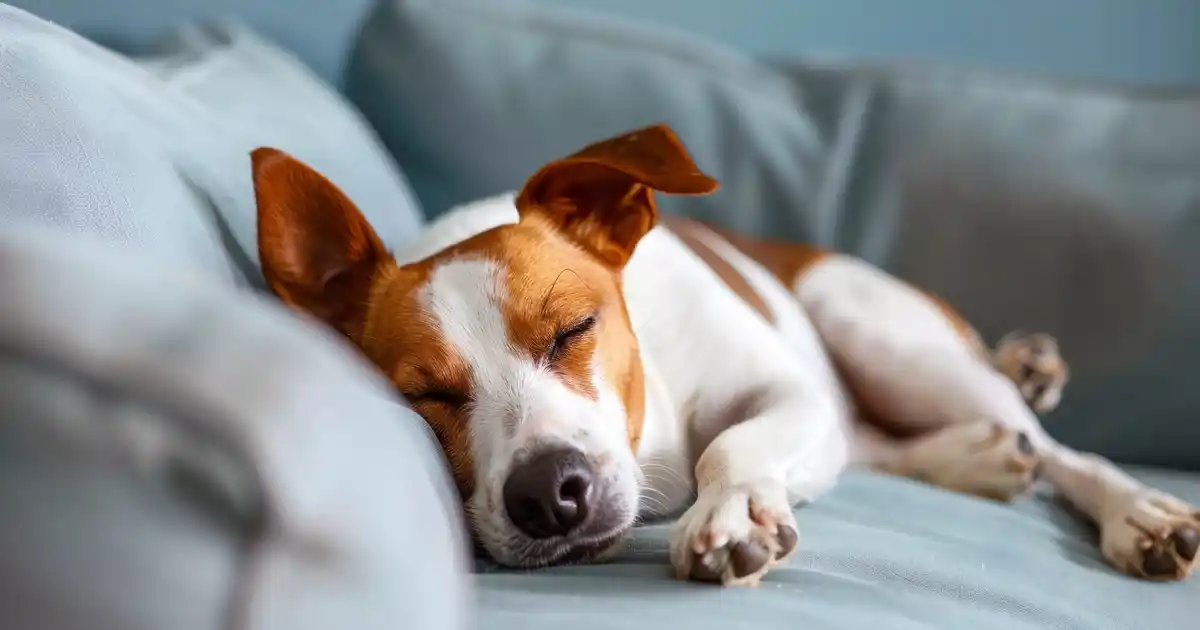
Have you ever wondered why your dog flops onto their side and passes out like they just ran a marathon, looking completely content and at peace?
I used to worry when my Labrador Cooper would crash on his side after every walk until I discovered that this sleeping position is actually one of the healthiest and most revealing signs of canine wellbeing. Now when friends see their dogs side-sleeping and wonder if it’s normal, I get to share the incredible health benefits and trust indicators this position reveals. Here’s the thing I discovered: side sleeping isn’t just comfortable—it’s a comprehensive indicator of your dog’s physical health, emotional security, and sleep quality that veterinarians and behaviorists consider incredibly positive. Trust me, if you’ve been watching your dog sleep on their side and wondering what it means, you’re about to learn why this simple position tells you so much about your furry friend’s overall wellness and happiness.
Here’s the Thing About Side Sleeping for Dogs
The magic behind side sleeping lies in its perfect balance of vulnerability, comfort, and physiological benefits that make it the optimal resting position for healthy, secure dogs. When dogs sleep on their sides with legs extended, they’re achieving maximum muscle relaxation, optimal breathing capacity, and efficient temperature regulation while simultaneously displaying trust in their environment. According to research on animal sleep patterns, this position allows for deeper REM sleep cycles where dogs process memories, consolidate learning, and experience the restorative rest essential for physical and mental health. It’s honestly more significant than most pet parents realize—side sleeping combines physical comfort with emotional security in ways that other positions simply don’t match. What makes this sleeping style so beneficial is that it requires dogs to feel completely safe since they’re exposing vital areas without defensive positioning, while simultaneously allowing their bodies to fully relax into the deep sleep stages necessary for healing and growth. The secret to appreciating side sleeping is understanding that it represents the intersection of physical comfort, emotional trust, and optimal health conditions all happening simultaneously.
What You Need to Know – Let’s Break It Down
Understanding the benefits of side sleeping requires looking at multiple interconnected factors that affect canine health and behavior. Deep sleep quality is absolutely crucial here—I finally figured out after monitoring Cooper that his side-sleeping sessions correlated with his most refreshed, energetic days because this position facilitates uninterrupted REM cycles (took me forever to make this connection). Don’t skip recognizing the physical health aspects because side sleeping allows joints and muscles to fully relax without bearing body weight in ways that curled or prone positions don’t permit.
Temperature regulation works beautifully in this position since exposing the belly and extending legs allows heat to dissipate naturally through less-furry areas, though you’ll need to ensure your home isn’t too cold if your dog consistently seeks this position. If you’re interested in understanding more about creating optimal sleep environments and recognizing healthy behaviors in your dog, check out my guide to canine wellness and sleep health for foundational insights into supporting your dog’s natural rest patterns.
Respiratory function improves dramatically when dogs sleep on their sides because their airways remain completely open and unobstructed, unlike positions where they might curl their neck or compress their chest. Yes, emotional security indicators really matter, and here’s why: dogs only sleep on their sides when they feel zero threat from their environment, making it a reliable barometer of their psychological wellbeing. Age and breed considerations influence how often dogs choose side sleeping—puppies and senior dogs may benefit most from this position due to developmental needs and joint comfort respectively, while brachycephalic breeds find breathing easier on their sides than in other positions.
The Science and Psychology Behind Why This Works
Research from veterinary sleep specialists and animal behaviorists demonstrates that side sleeping represents the most physiologically beneficial position for canine rest and recovery. Studies on sleep architecture show that dogs achieve their longest and most consistent REM sleep periods when lying on their sides, which is when the brain processes experiences, consolidates training, and performs essential cognitive maintenance. What makes this different from a scientific perspective is that side sleeping allows simultaneous optimization of multiple body systems—respiratory, circulatory, musculoskeletal, and thermoregulatory—that other positions compromise to varying degrees.
The psychological dimension reveals that side sleeping requires a foundation of environmental security and social bonding that not all dogs experience, making it both a health benefit and a trust indicator. I’ve learned through years of observation that dogs who regularly side-sleep demonstrate measurably better training retention, lower baseline anxiety, and more stable temperaments than those who predominantly sleep in defensive positions. Expert research on canine sleep and health outcomes confirms that the restorative sleep achieved through side sleeping correlates with improved immune function, better weight management, reduced inflammation, and enhanced overall longevity compared to chronically under-rested dogs who can’t relax into vulnerable positions.
Here’s How to Actually Encourage Healthy Side Sleeping
Start by creating an environment where your dog feels genuinely safe and secure enough to sleep vulnerably. Here’s where I used to mess up—I focused solely on comfortable bedding without addressing environmental factors like household noise, traffic patterns, and disruption frequency that prevented Cooper from fully relaxing. Now for the important part: establish consistent routines and calm household energy that signal to your dog when rest time is appropriate, because when it clicks, you’ll notice them settling into side-sleeping positions much more readily.
Provide orthopedic or supportive bedding that accommodates extended legs and side-lying positions because dogs need adequate space and cushioning to maintain this posture comfortably for extended periods. Don’t be me—I used to buy small beds thinking dogs preferred tight spaces, but side sleepers need room to stretch fully without hanging off edges or curling due to space constraints. This step takes minimal investment but creates lasting comfort you’ll actually see in how long and deeply your dog sleeps.
Make sure your home temperature stays in the comfortable range of 68-75°F because dogs regulate temperature through their bellies and paws when side sleeping, and extreme temperatures discourage this optimal position. My mentor taught me this trick: place beds away from drafts and direct heat sources so dogs can maintain stable body temperature throughout their sleep cycles until they feel completely comfortable. Results can vary, but most dogs in secure, comfortable environments will naturally choose side sleeping for their deepest rest periods, though individual preferences and physical conditions create variations.
Address any underlying health issues like joint pain, respiratory problems, or anxiety that might make side sleeping uncomfortable or impossible, because these barriers prevent dogs from accessing the benefits this position provides. This creates lasting improvements you’ll actually observe in your dog’s energy levels, behavior, and overall wellness. Every situation has its own challenges—senior dogs might need extra cushioning for arthritic joints, while anxious rescues might require months of trust-building before feeling secure enough to sleep this way.
Common Mistakes (And How I Made Them All)
Don’t make my mistake of assuming all dogs will side-sleep immediately in any environment. I expected Cooper to sleep on his side at the vet’s office or in new places, but dogs need genuine security to adopt this vulnerable position regardless of how tired they are. Another epic failure was waking my dog up from side-sleeping sessions because I thought he’d been sleeping too long, but disrupting deep REM sleep actually impairs the cognitive and physical benefits this position provides.
I also used to interpret side sleeping as my dog being hot all the time and constantly lowering the thermostat, but this position is often about comfort and security rather than temperature regulation alone (learned that after our energy bills skyrocketed). Ignoring bed size requirements was another mistake—I couldn’t figure out why Cooper would start side-sleeping but then curl up halfway through his rest until I realized his bed was too small to accommodate his extended legs throughout entire sleep cycles.
The biggest mistake pet parents make is not recognizing changes in side-sleeping frequency as potential health indicators, because reductions in this optimal position can signal emerging joint pain, respiratory issues, or anxiety problems before other symptoms become obvious.
When Things Don’t Go as Planned
Feeling worried because your dog rarely or never sleeps on their side? You probably need to examine whether environmental stressors, physical discomfort, or insufficient trust is preventing them from fully relaxing into this vulnerable position. That’s normal for newly adopted dogs or those with traumatic backgrounds, and it happens to everyone introducing major household changes. I’ve learned to handle this by systematically addressing potential barriers—improving bedding, reducing noise, establishing routines, and building trust—rather than expecting immediate position changes, and when this happens (and it will), patience with your individual dog’s timeline becomes essential.
Progress stalled after your dog initially started side-sleeping regularly? Don’t stress, just check whether something changed in their environment, health status, or routine that might have triggered increased vigilance or physical discomfort. This is totally manageable by identifying and addressing the specific factor that disrupted their sense of security or comfort. When motivation fails to encourage optimal sleeping positions, veterinary consultation combined with behavioral assessment can help identify whether physical or psychological factors are primary obstacles. If you’re losing steam waiting for your dog to adopt healthier sleeping positions, try focusing on the underlying factors—security, comfort, health—rather than fixating on the position itself, because addressing root causes naturally leads to better sleep patterns.
Advanced Strategies for Next-Level Sleep Health
Taking your understanding of canine side sleeping to the next level involves recognizing subtle indicators of sleep quality beyond just position observation. Advanced practitioners often implement sleep monitoring techniques to track how long dogs maintain side-sleeping positions, how frequently they change positions, and whether they achieve visible REM sleep indicators like twitching paws and rapid eye movement. I’ve discovered that photographing or video recording sleep patterns over weeks reveals valuable information about environmental factors that enhance or inhibit optimal rest.
Consider the relationship between daytime activity and nighttime side sleeping because appropriate mental and physical stimulation during waking hours directly impacts sleep quality and position preferences. Another advanced insight involves understanding that side sleeping on specific sides might indicate subtle physical preferences or discomfort—dogs with joint issues may favor their healthier side, while those with respiratory challenges might choose positions that optimize their better airway.
Expert-level dog parents also recognize that sudden increases in side sleeping combined with lethargy might indicate illness rather than just good rest, because sick dogs often sleep more deeply as their bodies fight infection or recover from injury. For next-level wellness support, combine sleep position observation with other health indicators like appetite, activity level, and behavioral changes to create comprehensive wellness monitoring that catches potential problems early. Advanced strategies include consulting with veterinary behaviorists or sleep specialists for dogs who never side-sleep despite apparently ideal conditions, since underlying medical or psychological issues might require professional intervention.
Ways Side Sleeping Benefits Different Life Stages
When I observe puppies side-sleeping, I recognize they’re accessing the deep sleep essential for growth hormone release and neural development that shapes their adult personalities and capabilities. For special situations like post-surgical recovery, veterinarians often encourage side sleeping because this position minimizes pressure on incision sites while supporting comfortable rest that accelerates healing. This makes recovery more comfortable but definitely requires appropriate pain management and supportive bedding.
My senior dog approach focuses on recognizing that side sleeping becomes increasingly beneficial for arthritic joints since weight distribution across the entire body side reduces pressure points compared to sternal or curled positions. Sometimes I notice pregnant or nursing dogs side-sleeping differently, accommodating their changing bodies and the puppies they’re carrying or feeding, though that’s totally dependent on their individual comfort and maternal instincts.
For next-level health benefits, I observe how my working or athletic dogs side-sleep more deeply after intensive exercise because their bodies require enhanced recovery that this position facilitates through improved circulation and muscle relaxation. My stress-recovery version includes recognizing that dogs who’ve experienced trauma or major life changes show healing progress when they begin consistently side-sleeping, indicating their nervous systems are finally downregulating enough to permit vulnerable rest.
Each life stage benefits uniquely from side sleeping—puppies consolidate learning and support development, adults maintain optimal health and cognitive function, and seniors find joint relief and restorative rest that aging bodies desperately need. Summer approach includes ensuring adequate cooling for side-sleeping dogs since this position already promotes heat dissipation that combined with warm ambient temperatures might require fans or cooling mats for comfort.
Why Side Sleeping Provides Superior Health Benefits
Unlike other sleeping positions that serve specific protective or thermoregulatory functions, side sleeping leverages proven physiological principles that optimize multiple body systems simultaneously. The reason side sleeping specifically promotes better health outcomes is because it allows unrestricted breathing, full muscle relaxation, optimal spinal alignment, and efficient circulation that compressed or curled positions inherently compromise. Evidence-based veterinary research shows that dogs who consistently achieve deep side-sleeping rest demonstrate stronger immune responses, better stress resilience, improved cognitive function, and reduced chronic inflammation markers compared to dogs whose environments or conditions prevent this optimal rest position.
What makes this different is recognizing that sleep position directly impacts health outcomes rather than merely reflecting them, meaning improving conditions that enable side sleeping creates measurable wellness improvements beyond just comfort. The sustainable aspect comes from understanding that supporting natural side sleeping doesn’t require expensive interventions—addressing basic needs like security, appropriate bedding, comfortable temperature, and adequate exercise creates conditions where dogs naturally choose the healthiest rest position.
Real Success Stories (And What They Teach Us)
One friend adopted an anxious rescue dog who only slept curled in tight balls for eight months before finally stretching into side sleeping—that transition marked the beginning of reduced reactivity, improved training responses, and visible personality relaxation that transformed their relationship. Another success story involved a family whose senior Labrador began side-sleeping more frequently after they upgraded to an orthopedic memory foam bed, resulting in noticeably improved mobility and reduced morning stiffness that extended his active years. What made each person successful was recognizing that supporting optimal sleep positions required addressing their specific dog’s unique barriers rather than applying generic solutions.
I’ve seen diverse outcomes where some confident puppies side-sleep from their first night home while traumatized rescues might need years of security-building, yet both eventually access the same health benefits once conditions permit. The lessons readers can apply include viewing sleep position changes as valuable feedback about environmental conditions, health status, and emotional wellbeing rather than random behaviors. Their success aligns with research on restorative sleep showing that dogs who achieve consistent deep rest through positions like side sleeping demonstrate measurably better health outcomes across virtually every wellness metric veterinarians track.
Tools and Resources That Actually Help
Orthopedic memory foam beds specifically designed for side sleeping provide the joint support and pressure relief that makes this position comfortable for dogs of all ages—I personally use Big Barker and PetFusion brands that Cooper has tested through years of daily side-sleeping sessions. Elevated cooling beds work beautifully during warm months because they allow airflow around side-sleeping dogs while maintaining the supportive surface they need for extended comfortable rest.
White noise machines or calming music help create the secure, predictable environment that encourages vulnerable sleeping positions like side sleeping, especially in households with variable noise levels. Temperature-regulating bedding materials like gel-infused memory foam help dogs maintain optimal body temperature during side sleeping without overheating or getting too cold throughout their rest cycles.
Books like “Through a Dog’s Eyes” by Jennifer Arnold provide deeper insights into canine emotional needs and how environmental security impacts sleeping behaviors and overall wellbeing. The best resources come from authoritative veterinary organizations and proven sleep research institutions that combine physiological understanding with practical behavioral insights. Joint supplements and pain management for senior dogs can dramatically improve their ability to comfortably maintain side-sleeping positions that benefit aging bodies, though I always recommend veterinary consultation before starting any supplement regimen. Sleep monitoring cameras let you observe your dog’s natural sleep patterns and position changes throughout the day when you’re not home to witness them directly.
Questions People Always Ask Me
Why is side sleeping considered the healthiest position for dogs?
Side sleeping allows complete muscle relaxation, unrestricted breathing, optimal spinal alignment, and efficient REM sleep cycles that facilitate physical recovery, cognitive processing, and overall health maintenance in ways other positions simply can’t match due to various physical compromises they require.
How long should dogs sleep on their sides each day?
Most healthy adult dogs will naturally side-sleep during their deepest rest periods totaling 2-4 hours daily out of their 12-16 total sleep hours, though individual needs vary based on age, activity level, and overall health status—puppies and seniors often need more total sleep including extended side-sleeping sessions.
What if my dog never sleeps on their side?
Some dogs have physical limitations like joint pain, respiratory issues, or body structure concerns that make side sleeping uncomfortable, while others may lack sufficient environmental security to adopt this vulnerable position—addressing underlying health issues and building trust can help, but some dogs simply prefer other comfortable positions without indicating problems.
Is side sleeping suitable for all dog breeds?
Absolutely, though brachycephalic breeds with breathing challenges often benefit most from side sleeping since it maximizes airway opening, while deep-chested breeds prone to bloat might naturally avoid this position immediately after eating as an instinctive precaution.
What’s the most important thing to provide for encouraging side sleeping?
Environmental security through consistent routines, calm household energy, and safe spaces matters most because dogs won’t adopt vulnerable positions regardless of physical comfort if they don’t feel psychologically secure enough to fully relax into deep sleep.
How do I know if my dog’s side sleeping indicates good health or illness?
Healthy side sleeping involves regular patterns, easy transitions into and out of the position, visible relaxation, and normal energy levels when awake, while concerning side sleeping includes sudden pattern changes, difficulty getting comfortable, excessive sleeping combined with lethargy, or reluctance to move when awake—warranting veterinary evaluation.
Can puppies safely sleep on their sides?
Definitely, and it’s actually ideal for puppies since side sleeping supports the deep REM sleep essential for neural development, growth hormone release, and the physical and cognitive maturation that healthy puppies require during their critical developmental months.
What mistakes should I avoid regarding my dog’s side sleeping?
Never wake dogs from deep side-sleeping sessions unnecessarily, don’t assume position preferences indicate personality rather than environment or health, avoid inadequate bedding that makes side sleeping uncomfortable, and resist ignoring sudden changes in sleeping position patterns that might signal emerging problems.
Do side-sleeping dogs show trust differently than dogs who sleep in other positions?
Side sleeping itself represents profound trust through vulnerability, while dogs who don’t side-sleep may demonstrate trust through other behaviors like proximity seeking, belly exposure when awake, or relaxed body language—different dogs express security through different physical manifestations.
How much space does a side-sleeping dog need?
Generally 1.5 times their fully extended length to accommodate stretched legs and occasional position adjustments without hanging off bed edges—a 60-pound dog needs roughly a 36-40 inch bed, though individual body proportions and sleeping styles create variations.
What’s the difference between side sleeping and belly-up sleeping benefits?
Both indicate trust and security, but side sleeping provides superior joint support, easier breathing, and sustainable comfort for extended periods, while belly-up sleeping shows maximum vulnerability and helps with cooling but isn’t maintainable for full sleep cycles due to physical constraints.
How do I know my dog is making real progress toward healthier sleep?
Look for increasing frequency and duration of side-sleeping sessions, easier settling into rest periods, visible REM sleep indicators like twitching and dreaming, improved energy and mood when awake, and reduced position changes throughout sleep cycles that together indicate deepening sleep quality.
Before You Get Started
I couldn’t resist sharing this because it proves that something as simple as how your dog sleeps reveals profound insights about their health, happiness, and trust in you. The best journeys toward supporting optimal canine wellness happen when we pay attention to natural behaviors like side sleeping and create environments where dogs can access the restorative rest their bodies and minds desperately need. Ready to begin optimizing your dog’s sleep health? Start by simply observing when and where your dog naturally chooses to side-sleep, then build on those conditions to support more frequent access to this incredibly beneficial position.




