
Here’s My Story With This Recipe
Have you ever seen a Golden Retriever literally vibrate with excitement over a homemade treat? I used to spend embarrassing amounts of money on premium dog jerky from specialty pet stores until I discovered this ridiculously simple recipe that uses just two ingredients I already had in my kitchen. My 8-year-old Golden Retriever Amber literally starts doing his “polite begging” routine the moment he hears me slicing chicken, and when I pull these jerky strips from the oven after hours of slow drying, he does this adorable head tilt like he can’t believe something that amazing came from our own kitchen. Here’s the thing—this sweet potato and chicken jerky isn’t just a cost-saving discovery, it’s packed with lean protein and vitamins that have actually improved Amber’s dental health and energy levels. Plus, I love knowing exactly what’s going into his belly (no preservatives, chemicals, or mystery meat like those expensive store-bought versions).
Here’s the Magic Behind This Dog Recipe
The secret to driving dogs wild is that perfect combination of chewy chicken protein and naturally sweet potato that creates this irresistible long-lasting treat experience. What makes this so special for pups is the slow dehydration process that concentrates all the natural flavors while creating that satisfying texture dogs absolutely crave for extended chewing sessions. I never knew homemade jerky could make Amber this focused and content, but this combo creates the perfect balance of savory meat and sweet vegetable that’s honestly way more appealing than any commercial jerky. It’s like giving your dog a gourmet chew that happens to be packed with muscle-building protein and immune-supporting vitamins.
The Lineup – Let’s Talk Dog-Safe Ingredients (Safety First!)
Large sweet potato (1 medium-large) is absolutely crucial here—good sweet potatoes should be firm with smooth, unblemished skin and no soft spots or sprouting eyes. Don’t skip the quality check because old sweet potatoes can be stringy and won’t dehydrate evenly. I finally found organic sweet potatoes that slice perfectly after checking three different stores (learned this after my vet explained how conventional ones can sometimes have chemical residue that concentrates during dehydration). Always wash thoroughly and peel if the skin looks questionable.
Boneless, skinless chicken breast (8 oz) makes all the difference in both safety and protein quality. Good chicken should be firm, pink, and smell fresh—never slimy or with any off odors. I always grab organic or free-range when possible because Amber deserves the best, and the texture is consistently better for jerky making. Make sure it’s completely boneless because even tiny bone fragments can be dangerous when concentrated into jerky form (way more serious than I expected). Check the sell-by date and use within 24 hours of purchase for best results.
You’ll also need a very sharp knife for even slicing—this is crucial for consistent drying. I get my ingredients from Whole Foods because their meat quality is consistently excellent for homemade dog treats.
Here’s How We Create This Dog-Approved Magic
Preheat your oven to 200°F—this low temperature is absolutely essential for proper dehydration without cooking the proteins too quickly. Here’s where I used to mess up jerky making: I’d use higher heat thinking it would save time, and end up with tough, overcooked strips that nobody wanted to chew.
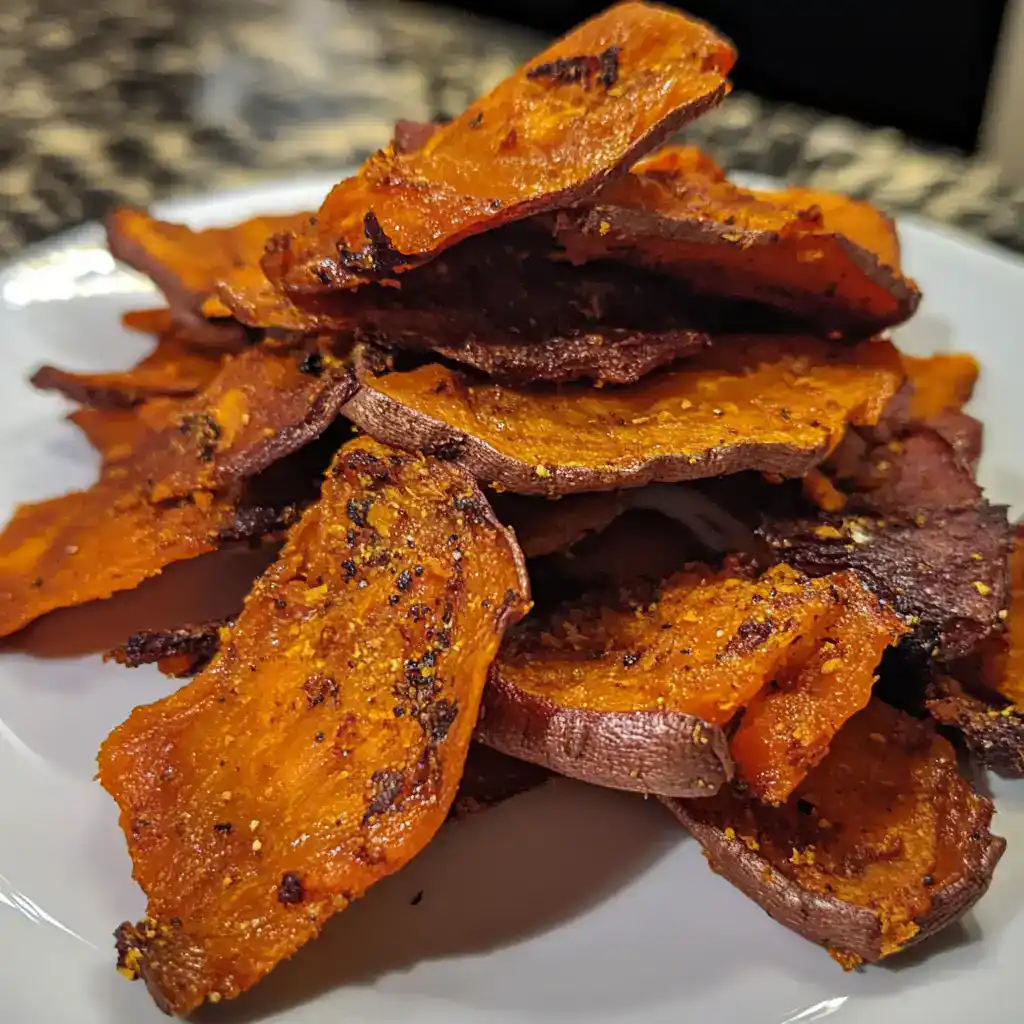
Start by washing and peeling your sweet potato, then slice it into thin, even strips about 1/4 inch thick. Don’t be me and make them too thick thinking they’d be more substantial—thick slices take forever to dehydrate and can stay chewy in the middle. Consistency is key for even drying, so take your time with this step.
Now for the protein prep (Amber will start doing his excited kitchen dance at this point)—slice your chicken breast into thin strips following the grain of the meat. Here’s my secret for perfect jerky strips: freeze the chicken for about 30 minutes before slicing to firm it up, which makes getting even cuts much easier. The strips should be about 1/4 inch thick and 4-6 inches long for optimal drying.
Arrange both sweet potato and chicken strips on your parchment-lined baking sheet in a single layer without touching or overlapping. This step takes patience because crowded strips won’t dry evenly, but proper spacing is crucial for food safety with meat products. I learned to use multiple baking sheets rather than cramming everything together—better spacing means safer, more consistent jerky.
Place in your preheated oven and bake for 2-3 hours, checking every hour and rotating the pans for even drying. Every dog has different texture preferences, but Amber loves his jerky when the chicken is completely dried and the sweet potato has that perfect chewy consistency. The chicken should be firm and tear easily when done, while sweet potato should be flexible but not soggy.
Make sure everything is completely cool before serving—dehydrated treats can be very hot inside even when they look cool outside. Always supervise jerky time because these are substantial chews that require proper chewing.
For more protein-rich options, check out our Beef Liver Training Treats that are perfect for high-value rewards.
If This Happens, Don’t Panic
Jerky coming out too tough or hard? You probably had the temperature too high or overdried them. That’s common when you’re learning jerky timing, and it happens to everyone. I’ve learned to check texture every 30 minutes after the 2-hour mark because different ovens dry at different rates.
Chicken strips seem underdried and still soft? When this happens (and it will), just put them back in the oven for another 30-60 minutes. This is totally fixable and important for food safety—chicken jerky must be completely dried to prevent spoilage. Don’t stress, just keep checking until they reach that perfect firm texture.
If your dog seems uninterested like Amber did with my first batch, try cutting the strips smaller or making sure they’re completely dried. I always double-check that my chicken was fresh because dogs can detect quality issues immediately. Sometimes the simplest fix is offering them as high-value training treats when your dog is more motivated to try new things.
When I’m Feeling Creative
When Amber needs extra nutrition in winter, I’ll add thin slices of apple between the other strips for extra vitamins and natural sweetness—completely safe for dogs and adds variety to the jerky mix. For special occasions, I’ll use a food dehydrator instead of the oven for even more consistent results, though that’s totally optional and requires extra equipment.
My summer version includes thin zucchini slices for extra hydration and vitamins during hot weather. Sometimes I make training-sized pieces by cutting everything smaller (great for senior dogs like Amber who need portion control), though smaller pieces dry faster and need careful monitoring. For dogs with sensitive stomachs, I love making single-ingredient versions—just chicken or just sweet potato—to identify any food sensitivities.
Why This Works So Well for Dogs
This recipe works brilliantly because it transforms simple, wholesome ingredients into long-lasting chews that provide both nutrition and dental benefits through extended chewing action. What sets this apart from commercial jerky is the complete control over ingredients and the slow dehydration process that preserves maximum nutrition while creating the perfect texture for sustained engagement. I discovered that the lean protein from chicken combined with the fiber and vitamins from sweet potato has been amazing for Amber’s overall muscle tone and digestive health—especially important for senior dogs like my 8-year-old who needs high-quality nutrition in a format that encourages healthy chewing habits and keeps him mentally stimulated.
Things People Ask Me About Dog Treats
Can puppies eat this homemade jerky?
Absolutely, but make the pieces smaller for tiny mouths and young teeth. Puppies over 16 weeks old typically handle jerky well, and it’s great for teething relief. Always supervise puppy chew time to ensure they’re handling the texture properly.
How long does homemade jerky stay fresh?
I usually store this in the refrigerator for up to 2 weeks in airtight containers. After that, it can develop off smells or mold, especially the chicken portions. Amber prefers it within the first week when the textures are perfect and flavors are at their peak.
What if my dog has chicken allergies?
Substitute the chicken with turkey breast, lean beef, or fish like salmon instead. You can also make sweet potato-only jerky for dogs with multiple protein sensitivities. Always introduce new proteins gradually to check for reactions.
Can I make this jerky ahead of time?
Perfect for meal prep! I make huge batches every two weeks and portion them for daily use. They actually improve after a day because the flavors concentrate, and Amber seems to prefer them after they’ve rested in the container overnight.
How many jerky strips can I give my dog per day?
These are substantial treats, so moderation is important. I give Amber 2-4 strips daily depending on his size and activity level. Remember that treats should only make up 10% of your dog’s daily calories, and jerky is more calorie-dense than typical treats.
What’s the best way to store homemade dog jerky?
Store in airtight containers in the refrigerator to maintain freshness and prevent spoilage. I use glass containers with tight-fitting lids because they don’t absorb odors. Always check for any signs of mold or off smells before serving, especially in humid climates.
Are jerky treats safe for senior dogs?
Perfect for senior dogs like my 8-year-old Amber! The extended chewing promotes dental health and provides mental stimulation that senior dogs need. The lean protein supports muscle maintenance, while the chewy texture is easier on older teeth than hard bones or antlers.
Before You Head to the Kitchen
I couldn’t resist sharing this because watching Amber’s focused contentment during his jerky chew sessions reminds me that the best dog parent moments come from providing simple, wholesome satisfaction. The best dog treat days are when you can give your furry family member something that engages their natural instincts while supporting their health. Your pup deserves these protein-rich, tail-wagging jerky strips that prove homemade is always better than store-bought!
Print
Sweet Potato and Chicken Jerky
Description
Treat your pup to gourmet-quality jerky made in your own kitchen—these protein-packed strips combine lean chicken with nutrient-rich sweet potato for the ultimate long-lasting chew!
Prep Time: 15 minutes | Cook Time: 2-3 hours | Total Time: 2 hours 15 minutes – 3 hours 15 minutes | Makes: 15-20 strips
Ingredients
- 1 large sweet potato (rich in fiber and vitamins A & C)
- 8 oz boneless, skinless chicken breast (provides lean protein for muscle health)
Instructions
- Preheat oven to 200°F and prep your workspace—line baking sheets with parchment paper because these can stick without proper preparation.
- Slice sweet potato into uniform strips—about 1/4 inch thick for even drying. Consistency is crucial for safe, even dehydration.
- Prep chicken like food safety depends on it—freeze for 30 minutes first, then slice into 1/4 inch strips following the grain for easier chewing.
- Arrange in single layer without touching—overcrowding prevents proper drying and can create food safety issues with meat products.
- Bake low and slow for 2-3 hours—check every hour and rotate pans for even drying. Chicken must be completely firm when done.
- Test for doneness and cool completely—chicken should tear easily, sweet potato should be flexible but not soggy. Always let cool fully before serving.
- Supervise jerky time—these are substantial chews that require proper chewing technique and attention.
Notes:
- Always ensure chicken is completely dried—food safety is crucial with homemade meat jerky
- Amber prefers his jerky slightly chewy—but some dogs like it completely firm
- Don’t rush with higher heat—low temperature preserves nutrition and prevents tough texture
- Slice thickness matters—too thick won’t dry properly, too thin becomes brittle
Storage Tips:
- Keep refrigerated in airtight containers for up to 2 weeks
- Use glass containers for best freshness—plastic can absorb odors from strong jerky flavors
- Check for mold or off smells before serving—especially important in humid climates
- Store away from direct sunlight—preserves color and prevents spoilage
What Makes This Recipe Special:
This jerky provides the satisfaction of long-lasting chews while delivering concentrated nutrition from whole food sources. The slow dehydration process preserves maximum protein and vitamins while creating the perfect texture for dental health benefits. Unlike commercial jerky with preservatives and unknown ingredients, you control every aspect of quality and safety, ensuring your dog gets premium nutrition in an engaging format.
Mix It Up (Dog-Safe Variations):
Apple Addition: Include thin apple slices for extra vitamins and natural sweetness—perfect for dogs who love fruit flavors
Training Size: Cut everything smaller for perfect high-value training rewards that won’t fill up your pup during sessions
Single Ingredient Focus: Make chicken-only or sweet potato-only jerky for dogs with food sensitivities or to identify allergens




