
Here’s My Story With This Recipe
Ready to become your dog’s favorite human with one simple recipe? I used to feel terrible about buying expensive dehydrated dog treats until I discovered this slow-baked jerky combination that made my 8-year-old Golden Retriever Amber literally sit guard by the oven for three hours straight. Here’s the thing—there’s something magical about combining the natural sweetness of sweet potato with savory beef that drives dogs absolutely wild. My vet actually complimented me on Amber’s coat shine during our last visit, and I love knowing he’s getting anti-inflammatory benefits along with that amazing flavor he craves. Plus, these smell so incredible baking that I’ve had neighbors knock on my door asking what I’m cooking (little do they know it’s gourmet dog food).
Here’s the Thing About This Dog Recipe
The secret to driving dogs wild is this perfect marriage of sweet and savory that mimics what they’d naturally hunt and forage for in the wild. What makes this irresistible to pups is how the long, slow dehydration process concentrates all those amazing flavors while creating that satisfying chewy texture dogs can’t get enough of. I never knew turmeric could make Amber this excited, but this combo creates jerky that’s honestly safer and more nutritious than any commercial version because you control every single ingredient. It’s like giving your dog artisan jerky with built-in joint support—no scary preservatives or artificial flavors needed.
The Lineup – Let’s Talk Dog-Safe Ingredients (Safety First!)
Good lean beef is absolutely crucial for this recipe—I always choose eye of round or bottom round because they slice evenly and have minimal fat, which is important for proper dehydration (learned this after my first batch turned out too greasy and didn’t store well). Don’t skip asking your butcher to slice it thin—consistency matters for even drying.
One medium sweet potato, peeled and sliced provides natural sweetness and serves as the perfect base for your beef. I always grab organic sweet potatoes when possible because they’re completely safe for dogs and packed with beta-carotene that’s amazing for eye health.
Coconut oil (the unrefined kind) helps the spices stick and adds healthy fats that dogs need for coat health. Yes, coconut oil is completely safe for dogs in these amounts and actually supports their immune system (though I avoid giving it in large quantities).
Turmeric is like a superfood spice for dogs—it has anti-inflammatory properties that are great for joint health, especially important for senior dogs like Amber. I always grab the pure powder without any added ingredients.
Cinnamon (Ceylon cinnamon, not cassia) adds warmth and natural sweetness while being completely safe for dogs in small amounts. I finally learned the difference between cinnamon types after my vet explained which one is safest for our furry friends.
For comprehensive information about safe spices for dogs, the American Kennel Club provides excellent guidance on which seasonings benefit canine health.
Here’s How We Create This Dog-Approved Magic
Preheat your oven to 200°F—this low temperature is crucial for proper dehydration without cooking the meat too quickly. Here’s where I used to mess up homemade dog jerky—I thought higher heat would be faster, but slow and low is the secret to perfect texture.
Line a baking sheet with parchment paper—this prevents sticking and makes cleanup so much easier after three hours of baking.
In a bowl, toss your beef slices with coconut oil, turmeric, and cinnamon until every piece is evenly coated. The mixture should look like the most appetizing seasoned meat you’ve ever prepared for your pup. Don’t worry about using your hands—the coconut oil makes everything smell amazing.
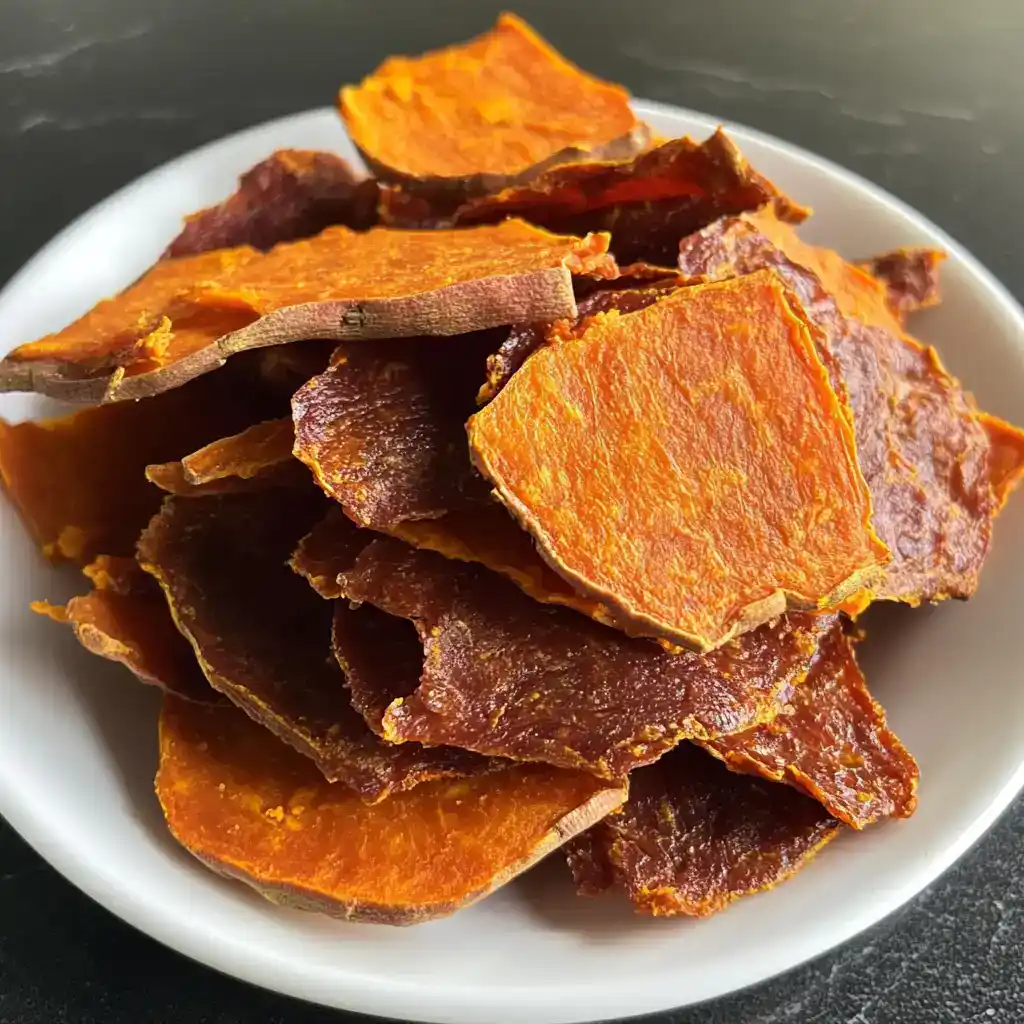
Place sweet potato slices on the baking sheet in a single layer first—they act as a natural rack that prevents the beef from sticking while adding their own delicious flavor to the bottom of the jerky.
Lay the seasoned beef slices on top of the sweet potato slices, making sure they don’t overlap. Every Golden Retriever has different texture preferences, but Amber loves when the beef and sweet potato flavors blend together during the long baking process.
Bake for 2-3 hours until the beef is completely dried and feels firm but still slightly flexible. Dog jerky can be tricky—too little time and it won’t store properly, too long and it becomes too hard for safe chewing. Check every 30 minutes after the 2-hour mark.
Let everything cool completely before serving—hot jerky can burn tongues, and the cooling process finishes the dehydration. My vet taught me this trick: properly dried jerky should bend without breaking and have no moisture when pressed.
Check out our long-lasting chew treat recipes for more ways to keep your pup satisfied with wholesome, homemade options.
If This Happens, Don’t Panic
Jerky seems too tough after cooling? You probably baked it a little too long—that’s common when you’re learning the timing, and it happens to everyone. I’ve learned that slightly over-dried is safer than under-dried for storage, and most dogs still love the extra chewiness.
Sweet potato pieces getting too crispy? When this happens (and it will), just remove them earlier next time or slice them thicker. Don’t stress—they’re still perfectly safe and add great flavor to the jerky.
Beef not drying evenly? If some pieces seem done while others need more time, just remove the finished ones and continue drying the rest. This is totally normal with natural meat variations.
Worried about the spice levels? I always double-check with my vet, but turmeric and cinnamon in these small amounts are generally beneficial for dogs. Start with less if your dog has a sensitive stomach.
When I’m Feeling Creative
When Amber needs extra joint support (senior dog life means thinking about arthritis prevention), I’ll add a tiny pinch of ginger powder to the spice mix. This makes them extra therapeutic but requires watching the total spice amount to keep it dog-safe.
For special occasions, I love using a dehydrator if you have one—it takes longer but creates even more consistent texture. Sometimes I make extra-thick cuts for dogs who love serious chewing challenges.
My batch-cooking version involves making double batches and vacuum sealing portions—perfect for busy dog parents who want premium jerky ready anytime. Amber goes absolutely bonkers when he hears that crinkly vacuum-sealed package opening.
Why This Works So Well for Dogs
This jerky works brilliantly because it combines high-quality protein with natural anti-inflammatory compounds that actually support your dog’s health while satisfying their instinctive need to chew. What sets this apart from commercial jerky is the slow dehydration process that preserves maximum nutrition while eliminating the need for artificial preservatives or excessive salt. The technique creates treats that provide mental stimulation through extended chewing while delivering therapeutic benefits from turmeric and natural vitamins from sweet potato. Plus, the long storage life means you can always have premium, homemade chews ready without the questionable ingredients found in store-bought versions, and the satisfying texture helps clean teeth naturally.
Things People Ask Me About Dog Treats
Can puppies eat this homemade jerky?
I’d be cautious with very young puppies due to the chewy texture—wait until they have adult teeth around 6 months. Always supervise and consider cutting into smaller pieces.
How long does this jerky stay fresh?
This lasts up to 2 weeks in the refrigerator when stored properly in airtight containers. The dehydration process really extends shelf life compared to regular treats.
What if my dog doesn’t like spices?
Start with just the beef and sweet potato, then gradually add tiny amounts of turmeric and cinnamon. Some dogs need time to appreciate new flavors.
Can I make this without a low oven temperature?
Low temperature is really important for proper dehydration. If your oven doesn’t go to 200°F, try the lowest setting with the door slightly cracked.
How many pieces can I give my dog per day?
I treat this as a high-value chew rather than a regular treat—usually 1-2 pieces for Amber depending on the size. It’s rich and filling.
What’s the best way to store homemade jerky?
Keep it in airtight containers in the fridge, or vacuum seal portions for longer storage. Never leave it out—even dehydrated meat can spoil.
Are these safe for senior dogs?
Perfect for senior dogs like my 8-year-old Amber! The anti-inflammatory turmeric supports joint health, and the chewy texture is great for dental health.
Before You Head to the Kitchen
I couldn’t resist sharing this because watching Amber’s pure concentration while working on one of these jerky pieces never gets old—it’s like meditation for dogs, and the health benefits make me feel like the world’s best dog parent. The best dog treat days are when you can give your pup something that provides both incredible satisfaction and genuine therapeutic benefits. Your furry family member deserves premium jerky that shows how much you care about their health and happiness, and this sweet potato and beef combination delivers exactly that perfect balance of indulgence and nutrition.
Print
Sweet Potato and Beef Jerky
Description
Slow-dehydrated perfection—this artisan jerky combines lean protein with natural sweetness and anti-inflammatory spices for the ultimate healthy chew!
Prep Time: 15 minutes | Cook Time: 2-3 hours | Total Time: 3+ hours | Makes: 12-15 pieces
Ingredients
- 1 lb lean beef, thinly sliced (eye of round or bottom round work best)
- 1 medium sweet potato, peeled and sliced (acts as natural rack and adds flavor)
- 1 tbsp coconut oil, melted (unrefined provides best health benefits)
- 1 tsp turmeric powder (pure, no additives – provides anti-inflammatory benefits)
- 1/2 tsp Ceylon cinnamon (safer than cassia cinnamon for dogs)
Instructions
- Preheat oven to 200°F and line baking sheet with parchment paper—low temperature is crucial for proper dehydration without overcooking.
- Toss beef slices with coconut oil, turmeric, and cinnamon until evenly coated—your dog will start drooling from the amazing aroma.
- Place sweet potato slices on baking sheet in single layer to act as natural racks for the beef.
- Lay seasoned beef on top of sweet potatoes, ensuring no overlap for even drying throughout the long baking process.
- Bake for 2-3 hours until beef is completely dried but still slightly flexible—check every 30 minutes after 2 hours.
- Cool completely before serving—proper cooling finishes the dehydration process and prevents burns.
Notes
- Ask your butcher to slice beef thinly for consistent drying—thickness matters for even results
- Low temperature (200°F) is essential for proper dehydration without cooking too quickly
- Properly dried jerky should bend without breaking and have no moisture when pressed
- Always supervise dogs with jerky treats due to the chewy texture
- These are high-value chews, so adjust regular meal portions accordingly
Storage Tips
- Store in airtight containers in refrigerator for up to 2 weeks
- Vacuum seal portions for longer storage and convenience
- Never leave out at room temperature—even dehydrated meat can spoil
- Check for any signs of mold before serving, especially in humid climates
What Makes This Recipe Special: This jerky provides natural anti-inflammatory benefits from turmeric, sustained chewing satisfaction, and premium nutrition through slow dehydration that preserves maximum nutrients without artificial preservatives.
Mix It Up (Dog-Safe Variations)
Joint Support Special: Add a tiny pinch of ginger powder for extra anti-inflammatory benefits—perfect for senior dogs like Amber who need joint health support.
Dehydrator Version: Use a food dehydrator for even more consistent texture—takes 4-6 hours but creates restaurant-quality results.
Thick Cut Challenge: Make extra-thick slices for dogs who love serious chewing sessions—perfect for strong chewers who need mental stimulation.




