
Let Me Tell You Why This Works
Ever wonder why some dogs have that incredible glossy coat while others look dull and lifeless? I used to spend a fortune on coat supplements until I discovered this sardine and vegetable combination that literally transformed my 8-year-old Golden Retriever Amber’s coat from winter-dry to show-dog shiny in just three weeks. These omega-rich jerky strips became his ultimate skin and coat treatment disguised as the most irresistible long-lasting chew.
Here’s the thing—most commercial fish treats are either too processed or ridiculously expensive for what you actually get. This homemade sardine and vegetable recipe gives you premium omega-3 nutrition combined with vitamin-rich vegetables, all dehydrated into perfect jerky strips. My vet was genuinely impressed with Amber’s improved coat condition and reduced seasonal itching after I started making these regularly, and honestly, they cost a fraction of those boutique fish oil supplements.
Here’s the Magic Behind These Dog-Approved Treats
The secret to creating coat-transforming jerky is combining omega-3 rich sardines with vitamin-packed vegetables through slow dehydration that concentrates all the beneficial nutrients. What makes this irresistible to pups is that sardines provide that intense, fishy flavor dogs absolutely crave while the vegetables add natural sweetness and satisfying texture that creates extended chewing enjoyment.
I never knew canned sardines could make Amber this excited about healthy treats, but the combination of concentrated fish protein with crispy vegetables creates something dogs will work on for extended periods. The olive oil helps achieve perfect jerky texture while adding heart-healthy fats, and the slow dehydration process intensifies all the natural flavors. It’s honestly more effective than expensive omega supplements and way more appealing to dogs who usually avoid “medicinal” treatments.
What You’ll Need (And My Dog-Safe Shopping Tips)
Good canned sardines in water are absolutely crucial for this recipe—I finally learned that sardines packed in water have better omega profiles than those in oil or sauce (learned this after trying fancy flavored varieties that Amber completely ignored). Look for plain sardines with no added salt or seasonings, preferably wild-caught for optimal nutrition.
Fresh carrots provide natural sweetness and beta-carotene while adding satisfying crunch that complements the soft sardine base (completely safe for dogs and perfect for eye health). I always buy extra carrots because Amber somehow steals pieces during prep, and honestly, they make great standalone training treats.
Fresh zucchini adds vitamins and minerals while creating beautiful green color that makes these jerky strips visually appealing. Don’t substitute with other squash—zucchini has the perfect moisture content and mild flavor that won’t overpower the sardines.
High-quality olive oil provides heart-healthy fats while helping vegetables achieve perfect jerky texture during the long drying process. This ingredient is what transforms raw vegetables into crispy, flavorful components that bind beautifully with the sardine base.
For more information about omega-3 benefits for dogs, check out VCA Animal Hospitals’ guide to fish oil to understand why sardines are such a powerhouse ingredient.
Let’s Make This Pup-Perfect Treat Together
Preheat your oven to 200°F and line a baking sheet with parchment paper. Here’s where I used to mess up fish-based jerky—I’d try to rush the process with higher heat and end up with tough, overcooked edges and chewy centers (not fun when you’re trying to create the perfect omega-rich chew).
In a blender, puree your drained sardines until completely smooth. This step creates the protein-rich base that will bind with vegetables to form cohesive jerky strips. The mixture should look smooth and smell incredibly fishy—appealing to dogs even if it seems intense to humans.
Now for the fun part (Amber starts getting excited when he hears the blender)—toss your sliced carrots and zucchini with olive oil until each piece is evenly coated. This ensures proper dehydration and helps vegetables achieve that perfect crispy texture.
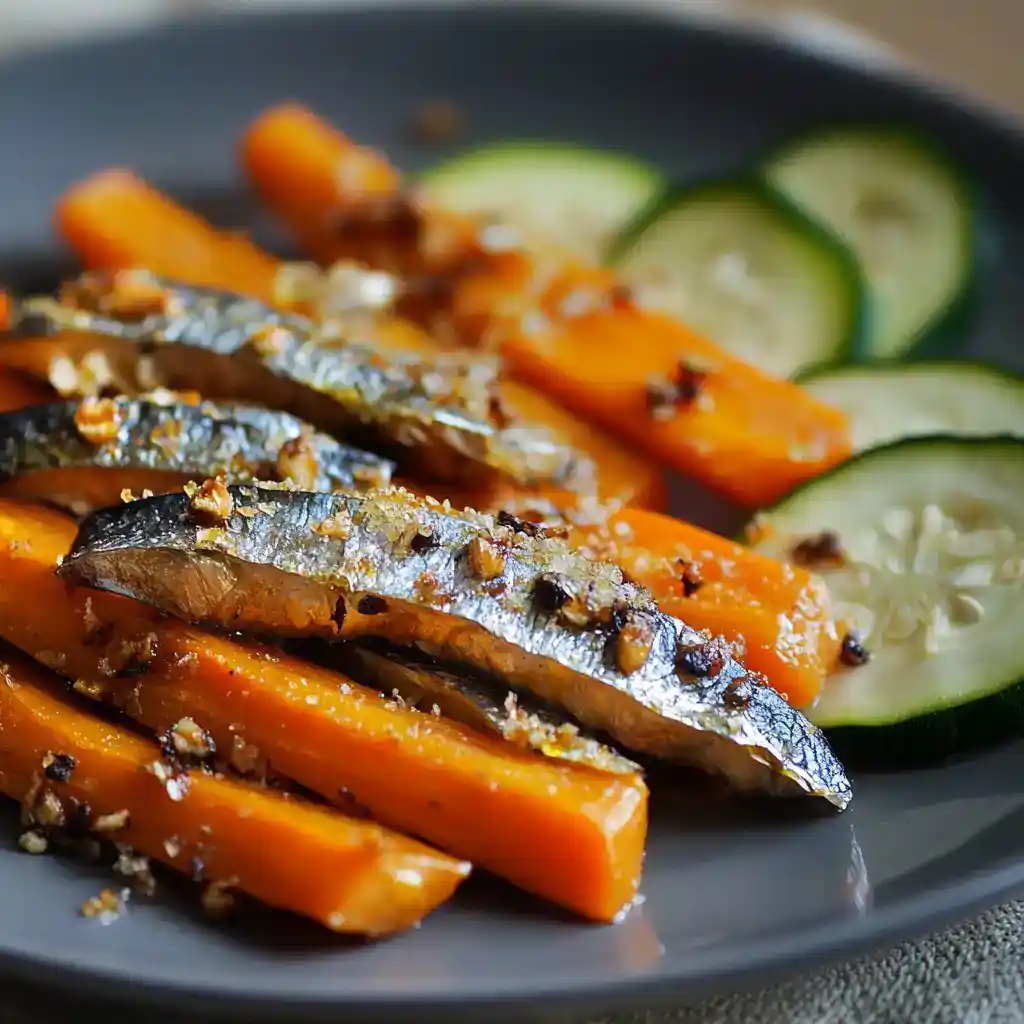
Here’s my secret for perfect fish jerky: spread the sardine puree evenly on your prepared baking sheet, then arrange the oiled vegetable slices on top in a single layer. Every Golden Retriever has different texture preferences, but Amber loves these when the vegetables are completely crispy and the sardine base is firm but still slightly flexible.
Bake for 2-3 hours until the entire mixture is dry and jerky-like throughout. The sardines will concentrate into this incredible protein-rich base while the vegetables become perfectly crispy. My vet taught me this trick: properly dried fish jerky should be firm but not brittle when bent.
Let cool completely before cutting into small strips appropriate for your dog’s size. I learned this the hard way when eager Amber tried to snatch warm jerky and burned his mouth on hot sardines. These actually intensify in flavor as they cool and the omega oils settle. For more omega-rich ideas, try these salmon skin training treats that provide different but equally beneficial nutrition.
If This Happens, Don’t Panic
Jerky coming out too soft? You probably needed more drying time—that’s common with high-moisture ingredients like sardines, and it happens to everyone. When this occurs (and it will), just pop them back in the oven for another 30-60 minutes until they reach perfect jerky texture.
Vegetables not crisping evenly? Don’t stress, that’s normal with varying thickness. Just remove the thinner pieces earlier and continue drying the thicker ones until they reach proper crispiness.
If your dog seems overwhelmed by the intense fish flavor like Amber did initially (he was used to milder treats), try offering smaller pieces or alternating with familiar treats to build positive association. Sometimes dogs need time to appreciate concentrated flavors, especially if they’re new to fish-based nutrition.
When I’m Feeling Creative
When Amber needs extra joint support along with coat benefits, I’ll add a tiny pinch of turmeric to the olive oil before coating vegetables (safe for dogs and incredible for inflammation). Sometimes I make these in larger batches during cooler months when running the oven for hours doesn’t heat up the house uncomfortably.
For special occasions, I’ll use different vegetable combinations—sweet potato strips for extra beta-carotene, or green beans for different texture. My seasonal version includes thinly sliced bell peppers during summer (safe for dogs and adds beautiful color), which creates this amazing rainbow effect that makes the jerky strips even more appealing.
The Secret Behind This Dog-Approved Recipe
What makes this sardine and vegetable jerky special is the combination of concentrated omega-3 fatty acids with vitamin-rich vegetables that provides comprehensive skin and coat support through natural, whole food nutrition. Sardines deliver EPA and DHA that reduce inflammation and promote healthy skin while vegetables contribute antioxidants and fiber that support overall wellness. The dehydration process concentrates these nutrients into long-lasting treats that provide genuine therapeutic benefits while satisfying dogs’ natural chewing instincts, making this more effective than supplements because it combines nutrition with behavioral enrichment.
Things People Ask Me About Dog Treats
Can puppies eat this fish jerky?
Yes! These ingredients are perfectly safe for puppies over 12 weeks old. Just make pieces smaller for little mouths and introduce gradually since rich fish oils should be added slowly to developing digestive systems.
How long does this homemade jerky stay fresh?
I usually store this jerky in airtight containers at room temperature for up to 2 weeks. The dehydration process removes moisture that causes spoilage, but proper storage away from humidity is essential for maintaining quality.
What if my dog doesn’t like fish?
Start with smaller amounts of sardine puree and more vegetables, gradually increasing the fish ratio as your dog gets used to the flavors. You can also try mixing with familiar treats initially.
Can I use different vegetables?
Absolutely! Sweet potato, green beans, or bell peppers work beautifully. Just make sure to slice them thin for proper dehydration and avoid onions, garlic, or other toxic vegetables.
How much jerky can I give my dog per day?
These are pretty rich in omega-3s, so for Amber’s size, 2-3 strips per day works perfectly for coat benefits without causing digestive upset. Start with less since rich fish can sometimes be overwhelming.
Are these jerky strips safe for senior dogs?
Perfect for older dogs like my 8-year-old Amber! The omega-3s support joint health and cognitive function while the extended chewing helps maintain jaw strength—all especially important for senior pups.
Before You Head to the Kitchen
I couldn’t resist sharing this because watching Amber’s coat transform from dull to absolutely gorgeous with these sardine and vegetable jerky strips—and seeing how they’ve become his favorite long-lasting entertainment—reminded me that the best nutrition often comes in the most enjoyable packages. The best dog treat days are when you can provide therapeutic benefits while giving your furry family member something they genuinely treasure and look forward to.
Print
Sardine and Vegetable Jerky
Description
Omega-3 powerhouse treats that combine nutrient-rich sardines with crispy vegetables—so beneficial and delicious your dog’s coat will thank you with every glossy strand.
Prep Time: 15 minutes | Cook Time: 2-3 hours | Total Time: 3 hours | Makes: About 15 jerky strips
Ingredients
- 8 oz canned sardines in water, drained (omega-3 powerhouse for skin and coat health – completely safe for dogs)
- 1 medium carrot, peeled and thinly sliced (provides beta-carotene for vision support)
- 1 zucchini, thinly sliced (vitamins and minerals for overall well-being)
- 2 tablespoons olive oil (heart-healthy fats for perfect jerky texture)
Instructions
- Preheat oven to 200°F and line a baking sheet with parchment paper (low heat is essential for proper dehydration without overcooking).
- In a blender, puree drained sardines until completely smooth—the intense fishy aroma will drive your dog wild with anticipation.
- Toss sliced carrots and zucchini with olive oil until evenly coated for optimal dehydration and flavor.
- Spread sardine puree evenly on prepared baking sheet, creating a smooth base layer for vegetables.
- Arrange oiled vegetable slices on top of sardine puree in single layer, ensuring no overlap for even drying.
- Bake for 2-3 hours until entire mixture is dry and jerky-like throughout—vegetables should be crispy, sardines firm but flexible.
- Cool completely before cutting into small strips appropriate for your dog’s size—patience creates perfect texture.
Notes:
- Always use sardines packed in water, not oil or sauce (better omega profile and safer for dogs)
- Don’t rush the drying process—low and slow creates perfect jerky texture
- Cool completely before cutting to prevent crumbling and burned tongues
- Slice vegetables thin for proper dehydration and easy chewing
Storage Tips:
- Store in airtight containers at room temperature for up to 2 weeks
- Keep away from moisture to maintain proper jerky texture
- Label containers with date for freshness tracking
- Don’t refrigerate—room temperature maintains best chewiness
What Makes This Recipe Special:
This sardine and vegetable jerky provides concentrated omega-3 fatty acids that support skin and coat health while delivering vitamin-rich vegetables that contribute to overall wellness. The dehydration process intensifies natural flavors and nutrients into long-lasting treats that provide therapeutic benefits for skin conditions, joint health, and cognitive function, making this more effective than traditional supplements because it combines nutrition with the behavioral enrichment of extended chewing.
Mix It Up (Dog-Safe Variations):
- Joint Support Boost: Add a tiny pinch of turmeric to olive oil for anti-inflammatory benefits, perfect for senior dogs like Amber
- Colorful Version: Include thinly sliced bell peppers for beautiful rainbow colors and extra vitamin C
- Sweet & Savory: Substitute sweet potato strips for carrots for different flavor and extra beta-carotene




