
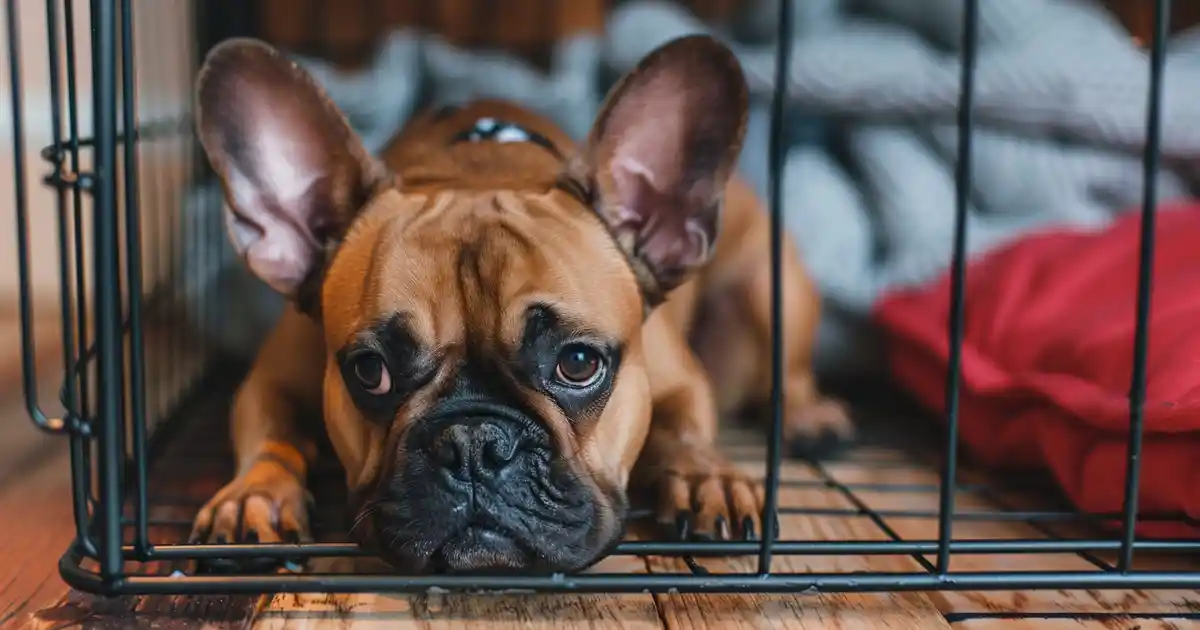
Have you ever wondered why some dogs run into their crates voluntarily for naps while your anxious dog trembles, refuses to enter, or panics the moment the door closes? I used to think crates were just naturally stressful for some dogs and that I should just force the issue until my dog “got used to it,” until I discovered that crate anxiety is entirely preventable and reversible through patient, positive training that respects your dog’s emotional state. Now my friends constantly ask how I transformed my crate-phobic rescue dog who would injure herself trying to escape into a dog who chooses to nap in her crate with the door open, and my family (who thought “tough love” crate training was the only way) has learned that going slowly creates faster, more reliable results than forcing or flooding. Trust me, if you’re worried that your anxious dog will never accept the crate or that you’ve already ruined their relationship with it, this compassionate approach will show you it’s more recoverable than you ever expected—though it requires abandoning everything traditional trainers told you about “just putting them in and letting them cry it out.”
Here’s the Thing About Crate Training for Anxiety
Here’s the magic behind anxiety-friendly crate training—it’s not about confinement or forcing compliance, but rather about systematically building positive associations so the crate becomes a genuine safe haven that your dog chooses voluntarily because it predicts comfort, security, and good things. According to research on classical conditioning, dogs learn emotional responses through repeated pairings of neutral stimuli (the crate) with positive or negative experiences, and anxious dogs have either never learned positive associations or have learned that crates predict scary things like forced confinement or being left alone past their tolerance. It’s honestly more reversible than I ever expected once you understand that you’re working with emotional responses, not rational understanding—your dog can’t reason their way out of crate fear, but they can learn new positive associations that overwrite the negative ones. The secret to success with anxious dogs is never forcing them into or keeping them in the crate against their will during training, because every forced exposure strengthens the fear association rather than reducing it. This combination creates amazing results because you’re respecting your dog’s autonomy while building genuine positive emotions—no dominance theory, alpha rolls, or “showing them who’s boss” needed, just patient classical conditioning.
What You Need to Know – Let’s Break It Down
Understanding why your specific dog has crate anxiety is absolutely crucial to choosing the right training approach. Some dogs developed crate fear through traumatic experiences—being crated too long, punishment associated with the crate, scary events happening while crated, or injury from trying to escape. I finally figured out my rescue dog’s crate phobia stemmed from her previous owner using the crate for punishment after months of detective work about her history.
The distinction between crate anxiety and separation anxiety matters because the training protocols differ (took me forever to realize this). Crate anxiety means your dog panics specifically about being in the crate—they might be fine loose in a room but panic when crated. Separation anxiety means panic about being alone regardless of confinement. Some dogs have both, which requires addressing each issue systematically. You can’t successfully crate train a dog with active separation anxiety without addressing the separation issue first.
Don’t skip the assessment phase where you determine your dog’s current comfort level with every aspect of the crate because everyone sees better results when training starts at the right level. Can your dog be near the crate? Walk past it? Sniff it? Take treats near it? Eat meals near it? Put their head inside? Step inside briefly? Stay inside with door open? Each of these is a separate training level—your dog might be comfortable with some but not others, seriously.
I always recommend starting with making the crate as appealing as possible physically before any training begins because environmental setup creates the foundation for positive associations. If you’re working on building confidence in your anxious dog, check out my beginner’s guide to understanding canine body language for foundational techniques on reading the stress signals that tell you when to slow down or back up in training.
The forced confinement versus voluntary choice component really matters too. Traditional crate training often involves putting dogs in crates and closing the door despite their stress, expecting them to “settle down” eventually. Yes, this flooding approach can create lifelong crate phobia in anxious dogs, and here’s why—you’re teaching them that their communication doesn’t matter and that crates equal loss of control and safety. Anxiety-friendly training means your dog always has choice and agency during the learning process.
The Science and Psychology Behind Crate Anxiety
Dive deeper into what’s actually happening neurologically, and you’ll understand why forcing anxious dogs into crates not only doesn’t work but actively makes anxiety worse. Research from leading veterinary behaviorists demonstrates that when dogs experience panic in confined spaces, their amygdala (fear center) creates powerful negative associations with that space through a process called fear conditioning. One traumatic crate experience can create lasting phobia that takes months of careful counter-conditioning to reverse.
What makes crate anxiety particularly challenging is that it often involves claustrophobia—fear of enclosed spaces where escape isn’t possible. Traditional approaches failed because they ignored that confined spaces trigger primal panic responses in some dogs, especially those with trauma histories or genetic predispositions to anxiety. Modern behavior science confirms that you cannot force an animal to overcome claustrophobia through repeated exposure to the feared situation—you must change the emotional association through sub-threshold work.
The psychological aspect involves understanding that anxious dogs need to feel safe and in control to learn positive associations. When dogs feel trapped—even if objectively safe—their stress hormones spike, their ability to learn positive associations shuts down, and they enter survival mode where only fear learning occurs. Studies confirm that dogs who are crate trained using force-free, choice-based methods show significantly lower stress hormones and better long-term crate comfort than dogs trained through confinement-based methods. Experts agree that for anxious dogs, crate training must be entirely voluntary throughout the process—no closing doors until the dog is genuinely comfortable, not just “tolerating” the situation.
Here’s How to Actually Crate Train Anxious Dogs
Start by setting up the crate to be as inviting as possible before asking anything of your dog—and here’s where I used to mess up, I’d use a plain wire crate in a busy area and wonder why my anxious dog avoided it. Choose a crate location that’s quiet but not isolated, where your dog can see you but isn’t in the middle of household chaos. Cover three sides with a blanket to create a den-like feeling (but ensure adequate ventilation). Put extremely comfortable bedding inside—memory foam, favorite blankets, worn t-shirts that smell like you.
Now for the important part—building positive associations without any pressure to actually go inside yet. I learned this the hard way after rushing to the “getting in the crate” stage before my dog even liked being near it. Start by feeding all meals next to the crate with the door completely open or removed. Toss amazing treats near the crate randomly throughout the day. Play games near the crate. Have relaxed hang-out time sitting near the crate reading or watching TV. Spend 1-2 weeks just making the crate’s presence predict good things with zero pressure to interact with it directly.
Here’s my secret for the actual introduction to going inside: never push, lure, or force your dog in. Instead, create a “treat trail” leading to the crate opening, then toss a treat just inside the doorway. If your dog reaches in to get it, amazing! Immediately toss another treat outside the crate. Repeat 10-20 times. The pattern is: treat inside, dog gets it, treat appears outside. You’re rewarding approach and investigation with the reward appearing outside, which prevents any feeling of being trapped.
Don’t be me—I used to close the crate door as soon as my dog was inside, thinking I needed to “catch” the moment. Wrong. Your dog needs weeks or even months of going in and out freely before you ever close the door. Instead of rushing to confinement, spend weeks letting your dog go in voluntarily to get treats, eat meals, or investigate, always being able to leave freely. This builds the association: crate = good things happen, and I can always leave if I want.
The duration-building inside the crate (with door still open) matters just as much as getting them to enter. Results can vary by individual, but most anxious dogs need to see you gradually increase the value of what appears inside. Start with tossed treats they grab and leave. Progress to scatter feeding their meal inside. Then offer a stuffed Kong or long-lasting chew that encourages them to stay inside voluntarily. Track how long they choose to remain inside—when they consistently stay for several minutes eating or relaxing, you’re ready to consider door work.
Train what I call “door desensitization” before ever latching the door closed. Just like every other aspect of anxious dog training, door closing must be gradual. Start by touching the door while your dog eats inside. Then move the door slightly. Then close it 1 inch while feeding treats continuously. Then close it all the way but don’t latch it. Then touch the latch. Then engage the latch for one second while feeding treats and immediately open. Each of these stages might take days or weeks.
Every anxious dog progresses at their own pace, but the basic principle stays the same: your dog must be completely comfortable and relaxed at each stage before progressing to the next, all rewards happen while they’re making the choice to be near or in the crate, and you never trap them or take away their ability to leave until they’ve shown through weeks of voluntary crate use that they genuinely love it. Don’t worry if you’re just starting out—even getting your dog to take treats near a crate they previously avoided is huge progress.
Common Mistakes (And How I Made Them All)
My biggest failure was using the crate for punishment or time-outs when my dog misbehaved. Here’s the truth—sending an already anxious dog to their crate as punishment guarantees they’ll develop negative associations with it. All I accomplished was creating a place my dog actively feared and avoided instead of the safe haven I wanted it to be.
Don’t make my mistake of ignoring the fundamental principle experts recommend: crate training anxious dogs must be 100% positive with zero negative associations ever. I used to think occasionally using the crate for time-outs wouldn’t matter if I mostly used it positively, but for anxious dogs, even rare negative experiences can undo months of careful positive work. Every single interaction with the crate must be voluntary and positive during training.
Another epic failure? Crating my anxious dog and leaving for work on day three of training because “she’d been in the crate voluntarily a few times.” Anxious dogs need weeks or months of positive crate experiences before you can close the door for more than seconds, and even longer before you can leave them crated and depart. I created a massive setback by rushing to use the crate for my schedule rather than progressing at my dog’s emotional pace.
The “cry it out” trap got me too—traditional advice says to ignore whining, barking, or pawing at the crate door because responding “rewards the behavior.” That’s terrible advice for anxious dogs. Distress vocalizations during crating mean your dog is genuinely panicked and you’ve progressed too fast. Instead of ignoring panic, I learned to immediately go back to an easier level where my dog was comfortable.
I also made the mistake of choosing crate size based on “what she’ll need as an adult” rather than what felt safest now. Anxious dogs often feel more secure in crates that fit them snugly (just large enough to stand, turn around, and lie down) rather than oversized crates that feel too exposed. I switched to an appropriately-sized crate and saw immediate improvement in my dog’s comfort level.
When Things Don’t Go as Planned
Feeling overwhelmed by how slowly crate training progresses with your anxious dog compared to the “3 days to successful crate training” timelines you read online? That’s completely normal, and it happens to everyone with genuinely anxious dogs. You probably need to adjust your expectations—anxious dogs often need 2-6 months of patient work to develop genuine crate comfort, not days or weeks. I’ve learned to handle this by celebrating tiny victories—my dog voluntarily stuck her head in the crate today, that’s real progress worth acknowledging.
You’ve been doing everything right but your dog still shows stress signals near the crate or refuses to go inside? This is totally manageable but might indicate past trauma is more severe than typical crate naivety. When this happens (and it does with some dogs), consider whether your dog actually needs a crate at all. Some anxious dogs do better with exercise pens, baby gates creating a safe room, or simply being loose in a dog-proofed area. Crates aren’t mandatory for every dog.
If you’re losing steam because your dog regressed after one bad experience—maybe they got scared by a noise while crated or you accidentally closed the door too soon—try going back several steps in the training protocol. I always prepare for setbacks being part of the process because anxiety recovery isn’t linear. Having patience with the process and your dog means accepting that one bad day might mean redoing two weeks of work, and that’s okay.
Your dog seems fine going in the crate during the day but panics when crated at night or vice versa? First, realize that context matters hugely to anxious dogs. Nighttime might feel scarier (dark, quiet, everyone asleep), or daytime might feel more stressful (activity, noise, people leaving). Train both contexts separately if needed, starting with whichever is easier for your dog and gradually generalizing to the harder context.
Living with a dog who has severe crate phobia from past trauma—maybe they injured themselves escaping crates, have visible fear responses to just seeing one, or panic immediately? I get it. Work with a certified behavior consultant or veterinary behaviorist who specializes in fear and anxiety. Some dogs need anti-anxiety medication to even begin crate training, and some dogs may never be good candidates for crating despite best efforts. That’s okay—there are alternative management solutions.
Advanced Strategies for Crate Training Anxious Dogs
Taking crate training to the next level means understanding micro-progressions that make training feel impossibly slow but create rock-solid foundations. Advanced trainers break down every aspect of crate interaction into tiny components: looking at crate (treat), stepping toward crate (treat), sniffing crate (treat), touching crate with paw (jackpot), putting head inside (huge reward). I started marking and rewarding every tiny voluntary interaction and saw dramatically faster overall progress because my dog was learning the crate predicts rewards for any investigation.
One discovery that changed everything for me was learning about “crate games” that make crate interaction fun rather than pressure-filled. I started playing “crate ping-pong” where I’d toss a treat in the crate, my dog would run in to get it, then I’d toss a treat outside and she’d run out. We did this 20-30 times in a row until going in and out of the crate became a fun, energetic game rather than something to stress about. This awareness lets you build speed and enthusiasm for crate entry that eventually generalizes to calm settling.
For experienced handlers, you can implement what’s called “cooperative crate training” where you teach your dog to close the door themselves or give consent signals for door closing. This means training a nose touch to the door that closes it, with massive rewards, so your dog has control over the confinement aspect. The difference between this and regular training is that you’re giving your dog agency over the one element that typically creates the most anxiety—loss of freedom.
Understanding the role of crate covers versus open crates helps you customize the environment to your individual dog’s preferences. I discovered through experimentation that my dog felt most secure with the crate completely covered except for the door, creating a dark cave-like den, while a friend’s anxious dog panicked with covers and needed a completely open wire crate where she could see everything. Neither approach is “right”—you must observe your individual dog’s comfort.
Medication discussions with a veterinary behaviorist can help severely crate-phobic dogs enough to make training possible. When and why to use anti-anxiety medication depends on the severity—dogs who show intense panic just seeing a crate or who have a trauma history of crate injuries might need pharmaceutical support to be able to participate in training at all. What separates beginners from experts is recognizing when behavioral intervention needs medical support and not viewing medication as failure.
Ways to Make This Your Own
When I want to build crate comfort specifically for dogs who need crating during the day while owners work, I’ll focus heavily on creating an amazing “crate routine” where being crated predicts a special frozen Kong, puzzle feeders, and long-lasting chews that appear ONLY during crate time. This makes it more intensive in preparation but definitely worth it because your dog starts looking forward to crate time as “when I get my special stuff.”
For special situations like travel where your dog must be crated (airplane cargo, hotel stays, car safety), I’ve developed what I call the “Portable Den Protocol”—my version focuses on making the crate itself the safe familiar element by feeding all meals in it at home, putting favorite bedding in it, and having it smell like home, then gradually introducing the movement/noise/strange location elements separately. Sometimes I add Adaptil spray inside the crate for extra calming support.
My advanced version includes teaching a specific “crate” cue where my dog runs to her crate enthusiastically on command because it’s been paired with amazing rewards thousands of times. For next-level results, I love adding a relaxation protocol practiced specifically in the crate where my dog learns deep settling behaviors on a mat inside the crate, which then generalizes to automatic relaxation when crated.
The “Separation Anxiety Integration Method” works for dogs who have both crate anxiety and separation anxiety—this involves treating the separation anxiety first through systematic desensitization to departures (with the dog loose, not crated), then once separation tolerance improves, very gradually introducing the crate for departures starting with seconds. The “Prevention Protocol” is for puppies or newly adopted dogs without existing crate issues and involves building positive associations from day one with no rushing.
Each variation adapts to different needs—the severe phobia version might take 6-12 months and include medication, while the prevention puppy protocol might achieve reliable comfortable crating in 6-8 weeks. The senior dog adaptation accounts for mobility issues (ramps or low-entry crates), potential cognitive changes, and possible pain that makes lying on hard surfaces uncomfortable even with bedding.
Why This Approach Actually Works
Unlike traditional “let them cry it out” methods that flood anxious dogs with the thing they fear until they give up, this systematic approach leverages classical conditioning to build genuine positive emotional associations that make dogs want to be in their crates. The reason choice-based training is so effective is that voluntary approach and investigation creates stronger learning than forced exposure—when dogs choose to interact with something, their brains are in a state that’s receptive to new associations rather than defensive and fearful.
What sets this apart from dominance-based crate training is that we’re creating positive emotions rather than forcing compliance through making the alternatives worse (ignoring distress, using punishment for resistance). Evidence-based research shows that dogs trained with force-free methods show lower cortisol levels, faster learning, better retention, and dramatically lower anxiety around trained behaviors compared to dogs trained with aversive methods.
My personal discovery about why this works came after failing with traditional methods that traumatized my dog. The comparison to other approaches is stark: flooding creates dogs who might eventually stop struggling but remain internally stressed (learned helplessness), while positive counter-conditioning creates dogs who genuinely relax and even seek out their crates because the emotional association is truly positive. When you address the emotional response—fear and anxiety—rather than just the behavioral resistance, you create sustainable comfort.
The sustainability factor matters because once a dog has hundreds of positive voluntary interactions with their crate, that positive association becomes deeply ingrained and resistant to deterioration. You’re not suppressing fear through exhaustion—you’re building genuine feelings of safety and comfort that last because they’re rooted in repeated positive experiences.
Real Success Stories (And What They Teach Us)
One client’s rescue Shepherd mix would urinate and defecate in terror if placed in a crate and had broken teeth trying to escape in her previous home. Within 4 months of systematic positive training—starting with just feeding meals 10 feet from the crate, gradually decreasing distance over weeks, eventually feeding inside with door open, then adding door work—this dog voluntarily napped in her crate with door closed and could be crated for 4+ hours comfortably. What made them successful was patience—they spent 6 weeks just getting comfortable being near the crate before ever asking her to put a paw inside.
A puppy mill rescue I worked with had spent the first 3 years of life in a wire crate 24/7 and showed extreme fear of any crate. Their timeline was longer—about 8 months—but they achieved success by using a completely different type of crate (soft-sided instead of wire), placing it in a very quiet location, and spending months just having it present with amazing things happening near it before ever asking for interaction. The lesson here is that sometimes you need to change not just the training approach but the equipment itself to work around specific trauma.
Another household struggled with their anxious dog who would enter the crate fine but panicked the moment the door closed. They learned to separate door-closing from departure—closing the door while sitting right next to the crate feeding treats continuously, gradually building duration with door closed while remaining present, and only after weeks of comfortable door-closed time did they start standing up, walking away briefly, etc. The outcome was a dog who could be crated for several hours after 5 months of training. Different dogs have different specific fear components—some fear the crate itself, others specifically fear the closed door, others fear the combination of crate plus being left alone.
Their success aligns with research on fear extinction that shows consistent patterns—systematic exposure below fear threshold paired with positive experiences rewrites emotional associations, while flooding can create lasting trauma even if surface behaviors eventually change.
Tools and Resources That Actually Help
The right crate type for your individual dog is my number-one recommendation—wire crates work for dogs who want visibility and airflow, plastic airline-style crates work for dogs who want more enclosed den-like spaces, and soft-sided crates work for dogs who are intimidated by hard materials. I personally switched my anxious dog from wire to plastic and saw immediate improvement in her willingness to investigate it. Some anxious dogs do better with open-top “furniture style” crates that don’t feel as confining.
Extremely high-value treats that appear ONLY during crate training sessions help build powerful positive associations—I use real chicken, cheese, hot dogs, or freeze-dried liver for crate work, never regular treats. These special rewards make crate interaction predict something extraordinary. The limitation is that some anxious dogs are too stressed to eat, which tells you you’re working above threshold and need to back up several steps.
Comfort items inside the crate matter enormously for anxious dogs—memory foam beds, familiar blankets that smell like you, favorite toys, and even worn t-shirts create positive associations. I always put my dog’s absolute favorite blanket in the crate to transfer positive emotions from the familiar comfort item to the crate itself. The alternative is starting with an empty crate, but anxious dogs benefit from immediate comfort associations.
For professional help, certified behavior consultants (IAABC or CCPDT) who specialize in fear and anxiety can create customized protocols for severe crate phobia. The best results come from professionals who understand trauma-informed training and won’t push anxious dogs beyond their comfort level. Virtual consultations work well for crate training since the professional can watch video of your training sessions and give feedback.
Calming aids like Adaptil spray applied to bedding inside the crate, calming music (Through a Dog’s Ear), or even calming supplements might provide supplemental support during training. I use these as part of a comprehensive approach, not as standalone solutions—they might reduce anxiety enough to make training slightly easier but won’t resolve crate phobia on their own.
Books like “Crate Training Made Easy” or sections in comprehensive positive training books provide detailed protocols, though many focus on normal puppies rather than anxious dogs specifically. I always look for resources that emphasize choice, gradual progression, and never forcing, as these align with anxiety-friendly approaches.
Questions People Always Ask Me
How long does crate training take for anxious dogs?
Most anxious dogs need 2-4 months minimum of patient positive training to develop genuine crate comfort, and severely traumatized dogs might take 6-12 months or more. Puppies without existing fear can often learn comfortable crating in 3-6 weeks. But you should see some progress—increased willingness to approach or investigate the crate—within the first 2 weeks if your approach is appropriate.
What if my dog was traumatized by crate training in the past?
You absolutely can reverse crate phobia, but it takes longer and requires even more patience than training a crate-naive dog. Start from the very beginning—making the crate’s presence predict good things with zero pressure to interact—and progress extremely slowly. Some dogs benefit from using a completely different crate style (wire instead of plastic or vice versa) to avoid triggering specific trauma associations.
Is it okay to never crate my anxious dog?
Absolutely—crates are management tools, not requirements. If your dog is safe and non-destructive when loose, or if you can use exercise pens, baby gates, or dog-proofed rooms instead, those are completely valid alternatives. Some anxious dogs never become comfortable with crates despite best efforts, and forcing the issue isn’t worth the emotional cost. Do what works for your individual situation.
Can I use medication to help with crate training anxiety?
For severe crate phobia, yes—anti-anxiety medication prescribed by a veterinary behaviorist can raise your dog’s threshold enough to make training possible. Dogs who panic at just seeing a crate or who have trauma histories might need pharmaceutical support to participate in training at all. Medication doesn’t replace training but can make training actually effective for dogs who are otherwise too anxious to learn.
What’s the biggest mistake people make with anxious dogs and crates?
Forcing or luring the dog into the crate and closing the door before the dog has built positive associations and comfort with every component—being near it, going inside voluntarily, staying inside with door open. Rushing to use the crate for your schedule rather than progressing at the dog’s emotional pace creates or worsens crate phobia. Every step must be voluntary and comfortable before progressing.
How do I stay motivated when progress is incredibly slow?
I track tiny wins in a journal—maybe your dog looked at the crate without showing stress today, or took a treat 6 inches closer than yesterday. Celebrate any forward movement rather than focusing on the end goal. Remember that every positive interaction is literally rewiring your dog’s brain associations. Slow progress that respects your dog’s emotions creates lasting results, while rushing creates setbacks.
What if my dog needs to be crated immediately for safety or logistics?
If you must crate an anxious dog before proper training is complete, make it as positive and short as possible—amazing treats/chews only available during crating, stay nearby if possible, keep duration minimal, and continue training during non-essential times. Accept that necessary crating might slow training progress if the dog exceeds their comfort level, but do your best to make each experience positive.
Can puppies develop crate anxiety if trained improperly?
Absolutely—using crates for punishment, crating for too long before building tolerance, or ignoring distress vocalizations during crate training can all create crate anxiety in initially fearless puppies. Prevention is much easier than remediation, so start positive crate training immediately with new puppies, progress gradually based on the individual puppy’s comfort, and never use crates punitively.
What if my dog is fine being crated but panics when I leave?
This is separation anxiety, not crate anxiety—your dog is comfortable with the crate but not with being alone. These require different training protocols. You’ll need to work on separation anxiety training (systematic desensitization to departures) separately from crate training. Some dogs benefit from being loose rather than crated during separation anxiety training, then reintroducing the crate later.
How much does professional help for crate anxiety cost?
Certified behavior consultant sessions cost $75-200 each, typically needing 3-6 sessions for crate issues. Veterinary behaviorist consultations run $300-600 initially if medication is needed. Books and training supplies total $50-150. Budget $300-800 for professional guidance through the process, though many dogs can be successfully trained using free online resources if anxiety isn’t severe.
What’s the difference between crate training and crate forcing?
Crate training builds positive associations through choice—the dog learns to love their crate through hundreds of voluntary positive interactions and is never trapped before they’re genuinely comfortable. Crate forcing involves putting dogs in crates and closing the door regardless of their comfort level, expecting them to “get used to it.” Forcing creates fear and resistance, while training creates genuine comfort and willing participation.
How do I know if my approach is working?
Track your dog’s body language around the crate—are stress signals (tension, avoidance, whale eye) decreasing? Is your dog voluntarily approaching or investigating the crate? Can you progress to the next training step with your dog showing relaxed, comfortable body language? These indicate your approach is working. If your dog remains fearful or resistant after 2-3 weeks at the same training level, you’re likely working above threshold and need to make it easier.
Before You Get Started
I couldn’t resist sharing this because it proves that crate anxiety isn’t a permanent condition or a sign your dog is “broken”—with proper positive training that respects emotional states, even severely crate-phobic dogs can learn to view their crates as safe havens they choose voluntarily. The best crate training for anxious dogs happens when you stop viewing the crate as something your dog must accept and start seeing it as something your dog should genuinely love, which requires building that love through hundreds of positive voluntary interactions rather than forcing compliance. Start by setting up the most appealing crate possible, committing to never forcing your dog inside or closing the door until they’re genuinely comfortable, and accepting that this process might take months of patient work rather than days. You’ve got this, and your anxious dog deserves training that builds confidence and positive associations rather than methods that rely on flooding, force, or making them “deal with it” when they’re genuinely terrified.




