
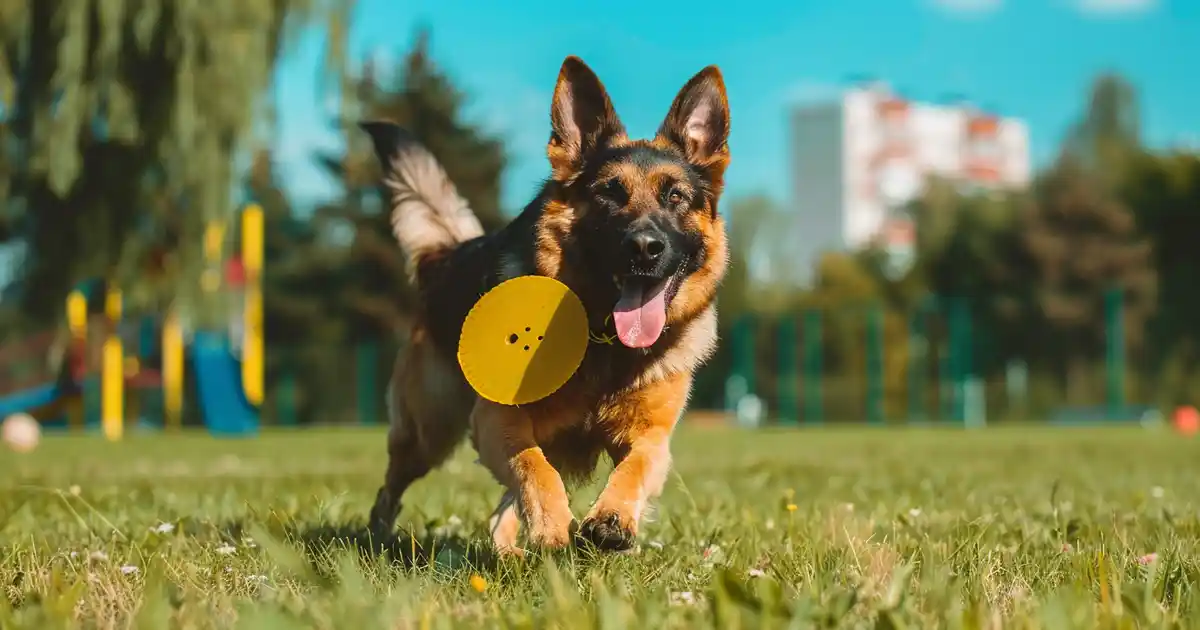
Have you ever wondered why disc dog training seems impossibly athletic until you discover the progressive skill-building approach that makes it achievable for any dog-handler team? I used to think catching flying discs and performing aerial tricks was only for Border Collies with professional handlers who’d spent years perfecting their throws, until I discovered these systematic methods that completely transformed my understanding of how disc skills develop. Now fellow dog owners constantly ask how I managed to go from fumbling throws and missed catches to executing freestyle routines with my dog that look choreographed, and friends (who thought disc dog was too physically demanding or complex) keep requesting guidance after seeing the incredible athleticism and bond this sport creates. Trust me, if you’re worried about your terrible throwing arm or whether your dog will even chase a disc, this comprehensive approach will show you it’s more accessible and joy-filled than you ever expected. The best part? You’ll develop an athletic partnership where you and your dog move in sync, communicating through body language and timing while getting exceptional exercise that satisfies even the most energetic dogs.
Here’s the Thing About Disc Dog Training
Here’s the magic: successful disc dog training isn’t about your dog’s natural catching ability or your throwing skills—it’s about building foundation behaviors, teaching proper catching technique that protects teeth and joints, and progressively introducing tricks and sequences that match your team’s developing capabilities. What makes this work is the systematic approach from ground work to aerial catches, all while developing the drive, focus, and communication that makes disc dog genuinely collaborative rather than just fetch. I never knew disc training could be this structured until I stopped trying to immediately replicate professional routines and started focusing on teaching one skill at a time with patience and body awareness (game-changer, seriously). According to research on canine sports and exercise, disc dog provides exceptional cardiovascular conditioning combined with mental engagement, creating one of the most comprehensive fitness activities available for athletic dogs when taught with injury-prevention emphasis. This combination creates amazing results because you’re building both physical skills and cognitive flexibility rather than just throwing and catching. It’s honestly more methodical than I ever expected—no natural talent required, just proven progressions applied consistently with emphasis on safety and mutual enjoyment.
What You Need to Know – Let’s Break It Down
Understanding the different disc dog disciplines helps you choose the right path from the start. Don’t skip this foundation—I finally figured out that distance/accuracy competitions (throwing for maximum distance or hitting targets), freestyle routines (choreographed performances set to music), and toss-and-fetch games represent completely different skill emphases requiring distinct training approaches (took me forever to realize these aren’t interchangeable). Your training focus needs to match whether you’re pursuing competitive distance, artistic freestyle, or simply recreational play that maximizes fun and fitness.
The concept of “take” versus “catch” represents the most critical safety distinction in disc dog training. I always recommend teaching proper catching technique before ever throwing discs because everyone’s dog stays healthier when they learn to catch softly with proper mouth positioning rather than crashing into discs or catching incorrectly. Yes, you want spectacular aerial catches eventually, but you’ll need to teach your dog to receive discs gently, use appropriate bite pressure, and land safely before attempting height or distance. Improper catching creates dental damage, neck injuries, and joint problems that end disc careers (harsh truth, but essential knowledge).
Disc selection matters tremendously for both training success and injury prevention—cheap hard plastic frisbees from toy stores literally damage dogs’ mouths and create bad habits. I used to think any disc worked fine until I learned that proper canine discs are made from specific flexible plastics, have appropriate weight distributions, and come in sizes matched to your dog’s mouth. Your investment in quality discs (typically $8-15 each) protects your dog’s teeth and creates better flight characteristics that make catching easier for developing teams.
If you’re just starting out with building fetch drive and basic retrieve skills, check out my essential guide to teaching reliable retrieves for foundational behaviors that complement this disc dog training approach perfectly.
The Science and Psychology Behind Why This Works
Modern canine sports science research reveals something fascinating: disc dog creates unique proprioceptive demands by requiring dogs to track moving objects in three-dimensional space, time their jumps precisely, and coordinate complex aerial body positioning—skills that develop superior spatial awareness and body control. This isn’t just impressive athleticism—studies from leading veterinary sports medicine programs demonstrate that disc-trained dogs show enhanced body awareness, better injury prevention in other activities, and superior problem-solving abilities because the spatial calculations required for catching transfer to other cognitive tasks.
What makes disc dog particularly effective for high-energy breeds is the mental exhaustion that accompanies physical exercise. Your dog doesn’t just run; they calculate trajectories, adjust mid-air, and make split-second decisions that engage their brain as intensely as their body. Traditional fetch often fails to create truly satisfied dogs because repetitive straight-line running doesn’t provide the cognitive challenge or variety that disc work offers. The psychological principle at work here is variable reinforcement through unpredictability, which means each throw differs slightly in speed, angle, and distance, requiring constant mental engagement that prevents the autopilot boredom of repetitive activities.
I discovered the partnership and communication aspects matter just as much as athletic ability. When training emphasizes reading each other’s movements, anticipating positioning, and working as synchronized unit, the human-canine bond deepens in ways that individual sports cannot replicate. Research from canine behavior specialists confirms that cooperative activities where dogs and handlers work together toward shared goals create stronger attachments and higher mutual satisfaction than activities where humans simply direct and dogs obey. The collaboration you experience in disc dog literally strengthens your relationship through shared achievement.
Here’s How to Actually Make This Happen
Start by building obsessive disc drive through restricted access and high-value play sessions where discs only appear during training—and here’s where I used to mess up: I’d leave discs lying around or use them for casual fetch, diminishing their special status. Make discs the most exciting thing in your dog’s world by reserving them exclusively for structured play, ending sessions while your dog desperately wants more, and creating association between disc appearance and the best games ever. This foundation takes 2-4 weeks but creates the motivation that fuels all subsequent training.
Now for the important part: teach proper “take” technique using rollers (discs rolled along the ground) where your dog learns to approach, grab gently from the rim, and bring back before ever attempting air catches. Don’t be me—I used to throw discs immediately and just created sloppy, dangerous catching habits including grabbing from the top (risks tooth damage) and hard biting (damages discs and teeth). Master rollers completely, teaching your dog to track rolling discs, grab properly, and return enthusiastically across 4-6 weeks before introducing any airborne discs. When it clicks, you’ll know, because your dog will show smooth, confident takes with appropriate mouth positioning.
Introduce short, low tosses (just above dog’s head height) to teach air awareness and soft catches, gradually increasing height and distance as catching mechanics become automatic—just like teaching a child to catch but with emphasis on body safety. Until you feel completely confident your dog catches softly, lands safely, and shows no signs of impact stress, don’t attempt higher or longer throws. The progression should feel gradual, with your dog succeeding 90% of attempts as difficulty increases incrementally over months, not weeks.
Develop your throwing accuracy and variety through dedicated practice without your dog, mastering different release angles, spins, and distances that create catchable flights. My mentor taught me this critical reality: handler throwing skill limits team potential more than dog ability in most cases. Every successful disc team includes a handler who’s invested hundreds of hours practicing throws alone, developing muscle memory for consistent, accurate releases. Results can vary, but most handlers need 6-12 months of regular throwing practice to achieve reliable accuracy.
Build trick progressions starting with simple behaviors like “take,” “drop,” “around” (circling handler), and “through” (between legs), gradually chaining these into sequences before attempting complex aerial maneuvers. The trick development here requires creativity because freestyle routines combine obedience, tricks, and disc catches into choreographed performances. Don’t worry if you’re just starting out with freestyle; you’ll develop choreography skills by watching competition videos, attending workshops, and experimenting with what flows naturally for your specific team.
Practice complete routines or distance sequences in conditions that simulate your goals—music for freestyle, measured courses for distance, or simply fun sessions for recreational play. This integration creates performance under realistic conditions rather than just isolated skills (weird but true—dogs can master individual components but struggle to maintain focus and energy through complete 90-second freestyle routines without specific endurance training). I always prepare complete run-throughs regularly, though each practice session also includes dedicated skill work on weak areas.
Common Mistakes (And How I Made Them All)
My biggest mistake? Attempting aerial catches and vaults before my dog’s catching technique and physical conditioning were truly solid. I’d get excited seeing professional teams’ spectacular tricks and rush into advanced moves, creating shoulder strains and near-misses that scared my dog. Learn from my epic failure: spend 6-12 months on foundation skills—rollers, short tosses, proper takes, safe landings—before ever attempting the Instagram-worthy aerial tricks. The patience protects your dog’s body and builds confidence that makes advanced work possible.
Another classic error: using inappropriate discs including hard plastic toys, discs with sharp edges, or weights unsuitable for my dog’s size and skill level. I used to think saving money on discs was smart until I realized cheap discs created bad flight paths that made catching harder and risked tooth damage. Don’t make my mistake of ignoring equipment quality—invest in proper canine discs from reputable manufacturers like Hyperflite, Hero, or Jawz that are specifically designed for dogs’ mouths and safety.
I also fell into the trap of throwing too hard or too far too soon because I thought distance and difficulty impressed people. Here’s the truth: successful disc dog is about what your dog can catch successfully, not what you can throw impressively. Those handlers whose dogs catch 95% of throws? They’re adjusting every toss to their dog’s current position, speed, and ability rather than showing off their arm strength. Ego-driven throwing creates frustration and missed catches that kill motivation.
Neglecting warm-ups, cool-downs, and conditioning work beyond disc sessions was perhaps my most injury-inviting mistake. Disc dog demands explosive jumping, rapid direction changes, and repetitive impact that requires dedicated fitness work including stretching, strength building, and cardiovascular conditioning to prevent the soft tissue injuries common in this athletic sport.
When Things Don’t Go as Planned
Feeling frustrated because your dog drops catches, shows no interest in discs, or refuses to jump? You probably need to rebuild drive through play, reduce difficulty dramatically, or address physical discomfort that’s making disc work unpleasant. That’s normal, and it happens to everyone—disc dog requires intense motivation that not all dogs naturally possess. I’ve learned to handle this by making discs ridiculously exciting through restricted access and prey-drive games, keeping sessions ultra-brief (3-5 minutes) to prevent fatigue or boredom, and ensuring every session ends with success that leaves dogs wanting more. When this happens (and it sometimes does), just remember that forced participation destroys the joy that makes disc dog special.
Your dog catches but won’t bring discs back, or brings them but won’t release? Your dog might lack proper retrieve training that should precede disc work. Don’t stress about this common issue—it signals the need to pause disc training and build reliable retrieves with other objects first, establishing “bring” and “drop” behaviors that transfer to disc work. I always prepare to spend weeks on fundamental retrieve skills because disc dog is impossible without clean exchanges between dog and handler.
If you’re losing enthusiasm because you can’t seem to throw accurately or your dog’s catches look sloppy compared to competition teams, try remembering that every professional team started exactly where you are now with fumbling throws and missed catches. Sometimes videoing your first attempts versus current performance reveals dramatic improvement invisible during day-to-day frustration. When discouragement creeps in, connecting with disc dog communities for support, realistic encouragement, and reminder that mastery takes years can help maintain perspective and motivation.
Advanced Strategies for Next-Level Results
Taking disc dog to the next level means developing multiple disc skills where you throw second and third discs while your dog is in mid-air catching previous ones, creating spectacular juggling sequences. Advanced practitioners often implement specialized techniques where they master various throw types (backhand, sidearm, overhand, butterflies, skip shots) and combine them in routines that showcase variety and difficulty. For example, I developed the ability to throw accurate skip shots (discs that bounce off ground then rise) that create unique catch opportunities, combined with air brushes (touching dog mid-flight to redirect them) that look like magic but are actually practiced positioning.
Creating freestyle choreography set to music with thematic elements, costume coordination, and storytelling through movement elevates disc dog from sport to performance art. I discovered that selecting music with clear beats, planning trick sequences that flow naturally, and practicing until movements become automatic creates routines that audiences find mesmerizing. Start by choosing 60-90 seconds of music you love, identifying natural cue points in the music, then building tricks and transitions that complement the mood and rhythm.
Understanding advanced tricks like vaults (where your dog launches off your body into the air to catch), multiples (multiple discs in air simultaneously), and butterflies (special throw that floats softly for gentle catches) requires dedicated practice and often instruction from experienced disc dog trainers. What separates recreational from competitive teams is mastery of difficult tricks performed with consistency and style that judges reward in freestyle competitions.
For competition success, try filming routines for self-analysis, attending disc dog camps and workshops, and competing in local events to gain experience before regional or national championships. Your preparation becomes competition-ready when you practice full routines with music, simulate judge observation, and develop the mental toughness to perform despite mistakes or distractions.
Ways to Make This Your Own
When I want maximum athleticism with naturally jumping breeds, I use the Aerial Excellence Method—focusing on spectacular height, multiple discs, and complex aerial choreography that showcases athleticism. Before worrying about ground tricks or transitions, build jumping confidence and catching precision that creates “wow” moments audiences remember. This makes routines more physically demanding but definitely worth it because aerial work is what makes disc dog visually stunning.
For special situations with dogs who can’t jump due to age, injury, or build, I’ll use the Ground Work Mastery approach. This version focuses on rollers, intricate ground tricks, creative sequencing, and handler movement that creates engaging performances without aerial demands. Sometimes I add tricks like leg weaves, spins, and “place” behaviors on props that demonstrate skills and training without physical stress (think adaptive disc dog for seniors or physically limited dogs), though this requires creativity to maintain interest without jumps.
My busy-season version when life gets hectic focuses on the Drive Maintenance Plan: brief daily roller sessions and short toss work to keep disc obsession sharp without demanding full training commitment. Summer approach includes more outdoor distance work and freestyle practice when weather is ideal, while winter shifts focus to indoor roller work and trick training when conditions limit outdoor throwing.
For next-level competitive pursuit, I love the Championship Preparation where you work with professional disc dog coaches, attend national-level competitions, and push both your throwing and your dog’s abilities to elite levels. My advanced version includes traveling to Skyhoundz World Championships or UFO World Cup, training with top-ranked teams, and pursuing podium finishes in competitive divisions. Each variation works beautifully with different goals—backyard fun, local demonstrations, or world championship pursuit all adapt to these core disc dog principles.
Why This Approach Actually Works
Unlike throwing discs randomly and hoping your dog figures it out, this approach leverages proven athletic training principles that casual players ignore: progressive skill building, injury prevention through proper technique, drive development through motivation psychology, and performance training through systematic practice. The science shows that disc dogs trained through patient, safety-focused methods develop superior longevity, fewer injuries, and higher performance levels than those rushed through improper progressions or taught through force.
What sets this apart from casual fetch is the emphasis on partnership where both handler and dog must develop skills, coordinate movements, and communicate through subtle cues rather than just human commanding and dog obeying. You’re not simply throwing for your dog; you’re creating synchronized performances where your positioning, throwing timing, and movement patterns must mesh perfectly with your dog’s speed, jumping ability, and catching style. I discovered through experience that this equality of skill development makes disc dog sustainable because both partners continually improve rather than one partner (the dog) doing all the work.
The underlying principle is beautifully elegant: when disc drive is built through positive association, catching technique is taught with safety emphasis, skills are progressed systematically, and teamwork is developed through coordinated practice, the resulting performance approaches the limits of both species’ athletic capabilities working in harmony. This evidence-based foundation explains why elite disc dog teams create performances that seem choreographed—they’re the result of hundreds of training hours where both partners learned to move as one. It’s effective precisely because it respects both human and canine learning while building skills that complement each other.
Real Success Stories (And What They Teach Us)
One handler transformed their reactive rescue dog who couldn’t be around other dogs into a competitive disc dog champion through the focus and impulse control that disc training naturally develops. What made them successful? They used disc work as behavior modification where intense focus on catching became the tool for teaching their dog to ignore environmental triggers. The lesson here: disc dog can be therapeutic for behavioral challenges when the drive for discs exceeds reactivity triggers, but this requires extremely high disc motivation built patiently.
Another person struggled with terrible throwing accuracy for two years before finally achieving consistency through daily dedicated practice separate from dog training. Their breakthrough came when they stopped expecting natural talent and started treating throwing as a learnable skill requiring deliberate practice just like their dog’s catching. Different outcomes happen because handler skill development requires equal dedication to dog training—the team improves together or struggles together.
I watched someone take their 8-year-old mixed breed to their first disc competition after years of backyard play, proving that disc dog serves recreational participants beautifully without requiring early starts or elite ambitions. Their success aligns with disc dog’s inclusive, welcoming culture where fun and personal achievement matter as much as winning. What they taught me is that disc dog exists for pure enjoyment at whatever level suits each team—competition is optional, but the bond and fitness benefits are universal.
Tools and Resources That Actually Help
Quality canine discs in appropriate sizes and weights for your dog become your essential equipment—I personally use multiple Hyperflite discs in various models (Jawz for durability, Competition Standard for general work, SofFlite for puppies or learning) plus Hero discs for specific throw types. Your specific needs might include 10-20 discs for practice so you can throw multiples without constant retrieval. Be honest about quality though: cheap discs create dangerous catching scenarios and poor flight that undermines training—invest in proper equipment that protects your dog.
Portable training equipment including cones for choreography planning, targets for throwing accuracy practice, and perhaps a small net for collecting discs during solo throwing practice enhances your training efficiency. These simple tools allow structured practice rather than just randomly throwing and hoping for improvement.
Video recording equipment for analyzing routines, catching technique, and throwing accuracy identifies issues invisible during the performance excitement. These recordings allow frame-by-frame review of your dog’s mouth positioning at catch, landing mechanics, and your throwing release points. My personal experience shows that video analysis accelerates improvement for both partners by revealing problems you cannot see while actively training.
The best resources come from authoritative organizations like UFO (Unified Flying Objects) and Skyhoundz, which provide training resources, competition information, rule books, and access to the disc dog community worldwide. Online platforms like Disc Dog Weekly offer tutorials, trick breakdowns, and training advice, while attending disc dog camps with professional instructors provides hands-on coaching that dramatically accelerates skill development.
Questions People Always Ask Me
How long does it take to train a disc dog for competition?
Most people need 12-24 months of consistent training before their team is truly ready for competitive freestyle or distance events, assuming you start with foundation skills and progress systematically. I usually recommend planning for at least eighteen months because disc dog cannot be rushed without creating technique gaps or injury risks. That said, basic recreational disc play can happen within weeks for motivated dogs, while elite championship-level performances require years of refinement. Every team’s timeline reflects their goals, training consistency, and starting point.
What if my dog shows no interest in chasing or catching discs?
Absolutely, just build drive through restricted access, prey-drive arousal, and making discs the gateway to everything fun. Some dogs need weeks or months of drive-building where discs predict play, treats, or favorite activities before they show genuine obsession. The key is never forcing participation—if your dog genuinely doesn’t enjoy disc work after extensive motivation building, respect their preferences and find activities they do love. I’ve successfully built disc drive in seemingly uninterested dogs by making discs rare, special, and always associated with peak excitement.
Are certain dog breeds better suited for disc dog?
While Border Collies, Australian Shepherds, and other herding breeds dominate competitive disc dog due to breeding for drive, athleticism, and handler focus, any healthy, athletic dog can participate and enjoy the sport. Small breeds can excel in freestyle with ground work emphasis, while large breeds bring power to distance competitions. The individual dog’s drive, physical soundness, and your training dedication matter more than breed. Mixed breeds compete alongside purebreds and often excel when they have appropriate motivation and build.
Can I start disc dog training with a puppy or senior dog?
The whole approach requires careful age-appropriate modification! Whether you’re building disc drive with puppies (8+ weeks) using only rollers and zero jumping, or adapting training for seniors with ground work and low tosses, disc dog can suit various ages with modifications. When working with puppies, focus exclusively on drive building and rollers with absolutely no jumping or aerial work until physical maturity (18-24 months for most breeds). Seniors can enjoy modified disc work emphasizing gentle rollers and low catches that provide mental stimulation without impact stress.
What’s the most important thing to focus on first in disc dog training?
Building obsessive disc drive and teaching proper safe catching technique is the foundation everything else depends on. Before attempting tricks or aerial catches, develop your dog’s passionate desire for discs and teach them to catch softly with appropriate mouth positioning that protects teeth and joints. These foundational elements matter exponentially more than your throwing ability initially. Trust me, a dog with intense disc drive and safe catching form will eventually execute complex tricks; a dog without motivation or proper technique will struggle regardless of your throwing skill.
How do I stay motivated when my throwing accuracy seems terrible?
Keep perspective by videoing your first throwing attempts versus current accuracy—you’ll see improvement invisible during daily frustration. When throwing feels hopeless (and it sometimes does initially), remember that every professional disc thrower started with wild, uncatchable tosses. I also recommend joining disc dog communities for support, attending throwing clinics, and practicing daily even for just 10 minutes. The skill develops through deliberate practice—your commitment to improvement matters more than natural talent.
What mistakes should I avoid when starting disc dog training?
Avoid attempting aerial catches before safe catching technique is solid, using inappropriate discs that damage teeth, throwing too hard or far for your dog’s current ability, and neglecting physical conditioning beyond disc-specific training. Don’t fall into the trap of comparing your beginner team to championship performers—everyone starts messy and develops gradually. Also skip the mistake of training only when convenient; consistent brief daily sessions produce better results than sporadic long sessions.
Can I do disc dog without competing in events?
As long as you and your dog enjoy the training and recreational play, absolutely practice disc dog purely for fitness, fun, and bonding! Many people do casual disc work with no competition interest whatsoever. The exercise benefits, mental stimulation, and relationship strengthening exist regardless of whether you ever enter an event. Backyard disc play provides exceptional enrichment without any formal structure or competitive pressure.
What if my dog gets injured during disc dog training?
Previous injuries require immediate veterinary assessment, complete rest as prescribed, and thorough rehabilitation before returning to disc work. This signals the need to evaluate your training progression—most disc injuries result from inadequate warm-up, improper catching technique, premature aerial work, or insufficient conditioning. Most people discover that proper fitness work, gradual progressions, and emphasis on safe technique prevent injuries. Some injuries end disc careers, while others heal completely with appropriate care and modified training upon return.
How much does getting started with disc dog training typically cost?
You can start with minimal investment—quality canine discs cost $8-15 each, and you need maybe 5-10 initially ($50-150 total). Beyond discs, the sport is remarkably affordable compared to equipment-intensive activities. Competition entry fees run $25-75 per event. Optional expenses include training camps ($200-500), coaching ($50-100 per session), or protective boots for your dog ($30-80). The investment scales with your goals—recreational backyard play costs under $100 to start while competitive pursuit involves ongoing costs for events, travel, and additional training.
What’s the difference between disc dog organizations like UFO, Skyhoundz, and AWI?
Different disc dog organizations have varying competition formats, rules, and judging criteria. UFO emphasizes freestyle artistry and creative choreography; Skyhoundz offers both freestyle and distance/accuracy competitions with standardized divisions; AWI (Ashley Whippet Invitational) focuses on classic freestyle with particular judging emphasis. The difference shows up in competition atmosphere, scoring systems, and qualifying paths to world championships—many teams compete in multiple organizations while others specialize based on their strengths and preferences.
How do I know when my team is ready to compete in disc dog events?
Real readiness shows up as consistent performance including reliable catches (80%+ success rate in practice), completing 60-90 second freestyle routines without major errors, maintaining focus despite distractions, and both partners showing genuine enjoyment during performances. Your dog should catch comfortably at the distances and heights you’ll attempt in competition, and you should feel confident in your throwing accuracy. I measure readiness by whether our worst practice run would still be respectable in competition—if your bad days look competitive, you’re ready to enter events.
Before You Get Started
I couldn’t resist sharing this because it proves that transformation is possible for any handler-dog team willing to commit to systematic, patient, safety-focused training that respects both partners’ learning curves. The best disc dog journeys happen when you approach this as developing athletic partnership through mutual skill-building rather than just teaching your dog to catch. Remember, you’re not simply playing fetch with a frisbee—you’re creating synchronized performances where your throwing precision, timing, and movement must mesh perfectly with your dog’s speed, jumping ability, and catching skills, all while building a bond through shared achievement that makes every successful catch a celebration of your teamwork. Ready to begin? Start with building disc drive and teaching safe roller takes today, practice your throwing accuracy during solo sessions, then progress systematically through proper catching technique before attempting any aerial work, always prioritizing your dog’s physical safety and maintaining the joy that makes disc dog special. Your future self (and your disc-catching partner dog) will thank you for starting now with realistic expectations, commitment to proper progression, and focus on the incredible journey of becoming a synchronized disc dog team.




