
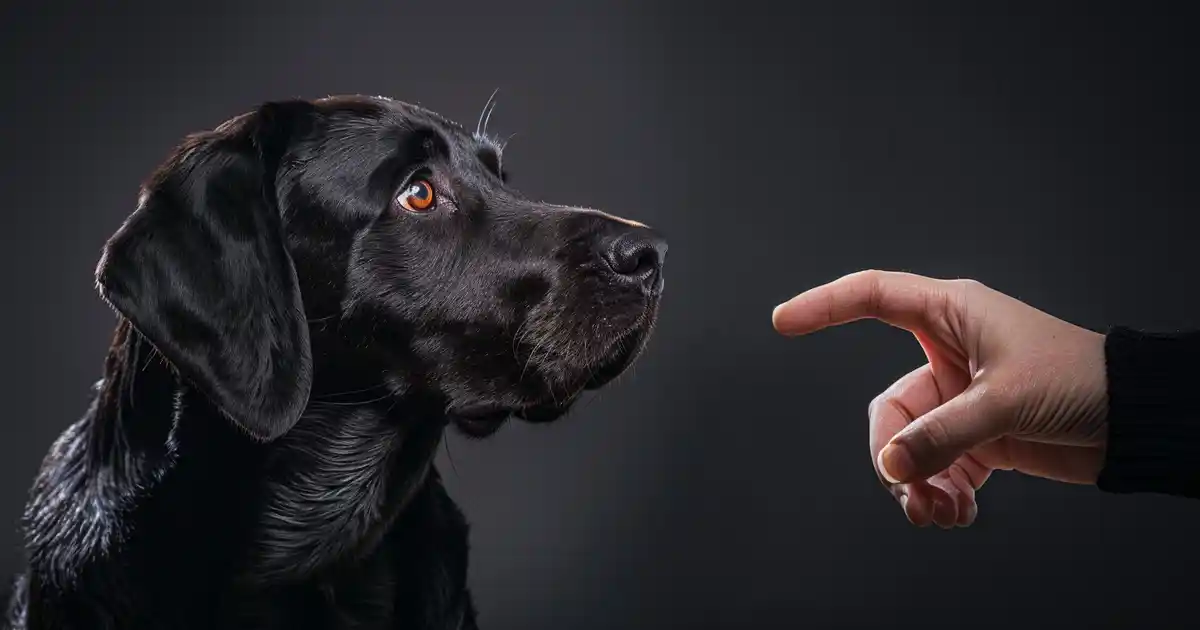
Have you ever wondered why professional trainers seem to control their dogs with just subtle hand movements while your dog ignores your frantic waving? I used to think hand signals were advanced tricks only competition dogs needed, until I discovered these visual communication methods that completely transformed my ability to control my dog in noisy environments, at distances, and even when he couldn’t hear verbal commands. Now my neighbors constantly ask how I can recall my dog from across the park with just a hand gesture, and my training club instructor (who emphasizes hand signals for all students) keeps commenting on how responsive my dog is to visual cues alone. Trust me, if you’re worried that teaching hand signals will confuse your dog or seems too complicated, this systematic approach will show you it’s more practical and achievable than you ever expected.
Here’s the Thing About Dog Training Hand Signals
The secret to successful hand signal training is understanding that dogs are actually more naturally attuned to visual communication than verbal—their evolutionary history with wolves and their incredible ability to read human body language means hand signals often work better than voice commands once properly taught. What makes this training truly effective is that hand signals provide redundant communication (you can use voice AND hand together), work when verbal commands fail (noisy environments, distance situations, or with deaf dogs), and create more attentive dogs who watch their handlers constantly for visual information rather than just listening passively.
I never knew visual communication could be this powerful until I started pairing hand signals with verbal commands and discovered my dog’s response reliability increased dramatically—he wasn’t just hearing commands, he was seeing them, doubling the communication clarity. This combination of leveraging dogs’ natural visual processing abilities, creating distinct memorable gestures for each behavior, and building visual attention through training creates life-changing communication flexibility within 2-4 weeks of consistent practice. It’s honestly more practical than I ever expected—no shouting needed in noisy environments, no vocal strain from constantly repeating commands, and the ability to communicate across football fields where voices don’t carry.
According to research on dog cognition, dogs process visual information faster than auditory information and can distinguish between dozens of distinct hand signals with proper training. The approach works beautifully whether you’re teaching puppies their first commands with simultaneous verbal and visual cues, adding hand signals to an adult dog’s existing verbal vocabulary, or training deaf dogs who rely entirely on visual communication, but you’ll need to understand that consistency in your hand signals is even more critical than consistency in verbal commands because visual cues have more variations to control.
Yes, even dogs who seem oblivious to your current gestures can master reliable hand signal responses, and here’s why: when you create distinctive, consistent hand signals and pair them systematically with known behaviors through proper training protocols, dogs quickly learn that specific visual cues predict specific outcomes just as reliably as words do—sometimes more reliably because hand signals are harder to garble or vary accidentally than verbal commands.
What You Need to Know – Let’s Break It Down
Understanding the advantages of hand signals over verbal commands is absolutely crucial before committing to this training. Hand signals work at distances where dogs can’t hear voices (50+ yards away), function in noisy environments where verbal commands get lost, allow silent communication when you don’t want to disturb others, work for deaf or hearing-impaired dogs, and reduce vocal strain for handlers who train extensively. Don’t skip appreciating these practical benefits because understanding why hand signals matter motivates consistent practice (took me forever to realize that teaching hand signals wasn’t just for show—it solved real problems like controlling my dog at the dog park without shouting across the field).
The concept of visual attention matters more than you think for hand signal success. Dogs must be looking at you to see hand signals, unlike verbal commands that work even when dogs aren’t watching. Most people need to understand this fundamental requirement and train strong visual attention before expecting hand signal reliability. I always recommend teaching “watch me” or “look” as a foundation skill because everyone sees better hand signal results when dogs habitually check in visually with handlers rather than wandering through life focused on environmental distractions.
Standard hand signals exist for basic commands, though variations are acceptable as long as you’re consistent. If you’re just beginning hand signal training and want to ensure your dog has the focus and energy for this visual learning, check out my guide to concentration-supporting nutrition for foundational knowledge on omega-3 fatty acids and nutrients that support cognitive function and attention during training.
Standard hand signals include: flat palm up for sit (mimicking the lure path), finger pointing down for down (indicating groundward direction), flat palm forward for stay (universal stop gesture), sweeping arm toward your body for come (inviting approach), hand touching thigh for heel (indicating position beside you). Reality check: the specific gestures matter less than their distinctiveness from each other and your absolute consistency in performing them identically every single time.
The timing of adding hand signals to verbal commands determines training success. Add hand signals after verbal commands are solid (dogs respond reliably to voice alone), or teach both simultaneously from the beginning (pairing voice and hand together from the first repetition). Never add hand signals to shaky verbal commands because you’ll just create dual confusion—fix the verbal command first, then layer in the visual component once reliability exists.
The Science and Psychology Behind Why This Works
Research from leading canine cognition researchers demonstrates that dogs evolved alongside humans for thousands of years, developing exceptional abilities to read human gestural communication—even puppies with minimal human contact can follow pointing gestures, a skill rare in other species including our closest primate relatives. The biological truth is that dogs’ brains are wired to attend to human visual cues, making hand signal training leverage an evolutionary adaptation rather than fight against natural tendencies.
Studies confirm that dogs trained with both verbal and visual cues show faster response times and higher reliability than dogs trained with verbal cues alone, because dual-channel communication provides redundancy that increases successful comprehension. Experts agree that hand signals often create more focused dogs because visual communication requires dogs to watch their handlers actively rather than passively waiting to hear commands, fundamentally changing the attention dynamic between handler and dog.
What research actually shows is that visual cues are processed differently in dogs’ brains than auditory cues—visual information travels through different neural pathways and may be integrated faster than verbal commands, explaining why many dogs respond more quickly to hand signals once trained. The psychology of successful hand signal training involves teaching dogs that specific visual patterns predict specific outcomes just as reliably as sounds do, creating multi-modal learners who integrate information from multiple senses simultaneously for clearest understanding.
Traditional training focused exclusively on verbal commands often fails in certain situations (distance, noise, handler vocal limitations), while hand signal training creates communication flexibility that works across virtually any circumstance. Visual communication also creates calmer training environments because handlers aren’t constantly verbalizing, reducing the general noise level and creating more peaceful interaction patterns between dogs and humans.
Here’s How to Actually Make This Happen
Start by ensuring your dog knows solid verbal commands before adding hand signals—here’s where I used to mess up completely by trying to teach hand signals to a dog who barely understood “sit” verbally, compounding confusion with too much new information. Your dog should respond reliably to verbal sit, down, stay, and come at minimum before you begin hand signal training. This foundation ensures you’re adding visual information to known behaviors rather than teaching new behaviors through unfamiliar communication channels simultaneously.
Now for the critical technique: pairing hand signals with known verbal commands. Start with sit since it’s typically the most reliable behavior. Give your verbal “sit” command while simultaneously performing your chosen sit hand signal (flat palm moving upward from waist to shoulder height works well). When your dog sits in response to the familiar verbal command, mark and reward enthusiastically. Here’s the precise sequence: verbal cue + hand signal simultaneously → dog performs behavior → mark and reward. This pairing creates the association between the visual gesture and the known behavior.
My secret is performing 15-20 paired repetitions over 2-3 days before attempting to test if the hand signal works alone. Every situation has its own challenges, but this pairing volume gives dogs sufficient exposure to connect the new visual cue with the established verbal cue and behavioral outcome. Don’t worry if you’re just starting out—dogs won’t understand hand signals immediately, but the repeated pairing creates gradual association that solidifies over multiple sessions.
Here’s my mentor’s advice that transformed my hand signal training: testing whether the hand signal works independently must be done carefully to avoid confusing your dog. On day 3 or 4 of pairing, try giving just the hand signal without the verbal command. If your dog performs the behavior (sits in response to hand signal alone), jackpot reward with multiple treats and enthusiastic praise—they’ve made the connection! If they don’t respond, don’t repeat the hand signal or add verbal help immediately. Wait 3-5 seconds to see if they puzzle it out, then give the paired verbal + hand signal again, returning to more pairing practice before testing again.
When your dog responds correctly to the hand signal alone 8 out of 10 times across multiple testing sessions, you’ve successfully taught that particular hand signal. Results can vary, but most dogs learn their first hand signal within 5-7 days of consistent pairing and testing, with subsequent hand signals learning faster (often 3-4 days) because they understand the concept that hand gestures predict behaviors.
Build your hand signal vocabulary systematically—master sit hand signal completely before adding down hand signal, then stay, then come, then heel. This step prevents the confusion that comes from trying to teach multiple new visual cues simultaneously. Until each hand signal is reliable in isolation, don’t add the next one to your training rotation.
Practice hand signals in progressively challenging environments once basic understanding exists. Start in your quiet training space where dogs learned the original verbal commands, then practice in the backyard, then on walks in low-distraction areas, building to busy environments with multiple distractions. Each new environment requires 5-10 successful hand signal responses before expecting reliability—you’re teaching that hand signals mean the same thing everywhere, not just in the quiet room where you first taught them.
Add distance to hand signals gradually. Once hand signals work reliably from 3-5 feet away, practice from 10 feet, then 20 feet, then 30+ feet. Distance changes the visual angle and size of your hand signals from your dog’s perspective, requiring practice to generalize. Don’t be me—I assumed that if my dog responded to hand signals from 5 feet, he’d respond from 50 feet without practice. Wrong. Distance requires explicit training to build reliability at progressively increasing ranges.
Common Mistakes (And How I Made Them All)
Don’t make my mistake of performing inconsistent hand signals. I used to give “sit” hand signal sometimes at chest height, sometimes at shoulder height, sometimes with fingers spread, sometimes in a fist—my dog had no idea these variations were supposed to mean the same thing. Experts recommend practicing your hand signals in a mirror without your dog present, standardizing exactly how high, how fast, and what position your hand takes for each signal, then replicating that standard perfectly every single time you use it.
Adding hand signals before verbal commands are solid is another trap I fell into. I thought hand signals would help clarify shaky verbal commands, but instead I just created dual confusion—my dog didn’t understand the verbal cue OR the visual cue. The verbal command must be reliable first (80%+ response rate in various environments) before layering in hand signals. If you add visual cues to unstable verbal cues, you’re building on a weak foundation that collapses under the additional complexity.
Using hand signals that are too similar to each other creates massive confusion. That’s normal for trainers who don’t plan their signal vocabulary carefully—if your sit signal, down signal, and stay signal all involve raised palms, your dog can’t reliably distinguish them. I’ve learned to handle this by making signals dramatically different: sit is upward palm movement, down is downward finger point, stay is flat palm forward, come is sweeping arm inward, heel is hand on thigh. Maximum distinctiveness prevents mix-ups.
Expecting hand signals to work without building visual attention guarantees failure. This is totally manageable by training “watch me” first—teaching your dog to make eye contact and watch you attentively before assuming they’ll notice your hand signals. I always prepare for hand signal training by ensuring dogs look at me frequently and habitually, because dogs who never watch their handlers miss even the clearest hand signals simply because they’re not oriented toward the visual information.
When Things Don’t Go as Planned
Feeling like your dog just doesn’t notice your hand signals at all? You probably need to train stronger visual attention before expecting hand signal responses. That’s normal, and it happens with dogs who’ve learned to navigate life purely by listening rather than watching. I’ve learned to handle this by dedicating 1-2 weeks exclusively to building “watch me” behavior—marking and heavily rewarding any moment your dog makes eye contact or looks at your face—before reintroducing hand signal training once visual attention is strong.
Your dog learned the first hand signal but seems confused by the second one? Don’t stress—this is common because dogs sometimes think the first signal is “the hand signal” rather than understanding that different hand movements predict different behaviors. This is totally manageable by ensuring the first signal is absolutely solid (95%+ reliability) before introducing a second signal, making the second signal dramatically different from the first (different hand, different movement direction, different position), and practicing both in alternation once the second is learned so dogs distinguish them actively.
Your dog responds to hand signals at close range but ignores them at distance? If you’re losing steam, try the systematic distance progression. Practice hand signals from progressively farther away—5 feet, 10 feet, 15 feet, 20 feet—ensuring 8/10 success at each distance before advancing. Behavioral principles remind us that distance changes visual information significantly (signals appear smaller, angles change, visibility decreases), requiring explicit practice at each range before expecting generalization across all distances.
Commands working separately but getting confused when you mix signals rapidly? When discrimination fails, you need clearer distinctions and more alternation practice. Ensure your hand signals are maximally different from each other (different hands, different movement directions, different speeds), and practice giving them in random order so dogs learn to discriminate actively rather than anticipating patterns. You’re not regressing—you’re building the discrimination skills that create reliable response to whichever signal appears.
Advanced Strategies for Next-Level Results
Fading verbal commands to create silent hand signal control transforms dual-cue responses into visual-only reliability. Once your dog responds to paired verbal + hand signals reliably, begin occasionally giving only the hand signal, gradually increasing the percentage of hand-signal-only trials until your dog responds to hand signals alone 100% of the time. Advanced practitioners often implement completely silent training sessions using only hand signals, creating dogs who watch handlers constantly for visual direction without any verbal input.
Teaching signals with both hands creates ambidextrous communication useful when one hand is occupied. Once dogs learn a signal with your primary hand, teach the same signal with your opposite hand through the same pairing process. What separates beginners from experts is dogs who respond to hand signals from either hand, from any body position (handler sitting, kneeling, lying down), and from any angle (handler facing forward, sideways, even with back partially turned).
Miniaturizing hand signals for subtle public control allows commanding dogs without obvious gestures that draw attention. Start with full-size signals, then gradually make them smaller and smaller while maintaining reliability—full arm sweeps become shoulder movements become wrist movements become finger movements. Advanced techniques for accelerated results include teaching dogs to watch for tiny facial cues like eyebrow raises or slight head nods that replace obvious hand signals entirely.
Adding sequential hand signals creates complex behavior chains. Once individual signals are solid, teach sequences like sit-signal followed immediately by down-signal followed by stay-signal, rewarding only after the complete sequence. This builds attention and creates impressive multi-step routines useful for competition obedience, service dog tasks, or simply showcasing advanced training.
Ways to Make This Your Own
When I want faster results with visually-oriented dogs who naturally watch handlers closely, I teach hand signals simultaneously with verbal commands from the very beginning rather than adding them later. This makes training more complex initially but definitely worth it for dogs whose attention naturally gravitates toward visual information—they learn dual cues in the same time it would take to learn verbal cues alone.
For special situations like training deaf dogs who rely entirely on visual communication, I incorporate vibration collars or flashlight signals for gaining attention before giving hand signals. My deaf-dog version focuses heavily on environmental management (keeping dogs on long lines outdoors, using visual fences) since verbal emergency recalls don’t exist, making hand signal reliability literally life-saving rather than just convenient.
Sometimes I add colored targets or props to hand signals to make them more visible at extreme distances—holding a brightly colored disc for down signal, wearing a white glove for contrast against dark backgrounds when signaling at dusk. For next-level results, I love teaching discrimination between similar signals that differ only in subtle ways (palm facing up versus palm facing down), building incredible visual acuity and attention to detail.
My advanced version includes full conversations using hand signal vocabulary—strings of 5-10 signals in sequence creating complex instruction sets my dog follows purely through visual information. Each variation works beautifully with different goals—pet owners need basic reliable signals for practical situations, while competitive handlers need precision signals visible from 100+ yards, deaf dog owners need comprehensive signal vocabularies covering all daily needs, and trick trainers need creative signals for impressive visual routines.
Why This Approach Actually Works
Unlike purely verbal training that limits communication to auditory channels, hand signal training leverages dogs’ natural visual processing strengths and evolutionary adaptations for reading human gestures. The approach works consistently because it builds on existing reliable verbal commands rather than starting from scratch, creating associations between new visual cues and established behaviors that transfer quickly.
What makes this different from trying to teach hand signals independently is the systematic pairing process that connects unknown visual cues with known verbal cues, letting dogs use their understanding of verbal commands to decode the meaning of hand signals. Research shows that paired associate learning (connecting two cues that predict the same outcome) creates faster acquisition than teaching new cues independently because dogs can leverage existing knowledge rather than building completely new associations.
Evidence-based approaches demonstrate that dogs trained with both verbal and visual cues show more reliable responses across varying conditions than dogs trained with single-modality cues, because dual-channel communication provides redundancy that catches attention even when one channel is compromised. The sustainable aspect of this method is crucial—you’re building flexible communication that works whether you can speak or not, whether dogs can hear or not, and whether you’re close or far, creating versatile obedience that persists across virtually any circumstance.
Real Success Stories (And What They Teach Us)
One client brought me a Border Collie who’d been trained entirely through verbal commands but was nearly impossible to control at the dog park because calling him required shouting over distance and noise. Within three weeks of adding hand signals to his existing vocabulary, the owner could silently recall the dog from 50 yards away with just a sweeping arm gesture. What made this transformation possible was leveraging the dog’s existing obedience knowledge—he already knew “come” verbally, so learning the visual version took days not months. The lesson: adding hand signals to trained dogs is much faster than teaching behaviors and signals simultaneously.
Another success story involves a deaf Australian Shepherd rescue who arrived knowing zero commands and relying entirely on visual communication. Using exclusively hand signals paired with treats and mark training (thumbs up instead of verbal “yes”), the dog learned sit, down, stay, come, and heel within six weeks. Their success aligns with learning theory showing that communication modality doesn’t determine learning speed—deaf dogs learn visual cues as quickly as hearing dogs learn verbal cues when training is appropriate to the sensory channel.
A particularly inspiring case involved an elderly handler who’d lost significant vocal volume due to medical issues and struggled to control her large dog through quiet verbal commands. Transitioning to hand signals restored her training control despite vocal limitations, allowing continued activity and bonding despite changed circumstances. The lesson here is that hand signals provide accessibility—they work for handlers with vocal limitations, dogs with hearing impairments, and situations where verbal communication isn’t viable, creating inclusive training that accommodates various needs.
Tools and Resources That Actually Help
Brightly colored training gloves or hand markers increase visual contrast against various backgrounds, making hand signals more visible at distance or in low light. I personally use a white glove on my signaling hand when training at dusk or against dark backgrounds, ensuring maximum visibility. Explain why each tool is valuable: visual contrast determines how easily dogs spot hand signals, especially at distances where hand details disappear and only high-contrast shapes remain visible.
Mirrors allow handlers to practice hand signals without dogs present, standardizing movements and checking for consistency. Be honest about limitations: you can’t assess your own hand signals during actual training sessions when focused on your dog, so pre-training practice in mirrors identifies inconsistencies you wouldn’t otherwise notice.
Video recording of training sessions reveals unintended hand movements that confuse dogs. Recording yourself giving commands shows inadvertent gestures—scratching your head, adjusting your shirt, pointing at distractions—that dogs might interpret as signals, explaining seemingly random responses. Regular video review eliminates these unintentional cues.
Books like “In Tune with Your Dog” discuss canine visual processing and how dogs interpret human body language, while deaf dog training guides provide comprehensive hand signal vocabularies. Online resources from certified professional dog trainers offer video demonstrations showing hand signals from multiple angles and distances that photos or written descriptions cannot adequately convey, helping standardize your signals to match recognized conventions.
Questions People Always Ask Me
How long does it take to teach hand signals to a dog who already knows verbal commands?
Most people need about 5-7 days to teach the first hand signal through systematic pairing with an existing verbal command, with subsequent signals learning faster (often 3-4 days each) as dogs understand that hand movements predict behaviors. I usually recommend expecting 3-4 weeks to build a complete basic hand signal vocabulary (sit, down, stay, come, heel) for dogs with solid verbal command foundation. Dogs learning verbal and visual commands simultaneously from the beginning take the same time to learn both as hearing dogs take to learn verbal commands alone—typically 2-4 weeks per command depending on complexity.
What if my dog already responds to my random gestures—will training formal signals confuse them?
You need to standardize your signals and eliminate random gestures that currently trigger responses. That’s normal—many dogs develop associations with unintentional handler movements, responding to gestures we don’t realize we’re making. I’ve learned to handle this by video recording my training to identify inadvertent cues, deliberately eliminating those movements, and replacing them with intentional formal signals that I control consciously. Most accidental-signal confusion resolves when you become aware of what you’re doing and intentionally standardize your communication.
Should I use the same hand signals that everyone else uses, or can I make up my own?
You can create custom signals as long as they’re distinct from each other and performed consistently, but using standard signals offers advantages: other trainers recognize them if you need help, competition obedience often requires specific signals, and learning resources show standard signals making it easier to learn proper form. If you customize, absolutely ensure each signal is maximally different from your others to prevent confusion—different hands, different movement directions, different speeds, different locations relative to your body.
Can I teach hand signals to a puppy who hasn’t learned verbal commands yet?
Absolutely—teaching both simultaneously from the beginning works beautifully and creates dogs who integrate multi-modal information naturally from the start. Don’t stress about teaching one before the other with puppies—just pair verbal and visual cues together from the first training session. This is totally manageable by always saying “sit” while showing the sit hand signal, saying “down” while showing the down hand signal, creating dual associations that develop in parallel rather than sequentially.
What’s the most important hand signal to teach first?
Recall (come) is arguably most critical for safety since it allows emergency control even when your dog can’t hear you across distance or in noisy environments. If you’re prioritizing, try teaching hand signal for come first (dramatic sweeping arm motion toward your body), then stay (flat palm forward stop gesture) for emergency stopping, then sit/down/heel as convenient position control. When dogs respond to visual recall and stay reliably, you have the foundation for safety in virtually any situation.
How do I get my dog to pay more attention to my hands?
You need to build visual orientation through “watch me” training and by making hand movements predict valuable outcomes consistently. That’s normal for dogs who’ve learned to navigate life by listening rather than watching—you must actively teach that visual information is worth attending to. I’ve learned to handle this by heavily rewarding any moment my dog looks at my hands or face, deliberately moving my hands while delivering treats so hands become associated with rewards, and practicing hand signals in contexts where verbal commands are impossible (underwater pool training, extreme distance) forcing visual attention.
Will teaching hand signals make my dog stop responding to verbal commands?
Not if you continue using verbal commands regularly—dogs can easily respond to both independently or simultaneously. What sometimes happens is that dogs who find visual information easier to process begin preferring hand signals and waiting for them even when you give verbal commands. This is totally manageable by occasionally using verbal commands alone (no hand signal) to maintain responsiveness to both modalities, ensuring your dog doesn’t become dependent on seeing signals to obey.
Can older dogs learn hand signals or is this only for puppies?
Older dogs learn hand signals as readily as puppies when the training protocol respects their existing knowledge base. When adding signals to dogs who already know verbal commands, the learning is actually faster than puppies because you’re leveraging established behaviors—older dogs just need to learn that visual cues connect to behaviors they already understand. Most elderly dogs (even 10+ years old) master complete hand signal vocabularies within 4-6 weeks when training is consistent and patient.
What should I do if my dog responds to hand signals inconsistently?
You probably have inconsistent signal performance—slight variations in your hand position, speed, or movement path that your dog can’t reliably decode. That’s normal, and it happens when handlers don’t consciously standardize their signals. I’ve learned to handle this by video recording myself giving signals across multiple sessions, comparing them to identify variations, then deliberately practicing identical repetitions in a mirror until muscle memory creates automatic consistency. Most inconsistent dog responses trace to inconsistent handler signals.
How small can I make hand signals before my dog stops seeing them?
This depends on distance and your dog’s visual acuity, but signals can become surprisingly subtle—eventually just finger twitches, facial expressions, or weight shifts if you build progressively. If training miniaturized signals, start with full-sized obvious versions, then gradually reduce signal size by 10-20% every few training sessions while maintaining reliability. Most dogs can learn to respond to signals as subtle as raised eyebrows or slight head tilts when the miniaturization is gradual enough, though practical applications rarely require signals that small.
Should I eliminate verbal commands once hand signals work, or use both forever?
Most trainers maintain both capabilities, using whichever is most appropriate for the situation—verbal in the car or at night when hand signals aren’t visible, visual in noisy environments or at distance when verbal doesn’t carry, or both simultaneously for maximum clarity in challenging situations. The fundamental advantage of dual-trained dogs is communication flexibility—you choose which modality serves each situation best rather than being limited to only one option regardless of circumstances.
How do I know if my dog has truly mastered hand signals?
You’ll see concrete indicators: your dog responds to hand signals alone without verbal help, maintains reliability across various environments and lighting conditions, discriminates between different signals performing the correct behavior for each, responds at increasing distances (20+ feet), and shows consistent response speed (within 1-2 seconds of seeing the signal). Success looks like being able to control your dog completely through silent visual communication—commanding sits, downs, stays, recalls, and heeling purely through hand signals across various real-world situations without ever speaking.
Before You Get Started
I couldn’t resist sharing this approach because it proves that teaching hand signals doesn’t require special talent or months of complicated training—just understanding that dogs are naturally visual creatures, systematic pairing of new visual cues with known verbal cues, and ruthless consistency in performing identical hand signals every single time you use them. The best hand signal training journeys happen when you view visual communication as complementing verbal commands rather than replacing them, creating flexible multi-modal communication that works across any distance, any noise level, and any circumstances life throws at you and your dog.
Ready to begin? Start with teaching your first hand signal today—choose sit since it’s typically the most reliable verbal command in your dog’s vocabulary, decide on your sit hand signal (flat palm moving upward from waist to shoulder height works well), and practice 10 repetitions right now where you say “sit” while simultaneously showing the hand signal, rewarding when your dog sits in response to the familiar verbal command. That simple paired practice repeated 15-20 times over the next 2-3 days will plant the seed for visual communication mastery, creating the foundation for silent control that transforms your ability to communicate with your dog across distances, in chaos, and in situations where words simply don’t work—unlocking the secret language that professional trainers have known for decades and that you’re about to discover firsthand!




