
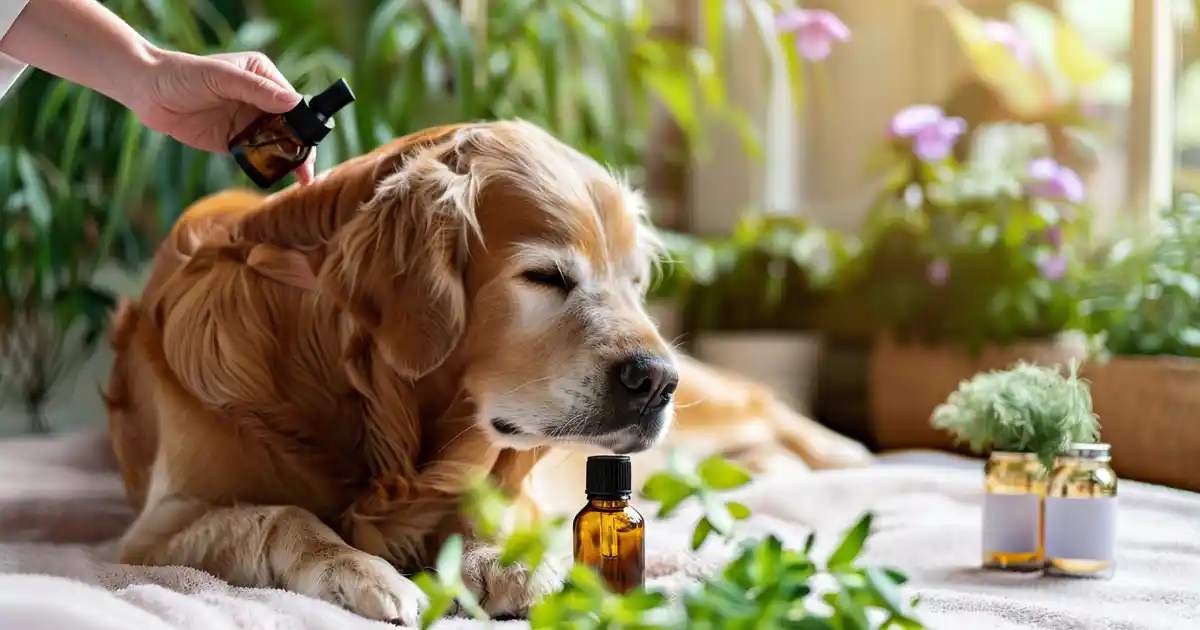
Have you ever wondered whether the essential oil diffuser running in your living room right now — the one filling your home with calming lavender or invigorating eucalyptus — could actually be making your dog sick in ways you might not immediately connect to that pleasant-smelling mist? I had absolutely no idea that my aromatherapy routine was a potential health risk for my dogs until my veterinarian casually asked during a wellness visit whether I used essential oils at home, and the conversation that followed genuinely shocked me. Here’s the thing I discovered after that appointment and the extensive research it launched: harmful essential oils for dogs represent one of the most underrecognized hazards in modern pet-owning households, the biological reasons dogs are so much more vulnerable than humans are fascinating and scientifically well-established, and the difference between safe and unsafe essential oil use around dogs is something every owner deserves to understand clearly before an accidental exposure happens. If you’ve been diffusing essential oils freely around your pets, applying them topically without checking safety, or assuming that natural equals safe for animals, this guide is going to fundamentally change how you think about aromatherapy in a home with dogs.
Here’s the Thing About Essential Oils and Dogs
Here’s the magic of truly understanding why essential oils affect dogs so differently than they affect us — it transforms what might seem like overcautious pet advice into something you immediately recognize as grounded in serious biological reality. What makes this genuinely important is that essential oils are not gentle, diluted fragrances — they are highly concentrated plant compounds, often requiring hundreds of pounds of plant material to produce a single small bottle, and their potency is precisely what makes them both therapeutically interesting to humans and potentially dangerous to dogs whose bodies process these compounds through completely different metabolic pathways. I never knew that a dog’s liver lacks specific enzymes that humans possess for breaking down certain aromatic compounds until my vet explained it, and that single piece of information reframed everything I thought I knew about using essential oils safely in my home. It’s honestly more serious than the wellness industry typically acknowledges, and dogs pay the price for that information gap regularly. According to research on the pharmacology of terpenes and phenolic compounds in mammalian biology, the complex organic compounds that give essential oils their therapeutic properties in humans interact with animal metabolic systems in ways that vary dramatically across species, with dogs being particularly vulnerable due to their specific hepatic enzyme profile. No chemistry background required to understand what this means for your dog — just clear information and the willingness to apply it.
What You Need to Know — Let’s Break It Down
Understanding exactly why dogs are so much more vulnerable to essential oil toxicity than humans is absolutely crucial before the specific dangers make complete sense, so don’t skip this biological foundation even if you’re eager to get to the list of harmful oils. Dogs process aromatic compounds primarily through their liver, and a dog’s liver lacks adequate levels of glucuronyl transferase — a key enzyme responsible for metabolizing and safely eliminating many of the phenolic compounds, terpenes, and ketones found in concentrated essential oils. This metabolic limitation means that compounds which a human liver neutralizes and excretes within hours can accumulate in a dog’s system to toxic concentrations with repeated exposure or single high-dose exposures (took me forever to truly appreciate how significant this enzymatic difference is in practical terms). I finally understood after extensive research that there are actually three distinct exposure routes that create risk — dermal absorption through the skin, inhalation of diffused or aerosolized oils, and direct ingestion — and each route carries different risk profiles and requires different precautions. Don’t overlook the inhalation route in particular, because diffusing essential oils creates concentrated airborne particles that a dog inhales directly into lung tissue that is significantly more sensitive to these compounds than human respiratory tissue. If you’re building a comprehensive picture of household hazards beyond essential oils, check out our complete guide to toxic household products and dog safety for an expanded look at the environmental risks most dog owners don’t think about until something goes wrong. The harmful essential oils for dogs conversation requires understanding all three exposure routes to be genuinely protective.
The Science and Psychology Behind Why This Works
What research actually shows is that essential oil toxicity in dogs is driven by several converging biological vulnerabilities that make dogs categorically different from humans in their ability to safely process these concentrated botanical compounds. Studies in veterinary toxicology confirm that phenol-containing essential oils — a category that includes tea tree, oregano, thyme, clove, and cinnamon oils — are particularly dangerous because phenols are specifically the compounds that dog livers struggle most acutely to metabolize, allowing them to accumulate in the bloodstream and cause progressive cellular damage. The reason the wellness industry’s general messaging of “natural equals safe” is so specifically dangerous in the context of pet households is that it conflates safety for humans with safety for animals in a way that veterinary science firmly does not support — arsenic is natural, and so is every compound on this toxicity list. Research from the ASPCA Animal Poison Control Center consistently identifies essential oils as a growing category of pet toxicity cases that has increased substantially alongside the rise of home aromatherapy and DIY wellness product use. Understanding the specific mechanisms — hepatic enzyme deficiency, respiratory sensitivity, dermal absorption capacity — removes any ambiguity about why this is taken seriously in veterinary medicine and why general wellness marketing cannot be trusted as a reliable guide to pet safety.
The Most Harmful Essential Oils for Dogs — What You Must Know About Each One
Tea Tree Oil (Melaleuca) Start here because tea tree oil is simultaneously one of the most widely used essential oils in households and one of the most well-documented causes of essential oil toxicity in dogs, a combination that makes it uniquely dangerous in practical terms. Tea tree oil contains terpinen-4-ol and other terpene compounds that cause severe neurological toxicity in dogs — ataxia (loss of coordination), muscle weakness, tremors, hypothermia, and in serious cases liver failure and coma. Here’s the part that genuinely shocked me when I first learned it: tea tree oil toxicity in dogs has been documented at concentrations as low as one to two percent — meaning even products marketed as “diluted” or “gentle” can cause serious harm, and the undiluted oil that many households keep for cleaning and first aid represents an acute poisoning risk if a dog contacts it dermally or licks a treated surface. Don’t ever apply tea tree oil to your dog’s skin for any reason — hotspot treatments, flea prevention, wound care — regardless of how many DIY pet care websites suggest it, because this advice is directly contradicted by veterinary toxicology and has caused serious, documented harm. Pennyroyal Oil Pennyroyal is a mint-family plant whose essential oil has historically been promoted as a natural flea repellent for dogs — a positioning that makes it particularly dangerous because it’s specifically marketed for use on dogs while being genuinely toxic to them. The active compound pulegone is metabolized by the liver into a reactive toxic intermediate that causes severe hepatotoxicity — liver cell death — in dogs, and cases of fatal liver failure following topical pennyroyal application have been documented in veterinary literature. Here’s the critical practical concern: pennyroyal essential oil appears in some DIY flea collar recipes, homemade dog shampoos, and natural pet care formulations circulating on social media and wellness blogs, where it’s presented as a safe natural alternative without any acknowledgment of its documented toxicity record in veterinary medicine. Eucalyptus Oil Eucalyptus oil contains eucalyptol — a compound that causes central nervous system depression, gastrointestinal distress, and respiratory difficulty in dogs through mechanisms that are distinct from its relatively benign effects in humans. Here’s where I see dog owners make a particularly common and understandable mistake: eucalyptus is so frequently associated with respiratory support and breathing ease in humans that owners sometimes intentionally diffuse it when their dog has a cold or respiratory symptoms, not realizing they’re potentially making a respiratory problem significantly worse by exposing sensitive canine lung tissue to a compound that irritates and depresses respiratory function in dogs. Cinnamon Oil Cinnamon essential oil — not cinnamon powder in small food amounts, but the concentrated essential oil — contains cinnamaldehyde and eugenol that cause significant oral irritation, central nervous system depression, and liver toxicity in dogs at relatively low doses. The concentrated oil can cause chemical burns to mouth tissue and the gastrointestinal tract on direct contact, and systemic absorption causes the hepatic and neurological effects that make it genuinely dangerous beyond surface-level irritation. Peppermint Oil Peppermint oil presents a nuanced danger — it’s less acutely toxic than tea tree or pennyroyal but causes significant gastrointestinal distress, neurological symptoms including ataxia, and respiratory irritation in dogs, particularly through diffusion in enclosed spaces where a dog cannot escape the concentration of airborne oil particles. Here’s the practical concern that most people miss: peppermint oil is one of the most commonly diffused oils in households for energy and focus, and dogs who spend long periods in a room where peppermint is being diffused can develop cumulative respiratory irritation that owners may attribute to allergies or other causes without recognizing the environmental connection. Clove Oil Clove oil contains extremely high concentrations of eugenol — a phenolic compound that causes significant liver toxicity in dogs and is one of the specific compounds that dog livers are least equipped to metabolize safely. Clove oil is also a potent topical irritant that causes chemical burns and severe inflammation on skin and mucous membrane contact, making dermal exposure acutely painful in addition to systemically dangerous. Oregano Oil Oregano essential oil — distinct from small culinary amounts of dried oregano herb — contains carvacrol and thymol, both of which cause gastrointestinal distress, central nervous system effects, and liver toxicity in dogs at the concentrated doses present in essential oil form. Oregano oil has become increasingly popular in human wellness applications for immune support and antimicrobial properties, and its growing household presence increases exposure risk for dogs in homes where it’s used regularly. Wintergreen Oil Wintergreen oil is particularly dangerous because it contains methyl salicylate — a compound closely related to aspirin — at extremely high concentrations. Dogs are far more sensitive to salicylate toxicity than humans, and wintergreen oil contains enough methyl salicylate that even small dermal exposures can produce systemic toxicity equivalent to a significant aspirin overdose, causing gastrointestinal hemorrhage, metabolic acidosis, and in severe cases seizures and organ failure. Ylang Ylang Oil Ylang ylang causes cardiovascular effects in dogs including heart rate depression, blood pressure changes, and cardiac arrhythmias that make it specifically dangerous for dogs with any underlying heart conditions, as well as causing gastrointestinal distress and neurological symptoms in otherwise healthy dogs at doses that appear small relative to the oil’s high potency. Pine and Spruce Oils Pine and spruce essential oils contain alpha and beta-pinene terpenes and phenolic compounds that cause liver and kidney toxicity in dogs, with the added practical danger that pine-scented cleaning products — floor cleaners, surface sprays, and disinfectants — frequently contain pine oil derivatives that dogs contact dermally by walking on cleaned surfaces and then absorbing through paw pads before grooming.
Common Mistakes (And How I Made Them All)
Don’t make my mistake of assuming that because an essential oil is safe for humans and even referenced in some wellness literature as calming for animals, it must be safe for dogs in the ways I was using it — I diffused lavender and eucalyptus freely for months before my vet conversation without realizing that even relatively lower-risk oils become problematic in enclosed spaces where dogs cannot move away from the concentration. Veterinary toxicologists consistently recommend that dog owners never apply any essential oil directly to a dog’s skin or coat without explicit veterinary guidance regardless of how the oil is positioned in wellness marketing, because dermal absorption in dogs is significant and the same dilution ratios that create safety margins for humans do not translate to dogs with different metabolic enzyme profiles. Another significant mistake I made was not considering my dogs’ ability to escape — I used to run my diffuser in the living room where Freddie spent most of his time without thinking about whether he had genuinely easy access to a room without diffused oil, and a dog who cannot remove himself from an irritant environment accumulates exposure that a dog with free exit access naturally self-regulates. A third critical mistake many owners make is trusting essential oil MLM representatives, wellness bloggers, and natural pet care social media accounts as authoritative sources on essential oil safety for dogs — these sources have significant financial incentives that are fundamentally misaligned with accurate safety information, and veterinary toxicology is the only appropriate authority on this topic.
When Things Don’t Go as Planned
Feeling alarmed because your dog just licked up spilled essential oil or you’ve been diffusing one of the oils on this list without knowing the risk? Here’s the exact sequence to follow: remove your dog from the exposure environment immediately, do not induce vomiting without professional guidance because some essential oils cause more damage coming back up than staying down, and call the ASPCA Animal Poison Control Center at (888) 426-4435 or your veterinarian with the specific oil name and your best estimate of the exposure amount and route. I’ve learned through research and veterinary consultation that dermal exposures — oil on skin or coat — should be addressed by gently washing the affected area with dish soap and warm water to remove as much oil as possible before it absorbs further, which is specifically useful in the window immediately after exposure before significant absorption has occurred. When your dog is already showing symptoms — tremors, loss of coordination, drooling, difficulty breathing, lethargy, or any neurological signs — that is an emergency veterinary clinic situation requiring immediate transport rather than a call-and-wait situation. Don’t dismiss early symptoms as unrelated to a recent essential oil exposure just because the connection isn’t obvious — the lag between exposure and visible symptoms varies by oil and exposure route, and early intervention consistently produces better outcomes across all categories of essential oil toxicity.
Advanced Strategies for Next-Level Essential Oil Safety at Home
Advanced dog owners who truly understand harmful essential oils for dogs implement what I think of as a whole-home ventilation and escape-route audit — a systematic evaluation of every space where essential oils are used to ensure that dogs always have clear, unobstructed access to areas free from diffused oil concentration, because a dog’s ability to self-regulate exposure by moving away from an irritant is one of the most important natural safety mechanisms available. I discovered after implementing this approach that I’d been running a diffuser in my home office where Freddie would sometimes nap for hours — an enclosed space with limited air exchange where oil concentration built up significantly over the course of a diffusing session — and simply moving the diffuser to a more open area with a clear exit route for Freddie changed the risk profile of that practice substantially. What separates truly informed dog owners from those who experience preventable essential oil toxicity incidents is understanding that safe essential oil use in a pet household is not simply about avoiding the most toxic oils — it’s about understanding ventilation, diffusing duration, room size, concentration, and your individual dog’s health status as interacting variables that collectively determine actual risk. For dogs with respiratory conditions, liver disease, or any chronic health issues, the already-limited safety margins for essential oil exposure are further reduced, and a frank conversation with your veterinarian about whether any essential oil use is appropriate in your home is genuinely warranted.
Ways to Make This Your Own
When I want to maintain an aromatherapy practice in my home while keeping my dogs genuinely safe, I use what I think of as the “Dedicated Diffusion Zone” approach — running my diffuser only in a room with a closed door that my dogs don’t have access to, for limited time periods, with the door remaining closed for at least 30 minutes after the diffuser stops to allow concentrations to dissipate before dogs re-enter the space. For busy professionals whose dogs have free roam of the house during the day, passive reed diffusers and candles present lower inhalation concentration risks than ultrasonic diffusers, though any essential oil product should still be positioned where dogs cannot make direct contact and ideally in rooms with good ventilation. My approach for households where essential oils are used therapeutically for human health reasons and cannot simply be eliminated is to work with both a veterinarian and a certified aromatherapist with animal safety training to identify specific oils that carry the lowest risk profile and specific usage practices that minimize exposure for dogs sharing the space. For households with curious or counter-surfing dogs, storing all essential oil bottles in closed cabinets rather than on accessible surfaces eliminates the acute ingestion risk that represents the most dangerous single-incident exposure scenario. Each of these variations works for different household setups and different levels of essential oil use.
Why This Approach Actually Works
Unlike blanket prohibitions that leave dog owners without practical guidance for navigating a home where essential oils are already part of daily life, understanding the specific mechanisms of harmful essential oils for dogs — the enzyme deficiency, the three exposure routes, the concentration dynamics of diffusion — creates a framework for making genuinely informed decisions rather than either abandoning aromatherapy entirely or dismissing the risks as exaggerated. What makes this approach genuinely different from standard pet safety warnings is that it treats you as capable of understanding the real science and making sophisticated decisions based on it rather than simply issuing prohibitions that often get ignored precisely because they lack explanatory grounding. Evidence-based understanding of which oils carry the highest risk, combined with practical ventilation and storage strategies and clear emergency protocols, covers every realistic scenario a dog owner with an existing essential oil practice needs to navigate safely. The difference between dog owners who use essential oils in their homes without incident and those who experience avoidable toxicity emergencies almost always comes down to whether they understood the specific risks and practical mitigation strategies before an incident occurred.
Real Success Stories (And What They Teach Us)
A friend of mine is a dedicated essential oil user who runs a home-based wellness practice and wasn’t willing to eliminate oils from her home entirely when she adopted her Cavalier King Charles Spaniel — a breed with known cardiac sensitivities that make essential oil exposure particularly concerning. Working with her veterinarian and an animal aromatherapy specialist, she developed a specific room-based protocol that allows her to continue her practice while keeping her dog completely protected, and two years later has maintained both her aromatherapy routine and her dog’s excellent health without a single incident. Another dog owner I know wasn’t as informed when she began using a popular essential oil blend in her bedroom diffuser for sleep support — her three-year-old Labrador mix slept in the bedroom and over several weeks developed progressive lethargy, reduced appetite, and mild tremors that her vet initially investigated for several other causes before the essential oil connection was identified and the diffuser removed. Her dog recovered fully within two weeks of ending the exposure, but the experience — and the months of unexplained symptoms that preceded the correct identification of the cause — made her one of the most committed advocates for essential oil safety education among pet owners she knows. Both stories align with veterinary toxicology literature showing that informed, protocol-based management of essential oil use in pet households produces dramatically better outcomes than either uninformed continuation or reactive abandonment after a problem develops.
Tools and Resources That Actually Help
A high-quality room air purifier with HEPA and activated carbon filtration placed in rooms where dogs spend time does not eliminate essential oil exposure risk but does meaningfully reduce the concentration of airborne oil particles that dogs inhale during and after diffusion sessions — it’s a supporting measure, not a solution, but it adds a genuine layer of protection in households where some essential oil use continues. Dedicated essential oil storage boxes with secure closures that mount on walls or sit on high shelves completely inaccessible to dogs are a worthwhile investment that eliminates the direct ingestion risk that represents the most acute single-exposure danger — essential oil bottles left on accessible surfaces get knocked over, chewed, and investigated by curious dogs far more often than owners anticipate. The ASPCA Animal Poison Control Center at (888) 426-4435 and the Pet Poison Helpline at (855) 764-7661 are both staffed by veterinary toxicologists who have specific experience with essential oil exposures and can provide calibrated, oil-specific guidance that no general resource can replicate — having both numbers saved before any incident occurs is simple preparedness that can make a significant difference in response speed. For owners who want to continue using essential oils therapeutically while ensuring genuine dog safety, consultation with a veterinarian who has training in integrative medicine or a certified veterinary aromatherapist provides personalized guidance that accounts for your specific oils, your home’s ventilation, and your dog’s individual health status in ways that general safety guidelines cannot.
Questions People Always Ask Me
Are any essential oils completely safe to use around dogs? Certain oils carry significantly lower risk profiles than others — cedarwood, frankincense, and properly diluted lavender are among those most often cited as relatively lower-risk in veterinary aromatherapy literature — but no essential oil should be considered completely safe for all dogs in all usage contexts, and any oil use around dogs should involve good ventilation, the ability for dogs to leave the space, and awareness of your individual dog’s health status and sensitivities.
Is diffusing essential oils around dogs safer than applying them topically? Diffusion and topical application carry different but overlapping risk profiles — diffusion creates inhalation exposure that accumulates over time, particularly in enclosed spaces, while topical application creates more immediate and concentrated dermal absorption and ingestion risk if the dog licks treated areas. Neither is categorically safer than the other, and both require specific precautions.
My dog has been around essential oils for years without obvious symptoms — does that mean they’re safe for her? Not necessarily — some essential oil toxicity effects, particularly hepatic damage from repeated low-level phenol exposure, are cumulative and may not produce obvious symptoms until significant damage has accumulated. A veterinary wellness bloodwork panel that includes liver function markers can provide useful baseline information for dogs with long-term essential oil household exposure.
Can essential oils cause long-term damage even without acute toxicity symptoms? Yes — chronic low-level exposure to hepatotoxic essential oils can cause progressive liver damage that develops gradually without acute poisoning episodes, which is one of the reasons that the absence of obvious symptoms does not confirm safety of ongoing exposure practices.
Is it safe to use essential oil-based cleaning products in a home with dogs? Pine oil-based and phenol-based cleaning products specifically warrant caution because dogs walk on cleaned surfaces and absorb compounds through their paw pads and then ingest them during grooming — ensuring floors and surfaces are fully dry before dogs access cleaned areas and choosing cleaning products without pine oil or phenol derivatives meaningfully reduces this exposure route.
How much ventilation is needed to make diffusing essential oils safe around dogs? Open windows that create genuine cross-ventilation, diffusing for limited time periods rather than continuously, using lower concentration settings, and ensuring dogs have clear access to exit the room are collectively the most important ventilation-related factors — there is no specific cubic feet per minute standard that guarantees safety, making these behavioral practices more reliably protective than any ventilation specification.
What symptoms should I watch for if I suspect essential oil exposure in my dog? Key symptoms include drooling or pawing at the mouth following oral or dermal exposure, watery eyes and nasal discharge following inhalation exposure, vomiting and diarrhea, lethargy and weakness, muscle tremors, loss of coordination, difficulty breathing, and in severe cases seizures or collapse — any neurological symptoms warrant immediate emergency veterinary attention.
Are essential oil-infused dog products like shampoos and sprays safe? Products specifically formulated for dogs and approved by veterinary oversight organizations carry lower risk than human-grade essential oil products, but should still be used with awareness of your dog’s individual health status — dogs with liver conditions, respiratory issues, or known sensitivities require additional caution even with products marketed as dog-safe.
Can small dogs tolerate less essential oil exposure than large dogs? Yes — body weight is a significant factor in essential oil toxicity just as it is in pharmaceutical dosing, meaning smaller dogs reach toxic thresholds at lower exposure doses than larger dogs. This makes small breeds disproportionately vulnerable to exposures that might cause minimal symptoms in a larger dog.
Is lavender oil safe for dogs since it’s often recommended for calming? Lavender carries a lower risk profile than the most toxic oils on this list but is not without risk — it contains linalool and linalyl acetate that can cause central nervous system depression in dogs at higher doses, and its reputation as a dog-calming tool in popular wellness culture significantly outpaces the evidence from rigorous veterinary safety research. Use with ventilation and self-removal access rather than in enclosed spaces.
What’s the difference between essential oil toxicity and a mild essential oil reaction in dogs? A mild reaction typically involves temporary gastrointestinal upset, brief lethargy, or minor respiratory irritation that resolves when the exposure source is removed — true toxicity involves progressive or severe neurological symptoms, persistent vomiting, liver-related symptoms, or cardiovascular effects that require veterinary intervention and don’t resolve with simple removal of the exposure source.
Should I tell my vet if I use essential oils at home even if my dog seems fine? Yes — this is genuinely useful clinical information for your veterinarian, both for interpreting any unusual bloodwork results and for informing their overall picture of your dog’s environmental exposure history. Many veterinarians now routinely ask about essential oil use during wellness visits precisely because it’s become such a common and underrecognized household exposure category.
Before You Get Started
I couldn’t resist sharing this guide because it proves that the gap between common wellness culture messaging about essential oils and what veterinary toxicology actually tells us about harmful essential oils for dogs is wide enough to cause serious, entirely preventable harm to dogs in households where owners are trying to create healthy, natural environments for their families. The best outcomes for dogs in essential oil-using households happen when owners understand the specific biological reasons for canine vulnerability, know which oils carry the highest risk, and have a clear, practical protocol for how oils are stored, used, and responded to in the event of accidental exposure. Start by reviewing the oils you currently use in your home against this list, saving the ASPCA Poison Control number in your phone, and having a brief conversation with your veterinarian at your dog’s next wellness visit about your specific essential oil practices — those three steps taken today represent the most meaningful immediate action you can take to close the gap between your current practices and genuinely informed pet safety.




