
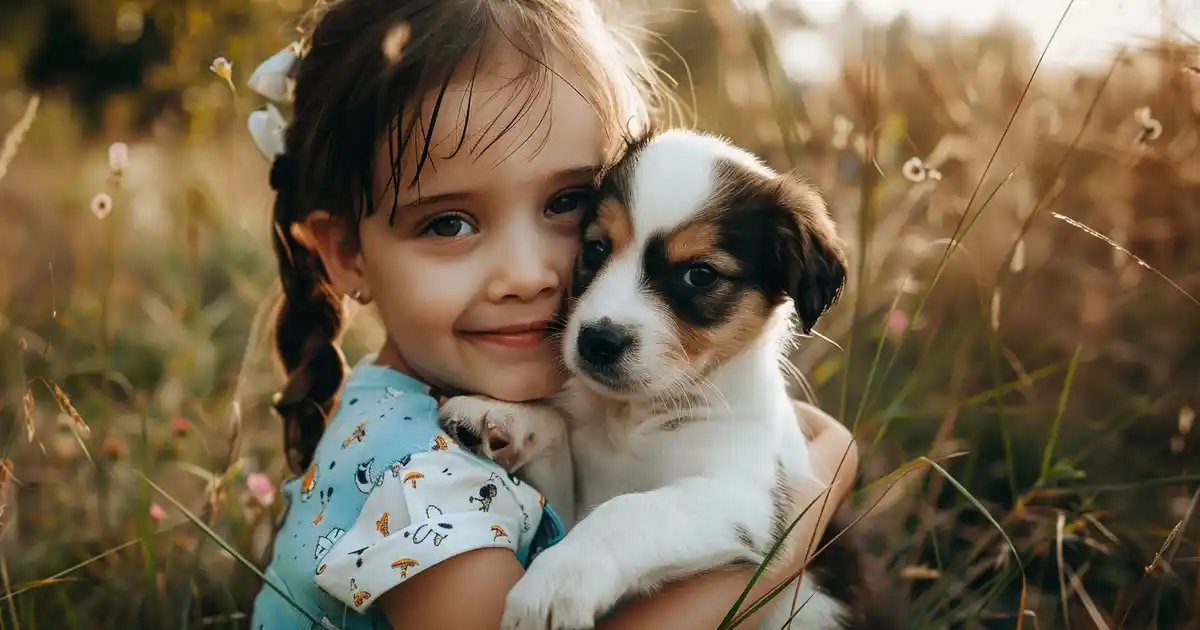
Have you ever wondered why some families effortlessly blend puppies and children while others end up with tears, bites, and constant stress? I’ll never forget the anxiety I felt watching my energetic 4-year-old nephew sprint toward my new 8-week-old puppy with arms outstretched, screaming “PUPPY!” at top volume while the terrified fluffball tried desperately to escape. Here’s the thing I discovered after successfully introducing five puppies to children of various ages and consulting with countless families: the introduction process determines whether you’ll build a beautiful lifelong friendship or spend years managing a tense, problematic relationship between your dog and kids. Now my parent friends constantly ask how my dogs remain calm and gentle around their children while other family dogs snap, hide, or get overly rough, and my pediatrician (who sees dog bite injuries regularly) keeps saying I’ve mastered the safety protocols most families completely miss. Trust me, if you’re worried about your puppy biting your kids, anxious about interactions going wrong, or wondering how to teach both species to respect each other, this approach will show you it’s more wonderful than you ever expected.
Here’s the Thing About Introducing Puppies to Kids
Here’s the magic: successful puppy-kid introductions aren’t about hoping both will “just figure it out”—they’re about systematically teaching both the puppy AND the children how to interact safely, gently, and positively from the very first meeting. The secret to success is understanding that neither puppies nor young children naturally know how to behave appropriately with each other, which means adults must actively teach, supervise, and manage every single interaction until both have learned the rules. According to research on dog bite prevention and child safety, the majority of dog bites to children occur with familiar dogs in the home, typically during unsupervised interactions where children inadvertently trigger defensive responses through inappropriate handling or when puppies become overstimulated. I never knew puppy-kid introductions could be this intentional until I stopped assuming “kids love dogs and dogs love kids” and started implementing structured teaching protocols for both species. This combination creates amazing results because you’re building mutual respect, communication skills, and positive associations simultaneously. It’s honestly more educational than I ever expected—no crossing fingers and hoping, just clear guidelines that protect everyone while nurturing genuine friendship.
What You Need to Know – Let’s Break It Down
Understanding the dual-education requirement is absolutely crucial to realistic expectations and safe outcomes. You’re not just teaching your puppy to be gentle with kids—you’re simultaneously teaching children to be gentle with puppies, recognize stress signals, respect boundaries, and interact appropriately. Both sides need extensive coaching, and adults bear 100% responsibility for supervision and safety regardless of how “good” the puppy or child seems.
Don’t skip the developmental context for both species—puppies communicate primarily through body language and mouthing (using their mouths to explore and play), have sharp puppy teeth despite gentle intentions, become overstimulated easily, and need frequent breaks from interaction. Children (especially under 8 years old) struggle with impulse control, often express excitement through loud voices and sudden movements, have difficulty reading subtle animal body language, and may not understand that puppies feel pain or fear. I finally figured out after one concerning incident that expecting a 3-year-old to “be gentle” without constant supervision and specific instruction is developmentally inappropriate, just like expecting a 10-week-old puppy to tolerate tail-pulling without defensive nipping. (Took me forever to realize both species need protection FROM each other, not just teaching TO each other.)
The cycle of positive associations perpetuates itself beautifully when managed correctly, but you’ll need to prevent negative experiences that create fear or aggression in either the puppy or child. I always recommend the “100% supervision” rule during the first 6-12 months because everyone sees better long-term relationships when early interactions are consistently positive and safe. For comprehensive information about selecting puppy-appropriate breeds for families with children, check out my complete guide to choosing family-friendly dog breeds for foundational knowledge that helps you start with a puppy temperamentally suited to kid interactions.
The Science and Psychology Behind Why This Works
Dive deeper into the evidence and you’ll find that early positive experiences between puppies and children during the critical socialization period (8-16 weeks) create lasting associations that shape adult behavior. Research from veterinary behaviorists demonstrates that puppies properly socialized with children during this window show significantly better tolerance, patience, and appropriate play behavior with kids throughout their lives compared to puppies with inadequate early child exposure. The neural pathways formed during early development literally create templates for future interactions.
Traditional approaches often fail because they either allow unsupervised interaction (assuming kids and puppies will naturally “work it out”), creating opportunities for bites, fear, or rough play to establish bad patterns, or they completely separate puppies from children out of fear, preventing the socialization necessary for safe future interactions. What makes this different from a scientific perspective is the structured middle ground: supervised, managed, intentionally positive interactions that build skills and confidence for both puppy and child without allowing harmful experiences.
I’ve learned through personal experience that one traumatic interaction—a child accidentally stepping on a puppy’s paw, causing pain and yelping, followed by the child’s screaming reaction—can create lasting negative associations requiring months of careful rehabilitation. Conversely, systematic positive experiences create resilient, tolerant adult dogs who genuinely enjoy children and remain calm during typical kid chaos. The psychological component matters enormously: children develop empathy, responsibility, and confidence through appropriate animal interactions, while gaining lifelong skills for safe behavior around all dogs, not just their family pet.
Here’s How to Actually Make This Happen
Start by preparing both your children and your home before the puppy arrives—reactive introduction planning leads to preventable problems. Here’s where I used to mess up: I’d bring home a puppy and immediately let excited children swarm the terrified baby, overwhelming the puppy within minutes and creating fear that took weeks to overcome. Instead, hold a family meeting before puppy arrival to establish clear rules: gentle touching only (show children how to pet with soft strokes on chest, shoulders, and back—never head-grabbing, tail-pulling, or ear-yanking), quiet voices around the puppy, no picking up the puppy without adult permission and assistance, no disturbing the puppy during sleep or meals, and immediate adult intervention if the puppy shows stress signals.
Now for the important part: orchestrate the first meeting carefully in a calm, controlled environment. Have children sit on the floor calmly (not standing over the puppy, which is intimidating) while one adult holds the puppy. Let the puppy approach the children at their own pace—never force interaction. My mentor taught me this trick: give each child high-value treats to offer the puppy from a flat palm, creating immediate positive association (children = good things happen). When it clicks, you’ll know because your puppy willingly approaches children rather than avoiding or showing stress.
Here’s my secret for teaching children appropriate interaction: use the “two-finger touch” rule for young kids (ages 2-5). Children use only two fingers to gently stroke the puppy’s chest or shoulders, which prevents accidentally rough handling while teaching gentle touch. This step takes consistent adult supervision but creates lasting gentleness that rough early interactions destroy. Until your children internalize gentle handling automatically, adults must be within arm’s reach during every interaction.
After establishing initial positive associations (first 2-3 days), teach children to recognize puppy stress signals so they learn when to give space. Show them what these look like: yawning (when not tired), lip licking, turning head away, ears back, tail tucked, freezing or becoming still, trying to move away, or showing the whites of their eyes. Results can vary, but most children over 5 can learn to identify at least 2-3 stress signals and understand “when you see these, stop touching and let the puppy have space.” This creates lasting awareness that prevents escalation to defensive behaviors like growling or nipping.
Critical step everyone forgets: create a puppy “safe zone” where children absolutely cannot follow—typically the crate or a gated room. Every situation has its own challenges, but the foundational principle is that puppies need breaks from kid interaction to decompress, rest, and feel secure. Just like children need quiet time away from overstimulation, puppies require child-free zones they can access whenever they need refuge.
Supervised interaction protocols to implement from day one:
Calm Greetings: Children sit on the floor and allow the puppy to approach them. No chasing, no sudden movements, no trapping the puppy in corners or against walls.
Gentle Petting: Demonstrate appropriate touch—soft strokes on chest, shoulders, and back. Redirect immediately when children attempt rough play, head-grabbing, or squeezing.
Appropriate Play: Children can roll balls for the puppy to chase, hide treats for searching games, or help with basic training (delivering treats for sits). No tug-of-war, wrestling, or games that encourage mouthing children.
Feeding Involvement: Older children (8+) can help prepare meals or deliver food bowls, but teach “leave the puppy alone while eating” as a non-negotiable rule. Resource guarding prevention starts with respecting the puppy’s meal times.
Training Participation: Age-appropriate involvement in training—children 6+ can practice basic cues (sit, down, come) with adult supervision and guidance. This builds children’s confidence and reinforces the puppy’s learning.
Nap Time Respect: Teach children the absolute rule: never wake, touch, or approach a sleeping puppy. Sleep disruption causes cranky, nippy puppies and teaches puppies that sleep isn’t safe around children.
Common Mistakes (And How I Made Them All)
Don’t make my mistake of allowing “gentle” roughhousing between my puppy and my nephew because “they’re both having fun.” What looked like play escalated to my puppy mouthing harder and my nephew shrieking, creating a cycle where the puppy learned that children scream when mouthed (exciting!) and my nephew learned that puppies hurt (scary!). Learned that one when my puppy started targeting my nephew specifically for rough play. Now I intervene the instant play becomes overstimulated, separating both for calm-down time before allowing resumed interaction.
Another epic failure: not teaching my children about consent and body autonomy for the puppy. I’d force my puppy to tolerate hugging, picking up, or interaction when showing clear stress signals because “kids should be able to hug the family dog.” This taught my puppy that their communication was ignored and escape wasn’t possible—a recipe for eventual defensive biting. Now I teach children that if the puppy moves away, interaction stops immediately. The puppy’s “no” must be respected just like human “no.”
The biggest mistake? Leaving my well-behaved 6-year-old “in charge” of supervising the puppy during bathroom breaks or brief moments while I grabbed something from another room. Children cannot supervise puppies—period. Even responsible, animal-loving kids lack the judgment to recognize dangerous situations before they escalate. I’ve learned that 100% adult supervision means an adult is present and attentive for every single interaction, no exceptions, until the dog reaches full maturity (18-24 months minimum) and has extensive positive history with the specific children. Also, dismissing early warning signs like growling or avoidance that experts recommend addressing immediately through management changes and professional consultation.
When Things Don’t Go as Planned
Feeling overwhelmed because your puppy nipped your child despite your supervision efforts? You probably need to reduce interaction frequency and intensity while rebuilding the puppy’s positive association with kids. That’s normal, and it happens to everyone when excitement levels exceed both species’ self-control capacity. I’ve learned to handle this by implementing mandatory “puppy breaks” every 10-15 minutes during play sessions—puppy goes to crate or gated area with a chew toy, children engage in different activities, everyone decompresses. When this happens (and it will with young puppies and young kids), strategic separation prevents the rehearsal of nipping that becomes habitual.
Progress stalled because your child is terrified after being knocked down by an exuberant puppy? This is totally manageable but requires rebuilding the child’s confidence through controlled, positive experiences. Don’t stress—have your child sit on elevated surfaces (couch, chair) where the puppy cannot reach them initially, give your child treats to toss to the puppy from a safe distance, let your child observe puppy training sessions without direct interaction, and very gradually decrease distance as comfort returns. I always prepare for setbacks because one scary experience can undo weeks of positive association, requiring patient rebuilding that some families don’t anticipate.
If you’re losing steam because constant supervision is exhausting and you just want them to “be friends already,” try this: remember that the intensive supervision phase lasts approximately 6-12 months depending on the puppy’s maturity and the children’s ages, which is temporary compared to the 10-15 year relationship you’re building. Use baby gates, exercise pens, and crates strategically to create safe separation when you cannot actively supervise. Don’t stress about achieving Instagram-worthy puppy-kid snuggles immediately—safety and positive experiences matter more than adorable photos.
Advanced Strategies for Next-Level Results
Taking this to the next level means teaching children to become active participants in the puppy’s training and care, building their competence and confidence while strengthening the bond. Advanced practitioners often assign children age-appropriate “puppy jobs”—5-year-olds can help fill water bowls (with supervision), 8-year-olds can practice training cues and record progress, 12-year-olds can research dog body language and become “stress signal spotters.” When my niece became the designated “gentle touch teacher,” her investment in the puppy’s well-being increased dramatically, and the puppy learned to approach her specifically for calm interaction.
For families with children across age ranges, I’ve discovered differentiated interaction protocols work better than one-size-fits-all rules. Toddlers (2-4) get extremely limited, heavily supervised floor-sitting interaction with treat delivery only. Young children (5-7) get structured play sessions with specific games and adult-enforced time limits. Older children (8-12) get training participation, walking practice with supervision, and gradually increased responsibility. Teens can participate in more advanced training and care with appropriate oversight. This makes family management more complex but definitely worth it for meeting each child’s developmental capabilities.
What separates beginners from experts? Understanding that puppy-kid safety isn’t just about preventing bites—it’s about building genuine mutual respect and affection that lasts throughout the dog’s lifetime. Dogs who genuinely enjoy children (versus tolerating them) demonstrate relaxed body language, willing approach, and playful engagement. Dogs who merely tolerate children show avoidance, tense body language, and stress signals during interaction. Some advanced techniques include: teaching children to perform the “consent test” (pet for 3 seconds, then stop—if the dog moves toward you seeking more, they’re enjoying it; if they move away or remain still, they want space), involving children in trick training that builds positive associations, and creating “kids and puppy” activities like supervised backyard play with appropriate toys.
Ways to Make This Your Own
When I want faster positive association building, I implement “puppy earns treats from kids only” for 1-2 weeks where children deliver every single treat during training sessions, meals, and throughout the day—this creates powerful positive association (kids = all good things). For special situations where I’m managing visiting children who don’t live with the puppy full-time, I’ll use leashed greetings where the puppy can approach but cannot jump or overwhelm, provide visitors with treat bags for positive interactions, and maintain closer supervision than with resident children who know the rules. This makes visits more structured but definitely worth it when unfamiliar children need extra protection and guidance.
My busy-season version focuses on prevention through separation—when I’m too busy to actively supervise, the puppy stays in their crate or gated area rather than risking unsupervised interaction. Sometimes I add a baby monitor in the playroom so I can supervise remotely while working in another room, though that’s totally optional and works better for families with older, reliable kids who follow rules consistently. For next-level results, I love enrolling children in age-appropriate dog safety classes where certified instructors teach kids about animal behavior, body language reading, and safe interaction with all dogs, not just the family pet.
My advanced version includes “family training sessions” where everyone participates in the puppy’s education—children take turns being the handler (with adult supervision), other family members create distractions, and everyone celebrates successes together. Each variation works beautifully with different family needs—the “Infant/Toddler Household Protocol” maintaining maximum separation with brief, positive supervised interactions, the “School-Age Children Approach” leveraging kids’ involvement in training and care, the “Multi-Age Sibling Strategy” assigning differentiated responsibilities and interaction levels. Budget-conscious options? Skip professional training classes and utilize free resources from veterinary behaviorists and certified trainers, create DIY barriers using baby gates and exercise pens, and recruit family friends’ kids for supervised socialization opportunities. Single-parent approach? Implement strict management protocols (gates, crates, scheduled interaction times) that don’t require constant direct supervision, and use screen time strategically—kids watch educational shows while puppy naps in crate nearby, maintaining safe coexistence without active supervision demands.
Why This Approach Actually Works
Unlike traditional methods that either allow unsupervised interaction (dangerous) or completely separate puppies and children (preventing necessary socialization), this approach leverages proven child development and animal behavior principles that most people ignore. The combination of structured supervision, dual-species education, stress signal recognition, and positive association building addresses both safety and relationship quality simultaneously. Research shows that dogs raised with consistent positive interaction protocols with children demonstrate significantly better tolerance, gentleness, and appropriate play behavior compared to dogs with either inadequate child exposure or poorly managed negative early experiences.
What sets this apart from other strategies is the emphasis on teaching both species simultaneously—most approaches focus on training the dog while assuming children will naturally know how to behave, which ignores developmental reality. I discovered through trial and error that the “teach everyone, supervise everything, separate when needed” approach feels overly cautious initially but produces family dogs who remain reliably gentle and tolerant even during typical childhood chaos (sudden loud noises, running, crying, play fighting between siblings). The evidence-based foundation—socialization during critical periods, classical conditioning (positive associations), trauma prevention, and graduated exposure—represents decades of research in both animal behavior and child safety.
This creates sustainable outcomes because you’re building skills, communication, and mutual respect rather than hoping natural affection will overcome poor handling, inadequate supervision, or missed learning opportunities. Families using this approach don’t just avoid bites—they create genuinely positive relationships where dogs seek out children for interaction and kids demonstrate empathy and appropriate behavior with all animals they encounter.
Real Success Stories (And What They Teach Us)
One of my clients brought home a border collie puppy into a household with three children ages 3, 6, and 9. She implemented strict protocols: baby gates everywhere, designated “puppy zones” children couldn’t enter, mandatory calm greetings, and assigned age-appropriate jobs for each child. Within three months, the puppy sought out the children for calm interaction, the 3-year-old consistently used gentle two-finger touches, and the 9-year-old successfully practiced basic obedience independently. What made her successful? She never deviated from supervision requirements despite exhaustion, enforced rules consistently with all children, and separated puppy and kids immediately when either showed stress or overstimulation.
Another success story involves a rescue puppy with unknown history showing initial fear of the family’s energetic 7-year-old son. The parents worked with a certified dog trainer, implemented gradual desensitization where the child participated in training sessions from increasing proximity, and taught their son to identify stress signals and respect the puppy’s communication. Their success aligns with research on behavior modification showing systematic positive exposure combined with child education creates lasting behavioral change—this puppy went from fearful avoidance to actively approaching the child for play and affection through patient, positive protocols.
I’ve seen diverse outcomes and different timelines: some puppy-kid pairs bond immediately with minimal intervention, others need 6-12 months of intensive management before safe independent interaction. A naturally calm golden retriever puppy tolerated more child interaction than a sensitive, high-strung herding breed. The lessons? Adjust expectations based on your specific puppy’s temperament, children’s ages and personalities, and family lifestyle. Success isn’t one-size-fits-all, but the principles remain constant. What each person learned: prevention beats correction every time, supervision requirements last longer than expected, small children and young puppies should never be alone together regardless of how “good” either seems, and professional guidance accelerates success when challenges arise.
Tools and Resources That Actually Help
The specific tools that made the difference for me: multiple baby gates creating puppy-free zones throughout the house, exercise pen for safe puppy containment while allowing visibility, comfortable crate in a quiet area where children cannot disturb the puppy, washable area rugs defining “puppy zones” visually for children, treat pouches at child-height for easy access during positive interactions, and age-appropriate children’s books about dog body language and safety. For teaching moments, I use stuffed animal dogs to demonstrate correct petting, handling, and how to recognize stress signals without practicing on the real puppy.
Free options that work: using household furniture to create physical barriers, teaching children dog safety through free online resources from veterinary organizations, practicing gentle handling with stuffed animals before real puppy interaction, and recruiting friends’ calm adult dogs for supervised child interaction practice (teaching skills before the puppy arrives). Paid options worth the investment: professional consultation with a certified dog behaviorist specializing in family dynamics ($150-300), age-appropriate dog safety classes for children through local humane societies or trainers, liability insurance specifically covering dog-related incidents, and puppy socialization classes where children can participate under professional supervision.
Be honest about limitations—some puppy temperaments aren’t well-suited to homes with young children regardless of training effort, some children have developmental challenges affecting their ability to interact safely with animals, and some families’ lifestyles simply cannot accommodate the supervision demands. My personal experience with each: I’ve successfully introduced puppies to children ranging from infants to teenagers, and the parental commitment to supervision matters more than the children’s ages or the puppy’s breed. For additional resources from authoritative organizations, the American Veterinary Medical Association’s dog bite prevention resources provide comprehensive information on child safety and proven interaction protocols that complement positive introduction approaches.
Questions People Always Ask Me
At what age can children safely interact with a new puppy?
Children of any age can interact with puppies if properly supervised and given age-appropriate interaction guidelines. Infants and toddlers (0-3) need constant adult presence with extremely limited, calm interaction (sitting nearby while supervised, gentle touches with adult hand-over-hand guidance). Young children (4-7) can have brief supervised play sessions with clear rules enforced. Older children (8+) can participate more actively in training and care with oversight. The adult supervision requirement remains constant regardless of age—never leave any child alone with a puppy unsupervised until the dog reaches full maturity (2+ years) and has extensive positive history.
How do I prevent my puppy from nipping my kids?
Teach bite inhibition through consistent feedback (yelping “ouch!” and withdrawing attention when mouthing becomes too hard), ensure adequate appropriate chew toys are always available, prevent overstimulation by enforcing puppy breaks every 10-15 minutes during play, and redirect immediately to toys when the puppy targets children. Most importantly, supervise all interactions to intervene before nipping occurs. Children’s sudden movements and high-pitched voices trigger prey drive in puppies—teach kids to “be a tree” (stand still with arms folded) when the puppy gets mouthy, which removes the rewarding reaction that reinforces nipping.
Should kids be involved in puppy training?
Yes, age-appropriately and with adult supervision. Children 5+ can help deliver treats during training sessions, practice basic cues like sit and come, participate in socialization outings, and learn alongside the puppy. This builds children’s confidence, teaches responsibility, and strengthens the puppy-child bond. However, adults must remain in charge of the training program—children are helpers and participants, not primary trainers. Younger children (under 5) can participate in very limited ways like treat delivery with hand-over-hand assistance.
What if my child is afraid of the puppy?
Never force interaction or dismiss the fear as silly. Respect the child’s feelings while gradually building positive association through: allowing the child to observe from a safe distance (behind a baby gate or on furniture where the puppy cannot reach), having the child toss treats to the puppy from increasing proximity, reading books together about puppies and demonstrating with stuffed animals, and celebrating small brave moments (standing 5 feet from the puppy instead of 10 feet). Professional help from a child psychologist and/or certified dog trainer may be needed for severe fear. Some children need weeks or months to feel comfortable—patience prevents forcing interactions that increase fear.
Can I leave my well-behaved older child in charge of the puppy?
No. Children under 16-18 lack the judgment and physical capability to handle emergency situations, recognize subtle stress signals before they escalate, or intervene effectively if problems arise. Even responsible, animal-loving children should never be solely responsible for puppy supervision or care. They can help with tasks under adult oversight, but an adult must always be present and attentive during puppy-child interactions. The “I’ll just be gone for 5 minutes” exception has caused countless preventable bites and injuries.
How do I teach my toddler to be gentle with the puppy?
Use the “two-finger touch” technique where toddlers gently stroke the puppy’s chest or shoulders with only two fingers extended—this prevents accidentally rough handling while teaching gentle touch. Demonstrate repeatedly with your own hand, use hand-over-hand guidance, and immediately redirect when the toddler attempts rough interaction. Keep sessions extremely brief (1-2 minutes maximum), maintain constant adult proximity (within arm’s reach), and accept that toddlers developmentally cannot be consistently gentle—management preventing unsupervised interaction matters more than teaching at this age.
What if my puppy growls at my child?
Never punish growling—it’s valuable communication that the puppy is uncomfortable and needs space. Immediately separate the puppy and child calmly, assess what triggered the growl (child approaching during meal time, pulling tail, invading crate, approaching while puppy was sleeping), and prevent that situation from recurring through management. Consult a certified dog behaviorist immediately—growling indicates the current interaction protocols aren’t working and professional guidance is essential before escalation to biting occurs. Punishing growling doesn’t eliminate the feeling driving it; it only removes the warning signal, making bites more likely.
Should I get a puppy if I have a baby or am pregnant?
This is a personal decision requiring honest assessment of your capacity. Puppies require intensive time, energy, and consistency during the first 6-12 months—exactly when infants demand maximum parental attention. Many families successfully manage both, but it requires: partner support for shared responsibilities, realistic expectations about reduced puppy training during the newborn phase, solid management systems (gates, crates, schedules), and potentially professional help (dog walker, trainer, daycare). I generally recommend waiting until the baby reaches 12-18 months if possible, though established adult dogs create their own challenges with new babies.
How long before my puppy and kids can play together unsupervised?
Minimum 18-24 months of age for the dog with extensive positive interaction history, and children should be 8+ years old with demonstrated consistent adherence to safety rules. Even then, supervision should remain nearby (within earshot and able to visually check frequently). Many families maintain some level of supervision throughout the dog’s entire life, especially during energetic play that can escalate unpredictably. The risk of allowing unsupervised interaction always outweighs the convenience—one incident can cause lasting trauma or serious injury to child or dog.
What are the most important rules to teach kids about the puppy?
The essential rules: (1) Never disturb the puppy while sleeping, eating, or in their crate/safe zone, (2) Always ask an adult before touching or playing with the puppy, (3) Use gentle touches only—no hitting, pulling, squeezing, or sitting on, (4) If the puppy moves away from you, let them go (respect consent), (5) Use quiet, calm voices around the puppy, (6) Never chase the puppy or corner them, (7) If the puppy’s teeth touch you, immediately stop playing and tell an adult, (8) Keep your face away from the puppy’s face (no hugging or kissing), (9) No taking toys or food from the puppy, (10) Hands are not toys—never wave hands in the puppy’s face.
What if visiting children don’t follow the safety rules?
You have several options: (1) Keep the puppy separated during visits (crated with a chew toy in a quiet room), (2) Allow only very brief, heavily supervised greetings with the puppy on leash and visiting children sitting calmly, (3) Educate visiting parents before arrival about your house rules and ask them to prepare their children, or (4) Limit visits until your puppy is older and more resilient. Protect your puppy from negative experiences—one traumatic interaction with a visiting child can create lasting fear or defensive behaviors toward all children. Your puppy’s safety and emotional wellbeing take precedence over visitors’ desires to interact.
Can puppies and kids become true best friends?
Absolutely, and these relationships are incredibly special when built properly. Dogs raised with structured positive interaction protocols often form deep bonds with children, seeking them out for play, comfort, and companionship. These relationships teach children empathy, responsibility, gentleness, and respect for other living beings—lessons that extend far beyond the family dog. The key is building this friendship on a foundation of safety, positive associations, mutual respect, and appropriate interaction rather than forcing bonding through close physical contact that makes many puppies uncomfortable. The best friendships develop naturally when both child and puppy feel safe, understood, and genuinely enjoy each other’s company.
Before You Get Started
I couldn’t resist sharing this because it proves puppy-kid relationships can be among the most rewarding, character-building experiences for families when approached with knowledge, patience, and realistic commitment to safety. The best puppy-child introductions happen when you educate yourself and your children before the puppy arrives, implement strict supervision protocols from day one without exception, teach both species how to communicate and interact appropriately, and intervene immediately when either shows stress or overstimulation. Remember that the adult-enforced supervision and safety protocols aren’t obstacles to bonding—they’re the foundation that makes genuine, safe friendship possible by preventing negative experiences that create fear or aggression. Ready to begin? Start with a simple first step: hold a family meeting to discuss puppy rules before bringing your puppy home, practice gentle handling on stuffed animals with your children, puppy-proof your home with appropriate barriers and safe zones, and commit to 100% adult supervision during every single interaction for at least the first year. Early education combined with unwavering safety protocols creates beautiful lifelong friendships between dogs and children that enrich everyone’s lives with joy, companionship, and mutual love.




