
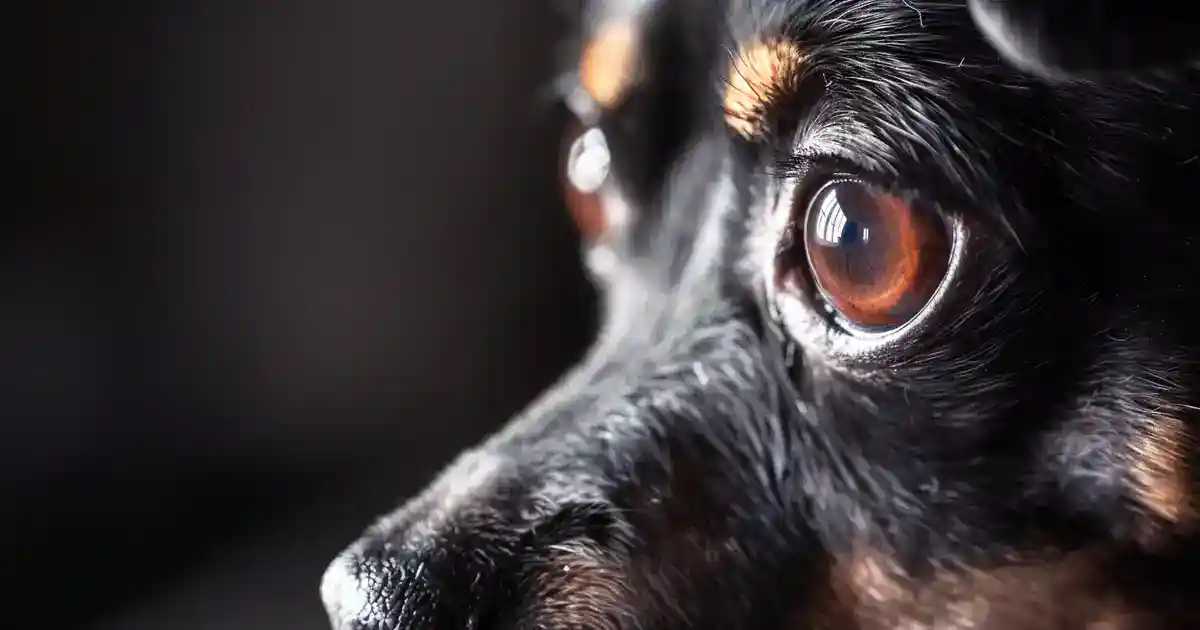
Have you ever looked into your dog’s eyes during a moment of separation, a painful experience, or a quiet evening when they seemed inexplicably sad, and genuinely wondered whether those glistening eyes meant your dog was crying the way you cry — with real emotional tears that meant something? I have asked myself that question more times than I can count, sitting with my dog after a hard day and noticing what looked unmistakably like moisture in his eyes while he stared at me with an expression that felt loaded with feeling. The question of whether dogs cry tears is one of the most genuinely fascinating intersections of animal science, emotional intelligence research, and the deeply personal experience of loving a dog, and the answer is simultaneously more nuanced and more wonderful than most people expect. If you’ve been wondering whether your dog’s watery eyes mean what you think they mean, whether dogs experience emotions deeply enough to produce tears the way humans do, or whether that moisture you’ve noticed requires a veterinary visit, this guide is going to give you the most complete and honest answer available anywhere.
Here’s the Thing About Dogs Crying Tears
Here’s the thing that immediately reframes this entire conversation — dogs do produce tears, but the biological purpose and the emotional significance of those tears are different from human crying in ways that are genuinely important to understand rather than gloss over. The secret to getting this right is separating the question into two distinct parts that often get conflated: do dogs produce tears from their eyes, and do dogs cry emotional tears as an expression of sadness or distress the way humans do. What makes this topic so compelling is that the science has been evolving meaningfully in recent years, with research suggesting that the relationship between dog tears and emotional states is more sophisticated than the traditional veterinary and behavioral science consensus previously acknowledged. I never knew that a landmark Japanese study published in 2022 would fundamentally shift the scientific conversation about whether dogs produce emotional tears until I read it, and it genuinely changed how I interpreted the moisture I sometimes notice in my dog’s eyes during emotionally significant moments. It’s honestly more scientifically interesting than the simple yes-or-no answer most people are looking for. According to research on animal cognition, the emotional and cognitive lives of domesticated dogs are significantly more complex than earlier scientific frameworks acknowledged, with ongoing research continuously revising our understanding of how dogs experience and express internal emotional states.
What You Need to Know — Let’s Break It Down
Understanding the complete picture of canine tears requires understanding three distinct categories that all fall under the umbrella of “my dog’s eyes look watery” but mean completely different things in terms of cause, significance, and appropriate response. Don’t skip this breakdown — I spent years operating with only a partial understanding of this topic, conflating medical eye discharge with emotional expression and missing the nuanced middle ground that recent science has opened up. The framework breaks down into three essential categories that every dog owner should be able to distinguish. The first category is basal tear production — the continuous, baseline moisture that keeps every dog’s eyes lubricated and healthy, produced by the lacrimal glands just as in humans, and present in every dog at all times as a fundamental physiological function. This baseline tear production is not emotional, not communicative, and not a sign of anything beyond a normally functioning eye (game-changer for not over-interpreting every moist eye moment, seriously). The second category is medical or environmental tear excess — increased tearing caused by eye irritation, allergies, blocked tear ducts, corneal injury, infection, or anatomical features like the flat faces of brachycephalic breeds that cause chronic overflow of tears onto the facial fur. I finally figured out after years of misreading my dog that this category is by far the most common explanation for noticeably watery eyes in dogs, and that ruling it out is always the first priority when you observe unusual tearing. The third category is the genuinely fascinating one — the emerging scientific evidence for emotionally associated tear production in dogs that represents the cutting edge of canine emotion research and the closest thing to a confirmed “yes, dogs do cry emotional tears” that science has so far produced. If you’re building a broader understanding of how dogs communicate their emotional and physical states, check out my complete guide to understanding dog body language and communication for a framework that puts tear production in the context of the full range of canine emotional expression. Working in knowledge of do dogs cry tears alongside a broader understanding of canine emotional communication creates a genuinely rich picture of your dog’s inner life that most pet owners never fully access.
The Science and Psychology Behind Why This Works
The scientific conversation about whether dogs cry emotional tears underwent a meaningful shift following the publication of a 2022 study in Current Biology by researchers at Azabu University in Japan, which found that dogs produced significantly more tears during reunions with their owners than during reunions with familiar non-owner humans — a finding that the researchers interpreted as suggesting an emotional component to canine tear production associated with positive social bonding rather than distress alone. The study also found that when human participants were shown photographs of dogs with artificially added moisture around the eyes versus the same dogs with dry eyes, they rated the teary-eyed dogs as significantly more appealing and reported stronger desire to care for them — a finding that the researchers suggested may reflect the co-evolutionary relationship between dogs and humans, in which dogs may have developed tear-associated emotional expression as part of the broader suite of social bonding behaviors that emerged through thousands of years of living alongside humans. Research from leading animal cognition scientists demonstrates that dogs have the neurological structures associated with emotional experience — including a limbic system functionally similar to the human emotional brain — and process social and emotional information in ways that produce behavioral and physiological responses analogous to human emotional states. The oxytocin connection is particularly interesting here: the same hormone that drives human social bonding, parental attachment, and emotional tears has been shown to be active in dog-human interactions and may represent part of the mechanistic link between dogs’ emotional states and their physiological tear response.
Here’s How to Actually Make This Happen
Start by training yourself to observe your dog’s eye moisture in context rather than in isolation — the same moist eyes can mean completely different things depending on whether they appear during a joyful reunion, a stressful veterinary visit, a quiet moment of apparent contentment, or seemingly at random during ordinary daily activity. Here’s where I used to mess up: I would notice moisture around my dog’s eyes and immediately either dismiss it entirely as “just eye gunk” or emotionally over-interpret it as sadness without ever systematically considering which of the three categories it most likely fell into. Now for the important part — here is the practical observational framework I use to make sense of what I’m seeing. When you notice unusual moisture or tearing in your dog’s eyes, the first question to ask is whether both eyes or only one eye is affected — bilateral tearing is more commonly associated with systemic causes like allergies or emotional states, while unilateral tearing more often indicates a localized issue like a foreign body, a blocked tear duct, or a corneal scratch on that specific eye. The second question is what the moisture looks like — clear and watery suggests either emotional or allergic origin, while thick, cloudy, yellowish, or greenish discharge suggests infection or other medical cause requiring veterinary attention. Here’s my secret for building an accurate picture of your dog’s individual tearing patterns: keep a brief note for two weeks recording when you notice eye moisture, what was happening at the time, what the moisture looked like, and whether it resolved quickly or persisted — this simple observation log will reveal patterns that make the medical versus emotional distinction much clearer than any single observation can. Don’t be me from my early dog ownership days — I completely ignored episodic eye discharge for months because it seemed minor, not realizing that one of those episodes was the early sign of a blocked nasolacrimal duct that would have been much simpler to address earlier than it ultimately was.
Common Mistakes (And How I Made Them All)
My most persistent mistake was using the presence or absence of visible tears as a proxy for whether my dog was experiencing emotional distress, without understanding that dogs express the vast majority of their emotional communication through body language, vocalizations, and behavioral changes rather than through the tear-based emotional expression that humans use and instinctively recognize. This led me to repeatedly miss genuine signals of my dog’s emotional state — the subtle postural changes, the ear position shifts, the tail carriage adjustments — while fixating on his eyes as though they were the primary emotional readout. I’ve also made the mistake of dismissing chronic low-level tearing in my brachycephalic friend’s bulldog as “just how he looks” without recognizing that the constant tear staining and overflow was causing skin irritation in the facial folds that required management. Another mistake I see constantly among emotionally attuned dog owners is the anthropomorphic projection error — interpreting a dog’s moist eyes specifically through the lens of human crying contexts, assuming that tears during separation mean the same thing that human separation tears mean, without considering that the dog’s full behavioral context might tell a quite different story. And the health monitoring mistake I’m most embarrassed about: I once saw a veterinary reference to epiphora — the technical term for excessive tear overflow — and assumed it was always a cosmetic issue rather than a potential indicator of conditions including corneal ulcers, glaucoma, or entropion that require prompt treatment to prevent vision damage.
When Things Don’t Go as Planned
Feeling uncertain because you’ve noticed a change in your dog’s tearing pattern that doesn’t fit neatly into any of the categories you’ve read about? That uncertainty is worth taking seriously rather than waiting out. I’ve learned to handle the ambiguity of unclear eye symptoms by applying a simple rule: any change in eye discharge that persists for more than forty-eight hours, involves cloudiness of the eye itself, causes your dog to paw at their eye or squint, or involves discharge that is anything other than clear and watery warrants a veterinary assessment rather than continued home observation. When the emotional interpretation question is creating its own kind of uncertainty — you’re worried that your dog seems sad or distressed and you’re reading their eyes as confirmation — the more reliable approach is to shift your observational focus to the behavioral signs that canine emotion researchers have validated as genuinely indicative of emotional states: reduced interest in food or play, changes in sleep patterns, reduced responsiveness to normally appealing stimuli, changes in social initiative, and alterations in movement energy. These behavioral indicators are far more reliable guides to your dog’s emotional state than eye moisture alone.
Advanced Strategies for Next-Level Results
Once you’ve established a solid foundation for distinguishing medical tearing from emotionally associated tearing and built a consistent observational practice around your dog’s eyes and emotional expression, you can move into more sophisticated approaches to understanding and supporting your dog’s emotional life. Advanced approaches in the canine emotional intelligence community focus on developing what researchers call “emotional attunement” — the ability to read your dog’s full suite of communicative signals including micro-expressions, subtle postural shifts, and ear and tail position changes that together provide a far richer picture of emotional state than any single indicator like tears can deliver. Connecting the tear observation practice to the broader framework of your dog’s emotional baseline — knowing what your specific dog looks like when genuinely content, mildly stressed, highly aroused, or deeply relaxed — allows you to interpret deviations from that baseline with meaningful accuracy. For dogs who do appear to experience pronounced emotional tear responses during separations or reunions, the advanced strategy is using that information to refine your understanding of your dog’s attachment style and separation sensitivity, which has direct implications for training approaches, daily routine management, and the environmental conditions that support your dog’s emotional wellbeing most effectively.
Ways to Make This Your Own
When I want the most complete picture of my dog’s emotional state during significant moments, my approach is what I call the “Full Emotional Inventory” — rather than focusing on any single indicator, I do a quick systematic scan of eyes, ears, tail, body posture, and behavioral engagement simultaneously, which takes about ten seconds and provides infinitely more information than any individual sign. For the scientifically curious pet parent who wants to engage more deeply with the research on canine emotional tears, reading the primary literature from the 2022 Azabu University study and the broader work of researchers like Alexandra Horowitz at the Dog Cognition Lab at Barnard College provides a genuinely fascinating window into the current frontier of what we know and don’t know about dogs’ emotional lives. My budget-conscious version of supporting a dog’s emotional wellbeing — regardless of whether their tear production has an emotional component — centers on the free, evidence-backed practices of consistent routine, adequate physical exercise, regular positive social interaction, and the kind of calm, secure attachment that research consistently identifies as the foundation of canine emotional health. For senior dogs whose eyes may produce more discharge due to age-related changes in tear composition and drainage, my “Senior Eye Care Protocol” includes daily gentle cleaning of the eye area with a warm damp cloth, more frequent veterinary eye assessments, and particular attention to the tear staining that can cause skin irritation under the eyes in dogs with light-colored coats. Each variation works beautifully with different lifestyle needs and different dogs, and the common thread is the combination of medical attentiveness and emotional attunement that makes you genuinely fluent in your dog’s full communicative repertoire.
Why This Approach Actually Works
Unlike the binary answer — either “yes, dogs cry emotional tears just like humans” or “no, dog tears are purely physiological” — that most people bring to this question, this nuanced framework for understanding do dogs cry tears gives you the scientifically accurate, practically useful, and emotionally honest answer that serves both your dog’s health and your relationship with them. The reason this approach produces better outcomes than either anthropomorphic over-interpretation or dismissive under-attribution of canine emotional life is that it is calibrated to what the evidence actually supports — which is simultaneously more modest and more wonderful than the popular mythology around dog crying. What sets this apart from simple yes-or-no answers is the complete picture: the medical context that ensures unusual tearing gets appropriately evaluated, the emotional context that honors the genuine complexity of your dog’s inner life, and the observational framework that helps you bring both perspectives to every moment of noticing your dog’s eyes. I remember the exact moment this whole topic crystallized for me — it was reading the 2022 research and realizing that the instinct I had always had that my dog’s moist eyes during reunions meant something emotionally real might actually be supported by emerging science, and that the appropriate response to that possibility was neither uncritical acceptance nor reflexive dismissal but genuine curiosity and attentiveness.
Real Success Stories (And What They Teach Us)
A member of my online community shared that she had been interpreting her dog’s chronic eye discharge as emotional expression for over a year — reading it as evidence that her dog was sensitive and deeply feeling — before a routine veterinary visit revealed that the discharge was caused by entropion, a condition in which the eyelid rolls inward causing the eyelashes to continuously irritate the corneal surface. The corrective surgery that followed eliminated the discharge entirely and produced a visibly more comfortable, more energetic dog whose genuine emotional expressiveness — now visible through behavioral rather than medical signals — was actually richer and more readable than it had been when the physical discomfort of the eye condition was affecting his overall demeanor. Another pet parent I know had the opposite experience — she had always dismissed her dog’s moist eyes during their reunions after work as simple eye irritation until reading the 2022 research prompted her to pay closer attention to the context and pattern of the moisture, and the combination of the scientific framework and her own careful observation produced a deepened appreciation for her dog’s attachment to her that changed how she understood and responded to their relationship. Their success aligns with research on human-animal bond quality showing that owners who develop accurate, nuanced understanding of their dogs’ communicative signals report significantly stronger relationship satisfaction and demonstrate more responsive caregiving than those operating on incomplete or inaccurate interpretive frameworks. The lesson in both stories is the same — accuracy matters, and the accurate answer to the question of whether dogs cry tears is more interesting and more useful than either the romanticized yes or the dismissive no.
Tools and Resources That Actually Help
The most practically valuable tool for any dog owner interested in understanding their dog’s tear production and emotional expression more accurately is a simple daily observation habit — thirty seconds of attentive looking at your dog’s eyes and noting anything unusual in the context of what was happening at the time creates the longitudinal observational record that makes patterns visible in a way that casual intermittent observation never can. For medical eye health management, a veterinarian-recommended gentle eye wash solution for regular cleaning of discharge and tear staining is a basic supply worth having on hand for any dog, particularly brachycephalic breeds prone to chronic overflow tearing. For deeper reading on the scientific research into canine emotional tears and the broader landscape of dog emotional cognition, the best resources come from peer-reviewed animal cognition research documenting the neurological and behavioral evidence for emotional experience in domestic dogs. Alexandra Horowitz’s books on dog cognition, particularly her work on what dogs perceive and experience, provide the most accessible and scientifically rigorous popular introduction to the current state of knowledge about canine inner life available to general readers. And as always, a veterinarian with specific interest or experience in veterinary ophthalmology is the most important resource for any dog owner dealing with persistent, unusual, or concerning eye discharge — eye conditions in dogs can deteriorate rapidly when untreated, and professional assessment is always worth pursuing when home observation leaves genuine uncertainty.
Questions People Always Ask Me
Do dogs actually cry emotional tears the way humans do? The honest scientific answer is: probably sometimes, partially, and not in exactly the way humans do. The 2022 research from Azabu University provided the first peer-reviewed evidence suggesting that dogs produce more tears during emotionally significant positive experiences like owner reunions than during neutral social interactions, which is the closest science has come to confirming emotionally associated tear production in dogs. This is genuinely different from the human crying response in both mechanism and context, but it is also more than pure coincidence or purely physiological function. The full picture remains an active area of research.
Why does my dog’s eye look watery when nothing emotional is happening? The most common cause of watery dog eyes in the absence of an obvious emotional context is medical or environmental — allergies, environmental irritants like dust or pollen, a minor eye irritation, anatomical features that cause chronic tear overflow, or the early stages of conditions like dry eye or blocked tear ducts. Any persistent watery appearance that is not clearly associated with an emotionally significant event warrants veterinary evaluation to rule out medical causes before emotional interpretation is applied.
What is the difference between tears and eye discharge in dogs? Clear, watery overflow that resembles the appearance of human tears is generally what people describe when they say their dog has teary eyes, and this is most commonly caused by excess tear production or drainage issues. Thick, sticky, cloudy, yellow, or green discharge is a distinct category associated with infection, inflammation, or other pathological processes that are quite different from normal or emotionally associated tearing. The color, consistency, and location of the discharge are the key distinguishing features, and anything other than clear and watery warrants veterinary attention.
Can dogs feel sad enough to cry? Dogs experience negative emotional states including something functionally analogous to sadness, grief, loneliness, and distress — the neurological and behavioral evidence for this is well-established in animal cognition research. Whether those states produce tear responses in the way human sadness produces crying is less certain, with the available evidence suggesting that dogs’ primary mode of expressing distress is through behavioral and vocal signals rather than through tear-based expression. The absence of visible tears does not mean your dog is not experiencing a negative emotional state.
Is this approach to understanding dog tears suitable for owners of all breeds? Yes, with the important acknowledgment that breed-specific anatomy significantly affects tear production and drainage in ways that create dramatically different baselines across breeds. Brachycephalic breeds — pugs, bulldogs, French bulldogs, shih tzus, and others with flat facial structures — have anatomical features that cause chronic tear overflow that has nothing to do with emotional state, which means their owners need to be particularly careful not to interpret chronic structural tearing as emotional expression. Long-haired breeds that develop tear staining present similar interpretive challenges. The three-category framework applies universally, but the baseline normal for each category varies significantly by breed.
What mistakes should I avoid when interpreting my dog’s watery eyes? Never use eye moisture as your primary indicator of your dog’s emotional state — it is at most one data point among many and is far less reliable than behavioral signals. Never dismiss persistent eye discharge as cosmetic without ruling out medical causes. Never assume that tears during a specific situation mean the same thing that human tears in an equivalent situation would mean, because the contexts in which dogs produce tears and the meaning those tears carry are not identical to human emotional crying even if there is some overlap.
How do I know if my dog’s watery eyes need a vet visit? Any discharge that is not clear and watery — including yellow, green, cloudy, or mucoid discharge — warrants veterinary attention. Any change in the eye’s appearance including cloudiness, redness, or visible third eyelid prominence warrants veterinary attention. Any behavioral sign suggesting eye discomfort including pawing at the eye, squinting, excessive blinking, or light sensitivity warrants veterinary attention. Clear watery overflow that appears specifically in the context of emotionally significant events and resolves quickly is the category most consistent with normal emotional or physiological tearing rather than medical concern.
Can dogs cry from physical pain? Dogs experiencing physical pain are more likely to express that pain through vocalization — whimpering, yelping, or crying sounds — than through visible tear production, though research on pain-associated tearing in dogs is less developed than research on emotionally associated tearing. The association between pain and audible crying sounds in dogs is well-established in veterinary literature. If your dog is making crying sounds, the possibility of pain as a cause should always be considered alongside emotional distress.
What does current science say about dog emotions more broadly? The scientific consensus on dog emotional experience has shifted substantially over the past two decades toward recognizing that dogs experience a meaningful range of emotional states including joy, fear, frustration, grief, and social attachment that are supported by neurological structures functionally analogous to those underlying human emotions. The primary ongoing debates in the field concern the depth and self-reflective quality of those emotions rather than their existence, and the methodological challenges of studying subjective experience in non-verbal animals. The 2022 tear research fits within a broader body of work that consistently finds dogs’ emotional lives to be richer and more nuanced than earlier, more behaviorally conservative scientific frameworks acknowledged.
Why do dogs make crying sounds if they don’t cry tears? Dogs produce a range of vocalizations including whimpering, whining, and yelping that are colloquially described as crying and that do carry genuine communicative and emotional content — these sounds are used to signal distress, seek attention, express discomfort, and communicate need in ways that are well-documented in behavioral research. The distinction between these vocal expressions and tear-based crying is important for accurate understanding but does not diminish the emotional reality of what the vocalizations communicate. Dogs are eloquent emotional communicators through sound and behavior even when their tear response differs from the human model.
How can I better support my dog’s emotional wellbeing based on this understanding? The most evidence-supported practices for canine emotional wellbeing are consistent daily routine, adequate physical exercise calibrated to your dog’s breed and age, regular positive social interaction with both humans and other dogs, mental stimulation through training and enrichment activities, and the secure attachment that comes from a relationship characterized by responsiveness, predictability, and positive reinforcement. Understanding that your dog’s emotional expression is primarily behavioral and vocal rather than tear-based helps you become a more accurate reader of their actual emotional state, which in turn allows you to be a more responsive and supportive presence in their life.
What should I do if I think my dog is emotionally distressed? Look beyond the eyes to the full behavioral picture — reduced interest in food, play, or interaction, changes in sleep patterns, increased vigilance or startling, withdrawal from normally enjoyed activities, and changes in social initiative are the most reliable behavioral indicators of emotional distress in dogs. Address any identifiable source of distress in the environment, maintain the consistency and predictability of routine that provides emotional security, ensure adequate exercise and enrichment, and consult your veterinarian if behavioral signs of distress are significant or persistent, as physical health issues can present as behavioral changes that resemble emotional distress.
Before You Get Started
I couldn’t resist putting this guide together because it proves that the question of whether dogs cry tears opens a window into one of the most genuinely fascinating areas of current animal science — a field where the answers are evolving in real time and where paying close attention to your own dog with the right framework can connect you to something both scientifically interesting and deeply personally meaningful. The best do dogs cry tears journeys end not with a simple yes or no but with a richer, more accurate appreciation of your dog’s inner life and a sharper eye for the full range of ways they communicate it. Your dog is telling you how they feel every single day through dozens of signals — and now you have the framework to read all of them, tears included, with the accuracy and nuance they deserve.




