
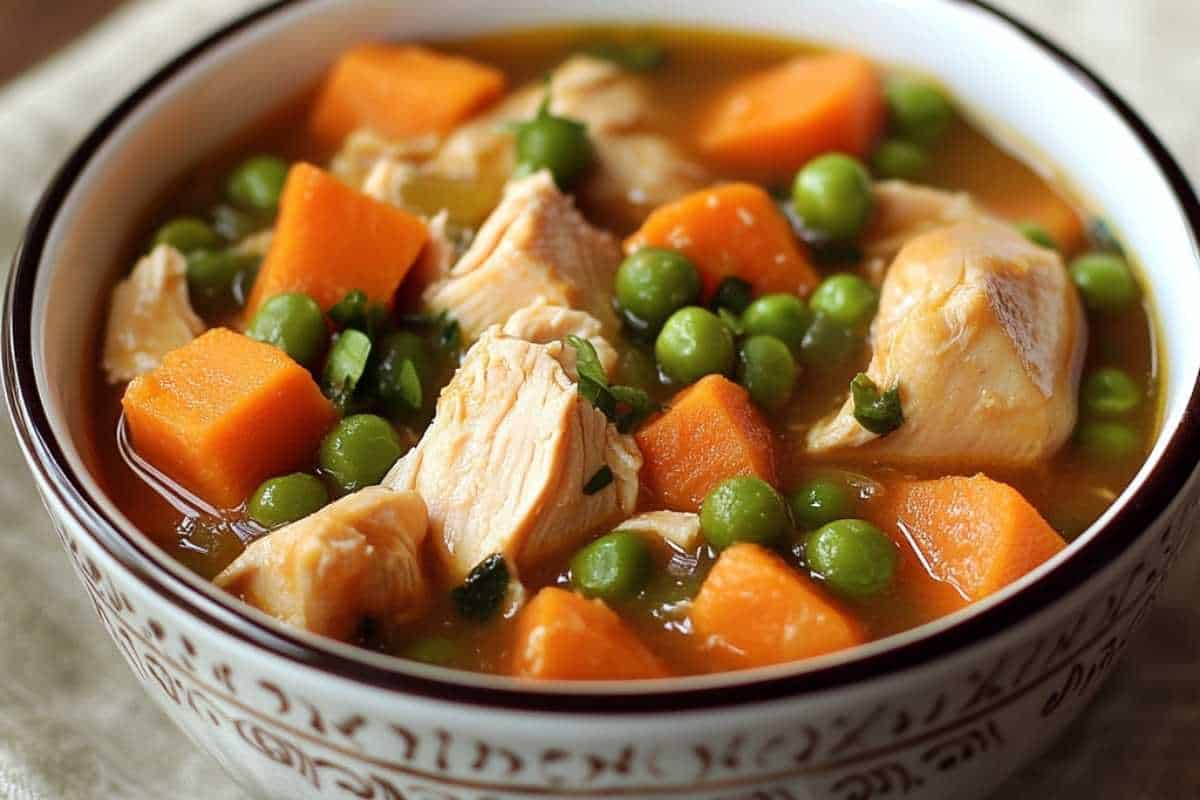
There’s nothing quite like the look on a dog’s face when they smell something absolutely delicious cooking just for them. This chicken and sweet potato stew has caused more tail wags, excited spins, and eager tippy-taps in my kitchen than any other homemade dog food I’ve prepared. Even my friend’s notoriously picky Shih Tzu sat attentively by the stove the entire time this was simmering!
Why This Recipe Works
In reality, commercial dog foods often contain fillers and preservatives that some pups simply don’t tolerate well. This homemade stew brings together lean protein from chicken, complex carbohydrates from sweet potatoes, and a rainbow of dog-safe vegetables to create a nutrient-dense meal your furry friend will devour. The slow simmering process makes all the ingredients incredibly tender and digestible, while the natural gelatin from the chicken creates a glossy, appetizing sauce that can entice even reluctant eaters. For your furry friend, it’s like getting a home-cooked meal that’s specifically designed to support their health.
Key Components Breakdown
Dog-Safe Ingredients
- Boneless Chicken – I use thighs for their higher nutrient content and natural fat, which helps keep coats shiny. Always remove skin to reduce unnecessary fat. Breast meat works too for leaner options or dogs on weight management plans.
- Sweet Potatoes – These orange powerhouses provide fiber, vitamins, and complex carbohydrates. They’re easier on doggy digestion than white potatoes and have a lower glycemic index.
- Carrots – Rich in beta-carotene and fiber, these add natural sweetness that dogs love. You can substitute with pumpkin for variety.
- Green Beans – These provide gentle fiber and nutrients without the gas-causing properties of other vegetables. Fresh or frozen both work well.
- Peas – Small but mighty protein boosters that most dogs digest easily. Leave these out if your dog has kidney concerns (check with your vet).
- Bone Broth – The secret ingredient that takes this stew to the next level! Use low-sodium chicken bone broth or make your own by simmering chicken bones for 24 hours. This adds joint-supporting gelatin and irresistible flavor.
- Coconut Oil – Just a small amount provides healthy fats and can help with nutrient absorption. Olive oil is a fine substitute.
- Turmeric – This ancient spice has anti-inflammatory properties. Use sparingly as too much can be bitter.
Equipment Needed
- Large Dutch Oven or Heavy Pot – Provides even heat distribution and prevents scorching. A good stock pot works too.
- Sharp Knife – For cutting ingredients into appropriate dog-sized pieces.
- Storage Containers – Glass containers with lids are ideal for refrigerating or freezing portions.
- Measuring Cups – For consistent results and proper nutritional balance.
- Potato Masher – Optional but helpful for adjusting texture for senior dogs or puppies.
- Ice Cube Trays – Perfect for freezing small portions of broth for enrichment or medication delivery.
The Technique Section
Critical Steps
The foundation of a perfect dog stew starts with proper ingredient preparation. Cut all vegetables into similarly sized pieces (about 1/2-inch cubes) to ensure even cooking and prevent choking hazards. This might seem fussy, but consistent pieces also help you easily identify if anything isn’t cooking properly.
When cooking the chicken, resist the urge to brown it first. While this might be standard practice in human recipes, for dog food, we want to keep the protein gentle and digestible. Instead, poach the chicken in the broth until it’s just cooked through, then shred it into bite-sized pieces that are easy for your pup to manage.
One common mistake I made early on was adding too much liquid, resulting in a soupy mixture that splashed everywhere when my enthusiastic Lab dove in! The perfect consistency should be thick enough to stay on a spoon but moist enough to be appealing. If your stew is too watery, simply simmer uncovered for an additional 10-15 minutes.
The vegetables should be tender enough to squish easily between your fingers—this ensures they’re digestible for your dog’s system. However, they shouldn’t be mushy to the point of losing all texture and nutritional value.
Temperature and Timing
Start with a medium-high heat to bring your liquid to a gentle boil, then immediately reduce to a simmer. Aggressive boiling can break down nutrients and create a mushy texture that lacks appeal.
The sweet potatoes typically need about 20-25 minutes to become fork-tender, which serves as a good indicator for overall doneness. If you can easily slide a fork into a chunk of sweet potato without resistance, your stew is likely ready.
Always allow the stew to cool completely before serving. The center of your pot should register no more than 100°F before offering it to your eager pup. I let mine cool on the counter for about 45 minutes, stirring occasionally to release heat, then refrigerate it to below 40°F for storage.
For the perfect serving temperature, dogs generally prefer their food at room temperature or slightly warmed—never hot. If serving from refrigerated, warm only to room temperature (about 70°F) to preserve nutrients and prevent mouth burns.
Troubleshooting Guide
Common Issues
Problem: My dog picks out the chicken and leaves the vegetables
This is a common challenge! Try pulsing the stew briefly in a food processor to integrate the flavors more thoroughly. Alternatively, chop the vegetables finer so they cling to the meat. For particularly stubborn pups, I’ve found that drizzling a teaspoon of the stew broth over their kibble for a few days before introducing the full stew helps create positive associations.
Problem: The stew causes digestive upset
If your dog experiences soft stool after trying this recipe, your transition might have been too abrupt. Start with just a tablespoon mixed with their regular food, gradually increasing over 7-10 days. Also consider reducing the fat content by using chicken breast instead of thighs, or removing some of the cooled fat from the top of the refrigerated stew.
Problem: The stew freezes too hard to portion
I learned this lesson the hard way with a freezer full of dog food “bricks!” The solution is to freeze in silicone muffin cups or ice cube trays first, then transfer the frozen portions to a larger container. This creates perfectly sized servings that thaw quickly.
Problem: The stew seems bland
While dogs appreciate simpler flavors than humans, you can enhance palatability by adding a small amount (1/2 teaspoon per batch) of dog-safe herbs like parsley, basil, or oregano. Just remember that less is more when it comes to canine taste buds.
Variations and Adaptations
For Different Dogs
Puppy Version: Growing pups need extra calories and protein. Increase the chicken by 25% and add 1 tablespoon of plain Greek yogurt at serving time for additional calcium and protein. Ensure all ingredients are pureed or very finely chopped for small mouths.
Senior Dog Adaptation: Older dogs often need softer foods that are easier to chew and digest. Cook the stew about 10 minutes longer and use a potato masher to create a more uniform consistency. Consider adding glucosamine-rich ingredients like a spoonful of ground eggshell powder (baked and ground) for joint health.
Weight Management: For pudgy pups on a diet, use chicken breast instead of thighs, reduce the sweet potato by half, and double the green beans for filling fiber without extra calories. This creates a satisfying meal with fewer calories per volume.
Dietary Modifications
For Dogs with Poultry Allergies: Substitute the chicken with lean ground turkey or mild white fish like cod or tilapia. If all poultry is problematic, try lean beef or lamb with all visible fat removed.
Grain-Sensitive Pups: This recipe is naturally grain-free, but you can add 1/2 cup of cooked quinoa or brown rice if your dog tolerates them well and needs additional carbohydrates for energy.
For Pups with Kidney Concerns: Skip the peas and reduce the overall protein content by decreasing the chicken and adding more vegetables. Always consult your veterinarian for specific modifications based on your dog’s blood work and condition.
Storage and Make-Ahead
Freshly made stew will keep in the refrigerator for 3-4 days in an airtight container. Always use clean utensils when portioning to prevent introducing bacteria. If you notice any off smells, unusual coloration, or slimy texture, discard immediately—when in doubt, throw it out!
For longer storage, freeze portions appropriate for your dog’s size. Small dogs might only need 1/4 cup per meal, while larger breeds might require a full cup or more. I use silicone muffin cups for my Border Collie’s portions, which create perfect 1/3 cup servings.
Frozen stew maintains quality for up to 3 months. Thaw overnight in the refrigerator, never at room temperature for more than 2 hours, as this can allow bacteria to multiply. Once thawed, use within 2 days and never refreeze previously thawed portions.
For travel, you can freeze individual portions and use them as ice packs in your cooler. They’ll help keep other items cold while thawing gradually for use at your destination—perfect for dog-friendly road trips!
FAQ
How much of this stew should I feed my dog?
Feeding amounts vary widely based on your dog’s weight, age, activity level, and whether this stew is a meal supplement or replacement. As a general starting point, feed approximately 1/4 cup per 10 pounds of body weight per meal when using as a complete diet. If mixing with kibble, replace about 25% of their regular food with the stew and adjust based on weight and energy levels. Always consult your veterinarian when making significant changes to your dog’s diet.
Can I make this recipe in a slow cooker?
Absolutely! This stew adapts beautifully to slow cooker preparation. Place all ingredients in your cooker, use the same quantity of liquid, and cook on low for 6 hours or high for 3 hours. The gentle, consistent heat produces an incredibly tender texture that many dogs prefer.
Is this recipe nutritionally complete for my dog?
This stew provides excellent nutrition but may not contain all essential nutrients in perfect balance for long-term exclusive feeding. For optimal health, either rotate between several homemade recipes, use this as a topper for high-quality commercial food, or consult with a veterinary nutritionist to add appropriate supplements for a balanced homemade diet.
How do I transition my dog to homemade food?
Start gradually by replacing just 10% of their usual food with the stew, increasing by 10% every 2-3 days while monitoring digestion. Some dogs may need a slower transition of up to two weeks, especially those with sensitive stomachs. Watch for consistent stool quality throughout the transition.
Closing Thoughts
Making homemade food for your dog creates a special bond beyond the everyday feeding routine. The best treat days are when I see my dog recognize the familiar ingredients coming out of the refrigerator, knowing that something wonderful is about to happen in the kitchen just for him.
Of course, every dog is different, and what works for one might not work for another. Pay attention to your pup’s preferences and adjust accordingly—some might love more sweet potato, others might go crazy for extra carrots. The joy of homemade dog food is the ability to personalize it perfectly.
Your pup will love the freshness and care that goes into this meal. I’ve found that even on days when my own dinner is just takeout, I still enjoy preparing this nutritious stew for my four-legged family member. There’s something deeply satisfying about providing this level of care for those who give us unconditional love.
Want more dog-approved recipes? Follow us on Pinterest @waggychef for weekly inspiration to keep your pup’s tail wagging at mealtime!
Print
Hearty Chicken & Sweet Potato Stew for Dogs
Description
This nutrient-rich stew combines lean protein, complex carbohydrates, and vegetables in a delicious meal that supports your dog’s overall health, energy, and happiness. The natural ingredients promote healthy digestion, a shiny coat, and bright eyes.
Prep Time: 15 minutes | Cook Time: 35 minutes | Total Time: 50 minutes | Servings: Makes about 8 cups (serves a 50lb dog for approximately 4 days)
Ingredients
- 2 pounds boneless, skinless chicken thighs, cut into 1-inch pieces
- 2 large sweet potatoes (about 1 pound), peeled and diced into 1/2-inch cubes
- 3 carrots, diced into 1/2-inch pieces
- 1 cup green beans, chopped into 1/2-inch pieces
- 1/2 cup peas (fresh or frozen)
- 4 cups low-sodium chicken bone broth
- 1 tablespoon coconut oil
- 1/2 teaspoon turmeric (optional)
- 2 cups water (adjust as needed for desired consistency)
Instructions
- Heat coconut oil in a large Dutch oven or pot over medium heat. Add chicken pieces and cook just until the outside turns white (about 2-3 minutes). We’re not fully cooking or browning them yet – this gentle approach keeps the protein digestible for your pup.
- Pour in the bone broth and water, then bring to a gentle simmer. Add turmeric if using. Simmer the chicken for about 10 minutes until nearly cooked through.
- Add sweet potatoes and carrots to the pot. Return to a simmer and cook for 15 minutes, or until vegetables begin to soften. The liquid should just barely cover all ingredients – add a little more water if needed.
- Add green beans and peas, then continue to simmer for another 10 minutes until all vegetables are tender when pierced with a fork. The sweet potatoes should be soft but not mushy.
- Remove from heat and allow to cool completely before serving to your dog. The stew will thicken as it cools to a perfect consistency.
Notes:
- For puppies or higher energy dogs, you can add an egg (cooked within the stew) for extra protein.
- Adjust vegetable sizes based on your dog’s size – smaller pieces for small breeds, larger for big dogs.
- Always introduce new foods gradually, mixing with current food for 7-10 days to prevent digestive upset.
- If your dog has known food sensitivities or health conditions, consult your veterinarian before making dietary changes.
Nutritional Information (per 1/2 cup serving):
Approximately 120 calories, 14g protein, 8g carbohydrates, 3g fat
Storage Tips:
Refrigerate in airtight containers for 3-4 days. Freeze individual portions in silicone molds or ice cube trays, then transfer to freezer bags for up to 3 months. Thaw overnight in refrigerator before serving.




