
Let Me Tell You Why This Works
I’ll be honest about high-value training treats—I used to think anything involving organ meat was too intimidating and messy for someone like me who could barely handle regular chicken. Then I tried these chicken liver training treats with my rescue Pittie who had zero interest in store-bought rewards, and suddenly she was laser-focused on me like I’d discovered the secret to canine motivation. Now she practically vibrates with excitement during training sessions because she knows these incredible rewards are coming. The best part? I know exactly what’s going into her system (just five wholesome ingredients), and they’re honestly more motivating than any expensive training treat that costs four times as much.
What Makes This So Tail-Wagging Good
Here’s the magic behind these protein-packed powerhouses—chicken liver provides that intensely savory flavor that even the most distracted dogs will abandon everything for, while the quinoa and vegetables add nutrition without diluting that irresistible liver taste. What makes this absolutely irresistible to pups is the concentrated protein and rich flavor that triggers their primal hunting instincts—it’s like having the ultimate training secret weapon. I never knew how much difference organ meat could make in training motivation, but this combo creates the perfect high-value reward that’s honestly more effective than any commercial training treat with artificial flavor enhancers.
What You’ll Need (And My Dog-Safe Shopping Tips)
Good quality chicken livers are absolutely crucial here—I finally found a reliable source at my local butcher counter after realizing that fresh livers work so much better than frozen ones that get mushy (learned this after my first batch turned into liver soup). Don’t skip the food processor step; trying to chop livers by hand is messy and doesn’t create that smooth consistency that binds perfectly with the other ingredients.
Plain cooked quinoa works beautifully as our complete protein grain (way better than wheat-based fillers that can cause sensitivities), and frozen peas add natural sweetness that balances the rich liver flavor—just make sure to thaw them first. One cooked and mashed carrot provides natural sweetness and vitamins, while a large egg binds everything together into perfect training-sized portions. I always grab extra chicken livers when I see them fresh because these treats work so well for stubborn dogs, and my neighbor’s rescue Shepherd somehow knows when I’m making them and shows up for “emergency training sessions.”
For the best organ meat handling tips, check out the USDA’s organ meat safety guidelines to ensure you’re preparing liver safely for your pup’s high-value rewards.
Let’s Make This Pup-Perfect Treat Together
Preheat your oven to 350°F and line a baking sheet with parchment paper—trust me on the parchment because liver-based treats can really stick without it. Here’s where I used to mess up organ meat treats: I’d try to hand-chop the livers, but using a food processor to blend them until smooth is absolutely essential for getting that perfect binding consistency and avoiding chunky pieces that don’t hold together well.
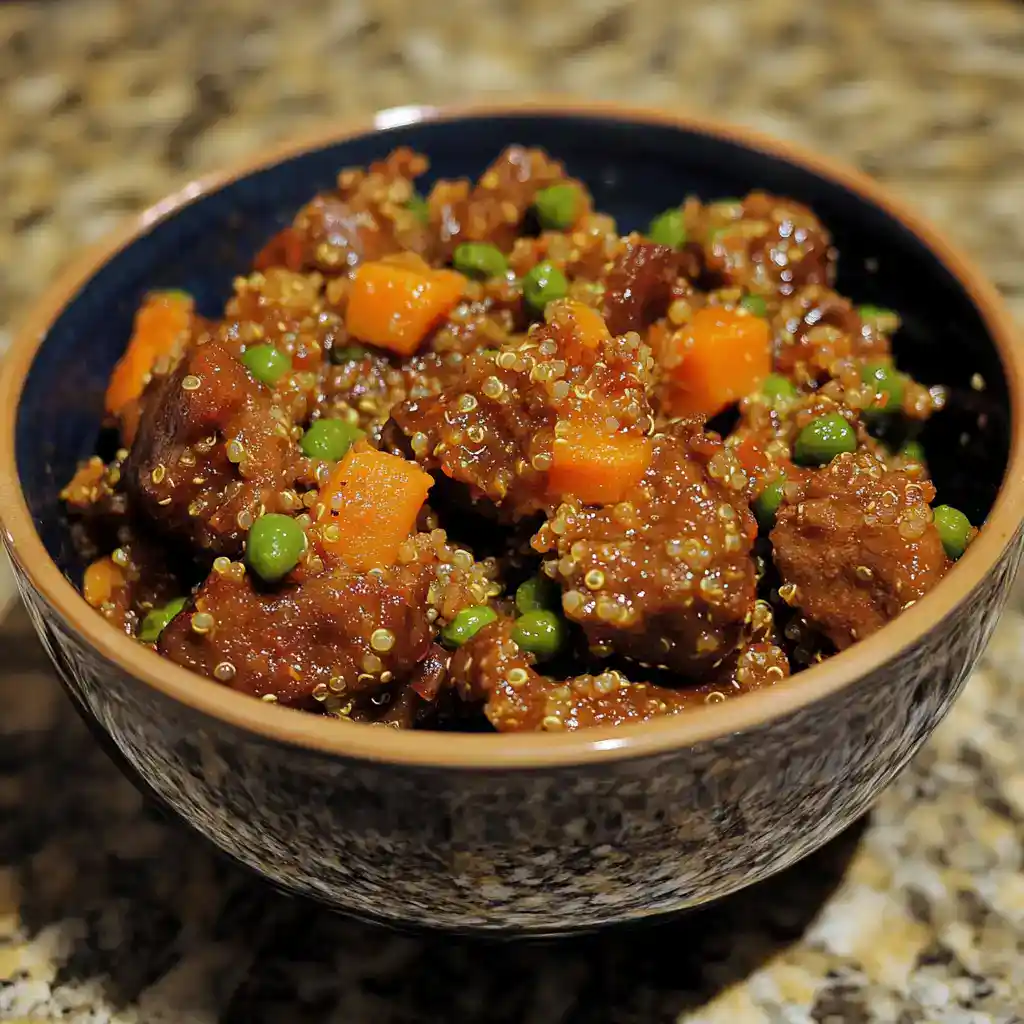
Now for the slightly messy part (your dog will start drooling from the smell of raw liver)—mix the blended livers with cooked quinoa, thawed peas, mashed carrot, and egg until you get a cohesive mixture that holds together well. The texture should feel like a thick, slightly sticky meatloaf mixture that’s easy to scoop.
Here’s my secret for perfect training treats: scoop small portions onto your prepared baking sheet using a small cookie scoop or spoon—aim for pieces about the size of a quarter because training treats need to be consumed quickly without interrupting the training flow. The mixture will spread slightly during baking, so leave a little space between each portion.
Bake for 15-20 minutes until they’re firm to the touch and slightly darker around the edges. The most important step for training success: let these cool completely before cutting into training-sized pieces—hot liver treats can burn tongues and completely derail a training session.
Check out my Beef Heart Power Bites for another organ meat option that drives dogs absolutely wild during training!
When Things Go Sideways (And They Will)
Mixture came out too wet to hold its shape? You probably used livers that retained too much moisture or added extra liquid somewhere. When this happens (and it will), just add a tablespoon of coconut flour or ground oats to absorb the excess moisture. Don’t stress—organ meat can be tricky to work with until you get the hang of it.
Treats fell apart during baking? That’s common if the liver wasn’t blended smooth enough or if you didn’t mix everything thoroughly. Just crumble them up and use them as training sprinkles—dogs honestly don’t care about presentation when it comes to liver rewards. Next time, blend the liver longer and mix more thoroughly.
If your dog seems overwhelmed by the liver intensity, try mixing these half and half with milder treats for the first few training sessions—some pups need time to adjust to such high-value rewards. This is totally normal and just means you’ve created something truly special that needs gradual introduction!
Ways to Mix It Up
When my dog needs extra motivation for really challenging training sessions, I’ll add a tablespoon of nutritional yeast to the mixture—it enhances that savory flavor dogs crave and adds B vitamins for brain function. For dogs who get overstimulated by super high-value treats, I’ll mix the liver with cooked chicken breast to tone down the intensity slightly.
My outdoor training version includes adding a bit of coconut oil to the mixture and baking them slightly longer for a firmer texture that travels well to training classes without falling apart. Sometimes I make these extra tiny for rapid-fire reward sessions, and honestly, even the tiniest pieces drive dogs absolutely wild.
What Makes This Recipe Special
What sets these training treats apart from commercial options is the concentrated nutrition and primal appeal of organ meat combined with functional ingredients that support brain health and sustained energy. Unlike store-bought training treats that often rely on artificial flavors and salt for appeal, these deliver genuine high-value nutrition that dogs instinctively crave. The chicken liver provides iron, B vitamins, and complete amino acids crucial for optimal brain function during learning.
The addition of quinoa creates a complete protein profile while peas and carrots add natural sweetness and vitamins that support overall health. Plus, the homemade approach means you control the intensity, size, and freshness—crucial for maintaining peak training motivation and effectiveness.
Questions I Always Get
Can puppies eat these liver training treats?
Absolutely! Just cut them extra tiny (rice grain-sized) for puppies under six months. The rich nutrition actually supports brain development, but start with very small amounts since organ meat is quite rich.
How long do these training treats stay fresh?
These last up to one week in the refrigerator when stored in an airtight container. I usually make fresh batches weekly to maintain peak freshness and training effectiveness—stale liver treats just don’t have the same motivational power.
What if my dog has never had organ meat before?
Start slowly! Mix a tiny piece with their regular food first to ensure they tolerate it well. Organ meat is rich, so some dogs need gradual introduction to avoid digestive upset.
Can I make these treats less intense for sensitive dogs?
Yes! Mix the liver with equal parts cooked chicken breast or turkey to reduce the intensity while still getting that high-value appeal that makes training more effective.
How many treats can I use during training?
These are so high-value that a little goes a long way. Even tiny pieces provide major motivation—adjust your dog’s dinner accordingly if you’re doing extensive training sessions with these powerhouse rewards.
What’s the best way to cut these for training?
Think tiny—smaller than your pinky nail. Training treats should disappear in one bite without requiring chewing time that interrupts the training rhythm and flow.
Are these treats safe for dogs with grain allergies?
Skip the quinoa and substitute with sweet potato or extra vegetables. The liver provides the main appeal, so dogs won’t notice the grain-free modification at all.
One Last Thing
I couldn’t resist sharing this recipe because watching dogs transform from distracted to laser-focused when they know these rewards are available is pure training magic. The best dog training days are when you see that intense concentration and eager cooperation, all while knowing you’re giving them something that actually supports their brain health and development. Your pup deserves training rewards that match the effort they’re putting into learning, and honestly, these work so much better than store-bought options with questionable ingredients and artificial appeal.
Print
Chicken Liver Training Treats
Description
High-value organ meat treats that create laser focus and enthusiastic cooperation during even the most challenging training sessions!
Prep Time: 15 minutes | Cook Time: 20 minutes | Total Time: 35 minutes | Makes: 50-60 tiny training pieces
Ingredients
- 8 oz fresh chicken livers (fresh works better than frozen)
- 1/2 cup cooked quinoa, cooled (completely safe for dogs)
- 1/2 cup frozen peas, thawed and drained
- 1 large carrot, cooked and mashed smooth
- 1 large egg (for binding)
Instructions
- Preheat your oven to 350°F and line a baking sheet with parchment paper (essential for easy removal with liver treats).
- Blend chicken livers in food processor until completely smooth—this creates the perfect binding consistency for training treats.
- Mix blended livers with cooled quinoa, thawed peas, mashed carrot, and egg until cohesive mixture forms.
- Scoop small quarter-sized portions onto prepared baking sheet using cookie scoop or spoon for consistent sizing.
- Bake for 15-20 minutes until firm to touch and slightly darker around edges—they’ll smell absolutely amazing.
- Cool completely, then cut into tiny training-sized pieces (smaller than your pinky nail for best training effectiveness).
Notes:
- Cut pieces extra tiny for rapid training rewards—one quick bite without chewing interruption
- Food processor is essential for smooth liver consistency and proper binding
- These smell incredible while baking—expect your dog to supervise the entire process
- Always cool completely before cutting to get clean, precise training-sized pieces
Storage Tips:
- Store in refrigerator for up to 1 week in airtight container
- Make fresh weekly for peak motivational power and safety
- Keep small portion in treat pouch during training for quick access
- Toss if you notice any off smells—organ meat spoils faster than regular treats
What Makes This Recipe Special:
These treats harness the primal appeal of organ meat to create unmatched training motivation while delivering concentrated nutrition that supports brain function and learning capacity. The chicken liver provides iron, B vitamins, and complete amino acids essential for optimal cognitive performance, while quinoa and vegetables add sustained energy without diluting the high-value appeal. Unlike commercial training treats with artificial flavors, these offer genuine nutritional benefits that support your dog’s health while maximizing training effectiveness.
Mix It Up (Dog-Safe Variations):
Extra High-Value: Add 1 tablespoon nutritional yeast for enhanced savory flavor and additional B vitamins for brain support
Intensity Control: Mix liver with equal parts cooked chicken breast for dogs who get overstimulated by pure organ meat
Travel-Friendly: Add 1 teaspoon coconut oil and bake 5 minutes longer for firmer texture that travels well to training classes
Rapid-Fire Rewards: Make extra tiny (rice grain-sized) for high-frequency reward training sessions and quick skill building




