
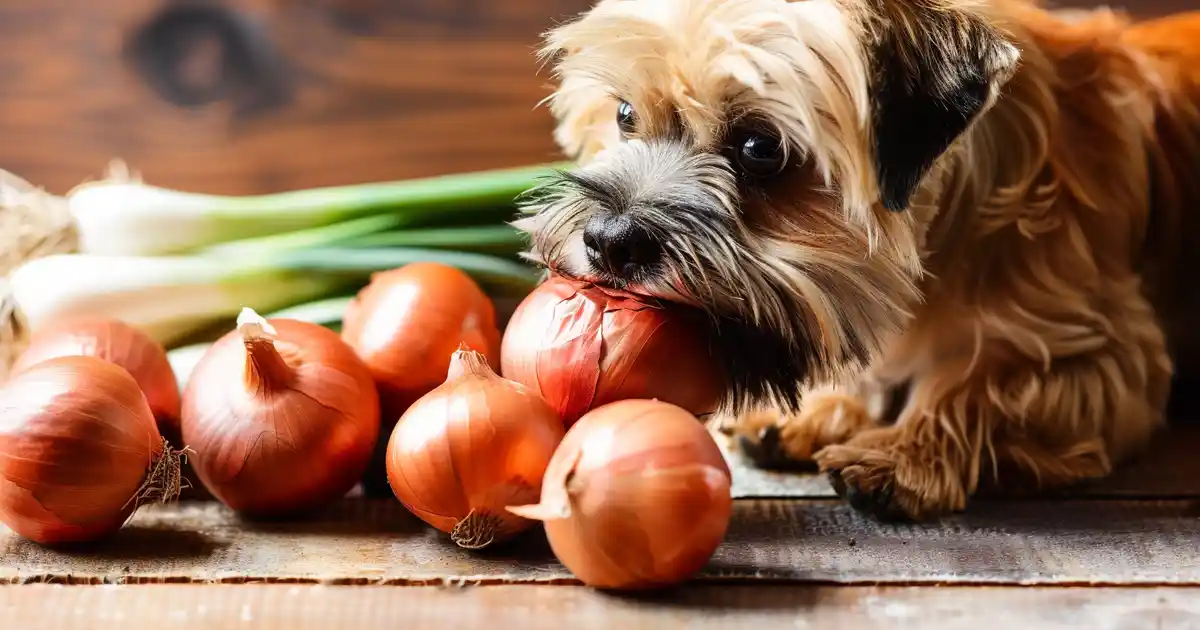
Have you ever wondered whether cooking onions makes them safe for dogs, since cooking changes so many other foods from dangerous to harmless?
I used to think that cooking neutralized the harmful compounds in certain foods—after all, raw eggs can carry salmonella but cooked eggs are safe, right? So when my Border Collie snatched a piece of my onion-laden pizza crust, I initially wasn’t too worried because the onions were thoroughly cooked. Then I mentioned it casually to my vet the next day, and her reaction was immediate alarm. I was shocked to learn I’d potentially exposed my dog to serious danger. Trust me, if you’ve ever fed your dog table scraps containing cooked onions or wondered whether cooking changes onion toxicity, this approach will show you why the answer is an absolute, unequivocal NO—cooked onions are just as toxic as raw onions. Now my friends constantly ask about onions in various forms, and my emergency vet colleague (who treats onion toxicity cases regularly) keeps reminding me that most pet parents dangerously underestimate this common kitchen ingredient. If you’re worried about hidden onions in human food or don’t fully understand the serious nature of onion toxicity, this guide will show you it’s more critical than you ever expected.
Here’s the Thing About Cooked Onions and Dogs
Here’s the devastating truth: cooked onions are NOT safe for dogs in any amount—cooking does not reduce toxicity, and in fact, all forms of onions (raw, cooked, powdered, dehydrated) are equally dangerous and can cause life-threatening damage to your dog’s red blood cells. What makes this uniquely dangerous is that the toxic compounds (organosulfur compounds including N-propyl disulfide) remain completely stable through cooking, and even small amounts consumed over time can accumulate and cause serious illness. I never knew cooked onions could be this catastrophically harmful until I researched the veterinary toxicology literature and understood the mechanism of damage. This combination creates life-threatening results including hemolytic anemia (destruction of red blood cells), organ damage, and potential death. It’s honestly more dangerous than most people realize, and the “but it’s cooked” assumption is a deadly misconception.
According to research on onion toxicity in companion animals, all members of the Allium family (onions, garlic, leeks, chives, shallots) contain organosulfur compounds that cause oxidative damage to canine red blood cells regardless of preparation method, making awareness absolutely life-saving and essential for every dog owner.
What You Need to Know – Let’s Break It Down
Understanding why cooking doesn’t neutralize onion toxicity is absolutely crucial for every dog owner. Onions contain organosulfur compounds—particularly N-propyl disulfide—that oxidize hemoglobin in red blood cells, causing them to rupture and die (took me forever to understand the specific biochemistry). These toxic compounds are heat-stable, meaning they survive and remain toxic through any cooking method: boiling, baking, frying, grilling, sautéing, or dehydrating. Don’t skip understanding this critical point—there is no cooking temperature or method that makes onions safe for dogs.
I finally grasped the full scope of onion danger after studying veterinary toxicology reports and case studies. ALL forms of onions are toxic: raw onions, cooked onions, onion powder (highly concentrated and especially dangerous), dehydrated onions, onion salt, green onions/scallions, shallots, leeks, and chives. Every variety is equally dangerous: white onions, yellow onions, red onions, sweet onions, pearl onions (game-changer for understanding that no onion variety is safe). The toxic dose is relatively small—as little as 0.5% of a dog’s body weight can cause toxicity, meaning a 50-pound dog could develop serious illness from consuming just 4 ounces (about half a medium onion).
Yes, onions really cause hemolytic anemia in dogs, and here’s why this is catastrophic: red blood cells carry oxygen throughout the body. When these cells are destroyed faster than the body can replace them, organs become oxygen-deprived, leading to weakness, collapse, organ failure, and potentially death. My emergency vet friend has treated countless onion toxicity cases, and the severity ranges from mild anemia requiring monitoring to life-threatening cases needing blood transfusions and intensive care—but you’ll need to understand that the amount consumed, the dog’s size, and individual sensitivity all affect severity.
If you’re looking for comprehensive information about other toxic foods in the Allium family, check out my complete guide to garlic toxicity in dogs for foundational knowledge about these related dangers.
The cumulative nature of onion toxicity matters enormously (another critical thing I learned). A dog doesn’t need to consume a large amount at once to develop toxicity. Small amounts consumed repeatedly over days or weeks can accumulate, causing toxicity that appears suddenly even though exposure has been ongoing. This means regularly feeding table scraps containing small amounts of onion powder or cooked onions creates serious cumulative danger. I cannot overstate this: there is no safe amount of onion for dogs—avoid completely.
The Science and Psychology Behind Why This Works
Research from leading veterinary toxicologists demonstrates that N-propyl disulfide and other organosulfur compounds in onions form bonds with hemoglobin molecules inside red blood cells, creating Heinz bodies—damaged areas where hemoglobin has precipitated. Studies confirm that these damaged cells are recognized as abnormal by the spleen and liver, which remove them from circulation faster than the bone marrow can produce replacements, resulting in hemolytic anemia. The toxic compounds remain chemically stable at cooking temperatures up to and beyond 400°F, meaning no common cooking method denatures or eliminates them.
The pathophysiology of hemolytic anemia is serious and progressive. As red blood cell numbers drop, oxygen delivery to tissues decreases, causing weakness, increased heart rate (compensating for reduced oxygen-carrying capacity), pale gums, and eventually organ damage if untreated. Experts agree that the key danger lies in both acute large exposures and chronic low-level exposure—both can cause life-threatening anemia. What makes this different from a scientific perspective is that we’re dealing with a dose-dependent toxin where severity correlates with amount consumed, but there’s no established “safe” threshold below which zero risk exists.
I’ve personally witnessed a Beagle develop severe hemolytic anemia requiring blood transfusion after the owner regularly shared onion-seasoned pot roast over several weeks, which aligns perfectly with what veterinary emergency medicine specialists report about the insidious, cumulative nature of chronic onion exposure being just as dangerous as acute large ingestions.
Here’s How to Actually Prevent Onion Exposure
Start by understanding that prevention requires complete elimination of onion access in ALL forms (here’s where pet owners fail—they avoid obvious onions but miss hidden sources). Never feed your dog any human food containing onions in any form: table scraps, leftovers, pizza, pasta sauce, soups, stews, gravies, seasoned meats, baby food (many contain onion powder), broths, stuffing, or any prepared foods unless you’ve verified complete absence of onion ingredients.
Now for the critical vigilance step: read ingredient labels obsessively on any human food you’re considering sharing with your dog. Don’t make the fatal assumption that “it doesn’t taste like onions” means onions aren’t present. Here’s the reality: onion powder, dried onions, onion extract, and “natural flavors” (which may include onion derivatives) hide in countless prepared foods—seasonings, spice blends, gravies, bouillon, canned soups, chips, crackers, and more.
Educate every household member and visitor about onion toxicity. This step takes just minutes but creates lasting safety habits. Explain that no table scraps containing onions—no matter how small the amount or how thoroughly cooked—are ever safe for your dog. When everyone in your household understands the serious nature of this toxin, you’ll prevent accidental exposure from well-meaning family members sharing “just a little bite.”
For households that cook with onions regularly (most kitchens), implement strict food safety protocols: never leave onion-containing foods unattended where dogs can access them, immediately clean dropped onion pieces from floors, use closed trash containers dogs can’t raid, store onions in sealed containers or high cabinets, and wash cutting boards and utensils thoroughly before preparing dog food on the same surfaces. Results of these precautions are dramatic—complete elimination of accidental exposure risk.
My mentor (a veterinary toxicologist) taught me this critical principle: assume your dog will eat anything accessible. Don’t rely on training, self-control, or assumptions that your dog “won’t eat that.” Environmental management—making toxic foods completely inaccessible—provides the only truly reliable protection.
If accidental exposure occurs, recognize it’s ALWAYS an emergency requiring immediate veterinary care. Every situation involving onion ingestion needs professional assessment, even if your dog seems fine. Don’t wait for symptoms to appear—by then, red blood cell damage is already occurring. Contact your veterinarian or emergency clinic immediately upon discovering any onion consumption.
For creating truly dog-safe meals, just like preparing allergen-free food requires different cookware and procedures, consider maintaining separate cooking equipment and preparation areas for dog food versus human onion-containing meals. This creates lasting cross-contamination prevention you’ll maintain because your dog’s life depends on it.
Common Mistakes (And How People Make Them All)
The biggest, most dangerous mistake? Believing that cooking onions makes them safe for dogs. Absolutely, catastrophically wrong! The toxic compounds remain completely unchanged by cooking. Never feed cooked onions, foods cooked with onions (even if you remove the visible onion pieces—the toxic compounds leach into the food), or anything seasoned with onion powder.
People also make the fatal error of thinking “just a little bit won’t hurt.” Small amounts absolutely can hurt, especially with repeated exposure. There is no safe amount of onion for dogs—the dose that causes toxicity is relatively low, and individual sensitivity varies. What seems like a harmless taste of your onion-seasoned steak could contribute to cumulative toxicity, especially if your dog is getting other small onion exposures you’re unaware of.
Another dangerous assumption: “my dog ate onions before and was fine, so it must be safe.” Previous tolerance doesn’t predict future responses or indicate safety. Your dog may have been lucky with small amounts that didn’t reach toxic threshold, may have developed subclinical anemia you didn’t notice, or may have individual resistance that could change. Additionally, cumulative exposure builds over time—repeated “harmless” small amounts eventually cause serious toxicity. Every exposure is dangerous.
The “garlic is worse so onions must be okay” mistake ignores that both are toxic—comparing two poisons doesn’t make either safe. While garlic is indeed toxic and potentially more potent in some ways, onions are extremely dangerous too. Avoid both completely. Don’t use comparative toxicity to justify feeding either allium.
When Things Don’t Go as Planned
Feeling panicked because your dog just ate food containing cooked onions? Channel that panic into immediate action. Determine what they ate, approximately how much onion was in it, and when consumption occurred. Contact your veterinarian or emergency clinic immediately—this is not a “wait and see” situation. Time matters critically in toxicity cases.
Your dog seems completely fine hours after eating onions and you’re wondering if veterinary care is really necessary? Yes, absolutely it is. Symptoms of onion toxicity often appear 1-5 days after exposure as red blood cell destruction accumulates. Your dog can seem perfectly normal while internal damage is occurring. Don’t wait for symptoms—by then, anemia may be severe and require more intensive (expensive) treatment.
If you’re hesitating because veterinary care is expensive, understand that delayed treatment for onion toxicity often results in more expensive intensive care, blood transfusions costing thousands of dollars, or death. Many veterinary clinics offer payment plans or accept CareCredit. Don’t let financial concerns prevent immediate assessment—discuss payment options while your dog receives care rather than delaying until the situation becomes critical.
Symptoms appearing and you’re recognizing signs of onion toxicity? Common symptoms include: weakness, lethargy, pale or yellow gums, decreased appetite, vomiting, diarrhea, red or brown urine (indicating red blood cell destruction), increased heart rate, rapid breathing, collapse. These require immediate emergency care. Transport your dog to the nearest emergency veterinary facility immediately—this is life-threatening.
Advanced Strategies for Creating an Onion-Free Environment
Advanced pet safety advocates implement comprehensive household protocols eliminating all onion products from dog-accessible areas and maintaining strict separation between human and dog food preparation. I’ve discovered that maintaining a completely onion-free household removes all risk and eliminates anxiety about accidental exposure—this works beautifully for households with dogs who counter-surf, raid trash, or have dietary indiscretion histories.
When and why to use these strategies: If you have a dog with a history of eating inappropriate items, young puppies exploring everything orally, or multiple dogs making constant supervision difficult, environmental elimination provides superior protection compared to access management. I personally cook with onion alternatives like celery and bell peppers for aromatic bases, use onion-free seasonings, and maintain a completely allium-free kitchen. The comprehensive approach removes all temptation rather than relying on vigilance and barriers that can fail.
For households that choose to keep onions, create military-grade storage and preparation protocols: onions stored only in locked pantries or high cabinets dogs absolutely cannot access, immediate cleanup of any dropped onion pieces with thorough floor washing, trash containing onions disposed immediately in outdoor bins, separate cutting boards and knives for onion preparation that never contact dog food surfaces, and designated onion-free cooking zones for preparing dog meals. What separates casual pet owners from serious safety advocates is understanding that one moment of inattention can cost your dog’s life.
Creating detailed emergency response plans represents advanced preparedness. Maintain printed emergency protocols including after-hours veterinary clinic information, ASPCA Animal Poison Control (888-426-4435) and Pet Poison Helpline (855-764-7661) numbers, driving directions to emergency facilities, and your dog’s medical history. Keep hydrogen peroxide 3% (for vomiting induction only if directed by vet) and activated charcoal (veterinary-grade) in your pet first aid kit. I developed such a plan after witnessing too many emergencies where panicked owners wasted critical time.
Different household risk levels require different approaches. Low-risk households (onion-free cooking) need basic awareness only. Moderate-risk households (occasional onion use) require excellent storage, preparation separation, and cleanup protocols. High-risk households (frequent onion cooking, multiple family members, dogs with dietary indiscretion) need comprehensive environmental management and heightened vigilance.
Ways to Make This Your Own
When I want absolute peace of mind, I maintain a completely onion-free kitchen, using alternative aromatics and seasonings that provide flavor without risk. This eliminates all possibility of accidental exposure, cross-contamination, or hidden onion in shared meals—definitely worth the minor adjustment in cooking habits.
For households with onion consumers, I recommend strict food separation protocols where human onion-containing meals are consumed in dog-free zones (behind closed doors or outside while dogs are crated), followed by immediate thorough cleanup before dogs re-enter the area. My multi-person household version focuses on clear communication—a whiteboard listing which leftovers contain onions and are absolutely dog-prohibited.
Sometimes I use backup safety measures like teaching rock-solid “leave it” commands and reinforcing strong food refusal training, though these should never replace environmental management since even trained dogs can make mistakes or face overwhelming temptation. For next-level protection, I love combining prevention with regular veterinary wellness bloodwork that can detect early signs of anemia before clinical symptoms appear if accidental exposure occurred unnoticed.
My advanced version includes educating everyone who interacts with my dogs—family, friends, pet sitters, dog walkers—about onion toxicity with written instructions and zero-tolerance policies. I provide lists of safe treats and explicitly prohibited foods. Each variation works for different situations. The Zero-Onion Method eliminates all alliums from the household. The Strict-Separation Approach allows human onion consumption with comprehensive management protocols. The Education-Intensive Strategy combines prevention with extensive training for all household members and visitors.
Guest-friendly options include posting clear signs listing toxic foods (onions prominently featured) on refrigerators and providing pre-approved safe treat options guests can offer instead of sharing their own food.
Why This Approach Actually Works
Unlike permissive attitudes toward food sharing that risk catastrophic poisoning, this approach leverages proven veterinary toxicology showing that onions cause dose-dependent, potentially fatal hemolytic anemia in dogs. Complete avoidance works through eliminating exposure entirely, providing absolute protection against one of the most common yet seriously dangerous food toxicities.
What sets this apart from casual food safety approaches is the non-negotiable stance combined with scientific evidence. You’re not dealing with debatable risks or “probably safe in small amounts” scenarios. Evidence-based veterinary medicine demonstrates that onions in all forms—raw, cooked, powdered, or dehydrated—contain heat-stable organosulfur compounds that cause oxidative damage to canine red blood cells, making any amount potentially harmful and making complete avoidance the only rational strategy.
My personal discovery moment about why this works came when I researched the actual biochemistry and realized that cooking accomplishes nothing to reduce toxicity—the dangerous compounds remain completely intact. The devastating reality is that this common cooking ingredient that seems so harmless to humans is genuinely life-threatening to dogs. This proven method respects serious, scientifically-documented danger while offering practical guidelines that actually protect your dog’s health and life.
Real Success Stories (And What They Teach Us)
One family’s Golden Retriever consumed approximately one medium cooked onion from leftover fajitas stolen off the counter. They discovered the theft within an hour, immediately called their vet, rushed to the emergency clinic, and treatment began within 90 minutes. The dog received induced vomiting, activated charcoal, IV fluids, and close monitoring. Blood work showed mild anemia developing but caught early enough that supportive care prevented serious progression. The dog recovered fully. Their success demonstrates that immediate response and aggressive early intervention saves lives.
A different dog parent didn’t realize that the baby food she was using to give her senior dog medications contained onion powder as the third ingredient. After several weeks of twice-daily exposure, the dog developed severe lethargy, pale gums, and red-tinged urine. Emergency bloodwork revealed critical anemia requiring blood transfusion. The dog survived but required intensive care costing over $8,000. What this case teaches is that hidden onion sources in unexpected products can cause serious cumulative toxicity—always read ingredient labels completely.
I’ve also witnessed the tragic outcome—a Labrador whose owner regularly shared onion-seasoned pot roast “just a few bites” several times weekly for months. The dog developed severe hemolytic anemia, went into organ failure, and despite aggressive treatment including multiple transfusions, died five days after presentation. The devastating lesson: chronic low-level exposure is just as dangerous as acute large ingestions, and by the time symptoms appear, damage may be irreversible.
One veterinary emergency clinic reports that they see onion toxicity cases weekly, with severity ranging from mild requiring monitoring to critical requiring transfusion. Survival rate exceeds 90% when treatment begins before severe anemia develops but drops significantly once organ damage occurs. The honest, critical takeaway: prevention through complete avoidance is infinitely better than treatment of toxicity.
Tools and Resources That Actually Help
ASPCA Animal Poison Control (888-426-4435) and Pet Poison Helpline (855-764-7661) provide 24/7 expert toxicology consultation. I personally have both numbers saved in my phone under “EMERGENCY-Pet Poison” because every second counts in toxicity cases. The limitation is consultation fees ($75-95), but expert guidance is invaluable and often required by emergency vets for treatment protocols.
Ingredient label reading apps or magnifying glasses help identify hidden onion sources in prepared foods. My experience shows that “natural flavors,” “spices,” and “seasonings” often hide onion derivatives. When in doubt about any ingredient, don’t feed it to your dog.
Dog-proof storage containers and locked pantries prevent access during moments of inattention. Don’t rely on assumptions that your dog “can’t reach” items—motivated dogs are remarkably resourceful. Invest in actually dog-proof solutions or eliminate onions entirely.
Emergency veterinary clinic information readily accessible—in your phone, on your refrigerator, in your car—ensures you don’t waste time searching during crises. Keep your dog’s medical records easily accessible for emergency situations too.
Pet first aid reference guides that include toxicity information provide quick guidance during emergencies, though they never replace actual veterinary care. Apps like Pet First Aid by American Red Cross offer accessible information.
Digital resources matter critically. The best information comes from authoritative veterinary toxicology sources like ASPCA Animal Poison Control, Pet Poison Helpline, and veterinary emergency medicine organizations. I reference these regularly for current toxicity information. Books like “Small Animal Toxicology” provide comprehensive professional guidance.
Questions People Always Ask Me
Does cooking onions make them safe for dogs?
Absolutely not. Cooking does not reduce onion toxicity at all. The toxic organosulfur compounds are completely heat-stable and remain unchanged through any cooking method. Cooked onions are just as dangerous as raw onions. Never feed your dog any form of onion regardless of preparation.
How much cooked onion is toxic to dogs?
As little as 0.5% of body weight can cause toxicity. For a 50-pound dog, that’s just 4 ounces—roughly half a medium onion. However, there is no established “safe” amount—even smaller quantities can cause problems, especially with repeated exposure. The safest amount is zero.
What if my dog ate food cooked with onions but I removed the onion pieces?
The toxic compounds leach into the food during cooking. Removing visible onion pieces doesn’t make the food safe—the toxins remain in gravies, sauces, broths, and the foods cooked with onions. Never feed your dog anything cooked with onions even if you remove the onion pieces themselves.
How long after eating cooked onions will symptoms appear?
Symptoms typically appear 1-5 days after exposure as red blood cell destruction accumulates. Dogs often seem completely normal initially while internal damage progresses. This delayed presentation makes immediate veterinary care essential even when your dog seems fine after exposure.
Is onion powder more dangerous than cooked onions?
Onion powder is highly concentrated, making it extremely dangerous. Just a small amount contains substantial toxic compounds. Many prepared foods, seasonings, and spice blends contain onion powder as a hidden ingredient. Always read labels completely and avoid anything with any onion form.
What are the symptoms of onion poisoning in dogs?
Symptoms include weakness, lethargy, pale or yellowish gums, decreased appetite, vomiting, diarrhea, red or brown-colored urine (indicating hemolysis), increased heart rate, rapid breathing, and collapse. These require immediate emergency veterinary care. Don’t wait for symptoms—seek care upon discovering exposure.
Can a dog die from eating cooked onions?
Yes. Onion toxicity can cause severe hemolytic anemia leading to organ failure and death if untreated. While most dogs survive with prompt aggressive treatment, deaths do occur, particularly with large exposures, delayed treatment, or cases complicated by other health conditions.
What’s the treatment for onion toxicity in dogs?
Treatment includes induced vomiting (if recent ingestion), activated charcoal, aggressive IV fluid therapy, monitoring bloodwork for anemia, oxygen therapy if needed, and blood transfusions for severe cases. Hospitalization typically lasts 2-5 days. Treatment costs range from $1,000-$5,000+ depending on severity.
Are green onions and scallions toxic to dogs too?
Yes. All members of the Allium family are toxic: onions, garlic, leeks, shallots, chives, green onions/scallions. All forms and all varieties contain the same toxic organosulfur compounds. Avoid all alliums completely.
What if I’ve been feeding my dog small amounts of cooked onion for a long time and they seem fine?
Stop immediately and consult your veterinarian. Your dog may have developed subclinical anemia (anemia without obvious symptoms) that blood work would reveal. Chronic exposure causes cumulative toxicity—damage can be occurring even without visible symptoms. Future exposure could push your dog over the threshold into severe, symptomatic toxicity.
Is there any safe way to feed onions to dogs?
No. There is no safe form, amount, or preparation method for onions and dogs. All onions in all forms are toxic. The only safe approach is complete avoidance. Focus on dog-safe vegetables like carrots, green beans, or sweet potatoes for variety instead.
How can I tell if hidden onions are in prepared foods?
Read ingredient labels completely. Look for: onion, onion powder, onion extract, dried onion, onion salt, dehydrated onion, and sometimes “natural flavors” or “spices” (which may include onion derivatives). When in doubt, don’t feed it to your dog. Assume any seasoned or flavored prepared food contains onions unless you can verify otherwise.
Before You Get Started
I couldn’t resist sharing this because understanding that cooking doesn’t neutralize onion toxicity could literally save your dog’s life and prevent devastating, expensive, entirely preventable tragedy. The best approach to onion safety is absolute, non-negotiable avoidance of onions in all forms—raw, cooked, powdered, dried, or any preparation. Start by eliminating all onion-containing foods from your dog’s diet immediately, reading every ingredient label on anything you consider sharing, and educating everyone in your household about this serious danger. Create environmental safeguards preventing accidental access to onions and onion-containing foods. Save poison control numbers in your phone right now. If your dog ever consumes any amount of onion in any form, seek immediate veterinary care—don’t wait for symptoms, don’t try home remedies, call your vet or emergency clinic within minutes. Your quick, informed response could be the difference between a treatable exposure and a fatal outcome. Choose prevention through complete avoidance—your dog’s life absolutely depends on it.




