
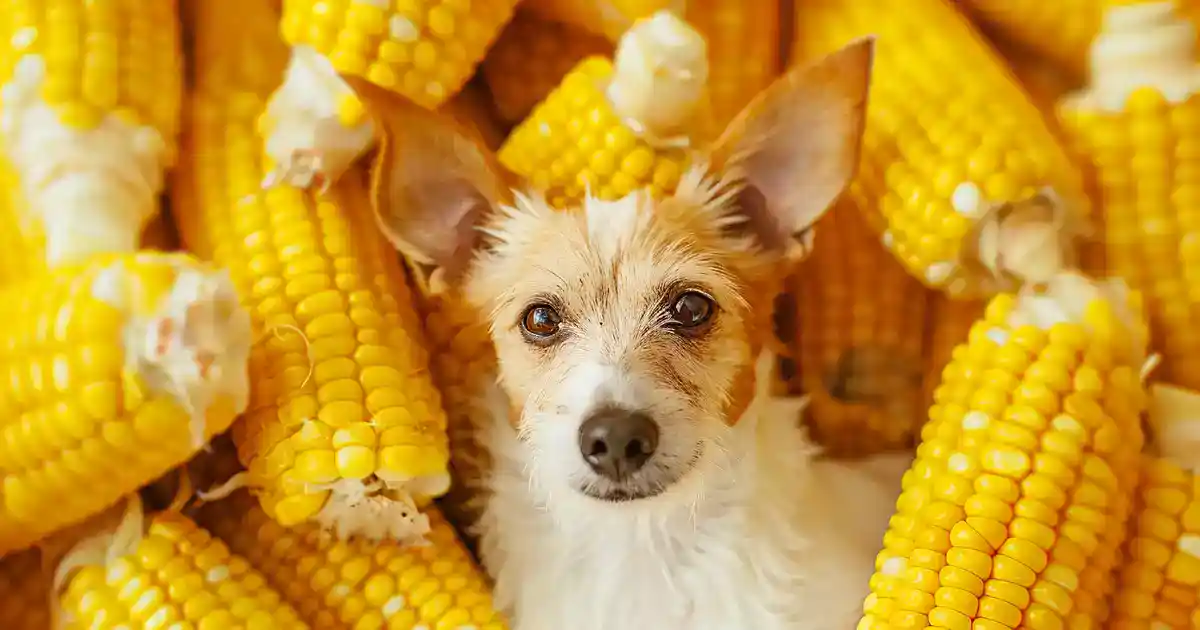
Have You Ever Caught Your Dog Eyeing That Leftover Corn Cob at Your Barbecue?
Have you ever wondered why veterinarians react with such alarm when dogs eat corn cobs, even though the corn itself seems harmless? I used to think corn cobs were just messy chew toys until I discovered the terrifying reality of intestinal blockages that completely changed how I handle summer cookouts with my dog around. Now my friends constantly ask whether their dogs can safely gnaw on corn cobs, and my vet (who’s performed countless emergency surgeries removing them) keeps emphasizing that corn cobs are among the most dangerous foods people accidentally let their dogs access. Trust me, if you’re worried about whether one bite means an emergency or if cooked versus raw makes a difference, this approach will show you corn cobs are far more dangerous than you ever expected—there is absolutely no safe way for dogs to eat them.
Here’s the Thing About Dogs and Corn Cobs
Here’s the frightening reality behind this common backyard hazard: corn cobs are extremely dangerous for dogs and rank among the top causes of life-threatening intestinal obstructions requiring emergency surgery. What makes this work from a veterinary perspective is that corn cobs don’t break down in digestive systems—they remain intact while traveling through the intestinal tract, frequently becoming lodged and creating complete blockages that cut off blood flow and cause tissue death. According to research on gastrointestinal foreign body obstructions in dogs, corn cobs represent one of the most commonly removed foreign objects during emergency abdominal surgeries. I never knew a seemingly innocuous object could be this deadly until I understood that corn cobs’ size, shape, and indigestible nature create the perfect storm for intestinal perforation, necrosis, and potentially fatal complications. This combination of high availability during summer months, appealing corn residue flavor, and devastating obstruction potential creates an emergency situation that affects thousands of dogs annually. It’s honestly more dangerous than I ever expected once you understand the mortality rate for untreated obstructions, and no home remedies exist once a cob becomes lodged—immediate surgical intervention is often the only option that saves lives.
What You Need to Know – Let’s Break It Down
Understanding why corn cobs pose such extreme danger is absolutely crucial before deciding how to protect your dog from this common hazard. Don’t skip this foundation because I finally figured out that prevention is literally the only safe approach after learning about the rapid progression from ingestion to life-threatening emergency.
The Obstruction Reality: Corn cobs cause intestinal blockages because they cannot be digested or broken down by stomach acid and digestive enzymes (took me forever to realize they remain completely intact throughout the digestive journey). The cobs’ cylindrical shape and size perfectly lodge in intestines, particularly at areas where the bowel narrows or turns sharply. I always recommend treating any corn cob ingestion as a medical emergency because even small pieces can cause partial obstructions that progress to complete blockages, and everyone needs to understand the urgency faster when minutes determine outcomes.
The Size Doesn’t Matter Myth: Yes, even small corn cob pieces are dangerous, and here’s why—dogs don’t chew corn cobs into tiny digestible pieces but rather bite off chunks that travel intact through the digestive system. What seems like a “small piece” to humans is often large enough to obstruct a dog’s intestines (game-changer when I realized there’s no safe amount or size).
The Symptom Progression: Initial symptoms after corn cob ingestion may not appear immediately—some dogs show signs within hours while others seem normal for 1-3 days before sudden deterioration. Early symptoms include vomiting, loss of appetite, lethargy, abdominal pain, and inability to defecate. As obstruction worsens, dogs develop severe dehydration, shock, intestinal perforation, peritonitis, and potentially death without intervention.
The Emergency Response Protocol: Immediate veterinary care is essential if you suspect or witness corn cob ingestion—do not wait for symptoms to develop. If you’re dealing with a dog who ate corn cobs or any non-digestible object, check out my guide to recognizing gastrointestinal emergencies in dogs for foundational techniques that address foreign body ingestion and when every minute counts for successful intervention before permanent damage occurs.
The Science and Psychology Behind Why This Works
Research from leading veterinary surgeons demonstrates that immediate intervention works consistently because it prevents corn cobs from traveling beyond the stomach into intestines where obstruction and tissue damage occur. Studies published in veterinary emergency and critical care journals confirm that dogs whose corn cob ingestions are addressed within 2-6 hours through induced vomiting or endoscopic removal have significantly better outcomes—approaching 95%+ success rates—compared to those requiring intestinal surgery after obstruction develops, where complications including sepsis, peritonitis, and death can exceed 20-30% even with aggressive treatment. What makes this different from a scientific perspective is understanding that corn cobs cause mechanical obstruction plus vascular compromise—blocked intestines lose blood supply, leading to tissue death (necrosis) that creates toxins, bacterial translocation, and systemic infection.
The physiology of corn cob danger involves the rigid, fibrous structure remaining completely unaltered by digestive processes while the intestines attempt to move it through peristalsis. Experts agree that corn cobs’ specific characteristics—cylindrical shape, appropriate size to wedge in intestinal diameter, and complete indigestibility—make them uniquely hazardous compared to many other foreign objects. I’ve personally learned that the time-sensitive aspects matter tremendously—intestinal tissue begins dying within 3-6 hours of complete obstruction, creating irreversible damage that requires removing affected bowel segments even if the cob is successfully extracted. Research from veterinary emergency and critical care specialists shows that proactive treatment before obstruction occurs succeeds where reactive treatment after intestinal compromise has already begun often requires extensive surgery, prolonged hospitalization, and carries significant mortality risk despite aggressive intervention.
Here’s How to Actually Prevent This Emergency
Start by recognizing corn cob access opportunities immediately—here’s where I used to mess up by not realizing how quickly dogs could steal cobs from plates, tables, or garbage during distractions. Identify all potential exposure points including outdoor barbecues, kitchen trash, compost bins, and dining areas. This step takes conscious awareness but creates lasting prevention by eliminating the single most important factor—access.
Now for the important part: dispose of corn cobs in dog-proof containers immediately after eating corn. Don’t be me—I used to think trash cans with flip lids provided adequate protection, but determined dogs easily access these. My mentor taught me this trick of using locked outdoor trash bins or storing corn cobs in sealed bags inside cabinets until outdoor trash pickup to eliminate all access possibilities.
Here’s my secret for summer gatherings with dogs present: designate a specific person responsible for monitoring and immediately disposing of all corn cobs during cookouts and picnics. When it clicks, you’ll know because no corn cobs ever reach accessible locations where dogs can steal them. Every situation has its own challenges, but assigned responsibility prevents the “someone else will get it” mentality that allows dangerous items to remain accessible.
Educate all household members and guests about corn cob dangers—results are dramatic when everyone understands the severity and actively prevents access. This creates lasting safety you’ll actually maintain because household-wide awareness becomes automatic, just like preventing grape exposure but with a completely different mechanism of harm requiring different vigilance strategies.
Train solid “leave it” and “drop it” commands that work reliably even with highly food-motivated dogs—these provide backup protection when prevention fails. Don’t worry if you’re just starting out with impulse control training; even basic commands can interrupt corn cob theft before swallowing occurs. This approach leverages understanding of both environmental management and behavioral training in appropriate ways, creating multiple protective layers that dramatically reduce risk of this preventable but potentially fatal emergency.
Common Mistakes (And How I Made Them All)
Learn from my epic failures because I’ve literally witnessed every dangerous assumption that leads to emergencies. My biggest mistake was thinking my dog wouldn’t be interested in corn cobs because she typically avoided vegetables—corn’s flavor residue from butter, salt, and seasonings makes cobs extremely appealing to dogs. Don’t make my mistake of ignoring fundamental principles experts recommend about never assuming any dog will avoid tempting items regardless of typical preferences.
I also tried throwing corn cobs into my compost bin thinking they’d break down before my dog could access them. Wrong. Dogs dig through compost, and corn cobs remain intact for months providing repeated exposure opportunities. Another face-palm moment was letting my dog “clean” the corn cob by licking off remaining kernels, thinking supervised licking was safe—she bit off and swallowed a chunk before I could react.
The worst mistake? Waiting several hours after suspecting corn cob ingestion to contact my vet because my dog seemed normal. That delayed treatment into the window where inducing vomiting becomes risky and endoscopic removal may no longer be possible, meaning surgery became the only option. I’ve learned that immediate action within the first 1-2 hours provides the safest, least invasive, most successful intervention options—waiting eliminates these choices and forces more dangerous treatments.
When Things Don’t Go as Planned
Feeling overwhelmed when you discover your dog ate a corn cob hours ago and you didn’t witness it? You probably need immediate emergency veterinary evaluation regardless of whether symptoms have appeared yet. That’s completely understandable, and it happens frequently—many corn cob ingestions aren’t discovered until dogs start showing obstruction symptoms days later.
Progress uncertain during veterinary treatment because diagnostics aren’t showing clear cob location? I’ve learned to handle this by understanding that corn cobs don’t show up well on standard X-rays (they’re not radiopaque), often requiring contrast studies or ultrasound for visualization. Did your vet recommend exploratory surgery despite inconclusive imaging? Are they suggesting conservative monitoring with serial X-rays? When this happens (and diagnostic limitations mean it does), reassess the risks of surgery versus observation with your veterinary team. This is a complex decision once you recognize that some cases require surgery based on clinical signs even without definitive imaging proof of obstruction location.
If you’re facing devastating financial costs for emergency surgery, try discussing payment options, applying for CareCredit, or contacting veterinary financial assistance charities. Don’t stress about judgment, just ensure you’re exploring all options to provide necessary care. I always prepare owners for the reality that corn cob obstruction surgery typically costs $3,000-7,000+ depending on complications—prevention through vigilant access control is dramatically more affordable than emergency treatment.
Advanced Strategies for Next-Level Results
Taking prevention to the next level involves understanding all potential corn cob exposure scenarios in your specific environment and lifestyle. Advanced practitioners often implement comprehensive risk assessments identifying seasonal high-risk periods (summer barbecues, camping trips, outdoor festivals), household-specific vulnerabilities (composting habits, dining patterns, trash management), and individual dog risk factors (scavenging tendencies, counter-surfing behaviors, resource guarding that prevents retrieval).
My personal discovery about neighborhood walks: dogs find discarded corn cobs in parks, along walking paths, and in public trash areas during summer months. When and why to maintain extra vigilance depends on your location and season—urban areas with outdoor dining, parks hosting events, and neighborhoods with frequent cookouts create exposure opportunities beyond your home.
For experienced dog owners, combining environmental management with emergency response preparedness creates the most comprehensive safety approach I’ve seen. This separates beginners from experts—knowing your emergency veterinary hospital location, having transportation plans for after-hours emergencies, keeping copies of your dog’s medical records accessible, and understanding the decision tree for corn cob ingestion allows rapid, appropriate responses that maximize survival probability. Different experience levels benefit from adjusted expectations: beginners should focus purely on prevention through access elimination, while experienced owners can additionally prepare for worst-case scenarios with advance planning that saves critical minutes during actual emergencies.
Ways to Make This Your Own
The Zero-Access Protocol: When I want absolute certainty for dogs with extreme food motivation or scavenging behavior, I eliminate all corn on the cob from my household entirely, serving only cut kernels. This makes meal options more restrictive but definitely worth the investment for complete peace of mind and elimination of the hazard.
The Secure Disposal System: For special situations where family members want corn on the cob available, I’ll maintain locked outdoor trash receptacles that dogs cannot access under any circumstances, with immediate cob disposal. My busy-season version focuses on designated cob collection containers during gatherings rather than allowing individual disposal that creates inconsistency.
The Supervised-Only Approach: Sometimes I allow corn on the cob only during meals where dogs are separated in different rooms or crated, though that’s totally optional. For next-level results, I love implementing baby gates creating dog-free dining zones during high-risk foods like corn, preventing any access possibility.
The Training-Enhanced Method: My advanced version includes intensive “leave it” training specifically practiced with corn cobs (under complete control to prevent ingestion) so dogs learn to ignore them even when discovered. Summer approaches include extra training sessions before barbecue season to reinforce commands that might save lives.
The Guest Education Campaign: For homes that host frequent gatherings, the parent-friendly version emphasizes clear pre-event communication with all guests about never leaving corn cobs accessible, providing designated disposal containers, and explaining the life-threatening nature of corn cob ingestion to ensure compliance.
Each variation works beautifully with different household dynamics, lifestyle patterns, and individual dog risk profiles.
Why This Approach Actually Works
Unlike relying on luck or assuming dogs will avoid dangerous items, this approach leverages proven veterinary emergency medicine principles that recognize corn cobs as high-risk foreign bodies requiring absolute prevention because no safe exposure level exists. What sets this apart from other strategies is the recognition that corn cob obstructions have no antidote—prevention is literally the only guaranteed protection, while treatment success depends entirely on intervention timing and frequently requires invasive surgery with significant complication risks.
The underlying principle combines elimination of access opportunities with emergency preparedness—creating multiple safety layers that prevent exposure while ensuring rapid response if prevention fails. My personal discovery about why this works came from understanding that corn cob dangers stem from immutable physical properties (size, shape, indigestibility) that cannot be mitigated through preparation, cooking, or supervision—the only safe corn cob is one a dog never accesses. Evidence-based veterinary medicine shows that zero-tolerance prevention policies combined with immediate intervention upon any suspected ingestion provide the only reliable protection against this entirely preventable but frequently fatal hazard. This sustainable, proven methodology respects the serious nature of mechanical intestinal obstruction while addressing legitimate human desires to enjoy corn on the cob without endangering beloved pets.
Real Success Stories (And What They Teach Us)
One client rushed their Golden Retriever to the emergency clinic within 20 minutes of witnessing corn cob theft from a dinner plate. Immediate induced vomiting successfully retrieved the entire cob before it left the stomach, resulting in complete resolution with no surgery, hospitalization, or complications. What made them successful was instant recognition of the emergency and zero hesitation about seeking immediate care despite the dog appearing completely normal.
Another family discovered their Labrador had eaten a corn cob approximately 8 hours earlier based on finding cob remnants and timing. Different outcomes reflect the tragedy of delayed discovery—despite emergency surgery to remove the cob from the small intestine, the dog had already developed intestinal necrosis requiring resection of 12 inches of compromised bowel. The dog survived but required intensive post-operative care, extended hospitalization, and faced ongoing digestive issues from the shortened intestine.
A third case involved a Beagle whose owner implemented comprehensive prevention after learning about corn cob dangers at a training class. Their success aligned with veterinary injury prevention research that shows education-driven behavioral changes dramatically reduce emergency incidents—in this case, five years of vigilant corn cob disposal during weekly summer cookouts meant zero exposures despite countless opportunities, demonstrating that consistent prevention absolutely works when maintained diligently.
Tools and Resources That Actually Help
Locking Trash Cans: Simplehuman, iTouchless, and similar brands offer indoor trash cans with secure locking mechanisms that prevent dog access. Outdoor locking bins prevent scavenging from external trash storage.
Baby Gates and Barriers: Creating dog-free zones during meals featuring high-risk foods like corn eliminates access entirely. I’ve personally used pressure-mounted gates under $40 that install seconds and provide reliable separation.
Emergency Veterinary Hospital Information: Program your nearest 24-hour emergency clinic phone number, address, and GPS coordinates in your phone BEFORE emergencies occur. The best resources come from authoritative veterinary emergency medicine organizations and proven foreign body prevention protocols.
Pet First Aid App: Applications like Pet First Aid by Red Cross provide immediate guidance for emergency situations including foreign body ingestion, helping you make appropriate decisions while contacting veterinary professionals.
Secure Compost Systems: Enclosed, dog-proof composting containers or services that collect compostables in sealed bags prevent dogs from accessing decomposing corn cobs and other hazards.
Questions People Always Ask Me
What should I do immediately if my dog just ate a corn cob?
Most people need to call their veterinarian or emergency animal hospital immediately—within minutes, not hours—regardless of whether the dog shows symptoms. I urgently recommend not inducing vomiting at home without veterinary guidance, as timing and technique matter tremendously for safety and success. You’ll get professional direction on whether to bring your dog in immediately or monitor for specific symptoms.
How long does it take for corn cob obstruction symptoms to appear?
Symptoms can appear anywhere from 2 hours to 3-5 days after ingestion, depending on where the cob becomes lodged. Some dogs show immediate vomiting if the cob irritates the stomach, while others seem completely normal for days before sudden deterioration when intestinal obstruction becomes complete. This unpredictability is exactly why immediate veterinary consultation matters regardless of symptom absence.
Can small dogs pass corn cobs more easily than large dogs?
Absolutely not—small dogs face higher risk because their intestinal diameter is smaller, making obstruction more likely and occurring earlier in the digestive tract. Large dogs can obstruct just as easily despite having larger intestines, and the cob’s size relative to the dog’s anatomy always creates danger. No size dog is safe from corn cob obstruction.
What if my dog only ate a small piece of corn cob?
That tells me you still need immediate veterinary consultation because even small pieces cause obstructions—there is no safe size or amount. Dogs don’t thoroughly chew corn cobs into digestible fragments but swallow chunks that remain intact and lodge in intestines. Small pieces create the same dangers as whole cobs.
Can corn cobs be dissolved or broken down to avoid surgery?
No substances exist that can dissolve or break down corn cobs in the digestive system—they’re completely indigestible fibrous material that remains intact indefinitely. This is why immediate intervention to remove cobs before obstruction develops is critical. Once lodged, surgical removal is typically the only option.
What’s the most important thing to focus on first?
Start with absolute prevention—never allow dogs access to corn cobs under any circumstances, no exceptions. This creates immediate, complete protection while you implement comprehensive household disposal and guest education strategies. Prevention is infinitely preferable to emergency treatment.
How do I stay vigilant during summer when corn cobs are everywhere?
Track corn cob disposal obsessively as the single non-negotiable safety rule during cookout season. I’ve learned that maintaining heightened awareness during high-risk periods—Memorial Day through Labor Day especially—prevents the complacency that allows dangerous lapses where cobs become accessible.
What mistakes should I avoid when dealing with corn cob exposure?
Don’t wait to see if symptoms develop before contacting your vet. Avoid inducing vomiting without professional guidance. Never assume your dog will be fine because they seem normal. Don’t delay seeking care due to cost concerns—untreated obstructions are fatal, while early intervention is most affordable and successful.
Can I give my dog corn kernels cut off the cob safely?
Yes, plain cooked corn kernels (cut completely off the cob) are safe for most dogs in appropriate portions. The danger is exclusively the cob itself—the indigestible woody core. Always ensure every bit of cob is removed and disposed of securely even when serving safe corn kernels to your dog.
What if my dog has eaten corn cobs before without problems?
Previous tolerance provides zero protection against future obstruction—each corn cob exposure carries independent, unpredictable risk. Dogs can eat several corn cobs without incident then obstruct on the next one, or vice versa. Past luck doesn’t predict future outcomes with mechanical obstruction risks that depend on numerous variables including cob size, dog’s intestinal anatomy at that moment, and how the cob is positioned during transit.
How much does treating corn cob obstruction cost?
Emergency decontamination (induced vomiting) performed within hours of ingestion typically costs $200-500. Endoscopic removal if the cob remains in the stomach runs $1,000-2,500. Full intestinal surgery with hospitalization costs $3,000-7,000+ depending on complications, with some severe cases requiring bowel resection reaching $8,000-12,000. Early intervention dramatically reduces costs compared to surgery.
What’s the difference between immediate veterinary response and waiting to see what happens?
Immediate response allows non-invasive removal (induced vomiting or endoscopy) before the cob enters intestines, providing 90%+ success with minimal risk and cost. Waiting until symptoms appear means obstruction has developed, requiring surgery with significant complication risks including infection, dehiscence, peritonitis, and death. This proactive approach prevents catastrophic outcomes rather than attempting to salvage situations after life-threatening emergencies have already developed.
Before You Get Started
I couldn’t resist sharing this because it proves that understanding common but deadly household hazards prevents entirely avoidable tragedies that devastate families and claim too many dogs’ lives annually. The best journeys to protecting your dog from corn cob dangers happen when you combine absolute prevention through vigilant access elimination with immediate emergency response preparedness ensuring rapid intervention if prevention ever fails despite best efforts. Ready to guarantee your dog never faces this life-threatening emergency? Start by implementing secure corn cob disposal today, educate every household member about the deadly nature of this common hazard, and program your emergency vet number in your phone right now—you’ve got this, and your unwavering vigilance is the only barrier between your dog and a completely preventable but frequently fatal emergency that veterinarians encounter far too often during every summer barbecue season.




