
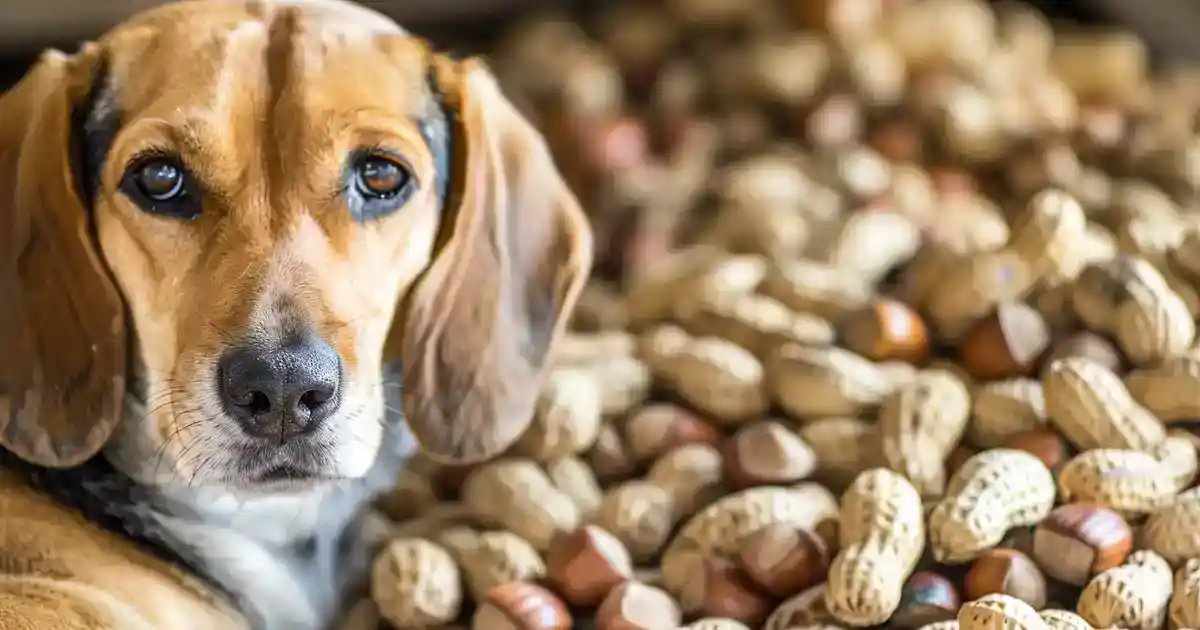
Have you ever wondered if sharing those roasted peanuts from your snack bowl with your eager pup is actually safe?
I’ll never forget the moment I caught my beagle, Charlie, scarfing down an entire handful of peanuts that had spilled on the floor during movie night—my heart raced as I wondered whether I should induce vomiting or rush to the emergency vet. My mind immediately went to all the warnings about certain nuts being toxic to dogs, and panic set in. Here’s the thing I discovered after that terrifying experience and hours of research into canine nutrition: plain, unsalted peanuts are actually safe for dogs in moderation and can even provide protein and healthy fats, but there are critical exceptions and preparation guidelines that every dog owner absolutely must understand. Now my friends constantly ask me which nuts are safe, whether peanut butter is better than whole peanuts, and how much is too much, and I’ve learned that the difference between a healthy treat and a veterinary emergency often comes down to specific details about preparation and ingredients. Trust me, if you’re curious about safely sharing peanuts with your dog or worried about accidental peanut consumption, this comprehensive guide will show you exactly what you need to know to keep your pup safe while potentially adding variety to their treat rotation.
Here’s the Thing About Dogs and Peanuts
Here’s the magic: plain, unsalted, unflavored peanuts (technically legumes, not true nuts) are generally safe for dogs and contain beneficial nutrients like protein, healthy fats, vitamin E, niacin, and vitamin B6 that can support overall health. According to research on canine nutrition, dogs can digest and benefit from plant-based proteins and fats when offered in appropriate portions as supplements to their primarily meat-based diet. What makes peanuts potentially problematic isn’t the peanut itself in most cases—it’s the way they’re prepared (salted, seasoned, flavored), the quantity consumed (high in fat and calories), and specific contamination risks like aflatoxin from mold or the deadly artificial sweetener xylitol in some peanut products. I never knew that something as simple as salt content or storage conditions could transform a safe treat into a health hazard until Charlie’s peanut incident sent me down a research rabbit hole. This combination creates both opportunity for healthy supplementation and serious risk depending entirely on the details. It’s honestly more nuanced than the simple “yes or no” answer most people expect, but the good news is that with proper guidelines about type, preparation, and quantity, plain peanuts can be an occasional safe treat for most dogs.
What You Need to Know – Let’s Break It Down
Understanding which peanuts are safe versus dangerous is absolutely crucial because not all peanuts are created equal from a canine safety perspective. Plain, unsalted, unflavored, dry-roasted or raw peanuts are the only safe options—these contain just peanuts with no added ingredients. Never give dogs salted peanuts (excessive sodium can cause salt poisoning), honey-roasted or flavored peanuts (contain sugar, artificial sweeteners, and seasonings), peanuts in the shell (choking hazard and shells can cause intestinal blockage), or any peanut product containing xylitol (this artificial sweetener is deadly toxic to dogs even in tiny amounts). I finally figured out why vets always specify “plain” peanuts after researching sodium toxicity levels and xylitol poisoning cases (took me forever to realize how many peanut products contain dangerous additives).
Don’t skip learning proper portion sizes based on your dog’s weight and caloric needs. Peanuts are calorie-dense at approximately 160 calories per ounce (about 28 peanuts), meaning they should represent only a tiny fraction of your dog’s daily intake. The general guideline suggests treats comprising no more than 10% of daily calories—for a 50-pound dog eating roughly 1,000 calories daily, that’s just 100 treat calories, or about half an ounce of peanuts maximum. Most people need to understand that even though peanuts aren’t toxic in small amounts, their high fat content makes overconsumption a serious concern for obesity, pancreatitis, and digestive upset.
Recognizing which dogs should avoid peanuts entirely works beautifully for preventing health complications. Dogs with pancreatitis or history of pancreatitis should never have peanuts due to high fat content that can trigger dangerous pancreatic inflammation. Overweight or obese dogs need to skip peanuts since the calories work directly against weight management goals. Dogs with kidney disease require sodium restriction that makes even “low sodium” peanuts problematic. Dogs with peanut allergies (yes, dogs can develop peanut allergies though they’re rare) must avoid all peanut products completely. If you’re looking to understand more about safe protein-rich treats and which human foods work well for dogs, check out my complete guide to safe and healthy dog treats from your kitchen for foundational knowledge about expanding your dog’s diet responsibly.
Yes, contamination risks really matter and here’s why: peanuts are susceptible to aflatoxin contamination from Aspergillus mold that grows on improperly stored peanuts—this toxin causes liver damage and can be fatal to dogs even at low doses. Always store peanuts in cool, dry conditions, discard any that smell musty or look discolored, and choose high-quality peanuts from reputable sources. I always recommend inspecting peanuts carefully before offering them because everyone who takes contamination seriously protects their dogs from this preventable toxic exposure.
The Science and Psychology Behind Why This Works
Research from veterinary nutritional science demonstrates that dogs can metabolize plant-based proteins and fats, though their digestive systems are optimized for animal proteins as primary nutrient sources. Studies published in veterinary journals confirm that protein and healthy fats from nuts can supplement canine diets by providing essential amino acids, omega-6 fatty acids, and fat-soluble vitamins, though nuts should never replace meat-based proteins that provide complete amino acid profiles dogs require.
What makes peanuts potentially beneficial is their nutrient density: they contain approximately 25% protein, heart-healthy monounsaturated fats, vitamin E (antioxidant supporting immune function), niacin (supporting metabolism and nervous system function), and magnesium (for bone health and enzyme function). However, traditional approaches of freely sharing human snacks with dogs often fail because they don’t account for species differences in sodium tolerance, caloric needs relative to body size, and specific toxic sensitivities like xylitol that affect dogs but not humans. This scientific understanding changes everything because it explains why plain peanuts can be beneficial while flavored or sweetened varieties become dangerous—the peanut itself isn’t the problem, but added ingredients and excessive quantities are.
The physiological aspect matters too—understanding that dogs have lower sodium requirements than humans (roughly 0.25-1.5g per 1,000 calories versus 2.3g for humans) helps explain why salted peanuts that seem fine to us can cause serious health problems in dogs. Most dogs who receive appropriately portioned, plain peanuts as occasional treats show no health impacts and may benefit from the protein and healthy fats, but understanding individual health considerations versus general safety guidelines makes all the difference in responsible treat-giving.
Here’s How to Actually Make This Happen
Start by confirming your dog has no underlying health conditions that contraindicate peanut consumption. Here’s where I used to mess up—I’d offer treats without considering Charlie’s individual health profile or weight status first. Take 30 seconds to think through: Does your dog have pancreatitis history, weight issues, kidney disease, or known food allergies? Has your dog ever shown signs of peanut sensitivity? If yes to any of these, skip peanuts entirely. If your dog is healthy and at ideal weight, proceed with careful moderation. This information is gold when making informed treat decisions.
Now for the important part: select only plain, unsalted peanuts from quality sources. Here’s my secret: buy raw or dry-roasted peanuts labeled specifically as “unsalted” and “no added ingredients,” preferably organic to minimize pesticide exposure. Inspect peanuts carefully for any signs of mold (discoloration, musty smell, visible growth) and discard suspicious ones immediately—aflatoxin poisoning is a real and serious risk. Results can vary by brand and storage conditions, but high-quality, properly stored peanuts dramatically reduce contamination risks. Don’t be me—I once offered Charlie peanuts that had been sitting in my pantry for months, not realizing that old, improperly stored peanuts develop mold that produces deadly toxins.
Properly prepare peanuts before offering them to your dog. My mentor (my veterinarian) taught me this trick: remove all shells completely (never give peanuts in the shell as they’re choking hazards and can cause intestinal blockage), crush or chop whole peanuts for small dogs to prevent choking, and consider grinding peanuts into powder to sprinkle over food for the safest consumption method. This step takes just one minute but creates conditions where choking risk is minimized and digestion is optimized.
Introduce peanuts gradually as you would any new food. Every situation has its own challenges, but the universal rule is starting with tiny amounts to monitor for adverse reactions. Give just 2-3 peanuts initially, then wait 24-48 hours watching for vomiting, diarrhea, gas, changes in appetite, or allergic reactions like itching, face swelling, or hives. Until you feel completely confident your dog tolerates peanuts well, don’t increase the amount or frequency. When it clicks, you’ll know whether peanuts work for your individual dog or should be avoided.
Offer peanuts only as an occasional treat in strictly controlled portions. Don’t worry if you’re just starting out with adding variety to your dog’s diet—the key is remembering that high-fat, high-calorie treats like peanuts must be given sparingly. I recommend limiting peanuts to 2-3 times weekly maximum for large dogs (about 5-6 peanuts per serving), 1-2 times weekly for medium dogs (3-4 peanuts), and rare tiny tastes for small dogs (1-2 peanuts). Always account for these additional calories by slightly reducing meal portions that day. This creates lasting healthy habits that prevent obesity and pancreatitis while allowing occasional dietary variety.
Monitor your dog during and after peanut consumption. Just like supervising children with choking-hazard foods prevents emergencies and allows early intervention if problems arise, watching your dog eat peanuts lets you ensure proper chewing and catch any immediate negative reactions. Document everything for your vet records—noting which treats your dog receives, in what quantities, and any reactions helps veterinarians provide better care and dietary recommendations.
Common Mistakes (And How I Made Them All)
Don’t make my mistake of thinking “unsalted” on the label meant the peanuts were completely plain, only to discover they contained honey, sugar, or other flavorings I hadn’t noticed. I learned to read ingredient labels completely and thoroughly—the only ingredient should be “peanuts” with absolutely nothing else listed. Experts recommend understanding that even seemingly minor additions like honey or light seasoning can cause digestive upset or add unnecessary sugars and calories to your dog’s diet.
Another epic failure: giving Charlie a “small handful” of peanuts without actually measuring the quantity or calculating the caloric impact. What felt like a small amount to me represented nearly 25% of his daily caloric needs—way over the recommended 10% treat allowance. By the time I realized I was contributing to his gradual weight gain through “just a few treats,” he’d put on three pounds. Always measure treats precisely and track calories to prevent this insidious weight creep.
I also used to think that because Charlie loved peanut butter, peanuts in any form must be equally safe. Wrong! Some peanut butters and peanut products contain xylitol, an artificial sweetener that’s absolutely deadly to dogs—consuming even tiny amounts causes life-threatening hypoglycemia and liver failure. While peanuts themselves don’t naturally contain xylitol, flavored peanut products might. The critical importance of checking every single ingredient cannot be overstated.
The biggest mistake? Not recognizing the signs of pancreatitis after giving Charlie too many peanuts over a weekend. Dogs with pancreatitis show vomiting, diarrhea, loss of appetite, abdominal pain (hunched posture), and lethargy—symptoms I initially dismissed as simple stomach upset. I learned the hard way that high-fat treats like peanuts can trigger this serious, potentially fatal condition, especially when given in excess or to predisposed dogs. Prevention through strict moderation is infinitely easier than treating pancreatitis.
When Things Don’t Go as Planned (And It Will)
Feeling overwhelmed because your dog got into a container of peanuts and you’re not sure how many they consumed? You probably need to monitor closely for 24-72 hours watching for signs of pancreatitis (vomiting, diarrhea, loss of appetite, abdominal pain, lethargy), salt toxicity if they were salted peanuts (excessive thirst, vomiting, diarrhea, tremors, seizures), or intestinal obstruction if shells were consumed (vomiting, loss of appetite, straining to defecate, abdominal pain). That’s normal panic, and it happens to everyone who’s dealt with a food-motivated dog. Contact your vet immediately with information about what type of peanuts, approximately how much, and when consumption occurred—they can assess whether emergency care is needed or home monitoring is sufficient.
Progress stalled because your dog keeps begging for peanuts after you’ve given them a few times? When this happens (and it will with treat-motivated dogs), I’ve learned to handle this by teaching a solid “no begging” or “go to your place” command, using peanuts only during specific training sessions rather than casual snacking, and substituting lower-calorie treats like plain air-popped popcorn or green beans for routine rewards. This is totally manageable with consistent boundaries—never cave to begging because it reinforces the behavior and leads to overconsumption.
If you’re losing steam on strict portion control because measuring out 4-5 individual peanuts feels tedious, try pre-portioning weekly treat bags with exactly the right number of peanuts per serving, clearly labeled by day. I always prepare for situations where convenience threatens good dietary management—having measured portions ready makes it impossible to accidentally overdo it.
Don’t stress if your dog accidentally consumed salted peanuts or peanuts with shells—immediate appropriate action following veterinary guidance can help determine whether treatment is necessary. Provide access to fresh water (dogs will naturally drink to dilute excess sodium), monitor closely for concerning symptoms, and call your vet or Pet Poison Helpline for professional assessment of whether emergency care is warranted based on the specific circumstances.
Advanced Strategies for Next-Level Results
Taking your approach to canine treat nutrition to the next level means implementing comprehensive treat management systems rather than casual, unplanned sharing. Advanced practitioners often implement specialized techniques like maintaining detailed treat logs tracking all treats given (type, quantity, calories) alongside meal portions to ensure overall dietary balance, creating weekly treat rotation schedules that provide variety while preventing overconsumption of any single treat type, and using precision kitchen scales to measure treat portions by weight rather than counting individual pieces for maximum accuracy.
I’ve discovered that working with a veterinary nutritionist to create a customized treat and supplement plan dramatically improves overall health outcomes, especially for dogs with specific needs like weight management, food sensitivities, or performance requirements. Once you understand your individual dog’s precise caloric needs, optimal macronutrient ratios, and micronutrient requirements, you can strategically incorporate treats like peanuts in ways that enhance rather than compromise their complete and balanced diet. The investment in professional guidance pays dividends by transforming treat-giving from potential health liability into strategic nutritional supplementation.
For households where peanuts are frequently present (family snacks, cooking ingredients), consider establishing proactive prevention protocols. Designate specific “dog-free” eating areas where peanuts can be consumed without risk of floor spills, store all peanut products in dog-proof containers (sealed, elevated, or locked), train “leave it” and “drop it” commands specifically around peanuts and other nuts, and educate all family members and visitors about peanut safety rules for your dog. This level of preparation separates casual pet owners who react to problems from truly responsible guardians who prevent them through systematic planning.
Another advanced approach: maintain a food sensitivity and reaction journal documenting every new food introduced, quantities given, and any physical or behavioral changes observed within 72 hours. Pattern tracking over months reveals whether specific treats correlate with digestive issues, skin problems, energy changes, or weight fluctuations—insights that casual observation misses and that empower you to optimize your dog’s individual diet.
Ways to Make This Your Own
When I want to provide peanut-based enrichment while maintaining maximum safety, I implement the Ground Peanut Powder Approach: grinding plain, unsalted peanuts into fine powder using a food processor, then sprinkling tiny amounts (1/4 to 1/2 teaspoon) over regular meals or mixing into plain yogurt or pumpkin for a special treat. This makes peanuts more intensive to prepare but definitely worth it because grinding eliminates choking risk, allows precise portion control, and creates longer-lasting flavor enrichment from smaller quantities.
For special situations like training sessions where you need high-value rewards but want to minimize calories, I’ll use the Micro-Treat Training Protocol. Sometimes I add single crushed peanut pieces (smaller than a pea) as jackpot rewards for particularly challenging behaviors, ensuring the special nature motivates without providing enough quantity to impact daily caloric intake. Though that’s totally optional, it dramatically increases training success for peanut-loving dogs while maintaining dietary discipline.
My busy-season version focuses on the Pre-Portioned Weekly System: every Sunday, I portion exactly seven servings of peanuts into small containers or bags, labeled by day of the week, ensuring I never exceed weekly limits even during hectic schedules when tracking feels difficult. For next-level results, I love combining this with calorie-tracking apps that automatically calculate remaining treat allowance based on meal portions fed that day.
The health-conscious approach includes the Integrated Treat Rotation Strategy since high-fat treats like peanuts should appear infrequently in a varied treat lineup. My advanced version includes rotating through 10-12 different safe treats weekly (vegetables, fruits, small amounts of plain meat, occasionally peanuts), with high-calorie treats like peanuts appearing no more than twice weekly and low-calorie options like cucumber or green beans filling in the other days. This works beautifully with different lifestyle needs and creates comprehensive dietary variety without caloric excess.
Each variation works perfectly for different situations—busy professional households might prefer batch-preparing weekly treat portions on meal prep day, while parent-friendly approaches focus on teaching children exact quantities and safety rules around peanut treats, and budget-conscious methods emphasize using peanuts as occasional special rewards rather than regular purchases since they’re relatively expensive per serving compared to dog-specific treats.
Why This Approach Actually Works
Unlike traditional methods that either prohibit all human foods or freely share without consideration, this comprehensive approach leverages proven nutritional science that most people overlook. The biology behind safe peanut consumption for dogs is straightforward: plain peanuts provide beneficial nutrients in appropriate portions but become problematic when preparation adds dangerous ingredients (salt, xylitol, flavoring) or when quantity exceeds what dogs can safely metabolize given their caloric needs and fat tolerance. Understanding this biological balance transforms treat-giving from guesswork into informed decision-making.
What sets this apart from just tossing your dog whatever snacks you’re eating is the individualized risk assessment component. Not every dog should eat peanuts regardless of general species safety, and knowing whether your specific dog’s health status, weight, breed predispositions, and digestive sensitivity make peanuts appropriate determines both immediate outcomes and long-term health. Evidence-based approaches combining species-appropriate nutrition with individual health considerations and contamination awareness prove far more reliable than either blanket prohibition or unrestricted sharing.
I discovered through personal experience that combining nutritional knowledge with strict portion control, quality sourcing, and careful preparation creates sustainable, safe treat enrichment. This approach acknowledges that dogs benefit from some dietary variety and protein supplementation, but only when those additions support rather than compromise their health—a nuanced strategy that proves far more beneficial than either extreme deprivation or uncontrolled indulgence.
Real Success Stories (And What They Teach Us)
My friend Jessica’s German Shepherd needed high-value training rewards for advanced obedience work but was gaining weight from commercial training treats. Because she switched to using 2-3 individual plain peanuts per training session (about 4-5 sessions weekly), she provided the high-reward motivation her dog needed while dramatically reducing caloric intake compared to cheese or meat treats. Her dog’s weight stabilized, training progress accelerated due to the novel high-value reward, and she spent less money on treats. Jessica’s success demonstrates how strategic, measured use of peanuts can serve specific training needs while supporting overall health goals.
Another dog owner’s Labrador developed severe pancreatitis after family members repeatedly gave him handfuls of honey-roasted peanuts during a holiday gathering. After emergency veterinary treatment costing over $3,000 and strict dietary management for months, her dog recovered but can never have high-fat treats again. This cautionary success story demonstrates why knowing what not to give matters just as much as knowing what’s technically “safe”—preparation matters enormously, and quantity control isn’t optional for high-fat treats like peanuts.
I’ve also seen cases where dogs developed peanut allergies after months of regular peanut consumption without problems. One Golden Retriever who’d enjoyed peanuts as treats for two years suddenly developed facial swelling, hives, and difficulty breathing after eating them—a rare but real possibility illustrating that food allergies can develop over time even to previously tolerated foods. Their success in managing the allergy through complete peanut avoidance and always carrying emergency medications aligns with research on food sensitivities showing that any food can potentially trigger allergic responses in susceptible individuals.
What made each situation successful or cautionary was the owner’s willingness to consider their individual dog’s health needs, follow veterinary guidance about appropriate treat types and quantities, and adjust their approach based on actual outcomes rather than assumptions about what “should” work or general claims that something is “safe for dogs.”
Tools and Resources That Actually Help
Digital kitchen scale measuring in grams allows precise portion control when offering calorie-dense treats like peanuts. I personally use a small digital scale ($15-20) that lives in my treat cabinet because eyeballing “a few peanuts” led to consistent overfeeding before I started weighing portions. Knowing that 7-8 grams equals roughly one tablespoon or about 6-7 peanuts helps maintain exact portions that keep treat calories within the 10% guideline.
Pet nutrition calculator apps like “Pet Nutrition Tracker” or similar tools let you input your dog’s age, weight, activity level, and current food to calculate precise daily caloric needs and remaining treat allowance. These free tools have saved me from accidentally overfeeding through multiple small treats throughout the day—the app tracks everything and alerts when I’m approaching daily limits.
Airtight storage containers specifically for storing opened peanut packages prevent moisture exposure that promotes mold growth and aflatoxin development. Investment in quality food storage ($10-15 for good containers) dramatically reduces contamination risk by maintaining optimal storage conditions that keep peanuts fresh and safe longer.
Xylitol detection resources including the Pet Poison Helpline’s database and regularly updated lists of xylitol-containing products help identify hidden dangers. The best resources come from authoritative veterinary toxicology databases that practicing veterinarians reference when assessing ingestion risks and that update regularly as product formulations change.
Veterinary nutritionist directories through organizations like the American College of Veterinary Nutrition help locate board-certified specialists who can create customized dietary plans including appropriate treat types and quantities for your individual dog’s needs, health conditions, and life stage.
For ongoing education, following board-certified veterinary nutritionists on social media and subscribing to evidence-based pet nutrition newsletters provides current information about safe human foods, emerging contamination concerns, and nutritional research that helps optimize your dog’s diet.
Questions People Always Ask Me
Can dogs eat salted peanuts?
No, dogs should never eat salted peanuts because the sodium content is far too high for their physiological needs and can cause salt poisoning, especially in small dogs or when larger quantities are consumed. Symptoms of salt toxicity include excessive thirst and urination, vomiting, diarrhea, tremors, seizures, and potentially death in severe cases. Most people don’t realize that dogs require only 0.25-1.5g of sodium per 1,000 calories—a small handful of salted peanuts can exceed daily sodium limits. Always choose plain, unsalted peanuts if offering them to your dog, and even then only in very small quantities.
How many peanuts can I safely give my dog?
Safe quantities depend entirely on your dog’s size and daily caloric needs, but general guidelines suggest 5-6 plain peanuts for large dogs (50+ pounds), 3-4 peanuts for medium dogs (25-50 pounds), and 1-2 peanuts for small dogs (under 25 pounds), given only 1-2 times weekly maximum. Remember that peanuts contain roughly 160 calories per ounce, and treats should comprise no more than 10% of daily caloric intake. I’ve learned to weigh portions using a kitchen scale rather than counting individual peanuts for maximum accuracy—about 7-8 grams equals one tablespoon or 6-7 peanuts.
Are raw peanuts better than roasted peanuts for dogs?
Both raw and dry-roasted plain, unsalted peanuts are safe for dogs in appropriate portions—the roasting process doesn’t add significant health concerns unless oils, salt, or flavoring are added. Some veterinarians slightly prefer raw peanuts because roasting can occasionally increase aflatoxin concentration if contaminated peanuts are roasted, but high-quality roasted peanuts from reputable sources are equally safe. The critical factors are ensuring they’re plain (no salt, sugar, flavoring) and stored properly regardless of whether they’re raw or roasted.
Can dogs be allergic to peanuts like humans?
Yes, though peanut allergies in dogs are relatively rare compared to humans, they can absolutely occur and range from mild (itching, skin irritation, ear infections) to severe (facial swelling, hives, difficulty breathing, anaphylaxis). Symptoms typically appear within minutes to hours of exposure and may include gastrointestinal upset, respiratory distress, or skin reactions. If you suspect your dog has a peanut allergy, discontinue all peanut products immediately and consult your veterinarian—they may recommend allergy testing and will certainly advise complete avoidance of peanuts going forward.
What should I do if my dog ate a lot of peanuts?
Contact your veterinarian immediately with information about what type of peanuts (plain, salted, flavored, with or without shells), approximately how much, and when consumption occurred. Monitor closely for signs of pancreatitis (vomiting, diarrhea, loss of appetite, abdominal pain shown by hunched posture, lethargy), salt toxicity if they were salted (excessive thirst, neurological symptoms like tremors), or intestinal obstruction if shells were consumed (vomiting, inability to defecate). Provide access to fresh water and follow your vet’s guidance about whether emergency care, home monitoring, or fasting followed by bland diet is appropriate.
Are peanuts or peanut butter better for dogs?
Plain, unsalted peanut butter (xylitol-free) is often safer than whole peanuts because it eliminates choking risk and allows more precise portion control—you can measure exactly one teaspoon (about 30-35 calories) rather than counting individual peanuts. However, whole plain peanuts work well when properly prepared (chopped or ground for small dogs) and may be less messy for training treats. The critical factor with either option is checking ingredients meticulously—peanut butter must be xylitol-free with no added salt or sugar, and peanuts must be completely plain and unsalted.
Can puppies eat peanuts?
While not toxic to puppies, peanuts are generally not recommended for dogs under six months old because their developing digestive systems are more sensitive to dietary additions and new foods, and their caloric needs are precisely balanced for growth—treats can interfere with getting adequate nutrition from puppy food. Most veterinarians suggest waiting until puppies are 6-12 months old before introducing treats beyond their complete puppy food, and even then starting with extremely small amounts. Puppies need carefully balanced nutrition for proper development, and high-fat treats like peanuts provide minimal nutritional value while risking digestive upset.
Are peanut shells dangerous for dogs?
Yes, peanut shells are dangerous for multiple reasons: they’re choking hazards, can cause intestinal blockage or perforation due to their sharp, fibrous nature, and don’t digest properly so they pass through unchanged or get stuck in the GI tract. Never give dogs peanuts in shells—always remove shells completely before offering any peanuts. If your dog consumed peanut shells, contact your vet immediately and watch for symptoms including vomiting, loss of appetite, straining to defecate, abdominal pain, or lethargy that might indicate intestinal obstruction requiring emergency surgery.
Can peanuts cause pancreatitis in dogs?
Yes, peanuts’ high fat content (about 50% fat by weight) can trigger pancreatitis, especially when given in excessive quantities, to dogs with history of pancreatitis, or to breeds predisposed to the condition (Miniature Schnauzers, Yorkshire Terriers, Cocker Spaniels). Pancreatitis is a serious, potentially life-threatening inflammation of the pancreas causing vomiting, diarrhea, loss of appetite, abdominal pain, and lethargy. This is why strict portion control is absolutely essential—a “small handful” of peanuts contains enough fat to trigger pancreatitis in susceptible dogs. Dogs with any history of pancreatitis should never receive peanuts or other high-fat treats.
What’s aflatoxin and why does it matter for dogs eating peanuts?
Aflatoxin is a toxic compound produced by Aspergillus mold that grows on improperly stored peanuts (and other crops). It’s extremely dangerous to dogs, causing acute liver failure at high doses or chronic liver damage at lower repeated exposures. Symptoms include vomiting, diarrhea, loss of appetite, lethargy, jaundice (yellowing of gums/eyes), and seizures. Prevention requires buying high-quality peanuts from reputable sources, storing them in cool, dry, airtight containers, discarding any that smell musty or show discoloration, and never giving dogs old or questionable-quality peanuts. This contamination risk is why many veterinarians consider peanuts a higher-risk treat compared to safer alternatives.
Can dogs with kidney disease eat peanuts?
No, dogs with kidney disease should not eat peanuts because even “low-sodium” or unsalted peanuts contain some natural sodium, and kidney disease requires strict sodium restriction to prevent fluid retention and high blood pressure that further damage kidneys. Additionally, peanuts contain phosphorus that must be carefully controlled in kidney disease diets. Dogs with kidney disease need precisely formulated prescription diets—all treats including peanuts should be discussed with your veterinarian to ensure they don’t compromise disease management. Most veterinarians recommend avoiding peanuts entirely for dogs with kidney disease in favor of kidney-friendly treat options.
How should I store peanuts to keep them safe for my dog?
Store peanuts in airtight containers in cool, dry locations (pantry or refrigerator) away from moisture that promotes mold growth and aflatoxin development. Buy smaller quantities that will be used within 2-3 months rather than bulk purchases that sit for long periods. Always inspect peanuts before offering them to your dog—discard any that smell musty, show visible mold or discoloration, or taste off. Write the purchase date on containers so you can track freshness. Proper storage dramatically reduces contamination risk and keeps peanuts safe for both you and your dog to consume.
Before You Get Started
I couldn’t resist sharing this because it proves that informed, cautious treat-giving really enhances your dog’s life without compromising their health when doneRetry




