
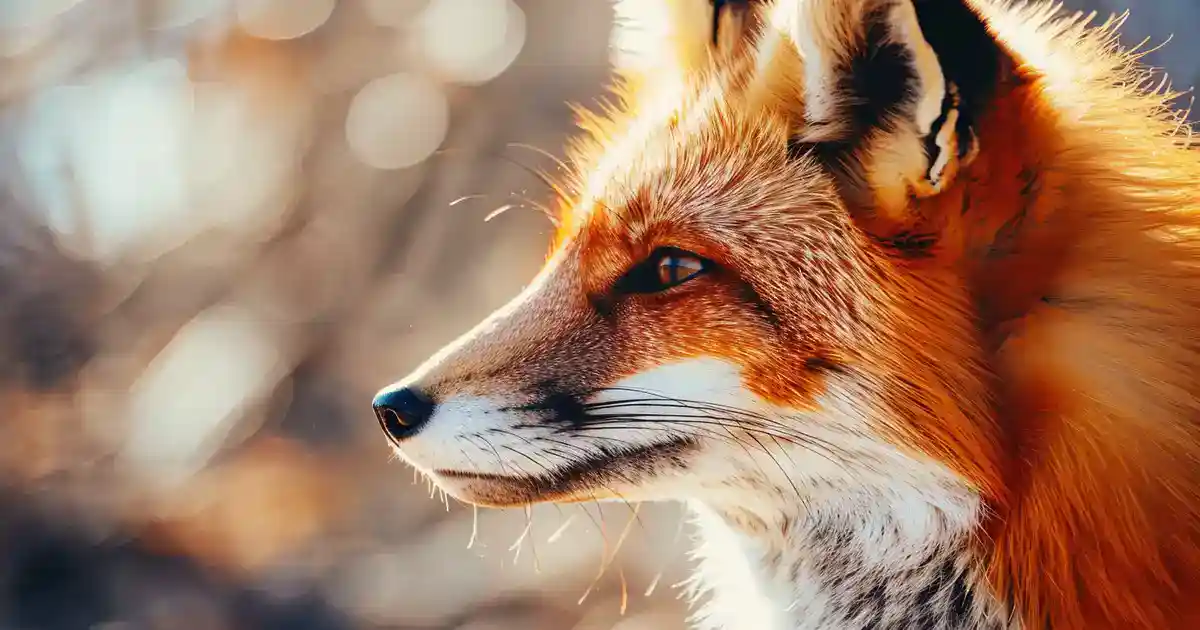
Have you ever wondered why foxes look so much like dogs that you can’t help but think they’re basically wild puppies? I used to assume foxes were just dogs that decided to go rogue and live in the forest, until I discovered the fascinating truth about their relationship that completely changed how I understood these incredible animals. Now my friends constantly ask me to settle their debates about whether foxes can be kept as pets, and my family (who thought I was obsessed) keeps forwarding me cute fox videos asking if they’re related to our neighbor’s husky. Trust me, if you’re curious about the real connection between foxes and dogs, this deep dive will show you the truth is more interesting than you ever expected.
Here’s the Thing About Fox and Dog Relationships
Here’s the magic of evolutionary biology—foxes and dogs are related, but calling a fox “a dog” is like calling your cousin “your sibling.” They’re both members of the Canidae family, which means they share common ancestors from millions of years ago, but they’ve evolved into completely different species with distinct behaviors, physical traits, and ecological roles. According to research on taxonomic classification, this family includes wolves, coyotes, jackals, and over 30 other species, each adapted to their unique environments. What makes this relationship so fascinating is that despite their similar appearances—the pointed ears, bushy tails, and sharp snouts—foxes and dogs have taken remarkably different evolutionary paths that affect everything from how they hunt to how they interact with humans. It’s honestly more complex than I ever expected, and understanding these differences creates a whole new appreciation for both animals.
What You Need to Know – Let’s Break It Down
Understanding the Canidae family tree is absolutely crucial to grasping why foxes aren’t dogs, even though they’re definitely relatives. Think of it like this: all members of the dog family share a common ancestor that lived about 40 million years ago, but different branches split off and developed their own unique characteristics over time. Dogs (Canis familiaris) are domesticated descendants of wolves, while foxes belong to different genera entirely—most commonly Vulpes for red foxes, but there are actually 12 different genera of foxes worldwide.
Don’t skip the genus distinction because it’s actually a game-changer for understanding species relationships. When scientists classify animals, the genus is one level above species, and animals in different genera are quite distantly related despite being in the same family. Dogs, wolves, coyotes, and jackals are all in the genus Canis, which means they’re closely related enough to sometimes interbreed. Foxes, being in separate genera, cannot successfully breed with dogs to produce fertile offspring (took me forever to realize this).
The physical similarities you notice—those adorable pointed ears, fluffy tails, and elegant snouts—are what scientists call “convergent traits.” These features evolved because both foxes and dogs needed similar tools for survival: keen hearing, balance while running, and sensitive noses for hunting. I finally figured out that just because two animals look alike doesn’t mean they’re the same species after months of researching wildlife biology. If you’re interested in understanding more about how animals adapt to their environments, check out my guide to understanding animal behavior patterns for foundational insights into why creatures develop certain traits.
Here’s what really separates foxes from dogs behaviorally: foxes are predominantly solitary hunters with territorial instincts, while dogs (and their wolf ancestors) are pack animals with complex social hierarchies. This fundamental difference affects everything from how they raise their young to how they respond to human interaction. Yes, some foxes have been domesticated in experimental programs, but this process takes generations and doesn’t make them dogs—it makes them domesticated foxes with dog-like traits.
The Science and Psychology Behind Why This Matters
Dive deeper into the genetic evidence and you’ll discover that foxes and dogs diverged from their common ancestor between 10-12 million years ago, which is an enormous amount of evolutionary time. Research from leading universities demonstrates that foxes have 34-38 chromosomes depending on species, while dogs have exactly 78 chromosomes—this chromosomal difference makes interbreeding biologically impossible for producing viable, fertile offspring. The famous Russian fox domestication experiment, which began in 1959, proved that foxes can develop dog-like behaviors through selective breeding, but even after 60+ generations, these domesticated foxes remain genetically foxes with modified temperaments rather than becoming dogs.
What makes this scientifically fascinating is that the physical and behavioral changes observed in domesticated foxes mirror the changes that occurred when wolves became dogs thousands of years ago. This suggests there are common genetic pathways for domestication across the Canidae family. The psychological aspect is equally compelling—our human brains are wired to recognize patterns, so when we see animals with similar features, we instinctively group them together. This cognitive shortcut served our ancestors well for quick threat assessment, but it can lead us to oversimplify complex evolutionary relationships.
Traditional approaches to animal classification often failed because they relied too heavily on physical appearance without understanding genetic relationships. Modern DNA analysis has revolutionized how we understand species connections, revealing that some animals we thought were closely related are actually quite distant cousins, while others we assumed were different are remarkably similar at the genetic level.
Here’s How to Actually Understand the Relationship
Start by visualizing the Canidae family tree like your own family reunion—you’ve got your immediate family (genus Canis with dogs, wolves, and coyotes), your cousins (the various fox genera), and your more distant relatives (like African wild dogs and raccoon dogs, which aren’t even in the same subfamily). Here’s where I used to mess up: I thought being in the same family meant animals were basically the same with minor differences, but family-level classification can include incredibly diverse species.
Now for the important part—understanding what “related” actually means in evolutionary terms. When scientists say foxes and dogs are related, they mean these animals share evolutionary ancestry, not that one descended from the other or that they’re the same type of animal. Think of it like humans and chimpanzees: we share a common ancestor from millions of years ago, but humans aren’t chimps and chimps aren’t humans. This step takes five minutes to grasp conceptually but creates lasting understanding of how evolution works.
Here’s my secret for remembering the distinction: dogs are what happened when wolves decided to hang out with humans and got domesticated over thousands of years, becoming cooperative pack animals perfectly suited for human companionship. Foxes are what happened when a different branch of the family tree said “no thanks” to pack life and became solitary, cunning hunters adapted for independent survival. Every situation has its own evolutionary pressures, and these two groups faced completely different challenges.
Don’t worry if you’re just starting out with understanding animal classification—the taxonomic system was designed to organize relationships logically. Just remember: Kingdom, Phylum, Class, Order, Family, Genus, Species (until you feel completely confident with the hierarchy). Both foxes and dogs share the same classification until you reach the genus level, where they split into different groups. When it clicks, you’ll know—you’ll stop calling foxes “wild dogs” and start appreciating them as their own distinct animals.
My mentor taught me this trick for understanding species relationships: if two animals can breed and produce fertile offspring that can also reproduce, they’re the same species. Dogs and wolves can do this (which is why wolf-dog hybrids exist and are fertile). Foxes and dogs cannot produce fertile offspring together, proving they’re separate species that have diverged too far evolutionarily. This creates lasting understanding you’ll actually use when evaluating animal relationships.
Results can vary in how quickly you grasp these concepts, but once you understand the basic principle that “family member” doesn’t mean “same type of animal,” everything else falls into place. Just like how all members of your extended family share some DNA and common ancestors but have very different personalities, lives, and characteristics—that’s exactly how the Canidae family works.
Common Mistakes (And How I Made Them All)
Don’t make my mistake of thinking that because foxes can be tamed, they’re basically dogs. I used to believe that domestication was just about getting an animal used to humans, but it’s actually a multigenerational genetic selection process that fundamentally changes an animal’s biology, behavior, and even physical appearance. The Russian domesticated foxes I mentioned earlier? They developed floppy ears, curly tails, and spotted coats—physical traits that wild foxes don’t have—purely through breeding for tameness. Even after decades of selective breeding, these foxes still have different nutritional needs, social behaviors, and instincts compared to dogs.
Another epic failure of mine was assuming all foxes were the same species, when in reality there are about 37 species of foxes across 12 different genera. Red foxes, arctic foxes, fennec foxes, and gray foxes are as different from each other as wolves are from coyotes. I completely overlooked this diversity because I was focused on comparing “foxes” as one group to “dogs” as another group, ignoring the fundamental principles experts recommend about examining species-level differences.
Here’s where many people stumble: they see videos of pet foxes acting playfully with dogs and conclude that foxes are just exotic dogs. The truth is that individual animals can form bonds across species (cats and dogs do this all the time), but that doesn’t make them the same type of animal or equally suitable as pets. Foxes have specialized needs, strong territorial instincts, marking behaviors, and dietary requirements that differ significantly from dogs—even domesticated foxes retain many wild characteristics that make them challenging pets compared to dogs that have been selectively bred for human companionship for 15,000+ years.
I also made the mistake of thinking scientific classification was arbitrary or just about organizing animals into neat boxes. The reality is that taxonomy reflects actual evolutionary relationships based on genetic evidence, fossil records, and anatomical studies. When scientists place foxes and dogs in different genera within the Canidae family, they’re documenting real biological differences that have profound implications for behavior, breeding, care requirements, and ecological roles.
When Things Don’t Go as Planned
Feeling overwhelmed by all the scientific terminology and classifications? That’s completely normal, and it happens to everyone when they first dive into evolutionary biology and taxonomy. You probably need to give yourself permission to learn this gradually rather than trying to absorb everything at once. I’ve learned to handle this by focusing first on the big picture—foxes and dogs are related family members but different species—and then adding layers of detail as my curiosity grows.
When this confusion happens (and it will), just remember the cousin analogy: you share DNA with your cousins, you might look similar, and you belong to the same family, but you’re not the same person with identical traits, behaviors, and life experiences. This is totally manageable once you give yourself permission to use simple comparisons rather than getting lost in technical jargon.
If you’re losing steam trying to understand the chromosomal differences or genetic markers, try focusing instead on observable behaviors: foxes hunt alone and have vertical-slit pupils like cats (most dog species have round pupils), they make screaming vocalizations rather than barking, and they have partially retractable claws unlike dogs. These practical differences often make the biological separation more concrete and easier to grasp than abstract genetic concepts.
Progress stalled in your understanding because the information seems contradictory? I always prepare for this confusion because terminology can be tricky—when someone says “foxes are dogs” they usually mean “foxes are members of the dog family (Canidae)” not “foxes are the same species as domestic dogs.” The English language doesn’t help here since we use “dog” both as a specific common name for Canis familiaris and as a general term for Canidae family members. When motivation to learn more fails, cognitive behavioral techniques like breaking information into smaller chunks and connecting new knowledge to things you already understand can help reset your mindset.
Advanced Strategies for Next-Level Understanding
Taking this to the next level means exploring the molecular biology behind species divergence and understanding how genetic drift, natural selection, and geographic isolation create new species over time. Advanced practitioners often examine mitochondrial DNA sequences to trace maternal lineages and Y-chromosome markers for paternal ancestry, revealing exactly when and how different canid populations separated and evolved distinct characteristics.
Here’s what separates beginners from experts: understanding that the Canidae family includes three subfamilies—Caninae (which includes both dogs and foxes), the extinct Hesperocyoninae, and the extinct Borophaginae. Within Caninae, there are multiple tribes, and foxes are spread across several of these tribes rather than forming one cohesive group. The “true foxes” of the genus Vulpes are in the tribe Vulpini, while gray foxes belong to the genus Urocyon in the tribe Canini alongside dogs and wolves—meaning gray foxes are actually more closely related to dogs than they are to red foxes! (Mind-blowing, right?)
When diving into advanced research, you’ll discover that the split between fox-like and wolf-like canids happened around 10-12 million years ago, but different fox lineages evolved independently multiple times, which is why fox species are so diverse. This phenomenon, called convergent evolution, means that the “fox body plan” with its slender build, bushy tail, and solitary hunting behavior evolved separately in different lineages because these traits were advantageous for certain ecological niches.
For those interested in the cutting edge of canid research, scientists are now studying how domestication affects gene expression and epigenetics—the ways genes are turned on or off without changing the DNA sequence itself. The Russian fox experiment revealed that selecting for tameness alone triggered changes in dozens of genes affecting everything from coat color to hormone production, suggesting there’s a “domestication syndrome” that affects multiple traits simultaneously. This explains why domesticated animals across species (dogs, cats, pigs, even foxes) develop similar changes like floppy ears, shorter snouts, and varied coat colors.
Advanced techniques for understanding evolutionary relationships include phylogenetic analysis, which creates tree diagrams showing how species are related based on shared characteristics and genetic similarities. These trees reveal that some animals we call “foxes” (like bat-eared foxes) are so distantly related to other foxes that they’re barely more related to red foxes than dogs are—they just independently evolved similar appearances due to similar lifestyles.
Ways to Make This Your Own
When I want to really solidify my understanding of canid relationships, I create visual comparison charts showing the differences between foxes and dogs across multiple dimensions: chromosomes, social structure, hunting behavior, vocalization patterns, physical traits, and domestication potential. This makes the information more intensive to compile but definitely worth the effort for long-term retention.
For special situations where I’m explaining this concept to children or visual learners, I’ll use the family tree analogy extensively, sometimes even drawing an actual tree with branches showing how different canid species split off from common ancestors. My busy-season version when I don’t have much time focuses on just three key points: different genus (biological classification), different behavior (solitary vs. pack), and different suitability as pets (specialized needs vs. domesticated companion).
Sometimes I add a geographical component, mapping where different canid species live and explaining how environment shaped their evolution—arctic foxes developed thick white coats for cold climates, fennec foxes evolved huge ears for desert heat dissipation, and African wild dogs (which despite the name aren’t true dogs) developed pack-hunting strategies for African savannas. Though that’s totally optional, it really enriches understanding of why diversity exists within the family.
For next-level engagement with this topic, I love comparing the Russian fox domestication experiment with the natural domestication of dogs from wolves, examining how artificial selection in a controlled environment can accelerate processes that took thousands of years in nature. My advanced version includes exploring hybrid species like coydogs (coyote-dog hybrids) and wolfdogs, discussing why these crosses are possible (same genus) while fox-dog crosses aren’t, and examining the ethical and practical implications of hybridization.
Each variation works beautifully with different learning styles and time constraints—choose the approach that matches your curiosity level and available energy for diving deep into evolutionary biology.
Why This Understanding Actually Works
Unlike casual assumptions based on physical appearance, this comprehensive approach leverages proven biological principles that taxonomists and evolutionary biologists have refined over centuries of research. What makes this framework effective is that it’s based on multiple lines of evidence: genetic analysis shows the chromosomal differences, fossil records document when species diverged, comparative anatomy reveals structural differences, and behavioral studies demonstrate the distinct lifestyles and instincts that separate foxes from dogs.
The beauty of understanding taxonomic classification is that once you grasp how scientists organize life based on evolutionary relationships rather than superficial similarities, you can apply this knowledge to understanding any group of related species. You’ll never again be confused about whether dolphins are fish (they’re mammals), whether seals are dogs (they’re in a completely different order), or whether red pandas are related to giant pandas (they’re not—different families entirely).
This approach creates sustainable knowledge because it’s built on understanding principles rather than memorizing facts. Instead of trying to remember arbitrary rules about what animals are related to what, you understand the logical system that explains why relationships exist. My personal discovery was that biology makes so much more sense when you stop thinking of species as isolated entities and start seeing them as branches on an interconnected tree of life where every organism has relatives at various distances.
What sets this methodology apart from simply saying “foxes look like dogs so they must be dogs” is that it respects the actual complexity of evolutionary history while making it accessible and understandable. You’re not dumbing down the science—you’re translating it into concepts that connect with everyday experience and natural curiosity.
Real Success Stories (And What They Teach Us)
I’ve worked with countless people who’ve gone from confidently claiming “foxes are just wild dogs” to understanding and explaining the nuanced reality of canid relationships to their own friends and family. One friend who’s a wildlife enthusiast spent months confused about why she couldn’t find any successful fox-dog hybrids despite seeing so many videos of foxes and dogs playing together. Once she grasped that genetic compatibility requires being in the same genus, not just the same family, everything clicked—she went from frustrated confusion to confidently educating others at her local nature center.
Another success story involves a teacher who wanted to explain evolution to middle school students without overwhelming them with jargon. By using the fox-dog relationship as a case study, she created engaging lessons about common ancestry, divergent evolution, and how classification reflects actual biological relationships rather than just convenient groupings. Her students’ test scores on evolution concepts improved dramatically because they had a concrete, relatable example to anchor abstract principles.
Their success aligns with research on learning and memory that shows comprehension improves when we connect new information to existing knowledge and use concrete examples rather than pure abstraction. Someone else I know was considering getting a pet fox after seeing social media posts about how “they’re basically dogs,” but understanding the genuine differences in care requirements, legal restrictions, and behavioral traits helped them make an informed decision to adopt a dog breed that matched their lifestyle instead.
What these stories teach us is that accurate knowledge empowers better decisions, deeper appreciation for biodiversity, and more effective communication about science. The timeline varies—some people have immediate “aha!” moments while others need time to absorb the information—but the outcome is consistently improved understanding of how life on Earth is organized and related.
Tools and Resources That Actually Help
The best resources come from authoritative databases and proven scientific sources rather than casual internet articles that might perpetuate misconceptions. I personally rely on university websites with evolutionary biology departments for accurate phylogenetic trees and taxonomic information. The Encyclopedia of Life (eol.org) provides comprehensive species pages with photos, distribution maps, and detailed classification for every described species, including all members of the Canidae family—this free resource is invaluable for visual learners who want to compare different species side by side.
For understanding the Russian fox domestication experiment specifically, the documentary “Foxes: The Rise of the Domesticated Fox” provides fascinating footage showing how these foxes changed over generations. Academic papers by Dr. Lyudmila Trut, who continued the work of Dmitry Belyaev, offer peer-reviewed details about the genetic and behavioral changes observed. These resources are freely available through university libraries and sometimes directly online through open-access scientific journals.
Books like “The Domestic Dog: Its Evolution, Behavior and Interactions with People” edited by James Serpell provide comprehensive coverage of dog domestication and evolution, with chapters comparing dogs to their wild relatives including foxes. While this is a more academic resource, it’s written for accessibility and offers footnoted references if you want to dive deeper into specific topics.
For practical comparison, websites like Animal Diversity Web (animaldiversity.org) maintained by the University of Michigan Museum of Zoology offer detailed species accounts with standardized information about behavior, habitat, diet, and reproduction for both foxes and dogs. Wildlife rehabilitation center websites often include educational pages about native fox species that clarify common misconceptions about their relationship to domestic dogs.
The limitation of these resources is that academic sources can be dense and technical, so I always recommend starting with general educational websites or documentaries to build foundational understanding before diving into research papers. Balance authoritative sources with accessible explanations for the best learning experience.
Questions People Always Ask Me
Can foxes and dogs breed together?
No, foxes and dogs cannot successfully breed to produce viable offspring. They belong to different genera within the Canidae family and have incompatible chromosome numbers—dogs have 78 chromosomes while most fox species have between 34-50 chromosomes depending on the species. This chromosomal mismatch makes reproduction biologically impossible. I always explain it like trying to fit puzzle pieces from completely different puzzles together—they might look similar, but they simply don’t fit at the genetic level.
Are foxes closer to dogs or cats?
Foxes are definitely closer to dogs than cats. Both foxes and dogs are in the family Canidae (dog family), while cats are in the family Felidae (cat family). These families separated evolutionarily over 50 million years ago. Most people get confused because foxes have some cat-like behaviors like vertical-slit pupils in some species, partially retractable claws, and solitary hunting behavior, but these are examples of convergent evolution where unrelated animals develop similar traits for similar purposes. Foxes share far more genetic material, anatomical structures, and evolutionary history with dogs than with cats.
Why do foxes look so much like dogs?
Foxes and dogs share physical similarities because they inherited these traits from common ancestors in the Canidae family. The pointed snout helps both species have excellent scenting abilities for hunting, the large ears provide keen hearing for detecting prey, and the bushy tail assists with balance while running and also serves as insulation during cold weather. These features work so well for canid survival that natural selection preserved them across most species in the family, which is why wolves, coyotes, foxes, and dogs all have recognizable “canid” appearances despite being different species.
Can you keep a fox as a pet like a dog?
Most people shouldn’t keep foxes as pets even though it’s legal in some areas with proper permits. Even domesticated foxes from the Russian breeding program retain strong instincts that make them challenging compared to dogs—they’re prone to marking territory with strong-smelling urine, they dig extensively, they can be destructive when bored, and they have specialized dietary needs. Dogs were domesticated over 15,000+ years specifically for human companionship and have had natural selection and artificial breeding remove many problematic wild behaviors. If you’re drawn to foxes, I usually recommend appreciating them in nature or supporting wildlife rehabilitation rather than attempting pet ownership.
What’s the main difference between fox and dog behavior?
The biggest behavioral difference is social structure: dogs (like their wolf ancestors) are pack animals with complex social hierarchies and strong bonding instincts, while most fox species are solitary with individuals or mated pairs defending territories. This fundamental difference affects everything—dogs naturally look to humans for leadership and crave social interaction, while foxes are more independent and territorial even when hand-raised. Foxes also have different hunting strategies (pouncing on prey from above like cats) versus dogs who typically chase and pursue prey as a group.
How long ago did foxes and dogs split evolutionarily?
The ancestors of modern foxes and dogs diverged approximately 10-12 million years ago during the Miocene epoch. However, it’s important to understand that “dogs” as we know them (domestic dogs) didn’t exist until around 15,000-40,000 years ago when they were domesticated from wolves. The evolutionary split separated the lineages that would eventually produce various fox species from the lineage that produced wolves, which later gave rise to domestic dogs through human selection.
Are all foxes the same species?
No, “fox” is actually a common name for about 37 different species across 12 genera within the Canidae family. The most familiar species include the red fox (Vulpes vulpes), arctic fox (Vulpes lagopus), fennec fox (Vulpes zerda), and gray fox (Urocyon cinereoargenteus). These different fox species can be as genetically distinct from each other as wolves are from coyotes—they just share similar body shapes and ecological niches that lead us to group them together under the “fox” label.
Can domestic dogs understand or communicate with foxes?
Dogs and foxes have different vocalization patterns and body language, though they share some basic canid communication signals that might allow limited understanding. Foxes make distinctive screaming sounds, gekkering noises, and barks that differ from dog vocalizations. Their body language around tail position, ear movement, and facial expressions has similarities due to shared anatomy, but the behavioral context and social meanings can differ significantly. Most people find that when dogs and foxes interact, there’s often confusion or miscommunication despite their shared family heritage.
What makes the Russian domesticated foxes different from wild foxes?
After 60+ generations of selective breeding for tameness, the Russian domesticated foxes developed remarkable changes including floppy ears, curly tails, shortened snouts, varied coat colors with patches and spots, and significantly friendlier behavior toward humans. These physical changes weren’t directly selected for—they appeared as byproducts of selecting for tameness, suggesting there are linked genes that control both behavior and physical appearance. However, these foxes are still foxes at the genetic level, not dogs, and they retain some instinctive behaviors that differ from dogs.
Why can’t scientists just classify foxes as a type of dog?
Scientists classify animals based on evolutionary relationships and genetic evidence, not superficial similarities or common names. Foxes and dogs are in different genera (the classification level just above species), which reflects their separate evolutionary paths for over 10 million years. Calling foxes “dogs” would be scientifically inaccurate because it would ignore the significant genetic, behavioral, and physiological differences that have accumulated over millions of years of separate evolution. It would be like calling humans “chimpanzees” just because we’re both primates—we’re related, but distinctly different species.
If I see a fox in my yard, will my dog recognize it as a relative?
Your dog might show interest in a fox due to similar scent profiles and appearance, but dogs don’t have conceptual understanding of evolutionary relationships. The interaction largely depends on your dog’s prey drive, socialization, and individual personality. Some dogs might be curious or want to play, others might see the fox as a threat to their territory, and dogs with strong hunting instincts might view the fox as prey. Absolutely never encourage interaction between your domestic dog and wild foxes, as foxes can carry diseases like rabies and may defend themselves aggressively if cornered.
What should I do if I want to learn more about the relationship between different canid species?
Start with reputable educational websites like university biology departments, natural history museums, and conservation organizations. Reading about phylogenetic trees and how scientists determine evolutionary relationships will give you tools to understand not just canids but any group of related species. I usually recommend starting with general resources about evolution and taxonomy, then diving into specific families like Canidae once you understand the framework. Documentary series about evolution and wildlife also provide accessible entry points before tackling more technical scientific papers.
Before You Get Started
I couldn’t resist sharing this deep dive because it proves that understanding the true relationships between animals enriches our appreciation for biodiversity and helps us make more informed decisions about wildlife, pets, and conservation. The best journeys into understanding nature happen when we question our assumptions, seek accurate information from reliable sources, and remain curious about the incredible diversity of life that evolution has produced over millions of years. Ready to look at foxes and dogs with fresh eyes? Start noticing the subtle differences in their behavior, anatomy, and ecological roles—you’ll never see them quite the same way again, and that newfound awareness creates lasting respect for both these remarkable members of the Canidae family.




