
Let Me Tell You Why This Works
Ever wonder why training sessions sometimes feel like you’re bribing your dog with the same boring treats over and over? I discovered this game-changing combination when my 8-year-old Golden Retriever Amber started ignoring his usual training rewards, acting like I was offering him cardboard instead of motivation. This crunchy apple and carrot recipe completely transformed our training sessions into tail-wagging success stories. Here’s the thing—I used to buy those expensive tiny training treats from the pet store until I realized I could make something way more exciting (and way more cost-effective) right in my kitchen. Now Amber literally perks up his ears when he hears me say “training time,” and even my dog trainer was amazed at how much more focused he became once I started using these fresh, crispy rewards.
What Makes This So Tail-Wagging Good
Here’s the magic behind these training powerhouses: fresh grated apple delivers natural sweetness and fiber that dogs go absolutely crazy for, while carrots add that satisfying crunch plus beta-carotene for eye health and immune support. What makes this irresistible to pups is how the natural peanut butter binds everything together with that nutty richness dogs instinctively love, creating the perfect high-value reward that keeps their attention during training. It’s honestly so much more motivating than store-bought options, plus you know exactly what quality ingredients are rewarding your furry family member’s hard work (no artificial flavors or questionable preservatives).
What You’ll Need (And My Dog-Safe Shopping Tips)
Fresh apples are absolutely crucial here—I’m talking crisp, sweet varieties like Gala or Honeycrisp that grate easily and won’t turn brown quickly. Don’t skip the quality on this ingredient because dogs can definitely tell the difference between fresh, sweet apples and mealy ones. Remove all seeds and core completely since apple seeds contain compounds that aren’t safe for dogs. I always grab an extra apple because Amber somehow knows when training treat prep is happening and expects his “quality control” samples.
Good carrots should be firm and bright orange for maximum beta-carotene content. I finally learned to use regular carrots rather than baby carrots (learned this after my vet explained how much better the fiber content is in full-sized carrots). Grate them fresh for the best texture and nutrition—pre-shredded just doesn’t have the same crunch factor.
Whole wheat flour provides the perfect binding structure and complex carbohydrates for sustained energy during long training sessions. Yes, whole wheat is completely safe for most dogs and actually provides more nutrients than white flour. Make sure it’s plain whole wheat with no added preservatives.
Natural peanut butter is your flavor powerhouse—but this is crucial: make sure it’s xylitol-free because xylitol is extremely toxic to dogs. I always check the ingredient list twice and stick to brands that only contain peanuts and maybe salt. The natural oils help bind everything together while adding that irresistible taste that makes training rewards actually rewarding.
One fresh egg helps everything stick together and adds high-quality protein that supports muscle development. Yes, cooked eggs are completely safe for dogs and actually provide essential amino acids.
For more information about training treat safety and ingredients, check out this comprehensive guide from Association of Professional Dog Trainers.
Let’s Make This Pup-Perfect Treat Together
Preheat your oven to 350°F and line a baking sheet with parchment paper—here’s where I used to mess up homemade training treats by forgetting the parchment and spending forever scraping stuck bits off the pan. Trust me, this step saves your sanity during cleanup.
Grate your apple and carrot into small, uniform pieces—about the size of rice grains works perfectly for training treats. Don’t worry about getting them perfectly uniform; a little variation actually creates interesting texture differences that keep dogs engaged during training sessions.
Mix your grated apple, grated carrot, whole wheat flour, peanut butter, and egg in a large bowl until everything’s well combined and forms a workable dough. The mixture should smell like pure training motivation at this point, and if your pup is anything like Amber, they’ll be doing their best “attentive student” pose from across the kitchen.
Now for the fun part that always gets my Golden Retriever’s training brain activated—roll out the dough on a floured surface to about quarter-inch thickness. Here’s my secret for perfect training treats: cut them into small, uniform pieces about the size of your pinky nail so they’re quick to chew and won’t interrupt the flow of training sessions.
Place your tiny treats on the parchment-lined baking sheet, leaving just a little space between each one. The aroma at this point is basically pure dog motivation—that sweet apple scent mixed with peanut butter richness and fresh carrot earthiness that makes even the most distracted dogs pay attention.
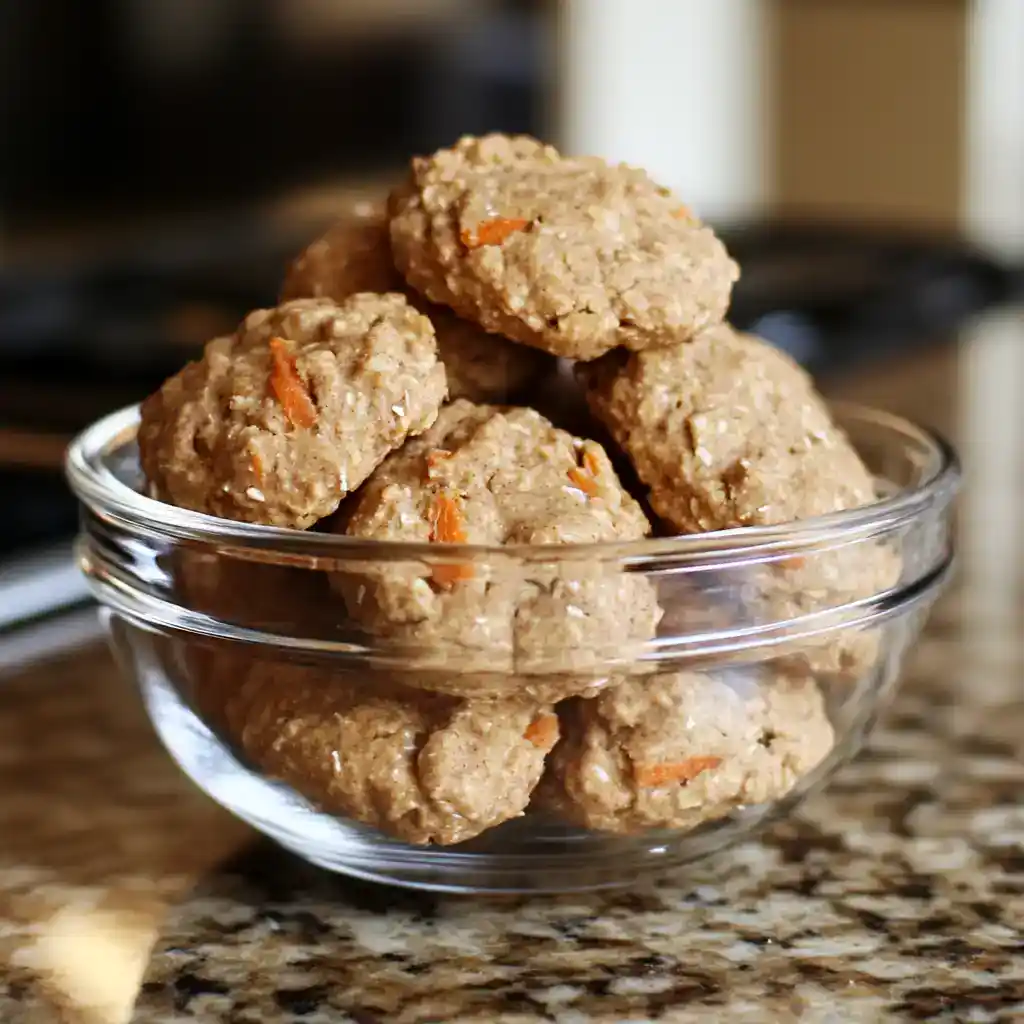
Bake for 20-25 minutes until they’re crispy and lightly golden. Keep an eye on those edges because training treats need to be crunchy enough to provide satisfying feedback but not so hard they become a choking hazard. Every dog has different preferences, but Amber loves these when they’re crispy throughout with just enough chew to be interesting.
The hardest part for both you and your eager student: let these cool completely before your first training session. Hot treats can burn mouths and completely derail a good training momentum.
For more training-focused homemade dog treat recipes, try our Chicken and Rice Reward Bites that use similar quick-reward principles.
When Things Go Sideways (And They Will)
Dough seems too sticky to roll out properly? You probably have extra-juicy apples (which actually means better flavor). Just work in a bit more whole wheat flour, a tablespoon at a time, until it’s manageable. That’s totally normal with fresh fruit treats, and it happens to everyone learning this recipe.
If your treats turned out softer than expected, don’t panic—they’re still perfectly safe and many dogs actually prefer the gentler texture for training. This usually means they needed a few more minutes in the oven or the dough had more moisture than usual. When this happens (and it will), I’ve learned to just store them in the refrigerator where they’ll firm up naturally.
Treats crumbling when you try to cut them? This typically means the mixture needed more binding—next time add an extra tablespoon of peanut butter or a beaten egg white. If your dog seems uninterested during training like Amber occasionally does, try making them even smaller—sometimes it’s just about finding the perfect bite size for quick rewards.
Ways to Mix It Up
When Amber needs extra brain-boosting power for complex training sessions, I’ll add a tablespoon of finely chopped blueberries for antioxidants that support cognitive function. This makes them extra beneficial for mental stimulation work but adds a slightly different flavor profile that most dogs love.
For basic obedience training, I’ll make micro versions about the size of a pea—perfect for rapid-fire rewards during sit-stay-come sequences. My high-value version substitutes almond butter for peanut butter (make sure it’s xylitol-free) when I need extra motivation for challenging behaviors.
Sometimes I add a pinch of dried parsley for fresh breath benefits during close-contact training sessions—totally optional but helpful when you’re working on heel commands and your dog will be right next to you.
What Makes This Recipe Special
This technique combines natural sweetness that dogs crave with the satisfying crunch that provides immediate sensory feedback during training. The apple provides quick energy and fiber for sustained focus, while carrots deliver beta-carotene for overall health and that satisfying texture that keeps dogs engaged.
What sets this apart from commercial training treats is the size control and freshness factor—you can make them exactly the right size for your dog and training style, plus they’re made with whole food ingredients at their nutritional peak. My 8-year-old version of this recipe has become our go-to for maintaining Amber’s training motivation and focus, especially since senior dogs benefit from high-value rewards that keep their minds sharp.
Questions I Always Get
Can puppies use these apple carrot training treats?
Absolutely! The small size and gentle ingredients are perfect for young dogs learning basic commands. Just make them extra tiny for puppy mouths and introduce gradually to avoid training session tummy upset.
How long do these training treats stay fresh?
I store these in an airtight container at room temperature for up to two weeks. They actually maintain their crunch better than most homemade treats, which is crucial for training effectiveness.
What if my dog has peanut allergies?
You can substitute the peanut butter with sunflower seed butter or plain Greek yogurt. Just make sure whatever you use is xylitol-free and dog-safe.
Can I make these treats ahead of time for training classes?
Definitely! I often make a big batch before starting a new training program. They’re actually crunchier after sitting overnight, which dogs seem to prefer for training rewards.
How many treats should I bring to a training session?
For Amber’s size, I usually bring about 20-30 small treats per 30-minute session. It’s better to have too many than run out mid-training and lose momentum.
What’s the best way to store training treats for on-the-go use?
Small containers or treat pouches work great. These don’t crumble easily, so they travel well to training classes or outdoor sessions.
Are these effective for high-distraction training environments?
Perfect for challenging situations! The fresh apple and peanut butter combination creates a high-value reward that can compete with environmental distractions.
Before You Head to the Kitchen
I couldn’t resist sharing this because watching Amber’s training progress accelerate with these fresh, motivating treats has been one of my favorite dog-parent victories. The best training days are when you know you’re rewarding your furry family member’s hard work with something that’s not just delicious, but actually supporting their health and learning. Your pup deserves training treats that are as dedicated to success as they are, and honestly, seeing that focused attention followed by the perfect sit-stay-come sequence makes every minute of apple-grating worth it.
Print
Apple Carrot Training Treats
Description
Perfectly-sized training rewards that combine crispy apples with crunchy carrots—ideal for keeping your pup motivated and focused during training sessions while supporting their health.
Prep Time: 25 minutes | Cook Time: 20-25 minutes | Total Time: 50 minutes | Makes: 60 training-sized treats
Ingredients
- 1 cup grated apple (remove all seeds and core, completely safe for dogs)
- 1 cup grated carrot (fresh-grated works best for crunch)
- 1 1/2 cups whole wheat flour (provides structure and sustained energy)
- 1/4 cup natural peanut butter (xylitol-free only—check ingredients twice)
- 1 large egg (adds protein and helps bind everything together)
Instructions
- Preheat your oven to 350°F and line a baking sheet with parchment paper—essential for easy removal and cleanup after training treat prep.
- Grate your apple and carrot into small, rice-grain-sized pieces for perfect training treat texture that won’t interrupt session flow.
- Mix the grated apple, grated carrot, whole wheat flour, peanut butter, and egg in a large bowl until you get a workable dough that smells like training motivation.
- Roll out the dough on a floured surface to about 1/4-inch thickness and cut into training-sized pieces about the size of your pinky nail for quick rewards.
- Place treats on your prepared baking sheet and bake for 20-25 minutes until crispy and lightly golden—perfect for providing satisfying crunch feedback.
- Let cool completely before your first training session (patience here prevents burned tongues and maintains training momentum).
Notes:
- Always let cool completely—these are meant for rapid-fire rewards, so they need to be safe temperature
- Cut uniform sizes for consistent training rewards that don’t vary in value
- Amber responds best when these are crispy throughout for satisfying texture feedback
Storage Tips:
- Store in an airtight container at room temperature for up to two weeks
- These travel well to training classes without crumbling or losing crunch
- Perfect size for treat pouches and on-the-go training sessions
What Makes This Recipe Special: These treats deliver immediate motivation through natural apple sweetness and satisfying carrot crunch, while providing sustained energy for focus during longer training sessions. Much more effective than processed training treats because of the fresh, whole food ingredients that dogs find irresistible.
Mix It Up (Training-Specific Variations):
Brain-Boosting Blueberry: Add 1 tablespoon finely chopped blueberries for extra antioxidants that support cognitive function during complex training
Micro Training Bites: Make pea-sized versions for rapid-fire basic obedience work without overfeeding during sessions
Fresh Breath Training: Add a pinch of dried parsley for close-contact training sessions where fresh breath matters (perfect for older dogs like my 8-year-old Amber)




