
Can We Talk About This Dog-Approved Winner?
Ever wonder why your dog gets more excited about long-lasting chews than quick treats? I used to think jerky-making was too complicated until I discovered this duck and sweet potato recipe that made my 8-year-old Golden Retriever Amber settle into the most satisfying two-hour chewing session I’d ever seen, looking absolutely blissful while working through every single piece.
Here’s the thing about homemade jerky—when you combine novel protein duck with naturally sweet potatoes and slow-dehydrate them to perfection, you’re creating what’s basically premium chew therapy that provides entertainment and nutrition for hours. Plus, watching Amber strategically decide which piece to tackle next honestly makes me think he’s developed a sophisticated jerky-appreciation system. No preservatives, no mystery ingredients, just pure, concentrated goodness that keeps dogs happily occupied.
Here’s the Magic Behind This Dog Recipe
The secret to creating chews that keep dogs engaged for hours while actually benefiting their health is this perfect combination of lean protein and complex carbs slowly dehydrated to concentrate all the flavors. Here’s what makes this work—duck provides novel protein that’s ideal for dogs with chicken or beef sensitivities, while sweet potatoes offer sustained energy and natural sweetness that dogs absolutely love. What makes this irresistible to pups is that intensely concentrated flavor combined with that satisfying, tough texture that gives their jaws the workout they crave. It’s honestly more engaging and nutritious than any commercial jerky treats you can find.
What You’ll Need (And My Dog-Safe Shopping Tips)
Lean duck breast is absolutely crucial for the best jerky texture and safety—I always get fresh duck breast from specialty butchers or order it online, making sure it’s boneless and skinless for easy slicing (learned this after trying to work with whole duck and creating way too much work for myself). The meat should be deep red and fresh-smelling.
Good sweet potatoes need to be firm and unblemished for even dehydration. I always grab the orange-fleshed ones because they’re naturally sweeter and more nutritious than white varieties. They should feel solid and heavy for their size, indicating good moisture content for proper jerky texture.
Coconut oil should be unrefined and organic when possible—just a tablespoon helps the sweet potatoes dehydrate evenly while adding healthy fats that support coat shine. I always grab extra because Amber somehow knows when I’m making his jerky and starts his patient waiting routine by the kitchen.
The key to perfect jerky is having a sharp knife for consistent slicing and plenty of patience for the low, slow dehydration process that concentrates all those amazing flavors.
For more information about novel proteins and food sensitivities in dogs, check out this comprehensive guide from VCA Animal Hospitals.
Let’s Make This Pup-Perfect Treat Together
Preheat your oven to 200°F—this low temperature is crucial for proper dehydration rather than cooking, which creates the perfect jerky texture. Line a baking sheet with parchment paper. Here’s where I used to mess up jerky making—I’d try to rush with higher temperatures and end up with cooked meat instead of properly dehydrated jerky that lasts and satisfies.
Start by slicing your duck breast into thin, uniform strips about 1/4 inch thick—consistency is key for even dehydration. Cut against the grain for easier chewing, especially important for dogs who like to really work their treats. The thinner you slice, the faster they’ll dehydrate, but thicker pieces provide longer chewing sessions.
Now for the sweet potato preparation (Amber will start getting excited when he sees me pulling out the sweet potatoes because he knows what’s coming)—peel and slice them into rounds about 1/8 to 1/4 inch thick. Thinner slices will get crispy, while thicker ones stay chewy, so mix it up based on your dog’s preferences.
Toss your sweet potato slices with coconut oil in a bowl until they’re lightly coated—this helps them dehydrate evenly and adds those healthy fats that make coats shine. My vet taught me this trick about oil helping vegetables maintain better texture during long dehydration.
Arrange both duck strips and sweet potato slices on your prepared baking sheet in single layers, making sure nothing overlaps. Overlapping pieces won’t dehydrate properly and can create soggy spots that spoil faster. Every Golden Retriever owner I know says proper spacing is what creates that perfect chewy texture dogs love.
Bake for 2-3 hours, checking every hour and flipping pieces halfway through for even dehydration. The duck should feel tough and leathery when done, while sweet potatoes should be firm but pliable. Don’t worry if you’re new to making jerky—these are pretty forgiving, and you can always bake longer if they’re not quite ready.
Make sure everything is completely cool before storing or serving (learned that lesson when I stored warm jerky and created condensation that ruined a whole batch). They’ll continue to firm up slightly as they cool to room temperature.
For more long-lasting homemade dog chew ideas, try our Dehydrated Chicken and Pumpkin Strips that are perfect for extended chewing sessions.
When Things Go Sideways (And They Will)
Jerky came out too soft and won’t keep well? You probably needed longer dehydration time or thinner slicing—this happens when pieces are too thick or if your oven runs cooler than the setting indicates. That’s totally fixable by putting them back in for another 30-60 minutes until they reach proper toughness.
Sweet potatoes turned out either too crispy or too chewy? This usually comes down to slicing thickness and personal dog preferences. Some dogs love the crispy chips while others prefer chewy strips—next time, make a variety of thicknesses to see what your pup prefers.
When pieces don’t dehydrate evenly (and it happens to everyone), that’s usually because of uneven slicing or overlapping during baking. Just separate the pieces that need more time and continue dehydrating them while using the finished ones right away.
If your dog seems overwhelmed by the intense flavors at first like some dogs do with concentrated jerky, try offering smaller pieces to let them adjust—the dehydration process really concentrates those duck and sweet potato flavors.
Ways to Mix It Up
When Amber needs extra joint support during his more active periods, I’ll lightly dust the sweet potato slices with a tiny pinch of turmeric before dehydrating for natural anti-inflammatory benefits. This creates a slightly different flavor profile but doesn’t affect the jerky appeal.
For special occasions or when we’re traveling, I’ll make extra-thin slices that dehydrate into portable chips perfect for hiking or car trips. Sometimes I’ll add a light sprinkle of dried parsley to the sweet potatoes, though that’s totally optional for my breath-freshening jerky version.
My 8-year-old senior dog version for Amber includes slightly thicker sweet potato slices that stay more tender for aging teeth while still providing that satisfying chewing experience he loves so much.
The Secret Behind This Dog-Approved Recipe
What makes this jerky special is how the slow dehydration process concentrates all the natural flavors while creating that perfect texture that provides genuine chewing satisfaction. Most commercial jerky treats are loaded with preservatives and artificial flavors, but this method preserves the natural taste and nutrition while creating treats that can last for weeks when stored properly.
The combination of novel protein and complex carbohydrates provides sustained energy and nutrition rather than empty chewing calories. Plus, the long chewing time helps with dental health by naturally scraping teeth while keeping dogs mentally stimulated and satisfied.
Questions I Always Get
Can dogs with food allergies eat this duck jerky?
Perfect for dogs with common protein allergies! Duck is considered a novel protein that most dogs haven’t been exposed to, making it ideal for elimination diets or dogs with chicken, beef, or lamb sensitivities. Always introduce new proteins gradually and check with your vet first.
How long does homemade dog jerky stay fresh?
Most homemade jerky stays fresh for up to three weeks stored in an airtight container at room temperature, or up to two months in the refrigerator. The key is making sure it’s completely dehydrated and stored in a moisture-free environment to prevent mold.
What if my dog finishes jerky too quickly?
You can make thicker pieces or give smaller portions to extend the chewing time. Some dogs are aggressive chewers while others savor slowly—adjust the thickness and portion size based on your dog’s chewing style and needs.
Can I use a food dehydrator instead of the oven?
Absolutely! A food dehydrator actually works better for consistent results. Follow the same slicing techniques but use your dehydrator’s recommended settings for meat and vegetables, usually 135-145°F for 4-6 hours.
How many pieces should I give my dog per day?
Jerky is quite rich and filling, so I give Amber 2-3 pieces per day depending on the size. These are substantial chews that should be counted as part of their daily food intake rather than just treats, especially for smaller dogs.
What’s the best way to store homemade jerky?
Store in airtight containers at room temperature for up to three weeks, or refrigerate for longer storage. The key is keeping moisture out to prevent spoilage. I use glass jars with tight-fitting lids for the best results.
Are these jerky treats safe for senior dogs?
Perfect for senior dogs! Amber being 8 years old absolutely loves these long chewing sessions, and the softer sweet potato pieces are gentle on older teeth while still providing good jaw exercise. The concentrated nutrition is especially beneficial for aging dogs.
Before You Head to the Kitchen
I couldn’t resist sharing this recipe because watching Amber’s pure contentment during his jerky chewing sessions has been absolutely wonderful. The best jerky days are when you know you’re giving your furry family member hours of satisfying entertainment while providing concentrated nutrition that actually benefits their health.
Your pup deserves chewing experiences that keep them engaged and happy, and honestly, seeing their strategic approach to working through these homemade jerky pieces makes every hour of dehydration time completely worth it.
Print
Duck and Sweet Potato Jerky
Description
Long-lasting, concentrated jerky combining novel protein duck with sweet potatoes—the perfect premium chews for extended satisfaction and nutrition!
Prep Time: 15 minutes | Dehydrate Time: 2-3 hours | Total Time: 3+ hours | Makes: About 15-20 jerky pieces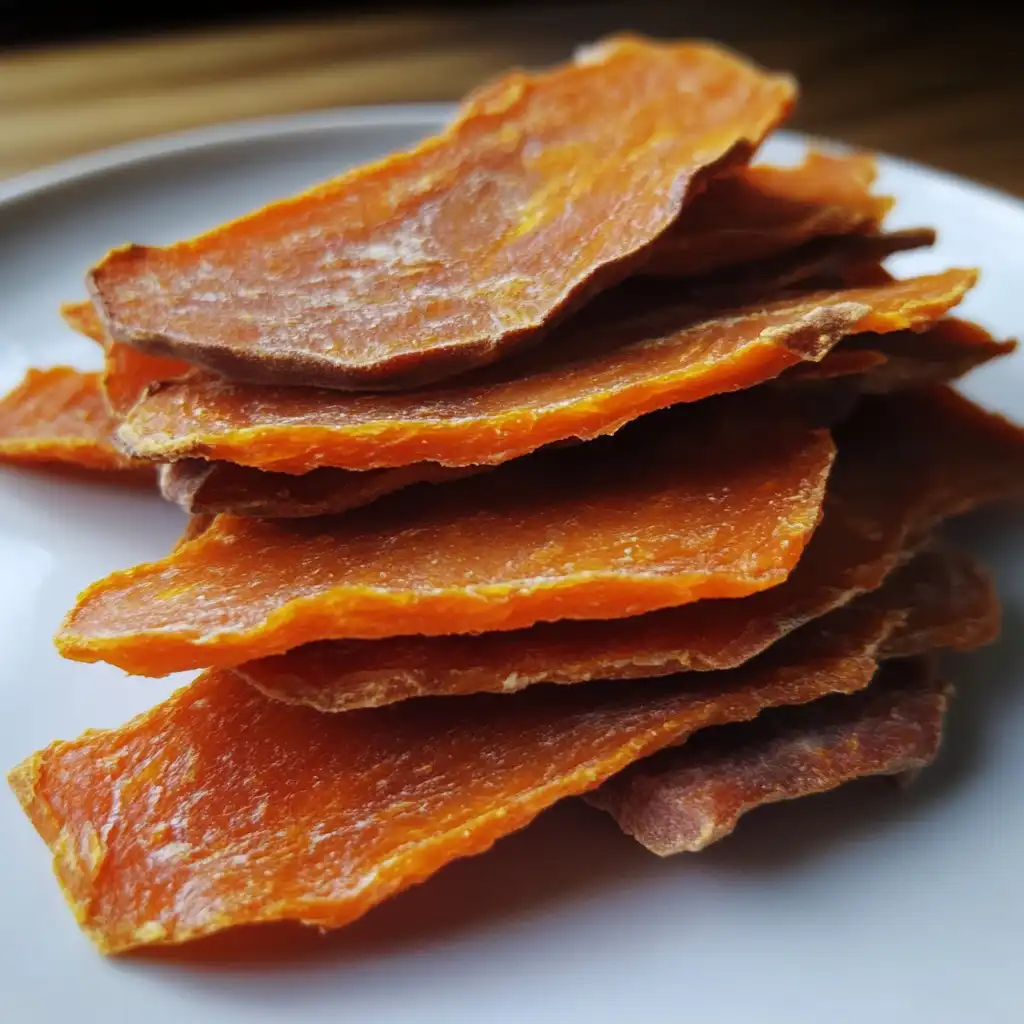
Ingredients
- 8 oz lean duck breast, boneless and skinless (fresh from specialty butcher preferred)
- 1 medium sweet potato, peeled (firm, unblemished, orange-fleshed varieties)
- 1 tbsp coconut oil, melted (unrefined organic preferred for healthy fats)
Instructions
- Prep your jerky workspace – Preheat oven to 200°F (95°C) and line a large baking sheet with parchment paper (low temperature is crucial for proper dehydration).
- Slice your protein perfectly – Cut duck breast into thin, uniform strips about 1/4 inch thick, cutting against the grain for easier chewing and even dehydration.
- Prepare sweet potato rounds – Peel and slice sweet potato into rounds 1/8 to 1/4 inch thick (thinner for crispy, thicker for chewy texture).
- Coat for even dehydration – Toss sweet potato slices with melted coconut oil until lightly coated, ensuring even dehydration and added healthy fats.
- Arrange for perfect drying – Place duck strips and sweet potato slices on prepared baking sheet in single layers with no overlapping (proper spacing is key for even jerky texture).
- Dehydrate to perfection – Bake for 2-3 hours, checking every hour and flipping pieces halfway through until duck feels tough and leathery, sweet potatoes are firm but pliable.
- Cool completely for storage – Let jerky cool completely before storing or serving—this prevents condensation that could cause spoilage.
Notes:
- 200°F is crucial for dehydration rather than cooking—higher temperatures create cooked meat instead of proper jerky
- Uniform slicing ensures even results and consistent chewing experience for your dog
- Amber settles into epic chewing sessions with these, showing genuine satisfaction with the long-lasting texture
Storage Tips:
- Store in airtight containers at room temperature for up to 3 weeks or refrigerate for up to 2 months
- Keep moisture out completely to prevent mold and maintain proper jerky texture
- These concentrate in flavor over time, becoming even more appealing to dogs after proper storage
What Makes This Recipe Special:
The slow dehydration process concentrates natural duck and sweet potato flavors while creating that perfect tough-but-chewable texture that provides hours of satisfying engagement. Duck offers novel protein ideal for dogs with food sensitivities, while sweet potatoes provide sustained energy and natural sweetness. Unlike commercial jerky loaded with preservatives, this method preserves natural nutrition while creating treats that support dental health through extended chewing and provide genuine mental stimulation.
Mix It Up (Extended Chew Variations):
Joint Support Plus: Lightly dust sweet potato slices with tiny pinch of turmeric before dehydrating for natural anti-inflammatory benefits
Travel-Friendly Chips: Make extra-thin slices that dehydrate into portable, crispy chips perfect for hiking or car trips
Senior-Friendly Tender: Use slightly thicker sweet potato slices that stay more tender for aging teeth while maintaining chewing satisfaction




