
Let Me Tell You Why This Works
Have you ever seen a Golden Retriever do actual happy tears? I used to spend a fortune on expensive dog jerky until I discovered this simple dehydrated beef recipe that made my 8-year-old Golden Retriever Amber literally vibrate with excitement like he’d discovered the most premium jerky stash ever. Here’s the thing—making your own beef jerky strips creates this incredible high-value reward that makes dogs feel like they’re getting the same quality treats humans enjoy. Let me tell you about the first time I made these strips and Amber carried one piece around the house for twenty minutes, just savoring it like a precious treasure, because he somehow knew this wasn’t ordinary dog food—this was pure, concentrated beef bliss.
What Makes This So Tail-Wagging Good
Here’s the magic behind these dehydrated beef jerky strips—it’s honestly the perfect combo of pure, concentrated beef flavor and satisfying chewy texture that creates this amazing high-value treat dogs absolutely go bonkers for. The secret to making dogs feel like royalty is how the slow dehydration process concentrates all that amazing beef flavor while creating this perfect chewy consistency that provides serious chewing satisfaction. What makes this irresistible to pups is how each strip feels substantial and rewarding, plus the natural beef flavor is so intense that Amber thinks he’s getting human-grade jerky (which he basically is!). It’s honestly safer than store-bought jerky, and way more satisfying than anything you’ll find in pet stores.
What You’ll Need (And My Dog-Safe Shopping Tips)
1 lb (16 oz) lean beef, thinly sliced – Good quality lean beef is absolutely crucial for safe jerky making. I always use eye of round or bottom round because it’s naturally lean and slices beautifully (learned this after my vet explained how important lean cuts are for Amber’s 8-year-old digestion).
IMPORTANT SAFETY NOTE: The original recipe included garlic powder, but garlic is toxic to dogs and should never be used in dog treats. Instead, we’ll use dog-safe seasonings.
2 tbsp (30ml) low-sodium beef broth – I substitute this for the soy sauce because plain beef broth is much safer for dogs. Make sure it’s onion and garlic-free (learned this after checking six different brands). The beef flavor enhances the natural meat taste beautifully.
1 tsp (5g) honey – Natural honey is completely safe for dogs over one year old and adds just a touch of sweetness that makes the jerky irresistible. I always use raw honey when possible because it’s unprocessed.
Dog-Safe Seasoning Options (choose one):
- 1/2 tsp dried rosemary (completely safe and aromatic)
- 1/2 tsp dried thyme (dogs love this herb)
- Just plain beef with honey (sometimes simple is perfect)
I always grab extra beef because Amber somehow knows when I’m making jerky and camps out in the kitchen for hours.
For more information about safe dehydrated treats for dogs, check out the American Kennel Club’s guide to homemade dog treats.
Let’s Make These Pup-Perfect Premium Jerky Strips Together
In a bowl, mix your low-sodium beef broth, honey, and your chosen dog-safe herb (if using). Here’s where I used to mess up jerky making—I’d use ingredients that weren’t dog-safe without realizing the danger.
Add the thinly sliced beef to the marinade, ensuring all pieces are well-coated. Let it marinate for at least 1 hour in the refrigerator. Now for the patient part (Amber will start doing his jerky anticipation dance)—the longer you marinate, the more flavor penetrates the meat.
Preheat your dehydrator to 160°F (70°C). If you don’t have a dehydrator, you can use your oven on its lowest setting with the door slightly open. Here’s my secret for perfect jerky—consistency in temperature is key for food safety.
Arrange your marinated beef slices on the dehydrator trays, leaving space between each piece for proper air circulation. Don’t be me—I used to overcrowd the trays and end up with unevenly dried jerky. My vet taught me this trick about spacing for even dehydration and food safety.
Dehydrate for 4-6 hours until the beef is dried but still slightly pliable when bent. Every Golden Retriever has different chewing preferences, but Amber loves them when they’re dry enough to be shelf-stable but still have that perfect chewy texture.
Let the jerky cool completely before serving to your furry friend—this step ensures food safety and lets you check the final texture.
For more high-value protein treat ideas, try our Turkey Jerky Bites that use similar safe dehydration techniques.
When Things Go Sideways (And They Will)
Jerky came out too brittle? You probably over-dehydrated or your temperature was too high. That’s common with homemade jerky, and it happens to everyone—next time check earlier and reduce time slightly.
Pieces seem unevenly dried? I’ve learned to rotate trays halfway through and move thicker pieces to hotter spots. When this happens (and it will), don’t stress, just continue drying the underdone pieces separately.
If your dog seems to choke on larger pieces like Amber did initially, try cutting the jerky into smaller strips before serving. I always supervise jerky time because it’s a high-value chew that dogs can get excited about.
Ways to Mix It Up
When Amber needs extra flavor variety (great for his 8-year-old taste buds), I’ll use different lean cuts like venison or turkey for novel protein jerky. For training sessions, I cut them into tiny pieces and call them “jerky rewards”—he works twice as hard for these premium treats.
My travel version uses the thinnest possible slices for faster drying and easier portability (perfect for hiking with dogs). Sometimes I make them extra thick for longer chewing sessions, though that requires longer dehydration time.
What Makes This Recipe Special
This dehydration technique creates pure, concentrated protein treats using simple, safe ingredients that provide incredible nutritional value. What sets this apart from commercial jerky is complete ingredient control—no preservatives, artificial colors, or questionable additives that often appear in store-bought versions. The slow dehydration process preserves maximum nutrition while creating that perfect chewy texture dogs crave, plus you know exactly what’s going into your pup’s body.
Questions I Always Get
Can puppies eat homemade beef jerky?
Puppies over 6 months can enjoy small pieces, but supervise carefully since jerky requires good chewing skills. I usually break pieces smaller for young dogs learning to handle tougher textures.
How long does homemade dog jerky stay fresh?
Properly dehydrated jerky stays good in airtight containers at room temperature for up to one month, or frozen for six months. The key is achieving proper dryness for shelf stability.
What if my dog has beef allergies?
You can substitute turkey, venison, or any lean meat your dog tolerates. The dehydration method works beautifully with any protein source your vet approves.
Can I make jerky without a dehydrator?
Absolutely! Use your oven on the lowest setting (170-200°F) with the door cracked open. It takes longer but works great—just monitor temperature with an oven thermometer.
How much jerky can I give my dog per day?
Treats should be about 10% of daily calories. For Amber’s size, that’s usually 2-3 strips per day maximum since jerky is concentrated protein and pretty rich.
What’s the best way to store homemade jerky?
Keep in airtight containers away from moisture. I usually vacuum seal portions for longer storage or keep small amounts in treat jars for daily use.
Is homemade jerky safe for senior dogs?
Perfect for senior dogs like Amber! The concentrated protein helps maintain muscle mass, and the chewy texture provides good jaw exercise. Just monitor for any chewing difficulties.
One Last Thing
I couldn’t resist sharing this because watching Amber treasure each piece of homemade jerky reminded me that the best treats are the ones made with love and complete ingredient transparency. The best dog treat days are when you see that premium jerky satisfaction in their eyes, knowing you’ve given them something truly special that’s both safe and absolutely delicious.
Print
Dehydrated Beef Jerky Strips
Description
Premium jerky strips that’ll make your dog think they’re getting the same high-quality treats you’d buy for yourself.
Prep Time: 15 minutes + 1 hour marinating | Dehydration Time: 4-6 hours | Total Time: 5-7 hours | Makes: About 4 oz finished jerky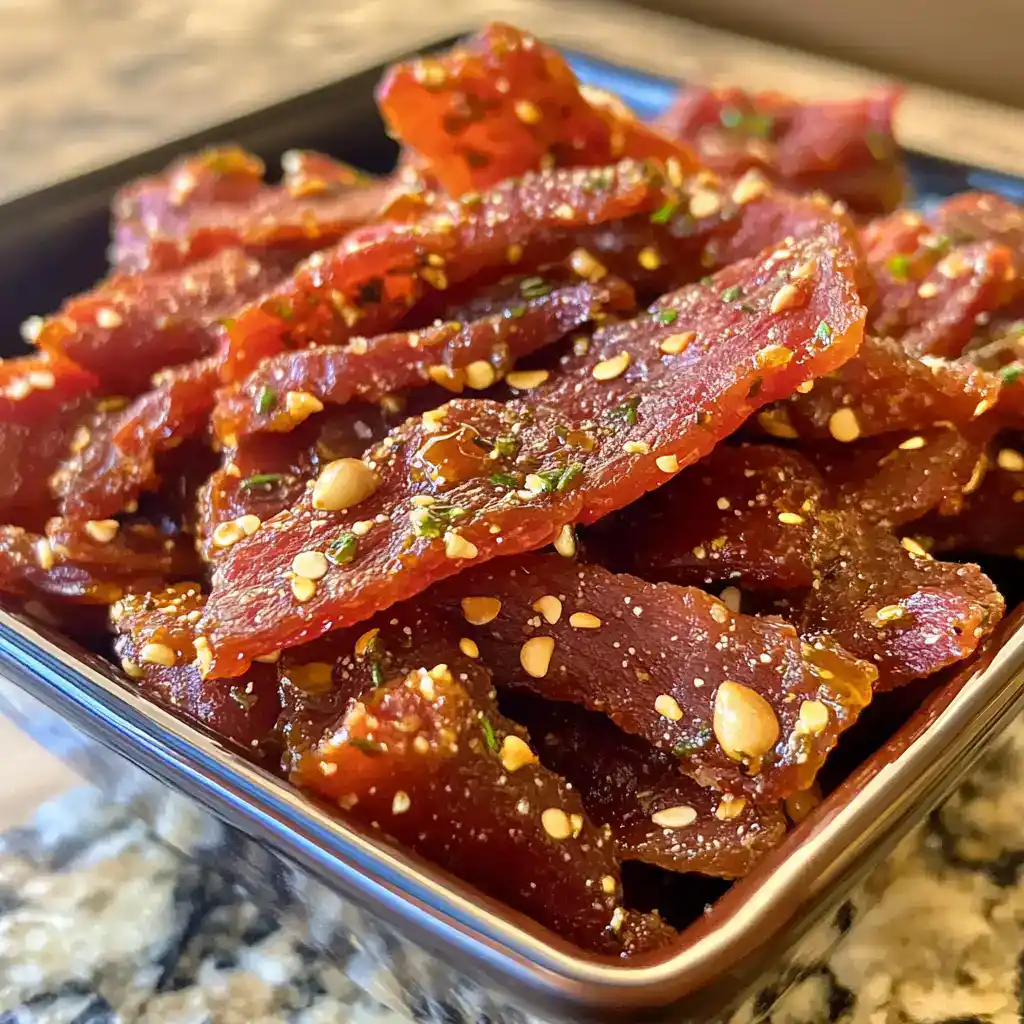
Ingredients
- 1 lb (16 oz) lean beef, thinly sliced (eye of round or bottom round work perfectly)
- 2 tbsp (30ml) low-sodium beef broth (onion and garlic-free for dog safety)
- 1 tsp (5g) honey (completely safe for dogs over 1 year old)
- Dog-Safe Seasoning Options (choose one):
- 1/2 tsp dried rosemary (aromatic and completely safe)
- 1/2 tsp dried thyme (dogs love this herb)
- Plain (sometimes simple is perfect)
Instructions
- SAFETY FIRST: Never use garlic powder or onion powder—both are toxic to dogs. Use only dog-safe seasonings listed above.
- Mix beef broth, honey, and chosen dog-safe herb in a bowl until well combined.
- Add thinly sliced beef, ensuring all pieces are coated. Marinate in refrigerator for at least 1 hour—longer is better.
- Preheat dehydrator to 160°F (70°C) or oven to lowest setting with door slightly open (if your patient pup can wait).
- Arrange beef slices on trays with space between pieces for proper air circulation—don’t overcrowd.
- Dehydrate for 4-6 hours until dried but still slightly pliable when bent—test doneness carefully.
- Let jerky cool completely before serving (always let cool completely for safety and texture check).
Notes:
- NEVER use garlic or onion powder—both are toxic to dogs
- Always supervise dogs eating jerky since it’s a high-value chew
- Amber prefers strips that are dry but still have slight pliability for perfect chewing
Storage Tips:
- Store in airtight containers at room temperature for up to 1 month
- Freeze for up to 6 months for longer storage
- Vacuum sealing extends freshness and prevents moisture absorption
What Makes This Recipe Special:
Complete ingredient control means no preservatives, artificial additives, or questionable ingredients found in commercial jerky. The slow dehydration process concentrates pure beef flavor while maintaining maximum nutritional value and creating that premium chewy texture dogs absolutely treasure.
Mix It Up (Dog-Safe Variations):
- Novel Protein: Use venison or turkey for dogs with beef sensitivities
- Training Size: Cut into tiny pieces before dehydrating for premium training rewards
- Thick Chew: Make thicker strips for longer chewing sessions (requires extended drying time)




