
Here’s My Story With This Protein-Packed Marvel
What if I told you the secret to making your dog forget about expensive commercial jerky isn’t complicated? I discovered this incredible combination of lean beef and nutrient-dense vegetables that had my 8-year-old Golden Retriever Amber literally doing reverent bows when he caught the aroma of slow-dehydrating protein and vegetables filling our kitchen for hours, then carrying these precious strips around like golden treasures before settling down to work through every fiber with pure devotion. Here’s the thing—I used to feel overwhelmed by the cost and questionable quality of commercial jerky treats, wondering what preservatives and fillers were hiding in those expensive packages, until I realized I could create restaurant-quality jerky at home using premium ingredients that actually support comprehensive nutrition. Now these layered strips are our weekend project that transforms our kitchen into an artisanal jerky workshop, with Amber serving as quality control supervisor throughout the entire multi-hour dehydration process. Plus, I love knowing he’s getting complete protein, beta-carotene, and natural vitamins instead of processed meat with artificial preservatives and mystery vegetables.
What Makes This Irresistible to Pups
Here’s the magic behind these irresistible artisanal strips—lean beef provides complete protein and satisfying chewiness that dogs instinctively crave for both nutrition and jaw exercise, while layered vegetables deliver fiber, vitamins, and natural sweetness that enhance the overall nutritional profile. What makes this combination create the perfect gourmet jerky experience is how the slow dehydration process concentrates flavors while creating complex textures that keep dogs engaged for extended periods, providing both mental stimulation and sustained nutrition. I never knew such methodical preparation could make Amber this excited about comprehensive nutrition, but watching him methodically work through these multi-layered strips tells me this technique creates treats that satisfy both his primal chewing instincts and nutritional needs. It’s honestly safer and more beneficial than any commercial jerky, because you control every ingredient and cooking stage while creating treats that actually support long-term health rather than just providing temporary satisfaction.
Gathering Your Artisanal Jerky Supplies (Premium Quality!)
High-quality lean beef is absolutely crucial for both safety and optimal protein content—choose grass-fed when possible because it has better nutritional profiles and cleaner flavor that dogs can really appreciate. Look for cuts like eye of round or bottom round that slice well and have minimal fat content (learned this after fattier cuts created jerky that didn’t preserve properly). I finally found a reliable butcher who understands jerky-making requirements and even provides slicing guidance for optimal dehydration.
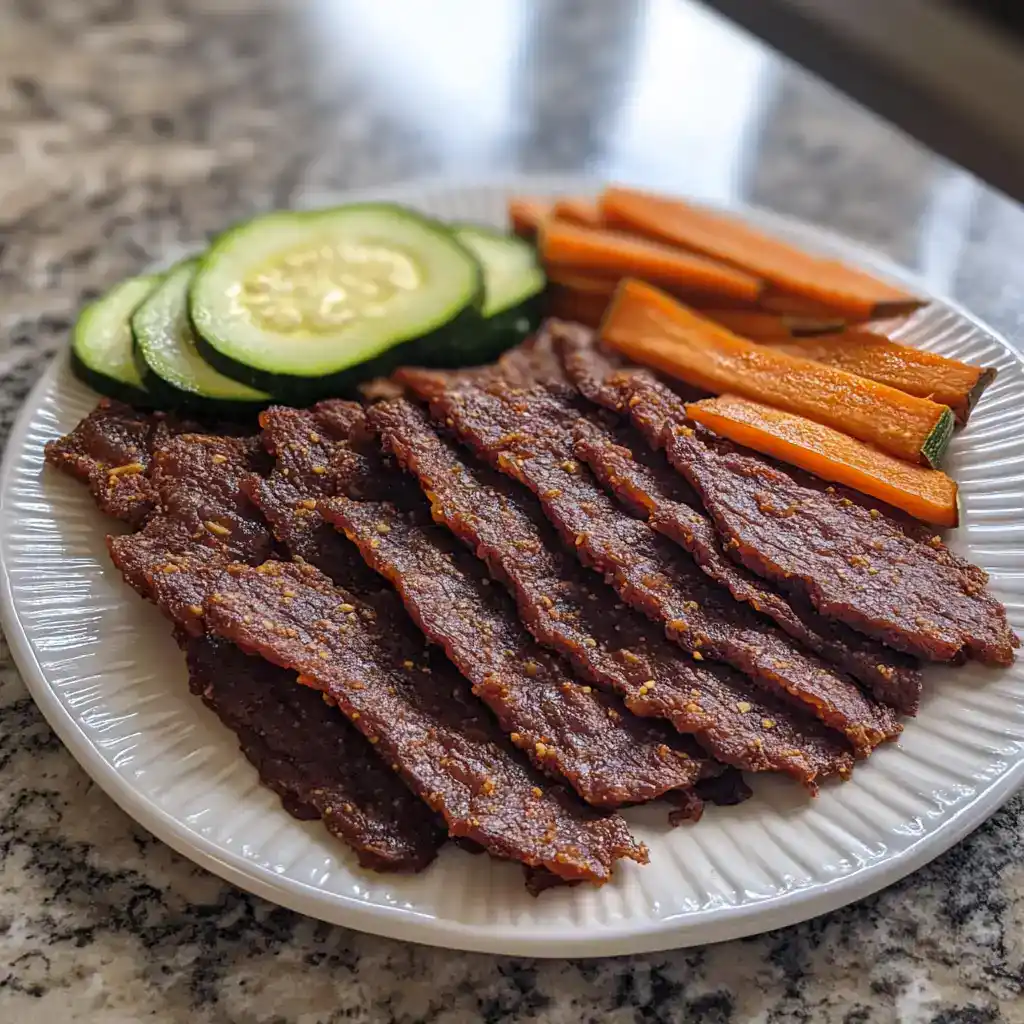
Fresh sweet potato adds natural sweetness and beta-carotene that perfectly complements the savory beef while contributing fiber and immune-supporting vitamins. Choose sweet potatoes that feel firm with smooth skin, avoiding any with soft spots or sprouting that might indicate aging. The natural orange color also creates visual appeal that makes these strips look professionally crafted.
Quality zucchini provides hydration and gentle fiber that helps create interesting texture contrast while adding B vitamins and potassium for overall wellness. Select firm zucchini with bright green skin and no soft spots, slicing uniformly for consistent dehydration timing. The mild flavor enhances rather than competes with the beef.
Fresh carrots contribute additional beta-carotene and natural sweetness while providing satisfying crunch that enhances the overall eating experience. Choose firm, bright orange carrots without white coating or soft spots, cutting into uniform matchsticks for even drying. The natural sugars concentrate during dehydration for enhanced flavor appeal.
Premium olive oil helps with even vegetable coating and contributes healthy fats that support nutrient absorption while ensuring proper adherence to the beef base. Choose extra virgin olive oil for maximum antioxidant benefits, using just enough to lightly coat vegetables without interfering with dehydration.
For more information on safe jerky preparation for dogs, check out the American Kennel Club’s guide to homemade dog treats.
Let’s Make This Artisanal Magic Together
Preheat your oven to 200°F and line large baking sheets with parchment paper for easy cleanup and even heat distribution during the long, slow dehydration process. Here’s where I used to mess up jerky making—I thought higher temperatures would work faster, but low heat is essential for proper texture without overcooking the vegetables.
Start by slicing your beef into uniform thin strips about 1/4 inch thick, cutting against the grain for optimal tenderness and chewing satisfaction. Consistent thickness ensures even dehydration while proper grain direction creates the ideal jerky texture that dogs find most appealing.
Arrange beef slices on your prepared baking sheets in a single layer with no overlapping to ensure proper air circulation during the artisanal dehydration process. The beef forms the foundation layer that will support the nutritious vegetables.
In a mixing bowl, toss sweet potato slices, zucchini strips, and carrot matchsticks with olive oil until evenly coated but not dripping. Now for the layering magic (Amber will start doing his artisanal-jerky dance at this point)—the vegetables should glisten lightly while maintaining their distinct colors and textures.
Carefully place the oiled vegetables on top of the beef slices, creating attractive combinations that ensure each strip contains both protein and vegetables for balanced nutrition. I’ve learned that thoughtful arrangement creates both visual appeal and nutritional consistency throughout each piece.
Bake for 2-3 hours until both beef and vegetables reach the desired jerky consistency—beef should be firm and slightly pliable while vegetables should be dehydrated but not brittle. Artisanal jerky requires patience and frequent checking during the final hour to achieve perfect texture.
Cool completely before cutting into desired strip lengths because proper cooling allows flavors to concentrate and creates the ideal chewiness that makes these strips so satisfying. Trust me on this patience—it’s essential for achieving professional-quality results. For more artisanal treats, check out our premium jerky collection.
When Artisanal Things Go Sideways (And They Will)
Vegetables are cooking faster than beef or creating uneven textures? You probably sliced vegetables too thin or the oven has hot spots, and that happens when you’re learning the balance for multi-ingredient dehydration. This is totally fixable—just adjust slice thickness next time and rotate pans halfway through for even cooking.
Jerky seems too dry or tough for comfortable chewing? That’s common when dehydration goes too long or beef is sliced with the grain, and artisanal jerky requires precise timing for optimal results. When this happens (and it will), just reduce time slightly and ensure proper grain direction for better texture.
Dog seems overwhelmed by the complex flavors and textures like Amber did initially? This is normal for dogs who aren’t used to artisanal jerky with multiple ingredients, and some need time to appreciate the layered nutrition and varied textures. Don’t stress, just offer smaller pieces initially to build appreciation for gourmet complexity.
Ways to Mix It Up
When Amber needs extra joint support during his senior years, I’ll add a light dusting of turmeric to the vegetables for anti-inflammatory benefits alongside the complete nutrition. This makes them extra special for mobility support but requires the same careful dehydration process.
For special artisanal occasions, I’ll create different vegetable combinations using butternut squash or bell peppers for seasonal variety and enhanced visual appeal. My weekend luxury version includes fresh herbs like rosemary for sophisticated flavor complexity.
Sometimes I create single-meat versions using different proteins like venison or turkey for dogs with specific dietary needs or preferences. The base technique works beautifully with any quality lean meat.
The Secret Behind This Artisanal-Approved Recipe
The protein and vegetable combination specifically provides comprehensive nutrition unlike simple single-ingredient jerky—beef delivers complete amino acids for muscle maintenance while vegetables contribute vitamins, minerals, and fiber for overall wellness support. This beats commercial jerky because you’re providing balanced nutrition alongside satisfying chewing experiences rather than just protein with artificial preservatives.
What makes this artisanal technique so effective is how the layered construction creates complex flavor development while the slow dehydration preserves nutrients and creates textures that address dogs’ natural need to work for their food. I discovered that Amber’s overall satisfaction and nutritional status improved when I started making these comprehensive strips regularly, probably from consistent high-quality protein combined with natural vitamin absorption.
The nutritional approach is brilliant because you’re addressing multiple wellness needs—protein requirements, vitamin support, and mental stimulation—all through one carefully crafted treat that dogs see as premium rewards rather than basic nutrition.
Things People Ask Me About Artisanal Jerky
Can puppies have these beef vegetable strips?
Absolutely, just cut them into much smaller pieces appropriate for puppy mouths and introduce complex textures gradually to ensure developing jaw strength can handle artisanal chewing. I usually make puppy-sized portions and monitor their jerky technique development.
How long do these artisanal strips stay fresh?
Most homemade jerky stays good for up to 2 weeks in the refrigerator or can be frozen for up to 3 months. I usually make monthly batches because the flavor and nutritional benefits are best when recently prepared with fresh ingredients.
What if my dog has never tried layered jerky?
Start with simpler combinations and gradually introduce more complex vegetable layers as they develop appreciation for artisanal textures and flavors. Some dogs need time to understand how to work through multi-ingredient strips effectively.
Can I make these artisanal strips ahead of time?
That’s actually perfect for premium treat preparation—the long dehydration process works well for weekend projects when you have time to monitor each phase properly. I usually make large batches during cooler weather when oven heat is more comfortable.
How many jerky strips can I give per day?
These count as both treats and substantial nutrition due to their protein and vegetable content, so I follow the 10% rule but consider their comprehensive nutritional benefits. For Amber’s size, he gets 2-3 strips during normal times, more during periods needing extra protein support.
What’s the best way to store artisanal jerky?
Store them in airtight containers in the refrigerator to maintain texture and preserve the nutritional compounds from both meat and vegetables. Don’t leave them out at room temperature—artisanal jerky without preservatives needs proper storage.
Are these strips safe for senior dogs?
Perfect question since Amber is 8 years old! The chewable texture is excellent for dental health and jaw exercise while the comprehensive nutrition becomes especially important as dogs age and need enhanced protein and vitamin support.
Before You Head to the Kitchen
I couldn’t resist sharing this recipe because watching Amber’s anticipation build throughout the entire multi-hour dehydration process—followed by his obvious reverence for these artisanal strips and the sustained satisfaction they provide—reminds me that some of the most rewarding experiences require patience and attention to detail. The best artisanal days are when you can give your furry family member something that represents hours of careful preparation and delivers both gourmet satisfaction and comprehensive nutrition in every carefully crafted bite.
Print
Beef & Vegetable Jerky Strips
Description
Artisanal jerky combining premium protein with nutritious vegetables—comprehensive nutrition requiring patience but delivering superior satisfaction
Prep Time: 15 minutes | Cook Time: 2-3 hours | Total Time: 3 hours 15 minutes | Makes: 25-30 artisanal strips
Ingredients
- 1 lb lean beef, thinly sliced against the grain (provides complete protein and satisfying chew)
- 1 sweet potato, peeled and thinly sliced (adds natural sweetness and beta-carotene)
- 1 zucchini, sliced into thin strips (contributes hydration and B vitamins)
- 1 carrot, peeled and cut into matchsticks (provides additional beta-carotene and crunch)
- 2 tbsp olive oil (helps vegetable adherence and contributes healthy fats)
Instructions
- Preheat oven to 200°F and line baking sheets with parchment paper for even heat distribution during the long, slow artisanal dehydration process.
- Slice beef thinly against the grain for optimal tenderness and arrange in single layer on prepared baking sheets as foundation for vegetable layers.
- Toss vegetables with olive oil in bowl until evenly coated but not dripping for optimal dehydration results (if your dog starts getting excited at the preparation aromas, you’re creating artisanal magic).
- Layer oiled vegetables on top of beef slices creating attractive combinations that ensure balanced nutrition in every strip.
- Bake for 2-3 hours until beef reaches desired jerky consistency and vegetables are properly dehydrated—check frequently during final hour.
- Cool completely before cutting into strips to allow flavors to concentrate and achieve ideal chewiness worthy of artisanal quality.
Notes
- Always slice beef against the grain for optimal texture and chewing satisfaction
- Perfect for dogs needing comprehensive nutrition or premium chewing experiences
- The layered technique creates visual appeal and nutritional balance in every strip
- Amber prefers these stored properly where they maintain perfect texture and artisanal quality
Storage Tips
- Store in airtight containers in the refrigerator for up to 2 weeks maximum
- Can be frozen for up to 3 months if individually wrapped for special occasions
- Don’t leave at room temperature for more than 2 hours—artisanal jerky needs proper storage
- Keep refrigerated to maintain food safety and optimal nutritional quality
What Makes This Recipe Special
The combination of premium protein with nutrient-dense vegetables creates jerky that delivers comprehensive nutrition typically found in complete meals. Unlike simple meat jerky, this provides balanced wellness support through carefully layered ingredients that work together nutritionally.
Mix It Up (Dog-Safe Variations)
Anti-Inflammatory Enhancement: Add light turmeric dusting to vegetables for joint support benefits, perfect for senior dogs like my 8-year-old Amber.
Seasonal Vegetables: Substitute butternut squash or bell peppers for variety while maintaining excellent nutritional profiles and visual appeal.
Herb-Enhanced Version: Include fresh rosemary for sophisticated flavor complexity that elevates these from treats to gourmet cuisine.




