
Here’s My Story With This Recipe
I’ll be honest about making homemade dog jerky—I used to think it was way too complicated until my hunting buddy brought over some duck breast he couldn’t finish. My Beagle went absolutely bonkers for the first batch I made, and now he literally sits by the oven door when I’m dehydrating these strips. The best part? My vet was amazed at how much shinier his coat became after switching from those expensive store-bought jerky treats to these homemade ones with real duck protein.
Here’s the Thing About This Dog Recipe
The secret to driving dogs wild is the combination of lean duck protein with the natural sweetness of apples—it creates this irresistible chewy texture that keeps pups occupied for ages. What makes this so brilliant is that slow-baking at low temperature concentrates all those amazing flavors while preserving the nutritional benefits of both ingredients. I never knew apples could make jerky this appealing to dogs, but the fiber and antioxidants pair perfectly with duck’s complete amino acid profile. It’s honestly safer than store-bought jerky because I control every single ingredient that goes into my dog’s mouth.
The Lineup – Let’s Talk Dog-Safe Ingredients
Good duck breast is absolutely crucial for this recipe—I always look for organic, hormone-free duck when possible because the flavor difference is incredible. Don’t skip the quality here; I finally found a local butcher who saves duck breasts for me after explaining this was for my four-legged family member (way safer than I expected, and dogs process poultry protein beautifully).
Fresh apples work beautifully here, and I usually grab Honeycrisp or Gala varieties because they hold their shape during the long baking process. Skip the red delicious—they get mushy too quickly (learned this after my vet reminded me that apple seeds aren’t safe, so I always core them completely). The natural sugars in apples help balance the rich duck flavor.
Raw honey adds that perfect touch of sweetness without any artificial additives. I always use local honey when I can find it because my neighbor swears dogs can taste the difference, plus it may help with seasonal allergies (though that’s just a bonus). Plain Greek yogurt works as a substitute if your dog can’t have honey, but skip the flavored stuff.
You’ll also want parchment paper for easy cleanup and even cooking—trust me on this one, duck fat can make a mess without it. Check out this helpful guide to safe cooking temperatures for pets to ensure you’re following proper food safety guidelines.
Here’s How We Create This Dog-Approved Magic
Preheat your oven to 200°F—this low temperature is crucial for creating that perfect jerky texture without cooking the duck too fast. Here’s where I used to mess up homemade jerky making: I’d get impatient and crank up the heat, ending up with tough, overcooked strips instead of chewy perfection.
Slice your duck breast as thin as possible—about 1/4 inch thick works perfectly. Now for the fun part (your dog will start drooling from the prep smells alone): arrange these slices on your parchment-lined baking sheet in a single layer. Don’t overcrowd them; they need space for air circulation.
Core and slice those apples equally thin, removing every trace of seeds because apple seeds contain compounds that aren’t safe for dogs. Here’s my secret for perfect jerky strips: I arrange the apple slices between the duck pieces so the flavors meld together during the long, slow baking process.
Drizzle the honey evenly over everything—I use a fork to make sure each piece gets coated. This step takes two minutes but makes the jerky irresistible to even the pickiest eaters. The honey helps the ingredients stick together and creates that glossy finish dogs love.
Slide everything into the oven for 2-3 hours, checking every hour after the first two. Here’s what to look for: the jerky should feel dry to the touch but still have some give when you press it. Every oven is different, so don’t stress if yours takes a bit longer—homemade jerky can go from perfect to overdone quickly, so keep an eye on those edges.
The most important step: let everything cool completely before cutting into strips and giving to your pup. I learned this patience lesson the hard way when my eager Beagle burned his tongue on hot jerky.
Try these healthy chicken and sweet potato treats for another high-protein homemade option your dog will devour.
If This Happens, Don’t Panic
Jerky came out too tough? You probably baked it a bit too long or your oven runs hot. That’s common with homemade jerky, and it happens to everyone. You can soften tough pieces by letting them sit in a sealed container with a slice of fresh apple overnight.
Duck seems undercooked in spots? This usually means the slices were cut unevenly thick. When this happens (and it will), just pop the thicker pieces back in the oven for another 30 minutes. Don’t stress—I’ve learned to slice everything as evenly as possible, but even professionals struggle with this.
Apple pieces got too crispy? Some dogs actually prefer this texture, but if yours doesn’t, try slicing the apples slightly thicker next time. I always double-check that apple slices are seed-free because some pieces can hide seeds in weird places.
Your dog seems uninterested? Some pups need time to adjust to new protein sources like duck. If your dog is used to chicken or beef jerky, try offering just a tiny piece first and gradually increase the size as they develop a taste for it.
When I’m Feeling Creative
When my dog needs extra joint support, I’ll add a tiny pinch of turmeric to the honey before drizzling—it gives the jerky a golden color and provides anti-inflammatory benefits. This makes them extra special but takes the same amount of time.
My winter comfort version includes thin slices of sweet potato layered with the duck and apple for extra beta-carotene and fiber. Sometimes I add a sprinkle of dried parsley, though that’s totally optional and creates a more complex flavor profile.
For training sessions, I’ll cut these into smaller, bite-sized pieces that work perfectly as high-value rewards. The duck protein makes them irresistible for teaching new commands or reinforcing good behavior.
Why This Works So Well for Dogs
This recipe works because duck provides complete protein with all essential amino acids dogs need for muscle development and maintenance, while being easier to digest than some traditional proteins. The slow dehydration process concentrates nutrients while creating that satisfying chewy texture that promotes healthy dental activity. What sets this apart from store-bought jerky is the absence of preservatives, artificial flavors, and excessive sodium that can upset sensitive stomachs. The apples contribute natural enzymes and fiber that support digestive health, while the honey provides trace minerals and potential allergy-fighting properties that processed treats simply can’t match.
Things People Ask Me About Dog Jerky
Can puppies eat these duck and apple jerky strips?
Absolutely, but I recommend cutting them into smaller pieces since puppies have smaller mouths and developing teeth. Start with tiny amounts to make sure their digestive systems handle the rich duck protein well.
How long do these homemade jerky treats stay fresh?
These keep beautifully in an airtight container at room temperature for up to two weeks, or you can freeze them for up to three months. I usually store them in the pantry and they disappear way before spoilage becomes an issue.
What if my dog has poultry allergies?
Duck is actually considered a novel protein for many dogs with chicken sensitivities, but always check with your vet first. You could substitute lean venison or beef if duck isn’t suitable for your pup’s dietary needs.
Can I make these strips ahead of time?
That’s the beauty of jerky—it’s designed to be made in big batches! I usually prep enough for two weeks and store them in multiple containers so they stay fresh longer.
How many jerky strips can I give my dog per day?
I stick to the 10% rule for treats, so for most dogs, 1-3 strips depending on size is perfect. These are protein-rich, so a little goes a long way for satisfying your pup.
What’s the best way to store homemade dog jerky?
Store in airtight containers in a cool, dry place. Don’t refrigerate unless your kitchen gets very humid—moisture is jerky’s enemy and can cause spoilage.
Are these treats safe for senior dogs?
Yes, the chewy texture is actually great for senior dogs’ dental health, and duck protein is easily digestible. Just monitor older dogs to make sure they’re chewing thoroughly and not trying to swallow large pieces.
Before You Head to the Kitchen
I couldn’t resist sharing this duck and apple jerky recipe because watching dogs discover new flavors and textures never gets old. The best jerky-making days are when I see that concentrated focus on my Beagle’s face as he savors every single chewy bite, knowing I’m giving him restaurant-quality protein in a form that’s perfectly safe and nutritious for his daily treat routine.
Print
Duck & Apple Jerky Strips
Description
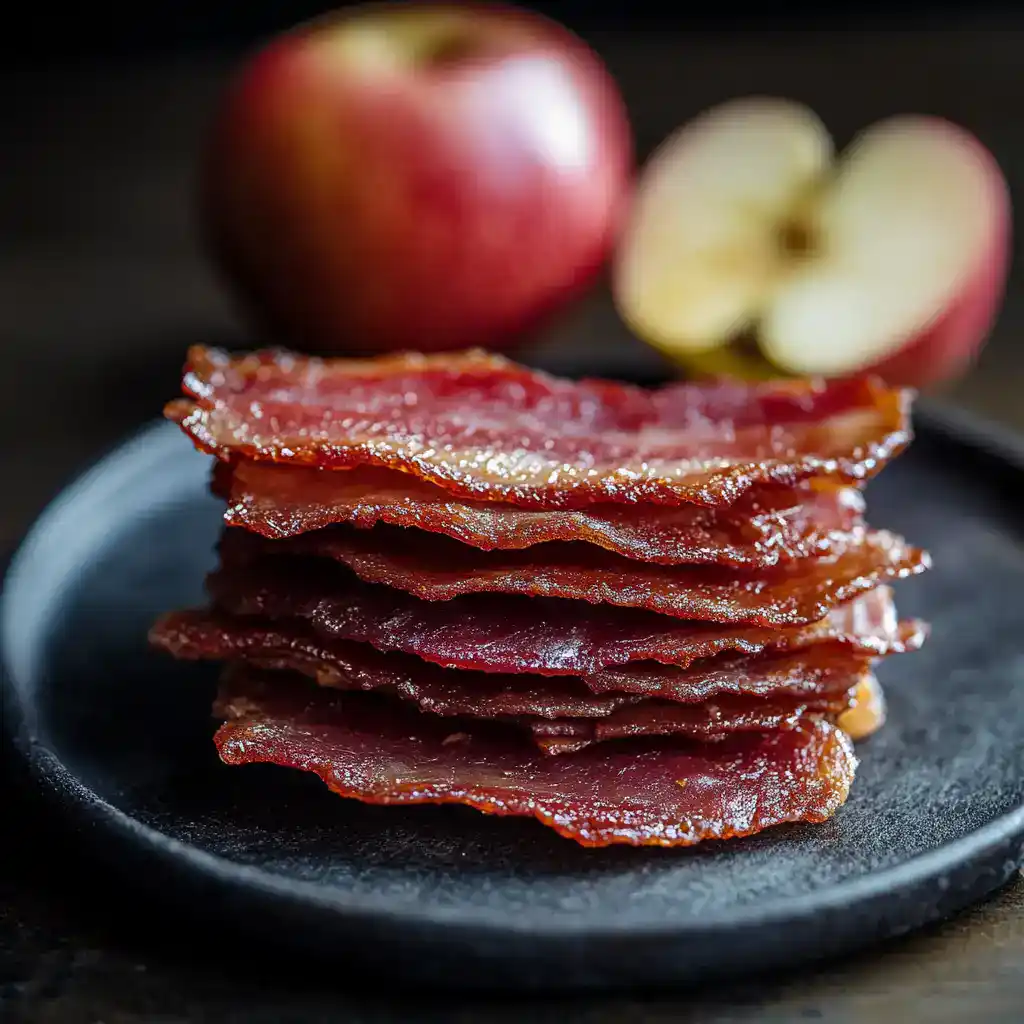
Premium homemade jerky strips that combine lean duck protein with sweet apple flavor for an irresistible dog treat
Prep Time: 15 minutes | Cook Time: 2-3 hours | Total Time: 3 hours 15 minutes | Makes: 20-25 strips
Ingredients
- 1 lb duck breast, thinly sliced (hormone-free works best, completely safe for dogs)
- 2 apples, cored and thinly sliced (remove all seeds—they’re not safe)
- 1 tablespoon raw honey (local honey adds amazing flavor)
Instructions
- Preheat your oven to 200°F and line a baking sheet with parchment paper—this low temperature is crucial for perfect jerky texture.
- Slice the duck breast as thin as possible, about 1/4 inch thick for even cooking. Take your time here; consistent thickness makes all the difference.
- Core those apples completely and slice them equally thin, making absolutely sure no seeds remain (apple seeds aren’t safe for dogs).
- Arrange duck and apple slices on the baking sheet in a single layer—don’t overcrowd them or they won’t dehydrate properly.
- Drizzle honey evenly over all the slices, using a fork to ensure everything gets coated with that natural sweetness dogs crave.
- Bake for 2-3 hours, checking every hour after the first two. The jerky should feel dry but still have slight give when pressed—it firms up more as it cools.
- Let everything cool completely before cutting into strips. Always let cool completely before giving to your pup to prevent burns.
Notes:
- Duck should reach an internal temperature of 165°F for food safety
- My dog prefers these slightly chewy rather than crispy, so I err on the side of underdone
- Start with smaller pieces if your dog hasn’t tried duck protein before
Storage Tips:
- Store in airtight containers at room temperature for up to 2 weeks
- Freeze for longer storage—they keep for months in the freezer
- Toss if you notice any off smells or mold (though they usually disappear before spoilage)
What Makes This Recipe Special:
Duck provides complete protein with all essential amino acids for muscle development, while being easier to digest than some traditional proteins. The slow dehydration process concentrates nutrients and creates natural dental benefits through chewing action. Unlike commercial jerky, this recipe contains no preservatives, artificial flavors, or excessive sodium that can upset sensitive stomachs.
Mix It Up (Dog-Safe Variations):
- Joint Support Version: Add a tiny pinch of turmeric to honey for anti-inflammatory benefits and golden color
- Sweet Potato Addition: Layer thin sweet potato slices with duck and apple for extra beta-carotene
- Training Size: Cut into small, bite-sized pieces perfect for high-value training rewards




