
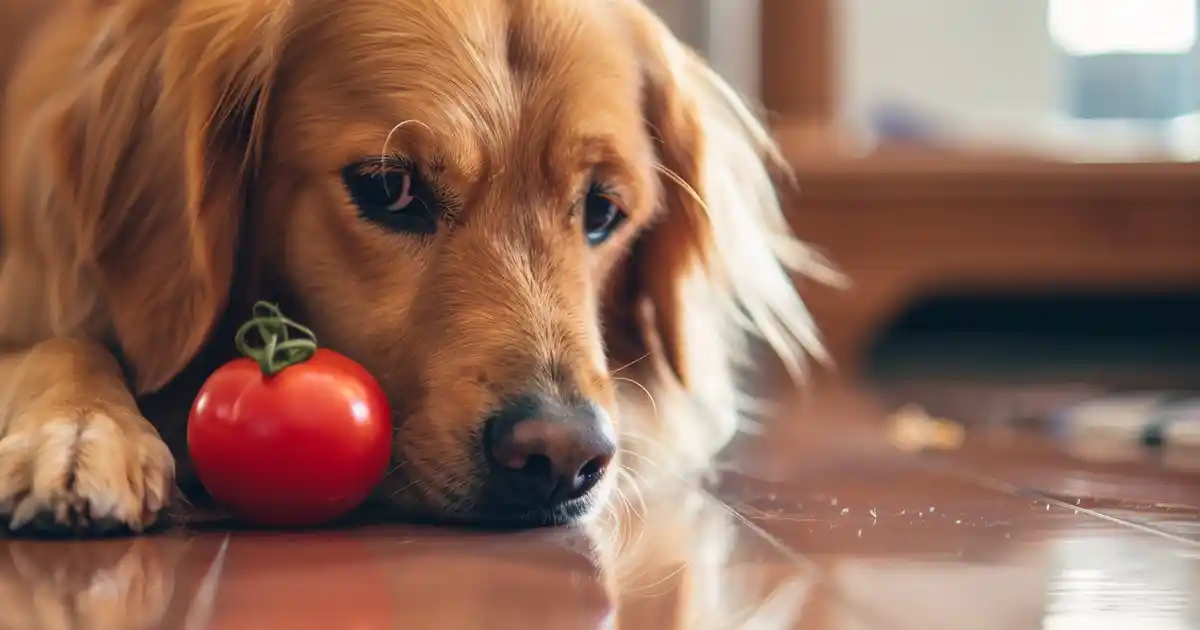
If you have ever been slicing tomatoes in the kitchen and looked down to find your dog staring up at you with that particular expression of hopeful anticipation, you have probably wondered whether sharing a piece was a kind gesture or a mistake you would regret later. The answer is more nuanced and more interesting than a simple yes or no, because tomatoes occupy a genuinely unique position among human foods that dogs can eat — offering real nutritional value when prepared and portioned correctly while carrying specific risks that every dog owner needs to understand before tossing one over. Getting clear on the complete picture of tomatoes and dogs, from the science of what makes ripe tomatoes beneficial to the toxicology of why green tomatoes and tomato plants are genuinely dangerous, is exactly what this guide delivers with the honest, evidence-based detail that actually serves your dog rather than leaving you more confused than when you started.
Here’s the Thing About Tomatoes and Dogs
Here is the foundational reality that reframes every tomato-related feeding decision you will ever make for your dog — the ripeness of the tomato and the part of the plant involved matter far more than whether tomatoes are simply safe or unsafe in any blanket sense, and understanding that distinction is genuinely life-changing for dog owners who have been avoiding tomatoes entirely out of caution or feeding them without awareness of the specific risks. Ripe red tomatoes contain a compelling nutritional profile including lycopene, vitamin C, vitamin K, potassium, and folate that offers measurable health support for dogs when given in appropriate amounts, while unripe green tomatoes and all parts of the tomato plant including stems, leaves, and vines contain tomatine and solanine — alkaloid compounds that are toxic to dogs and can cause gastrointestinal distress, lethargy, weakness, and in significant exposures, more serious neurological symptoms. I never knew that the same plant could offer genuine nutritional benefit in one form and meaningful toxicity risk in another until I actually looked into the biochemistry rather than relying on the oversimplified either-safe-or-not framing that dominates most casual conversations about dogs and human food.
What You Need to Know — Let’s Break It Down
Understanding the specific nutritional components of ripe tomatoes and why they matter for canine health gives you the informed foundation that makes every tomato feeding decision straightforward rather than uncertain. Lycopene is the most discussed and most researched beneficial compound in ripe tomatoes, and its relevance to dog health is genuinely significant — lycopene is a carotenoid antioxidant that has been studied for its role in reducing oxidative stress, supporting cardiovascular health, and potentially offering protective effects against certain cellular damage processes in mammals including dogs. Ripe tomatoes are one of the most concentrated dietary sources of lycopene available, and the bioavailability of lycopene actually increases when tomatoes are lightly processed or cooked, which means plain cooked tomato without added salt, garlic, or onion offers even more accessible lycopene than raw tomato for your dog.
Vitamin C in ripe tomatoes supports immune function and acts as an additional antioxidant, though dogs synthesize their own vitamin C unlike humans and do not have the same dietary dependency on it that we do — making the vitamin C content a supplementary benefit rather than a critical nutritional need being met. Potassium supports healthy muscle function, nerve transmission, and fluid balance in dogs, and folate supports healthy cell production and DNA synthesis, making the overall nutritional profile of ripe tomatoes a genuinely useful addition to a balanced diet rather than empty treat calories with no functional value.
The fiber content of tomatoes supports digestive regularity in dogs in the same way it does in humans, which is particularly relevant for dogs who experience intermittent digestive inconsistency and whose owners are looking for gentle dietary additions that support gut health without introducing the digestive upset that some higher-fiber foods cause. Beta-carotene, another antioxidant present in tomatoes, supports healthy vision and immune response in dogs, adding another layer of nutritional relevance to a fruit that many dog owners have been unnecessarily avoiding.
The Science Behind Tomatoes for Dogs
What research actually shows about lycopene and antioxidant compounds in canine nutrition helps explain why veterinary nutritionists increasingly recognize ripe tomatoes as a dog-safe food with genuine health value rather than simply a human food that dogs can technically tolerate. Studies on antioxidant supplementation in dogs have demonstrated measurable benefits in markers of oxidative stress reduction, immune support, and inflammatory response modulation — the same mechanisms through which lycopene and other tomato-derived antioxidants are theorized to provide benefit. The tomatine content of green tomatoes and tomato plants has been documented in veterinary toxicology literature as a genuine concern, with clinical case reports describing gastrointestinal symptoms, lethargy, and in higher exposure cases, more serious systemic effects — which is why the ripeness distinction is not a minor technicality but a meaningful safety boundary that responsible tomato feeding requires.
Experts in veterinary nutrition agree that the appropriate serving size of ripe tomato for dogs scales with body weight and that tomatoes should represent a treat-level addition to an already complete and balanced diet rather than a primary food source — a position consistent with the general principle that no single whole food, however nutritious, should comprise more than ten percent of a dog’s total caloric intake. The sugar content of tomatoes, while modest compared to many fruits, is another reason that portion moderation matters particularly for dogs managing weight or blood sugar, and the acidity of tomatoes can contribute to digestive discomfort in dogs with sensitive stomachs if given in excess even when the tomatoes are fully ripe and otherwise appropriate.
Here’s How to Actually Feed Tomatoes to Your Dog
Start by selecting only fully ripe red tomatoes and removing all stems, leaves, and green portions before offering any piece to your dog, because the safety of tomato feeding depends entirely on eliminating every part of the plant that contains meaningful tomatine and solanine concentrations. Wash the tomato thoroughly to remove any pesticide residue, and cut it into pieces appropriately sized for your dog — small bite-sized pieces for smaller dogs, slightly larger pieces for larger breeds, always small enough to eliminate any choking concern. Plain ripe tomato with no added salt, seasoning, sauce, or preparation involving garlic or onion is the only form that is appropriate for dogs, which means that while a plain tomato slice is a reasonable treat, tomato sauce, ketchup, canned tomatoes with added sodium, and any prepared tomato product with seasoning are not appropriate regardless of how ripe the base tomatoes were.
For a small dog under twenty pounds, one to two small pieces of ripe tomato represents an appropriate occasional treat portion. For a medium dog between twenty and fifty pounds, a few pieces or up to a quarter of a small tomato given occasionally is a reasonable serving. For a large dog over fifty pounds, up to half a small tomato given as an occasional treat rather than a daily addition is within the range that provides nutritional benefit without excess sugar or acidity. The word occasional matters here — tomatoes are best approached as a several-times-per-week treat at most rather than a daily feeding, both to keep portions within the ten percent treat guideline and to prevent the cumulative acidity exposure that daily tomato feeding could create for sensitive digestive systems.
Introducing tomatoes for the first time follows the same sensible protocol as introducing any new food — offer a small amount, observe your dog for twenty-four hours for any signs of digestive upset including loose stool, vomiting, or unusual lethargy, and only continue offering tomatoes if the initial introduction produces no adverse response. Dogs with known digestive sensitivity, acid reflux, or gastrointestinal conditions should have any tomato introduction discussed with a veterinarian before proceeding, as the acidity that most dogs tolerate easily can be genuinely problematic for dogs with pre-existing digestive vulnerabilities.
Common Mistakes Dog Owners Make With Tomatoes
The most consequential mistake dog owners make with tomatoes is feeding tomatoes from the garden without removing green portions or without checking that every part of what they are offering is fully ripe, because garden tomatoes at various stages of ripeness on the same plant create a situation where a well-intentioned treat can include tomatine-containing green material that the owner did not notice. The second most common mistake is offering prepared tomato products — sauce, paste, juice, soup, or ketchup — under the assumption that the tomato base makes them equivalent to fresh tomato, when in fact the sodium content, added seasonings, and frequent inclusion of garlic or onion in these products makes them inappropriate and potentially harmful regardless of the tomato content.
Feeding tomatoes daily in portions that seem modest but accumulate to meaningful acidity and sugar exposure over time is a subtler mistake that tends to manifest as gradual digestive changes rather than immediate obvious symptoms, and owners who notice their dog’s stool becoming looser or their dog showing signs of stomach discomfort without an obvious cause sometimes discover that the daily tomato addition they considered harmless was the contributing factor. Ignoring a dog’s individual response to tomatoes and continuing to offer them despite signs of digestive discomfort is a mistake driven by the reasonable but incomplete logic that tomatoes are generally safe for dogs — general safety does not override individual sensitivity, and a dog who consistently shows digestive upset after tomato consumption is communicating clearly that tomatoes are not the right treat for them specifically.
When Things Don’t Go as Planned
Your dog ate tomato plant leaves or stems from the garden, or consumed a significant quantity of unripe green tomatoes, and you are now watching for symptoms and wondering what to do? Contact your veterinarian or an animal poison control hotline immediately rather than waiting to see whether symptoms develop, because tomatine toxicity is dose-dependent and early veterinary guidance is always preferable to reactive management after symptoms appear. Symptoms of tomatine toxicity to watch for include gastrointestinal upset, excessive drooling, loss of appetite, lethargy, weakness, confusion, and in serious exposures, tremors or abnormal heart rate — any of these symptoms following tomato plant exposure warrants prompt veterinary attention rather than watchful waiting at home.
Your dog ate a small piece of ripe tomato and is now showing mild digestive upset like a single episode of loose stool? That is a much lower concern scenario that typically resolves within twenty-four hours without intervention, and the appropriate response is withholding further tomato, ensuring adequate water access, and monitoring for any worsening or additional symptoms. The distinction between plant exposure and ripe fruit exposure in appropriate portions is the key triage factor — ripe tomato in reasonable amounts producing mild temporary digestive upset is a minor feeding adjustment situation, while any plant part exposure or green tomato consumption in meaningful quantity is a contact-your-vet situation.
Advanced Considerations for Specific Dogs
Dogs with chronic kidney disease have specific dietary restrictions around potassium and phosphorus that make any addition of potassium-containing foods including tomatoes a conversation to have with the managing veterinarian before proceeding, because what is a beneficial nutrient for a healthy dog can be a problematic addition for a dog whose kidneys are not processing minerals normally. Dogs with diabetes or insulin resistance warrant extra attention to the sugar content of any treat including tomatoes, and while tomato sugar content is modest compared to many fruits, it is still a dietary variable that should be factored into the overall carbohydrate management conversation with the dog’s veterinary care team.
Dogs who are prone to bladder stones, particularly calcium oxalate stones, may need to avoid high-oxalate foods, and while tomatoes are not among the highest-oxalate foods, they do contain oxalates and represent a consideration worth raising with a veterinarian managing a dog with stone history. Senior dogs benefit particularly from the antioxidant properties of lycopene and the anti-inflammatory potential of tomato-derived compounds, making appropriate tomato treats a potentially valuable addition to the senior dog diet when the dog’s overall health status supports it — another reason that the benefits of tomatoes for dogs are genuinely meaningful rather than theoretical when applied thoughtfully to the right candidates.
Ways to Make Tomatoes Work for Your Dog
When I want to offer tomatoes as a genuinely enriching treat rather than just a food scrap, I freeze small pieces of ripe tomato to create a cool summer treat that combines the nutritional benefit of tomato with the enrichment value of a frozen reward — simple, cost-free, and something most dogs find genuinely engaging. For dogs who are indifferent to plain tomato pieces, lightly mashing a small amount of ripe tomato and mixing it into their regular food as a meal topper provides the nutritional benefit in a format that integrates naturally with their existing feeding routine without requiring them to find plain tomato pieces appealing as standalone treats.
Plain lightly cooked tomato — briefly simmered without any seasoning, salt, or added ingredients — offers increased lycopene bioavailability compared to raw tomato and can be prepared in small batches, cooled completely, and offered as an occasional food addition that delivers more of the antioxidant benefit per portion than raw tomato alone. For the budget-conscious dog owner, tomatoes represent one of the most nutritionally valuable and cost-effective whole food treat additions available, particularly during summer growing seasons when garden or farmers market tomatoes are abundant, inexpensive, and at peak nutritional density. Each approach to incorporating tomatoes works within different feeding styles and individual dog preferences as long as the core commitments to ripeness, plain preparation, appropriate portioning, and individual response monitoring stay consistently maintained.
Why This Approach Actually Works
Unlike the binary safe-or-not framing that leaves dog owners either avoiding tomatoes entirely or feeding them without meaningful awareness of the relevant distinctions, understanding the specific nutritional benefits of ripe tomatoes alongside the specific risks of green tomatoes and plant parts creates an informed feeding framework that captures the genuine value tomatoes offer while managing the real risks that uninformed feeding ignores. What makes this approach sustainable is that the framework — ripe only, plant parts removed, plain preparation, portion appropriate to body size, individual response monitored — is a repeatable decision structure that applies consistently every time tomatoes come up rather than requiring you to relitigate the safety question from scratch each time your dog looks hopefully at your salad.
The practical wisdom here is that tomatoes are genuinely worth including in a thoughtful treat rotation for most healthy dogs, offering antioxidant, vitamin, mineral, and fiber benefits that support overall health in a whole food format that most dogs find palatable and that costs essentially nothing to provide. I had a genuine appreciation moment the first time I understood that the lycopene in the tomato I was sharing with my dog was providing the same category of antioxidant support that nutritionists recommend for human health — a reminder that thoughtful, informed whole food feeding benefits dogs and humans through the same underlying nutritional science.
Questions People Always Ask About Tomatoes for Dogs
Can dogs eat tomatoes safely? Yes, dogs can eat ripe red tomatoes safely in appropriate portions with all stems, leaves, and green portions removed. The ripeness of the tomato and the elimination of plant material are the critical safety factors that distinguish safe tomato feeding from genuinely risky tomato exposure.
What part of the tomato is dangerous for dogs? The stems, leaves, vines, and any green unripe portions of tomatoes contain tomatine and solanine — alkaloid compounds that are toxic to dogs. Only fully ripe red tomato flesh is appropriate for dogs to consume.
How much tomato can I give my dog? Portion size scales with body weight — a few small pieces for small dogs, up to a quarter of a small tomato for medium dogs, and up to half a small tomato for large dogs, offered as an occasional treat rather than a daily addition.
Can tomatoes cause harm to dogs? Ripe tomato in appropriate portions causes harm primarily in dogs with individual digestive sensitivity or pre-existing conditions like kidney disease or diabetes. Green tomatoes and tomato plant material can cause genuine toxicity symptoms and warrant veterinary contact if consumed in meaningful amounts.
Is lycopene from tomatoes good for dogs? Yes, lycopene is a well-studied antioxidant carotenoid that supports cardiovascular health, reduces oxidative stress, and offers cellular protective effects in mammals including dogs. Ripe tomatoes are one of the most concentrated dietary sources of lycopene available.
Can dogs eat tomato sauce or ketchup? No. Prepared tomato products including sauce, paste, ketchup, and soup typically contain added sodium, garlic, onion, or other seasonings that are harmful to dogs regardless of the tomato base. Only plain fresh or lightly cooked unseasoned ripe tomato is appropriate.
What should I do if my dog ate tomato plant leaves? Contact your veterinarian or an animal poison control hotline promptly. Tomatine in tomato plant material is a genuine toxin and early veterinary guidance is preferable to waiting for symptoms to develop.
One Last Thing
Every strategy in this complete guide exists because understanding the benefits of tomatoes for dogs with genuine nutritional science grounding and honest practical methodology proves that the difference between tomato feeding that contributes meaningfully to your dog’s health and tomato exposure that creates unnecessary risk is almost entirely determined by the knowledge and awareness the owner brings to the decision. The best tomato feeding experiences happen when owners choose only ripe fruit, remove all plant material, prepare tomatoes plainly without seasoning, portion appropriately for their dog’s size, and pay attention to their individual dog’s response rather than assuming that general safety applies universally. You now have every nutritional framework, every safety distinction, every portioning guideline, and every troubleshooting approach you need to offer tomatoes to your dog with the calm, confident, informed intentionality that gives your dog access to a genuinely beneficial whole food treat — go pick a ripe one, remove the stem, cut it into the right size pieces, and share it like the informed advocate your dog needs you to be.
The Ultimate Guide to Understanding IVDD in Dogs
10:51 PM
SEO Title: The Ultimate Guide to Understanding IVDD in Dogs: Causes, Symptoms, and Treatment Options
Meta Description: Learn everything about IVDD in dogs — what causes it, how to recognize early symptoms, treatment options, and how to support your dog’s recovery and quality of life.
Primary Keyword: IVDD in dogs
Similar Keywords: intervertebral disc disease in dogs, dog back problems, IVDD symptoms in dogs, IVDD treatment for dogs, dog spinal disease
The Ultimate Guide to Understanding IVDD in Dogs
If you have ever watched your dog suddenly cry out in pain while doing something as ordinary as jumping off the couch or running across the yard, or noticed your once-energetic dog becoming reluctant to climb stairs, walk normally, or even hold their head up without wincing, you have probably experienced the specific terror of knowing something is seriously wrong with your dog’s spine without having the knowledge to understand what you are seeing or what it means for your dog’s future. I had that exact experience of helpless, heart-dropping uncertainty the first time I watched a friend’s Dachshund go from completely normal at breakfast to dragging his back legs by afternoon — a progression that felt impossibly sudden and devastating until a veterinary neurologist explained that what we were witnessing had actually been developing silently for months inside the dog’s spinal column before it became visible as a neurological emergency. Understanding the complete picture of intervertebral disc disease in dogs — what actually happens inside the spine when IVDD develops, which dogs are most vulnerable and why, how to recognize the early warning signs that create treatment options before a crisis occurs, and what the full spectrum of conservative and surgical treatment approaches actually involves — completely transformed how I think about spinal health in dogs and gave me the informed framework that every dog owner deserves to have long before they need it desperately. If you have been navigating IVDD concerns by fragments of internet information rather than a complete, honest, evidence-based understanding, this guide delivers everything you need with the practical clarity that actually serves both you and your dog.
Here’s the Thing About IVDD in Dogs
Here is the foundational reality that reframes every IVDD-related decision you will ever make for your dog — intervertebral disc disease is not a single event that happens to a dog but a progressive degenerative condition that develops over time within the spinal column, and understanding that distinction between the underlying disease process and the acute crisis episode it eventually produces is genuinely life-changing for dog owners who want to protect their dogs proactively rather than only respond after a neurological emergency has already occurred. The spine of a dog, like the human spine, is a column of vertebral bones separated and cushioned by intervertebral discs — structures composed of a tough fibrous outer ring called the annulus fibrosus and a soft gel-like inner core called the nucleus pulposus — that absorb the mechanical forces of movement, provide flexibility, and protect the delicate spinal cord running through the vertebral canal above them. When those discs degenerate, harden, rupture, or bulge in ways that compress or injure the spinal cord or the nerve roots branching from it, the result is the pain, neurological dysfunction, and in severe cases, paralysis that dog owners recognize as an IVDD crisis even when they do not know the underlying mechanism producing it.
I never knew that IVDD in dogs actually encompasses two distinct disease types with different mechanisms, different breed predispositions, and different typical progression timelines — Hansen Type I and Hansen Type II — until I actually studied the veterinary literature rather than relying on the general IVDD label that gets applied to both without distinction in most casual conversations about dog spinal disease. Hansen Type I IVDD involves the calcification and acute explosive herniation of disc material into the spinal canal, typically occurs in chondrodystrophic breeds with abnormal cartilage development, and produces the sudden dramatic neurological deterioration that owners experience as an overnight emergency. Hansen Type II IVDD involves the slower fibrous bulging of a disc that gradually compresses the spinal cord over months or years, typically affects larger non-chondrodystrophic breeds, and produces a more gradual progressive neurological decline that owners sometimes misattribute to normal aging before the underlying spinal cause is identified. Understanding which type your dog is predisposed to based on breed and body type gives you a fundamentally different framework for recognizing risk and monitoring for early signs than the generic IVDD awareness that applies the same watchfulness to all dogs equally.
What You Need to Know — Let’s Break It Down
Understanding the anatomy of canine spinal disease and the specific factors that determine IVDD risk, progression, and outcome gives you the interpretive framework that makes every subsequent section of this guide actionable rather than theoretical, and skipping this foundational understanding leaves you with treatment information you cannot apply with genuine confidence. The location of disc herniation within the spine determines which functions are affected and how severely — cervical disc herniations in the neck region affect the forelimbs, can cause profound pain and weakness in all four limbs, and sometimes produce the characteristic neck pain and muscle spasms that owners notice as a dog reluctant to look up or turn their head. Thoracolumbar disc herniations in the mid-to-lower back region, the most common IVDD location in predisposed breeds, affect the hindlimbs and can progress from pain and mild weakness through progressive loss of hindlimb coordination to complete hindlimb paralysis and loss of bladder and bowel control depending on the severity and speed of the compression event.
The grading scale that veterinary neurologists use to describe IVDD severity is one of the most practically important pieces of knowledge a dog owner can have because it translates the clinical examination findings into a framework that directly informs treatment decisions and outcome expectations. Grade I IVDD produces pain without neurological deficits — the dog is painful but walking normally. Grade II produces pain with mild neurological deficits including weakness and altered gait but the dog is still ambulatory. Grade III produces moderate neurological deficits with the dog walking but with significant ataxia and weakness. Grade IV produces non-ambulatory paraparesis — the dog cannot walk but retains the ability to feel deep pain. Grade V, the most severe presentation, involves complete loss of deep pain sensation below the level of the lesion and represents the neurological emergency that requires the most urgent treatment decisions and carries the most guarded outcome prognosis.
Chondrodystrophic breeds — those with genetically abnormal cartilage development that produces the short-legged, long-bodied conformation associated with breeds like Dachshunds, Beagles, Corgis, Basset Hounds, Shih Tzus, and French Bulldogs — are disproportionately affected by Hansen Type I IVDD because the same genetic mutation that produces their characteristic body shape also causes premature calcification of intervertebral discs that makes explosive herniation far more likely across their entire lifespan rather than only in old age. A Dachshund has a lifetime IVDD risk estimated between nineteen and twenty-four percent, meaning roughly one in four or five Dachshunds will experience a clinically significant IVDD episode in their lifetime — a statistic that reframes Dachshund ownership as a relationship that genuinely benefits from proactive spinal health management rather than reactive emergency response.
The Science Behind IVDD in Dogs
What research actually shows about the pathophysiology of intervertebral disc degeneration in dogs helps explain why specific management, prevention, and treatment approaches produce the outcomes they do and why the preparation investment in understanding IVDD before a crisis occurs is worth every minute of attention it requires. The chondroid metaplasia that underlies Hansen Type I IVDD in predisposed breeds begins earlier in life than most owners realize — histological studies have demonstrated disc degeneration changes in chondrodystrophic breeds as young as one to two years of age, meaning that by the time a Dachshund is three or four years old, multiple discs may already be in various stages of calcification that represent potential herniation risks years before any clinical symptoms appear. Advanced imaging studies using MRI have demonstrated that dogs presenting with their first IVDD episode often have evidence of disease at multiple disc spaces simultaneously, which explains both why some dogs experience recurrent IVDD episodes at different spinal levels and why comprehensive spinal imaging rather than single-lesion focused assessment is the gold standard for treatment planning.
Experts in veterinary neurology agree that the speed of neurological deterioration following an acute disc herniation is one of the most significant prognostic factors for recovery — dogs who deteriorate from ambulatory to non-ambulatory within hours carry a more guarded prognosis than dogs who show stable or slowly progressive neurological signs, because rapid deterioration suggests ongoing active compression or hemorrhage within the spinal canal that requires urgent decompressive intervention. Research on surgical versus conservative management outcomes has demonstrated that dogs with Grade I through Grade III IVDD have meaningful recovery potential with either appropriately managed conservative treatment or surgical decompression, while Grade IV and Grade V presentations benefit substantially from surgical decompression in terms of both recovery rate and recovery completeness — with Grade V cases having dramatically better outcomes when surgery is performed within twenty-four to forty-eight hours of complete loss of deep pain sensation than when surgery is delayed beyond that window.
The evidence base for rehabilitation therapy following IVDD treatment has grown substantially over the past decade, with controlled studies demonstrating that structured physical rehabilitation including hydrotherapy, underwater treadmill exercise, targeted physiotherapy exercises, and acupuncture as an adjunct modality produces faster neurological recovery, better functional outcomes, and reduced recurrence risk compared to cage rest alone following either surgical or conservative IVDD treatment. Understanding that rehabilitation is not an optional luxury addition to IVDD recovery but an evidence-supported component of optimal outcome achievement reframes the investment in post-treatment rehabilitation as a direct contributor to your dog’s recovery trajectory rather than an additional expense of uncertain value.
Here’s How IVDD in Dogs Actually Presents and Progresses
Start by learning the early warning signs that appear before any acute neurological crisis, because the treatment window that produces the best outcomes in IVDD management is the period before severe neurological compromise has occurred — and recognizing those early signs requires knowing specifically what to watch for rather than waiting for obvious paralysis to prompt veterinary attention. The earliest signs of cervical IVDD include reluctance to look up or turn the head, muscle spasms along the neck, crying out when touched around the neck or shoulders, changes in posture including a hunched neck carriage, and sometimes subtle forelimb weakness or stumbling that owners may initially attribute to a sprain or minor injury. The earliest signs of thoracolumbar IVDD include a hunched back posture, reluctance to jump or use stairs, crying out during movement or when lifted, subtle hindlimb weakness or wobbling, and changes in gait that owners sometimes describe as the dog appearing drunk or uncoordinated in the hindquarters.
Here is the specific progression pattern that distinguishes IVDD deterioration from other causes of pain or gait change in dogs, and understanding this pattern is what allows owners to recognize when veterinary urgency is genuinely indicated rather than a wait-and-see approach. Pain without neurological deficits that responds to rest and anti-inflammatory medication but recurs with activity resumption is the classic early IVDD presentation that warrants diagnostic imaging rather than repeated symptomatic treatment, because each recurrence represents another opportunity for more significant herniation and each delay in diagnosis is a delay in implementing preventive management. Progressive neurological signs — weakness that is getting worse rather than stable or improving, coordination that is deteriorating over hours or days, or any loss of bladder or bowel control — represent the escalating urgency that requires same-day emergency veterinary evaluation rather than a scheduled appointment, because the difference between the treatment window that produces full recovery and the treatment window that produces incomplete recovery is often measured in hours rather than days at the more severe end of the presentation spectrum.
The diagnostic process for confirming IVDD and characterizing the lesion for treatment planning has evolved significantly with the widespread availability of MRI in veterinary referral centers, and understanding what the diagnostic process involves helps owners navigate it without the additional distress of facing unknown procedures during an already frightening experience. A complete neurological examination by a veterinary neurologist determines the neurological grade and localizes the lesion to a spinal region. Advanced imaging — ideally MRI rather than the older CT myelogram approach — visualizes the disc herniation, characterizes its severity and extent, identifies any concurrent disc disease at other spinal levels, and provides the surgical roadmap needed for precise decompressive intervention if surgery is recommended. The cost and logistics of MRI at a veterinary referral center represent a genuine practical consideration for many dog owners, and having that financial conversation with yourself before a crisis occurs — ideally supported by pet insurance that covers neurological conditions — is one of the most concrete preparatory steps a predisposed breed owner can take.
Common Mistakes Dog Owners Make With IVDD
The most consequential mistake dog owners make when IVDD first appears is attributing the early signs to something less serious — a sprain from rough play, normal aging stiffness, or temporary soreness — and waiting days or weeks before pursuing veterinary evaluation, during which time the underlying disc disease may progress from a presentation that had excellent conservative treatment potential to one requiring emergency surgery or carrying permanent neurological consequences. The second most common and equally damaging mistake is accepting symptomatic treatment with pain medication and anti-inflammatories without pursuing diagnostic imaging to understand what is actually causing the symptoms — medication can mask pain effectively enough that the dog resumes activity before the disc has stabilized, and the activity that pain relief enables can precipitate the more complete herniation that the initial partial herniation had not yet produced.
Allowing a dog with diagnosed or suspected IVDD to continue unrestricted activity during a conservative management protocol is a mistake that I have watched undermine recoveries that had genuine potential, because the strict rest that conservative management requires is not a suggestion but a biological necessity — the annulus fibrosus needs immobility to mount whatever healing response it is capable of, and activity during the critical rest period mechanically disrupts that process in ways that push conservative treatment failures toward surgical intervention territory. The mindset mistake underlying most IVDD management errors is treating the symptom rather than the disease — focusing on making the dog comfortable and functional in the short term without addressing the underlying spinal pathology that produced the symptoms and will produce them again if not properly managed, and that reactive rather than proactive orientation is the single most preventable contributor to poor IVDD outcomes.
When Things Don’t Go as Planned
Your dog completed a conservative management protocol, seemed to fully recover, and has now presented with another IVDD episode at the same or different spinal level — a recurrence experience that is genuinely common in predisposed breeds and that requires a different decision framework the second time than the first. Recurrent IVDD in a chondrodystrophic breed is the clearest indication for surgical consultation if it has not already occurred, because multiple disc herniations in a dog with documented chondroid metaplasia across multiple disc spaces represents a pattern that conservative management addresses episodically rather than definitively, and prophylactic fenestration — the surgical procedure that removes disc material from multiple at-risk discs before they herniate — is an option that some veterinary neurologists recommend for recurrent IVDD patients or as a concurrent procedure during decompressive surgery for an acute herniation.
Your dog underwent surgical decompression and is four weeks post-operatively without the hindlimb function return that the neurologist indicated was expected — a plateau experience that is both emotionally devastating and genuinely uncertain in its implications? The appropriate response is communication with the managing veterinary neurologist about whether the current rehabilitation protocol is optimally structured, whether additional imaging is indicated to assess the surgical site and identify any complications, and what the realistic timeline for further recovery assessment looks like given the individual dog’s neurological grade at the time of surgery and the surgical findings. Recovery timelines after IVDD surgery vary enormously based on the severity of the initial compression, the duration of compression before decompression, individual neurological resilience, and rehabilitation intensity — and dogs who appear plateaued at four weeks sometimes achieve meaningful additional recovery over months with continued structured rehabilitation.
Advanced Considerations for IVDD Management and Prevention
Weight management is the single most modifiable lifestyle factor in IVDD risk reduction for predisposed breeds, and the biomechanical logic is straightforward — excess body weight increases the compressive load on intervertebral discs with every step, jump, and postural change, accelerating the degenerative changes that predisposed discs are already undergoing and increasing the mechanical force of any herniation event when it occurs. A Dachshund or Corgi who is even ten to fifteen percent overweight carries meaningfully elevated IVDD risk compared to the same dog at ideal body condition, and the investment in maintaining ideal weight through appropriate portion management and regular exercise represents genuine spinal health protection rather than only the metabolic and cardiovascular benefits that weight management is more commonly associated with.
Environmental modification for predisposed breed dogs is an evidence-informed prevention strategy that reduces the repetitive high-impact spinal loading that accelerates disc degeneration and increases herniation risk. Ramps and steps that allow dogs to access furniture and vehicles without jumping, non-slip flooring surfaces that prevent the explosive spinal loading of slipping and scrambling for footing, and management of jumping and rough play — particularly the high-impact landing forces of repetitive jumping — represent the practical environmental modifications that spinal-savvy owners of chondrodystrophic breeds implement proactively rather than only after a first IVDD episode has already occurred. Harness use rather than collar and leash attachment is specifically recommended for chondrodystrophic breeds and any dog with cervical IVDD history because collar pressure during leash walking transmits directly to the cervical spine in a way that harness attachment completely eliminates, removing a repetitive mechanical stress source from a spinal region already at elevated disease risk.
Genetic testing is now available for the CDDY and CDPA mutations associated with chondrodystrophy in dogs, and responsible breeders of affected breeds increasingly use this testing in breeding decisions — information that is worth knowing for prospective owners of predisposed breeds as it relates to understanding individual risk and for breed community conversations about long-term health improvement through informed breeding practices.
Ways to Support a Dog Living With IVDD
When I want to create the most supportive environment possible for a dog managing chronic IVDD or recovering from an acute episode, I approach the home environment as a spinal protection project — evaluating every surface, every furniture piece, every daily routine activity through the lens of what spinal loading it creates and whether that loading can be reduced or eliminated without diminishing the dog’s quality of life. Orthopedic bedding that provides adequate cushioning without the instability of overly soft surfaces supports spinal alignment during rest, the period when disc healing and neurological recovery both require optimal conditions. Controlled, structured leash walks on non-slip surfaces replace free running and off-leash activity during recovery and management periods, providing the physical and mental engagement that contributes to wellbeing without the unpredictable high-impact loading of uncontrolled movement.
For dog owners managing the financial and emotional demands of IVDD treatment and recovery simultaneously, connecting with breed-specific IVDD support communities provides both practical guidance from owners who have navigated the same experience and emotional support that helps sustain the long-term management commitment that IVDD often requires. Pet insurance purchased before any IVDD diagnosis or clinical signs appear — ideally when the dog is young and healthy — is the single most impactful financial preparation a predisposed breed owner can make, as surgical decompression costs can range from five thousand to ten thousand dollars or more at referral centers, and rehabilitation therapy adds meaningful ongoing expense to a recovery period that may last months. Each management and support approach works within different owner circumstances and individual dog needs as long as the core commitments to veterinary partnership, appropriate activity restriction during acute phases, weight management, environmental modification, and rehabilitation investment stay consistently maintained throughout the dog’s life with IVDD.
Why This Approach to Understanding IVDD Actually Works
Unlike the frightening and disempowering experience of encountering IVDD as an unexplained emergency with no prior understanding of the condition, its mechanism, its warning signs, or its treatment landscape, building a complete informed framework for understanding intervertebral disc disease before or immediately after a diagnosis creates the owner capability that veterinary neurologists consistently identify as one of the most significant contributors to positive IVDD outcomes. What makes this understanding sustainable is that the framework — recognize the early signs, pursue diagnosis before crisis, implement strict conservative management or surgical intervention based on neurological grade, commit to rehabilitation, and manage the environment and weight proactively for long-term spinal health — is a repeatable approach that improves in execution with experience and that gives dog owners genuine agency in an experience that can otherwise feel entirely beyond their control.
The effective, practical wisdom here is that IVDD in dogs is a condition that informed, prepared owners navigate with measurably better outcomes than uninformed ones — not because love and dedication differ between informed and uninformed owners, but because the specific knowledge of what signs to act on, when to act on them, how urgently, and what treatment and recovery commitment actually looks like makes the difference between the treatment window that produces full recovery and the one that produces permanent deficits. I had a genuine perspective shift when I understood that the dog owners whose IVDD stories end with full recovery and years of quality life ahead are disproportionately the ones who recognized the early signs, sought specialist evaluation promptly, understood their treatment options clearly, and committed to the rehabilitation process completely — and that every element of that outcome was within reach of any owner with the right knowledge framework.
Questions People Always Ask About IVDD in Dogs
What is IVDD in dogs? IVDD stands for intervertebral disc disease, a spinal condition in which the cushioning discs between vertebral bones degenerate, herniate, or bulge in ways that compress the spinal cord or nerve roots, producing pain, neurological dysfunction, and in severe cases, paralysis. It encompasses two distinct types — Hansen Type I involving acute disc herniation and Hansen Type II involving gradual disc bulging — with different breed predispositions and progression patterns.
Which dog breeds are most at risk for IVDD? Chondrodystrophic breeds including Dachshunds, French Bulldogs, Beagles, Corgis, Basset Hounds, Shih Tzus, and Pekingese carry the highest IVDD risk due to genetic disc degeneration that begins early in life. Larger non-chondrodystrophic breeds including German Shepherds, Labrador Retrievers, and Dobermans are predisposed to the slower-developing Hansen Type II IVDD.
What are the early signs of IVDD in dogs? Early signs include back or neck pain expressed as hunched posture, reluctance to jump or use stairs, crying out during movement or when lifted, muscle spasms, reduced activity level, and subtle hindlimb weakness or coordination changes. These early signs warrant prompt veterinary evaluation rather than watchful waiting.
Is IVDD in dogs treatable? Yes, IVDD is treatable with outcomes ranging from full recovery to meaningful functional improvement depending on neurological grade at presentation, speed of intervention, and treatment approach. Grade I through III cases have strong conservative and surgical treatment potential. Grade IV and V cases benefit substantially from prompt surgical decompression, with Grade V cases requiring surgery within twenty-four to forty-eight hours of complete pain sensation loss for best outcomes.
What is the difference between conservative and surgical IVDD treatment? Conservative management involves strict rest, anti-inflammatory and pain medication, and gradual controlled activity reintroduction over four to eight weeks, appropriate for Grade I through lower Grade III presentations. Surgical decompression removes herniated disc material from the spinal canal to relieve cord compression directly, recommended for Grade III through V presentations or conservative treatment failures, and produces faster and more complete recovery in severe cases.
Can a dog recover fully from IVDD? Many dogs recover fully from IVDD with appropriate treatment, particularly those presenting at Grade I through III who receive prompt diagnosis and appropriate conservative or surgical management. Grade IV dogs have good surgical recovery rates with prompt intervention. Grade V dogs who receive surgery within the critical window have meaningful recovery potential, though complete recovery is less certain than in lower-grade presentations.
How can I prevent IVDD in my dog? Prevention focuses on weight management to reduce disc compression loading, environmental modification to eliminate repetitive high-impact jumping and landing, harness use instead of collar attachment for leash walking, non-slip flooring, and ramps or steps for furniture access. These measures reduce mechanical stress on at-risk discs without eliminating the dog’s quality of life.
How much does IVDD treatment cost? Conservative management costs primarily involve veterinary examination, imaging, and medication — potentially several hundred to one thousand dollars for initial diagnosis and management. Surgical decompression at a veterinary referral center typically costs five thousand to ten thousand dollars or more depending on location and case complexity. Rehabilitation therapy adds ongoing cost during the recovery period. Pet insurance purchased before any diagnosis is the most effective financial preparation.
One Last Thing
Every strategy and framework in this complete guide exists because understanding IVDD in dogs with genuine neurological science grounding and honest practical methodology proves that the difference between an IVDD experience that ends in full recovery and rich continued quality of life and one that ends in permanent neurological deficit or unnecessary suffering is almost entirely determined by the knowledge, preparation, and response speed of the owner. The best IVDD outcomes happen when owners recognize the early warning signs before neurological crisis, pursue specialist evaluation with appropriate urgency, understand their treatment options with enough clarity to make genuinely informed decisions, commit to the rehabilitation process with the sustained consistency that neurological recovery requires, and implement the lifestyle and environmental modifications that protect the spine from further compromise. You now have every biological framework, every clinical sign reference, every treatment consideration, every recovery expectation, and every prevention strategy you need to be the informed, prepared, proactive advocate that your dog needs you to be when IVDD enters your shared life — go learn your dog’s baseline movement and posture today, so that any change from that baseline is something you recognize immediately and respond to with exactly the knowledge this guide has given you.




