
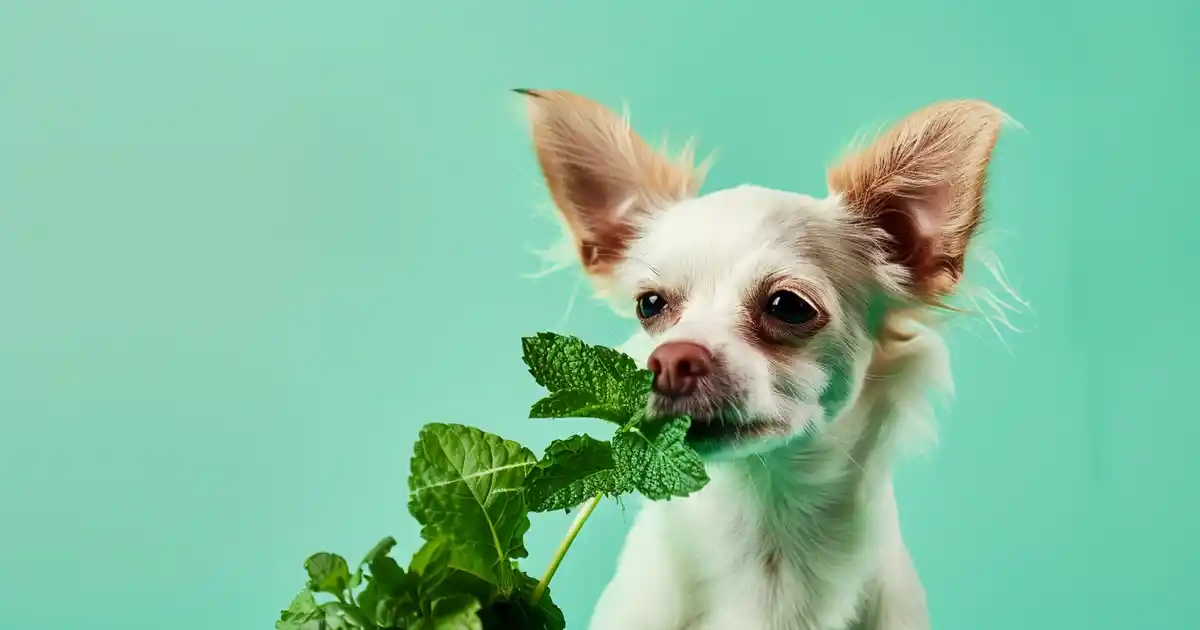
Have you ever been tending your herb garden, pinching off a sprig of fresh mint for a summer drink or a recipe, and looked down to find your dog sniffing at the plant with that specific focused interest that makes you wonder whether their apparent attraction to the scent means mint is something they would benefit from or something you should be actively keeping them away from? I had that exact moment with my dog Finn on a warm afternoon in the garden, watching him sniff a large cluster of spearmint with the kind of sustained interest he usually reserves for considerably more consequential discoveries, and realizing that my honest answer to the question of whether mint was safe for him was a genuine uncertainty rather than confident knowledge. What my research uncovered was a topic considerably more complicated than I had anticipated — a plant family where some varieties are genuinely safe and offer real health benefits for dogs, while others ranging from moderately concerning to genuinely toxic exist under the same common name of mint, meaning that the question cannot be answered with a single yes or no but requires specific knowledge about which mint you are dealing with and in what form and quantity. If you have been similarly uncertain about mint around your dog — whether from your garden, your kitchen herbs, your dog’s commercial treat ingredients, or the mint in products throughout your household — this guide is going to give you the specific, honest, vet-informed answer that replaces vague uncertainty with genuine knowledge about exactly which mints are safe, which are dangerous, and how to navigate the surprisingly complex mint landscape confidently and correctly.
Here’s the Thing About Mint and Dogs
Here’s what makes mint such a genuinely important topic to understand specifically rather than generally: the common name mint encompasses a botanical family — Mentha — that contains dozens of species and hundreds of cultivated varieties with significantly different chemical compositions and correspondingly different safety profiles for dogs, meaning that the same casual question of whether mint is safe for dogs produces a completely different accurate answer depending on which specific plant is being discussed, and the gap between the safest and most dangerous members of the mint family is large enough to make species identification genuinely consequential for your dog’s safety. According to research on Mentha and the mint family, the genus Mentha contains approximately thirteen to eighteen species with numerous natural and cultivated hybrids, with the most common culinary and garden varieties including spearmint, peppermint, watermint, apple mint, and chocolate mint representing a generally safe group for dogs at modest amounts, while pennyroyal — Mentha pulegium — represents a categorically different and genuinely dangerous member of the same plant family that causes liver toxicity and serious systemic illness and should be kept completely away from dogs under all circumstances. What makes this species distinction so practically significant rather than merely botanically interesting is that pennyroyal is commonly grown in home gardens, is sometimes present in natural insect repellent products and flea control preparations where it is marketed as a natural ingredient, and is not always clearly distinguished from safer mint varieties by appearance or casual observation — meaning that the confident assumption that your garden mint is safe because you think of mint as safe could be genuinely dangerous if the plant in question is actually pennyroyal rather than spearmint or peppermint. I never fully appreciated how critical species identification was for mint safety until I mapped the specific toxic mechanisms of pennyroyal against the benign profile of culinary mint varieties, and that mapping permanently changed how I approached the mint question — not with blanket confidence but with the specific species awareness that makes the confidence appropriate when it actually is. It is a topic where the difference between a casual generalization and an informed specific answer is the difference between a beneficial treat and a veterinary emergency.
What You Need to Know — Let’s Break It Down
Understanding the complete mint safety picture for dogs requires engaging with three distinct categories — safe culinary mints that offer genuine benefits, moderately concerning forms of otherwise safe mints, and genuinely dangerous mint varieties and mint-derived products — and having specific knowledge about each category to apply the right response to each situation. Don’t skip the pennyroyal identification piece — pennyroyal looks broadly similar to other mint family plants, has the characteristic minty fragrance of the family, and may be labeled simply as mint in some garden centers or natural product formulations, making it necessary to either positively identify culinary mint varieties by their specific botanical names or by purchasing them from suppliers who provide that specific identification rather than assuming that any plant smelling of mint is the same benign food herb. I finally understood the practical identification challenge when I visited a garden center with the specific intention of identifying what mint varieties they carried and discovered that approximately a third of their mint offerings were labeled only as mint without species identification — creating the exact ambiguity that makes species awareness so important for dog owners who grow mint. Spearmint — Mentha spicata — and its close relative peppermint — Mentha piperita — are the gold standard safe culinary mints for dogs, both appearing in commercial dog treats and breath freshening products designed specifically for canine use, and both recognized by veterinary authorities as appropriate for dogs in modest amounts. The key distinction for peppermint specifically is the difference between the fresh or dried herb and peppermint essential oil — peppermint essential oil is concentrated to levels where the menthol and other active compounds can cause genuine gastrointestinal distress, central nervous system effects, and liver toxicity in dogs at doses achievable through direct ingestion of the oil, making peppermint essential oil a product to keep away from dogs while peppermint leaf itself is generally safe. Wild mint — Mentha arvensis — and spearmint hybrids found in home gardens are generally in the safe category, while pennyroyal — Mentha pulegium — stands entirely apart as a toxic species regardless of whether it is fresh plant, dried herb, or essential oil concentrate. The specific toxic compound in pennyroyal is pulegone, a monoterpene ketone that causes severe liver toxicity through mechanisms that do not apply to safe culinary mint species, and the symptoms of pennyroyal toxicity including vomiting, diarrhea, lethargy, and in serious cases liver failure can develop following relatively small exposures in dogs whose smaller body mass makes them more vulnerable than humans to the dose effects. For a broader framework on understanding herb and plant safety for dogs in garden and kitchen environments where many commonly grown plants present varying safety profiles, check out this helpful guide to garden plants and herbs safe and unsafe for dogs for foundational context. Secondary concepts worth understanding clearly throughout this discussion include how the beneficial properties of safe mint varieties affect dogs, what appropriate portion guidance looks like for different mint forms, and which commercial products containing mint require label reading to distinguish safe culinary mint formulations from essential oil or pennyroyal-containing preparations.
The Science and Psychology Behind Why This Works
What research actually shows is that the rosmarinic acid content of spearmint and peppermint — a polyphenolic compound with documented antioxidant and anti-inflammatory properties — provides genuine physiological benefits when consumed at appropriate amounts, with veterinary research on rosmarinic acid suggesting relevance to inflammatory conditions including seasonal allergies where the compound’s inhibition of inflammatory enzyme activity has been studied as a potential therapeutic mechanism. Studies confirm that the breath-freshening effect of spearmint on dogs — the most commonly cited practical benefit of mint for dogs — is not merely a masking of odor through aromatic compounds but reflects a partial reduction in the bacterial populations responsible for volatile sulfur compound production in the oral cavity, providing a modest but genuine antimicrobial action that explains why veterinary dental product formulators incorporate spearmint into breath freshening and oral hygiene products. Experts agree that the digestive benefits of mint — specifically the carminative properties that reduce gas and bloating and the mild smooth muscle relaxant effect that can relieve digestive spasm — are physiologically relevant in dogs as well as humans through mechanisms involving menthol’s action on smooth muscle calcium channels, providing a biological foundation for the traditional use of mint as a digestive aid that is not merely folklore but reflects documented physiological mechanisms. Research from veterinary toxicology clearly establishes the pulegone hepatotoxicity mechanism in dogs — pulegone from pennyroyal is metabolized by the liver’s cytochrome P450 enzyme system into a reactive metabolite called menthofuran that directly damages hepatocytes, and dogs are more susceptible than humans to this toxic mechanism because of differences in their specific cytochrome P450 enzyme activity profile that produces more of the toxic metabolite per unit of pulegone consumed. Understanding both the genuine mechanisms of benefit from safe culinary mint and the specific toxicity mechanism of pennyroyal is what allows you to engage confidently with the mint question from a scientifically grounded position rather than relying on either blanket approval or blanket anxiety.
Here’s How to Actually Make This Happen
Start your approach to mint around your dog by positively identifying every mint plant in your garden and home environment before making any assumptions about safety — because the practical knowledge that your garden contains spearmint rather than pennyroyal is more important than any general guidance about mint safety, and achieving that knowledge requires the five minutes of specific identification that most dog owners have never invested. Here’s where I had been operating on comfortable but unverified assumptions with Finn: I had grown up thinking of the mint in my garden as simply mint, had never looked at it closely enough to positively identify the species, and it was only after researching this topic that I confirmed through leaf shape, fragrance profile, and comparison with botanical descriptions that what I had was spearmint — a confirmation that took about ten minutes and permanently resolved my uncertainty. The positive identification process for common garden mints involves three complementary approaches that together provide reliable species confirmation. Leaf examination — spearmint has lance-shaped leaves with serrated edges and a relatively smooth surface, while peppermint has broader, slightly more rounded leaves with a darker green color and often a reddish stem, and pennyroyal has smaller, rounder, more oval leaves with a distinctly different and more pungent fragrance character. Fragrance character — crushing a leaf between your fingers produces a characteristic scent that experienced herb growers can distinguish between species, with spearmint having a sweeter, more candy-like mint fragrance, peppermint having a sharper, more cooling menthol character, and pennyroyal having a more pungent, almost medicinal fragrance distinctly different from culinary mint. Source verification — purchasing mint plants from reputable nurseries that provide botanical name labels, or growing from seed using reliably labeled seed packets, eliminates the identification ambiguity that unidentified garden center plants can create. Once you have confirmed that your garden or kitchen mint is a safe culinary variety, the appropriate offering approach for fresh mint leaves to dogs is genuinely simple: one to two fresh spearmint or peppermint leaves for a small dog, two to four leaves for a medium dog, and up to five or six for a large dog offered as an occasional treat rather than a daily staple, with the frequency of offering being several times per week at most rather than continuous access to large quantities. Now for the important part about mint in commercial dog treats and products: the presence of mint or peppermint in a commercial dog treat is generally a positive indicator of appropriate formulation rather than a concern, as commercial canine product formulators use safe culinary mint varieties at appropriate concentrations, but reading ingredient labels to confirm that the mint ingredient is spearmint or peppermint rather than pennyroyal or mint oil is a worthwhile verification habit. Here’s my secret that has made mint a genuinely useful and consistently safe tool in Finn’s care routine — I grow a clearly labeled spearmint plant in a dedicated pot that I can harvest from with complete species confidence, I use two to three fresh leaves as an occasional breath freshening treat after meals, and I have never needed to address bad breath concerns because the consistent light use maintains comfortable breath quality rather than requiring reactive treatment of established bad breath. Results from this consistent moderate approach to mint are quiet in the positive sense — fresh breath without drama, the occasional digestive benefit, and zero incidents because the species identification and portion approach eliminate both the toxicity risks and the excess-fiber issues that make some dogs intolerant of larger mint quantities.
Common Mistakes (And How I Made Them All)
The mistake that carries the most serious safety implications is the assumption-based one — assuming that any mint-scented plant is as safe as culinary spearmint without specific identification, which is the assumption that creates the pennyroyal exposure risk. Before my research corrected this, I had essentially been trusting that my garden mint was safe based on the fact that I had always thought of it as mint without ever verifying the species, which is a form of circular reasoning that could have produced a very different outcome if my garden had contained pennyroyal rather than spearmint. Another extremely common and concerning mistake is the use of pennyroyal-containing flea control products on or around dogs — the natural flea control market includes products containing pennyroyal essential oil that are marketed as safer natural alternatives to conventional flea treatments, and the toxicity risk from pennyroyal essential oil applied topically or in collar form is genuine and has been documented in veterinary case reports. Don’t make my mistake of treating peppermint essential oil as equivalent in safety to fresh peppermint leaves — the concentration differential between fresh herb and essential oil is enormous, with essential oil containing active compounds at concentrations potentially hundreds of times higher than fresh plant material, and the direct ingestion of peppermint essential oil produces gastrointestinal distress and potential central nervous system and liver effects that fresh peppermint leaf does not. The mistake of offering mint-flavored human products — including mint gum, mint candy, mint chocolate, and mint toothpaste — under the reasoning that mint is safe for dogs ignores the other ingredients in these products that range from massively inappropriate sugar levels to xylitol, the sugar alcohol used in many sugar-free mint products that is acutely toxic to dogs and responsible for numerous serious poisoning incidents annually.
When Things Don’t Go as Planned
Feeling alarmed because your dog accessed pennyroyal — either from your garden, from a neighbor’s yard, or from a natural flea control product — contact the ASPCA Animal Poison Control Center or your veterinarian immediately regardless of whether symptoms have developed, because the hepatotoxic mechanism of pulegone means that liver damage can progress significantly before overt clinical signs appear, making early professional assessment more valuable than waiting for symptoms to determine the urgency of response. Provide the most specific information available about the plant or product involved, the approximate amount consumed, and your dog’s weight, as this information allows the poison control specialist to assess the dose-relative risk and advise on whether immediate emergency veterinary assessment is required or whether monitoring for specific signs is appropriate given the exposure specifics. For digestive upset following consumption of larger than appropriate amounts of safe culinary mint — the gas, mild bloating, or loose stools that can follow excess mint consumption in some dogs — the bland diet approach of plain boiled chicken and rice for twenty-four hours with continuous fresh water access is the appropriate management for mild symptoms, with veterinary contact warranted if symptoms are significant or persistent. I have learned from Finn’s occasional overenthusiastic herb garden sampling that the twenty-four hour observation window following any novel or excess plant consumption is the most diagnostically useful monitoring period — specifically tracking for vomiting, changes in stool, lethargy, and any signs of abdominal discomfort during that window provides the information needed to determine whether the exposure was as benign as hoped or requires professional assessment.
Advanced Strategies for Next-Level Results
Advanced integration of safe culinary mint into a dog’s health and care routine moves beyond casual treat offering into deliberate, purposeful use that leverages mint’s specific properties for defined health and hygiene goals. One of the most practically valuable advanced applications is incorporating fresh spearmint into a comprehensive oral hygiene routine — using two to three fresh leaves offered after meals as a routine element of dental hygiene support that complements but does not replace mechanical plaque removal through brushing or dental chews, taking advantage of the genuine antimicrobial and breath-freshening properties of spearmint in a form that most dogs find naturally appealing. Experienced dog owners with gardens often grow several clearly identified culinary herb plants in dedicated pots — spearmint and possibly chamomile, parsley, or other dog-safe herbs — as a controlled herb resource that allows confident plant-source treat offering without the species ambiguity that unidentified garden mint can create. What separates advanced mint use from casual offering is the integration of mint’s specific functional properties — breath freshening, digestive carminative effect, antioxidant contribution — into a thoughtful health maintenance routine rather than simply offering it as a treat of uncertain benefit. For dogs who resist toothbrushing — which represents a significant proportion of dogs in actual households where toothbrushing compliance is genuinely challenging — the breath freshening effect of regular small spearmint leaf offerings provides a meaningful contribution to oral health maintenance that supports rather than replaces the mechanical cleaning that dentists and veterinarians recommend as primary care.
Ways to Make This Your Own
When I want the most practical and consistently beneficial mint incorporation approach for Finn, I use what I call the Post-Meal Mint Routine — offering two fresh spearmint leaves from my clearly labeled pot immediately after his evening meal, which combines the timing advantage of fresh breath maintenance following the meal most associated with food-breath odor with the digestive benefit of carminative support during the post-meal digestive period, creating a routine that takes ten seconds and provides genuine dual benefit. For the garden-growing approach that provides the most confidence in safe species identity, my Labeled Herb Garden System involves growing every culinary herb in clearly labeled individual pots with both the common name and the botanical name on the label — a practice that serves both the dog safety identification purpose and the general household culinary herb organization purpose simultaneously, making it a zero-cost-in-effort system once the initial labeling is done. My seasonal fresh mint availability adaptation involves harvesting and drying spearmint from the garden during peak summer growth, storing the dried leaves in a sealed jar, and using small amounts of dried spearmint during winter months when fresh garden mint is not available — dried spearmint retains both the aromatic compounds and the functional properties of fresh at appropriately small portions. Each approach works beautifully for different household configurations and different levels of garden engagement. The Urban Apartment Adaptation for dog owners without gardens involves purchasing fresh spearmint from grocery store produce sections — where it is consistently labeled clearly enough to confirm species — as a reliable source of positively identified safe mint for occasional treat use without any growing infrastructure requirement.
Why This Approach Actually Works
Unlike the two inadequate responses to the mint question that most dog owners default to — either the blanket assumption that all mint is safe because culinary mint is safe, or the blanket avoidance of all mint because some mint is dangerous — this framework works because it accurately reflects the species-dependent safety profile of the mint family, provides the specific identification knowledge that allows confident safe use of genuinely appropriate varieties, and gives you the product label reading habit that extends safe mint engagement into commercial products without the risk of inadvertently exposing your dog to pennyroyal or essential oil concentrations in products that use the word mint without species specificity. The sustainable element is that once you have identified your specific mint sources, verified their species, and internalized the core distinctions — culinary spearmint and peppermint in leaf form are safe and beneficial, pennyroyal is always toxic regardless of form, essential oils of any mint are too concentrated for safe dog consumption — you have a complete and permanent framework for every mint decision you will encounter in dog ownership.
Real Success Stories (And What They Teach Us)
A dog owner I know whose rescue dog had persistent mild bad breath that made close interaction less comfortable than she wanted spent months trying various commercial breath freshening products before discovering through research that incorporating two to three fresh spearmint leaves from her kitchen herb garden into her dog’s post-meal routine produced breath improvement comparable to the commercial products she had been using, at essentially zero cost and with the confidence of knowing exactly what ingredient she was using and in what quantity. Her success illustrates the practical value of understanding mint’s genuine functional properties rather than simply its safety profile — the same knowledge that prevents harm by identifying pennyroyal as dangerous also enables benefit by confirming spearmint’s genuine antimicrobial and breath-freshening properties. Another dog owner I know avoided a genuine toxicity incident by reading the ingredient label on a natural flea control collar before putting it on her dog and recognizing pennyroyal essential oil as an ingredient she had specifically learned to avoid — a recognition that came directly from having researched the mint safety question thoroughly enough to know that pennyroyal’s marketing as a natural ingredient did not make it safe for her dog. The lesson across both stories is the same fundamental principle that defines this entire guide: specific, accurate knowledge about which mints are safe and which are dangerous, in which forms and at which concentrations, produces both better care outcomes and better safety outcomes than either general confidence or general anxiety about the entire mint category.
Tools and Resources That Actually Help
A clearly labeled dedicated spearmint pot — grown on a windowsill or in a garden space with both common and botanical name on the label — provides the most reliable source of positively identified safe mint for regular dog treat use, eliminating the species ambiguity that makes unidentified garden mint a potential source of inadvertent pennyroyal exposure. A botanical herb identification guide — either a reliable print reference or a reputable online botanical database — provides the specific visual and descriptive identification criteria needed to positively identify mint species from physical plant characteristics, and investing fifteen minutes in comparing your garden mint plants to botanical descriptions produces the permanent confident identification that makes ongoing use appropriate. A label-reading habit for any product labeled as containing mint, spearmint, peppermint, or natural mint — specifically looking for pennyroyal, Mentha pulegium, or mint essential oil as ingredients that warrant avoidance — converts a vague awareness of mint safety variation into a practical verification step that takes seconds and prevents the specific exposures most likely to cause harm. A saved reference note in your phone listing the key mint safety distinctions — spearmint and peppermint leaf safe in small amounts, pennyroyal always toxic, essential oils too concentrated, xylitol in mint products acutely toxic — provides the quick-reference reminder that prevents in-the-moment decisions made without the complete relevant information. For comprehensive, veterinarian-reviewed information on plant toxicity including the mint family and specifically pennyroyal toxicity in dogs including clinical signs, treatment approach, and prognosis, the ASPCA Animal Poison Control Center’s toxic plant database provides the most complete and regularly updated reference available for confirming the safety status of any specific plant your dog may have encountered. A dedicated mint storage location — whether a kitchen pot, a garden bed, or a grocery purchase kept fresh — that is consistently your identified, species-confirmed source for dog mint treats eliminates the inconsistency that makes ad hoc mint offering more ambiguous than regular use of a positively identified source.
Questions People Always Ask Me
Can dogs eat mint safely, or is it one of those herbs that sounds natural but is actually dangerous? The accurate answer depends entirely on which mint — spearmint and peppermint in leaf form are genuinely safe for dogs in modest amounts and offer real benefits including breath freshening and digestive support, while pennyroyal is genuinely toxic regardless of quantity and should be kept completely away from dogs. The key to answering this question correctly for your specific situation is knowing which specific mint plant you are dealing with, which requires positive species identification rather than the assumption that all mint is equivalent.
What makes pennyroyal so much more dangerous than other mint varieties? Pennyroyal contains pulegone, a monoterpene ketone that is metabolized by the liver into a reactive compound called menthofuran that directly damages liver cells through a mechanism that does not occur with the active compounds in safe culinary mint species. Dogs are more susceptible than humans to this toxic mechanism because of differences in their liver enzyme activity that produces more of the toxic metabolite per unit of pulegone consumed. The toxicity is not merely a dose effect of the same compounds present in safe mint but a qualitatively different chemistry that makes pennyroyal dangerous at exposures that would be insignificant with spearmint.
Is peppermint safe for dogs, and what about peppermint essential oil? Fresh or dried peppermint leaf is generally safe for dogs in modest amounts — it appears in veterinary dental and breath care products and is recognized by veterinary authorities as appropriate in culinary quantities. Peppermint essential oil is a completely different matter — the concentration of active compounds including menthol in essential oil is so dramatically higher than in fresh or dried leaf that even small amounts can cause gastrointestinal distress, central nervous system effects, and potential liver toxicity. Peppermint leaf safe, peppermint essential oil not safe — that distinction is absolute and important.
How much spearmint can I safely give my dog? One to two fresh spearmint leaves for a small dog, two to four leaves for a medium dog, and up to five or six for a large dog represents an appropriate occasional treat portion. Daily offering at these amounts is reasonable for most healthy adult dogs, with the qualification that dogs new to mint should start at the lower end of this range and be observed for any digestive sensitivity before regular incorporation. Large quantities of any mint can cause digestive upset through the carminative effects becoming excessive rather than beneficial at high doses.
Can I use mint to freshen my dog’s breath, and does it actually work? Spearmint does provide genuine breath freshening benefit through a combination of aromatic masking and actual antimicrobial activity against the bacteria responsible for oral odor production, making it a legitimate tool for breath management rather than merely a pleasant-smelling placebo. Two to three fresh spearmint leaves offered after meals is a practical routine for breath maintenance. However, persistent severe bad breath in dogs often reflects underlying dental disease, gum disease, or systemic health issues that require veterinary assessment and treatment rather than herbal management.
My dog ate mint gum — what should I do? Contact the ASPCA Animal Poison Control Center or your veterinarian immediately — mint gum is a high-priority concern not because of the mint but because of the other ingredients, specifically xylitol, a sugar alcohol used in many sugar-free gum formulations that is acutely toxic to dogs causing dangerous hypoglycemia and liver failure even in small amounts. Provide the specific product name and approximate quantity consumed along with your dog’s weight for the most accurate risk assessment. Do not wait for symptoms — xylitol toxicity requires prompt veterinary intervention.
Are there mint-based dog treats I can buy, or should I only use fresh herbs? Many commercial dog treats and dental care products incorporate spearmint or peppermint as an ingredient specifically for the breath freshening and oral hygiene benefits relevant to canine dental health, and these products are generally formulated at appropriate concentrations using safe mint varieties. Reading the ingredient label to confirm spearmint or peppermint rather than pennyroyal or mint essential oil is the appropriate verification step before purchasing any commercial mint-containing product. Commercial mint dog treats that meet this label check are a convenient alternative to fresh herb for owners who do not grow their own mint.
Can I plant mint in my garden if I have a dog, or is it safer to avoid it entirely? Culinary mint varieties including spearmint and peppermint can be safely grown in gardens with dogs — the plants are not toxic and garden access to modest amounts of spearmint or peppermint leaves is unlikely to cause any harm. The important qualifications are positively identifying the specific variety planted, keeping pennyroyal out of any garden accessible to dogs, and ensuring that dogs do not have unsupervised access to quantities large enough to cause digestive upset from excess consumption. A clearly labeled spearmint or peppermint planting is a legitimate dog-safe garden herb.
What are the signs of mint toxicity in dogs, and how would I know if my dog ate something dangerous? Signs of pennyroyal toxicity — the most serious mint-family toxicity concern — include vomiting, diarrhea, lethargy, loss of appetite, and in more serious cases signs of liver involvement including jaundice, behavioral changes, and abdominal pain, typically developing within several hours of exposure. Signs of peppermint essential oil exposure include vomiting, diarrhea, and potentially central nervous system signs including lethargy and incoordination. Any of these signs following plant or product ingestion should prompt immediate veterinary contact with the most specific information available about what was consumed.
Does mint have any real health benefits for dogs, or is it just for breath freshening? Beyond breath freshening, spearmint and peppermint offer dogs genuine carminative properties — reducing gas and digestive discomfort — through menthol’s smooth muscle relaxant effects, antioxidant contribution through rosmarinic acid and other polyphenolic compounds, and mild anti-inflammatory activity that has been studied in the context of seasonal allergy management. These are real physiological effects supported by documented mechanisms rather than folk wisdom without scientific foundation, making culinary mint a functionally beneficial supplement when used appropriately rather than simply a pleasant-smelling treat.
Can puppies eat mint, or should I wait until they are adults? Very small amounts of fresh spearmint are not acutely dangerous for puppies, but puppies have more sensitive digestive systems than adults and may respond with more pronounced gastrointestinal upset to the carminative compounds in mint than healthy adult dogs would. The breath freshening and digestive support applications that make mint most useful are less relevant for puppies whose normal breath and digestion do not typically require intervention. If offering mint to a puppy, use genuinely tiny amounts — a single small leaf — with careful observation for any adverse response before making it any kind of regular offering.
Before You Get Started
I couldn’t resist putting together the most complete and honestly nuanced guide I could on this topic because the mint question is one where a casual yes or no answer does a disservice to both the genuine benefits of safe culinary mint varieties and the genuine danger of pennyroyal — and where the specific knowledge that distinguishes between them is simple enough to acquire and important enough to make a real difference in real dogs’ safety and wellbeing. The best mint experiences for dogs come from owners who took the ten minutes to positively identify their mint source before the first leaf was offered, who understand the essential oil concentration issue completely enough to keep those products away from their dogs regardless of how they are marketed, and who use the safe culinary varieties with the relaxed confidence that accurate species knowledge makes genuinely appropriate. Ready to begin? Look at the mint in your garden or kitchen right now, identify it by its specific botanical name using the visual and fragrance characteristics this guide has described, and then — if you have confirmed spearmint or peppermint — offer Finn, or your dog, a single fresh leaf and watch them discover one of the more pleasant and genuinely beneficial herbs you can share with them.




