
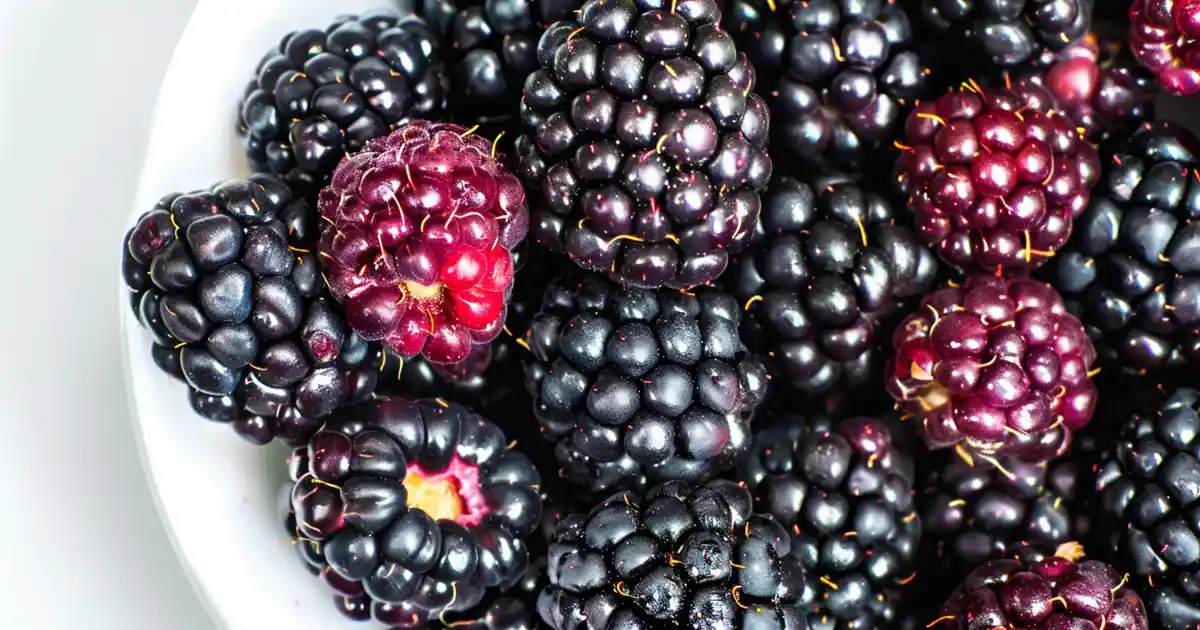
Have you ever been standing at your kitchen counter, snacking on a bowl of fresh blackberries, and looked down to find your dog staring up at you with that irresistible combination of hope and absolute certainty that whatever you’re eating must be the greatest thing on earth? I’ve been there so many times with my own dog that it practically became a daily ritual every summer. The thing is, I genuinely didn’t know for the longest time whether blackberries were safe to share or whether I was about to cause a problem by being generous. Unlike grapes — which every dog owner seems to know are dangerous — blackberries exist in this strange gray zone where nobody seems confident about the answer. After going deep on the research, talking to my vet, and carefully testing the waters with my own pup, I finally have a clear, honest answer that I wish someone had given me years ago. If you’ve been hesitating every berry season, this guide is going to settle it once and for all.
Here’s the Thing About Blackberries and Dogs
Here’s the magic of this particular topic — blackberries are actually one of the more genuinely beneficial fruits you can share with your dog when done correctly. Unlike some human foods that are merely “not harmful,” blackberries bring real nutritional value to the table. They’re packed with antioxidants, fiber, vitamins C and K, and manganese, all of which support canine health in meaningful ways. The mild hesitation most dog owners feel comes from two legitimate concerns: the natural sugar content and the presence of a compound called xylitol that occurs naturally in trace amounts in some berries. According to research on xylitol toxicity documented in veterinary pharmacology studies, the naturally occurring xylitol in blackberries exists at levels so low that the fruit would need to be consumed in truly enormous quantities to pose any realistic risk to most dogs — a far cry from the concentrated artificial xylitol found in sugar-free products that is genuinely dangerous. I never knew that the xylitol concern so many websites raise about blackberries was so dramatically overstated compared to actual artificial xylitol exposure risks, and that discovery completely changed how I approach berry season with my dog. It’s honestly more straightforward than I ever expected once the real science is separated from the internet noise — no complicated calculations needed.
What You Need to Know — Let’s Break It Down
Understanding both the benefits and the boundaries of feeding blackberries to your dog is absolutely crucial before you start tossing them across the kitchen floor like I eventually did with great confidence. Don’t skip this section — this is where the nuance lives.
The nutritional profile is genuinely impressive. Blackberries are among the highest antioxidant fruits available, which matters for dogs just as it does for humans. Antioxidants combat oxidative stress and inflammation, support immune function, and have been associated with reduced cancer risk in long-term studies. For a dog eating primarily processed kibble, a few blackberries represent a meaningful whole-food nutritional boost. I finally understood this after months of thinking fruit was just a fun treat with no real value — the science changed my whole perspective.
Sugar content requires honest respect. Blackberries are lower in sugar than many other fruits — lower than bananas, mangoes, or grapes — but they still contain natural sugars that add up. For dogs with diabetes, obesity, or pancreatitis, even the natural sugar in berries warrants a conversation with your vet before becoming a regular treat. (Took me forever to apply this nuance to my thinking rather than assuming “natural sugar equals fine.”)
Size and portion are everything. One or two blackberries for a small dog, a small handful for a medium dog, and up to ten or so for a large breed is a reasonable framework. These are treats, not meal components. (Game-changer, seriously, once I stopped eyeballing it and actually thought proportionally.)
Wild blackberries require extra caution. Backyard or trail-side wild blackberries could carry pesticide residue, parasites, or contamination from animal activity. If your dog hoovers them up on a hike before you can intervene, don’t panic — but washing and sourcing matters when you’re intentionally serving them.
If you’re just starting out with building a whole-food treat rotation for your dog, check out our beginner’s guide to dog-safe fruits and vegetables for foundational techniques on introducing new foods confidently and without second-guessing every decision.
The Science and Psychology Behind Why This Works
What research actually shows about blackberries and canine health goes well beyond the simple “yes or no” safety question most dog owners start with. The anthocyanins responsible for blackberries’ deep purple-black color are among the most studied antioxidant compounds in nutritional science, and their benefits appear to cross species lines meaningfully. Studies in veterinary nutrition have examined the role of polyphenols — the broader category anthocyanins belong to — in reducing chronic inflammation in dogs, supporting cognitive function in aging animals, and even contributing to cardiovascular health over time.
The psychological dimension of this topic is worth examining too. There’s a growing body of evidence suggesting that the ritual of sharing food — even in small amounts — strengthens the human-animal bond in ways that have measurable effects on both owner satisfaction and dog behavioral wellbeing. Research in animal behavioral science confirms that positive, consistent food-sharing interactions build trust, reduce anxiety in dogs with nervous temperaments, and create reliable positive associations between owner and dog. For dog owners who feel guilty about not offering variety beyond kibble, introducing safe fruits like blackberries is a genuinely low-cost, high-reward way to enrich your dog’s daily experience. Experts in canine enrichment agree that sensory novelty — new textures, flavors, and aromas — is one of the most underutilized tools for supporting mental health in companion animals.
Here’s How to Actually Make This Happen
Start by sourcing your blackberries thoughtfully — and here’s where I used to completely skip steps because I figured a berry is a berry and that was that.
Step 1: Choose and inspect your blackberries. Whether from the grocery store, farmers market, or your own garden, select fully ripe blackberries — deep black, slightly soft, and sweet-smelling. Unripe blackberries are more tart and contain higher concentrations of compounds that can cause digestive upset in dogs. Discard any that are moldy or overly mushy.
Step 2: Wash thoroughly. Rinse under cool running water even if they’re labeled organic. This removes surface residue, dust, and any hitchhiking insects that might have made themselves at home in those little drupelets.
Step 3: Consider size relative to your dog. For very small dogs — think Chihuahuas, toy breeds, or small puppies — cutting blackberries in half or even quarters reduces choking risk and makes the treat more manageable. For medium and large dogs, whole blackberries are generally fine. Now for the important part: whole blackberries are soft and unlikely to be a genuine choking hazard for most dogs, but cutting them takes ten seconds and removes any doubt entirely.
Step 4: Introduce with a single berry. Here’s where I used to mess up — I’d get excited and give a small handful right away. Start with one blackberry the first time and observe your dog for the next several hours. Watch for any signs of digestive upset, unusual stool, or allergic response. This step takes almost no effort but creates lasting confidence going forward.
Step 5: Establish a sensible portion routine. Once your dog has handled the introduction beautifully, build a rhythm that works. My mentor — my vet of many years — taught me this trick: use the 10% rule for all treats, meaning treats including fruit should never exceed 10% of your dog’s total daily caloric intake. A blackberry has roughly one to two calories, making portion math genuinely easy compared to higher-calorie treats. Every dog has individual thresholds, and smaller or more sedentary dogs need more conservative portions.
Step 6: Vary the delivery method. Fresh, frozen, or blended into a dog-safe smoothie — varying how you offer blackberries keeps the experience novel and engaging. Results vary based on individual preference, but most dogs respond enthusiastically to frozen berries particularly during warm months.
Common Mistakes (And How I Made Them All)
Let me be completely transparent with you — my enthusiasm for feeding my dog healthy foods has led me into some genuinely avoidable mistakes over the years, and blackberries were no exception.
My first mistake was serving blackberries straight from a container of mixed berries without checking what else was in there. Grapes were the other berry in that particular mix — and grapes are genuinely toxic to dogs in ways that are still not entirely understood scientifically but are well-documented clinically. I caught it before my dog got into the grapes, but the lesson landed hard. Don’t make my mistake of serving any berry without knowing exactly what it is first.
My second mistake was not accounting for the fiber content when I first introduced blackberries. Blackberries are notably high in fiber for their size, which is generally a positive thing — but giving a dog who isn’t used to high-fiber foods a generous portion right away is a reliable path to a messy afternoon. Start small and build up gradually, especially for dogs on low-fiber kibble diets.
My third mistake was assuming that because my large dog tolerated a portion well, the same portion would be fine for my friend’s small dog. Portion sizing is body-weight dependent, full stop. What works for a 70-pound Labrador is a genuinely different conversation from what works for a 12-pound Shih Tzu.
When Things Don’t Go as Planned
Feeling a flash of panic because your dog already helped themselves to a significant quantity of blackberries from a low bowl on the counter before you could intervene? Take a breath — this is one of the more forgiving situations in the world of dogs-eating-human-food emergencies.
If your dog consumed a moderate amount of plain ripe blackberries with nothing else added, you’re almost certainly looking at a digestive situation rather than a toxicity situation. Expect potentially softer stool or mild stomach gurgling in the next 12 to 24 hours, ensure access to plenty of fresh water, and monitor calmly. I’ve learned to handle these moments by staying observant rather than panicked, because most blackberry overindulgences resolve on their own within a day.
If your dog consumed blackberries that were part of a dessert, jam, preservative, or baked good containing added sugar, xylitol, or other ingredients, that’s a different conversation entirely. Contact your vet or the ASPCA Animal Poison Control Center with specifics about what was consumed and how much. Symptoms of xylitol toxicity — from artificial sources — include vomiting, loss of coordination, lethargy, and in serious cases, seizures. Don’t wait for symptoms before calling if artificial xylitol exposure is a possibility.
If your dog ate wild blackberries on a walk and you’re unsure of the environment they came from, watch for any signs of gastrointestinal distress and call your vet if symptoms appear within 24 hours.
Advanced Strategies for Next-Level Results
Once you’ve established that your dog is a happy blackberry fan and handles them without any fuss, there are some genuinely creative and nutritionally thoughtful ways to take this further.
Blackberry and yogurt frozen treats are something I make every summer without fail. Blend a small handful of blackberries with plain, unsweetened, xylitol-free yogurt — probiotic yogurt is even better — pour into silicone molds, and freeze. The result is a beautiful purple frozen treat that delivers antioxidants, probiotics, and cooling relief in one. Advanced dog treat makers often layer complementary nutritional benefits exactly this way.
Blackberry-infused water is a gentle way to add the flavor and a touch of nutrition for dogs who aren’t immediately enthusiastic about eating the whole fruit. Muddle a few blackberries in fresh water, strain out the solids, and offer the lightly tinted water alongside their regular water bowl. Great for picky drinkers in summer.
Mixed berry training reward rotation is a strategy I’ve seen experienced positive reinforcement trainers use effectively. Rotating between blueberries, blackberries, and raspberries as training rewards keeps high-value reward sessions feeling fresh and novel for scent-and-flavor-motivated dogs, reducing treat boredom that can flatten training enthusiasm over time.
Blackberry powder supplement — made by freeze-drying blackberries and grinding them — can be sprinkled in tiny amounts over kibble as a daily antioxidant addition. This is a more advanced approach that some integrative veterinary practitioners recommend for senior dogs or those with inflammatory conditions, always in conjunction with professional guidance.
Ways to Make This Your Own
When I want faster results with a picky dog who isn’t immediately convinced by fresh blackberries, I’ll lightly mash one between my fingers to release the juice and aroma before offering it — the intensified scent is almost always enough to close the deal.
The Frozen Summer Version is my absolute warm-weather staple. Wash, dry, and freeze whole blackberries on a parchment-lined baking sheet until solid, then transfer to a freezer bag. Pull one out as needed for a refreshing, long-lasting treat that most dogs find fascinating to eat because of the texture change. I call this the Berry Freeze and it genuinely never gets old.
The Senior Dog Adaptation focuses on using blackberries specifically for their anti-inflammatory and cognitive support properties. For older dogs, mashing a few blackberries into their food a few times a week is a simple, low-effort way to add meaningful antioxidant support during the years when it matters most.
The Training Treat Version uses very small blackberry pieces — a quarter berry for small dogs, half for medium and large — as high-value, novel rewards during training sessions. The juiciness and distinctive flavor make them genuinely exciting compared to standard training treats, and the low calorie count means you can use more repetitions without guilt.
The Budget-Friendly Version focuses on buying blackberries in bulk when they’re in peak season and least expensive — typically late summer — washing, drying, and freezing the entire haul for use throughout the rest of the year. One afternoon of prep gives you months of ready-to-go dog treats at a fraction of the off-season cost.
The Picky Eater Version involves blending one or two blackberries into a spoonful of plain pumpkin puree — itself an excellent digestive support food for dogs — and offering it as a lickable treat from a spoon or lick mat. The combination of flavors and textures tends to win over even reluctant fruit eaters.
Why This Approach Actually Works
Unlike the binary “safe or unsafe” framing that most quick internet searches deliver, understanding the full nutritional and physiological picture of blackberries for dogs allows you to make genuinely confident, customized decisions for your specific animal. This isn’t about following a rule you don’t understand — it’s about knowing enough to adapt intelligently to your dog’s size, health status, and individual preferences.
What sets this approach apart from a quick Google answer is that it integrates the toxicology, the nutrition science, the behavioral benefits, and the practical realities of actually living with a dog who wants to share your snacks. I had a personal discovery moment when I realized that the veterinary community’s general enthusiasm for berries as a dog treat category isn’t accidental — it’s rooted in genuinely favorable nutritional profiles that compare well to most commercial dog treats. That understanding completely reframed blackberries from a “maybe okay sometimes” treat into a confidently chosen, intentionally offered nutritional addition.
Real Success Stories (And What They Teach Us)
A close friend of mine has a seven-year-old Cocker Spaniel who developed seasonal allergies that her vet attributed partly to chronic low-grade inflammation. As part of a broader dietary adjustment recommended by a veterinary nutritionist, she began incorporating small amounts of mixed berries — including blackberries — into her dog’s daily routine alongside other anti-inflammatory dietary changes. Six months later, her dog’s allergy symptoms had reduced noticeably, her coat quality had improved, and her vet noted reduced redness and skin irritation at her annual checkup. Their success aligns with research on dietary antioxidants showing that consistent polyphenol intake supports measurable reductions in inflammatory markers across mammalian species.
Another dog owner in my neighborhood used blackberries as the breakthrough treat that finally made recall training click for her notoriously distracted Beagle. She’d tried every commercial treat on the market and he’d lose focus the moment anything more interesting than the treat appeared in his environment. The novel scent and flavor of fresh blackberries held his attention in a way nothing else had managed. Three weeks of blackberry-rewarded recall sessions later, she had a dog who came every single time she called. The lesson both stories teach is that intentional, informed food choices ripple outward in ways you genuinely don’t expect when you start.
Tools and Resources That Actually Help
Silicone lick mats are something I use constantly and recommend to every dog owner I talk to. Spreading a small amount of mashed blackberry mixed with plain yogurt or pumpkin onto a lick mat creates a slow-consumption enrichment activity that keeps dogs engaged, supports calm behavior, and delivers the nutritional benefits over a longer, more satisfying experience than simply eating a berry in one bite.
A small kitchen food scale removes all the guesswork from portioning. Knowing exactly how many grams of blackberries you’re offering relative to your dog’s body weight takes the anxiety out of treat math entirely and is especially useful if you’re working with a dog managing weight or metabolic health.
Silicone freezer molds in small sizes are invaluable for making dog-safe frozen treats at home. The small size is specifically important — standard ice cube trays make portions that are often too large for small and medium dogs.
“Unlocking the Canine Ancestral Diet” by Steve Brown is a genuinely fascinating read for dog owners interested in understanding how whole foods — including fruits — fit into the broader picture of canine nutritional evolution and modern dietary optimization.
The American Kennel Club’s comprehensive food safety database and the Merck Veterinary Manual’s online toxicology resources are both excellent, regularly updated references for cross-checking any food before offering it to your dog. The best resources always come from authoritative veterinary sources, and both deliver that with accessibility and regularity.
Questions People Always Ask Me
How many blackberries can my dog eat safely in one sitting? The honest answer is that it depends on your dog’s size. A rough framework: one to two berries for dogs under 10 pounds, three to five for dogs between 10 and 30 pounds, and up to ten for larger breeds. These aren’t rigid limits so much as sensible starting points that keep sugar and fiber intake in a comfortable range. Always observe your individual dog’s response and adjust from there.
Are blackberries better fresh or frozen for dogs? Both are equally safe and nutritious — freezing doesn’t meaningfully degrade the antioxidant or fiber content of blackberries. Frozen blackberries offer the added benefit of being a cooling treat in warm weather and a novel texture that many dogs find more engaging than fresh. I personally use both depending on the season and what I have on hand.
Can puppies eat blackberries? Yes, with appropriate caution. Puppies have more sensitive digestive systems and smaller body weights, so portions should be smaller and introduction even more gradual than with adult dogs. A single blackberry cut in half is a reasonable first introduction for a puppy, and I’d wait until after the initial feeding transition period — ideally after 12 weeks old — before introducing fruit treats.
Are wild blackberries safe for dogs? Ripe wild blackberries are generally the same fruit as cultivated ones from a botanical perspective, but the environment matters. Wild berries may carry pesticide drift from neighboring properties, parasites, or contamination from wildlife activity. If your dog snacks on a few during a hike, it’s unlikely to be a problem, but I wouldn’t intentionally harvest wild berries for regular treat use without knowing the environment they came from.
My dog ate blackberry jam — should I be worried? Blackberry jam is a different situation from fresh blackberries. Most commercial jams contain significant amounts of added sugar and sometimes xylitol as a sweetener, and the sugar concentration alone makes it inappropriate for dogs even in small quantities. Plain jam without xylitol in a tiny accidental amount is unlikely to be a crisis, but it’s not something to offer intentionally. Check the label for xylitol and contact your vet if any was present.
Can blackberries help with my dog’s digestion? The fiber content in blackberries can support healthy digestion in dogs who consume them in appropriate amounts — particularly for dogs prone to occasional constipation or irregularity. However, too much fiber too quickly has the opposite effect, contributing to loose stool. The key is moderation and gradual introduction, which lets the digestive system adapt without disruption.
Are blackberries safe for dogs with diabetes? Blackberries are on the lower end of the glycemic spectrum for fruits, which is relatively favorable, but dogs with diabetes require careful management of all sugar intake including natural sugars from fruit. This is a conversation to have with your vet specifically, who can weigh in on whether and how much fruit fits within your diabetic dog’s overall dietary management plan.
What other berries are safe to mix with blackberries for dogs? Blueberries and raspberries are both excellent companions to blackberries in a mixed berry treat. Strawberries are also safe in moderation. The berries to avoid entirely are grapes and currants, which are toxic to dogs and should never be part of any mix. Always identify every ingredient before serving a mixed fruit combination.
How do I know if my dog is allergic to blackberries? Signs of a food sensitivity or allergic response can include itching, hives or skin redness, vomiting, diarrhea, or facial swelling following consumption. These responses are relatively uncommon with blackberries specifically, but any new food carries a small possibility of individual reaction. Introducing one new food at a time and observing carefully for 24 to 48 hours is the most reliable way to catch and identify sensitivities early.
Do blackberries help with inflammation in dogs? The anthocyanins and other polyphenols in blackberries have well-documented anti-inflammatory properties in nutritional research, and while canine-specific long-term studies are more limited than human studies, the underlying biochemistry is similar enough that many veterinary nutritionists consider berries a worthwhile addition to the diet of dogs dealing with chronic inflammation, arthritis, or skin conditions. They’re not a replacement for veterinary treatment but can be a meaningful complementary addition.
Can I give my dog blackberry-flavored dog treats instead of real blackberries? Commercial dog treats with blackberry flavoring vary enormously in quality and ingredient integrity. Some contain real fruit, many contain artificial flavors, and the sugar and additive content differs widely by brand. Real blackberries will always be nutritionally superior to flavored treats, and I’d encourage reading the label of any commercial option as carefully as you would a jar of human jam.
What’s the best way to store blackberries for use as dog treats? Fresh blackberries keep in the refrigerator for three to five days. For longer storage, wash, dry thoroughly, and freeze in a single layer before transferring to a sealed freezer bag — they’ll keep for up to a year without significant quality loss. Having a stash of frozen blackberries means you’re never without a healthy treat option, which is genuinely one of the more underrated advantages of this particular fruit.
Before You Get Started
I couldn’t resist putting together this complete guide because it genuinely proves that one of summer’s most beautiful, nutritious fruits belongs in your dog’s treat rotation just as much as it belongs in yours. The best blackberries for dogs journeys start with a single ripe berry, an observant eye, and the confidence that comes from actually understanding why something is safe rather than just being told it is. Ready to begin? Wash one ripe blackberry, cut it in half, and offer it to your dog this afternoon — that one small moment of intentional, informed sharing is where every great dog nutrition habit starts.




