
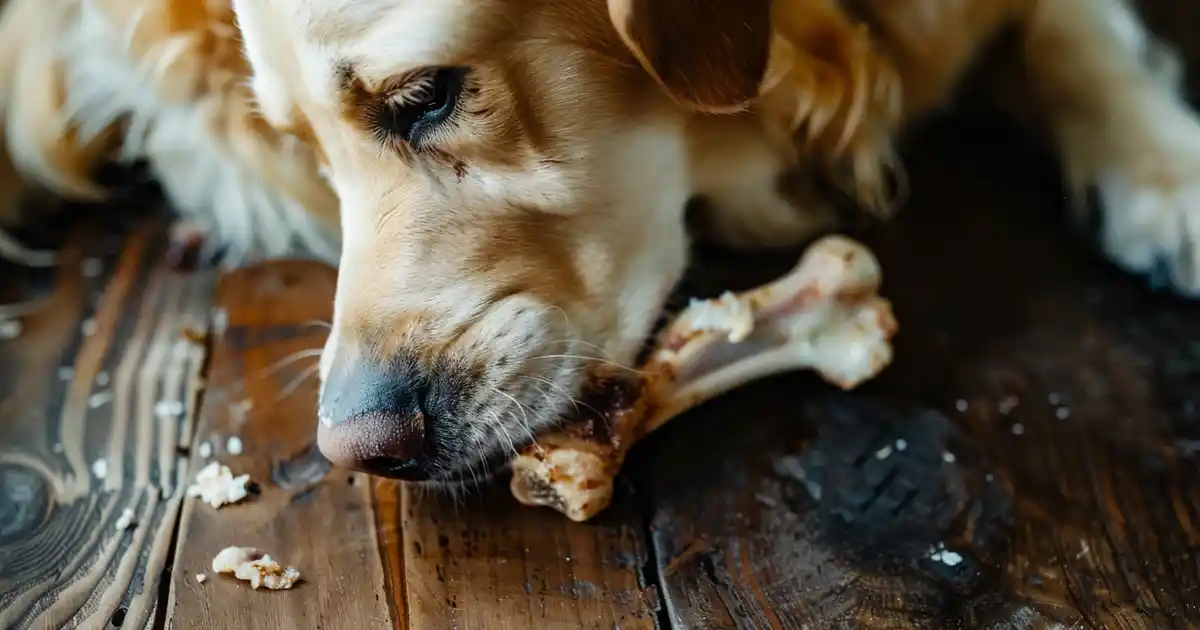
Have you ever wondered why pork bones seem like a natural treat for dogs until you discover what veterinarians actually see in emergency rooms? I used to think giving my Rottweiler Bruno leftover pork chop bones was perfectly harmless, until I discovered the terrifying reality that completely changed how I approach bones forever. Now my friends constantly ask whether bones are okay for their dogs, and my vet (who’s seen countless bone-related emergencies) keeps praising how I’ve learned to protect Bruno from this common but serious hazard. Trust me, if you’re worried about making a potentially life-threatening mistake with something that seems so natural, this approach will show you it’s more critical than you ever expected.
Here’s the Thing About Pork Bones and Dogs
Here’s the harsh truth—pork bones, especially cooked ones, are genuinely dangerous for dogs and should never be given, despite how natural it seems. The secret to understanding this is recognizing that cooked bones fundamentally change structure, becoming brittle and prone to splintering in ways that can cause catastrophic injuries. I never knew the difference between raw and cooked bone safety could be this life-or-death serious until I learned the crucial physics of how heat affects bone structure. According to research on canine digestive system anatomy and foreign body complications, dogs’ powerful jaws and strong stomach acid can’t prevent the mechanical damage that bone fragments cause to tissues. This combination of instinctive bone-chewing behavior and genuine physical danger creates one of the most common preventable emergency situations veterinarians encounter. It’s honestly more dangerous than I ever expected—what seems like a harmless reward can become a surgical emergency within hours.
What You Need to Know – Let’s Break It Down
Understanding why cooked pork bones are specifically dangerous is absolutely crucial for protecting your dog. When pork bones are cooked, the heating process removes moisture and makes the bone matrix brittle, causing them to splinter into sharp shards rather than breaking into larger, safer pieces. Don’t skip this reality check—I finally figured out that the cooking method doesn’t matter (baked, grilled, fried, smoked—all equally dangerous) after nearly making a fatal mistake with leftover ribs (took me forever to realize this).
The splintering creates sharp fragments that can puncture the esophagus, stomach, or intestines as they pass through the digestive system. Perforation leads to peritonitis (infection of the abdominal cavity), which is often fatal without emergency surgery (game-changer, seriously). I always recommend understanding the actual mechanism of injury because everyone makes better decisions when they grasp what’s physically happening inside their dog’s body.
Yes, raw pork bones are slightly less dangerous but still problematic, and here’s why: while raw bones maintain more flexibility and splinter less readily, they still pose choking hazards, tooth fractures, and can carry bacteria like Salmonella or parasites. Raw pork bones work marginally better than cooked if you’re determined to give bones, but you’ll need to understand they’re never truly “safe”—only “less immediately deadly.”
If you’re looking to understand what safe chewing options actually exist for dogs who need that satisfying gnawing experience, check out my comprehensive guide to safe dog chews and treats for foundational knowledge that’ll help you provide appropriate alternatives without the emergency room risk.
The Science and Psychology Behind Why This Works (Badly)
The psychology of why bones seem natural for dogs comes down to ancestral behavior—wild canines consume entire prey including bones. Research from leading veterinary surgeons demonstrates that domestic dogs’ anatomy hasn’t evolved to safely process cooked bones, which never existed in their evolutionary history. Studies on veterinary emergency medicine and foreign body complications show that bone fragments account for a significant percentage of gastrointestinal foreign body surgeries, with pork and chicken bones being most common culprits.
The science backs this up: cooked bones lose their organic matrix flexibility, making them behave more like ceramic shards than the pliable structures wild canines might encounter. Your dog’s powerful bite pressure (300+ PSI for many breeds) easily fractures cooked bones into irregular, sharp pieces. Traditional thinking that “dogs have always eaten bones” fails to account for the critical difference between raw bones with intact connective tissue and the denatured structure of cooked bones.
What makes pork bones particularly dangerous from a scientific perspective is their size and structure. Pork rib bones are thin and curve perfectly to lodge in throats or intestines. Pork chop bones are weight-bearing bones that splinter aggressively when cooked. The combination of size, shape, and brittleness creates multiple failure points—choking, obstruction, perforation, or all three simultaneously.
Here’s How to Actually Make This Happen (Safely—Which Means NO Pork Bones)
Start by absolutely never giving your dog any cooked bones of any kind—here’s where I used to mess up, thinking “just this once” or “he’s had them before without problems” created some kind of safety margin. The conversation with yourself should be: “No cooked bones, ever, no exceptions.” Don’t be me—I used to rationalize that Bruno’s large size meant he could handle bones until my vet showed me X-rays of similar-sized dogs with perforated intestines.
Now for the important part: dispose of pork bones where your dog cannot possibly access them. This step takes conscious effort but prevents life-threatening emergencies. Pork bones go directly into a secure outdoor trash can or disposal, never into kitchen garbage where dogs can raid it. Here’s my secret—I keep a dedicated container with a locking lid specifically for meat bones and dispose of it immediately after meals.
When you have pork bones from meals, account for every single bone before cleanup. Until you feel completely confident that all bones are secured, double-check your counting—missing even one bone can be catastrophic. Results of bone ingestion can manifest within hours (choking, obstruction) or take days (perforation), so vigilance extends beyond the immediate meal.
My vet taught me this trick: if you absolutely must give your dog something bone-like, choose products specifically designed for safe chewing—synthetic bones, rubber chew toys, or dental chews made from digestible materials. Every situation has its own challenges—power chewers versus gentle gnawers require different products. Don’t worry if you’re just learning about bone safety; even experienced dog owners sometimes don’t realize the severity of risks until it’s almost too late.
Create household rules that everyone follows. This creates lasting safety you’ll actually maintain, just like any critical safety protocol but with a completely different approach—you’re preventing tragedy rather than hoping luck continues.
Common Mistakes (And How I Made Them All)
Don’t make my mistake of giving Bruno a “large” pork bone thinking size equaled safety. He broke it into swallowable pieces within minutes, and I spent a terrifying night watching for obstruction symptoms. I learned that no pork bone is safe regardless of size—Bruno’s powerful jaws could fragment anything.
Another epic failure: leaving pork rib bones on my plate while answering the door. Bruno grabbed them in the 30 seconds I was gone and swallowed three before I could intervene. The fundamental principles experts recommend about securing all bones immediately? Absolutely essential for preventing opportunistic ingestion—dogs are incredibly fast and motivated when food is involved.
I also ignored early warning signs. Bruno vomited once after eating a small pork bone piece, but I rationalized it as unrelated. That’s a classic symptom that warranted immediate veterinary consultation. Assuming isolated vomiting or behavior changes are coincidental when bone ingestion is possible is dangerous denial.
The biggest mindset mistake? Thinking “my dog has eaten bones before without issues, so they must be fine.” Statistics and luck work differently—every bone ingestion creates risk, and the fact that previous incidents didn’t cause observable harm doesn’t mean the next one won’t be catastrophic. Veterinary emergency rooms are full of dogs whose owners said “but he’s eaten bones dozens of times.”
When Things Don’t Go as Planned (And It Will)
Feeling overwhelmed because your dog already ate a pork bone? You probably need immediate veterinary guidance rather than waiting to see what happens. That’s a genuine emergency situation, and it happens to responsible owners—dogs are opportunistic and incredibly quick. I’ve learned to handle this by having my vet’s emergency number and the nearest 24-hour emergency clinic information saved in my phone.
When this happens (and statistically, it will to many dog owners at some point), your dog might show immediate choking, difficulty swallowing, or respiratory distress. This is an absolute emergency—attempt the Heimlich maneuver for dogs if you’re trained, otherwise get to emergency care immediately. Don’t stress about “overreacting”—choking is life-threatening within minutes.
Dog swallowed bone pieces but isn’t choking? Monitor intensively for 72 hours for these symptoms: vomiting (especially if repeated), inability to keep water down, abdominal pain (hunched posture, reluctance to move), bloody stool, black tarry stool (indicating upper GI bleeding), lethargy, or loss of appetite. When prevention fails completely, sometimes the answer is emergency surgery to remove obstructing or perforating bone fragments—this costs $2,000-7,000 but saves lives.
If you’re losing confidence in your ability to keep bones away from your dog, try focusing on comprehensive household management—trash security, family education, vigilant cleanup after meals. Small wins like successfully preventing access for a full year build confidence in your safety systems.
Advanced Strategies for Next-Level Results
Advanced practitioners often implement specialized techniques for preventing bone access entirely. I’ve discovered that training a rock-solid “leave it” command specifically for bones and food trash changes everything. Practice with various foods (never actual cooked bones for training!) and reward heavily for compliance—this creates impulse control that can save your dog’s life.
The pro move? Assume every piece of pork on the bone will tempt your dog and plan accordingly. You’ll have zero bone-related emergencies, complete peace of mind, and a dog who learns that human food bones are absolutely off-limits. This dramatically reduces the single most common cause of emergency gastrointestinal surgery in dogs.
Taking this to the next level means educating everyone who might feed your dog—family, guests, neighbors, dog sitters. I created a simple one-page document explaining that Bruno cannot have any bones, ever, and what to do in emergencies. Keep this information visible and accessible.
What separates beginners from experts? Experts understand that one moment of inattention can create a crisis, so they build redundant safety systems. I use a locking trash can, immediately dispose of bones to outdoor trash, train “leave it” constantly, and ensure everyone in my household knows the rules. The multi-layered approach prevents single-point failures.
Ways to Make This Your Own
When I want absolute safety for scavenging dogs, I use the “Zero Bone Household Method”—literally never bringing pork bones into my home. I buy boneless pork products exclusively, eliminating the hazard entirely. This makes it more limiting in meal choices but definitely worth it for removing all risk.
For special situations, I’ll use the “Immediate Secure Disposal Protocol” when bones are unavoidable (dinner guests bring bone-in dishes). All bones go directly into a sealed container, then immediately to outdoor trash that Bruno cannot access. My busy-season version focuses on simplicity—boneless everything during hectic times when vigilance might slip.
Sometimes I add the “Safe Chew Substitution,” though that’s addressing a different need. When Bruno seems to crave chewing, I offer vet-approved alternatives like Kong toys stuffed with frozen pumpkin or commercially-made dental chews. The satisfaction-based approach recognizes that denying bones requires providing alternative outlets.
For next-level results, I love the “Complete Family Training System” where every household member can recite what to do if Bruno gets a bone (immediate removal if safe, emergency vet if swallowed, never attempt to pull from throat). My advanced version includes quarterly refreshers on protocols because complacency kills.
Each variation works beautifully with different lifestyle needs:
- Ultra-Safe Protocol: Boneless meat only, secured trash, trained family
- Multi-Dog Household: Individual supervision during meals, crate feeding if necessary
- Guests and Visitors: Clear signage, pre-visit briefings about bone dangers
- Scavenging-Prone Dogs: Additional management like outdoor exercise on leash near trash areas
Why This Approach Actually Works
Unlike traditional wisdom that treats bones as natural dog treats, this approach leverages proven veterinary emergency medicine data that most people tragically ignore. The science behind this method recognizes that domestic dogs lack the evolutionary adaptation to safely process cooked bones, which never existed in their ancestral diet.
What makes this different is understanding that prevention is the only effective treatment. Most veterinary surgeons acknowledge that once bone fragments cause problems, treatment is invasive, expensive, risky, and sometimes unsuccessful. Evidence-based research shows that complete bone avoidance eliminates this entire category of preventable emergencies.
The underlying principle is simple: some risks aren’t worth taking regardless of how natural they seem. When you absolutely prohibit cooked bones, educate everyone in your household, and provide safe alternatives for chewing needs, you’re proving that informed safety protocols work better than hope and luck. This sustainable, effective approach works because it benefits everyone—your dog avoids suffering and potential death, you avoid crushing guilt and financial devastation, and veterinary emergency rooms have one less tragedy to manage.
Real Success Stories (And What They Teach Us)
Their survival aligns with research on emergency intervention that shows time-sensitive action saves lives. One owner told me about her Labrador who swallowed a pork rib bone whole. She immediately drove to the emergency vet (midnight, $250 just to walk in the door), where they induced vomiting and successfully retrieved the bone before it caused obstruction or perforation. What made her successful? Immediate action without “wait and see” delay. The lesson here is that rapid response to bone ingestion dramatically improves outcomes.
I’ve watched a dedicated veterinary surgeon show photos of the gastrointestinal damage he repairs weekly from bone ingestion. His approach? He tells every client the same thing I’m telling you—never give any cooked bones, ever, and secure all bones where dogs cannot access them. Different dogs, same message, consistent prevention focus.
Another sobering example came from a friend whose Beagle required $4,500 in emergency surgery after a pork chop bone perforated his small intestine. The dog survived but endured days of hospitalization and weeks of recovery. What did she learn? That “he’s eaten bones before” means nothing—each exposure is a fresh gamble with catastrophic stakes.
The most valuable lesson from all these stories? The only dogs who don’t experience bone-related emergencies are those whose owners never give bones and vigilantly prevent access.
Tools and Resources That Actually Help
The best resources come from authoritative databases and proven methodologies for emergency prevention. Here’s my personal toolkit:
Locking trash can: Absolutely essential for households with food-motivated dogs. I use SimpleHuman locking models that Bruno cannot open despite determined attempts.
Pet Poison Helpline number (855-764-7661): Available 24/7 for toxin and foreign body emergencies. There’s a consultation fee but immediate expert guidance is priceless.
Emergency vet contact information: Saved in my phone with address and fastest route mapped. Seconds matter in choking emergencies.
Safe chew alternatives list: I maintain a running list of vet-approved chews that satisfy Bruno’s need to gnaw without risks. Updated as products are recalled or new options emerge.
ASPCA Animal Poison Control resources: Comprehensive information available at ASPCA’s emergency resources, including bone and foreign body dangers.
X-ray examples: My vet showed me actual X-rays of bone fragments in dogs’ digestive systems. Visual evidence makes the abstract danger concrete and memorable.
Training resources: Positive reinforcement materials for teaching “leave it” and “drop it” commands that can save lives during accidental bone access.
Questions People Always Ask Me
How long does it take to see symptoms if my dog ate a pork bone?
Choking symptoms appear immediately—within seconds to minutes. Obstruction symptoms typically develop within 2-24 hours (vomiting, inability to keep water down, abdominal pain). Perforation symptoms might not appear for 24-72 hours (lethargy, fever, severe abdominal pain). I always recommend monitoring intensively for at least 72 hours after any bone ingestion and contacting your vet immediately after the incident—don’t wait for symptoms. Some dogs pass bone fragments without apparent problems, but this is luck, not safety.
What if I don’t have money for emergency vet care right now?
Call the emergency vet anyway and explain your financial situation. Many offer payment plans, accept CareCredit, or can provide guidance on lower-cost options. Some areas have emergency assistance programs for pet owners facing financial hardship. You don’t need thousands upfront in many cases—Care Credit offers 6-12 month interest-free periods. The absolute worst option is doing nothing because of cost concerns when your dog’s life is at risk.
Are raw pork bones safer than cooked ones?
Raw pork bones are less dangerous than cooked because they’re more flexible and less prone to splintering, but they’re still not safe. Raw bones can still cause tooth fractures, choking, obstruction if swallowed in large pieces, and bacterial contamination (Salmonella, Trichinella parasites). If you’re absolutely determined to give bones despite all warnings, raw weight-bearing bones from large animals (beef femurs) under strict supervision are the “least worst” option—but I still don’t recommend them.
Can I give my dog pork bones if I supervise closely?
Supervision doesn’t prevent the problem—it only potentially allows you to witness the emergency as it happens. Dogs can fracture bones into swallowable pieces in seconds, faster than human reaction time. Choking can occur during that “one second I looked away.” Honestly, the supervision argument is false security—the bone itself is the hazard, and watching doesn’t make it safe.
What’s the most important thing to focus on first?
Complete prevention—never allowing pork bones near your dog in any form. Everything else is secondary. If prevention fails and your dog ate a bone, immediate veterinary consultation is the priority. Time-sensitive action (calling the vet within minutes, not hours) can mean the difference between simple vomiting induction and major abdominal surgery or death.
How do I convince family members that pork bones are dangerous?
Show them this article, veterinary emergency statistics, or ask your vet to explain during the next visit. I literally asked my vet to speak sternly to my father about not giving Bruno “just the little rib bones” after family dinners. Sometimes professional authority carries more weight than owner concerns. Offering safe alternatives also helps—give family members appropriate treats they CAN share with your dog.
What mistakes should I avoid if my dog ate a pork bone?
Don’t induce vomiting at home without veterinary guidance—sometimes this causes more damage. Never attempt to pull bones from your dog’s throat yourself (causes panic and deeper lodging). Avoid the “wait and see” approach—call your vet immediately even if the dog seems fine. Don’t give food to “help it pass”—this can make obstruction worse. And absolutely don’t give more bones thinking “another bone will push it through.”
Can I give pork bones to large breed dogs safely?
No. Large dogs have powerful jaws that fragment bones more easily, and they tend to swallow larger pieces that cause more severe obstructions. Bruno is 110 pounds, and pork bones are just as dangerous for him as for a 10-pound terrier—actually, the severity of injuries scales with size, so larger dogs often suffer worse outcomes. Size doesn’t equal safety with cooked bones.
What if my dog has eaten pork bones regularly without problems?
You’ve been incredibly lucky, and that luck will eventually run out. Statistics work against you—each exposure is an independent risk event. The fact that Russian roulette didn’t kill someone the first five times doesn’t make the sixth spin safe. Please stop immediately. Many dogs tolerate bones for years before a catastrophic incident occurs, often the very last bone they ever eat.
How much does emergency treatment for bone ingestion cost?
Initial emergency exam and X-rays: $300-800. Endoscopic bone removal: $800-2,000. Exploratory surgery for obstruction or perforation: $2,000-7,000+. ICU hospitalization if peritonitis develops: $3,000-10,000. These costs don’t include follow-up care, medications, or complications. Prevention costs zero dollars. The financial argument alone justifies never giving bones even before considering the animal suffering involved.
What are truly safe alternatives to pork bones?
Vet-approved options include: Kong toys (fill with frozen pumpkin or plain yogurt), Nylabones rated for your dog’s size, bully sticks (supervision required), dental chews like Greenies or Whimzees, frozen carrots for teething puppies, and puzzle toys that dispense treats. Avoid: rawhide (choking/obstruction risk), real bones of any kind, hooves, antlers (tooth fractures), and anything that can be broken into swallowable chunks smaller than your dog’s throat diameter.
How do I know if my dog is choking versus just coughing?
Choking involves desperate pawing at the mouth, inability to breathe (blue-tinged gums), panic, and silence (can’t vocalize if airway is blocked). Coughing involves forceful exhalation with sound, brief episodes that resolve, and the dog can still breathe between coughs. If you’re not certain, treat as choking and get to emergency care immediately—better to overreact than delay during a true choking emergency where brain damage begins within 3-4 minutes of oxygen deprivation.
Before You Get Started
I couldn’t resist sharing this because it proves that even practices that seem natural and harmless can be genuinely life-threatening when we ignore veterinary science and emergency medicine data. The best dog care decisions happen when we prioritize our dogs’ safety over our assumptions about what’s “natural,” listen to professionals who treat the consequences of our choices, and remember that prevention is infinitely better than emergency intervention. Ready to commit to never giving your dog pork bones and protecting them from this entirely preventable danger?




