
What if I told you that your dog is constantly broadcasting their level of trust through dozens of subtle signals every single day—and that most owners are completely missing this rich, continuous conversation happening right in front of them? I used to think trust was either present or absent, a simple binary I could determine by whether my dog seemed “happy,” until I discovered these eye-opening insights about dog trust signals that completely transformed how I read my dog’s emotional state and shaped every interaction we had together. Now my friends constantly ask how I became so attuned to what my dog is actually communicating, and my family (who thought I was reading too much into “just dog behavior”) keeps noticing how much more harmonious and responsive our relationship became once I learned the real language of canine trust. Trust me, if you’ve ever wondered whether your dog genuinely trusts you or if there’s something subtle happening beneath the surface of your relationship that you’re missing, this guide will open your eyes to a conversation you didn’t know you were having.
Here’s the Thing About Canine Trust Communication
Here’s the magic: dog trust signals aren’t just cute behaviors to notice and appreciate—they’re a sophisticated, continuous communication system through which your dog broadcasts their precise emotional state, their assessment of safety in the current environment, and specifically how much confidence they’ve invested in you as a reliable, trustworthy presence in their life. The secret to reading these signals accurately is understanding that trust operates on a spectrum rather than as an on-off switch, and that your dog’s trust level shifts fluidly based on context, history, and the quality of your most recent interactions. What makes this understanding work is recognizing that every interaction you have either deposits into or withdraws from the trust bank your dog maintains for you—and that the signals they broadcast are real-time updates on that running balance. I never knew canine trust behaviors could be this nuanced and continuously informative until I started studying ethology and behavioral science seriously—suddenly my dog’s entire body became a readable, real-time emotional dashboard rather than a collection of cute habits. This combination creates amazing relational depth because you stop guessing about your dog’s emotional state and start reading it directly. It’s honestly more fascinating than I ever expected—not a simple “does my dog trust me” question but a rich, moment-by-moment conversation about safety, confidence, and relationship quality. According to research on dog behavior, this approach has been proven effective for accurately interpreting the complex communicative signals dogs use to express internal states including trust, fear, confidence, and social comfort across diverse contexts.
What You Need to Know – Let’s Break It Down
Understanding the physiological and behavioral foundations of trust signaling is absolutely crucial before attempting to read specific signals accurately. Don’t skip learning about the autonomic nervous system’s role (took me forever to realize this)—trust signals are largely involuntary physiological responses to perceived safety or threat, meaning your dog literally cannot fake them consistently the way they might perform trained behaviors. I finally figured out that this involuntary quality is what makes trust signals so valuable as relationship indicators—they reveal genuine internal states rather than learned performances after studying the neurological basis of stress and relaxation responses.
The foundation includes recognizing that dog confidence signals operate through two primary systems simultaneously (game-changer, seriously). Your dog’s parasympathetic nervous system (rest-and-digest, activated by perceived safety) produces specific observable signals: loose muscle tone, soft facial expressions, slow movements, deep breathing, and relaxed posture. Conversely, sympathetic nervous system activation (fight-or-flight, activated by perceived threat) produces tight muscles, hard facial expressions, quick movements, shallow breathing, and tense posture. Reading dog body language trust means learning to read which system is currently dominant.
Yes, recognizing signs dog trusts you really allows you to make better decisions in every interaction and here’s why: when you know your dog’s current trust level, you can avoid pushing interactions that exceed their comfort, recognize when trust is being built versus eroded, identify subtle early warning signs before stress escalates, and calibrate your behavior to maximize the trust-building potential of every moment together. I always recommend learning these signals before attempting any training or behavior modification because everyone achieves better outcomes when they can read their dog’s real-time emotional response to every approach and technique.
If you’re just starting out with understanding canine emotional communication, check out my comprehensive guide to signs your dog loves you for foundational techniques that help you develop the observational skills needed to read your dog’s emotional state accurately across different contexts.
The Science and Psychology Behind Why This Works
Research from leading universities demonstrates that trust in dogs operates through measurable physiological and behavioral channels that reflect genuine internal states rather than learned performances. The trust signaling process leverages what scientists call “emotional contagion” and “social referencing”—dogs are continuously monitoring their environment and trusted humans for safety information, adjusting their own physiological state based on what they perceive from both.
Traditional approaches to reading dogs often oversimplified to obvious signals (tail up equals happy, tail down equals scared), missing the sophisticated contextual nuance that accurate reading requires. Studies confirm that body language interpretation requires holistic assessment of multiple simultaneous signals rather than single indicator reading—a wagging tail in a tense body communicates very differently than a wagging tail in a loose body, and experienced readers integrate multiple channels simultaneously rather than reading signals in isolation.
The psychological principles here are fascinating: trust develops through accumulated positive experiences where your dog’s predictions about your behavior proved accurate—you were gentle when they were vulnerable, predictable when they needed reliability, and responsive when they communicated need. Experts agree that trust is fundamentally about predictability: a dog who can accurately predict how you’ll respond to their signals in any given situation experiences you as trustworthy, while a dog who cannot predict your responses (even if you’re generally kind) experiences uncertainty that prevents full trust development. Building dog trust requires making yourself consistently, accurately predictable rather than simply consistently nice.
Here’s How to Actually Make This Happen
Reading Muscle Tone: The Foundation of Trust Assessment
Start by developing sensitivity to your dog’s overall muscle tone as the most fundamental trust indicator. Here’s where I used to make assessment errors—I looked at specific body parts rather than overall tone first. A trusting, relaxed dog shows loose, fluid muscle tone throughout their body—weight distributed evenly or shifted back slightly, movements that flow rather than appear mechanical or braced, and a general quality of physical ease. A stressed or distrustful dog shows increased muscle tone—even mild tension is visible as slight rigidity in movement, weight shifted forward onto front feet, and a certain quality of physical readiness or bracing. This step creates lasting assessment accuracy because muscle tone is nearly impossible to fake and provides immediate, reliable information about your dog’s current trust level.
Interpreting Facial Expressions: The Emotional Window
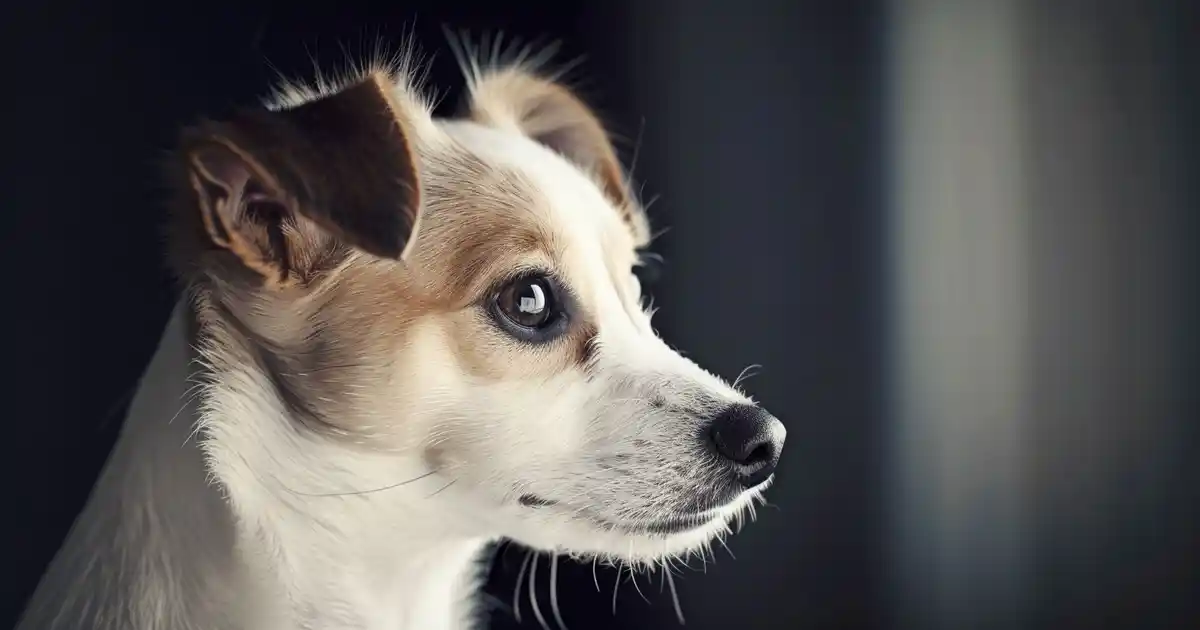
Now for the most expressive trust signal channel: facial expression. Don’t be me—I used to look primarily at tail position and miss the extraordinarily rich emotional communication happening in my dog’s face. Trust and relaxation show as: soft eyes with slightly relaxed lids (not wide-open or squinted in stress), a loose relaxed mouth that may be slightly open with tongue visible (not closed tight or pulled back in stress grimace), smooth forehead without vertical worry wrinkles, ears in a neutral position for their breed rather than pinned back or rigidly forward, and an overall quality of facial softness. When it clicks, you’ll know—you’ll start seeing the difference between a dog’s “public face” in uncertain situations and their “home face” with trusted people as clearly as you read human facial expressions.
Understanding Proximity and Contact Choices
Here’s my secret: where your dog chooses to position themselves relative to you in different contexts reveals trust levels more reliably than almost any other signal. My mentor taught me to notice not just that my dog was near me but the quality of that proximity—whether they positioned with their back toward me (extreme trust, exposing the most vulnerable direction), whether they sought contact or simply tolerated it, whether their body orientation was toward me or away from me, and whether their proximity choices remained stable when minor stressors appeared or they immediately increased distance. Every proximity choice is a trust vote—just like noticing whether someone physically draws closer or creates distance in your presence reveals their comfort level.
Recognizing Sleep and Rest Positions as Trust Barometers
Engage in observing your dog’s resting and sleep behaviors as long-term trust indicators. Results are consistent here—dogs reveal their genuine trust level most clearly during sleep, when behavioral management is impossible. High-trust dogs sleep in vulnerable positions (on their back, limbs in air, completely exposed), sleep deeply in your presence (REM sleep with twitching and movement), choose locations near you for rest even when more comfortable options exist elsewhere, and show minimal alerting behavior during normal household sounds because they trust the environment is being monitored. This creates revealing information—just like observing whether someone can truly relax in your presence reveals their comfort level with you.
Reading the Greeting Ritual
Learn to extract trust information from the quality and character of your dog’s greeting behavior rather than just its presence. Don’t worry if this requires practice—greeting rituals are information-rich but easy to misread. Trust indicators in greetings include: approaching with weight slightly back (comfortable, not rushing in urgency), loose wiggly body movement (versus stiff or frantic), soft eyes and relaxed mouth during approach, willingness to make and break eye contact naturally, and smooth transition from greeting to normal relaxed behavior. Contrast this with low-trust or anxious greetings: rushing in frantically (anxious relief rather than confident joy), stiff body during contact, inability to settle after greeting (hyperarousal indicating underlying anxiety), or avoidance-approach patterns showing ambivalence.
Interpreting the Trust Fall: Belly Exposure
Finally, understand the graduated significance of different belly exposure types. Just like vulnerability comes in degrees in human relationships, belly exposure in dogs ranges from mild (rolling partially on side during play) to profound (completely supine, all limbs in air, remaining still). The key variables are: whether the exposure is offered or demanded, whether the dog remains truly relaxed throughout (loose limbs, soft face) or becomes tense when touched (indicating the exposure is appeasement rather than trust), and whether they maintain this position comfortably or immediately scramble up. Genuine trust-based belly exposure involves complete relaxation throughout, willingness to remain in the position, and a quality of peaceful offering rather than anxious submission.
Observing Stress Recovery Speed
Notice how quickly your dog returns to baseline after minor stressors—this “recovery time” is one of the most revealing trust and security indicators available. Highly trusting, securely attached dogs startle at unexpected sounds but recover within seconds to minutes, returning quickly to relaxed body language. Dogs with lower trust or higher baseline anxiety show slower recovery, sometimes remaining elevated for extended periods after minor stressors. Your presence specifically should accelerate recovery—if your dog recovers faster with you present than without, this demonstrates that your presence is registered as a genuine safety signal.
Common Mistakes (And How I Made Them All)
My biggest mistake? Reading individual signals in isolation rather than holistically. I learned the hard way that a wagging tail on a tense body doesn’t mean happiness, that a dog approaching doesn’t necessarily mean comfort, and that apparent calm can mask active suppression of stress responses in dogs who’ve learned that showing stress produces negative consequences. The breakthrough came when I started reading my dog’s whole body simultaneously rather than following one indicator at a time.
Don’t make my mistake of ignoring fundamental principles experts recommend about context in signal interpretation. I initially interpreted the same signals identically regardless of context—not understanding that a dog’s ears being forward means something completely different during focused training versus during an alert to an unfamiliar sound. Another epic failure: confusing appeasing signals with trust signals—behaviors like belly-up, lip licking, yawning, and looking away can indicate submission or stress rather than relaxation and trust, depending on the muscular tension context they appear in.
I also mistakenly believed that trust, once established, was permanent and stable. Quality relationships require maintenance—trust is continuously updated based on recent experiences, and even long-established trust can temporarily reduce following frightening veterinary visits, painful grooming sessions, or sudden changes in handling style. Finally, I used to mistake the absence of obvious fear signals for the presence of trust—not understanding that suppressed fear (a dog who has learned that showing fear doesn’t help) can look deceptively like calm, requiring careful muscular tension reading to distinguish genuine relaxation from behavioral suppression.
When Things Don’t Go as Planned (And It Will)
Feeling confused because your dog’s trust signals seem inconsistent—trusting in some contexts but not others? You probably have a dog whose trust is context-specific, which is completely normal—dogs can trust you deeply in familiar home environments while showing lower trust in novel, stressful situations because their assessment is always based on current context as well as relationship history. That’s normal, and it happens to everyone once they start reading trust signals accurately rather than assuming trust is all-or-nothing. When this happens (and it will), I’ve learned to handle this by appreciating context-specific trust as genuine while working to generalize it through positive experiences in previously low-trust contexts.
Your dog’s trust signals seeming to decrease after a specific event despite your unchanged behavior? This is totally manageable—trust can be temporarily disrupted by frightening experiences (vet visits, grooming, accidents, thunderstorms, fireworks) that aren’t your fault but associate temporary fear with your presence or handling. Don’t stress, just implement trust-rebuilding interactions in low-pressure contexts, ensure subsequent handling of sensitive areas is preceded by extensive positive conditioning, and allow your dog’s nervous system the time it needs to update its safety assessment. I always prepare for trust fluctuations because reading dog confidence signals accurately means accepting that trust is dynamic rather than static.
If you’re consistently seeing low-trust signals in your dog despite what you believe is good caregiving, try honest assessment of whether any aspects of your handling, training methods, or household environment might be inadvertently creating low-level chronic stress you’re not recognizing, consultation with a certified applied animal behaviorist who can objectively assess your dog’s behavioral state, or systematic video review of your interactions to identify patterns you might be missing in real-time. When interpretation feels overwhelming, earning dog trust signals as a skill develops gradually—every dog you observe increases your fluency in reading this language.
Advanced Strategies for Next-Level Results
Taking trust signal reading to the next level involves developing real-time, dynamic reading capabilities rather than static assessment of individual moments. Advanced practitioners often implement specialized techniques like continuous body language scanning during all interactions (updating your assessment every few seconds rather than making one global assessment), learning to predict your dog’s trust state transitions before they occur based on environmental pattern recognition, or deliberately testing trust generalization by systematically introducing novel contexts and monitoring how quickly trust-indicating body language returns.
My advanced version includes studying the intersection of my dog’s trust signals with her communication attempts—learning not just that she trusts me but what specifically she’s communicating from within that trust state, developing the ability to distinguish “I trust you and I’m comfortable” from “I trust you but I’m uncertain about this specific thing” from “I trust you completely and I’m completely at peace right now.” I’ve discovered that this granular reading creates the foundation for genuinely responsive caregiving that maintains and deepens trust because you’re responding to what your dog is actually experiencing rather than what you assume they’re experiencing.
For experienced observers wanting to develop professional-level reading ability, explore formal body language training through organizations like the IAABC or Karen Pryor Academy, study slow-motion video of dog interactions to catch micro-expressions and subtle muscular changes invisible at normal speed, or deliberately practice reading unfamiliar dogs in controlled settings to develop generalized reading ability beyond your own dog.
Ways to Make This Your Own
When I want to systematically develop my trust signal reading ability, I use the “Daily Body Language Audit”—spending five dedicated minutes each day in pure observation of my dog without any interaction agenda, noting specific trust signals present and absent, muscle tone quality, and any contextual factors affecting trust level. This makes observation more intentional but definitely worth it for the rapid fluency development that focused practice produces compared to casual observation.
For special situations requiring acute trust assessment, like introducing novel handling, veterinary care, or training new behaviors, I’ll adapt to the “Continuous Trust Monitoring Protocol”—maintaining constant body language awareness throughout the interaction, adjusting pace and approach based on real-time trust signal feedback, and stopping or modifying whenever trust signals indicate threshold is being approached. My busy-season version focuses on daily baseline checking—even during hectic periods, spending thirty seconds observing my dog’s resting body language provides crucial information about her general trust and stress level.
Sometimes I add the “Comparison Context Practice” deliberately observing my dog with different people, in different environments, and during different activities to develop understanding of how their baseline trust signals compare across contexts. Summer approach includes outdoor observation settings where more space and lower arousal levels often produce clearer, more readable trust signals than indoor environments. For next-level fluency, I love the “Video Study Practice” recording ordinary interactions and reviewing in slow motion to catch subtle signals invisible in real-time observation. Each variation works beautifully with different learning styles and schedules, whether you’re building reading ability from scratch or refining already-good observation skills.
Why This Approach Actually Works
Unlike surface-level observation that reads obvious signals while missing subtle but crucial communication, this approach leverages proven ethological principles that most people overlook: holistic body language reading that integrates multiple simultaneous signal channels, autonomic nervous system understanding that reveals genuine internal states rather than performed behaviors, and contextual interpretation that accurately accounts for how the same signal communicates differently across situations. The science behind reading dog trust signals shows that trust communication is continuous, multi-channel, and largely involuntary—meaning it reflects genuine internal states that provide reliable information about your dog’s actual experience when accurately read.
What sets this apart from casual observation is the recognition that trust signal reading is a learnable skill, not an intuitive gift—systematic study of the underlying physiology, behavioral science, and contextual interpretation rules produces dramatically more accurate reading than relying on general impressions. When you read trust signals accurately, you make better decisions about pacing in training, recognize early warning signs before problems escalate, identify what’s working and what isn’t in your relationship-building efforts, and ultimately create the kind of responsive caregiving that deepens trust rather than inadvertently eroding it. My personal discovery moments about why this works came from reviewing slow-motion video of interactions I’d thought were going well—seeing subtle stress signals I’d completely missed in real-time that, once visible, allowed me to immediately improve those interactions. This is effective precisely because it replaces assumption with observation, giving you actual data about your dog’s experience rather than your interpretation of what you hope or fear they’re experiencing.
Real Success Stories (And What They Teach Us)
One owner spent three years believing their Shiba Inu didn’t really trust them because the dog never showed the obvious affection signals she expected—no cuddling, no following, no exuberant greetings. By learning Shiba-specific trust signals (choosing to rest in the same room, brief soft glances, relaxed muscle tone during handling, and the specific quality of deep sleep they only showed at home), she realized her dog trusted her profoundly—just in a characteristically Shiba way that her previous Golden Retriever experience hadn’t prepared her to read. Their success demonstrates that trust signal literacy requires individual and breed-specific fluency rather than universal templates.
Another person was using punishment-based training methods and genuinely didn’t understand why their dog seemed “fine” during training but showed increasing reactivity in other contexts—the dog had learned to suppress stress signals during training (making them appear compliant) while accumulating anxiety that emerged elsewhere. By learning to read suppressed stress signals—the subtle muscle tension, slightly elevated tail, micro-expressions of discomfort invisible without training—they recognized that what looked like trust was actually learned suppression, leading them to shift training approaches and eventually see genuine trust signals emerge. What made each person successful was developing the reading accuracy to distinguish genuine trust from its behavioral lookalikes.
I’ve seen countless relationships transform when owners developed genuine trust signal fluency—discovering their dog trusted them more than they realized, or discovering subtle erosion happening beneath a surface of apparent harmony that, once visible, could be addressed before becoming a serious problem. Different dogs signal trust differently, but the underlying physiological language is consistent—fluency is achievable, and it changes everything about how you experience and navigate your relationship.
Tools and Resources That Actually Help
The best resources come from professional canine body language education, so I recommend starting with Turid Rugaas’s On Talking Terms with Dogs: Calming Signals for foundational signal vocabulary, Brenda Aloff’s Canine Body Language: A Photographic Guide for visual reference across hundreds of specific positions and expressions, and Sarah Kalnajs’s DVD series “The Language of Dogs” for video-based learning that captures the dynamic quality of body language that photographs can’t fully convey. These three resources together provide comprehensive signal vocabulary and interpretation framework.
I personally use video recording as the single most powerful trust signal learning tool—recording ordinary daily interactions and reviewing in slow motion reveals subtle signals invisible in real-time and creates genuine fluency faster than any other practice. Simple observation journals noting specific signals observed in different contexts create a personalized reference for your individual dog’s signal vocabulary. For professional-level development, attending in-person body language workshops where experienced practitioners provide real-time feedback on your interpretations accelerates learning dramatically.
Free options include Sarah Stremming’s extensive podcast resources on behavioral science and body language, Patricia McConnell’s blog covering specific signal interpretation, and YouTube channels from ethologically-informed trainers demonstrating real-time body language reading. Paid options like formal body language courses through IAABC ($200-500), private consultations with certified applied animal behaviorists ($150-300) who can assess your specific dog and teach you their individual signal vocabulary, or comprehensive online courses in canine body language provide structured professional-level education. Be honest about limitations: body language reading develops through practice and feedback, not just studying resources—real improvement requires observation practice with actual dogs in real contexts. The most valuable investment combines foundational resources with deliberate daily observation practice of your own dog.
Questions People Always Ask Me
How long does it take to learn to read dog trust signals accurately?
Most people develop meaningful basic fluency within 4-6 weeks of daily intentional practice—recognizing obvious trust and stress signals reliably in their own dog. Intermediate fluency that catches subtle signals and reads context-dependent variations typically develops over 3-6 months of consistent practice. Professional-level reading ability that accurately interprets unfamiliar dogs in varied contexts takes years of dedicated study and practice. I usually recommend starting with learning to accurately read just muscle tone (loose versus tense) and facial expression (soft versus hard) in your own dog before expanding to subtler signals.
What’s the single most reliable trust signal to look for?
Voluntary deep sleep in your presence—when your dog enters genuine REM sleep (twitching, running legs, vocalizing softly) in your proximity, they’ve made themselves completely neurologically vulnerable based on their assessment that your presence makes them safe. This cannot be performed or faked, requires genuine nervous system relaxation, and represents the highest possible trust declaration available in behavioral form. If your dog sleeps deeply near you regularly, their trust in you is genuine regardless of what any other signal suggests.
How do I know if my dog trusts me or just tolerates me?
The key distinction is whether your presence actively produces relaxation or simply doesn’t produce active distress. Trust shows when your presence specifically accelerates stress recovery (your dog calms faster with you than without you), when your dog seeks you during mild stress rather than simply not fleeing you, when your dog makes active proximity choices toward you when alternatives exist, and when your dog’s body language shows genuine relaxation rather than just absence of obvious fear. Tolerance shows when your presence produces neither particular comfort nor particular distress—neutral rather than positive.
Can a dog’s trust signals change quickly, or is trust slow to build and lose?
Both—trust has long-term accumulated foundations that change slowly and short-term contextual fluctuations that change moment-to-moment. The accumulated trust in your relationship (long-term trust) changes slowly, requiring many positive or negative experiences to significantly shift. But your dog’s trust expression in any given moment (contextual trust) changes rapidly based on current environmental factors, recent interactions, physical state, and specific situational assessment. Learning to read both dimensions—long-term relationship trust and moment-to-moment contextual trust—provides the most complete picture.
What’s the most important thing I can do to build trust?
Make yourself consistently, accurately predictable—not just consistently kind, but consistently the same across different contexts and emotional states so your dog can reliably predict your behavior in any situation. Dogs trust beings whose responses they can accurately predict; unpredictability, even positive unpredictability, creates the uncertainty that prevents full trust development. Before working on any other trust-building strategy, examine whether your responses to your dog’s signals are truly consistent across your own mood variations, different contexts, and different types of interaction.
How do stress signals differ from low-trust signals?
Related but distinct: stress signals indicate your dog’s current physiological state (elevated autonomic arousal from perceived challenge or threat), while low-trust signals specifically indicate their assessment of your reliability and safety as a person. A dog can show stress signals during genuinely challenging situations while still trusting you completely (trusting dogs still find veterinary visits stressful). A dog with low trust in you may appear calm in familiar, unchallenging environments while showing specific signals of wariness around you. The key is whether signals appear specifically around you or contextually regardless of your presence.
What mistakes damage trust most severely?
Unpredictable punishment—particularly physical punishment—most severely damages trust by transforming you from a safe, predictable presence into a potential threat. Forcing interactions your dog has communicated discomfort with (particularly through calming signals you ignored) teaches them their communication doesn’t work, reducing communication attempts rather than reducing the discomfort. Sudden behavioral changes (new household members, changed routines, different handling approaches) that your dog can’t anticipate create uncertainty that temporarily reduces trust even without any negative interaction. Repeated threshold exceedances in training that produce panic rather than learning reduce trust in training contexts specifically.
Can I rebuild trust after it’s been damaged?
Yes—damaged trust responds to consistent, patient, positive rebuilding interactions. The timeline depends on severity: minor trust damage from occasional training mistakes responds to a few weeks of careful positive interaction, while significant damage from sustained punishment-based handling or frightening experiences may require months of deliberate rebuilding. The key is making yourself maximally predictable and reliably positive while giving your dog complete control over interaction initiation and pace—allowing trust to rebuild at your dog’s nervous system timeline rather than yours.
Do different breeds show trust signals differently?
Yes—breed influences both the behavioral signals through which trust is expressed and their typical resting baseline. Nordic breeds often show more subtle, less effusive trust signals than Golden Retrievers, making them easy to misread as untrusting. Dogs with physical breed characteristics affecting signal visibility (drop ears, docked tails, flat faces) require adjusted signal reading that accounts for what’s anatomically possible for that dog. Independent breeds may show trust through proximity choices and relaxed sleep more than physical contact-seeking. Learning your specific breed’s typical range helps you correctly interpret individual variation within that context.
How does my handling of my dog affect their trust signals?
Directly and significantly—how you physically handle your dog (during grooming, veterinary care, putting on equipment, physical contact during play) creates specific trust associations with your touch. Dogs whose handling has been gentle, predictable, and responsive to their signals develop trust in being touched that extends beyond specific familiar procedures. Dogs whose handling has been forceful, unpredictable, or unresponsive to their discomfort signals develop wariness about contact that shows in specific body language changes when touched—even by otherwise trusted people.
What’s the relationship between trust signals and training success?
Profound—dogs in high-trust states with their trainer learn faster, retain learning better, generalize more readily, and maintain performance under stress better than dogs in low-trust states. Trust reading during training lets you identify when your dog is in an optimal learning state versus when anxiety is interfering with learning, calibrate your approach to maintain trust throughout training sessions, and recognize when to stop and rebuild before proceeding. The most effective trainers are simultaneously skilled body language readers who continuously adjust based on trust signal feedback.
How do I know if I’m accurately reading my dog’s trust signals?
Test your interpretations against measurable outcomes: if you read your dog as highly trusting and comfortable, they should handle minor challenges with quick recovery, seek you during stress, and show genuine relaxation in your presence. If your interpretations consistently predict your dog’s behavioral responses to situations accurately (you predict they’ll handle something easily and they do, you predict they’ll find something difficult and they do), your reading is accurate. Mismatches between your predictions and your dog’s actual responses indicate reading errors worth investigating—not to criticize yourself, but to identify what you’re misinterpreting.
Before You Get Started
I couldn’t resist sharing this because it proves that dog trust signals aren’t an esoteric specialty skill reserved for professional trainers—they’re a learnable language that transforms every interaction you have with your dog by replacing assumption with observation, replacing guesswork with genuine understanding, and replacing the experience of managing a dog’s behavior into the experience of being in genuine ongoing conversation with another feeling, communicating being. The best relationships with dogs happen when both parties are genuinely fluent in each other’s communication—when you can read your dog’s continuous trust broadcasting as accurately as they read your emotional state, creating the mutual understanding that is the foundation of the deepest possible bond. Ready to begin reading your dog like a pro? Start with a simple first step—maybe spending five undistracted minutes today observing just your dog’s muscle tone and facial expression in different contexts, or noticing the next time your dog makes an unprompted proximity choice toward you and acknowledging it as the trust declaration it actually is—and build fluency from there. Your dog has been broadcasting their trust level continuously every moment of every day; learning to receive that signal is one of the most profound acts of respect and attention you can offer the relationship, transforming what was previously invisible into a rich, continuous conversation that deepens everything between you.




