
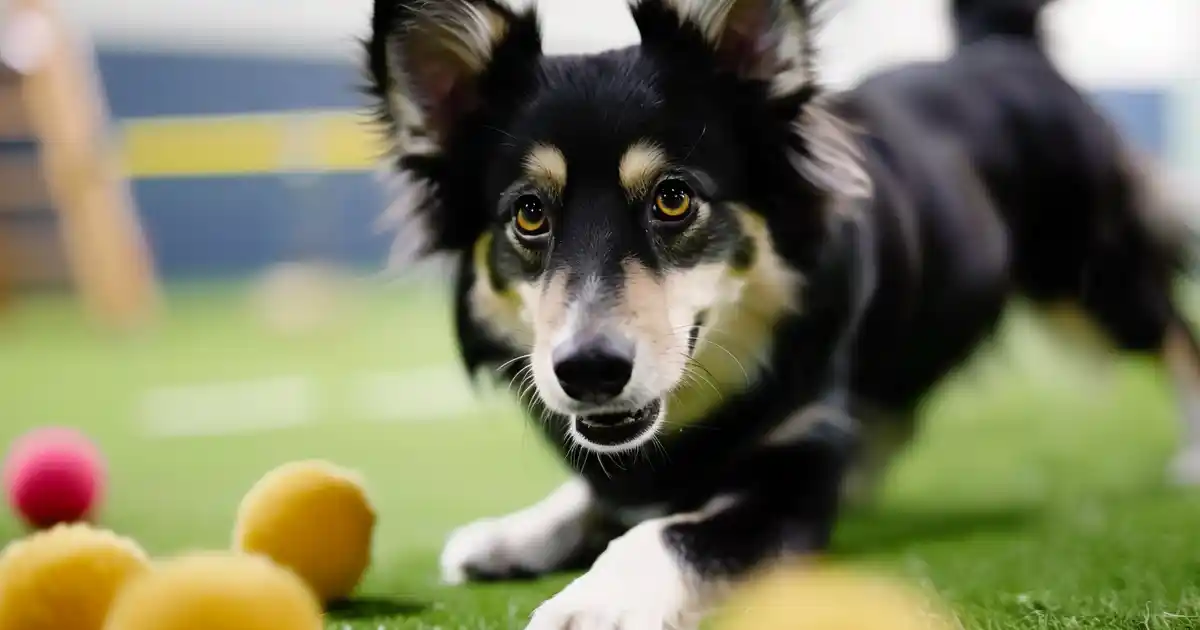
Have you ever wondered why flyball training seems impossibly complex until you discover the progressive skill-building approach that makes it achievable? I used to think relay racing with multiple dogs was only for experienced teams with expensive equipment and years of practice, until I discovered these systematic methods that completely transformed my understanding of how flyball skills develop. Now other dog sport enthusiasts constantly ask how I managed to go from confused beginner to running clean competitive races with my team, and friends (who thought flyball was too chaotic or difficult) keep requesting guidance after seeing the incredible teamwork and speed this sport creates. Trust me, if you’re worried about coordinating multiple dogs, teaching the box turn, or finding a team to join, this comprehensive approach will show you it’s more accessible and exhilarating than you ever expected. The best part? You’ll build lightning-fast reflexes, unbreakable recalls, and a unique team sport experience that creates bonds with both your dog and fellow handlers that no individual sport can match.
Here’s the Thing About Flyball Training
Here’s the magic: successful flyball training isn’t about having the fastest dog or perfect athletic ability—it’s about systematically building each component skill, then integrating them into seamless relay racing where timing, teamwork, and consistency matter more than raw speed. What makes this work is the progressive approach from single skills (jumping, retrieving, box turns) to full runs, all while developing the confidence and drive that makes dogs love this high-energy sport. I never knew flyball could be this methodical until I stopped being intimidated by experienced teams running sub-20-second heats and started focusing on teaching one skill at a time with patience and precision (game-changer, seriously). According to research on dog sports and team activities, flyball creates unique benefits by combining individual athletic performance with team coordination, requiring dogs to focus intensely despite nearby canine activity—a challenge that develops exceptional impulse control and handler focus. This combination creates amazing results because you’re building both technical skills and emotional regulation rather than just speed. It’s honestly more structured than I ever expected—no throwing untrained dogs into relay chaos, just proven progressions applied consistently with emphasis on accuracy before speed.
What You Need to Know – Let’s Break It Down
Understanding the flyball course layout and rules is absolutely crucial before starting training. Don’t skip this foundation—I finally figured out that the standard course includes a start/finish line, four hurdles spaced 10 feet apart, a spring-loaded box 15 feet from the last hurdle, and a 51-foot racing lane where dogs must jump all hurdles, trigger the box to release a ball, catch it, and return over all hurdles (took me forever to realize the precision required makes this far more than simple fetch). Your training approach needs to honor every rule requirement because mistakes in competition cost your team valuable time.
The box turn represents the most technically challenging and injury-risk component of flyball that requires specialized teaching. I always recommend working with experienced flyball trainers for box turn instruction because everyone sees results faster when learning proper technique that protects your dog’s shoulders, spine, and joints. Yes, dogs can learn to trigger boxes multiple ways, but you’ll need to teach the safest, most efficient “swimmer’s turn” method where dogs hit the box with all four feet, push off powerfully, and rotate their body while maintaining forward momentum. Improper box turns create injuries that end flyball careers (harsh truth, but essential knowledge).
Height divisions and team composition strategy affects everything about your competitive experience and training approach. I used to think all dogs ran the same course, but actually jump heights are determined by the shortest dog on your team (measuring from floor to withers, minus one inch, with 8-inch minimum). Your team strategically benefits from having one small dog who sets lower heights for all teammates—this is why many competitive teams actively recruit small, fast dogs. Understanding this dynamic helps you find appropriate teams and set realistic expectations.
If you’re just starting out with building drive and reliable recalls, check out my essential guide to motivation and recall training for foundational skills that complement this flyball training approach perfectly.
The Science and Psychology Behind Why This Works
Modern canine sports science research reveals something fascinating: relay racing creates unique neurological demands by requiring dogs to simultaneously maintain arousal and focus, execute precise athletic movements at speed, and ignore exciting environmental stimuli (other dogs, balls, handlers)—a combination that develops exceptional cognitive control. This isn’t just exciting exercise—studies from leading veterinary sports medicine programs demonstrate that flyball training creates superior proprioception, cardiovascular conditioning, and impulse control compared to individual sports because the team element adds complexity that solo activities cannot replicate.
What makes flyball particularly effective for high-drive dogs is the outlet for intense energy in structured, rule-governed format. Your dog doesn’t just run wild; they learn to channel overwhelming prey drive and speed into precise patterns where control matters as much as velocity. Traditional exercise often fails to satisfy driven dogs because it doesn’t provide the mental challenge and focused intensity that flyball demands. The psychological principle at work here is structured arousal management, which means teaching dogs to be simultaneously highly excited and completely controlled—a skill that transfers to reducing reactivity and improving focus in other contexts.
I discovered the team bonding aspects matter just as much as individual performance. When training emphasizes supporting teammates, celebrating others’ successes, and working toward collective goals, both dogs and handlers develop social connections unique to team sports. Research from dog sport communities confirms that team-based activities create stronger human social networks and higher sustained participation rates than individual sports because the social accountability and shared achievements maintain motivation during challenges. The camaraderie you experience in flyball literally makes training sustainable long-term.
Here’s How to Actually Make This Happen
Start by building reliable, enthusiastic recalls under high distraction that form the foundation of all flyball performance—and here’s where I used to mess up: I’d assume my dog’s casual backyard recall was sufficient, when really flyball demands bullet-speed returns despite nearby dogs, flying balls, and handler excitement. Spend 2-3 months developing recalls where your dog explodes back to you from any distance, ignoring all distractions, with obvious enthusiasm every single time. This foundation work happens before ever approaching flyball equipment because without perfect recalls, nothing else matters.
Now for the important part: introduce jumps systematically starting at 4-6 inches regardless of your dog’s eventual competition height, focusing on proper striding, jumping arc, and confidence before increasing height. Don’t be me—I used to set jumps at competition height immediately and just created careless, sloppy jumping that risked injuries. Master low-height jumping with proper technique across 4-6 weeks, gradually increasing height as muscle conditioning develops and jumping mechanics become automatic. When it clicks, you’ll know, because your dog will show confident, fluid jumping motion rather than hesitation or awkward clearances.
Teach ball drive and retrieval skills separately from flyball context to build obsession with tennis balls that fuels motivation during training. My mentor taught me this crucial distinction: your dog must value the ball above almost everything before box work makes sense. Every successful flyball dog shows obvious ball obsession, so if yours doesn’t naturally love tennis balls, build that drive through restricted access (balls only appear during training), play sessions, and making balls the most exciting reward in your dog’s world. Results can vary, but most dogs develop strong ball drive within 4-8 weeks of structured motivation building.
Introduce box work using progressively closer approaches, initially just having your dog step on the box to trigger ball release, gradually backing up until they’re approaching with speed—just like teaching a gymnast to vault but for dogs. Until you feel completely confident your dog understands the mechanics of hitting the box with all four paws and pushing off powerfully, don’t attempt full-speed approaches from distance. The technique should be practiced thousands of times at slow speed before adding velocity that could cause injuries from improper form.
Integrate full runs by chaining all components—start line, jumps, box turn, return jumps, finish line—practicing initially alone before adding the complexity of relay passing and multiple dogs. The integration here requires patience because each component needs independent mastery before they combine smoothly. Don’t worry if you’re just starting out with full runs; you’ll develop the timing and rhythm through hundreds of repetitions that eventually create the seamless performance seen in competition.
Practice relay passing and team coordination where one dog’s finish triggers the next dog’s release, requiring split-second timing and intense focus from both dogs and handlers. This creates the team sport element but also introduces the most challenging aspect—dogs must focus on their job despite another dog running nearby with a ball (the most exciting possible distraction). I always prepare for extensive passing practice because this is where most errors occur in competition, requiring months of training to achieve reliable, clean passes.
Common Mistakes (And How I Made Them All)
My biggest mistake? Rushing to box work before my dog’s jumping technique and ball drive were truly solid. I’d introduce the box after just a few weeks of training, creating confusion about the complete sequence and risking shoulder injuries from improper box hits. Learn from my epic failure: spend 3-6 months on foundational skills before ever attempting box turns. The patience protects your dog’s body and creates understanding that makes box training exponentially easier.
Another classic error: training only at my home club with the same equipment, then struggling when competition environments differed. I used to think all flyball boxes and jumps were identical, when really variations in box angle, pedal tension, jump width, and surface footing create challenges for dogs who haven’t generalized across equipment types. Don’t make my mistake of ignoring the fundamental principle experienced teams emphasize—train on multiple box types in various environments to create adaptability rather than equipment-specific performance.
I also fell into the trap of allowing my dog to anticipate the start and break early (called “false starts”) because I thought enthusiasm was more important than start line control. Here’s the truth: false starts in competition create re-runs and time penalties that cost your team placements. Those teams with perfectly timed starts where dogs explode forward the instant their handler releases them? They’ve trained thousands of start repetitions with absolute criteria that breaking early never gets rewarded.
Neglecting physical conditioning and assuming flyball training alone provided sufficient fitness was perhaps my most injury-inviting mistake. Flyball demands explosive power, cardiovascular endurance, and muscular strength that casual training doesn’t fully develop. Dogs need dedicated conditioning including warm-ups, cool-downs, strength building, and cardiovascular work beyond flyball-specific training to prevent the repetitive stress injuries common in this high-impact sport.
When Things Don’t Go as Planned
Feeling frustrated because your dog keeps missing box turns or knocking bars despite months of training? You probably need to slow down dramatically, reduce height or distance, and rebuild the specific skill that’s failing with perfect form before attempting speed or competition height. That’s normal, and it happens to everyone—flyball is genuinely difficult, requiring precision that takes years to perfect. I’ve learned to handle this by removing all pressure, making the problematic skill ridiculously easy, then building back up at whatever snail’s pace produces 90%+ success rates. When this happens (and it will), just remember that regression to basics isn’t failure; it’s the path to genuine mastery.
Your dog breaks start lines consistently or loses focus during passes? Your dog might be experiencing overstimulation from the relay environment, insufficient impulse control training, or unclear criteria about exactly when release happens. Don’t stress about these incredibly common issues—they signal the need for more foundation work on impulse control in high-arousal situations and clearer communication about release cues. I always prepare for start line challenges because teaching dogs to contain explosive drive until the precise release moment is the hardest skill in flyball.
If you’re losing enthusiasm because team dynamics create stress or you struggle to find practice times that work, try communicating openly with teammates about challenges or seeking different teams whose culture better matches your needs. Sometimes team sports involve interpersonal challenges that individual sports avoid. When team stress undermines your enjoyment, remembering that flyball should be fun for both you and your dog can help you make decisions—whether that’s addressing issues directly, finding new teams, or taking breaks—that prioritize wellbeing over competition pressure.
Advanced Strategies for Next-Level Results
Taking flyball to the next level means analyzing your team’s racing times and identifying specific inefficiencies—slow box turns, wide turns around jumps, hesitation at start, delayed passes—then addressing each millisecond of lost time through targeted training. Advanced practitioners often implement specialized techniques where they video every run frame-by-frame, measuring exact times for each segment and comparing to elite teams’ performance. For example, I discovered my dog was adding 0.3 seconds on box turns through slightly inefficient push-off, which I addressed through hundreds of slow-motion box reps focusing on explosive power—those milliseconds accumulated to significant time improvements.
Developing start line strategies including using different release words for each dog, positioning handlers optimally, and training dogs to load (coil their muscles in preparation) creates faster reaction times and cleaner starts. I discovered that teaching my dog a specific pre-start routine—sit, focus on me, coil muscles, explode on release word—shaved 0.2 seconds off start times compared to casual starts. These routines require extensive training but produce measurable advantages in competitive racing.
Understanding lane focus and preventing cross-overs where dogs run into the adjacent lane creates cleaner, faster runs with fewer errors. What separates recreational from competitive teams is training dogs to maintain laser-focus on their own lane despite another dog running 6 feet away—this requires thousands of practice passes where dogs learn to ignore the ultimate distraction (another dog with a ball). This focus training prevents disqualifications and collisions that plague under-trained teams.
For tournament success, try simulating competition atmosphere during practice including unfamiliar locations, judge observation, loud music and announcements, tight scheduling, and multiple back-to-back runs. Your preparation becomes competition-ready when you practice the mental and environmental pressures of tournaments rather than just the technical skills in comfortable home club settings. This simulation prevents the common problem where dogs perform beautifully in practice but fall apart in actual competition chaos.
Ways to Make This Your Own
When I want maximum speed with naturally fast dogs, I use the Race-to-Win Method—training for absolute velocity while maintaining accuracy, focusing on explosive starts, powerful box turns, and sprinting rather than controlled trotting. Before worrying about perfection, build speed and drive that can be refined later. This makes training more intense but definitely worth it because competitive flyball rewards speed above all else—clean runs matter, but fast clean runs win tournaments.
For special situations with smaller or less athletic dogs, I’ll use the Precision-First Protocol approach. This version focuses on perfect technique, minimal wasted motion, and strategic advantages like setting team height low or being the reliable “anchor” dog who never makes mistakes. Sometimes I add specialized training for dogs with physical limitations, teaching modified box turns or jump techniques that work within their capabilities (think adaptive methods for dogs with one leg or vision impairment), though this requires creativity and willingness to work within constraints.
My busy-season version when life gets hectic focuses on the Fundamentals Maintenance Plan: practice just start line control, solo runs without passing complexity, and box work through brief weekly sessions while pausing full team training. Summer approach includes more outdoor training and tournament attendance when travel is easier, while winter shifts focus to indoor club practice and technical skill refinement when weather limits outdoor tournaments.
For next-level competitive success, I love the Elite Team Integration where you join established competitive teams, learn from experienced handlers, and push yourself and your dog to perform at championship levels. My advanced version includes traveling to regional and national tournaments, training with top-ranked teams, and pursuing competitive height divisions where speed matters most. Each variation works beautifully with different goals—casual club fun, local tournament participation, or national championship pursuit all adapt to these core flyball principles.
Why This Approach Actually Works
Unlike throwing untrained dogs into relay chaos hoping they’ll figure it out, this approach leverages proven athletic training principles that casual teams ignore: systematic skill progression, component isolation before integration, physical conditioning protocols, and performance analysis. The science shows that dogs trained through patient, progressive methods develop superior technique, fewer injuries, and longer competitive careers than those rushed through improper progressions.
What sets this apart from other dog sports is the unique combination of individual excellence and team coordination required simultaneously. You’re not just training your dog; you’re developing synchronized performance where four dogs and handlers function as one unit, requiring communication, timing, and mutual support that individual sports don’t demand. I discovered through experience that this team element makes flyball sustainable because the social bonds and shared goals create motivation that outlasts the initial excitement.
The underlying principle is elegantly powerful: when each skill component is mastered independently, then integrated systematically, with appropriate physical conditioning and team coordination training, the resulting performance approaches the limits of canine athletic capability within the flyball format. This evidence-based foundation explains why top flyball teams run sub-16-second heats that seem impossibly fast—they’re the result of thousands of training hours perfecting every millisecond of the race. It’s effective precisely because it respects both athletic training science and canine learning psychology.
Real Success Stories (And What They Teach Us)
One handler transformed their rescue mix from fearful of other dogs into a confident flyball competitor running on a championship team within two years through patient foundation-building and positive team experiences. What made them successful? They prioritized their dog’s emotional comfort over rushing into competition, spending months on confidence-building before ever attempting full team practice. The lesson here: flyball can be therapeutic for reactive or fearful dogs when introduced properly, but emotional readiness must precede athletic demands.
Another person struggled with persistent false starts until they completely rebuilt start line training using a different release cue and clearer criteria, eventually achieving rock-solid starts that became their team’s strength. Their breakthrough came when they stopped blaming their dog’s “lack of self-control” and recognized they hadn’t taught clear enough criteria about exactly when release happened. Different outcomes happen because handler clarity determines dog performance—confusion creates errors while crystal-clear communication creates reliability.
I watched someone take their 10-year-old veteran flyball dog to their first tournament after years of club practice, proving that flyball serves dogs at any competition level. Their success aligns with flyball’s inclusive culture where recreational participation provides all the benefits without requiring elite performance. What they taught me is that flyball exists for enjoyment and challenge at whatever level suits each team—not everyone needs championship aspirations to find fulfillment in this sport.
Tools and Resources That Actually Help
Access to regulation flyball equipment or a flyball club becomes essential for proper training—I personally train with a spring-loaded box meeting North American Flyball Association (NAFA) specifications, four adjustable jumps, and proper racing mats. Your specific needs might include practice equipment for home or relying entirely on club equipment during team practices. Be honest about safety though: improper or damaged equipment creates injuries, so only train with well-maintained, regulation-standard gear that protects your dog.
Protective boots or paw care products help prevent injuries to pads and nails from the repetitive impact and hard turns flyball demands. I prefer well-fitted boots that provide traction without restricting movement, though some dogs perform better barefoot with just paw wax or mushers’ secret for protection. Both options work depending on your dog’s tolerance and surface type.
Video recording equipment for analyzing runs frame-by-frame identifies technique issues invisible at racing speed. These recordings allow you to measure exact times for each segment, identify wasted motion, and track improvement over time. My personal experience shows that video analysis accelerates improvement by revealing problems you cannot see while handling or coaching.
The best resources come from authoritative organizations like the North American Flyball Association (NAFA), which provides evidence-based training resources, rule books, tournament information, and proven methodologies used by competitive teams worldwide. Online communities like Flyball Forum offer peer support and training advice, while books like “Flyball Racing: The Dog Sport for Everyone” by Lonnie Olson provide systematic training protocols for handlers at all levels.
Questions People Always Ask Me
How long does it take to train a dog for flyball competition?
Most people need 12-18 months of consistent training before their dog is truly ready for tournament competition, assuming you start with foundation skills and progress systematically. I usually recommend planning for at least one full year because rushing creates technique gaps and injury risks. That said, your timeline varies dramatically based on your dog’s prior training, natural drive, physical ability, and the quality of instruction available. Every team’s journey reflects their starting point—focus on genuine readiness rather than arbitrary timelines.
What if I don’t have access to a flyball club or team?
Absolutely, just focus on building foundation skills at home—recalls, jumps, ball drive, and fitness work—until you can connect with teams or clubs. Foundation work requires minimal equipment (just some jumps you can build or buy) and prepares your dog thoroughly for eventual team training. The investment in fundamentals means you’ll be ready to integrate quickly when you do find a team. Many successful flyball dogs built foundations solo before joining clubs.
Are certain dog breeds better suited for flyball?
While Border Collies, Jack Russell Terriers, and other high-drive herding or terrier breeds dominate competitive flyball due to speed and ball drive, any breed or mix can participate and enjoy the sport. Teams strategically recruit small, fast dogs for height advantage, but medium and large breeds compete successfully. The individual dog’s ball drive, athletic ability, and handler’s commitment matter more than breed. Mixed breeds compete alongside purebreds and often excel when they have appropriate drive and training.
Can I start flyball training with a puppy or senior dog?
The whole approach requires careful age-appropriate modification! Whether you’re building ball drive and recalls with puppies (8+ weeks), introducing low jumps to adolescents (12+ months for most breeds), or adapting training for seniors, flyball can suit various ages with modifications. When working with puppies, focus exclusively on foundation skills with zero jumping at competition height or box work until physical maturity. Seniors can participate in veterans divisions with lower jump heights and modified expectations.
What’s the most important thing to focus on first in flyball training?
Building explosive, reliable recalls and obsessive ball drive is the foundation everything else depends on. Before touching flyball equipment, develop your dog’s desire to sprint back to you despite any distraction and their passion for tennis balls that borders on obsession. These motivational foundations matter exponentially more than athletic ability initially. Trust me, a dog with perfect recalls and intense ball drive will learn flyball mechanics easily; a dog without motivation will struggle regardless of athletic talent.
How do I stay motivated when progress seems slow or my team struggles?
Keep perspective by celebrating small improvements in individual skills rather than focusing only on race times or tournament placements. When progress feels slow (and it sometimes will), videoing your first attempts versus current performance reveals dramatic growth invisible during day-to-day training. I also recommend connecting with the broader flyball community for support, inspiration, and reminder that every champion team struggled initially. The process itself becomes rewarding when you focus on the journey and relationships rather than just competition results.
What mistakes should I avoid when starting flyball training?
Avoid rushing to box work before foundations are solid, training only on one equipment type in one location, allowing false starts or sloppy technique, and neglecting physical conditioning beyond flyball-specific training. Don’t fall into the trap of comparing your timeline to experienced teams—everyone develops at different rates and comparisons create harmful pressure. Also skip the mistake of prioritizing speed over accuracy initially; proper technique must precede velocity to prevent injuries and create sustainable performance.
Can I do flyball without competing in tournaments?
As long as you and your dog enjoy the training and team practice, absolutely participate in flyball purely for recreation! Many teams have members who train regularly but never enter tournaments. The fitness benefits, mental stimulation, and social connections exist regardless of competition participation. Club practice provides all the fun and challenge without tournament pressure or travel demands.
What if my dog gets injured during flyball training?
Previous injuries require immediate veterinary assessment, complete rest as prescribed, and thorough rehabilitation before returning to training. This signals the need to evaluate your training progression, equipment safety, and warm-up protocols—most flyball injuries result from inadequate conditioning, improper technique, or insufficient warm-up. Most people discover that proper fitness work, technique emphasis, and gradual conditioning prevent injuries entirely. Some injuries end flyball careers, while others heal completely with proper care.
How much does getting started with flyball training typically cost?
You can start with minimal investment for foundation work—just treats, a ball, and maybe some DIY jumps ($50-100). Joining a flyball club runs $50-200 annually for membership dues. Tournament entry fees are $40-80 per dog per tournament. If you want home practice equipment, a regulation box costs $800-1500, plus $200-400 for jumps and mats. The investment scales with your goals—casual club participation requires minimal expense while serious competition involves equipment, travel, and entry fees.
What’s the difference between NAFA and U-FLI flyball organizations?
Different flyball organizations have varying rules, jump height calculations, and tournament formats. NAFA (North American Flyball Association) is the original and largest organization emphasizing traditional four-dog teams and specific height formulas. U-FLI (United Flyball League International) offers alternative formats including different jump height divisions and sometimes three-dog teams. The difference shows up in competition atmosphere, qualifying requirements, and rule details—many teams compete in both organizations while others specialize in one.
How do I know when my dog is ready to compete in flyball tournaments?
Real readiness shows up as consistent performance in full team practice including reliable starts without breaks, clean four-jump runs both directions, confident box turns with proper technique, and ability to focus despite other dogs running nearby. Your dog should complete 20+ consecutive runs with 90%+ accuracy in practice before entering tournaments. I measure readiness by whether my dog can maintain performance despite the chaos, noise, and excitement of unfamiliar environments with multiple teams racing simultaneously—practice perfection doesn’t guarantee tournament success without exposure to competition atmosphere.
Before You Get Started
I couldn’t resist sharing this because it proves that transformation is possible for any handler-dog team willing to commit to systematic, patient, team-oriented training over the timeline this high-energy sport requires. The best flyball journeys happen when you approach this as developing an athletic partnership within a supportive team community rather than just teaching your dog to race. Remember, you’re not just training for speed—you’re building explosive power, perfect timing, unshakeable focus, and the unique camaraderie that only team sports create. Ready to begin? Start with foundation recalls and ball drive today, find a local flyball club or team to join, then progress systematically through each skill component with emphasis on technique over speed and patience over rushing. Your future self (and your flyball-racing dog) will thank you for starting now with realistic expectations, commitment to proper progression, and dedication to the team sport experience that makes flyball utterly unique in the dog sports world.




