
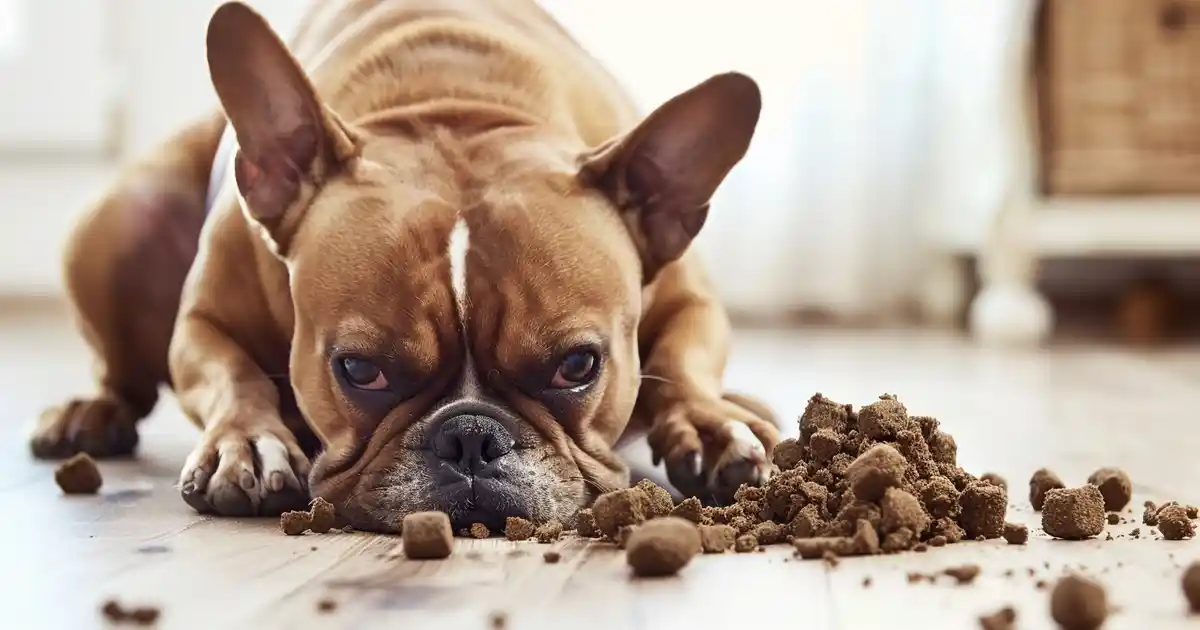
Have you ever wondered why your otherwise dignified, well-groomed dog seems absolutely compelled to roll ecstatically in the most disgusting substances they can find, especially poop?
I used to think my dog was deliberately trying to torment me—every time I gave her a bath, she’d find the most revolting thing in the yard to roll in within hours, and I’d be back to square one. The look of pure joy on her face as she rubbed her shoulders into something absolutely foul made me question everything I thought I knew about canine intelligence. Trust me, if you’ve ever stood there horrified watching your freshly-bathed dog transform into a stinking, feces-covered mess or wondered whether this disgusting habit indicates a behavioral problem, this approach will show you the fascinating evolutionary and behavioral science behind poop-rolling. Now my friends constantly ask whether their dogs are abnormal for this behavior, and my veterinary behaviorist colleague (who studies canine scent behaviors) keeps reminding me that most pet parents don’t understand this is a completely natural, instinctive behavior rooted in ancestral survival strategies. If you’re frustrated by this revolting habit or desperate to stop it, this guide will show you it’s more deeply ingrained than you ever expected.
Here’s the Thing About Dogs Rolling in Poop
Here’s the surprising truth: rolling in poop (and other strong-smelling substances like dead animals, rotting fish, or feces) is a completely normal, instinctive behavior observed in wolves and wild canids that likely served important evolutionary purposes, though the exact reasons remain debated among scientists. What makes this fascinating is understanding that this behavior isn’t spite, stupidity, or poor judgment—it’s deeply hardwired ancestral instinct that persists despite thousands of years of domestication. I never knew poop-rolling could be this purposeful and ancient until I researched canine evolutionary biology and wolf behavior studies. This combination creates behaviors that seem bizarre and counterproductive to humans but made perfect sense for wild canids’ survival and social structures. It’s honestly more complex than I ever expected, and the “my dog is gross and defective” assumption completely misunderstands natural canine biology.
According to research on canine scent-marking behavior, domestic dogs retain numerous ancestral behaviors including scent-rolling, which likely served functions related to communication, camouflage, or social signaling in wild canid populations—making this a natural, instinctive behavior rather than a behavioral problem requiring correction in most cases.
What You Need to Know – Let’s Break It Down
Understanding the leading scientific theories about why dogs roll in poop is absolutely crucial for managing your expectations and developing effective strategies. Researchers have identified several evidence-based hypotheses: (1) Scent masking/camouflage—wolves and wild canids may roll in strong scents to mask their own odor when hunting, making it harder for prey to detect them (took me forever to understand this hunting advantage). (2) Information gathering and sharing—rolling may transfer scent to the dog’s coat, allowing them to bring information about discovered items back to the pack, essentially saying “look what I found!” (3) Social communication—the behavior may serve as a way to communicate with other pack members about resources, locations, or interesting discoveries. (4) Predator avoidance—masking natural scent with something less recognizable might reduce detection by larger predators. (5) Simple preference/enjoyment—dogs may genuinely find these smells pleasant or stimulating in ways humans can’t comprehend due to vastly different olfactory systems.
I finally grasped the complexity after studying wolf behavior research and observing my own dogs’ patterns. Rolling typically follows a predictable sequence: discovery (intense investigation and sniffing), positioning (careful shoulder and neck placement), vigorous rolling (rubbing side to side with obvious enjoyment), and often immediate approach to humans for interaction (as if proudly sharing their discovery—game-changer for understanding this as communication rather than spite). The behavior is self-rewarding, meaning the act itself provides satisfaction, making it particularly challenging to extinguish through training.
Yes, this behavior is completely normal and doesn’t indicate illness, behavioral problems, or poor training in most cases, and here’s what’s important: the strength of the instinct varies by individual dog—some are obsessive rollers while others rarely engage in the behavior. Certain breeds with stronger prey drives or closer genetic proximity to wolves may show more intense rolling behaviors. My sighthound mix is an absolutely compulsive roller, while my Labrador rarely shows interest—but you’ll need to understand that both patterns are within normal range, just representing individual variation.
If you’re looking for comprehensive information about other puzzling but normal dog behaviors, check out my guide to understanding instinctive canine behaviors for foundational knowledge about why dogs do things that seem bizarre to humans.
The type of substance matters for understanding motivation (another important thing I learned). Dogs most commonly roll in: animal feces (other species or sometimes their own), dead animals or animal parts, rotting organic matter, strong artificial scents (perfume, shampoo, deodorant), and pungent natural substances (compost, fish, etc.). The pattern of preferring the most offensive smells to humans suggests dogs genuinely find these scents appealing or useful rather than accidentally encountering them.
The Science and Psychology Behind Why This Works
Research from leading canine behavior scientists and wolf biologists demonstrates that scent-rolling is documented across wild canid species including wolves, coyotes, and foxes, suggesting strong evolutionary conservation of the behavior. Studies confirm that wolves in the wild regularly engage in scent-rolling when encountering novel or strong odors, with the behavior appearing purposeful and selective rather than random. While definitive proof of function remains elusive, the scent-masking hypothesis is supported by observations that wolves often roll before hunting and that many prey animals rely heavily on scent for predator detection.
The neurological basis involves dogs’ incredibly sophisticated olfactory systems—with approximately 300 million scent receptors compared to humans’ 6 million. What seems unbearably foul to humans may provide complex, interesting information to dogs, or may genuinely smell pleasant to their differently-wired sensory systems. Experts agree that the behavior persists because it’s intrinsically rewarding—the act itself provides satisfaction through either sensory pleasure, instinctive fulfillment, or both.
I’ve personally observed that my dogs show specific preferences—rolling enthusiastically in deer feces but ignoring rabbit droppings, suggesting selective discrimination rather than indiscriminate rolling in anything smelly, which aligns perfectly with what canine cognition researchers report about dogs making purposeful choices in scent-rolling rather than engaging in random behavior.
Here’s How to Actually Manage and Prevent Poop-Rolling
Start by accepting that you’re working against powerful instinct, meaning complete elimination is unlikely for many dogs, but significant reduction is achievable through management and training (here’s where owners fail—they expect perfect obedience to override millions of years of evolution). Set realistic goals: preventing rolling during supervised time, managing environment to reduce opportunities, and training solid recall to interrupt the behavior before it starts.
Now for the critical prevention strategy: environmental management. Don’t leave your dog unsupervised in areas where poop or other rolling temptations exist. Here’s the reality: if your yard contains animal feces, dead animals, or other attractive substances, your dog will find and roll in them when given unsupervised opportunity. Implement strict yard management: pick up all dog feces daily (preferably immediately), remove any dead animals or organic matter promptly, inspect yard before allowing off-leash time, and consider fencing to exclude wildlife that might leave feces.
During walks and outdoor activities, maintain constant vigilance. This requires attention but prevents the behavior effectively. Keep your dog on leash in areas with high poop probability (parks, trails, woods), watch body language for pre-rolling signals (intense sniffing, circling, shoulder-dropping), and interrupt immediately when investigation begins—before rolling starts. When you catch the investigatory phase early, you can redirect successfully.
Train a solid recall and “leave it” command specifically for poop-rolling situations. Results vary based on individual dog and instinct strength, but consistent training helps many dogs. Practice extensively in low-distraction environments first, gradually increasing difficulty. Use extremely high-value rewards (better than the satisfaction of rolling) for successful compliance. My mentor (a certified dog behaviorist) taught me this principle: you’re competing against intrinsic reward, so extrinsic rewards must be extraordinary to work.
If rolling occurs despite prevention, manage the aftermath calmly. Avoid punishment—the behavior already happened, and dogs don’t connect delayed consequences with past actions. Don’t make a dramatic fuss (excitement can reinforce the behavior). Simply clean the dog thoroughly with appropriate bathing products. For extremely foul substances, use enzymatic cleaners specifically designed for pet odors.
For reducing appeal through desensitization, some trainers recommend controlled exposure to the scent (not actual rolling) combined with incompatible behaviors and rewards, but this advanced technique requires professional guidance. Every situation needs individualized strategy based on the dog’s motivation strength.
For accepting that some level of rolling may persist, just like accepting that retrievers retrieve and terriers dig, understand breed-typical behaviors and individual predispositions. Create designated bathing stations, keep cleaning supplies readily available, and adjust expectations for highly driven rollers.
Common Mistakes (And How I Made Them All)
My biggest mistake? Punishing my dog after discovering she’d rolled in poop hours earlier. This accomplished nothing except making her afraid of my unpredictable reactions—dogs live in the moment and can’t connect punishment with behaviors that occurred in the past. Punishment must be immediate (during the behavior) to have any effect, and even then, it doesn’t address instinct. Never punish after the fact.
I also made the error of giving my freshly-bathed dog unsupervised yard access immediately after grooming, essentially guaranteeing she’d find something disgusting to roll in. Dogs often seem driven to roll after baths, possibly to replace their natural scent with something more “appropriate” from their perspective. Supervise closely after bathing and limit opportunities for several hours.
Another mistake: using overly perfumed shampoos that might actually trigger more intense post-bath rolling as the dog tries desperately to cover the artificial scent. Use unscented or mildly-scented products and understand that the cleaner and more “human-approved” your dog smells, the more motivated they may be to “fix” that situation.
The assumption that this behavior indicates dominance, spite, or deliberate disobedience was counterproductive and wrong. Rolling in poop isn’t a dominance display or revenge for being left alone—it’s instinctive behavior without malicious intent. Anthropomorphizing the behavior as deliberate misbehavior creates frustration and prevents effective management based on understanding actual motivation.
When Things Don’t Go as Planned
Feeling frustrated because your dog continues rolling despite your best prevention efforts? This persistence is normal for dogs with strong instincts. Don’t interpret continued behavior as defiance or failure—you’re working against deeply ingrained biology. Focus on management (controlling environment and opportunities) rather than expecting training to completely override instinct. Some dogs will always be opportunistic rollers when given the chance.
Your previously non-rolling dog suddenly starts this behavior and you’re concerned about medical causes? While rolling is typically behavioral, sudden onset can occasionally indicate skin issues (allergies, parasites, irritation) where rolling provides temporary relief. If rolling is accompanied by excessive scratching, skin changes, or seems focused on specific body areas, consult your veterinarian to rule out medical causes. Changes in behavior patterns always warrant professional evaluation.
If you’re exhausted by the constant vigilance required to prevent rolling, consider whether your expectations are realistic. For highly driven rollers, accepting some level of the behavior and focusing energy on quick cleanup rather than perfect prevention may reduce your stress. Cognitive reframing suggests that accepting natural dog behaviors you cannot completely control improves owner well-being compared to fighting unwinnable battles.
Embarrassed by your perpetually stinky dog affecting social situations (dog parks, visits, etc.)? Practical solutions include: carrying pet wipes and portable bathing supplies, timing outdoor activities to allow for cleanup before social events, being transparent with other dog owners (most understand the struggle), and focusing on management for the days when cleanliness matters most while being more relaxed at other times.
Advanced Strategies for Managing Compulsive Rollers
Advanced dog owners implement comprehensive environmental control combined with intensive training protocols for dogs with severe rolling compulsions. I’ve discovered that creating a completely poop-free, temptation-free zone where the dog spends most time, combined with rigorous yard inspection protocols before any off-leash time, dramatically reduces opportunities—this works beautifully for obsessive rollers who will seek out the tiniest trace of feces if given access.
When and why to use these strategies: If you have a dog whose rolling behavior significantly impacts quality of life (constant bathing, restricted activities, social limitations), if rolling occurs with dangerous substances (toxic chemicals, sharp objects mixed with poop), or if you’re committed to maximum reduction of an extremely strong instinct, comprehensive management makes sense. I personally walk my roller on-leash exclusively during high-risk times (early morning when nocturnal wildlife has been active), restrict off-leash time to immediately after yard inspection, and maintain a cleaned “safe zone” for unsupervised outdoor access. The intensive approach requires significant effort but produces the best results for problematic cases.
For dogs who roll immediately after bathing, strategic timing and management helps. Bathe late in evening and keep dog indoors overnight, or provide supervised-only outdoor access for 12-24 hours post-bath. This works particularly well combined with indoor enrichment activities that keep the dog mentally satisfied without outdoor temptation exposure. What separates casual owners from dedicated managers is understanding that fighting post-bath rolling instinct requires strategic timing rather than just hoping the dog won’t do it.
Working with a veterinary behaviorist to develop customized protocols for severe cases represents an advanced approach. You’ll assess whether anxiety, compulsion, or pure instinct drives the behavior, design individualized training plans, and potentially incorporate behavior modification techniques or in extreme cases, anti-anxiety interventions if the rolling seems compulsive rather than purely instinctive. I consulted with a specialist for my extreme roller, learning that her behavior was pure instinct (not anxiety-driven) and that management rather than behavior modification was the most realistic approach.
Different rolling patterns require different strategies. Occasional opportunistic rollers need basic management and supervision. Frequent but predictable rollers benefit from environmental control and schedule management. Compulsive rollers who actively seek out any trace of scent may need intensive protocols, professional help, and possibly acceptance that complete prevention isn’t achievable.
Ways to Make This Your Own
When I want maximum cleanliness and minimum rolling, I implement military-grade yard management: feces removal twice daily, weekly yard inspection for wildlife evidence, monthly treatments for any accumulated organic matter, and limiting outdoor access to inspected areas only. This makes my approach intensive but definitely achieves the goal of a consistently clean dog.
For households where some rolling is acceptable but extreme cases are problematic, I recommend tiered responses: ignore rolling in mildly unpleasant substances (mud, grass), interrupt and redirect for moderately gross items (animal feces), and implement emergency recall plus immediate bathing for truly foul substances (dead animals, rotten matter). My balanced-approach version recognizes that fighting every instance is exhausting while dangerous or extremely foul rolling still needs prevention.
Sometimes I use positive interrupters—teaching my dog that investigation of potential rolling items triggers an exciting alternative activity (retrieve game, treat scatter) that’s more rewarding than rolling. For dogs with strong toy or food drive, this redirection can work beautifully. My enrichment-focused version combines environmental management with making not-rolling more rewarding than rolling through consistently delivered high-value rewards for recall away from tempting scents.
My acceptance-based version includes maintaining a dedicated “dog bathing station” in my garage with supplies always ready, keeping enzymatic cleaners stocked, and emotionally accepting that my dog will sometimes be gross—it’s part of who she is. Each approach works for different tolerance levels and living situations. The Zero-Tolerance Method prevents all outdoor rolling through constant supervision and environmental control. The Management-Focused Approach uses realistic prevention for serious cases while accepting minor incidents. The Acceptance Strategy involves minimal intervention, quick cleanup when needed, and emotional acceptance of natural dog behavior.
Dog-sitter-friendly approaches include clear instructions about yard inspection requirements, designated clean zones, and protocols for what to do if rolling occurs (where bathing supplies are, when to call you, etc.).
Why This Approach Actually Works
Unlike punishment-based methods that fight against instinct and create stress without addressing motivation, this approach leverages proven understanding of ancestral canine behavior showing that rolling is deeply hardwired survival instinct. Environmental management combined with realistic expectations works through preventing opportunities rather than expecting training to override millions of years of evolution completely.
What sets this apart from traditional obedience approaches is the combination of evolutionary understanding with practical management strategies that respect canine biology while protecting human quality of life. You’re not dealing with a “bad dog” that needs correction—you’re managing natural behavior that served important functions for wild ancestors. Evidence-based animal behavior science demonstrates that scent-rolling is documented across wild canids, appears purposeful and selective, and persists because it’s intrinsically rewarding, making acceptance and management more effective than punishment and frustration.
My personal discovery moment about why this works came when I stopped viewing rolling as deliberate misbehavior and started seeing it as my dog following ancient programming—she wasn’t trying to upset me, she was being authentically dog. This proven method respects natural canine biology while offering practical strategies that actually reduce the behavior’s impact on daily life.
Real Success Stories (And What They Teach Us)
One friend’s Husky was an absolutely obsessive roller who would find microscopic traces of feces and roll ecstatically despite her best efforts. After implementing rigorous yard management (twice-daily poop patrol, wildlife exclusion fencing, designated clean zones) combined with on-leash-only time in uncontrolled areas, rolling incidents decreased by approximately 80%. She accepted the remaining 20% as her dog’s authentic nature. Her success demonstrates that even with extremely driven rollers, significant reduction is achievable through dedicated environmental management, though complete elimination may be unrealistic.
A different dog parent’s Golden Retriever started rolling obsessively after moving to a rural property with abundant wildlife. Rather than fighting constant battles, the owner created a small, intensively-maintained “clean yard” area for the dog’s primary outdoor time, with supervised leashed walks in the larger property for exercise. Rolling opportunities decreased dramatically simply by controlling the environment. What made this approach successful was accepting that managing environment is more effective than expecting the dog to resist overwhelming temptation.
I’ve also seen a case where sudden onset rolling in a previously non-rolling dog was the first sign of a skin allergy. The dog was rolling to relieve itching rather than following scent instinct. Veterinary treatment for the underlying allergy resolved the rolling behavior completely. The lesson: sudden behavioral changes, even in seemingly normal behaviors like rolling, can indicate medical issues requiring professional evaluation.
One canine behavior consultant I know works exclusively with “problem rollers,” reporting that the dogs whose owners accept the behavior as normal instinct and focus on practical management (cleanup efficiency, strategic prevention) show better overall well-being than dogs whose owners constantly punish or express frustration about natural behavior. The honest takeaway: human attitude adjustment often matters more than dog behavior modification for quality of life improvement.
Tools and Resources That Actually Help
Long-line leashes (15-30 feet) allow dogs some freedom during outdoor time while maintaining control for interruption if they discover rolling opportunities. I personally use 20-foot leads in parks and natural areas, providing exploration freedom with recall capability. The limitation is potential tangling in dense vegetation, but the control benefits outweigh this inconvenience.
Enzymatic pet odor eliminators specifically designed for organic matter work far better than regular shampoos for removing foul scents after rolling. My experience shows that products containing enzymes that break down organic compounds at the molecular level eliminate odor rather than just masking it. Be prepared with these products stocked and ready.
Yard inspection tools like pooper scoopers, rakes, and UV flashlights (for finding feces in darkness) help maintain clean environments. Some dog owners use motion-activated sprinklers in areas where wildlife deposits feces, deterring both the wildlife and creating negative associations with those areas for dogs.
Strong recall training resources including books, online courses, or professional trainers help build the foundation for interrupting rolling behavior. Digital resources from certified dog trainers focusing on impulse control and recall are particularly valuable.
Professional consultation matters for severe cases. The best help comes from certified applied animal behaviorists (CAAB), veterinary behaviorists (DACVB), or certified professional dog trainers (CPDT) with specific expertise in instinctive behaviors. I reference resources from these professionals rather than generic internet advice. Books like “The Other End of the Leash” by Patricia McConnell provide excellent insight into understanding dog behavior from their perspective.
Questions People Always Ask Me
Why do dogs roll in poop and other disgusting things?
Leading theories include scent masking for hunting, information gathering to share with pack members, social communication, predator avoidance, and simple sensory preference. While definitive proof is elusive, the behavior is observed in wild canids and likely served evolutionary purposes that persist in domestic dogs as instinctive behavior.
Is rolling in poop a sign of behavioral problems?
No, it’s completely normal instinctive behavior observed in most dogs to varying degrees. It doesn’t indicate poor training, dominance issues, or psychological problems. However, if rolling is obsessive, accompanied by other concerning behaviors, or represents a sudden change, veterinary consultation can rule out medical causes.
How can I stop my dog from rolling in poop?
Complete prevention requires environmental management (removing all poop from accessible areas), constant supervision, training solid recall and “leave it” commands, and interrupting investigation before rolling starts. Realistic goals focus on significant reduction rather than complete elimination for highly driven rollers.
Why does my dog roll immediately after a bath?
Dogs likely roll post-bath to replace their natural scent with something more “appropriate” from their perspective, or because perfumed shampoos trigger instincts to mask artificial scents. Supervise closely after bathing and limit outdoor access for several hours. Using unscented or mildly-scented products may help.
Do certain breeds roll in poop more than others?
Individual variation matters more than breed, though dogs with strong prey drives, working backgrounds, or closer genetic similarity to wolves may show more intense scent-rolling behaviors. Hounds, terriers, and northern breeds sometimes show higher incidence, but any dog can be a roller.
Is there something wrong with my dog’s sense of smell if they like poop smell?
No, dogs’ olfactory systems are vastly different from humans’—approximately 300 million scent receptors versus our 6 million. What smells unbearably foul to us may provide interesting information or genuinely pleasant sensory experience to dogs. Their sensory world is incomprehensible to human perception.
Can I train my dog to stop rolling in poop completely?
For many dogs, particularly those with strong instincts, complete elimination is unrealistic. Training can reduce frequency and improve interruption success, but environmental management (preventing access to rolling opportunities) is more reliably effective than expecting training to override powerful instinct completely.
Should I punish my dog when they roll in poop?
No. Punishment is ineffective because: (1) rolling is intrinsically rewarding, making external punishment less powerful than internal satisfaction, (2) the behavior usually completes before you can intervene, making punishment after-the-fact useless, and (3) punishment damages your relationship without addressing the underlying instinct.
Why does my dog seem so happy when rolling in disgusting things?
The behavior appears to provide genuine satisfaction, either through sensory pleasure, instinctive fulfillment, or both. Dogs show obvious signs of enjoyment (vigorous rolling, enthusiastic body language, approaching humans proudly afterward) suggesting the act itself is intrinsically rewarding from their perspective.
What’s the best way to clean a dog that rolled in poop?
Use enzymatic pet odor eliminators that break down organic compounds rather than just masking scent. For extremely foul substances, multiple washings may be necessary. Focus on areas that contacted the substance (typically shoulders, neck, head). Tomato juice and other home remedies are less effective than enzymatic products.
Could rolling in poop be a medical issue?
While typically behavioral, sudden onset or obsessive rolling can occasionally indicate skin problems (allergies, parasites, irritation) where rolling provides temporary relief. If rolling is accompanied by scratching, skin changes, or represents a significant behavioral change, consult your veterinarian.
How do I prevent rolling during walks in areas with lots of poop?
Keep your dog on leash, maintain constant vigilance, watch for investigation signals (intense sniffing, circling), interrupt before rolling starts, train solid recall and “leave it” commands, and use extremely high-value rewards for successful redirection away from tempting scents.
Before You Get Started
I couldn’t resist sharing this because understanding that poop-rolling is normal, ancestral, instinctive behavior transforms frustration into acceptance while guiding you toward effective management strategies that actually work. The best approach to rolling behavior combines evolutionary understanding with practical prevention—accept that this is deeply hardwired instinct serving ancient purposes rather than deliberate misbehavior, implement rigorous environmental management by removing all feces and rolling temptations from accessible areas daily, maintain constant supervision during outdoor time in uncontrolled environments, train solid recall and “leave it” commands to interrupt investigation before rolling begins, and set realistic expectations understanding that significant reduction is achievable while complete elimination may be impossible for highly driven rollers. Your balanced approach respecting natural canine biology while protecting your quality of life creates the best outcome for both you and your authentically dog-like dog.




