
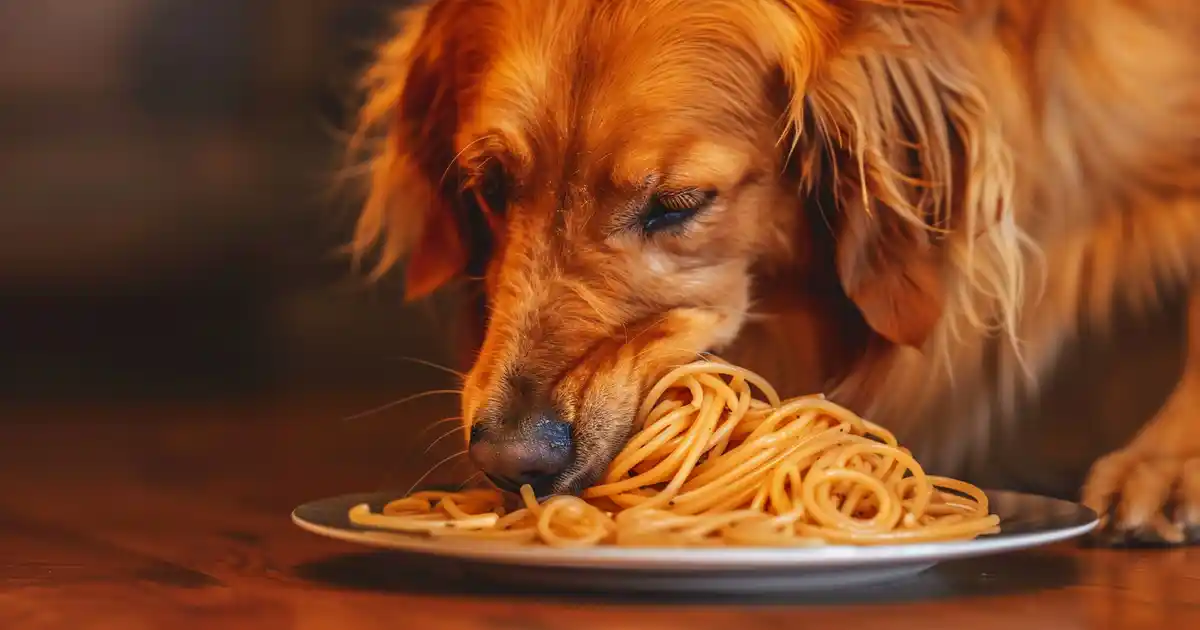
Have you ever wondered why your dog sits mesmerized watching you twirl spaghetti, leaving you torn between sharing a noodle and worrying about whether pasta is actually appropriate for carnivorous companions? I used to think plain pasta was a harmless filler food until I discovered that while the noodles themselves are generally safe, the sauce, seasonings, and ingredients we typically serve with spaghetti create a minefield of potentially toxic hazards. Now when friends casually let their dogs lick spaghetti plates clean, I share these critical insights that completely changed how I understand Italian food safety for pets. Trust me, if you’re worried about garlic and onion in sauce, tomato acidity, or whether carb-loading your dog makes any nutritional sense, this guide will show you exactly what’s safe, what’s dangerous, and why that iconic Lady and the Tramp scene is actually terrible pet care advice.
Here’s the Thing About Spaghetti and Dogs
Here’s the straightforward truth: plain, cooked spaghetti noodles without any sauce, butter, oil, or seasonings are non-toxic to dogs but offer virtually zero nutritional value—they’re essentially empty carbohydrates that do nothing to support canine health. What makes spaghetti problematic isn’t usually the pasta itself but rather everything we typically serve it with: tomato sauce containing garlic and onions (toxic), high sodium levels, herbs and spices, cheese (often problematic for lactose-intolerant dogs), and meatballs or sausage loaded with seasonings and fat.
I never knew Italian cuisine could be this dangerous for dogs until my vet explained that a single serving of typical spaghetti with marinara sauce contains multiple toxic ingredients. According to research on Allium toxicity, garlic and onions—staples of virtually every pasta sauce—contain compounds that destroy dogs’ red blood cells, causing potentially fatal anemia. It’s honestly more hazardous than I ever expected—no “just a little sauce” exceptions, no safe seasoning levels. Even small amounts of sauce accumulate toxicity over time, and the symptoms can appear days after ingestion, making it especially tricky to connect the spaghetti dinner to your dog’s sudden illness.
What You Need to Know – Let’s Break It Down
Understanding what makes spaghetti dangerous versus merely nutritionally pointless is absolutely crucial before you share that pasta bowl. Don’t skip this foundation because the difference between “safe but useless” and “potentially toxic” depends entirely on preparation and ingredients (took me forever to realize how many “harmless” spaghetti components are actually problematic).
Plain cooked pasta is non-toxic but nutritionally empty. I finally figured out that spaghetti noodles are just refined wheat flour and water—pure carbohydrates without the protein, vitamins, minerals, or nutrients dogs actually need. A few plain noodles won’t harm your dog, but they contribute nothing beneficial to their diet and add empty calories that promote weight gain (game-changer for understanding why pasta isn’t a treat worth giving).
Garlic and onion make virtually all spaghetti sauce toxic. Yes, this is the critical point: traditional marinara, bolognese, arrabiata, and basically every Italian tomato sauce contains garlic and/or onions as base ingredients. Here’s why this matters so much: even small amounts of these Allium vegetables are toxic to dogs, causing cumulative damage to red blood cells that leads to hemolytic anemia. There is no safe amount, and the “a little won’t hurt” mindset has caused countless cases of onion and garlic poisoning.
Tomato sauce itself has multiple concerns beyond garlic and onions. High sodium content stresses kidneys and cardiovascular systems, acidity can upset sensitive stomachs, and many sauces contain additional problematic ingredients like sugar, herbs (some toxic), and preservatives. If you’re just starting to understand which common foods pose risks, check out my beginner’s guide to toxic ingredients in human food for foundational knowledge that works alongside pasta safety awareness.
Meat additions compound the problems. Meatballs and sausage typically contain garlic, onions, breadcrumbs with seasonings, and high fat content that can trigger pancreatitis. Even “plain” ground beef in sauce has usually been cooked with onions and garlic. The Italian meats often include fennel, black pepper, and other spices that, while not necessarily toxic, can cause digestive upset.
Cheese toppings are problematic for many dogs. Most dogs are lactose intolerant to varying degrees, and Parmesan or mozzarella on spaghetti can cause gas, diarrhea, and stomach discomfort. The high fat and sodium content adds additional concerns, especially for dogs prone to pancreatitis or with sensitive digestion.
Portion size matters even with plain pasta. A single plain noodle is vastly different from a bowl of pasta. Excessive carbohydrate consumption contributes to obesity, blood sugar spikes, and digestive upset. Dogs aren’t designed to process large amounts of refined carbohydrates efficiently.
The Science and Psychology Behind Why This Works
Dogs are facultative carnivores with digestive systems optimized for protein and fat metabolism rather than carbohydrate processing. While they can digest cooked starches thanks to evolutionary adaptation alongside humans, their nutritional requirements center on animal proteins and fats. Research from leading veterinary nutritionists demonstrates that dogs have limited amylase (the enzyme that breaks down starches) compared to omnivorous animals, making large amounts of pasta harder to digest efficiently.
The real danger comes from the toxic compounds in garlic and onions. These Allium vegetables contain N-propyl disulfide and sodium n-propylthiosulfate, which oxidize hemoglobin in red blood cells, causing them to form Heinz bodies and eventually rupture. Studies confirm that this hemolytic anemia develops progressively as damaged cells are removed faster than new ones can be produced, potentially leading to life-threatening anemia requiring blood transfusions.
The toxicity is cumulative and dose-dependent—repeated small exposures are just as dangerous as a single large exposure. Experts agree that Japanese breeds (Akitas, Shiba Inus) may be more susceptible, but all dogs are at risk regardless of breed or size. What makes spaghetti particularly insidious is that it seems so benign—it’s comfort food for humans, so we assume sharing a few bites with our beloved pets is an act of love rather than a potential health hazard.
The psychological challenge for pet parents is recognizing that our food culture doesn’t automatically translate to safe dog food. The mental association between sharing meals and bonding is strong, but canine biology demands we separate emotional desires from nutritional appropriateness.
Here’s How to Actually Make This Happen
Start by accepting that traditional spaghetti is not dog-appropriate food and committing to never sharing sauced pasta—I know this sounds restrictive, but trust me on this. Here’s where I used to mess up: I’d think “just a little marinara” was fine, not understanding that even small amounts of garlic-and-onion-laden sauce cause cumulative toxicity. The safest approach is treating spaghetti as completely off-limits for dogs.
Now for the important part: if you absolutely must share pasta with your dog (and I question whether you should), it must be completely plain—just boiled noodles with absolutely nothing added. Don’t be me—I used to think “lightly buttered” or “a tiny bit of salt” was still “plain,” but any addition beyond pure pasta increases risks unnecessarily.
Cook a completely separate small portion without any oil, butter, or salt if you’re preparing pasta specifically for your dog. My mentor (my veterinary nutritionist after I sought guidance on homemade feeding) taught me this trick: if you wouldn’t feed it to an infant with severe allergies, don’t feed it to your dog—that level of purity and simplicity. Every situation has its own challenges, but ingredient control prevents accidental exposure to toxins.
Limit portions to tiny amounts appropriate for your dog’s size. Until you feel completely confident with portion control, stick to 1-2 plain noodles for a 50-pound dog as an absolute maximum, and only very occasionally. When it clicks, you’ll know because you’ll question whether the effort of cooking separate plain pasta is even worth it for something with zero nutritional benefit.
Establish strict household rules: no plate licking after spaghetti dinners, no dropping noodles “accidentally,” no sharing bites, no exceptions. Results vary based on family compliance, but clear boundaries prevent well-meaning but dangerous feeding. This creates lasting safety you’ll actually stick with because everyone understands the stakes—just like not letting kids play in traffic, but this approach actually prevents toxic exposures that could require emergency veterinary intervention.
Common Mistakes (And How I Made Them All)
My biggest mistake? Thinking “a little sauce won’t hurt” and letting my dog lick my spaghetti plate clean after dinner for years. Learn from my epic failure—when my dog developed unexplained lethargy and pale gums, the vet’s bloodwork revealed hemolytic anemia from cumulative garlic and onion exposure. Months of repeated small exposures had caused significant red blood cell damage that required treatment and could have been fatal without intervention.
I also assumed tomato-based sauces without obvious garlic chunks were “garlic-free.” Don’t make my mistake of ignoring the fundamental principles experts recommend—garlic powder and granulated garlic are in virtually every prepared sauce, often listed as “spices” or “natural flavoring.” Reading labels isn’t enough; avoiding all sauce is necessary.
Another rookie move: giving my dog leftover spaghetti and meatballs as a “special treat” without considering the compound toxicity of multiple dangerous ingredients combined. The mindset mistake here was treating prepared human food as appropriate dog food just because my dog enjoyed it. Palatability doesn’t equal safety.
I used to rinse sauce off noodles thinking that made them safe. Tactical mistake: sauce absorbs into porous pasta, and rinsing doesn’t remove the toxic compounds that have already penetrated the noodles. Once pasta touches sauce containing garlic or onions, it’s contaminated.
Finally, I didn’t educate dinner guests about the no-sharing rule. Well-meaning friends would sneak noodles to my begging dog under the table, undermining all my prevention efforts and creating toxic exposures I didn’t even know about until later.
When Things Don’t Go as Planned
Feeling panicked because your dog ate spaghetti with marinara sauce? You need to call your veterinarian or poison control immediately to determine if the amount consumed warrants intervention. That’s the appropriate response when garlic or onion exposure occurs. When this happens (and hopefully it won’t), I’ve learned to handle this by estimating the amount consumed, noting the time, checking the sauce ingredients, and following professional guidance about whether to induce vomiting or monitor for symptoms.
Your dog has mild diarrhea after eating plain pasta? Don’t stress—unfamiliar carbohydrates can cause digestive upset in some dogs. This is totally manageable with a 12-hour food rest followed by a bland diet (plain boiled chicken and rice) for 24 hours. The digestive upset from pasta alone is typically self-limiting and mild.
If symptoms of garlic/onion toxicity appear (lethargy, weakness, pale or yellowish gums, red or brown urine, rapid breathing, vomiting), seek emergency veterinary care immediately. I always prepare for worst-case scenarios with Allium toxicity because hemolytic anemia can progress rapidly once symptomatic, potentially requiring blood transfusions and aggressive supportive care.
When you’re uncertain whether the sauce contained garlic or onions, err on the side of caution and contact your vet. Cognitive strategies for managing poisoning anxiety include having emergency contacts readily available and recognizing that early intervention for toxic exposures always yields better outcomes than waiting for symptoms to appear.
Advanced Strategies for Next-Level Results
Advanced practitioners often implement comprehensive Italian food safety protocols that extend beyond just spaghetti to include pizza, lasagna, garlic bread, and all tomato-based dishes. I discovered that creating “dog-free zones” during Italian meal preparation works brilliantly—dogs are confined to another room or crated while cooking and eating meals that contain problematic ingredients.
When I want absolute prevention in Italian food-loving households, I use the Zero Tolerance Protocol—no Italian food sharing ever, no exceptions, no “plain” versions. This makes it maximally restrictive but definitely worth it because it eliminates all ambiguity and prevents gradual rule erosion over time.
What separates beginners from experts? Understanding that pasta culture creates numerous exposure opportunities beyond just spaghetti night—leftover containers dogs might knock over, compost bins with sauce-covered noodles, pizza crusts with garlic oil, and more. Expert-level safety extends to disposal methods (sealed trash bags in inaccessible bins) and thorough kitchen cleanup to prevent scavenging.
For next-level results, I love teaching household members and dinner guests the “why” behind the rules—people comply better when they understand that garlic and onions cause red blood cell destruction, not just “upset tummies.” The advanced version includes posting visual reminders about toxic foods on the refrigerator and maintaining emergency vet information in multiple accessible locations.
Ways to Make This Your Own
When I want simplified safety with a busy lifestyle, I use the Complete Exclusion Method—no pasta sharing ever, period. This makes it unambiguous but completely effective for preventing any possibility of dangerous exposure.
For special situations where dogs beg intensely during spaghetti dinners, the Distraction Protocol focuses on providing high-value dog-appropriate treats or puzzle toys during human meal times. My busy-season version emphasizes prevention through environmental management—dogs eat their own meals in a separate room while humans eat spaghetti.
The Alternative Treat Approach works beautifully with different household dynamics—perfect for families who really want to share food experiences with dogs. Sometimes I prepare dog-safe “pasta night” alternatives like plain sweet potato noodles or plain cooked chicken, though proper dog treats are honestly simpler and more nutritionally appropriate.
For multi-dog households with different food motivation levels, the Individual Management Strategy recognizes that the food-obsessed beagle needs stricter confinement during meals than the disinterested senior dog who ignores human food. My advanced version includes higher security measures for notorious beggars and counter-surfers.
The Education-Focused Philosophy emphasizes teaching all household members—especially children—why Italian food isn’t dog-friendly, creating family-wide commitment to safety rather than relying solely on rules. Each variation works beautifully when you commit to preventing toxic exposure as the non-negotiable priority.
Why This Approach Actually Works
Unlike traditional approaches that casually share table scraps without understanding cumulative toxicity or dismiss concerns because “a little won’t hurt,” this method leverages proven toxicology that most people overlook. Garlic and onion toxicity is real, cumulative, and potentially fatal—even small repeated exposures cause measurable damage.
The evidence-based foundation here recognizes that spaghetti offers no nutritional benefits worth any level of risk. What sets this apart from other strategies is the emphasis on complete avoidance rather than “safe” portions, because there is no safe amount of garlic or onions, and sauce-free pasta is nutritionally worthless anyway.
My personal discovery about why this works: informed prevention based on understanding actual mechanisms of harm (Heinz body formation and hemolytic anemia) creates rational boundaries without confusion. This sustainable, effective approach respects canine biology and toxicology while still giving you practical tools for enjoying your own meals without endangering your dog. It’s not about deprivation—it’s about recognizing that dogs don’t need or benefit from spaghetti, so avoiding it entirely eliminates an unnecessary risk.
Real Success Stories (And What They Teach Us)
One client’s dog experienced chronic low-grade anemia that veterinary testing couldn’t initially explain. After detailed dietary history revealed the dog routinely licked Italian food plates and received “plain” pasta with “just a little sauce,” they eliminated all Allium exposure. Within six weeks, bloodwork normalized completely and the dog’s energy returned. The lesson? Cumulative low-dose toxicity can cause significant health problems that resolve with elimination.
Another friend’s dog consumed a large amount of spaghetti with meat sauce containing significant garlic and onions. Because they called poison control immediately and brought the dog to the emergency vet within an hour, induced vomiting removed most of the toxic material before absorption. The dog never developed anemia and was released after overnight observation. Their success aligns with research on toxic exposure that shows early intervention dramatically improves outcomes.
I’ve seen dogs survive serious Allium toxicity because owners recognized symptoms early and sought aggressive treatment, and others suffer permanent organ damage because owners normalized gradual health decline without connecting it to regular Italian food exposure. The message? Prevention through complete avoidance is infinitely superior to treating toxicity after the fact.
Tools and Resources That Actually Help
Clear household feeding rules posted visibly prevent confusion and well-meaning but dangerous sharing. I keep a laminated list on the refrigerator of toxic foods including garlic, onions, and foods typically containing them.
Secure trash solutions with locking lids prevent dogs from accessing discarded spaghetti and sauce. The best resources come from veterinary toxicology organizations and proven methodologies for identifying hidden dangers in common foods.
Alternative treats that are actually dog-appropriate provide guilt-free sharing during family meals. High-quality dog treats, plain cooked vegetables like carrots or green beans, or small pieces of plain cooked chicken satisfy the desire to include dogs in meal times safely.
Emergency vet information saved in phones and posted prominently ensures rapid response if toxic ingestion occurs. Books like “Canine Nutrigenomics” by W. Jean Dodds discuss proper canine nutrition and why human food culture doesn’t translate to dog-appropriate feeding.
Label-reading skills help identify hidden garlic and onions in prepared foods, though the safest approach is simply avoiding all Italian food sharing rather than trying to find “safe” versions.
Questions People Always Ask Me
How much plain spaghetti can I safely give my dog?
Plain cooked pasta in very small amounts (1-2 noodles for a 50-pound dog) won’t cause acute harm, but it offers zero nutritional value and just adds empty calories. Most veterinarians and nutritionists recommend skipping pasta entirely because there are far better treat options.
What if my dog ate spaghetti with meat sauce containing garlic and onions?
Call your veterinarian or poison control immediately. They’ll calculate whether the amount consumed requires induced vomiting or other intervention based on your dog’s size and the estimated garlic/onion content. Don’t wait for symptoms—early action provides the best outcomes.
Is tomato sauce without garlic or onions safe for dogs?
Even plain tomato sauce has concerns: high acidity can upset sensitive stomachs, high sodium stresses kidneys, and sugar content is unnecessary. But the bigger issue is that finding truly garlic-and-onion-free tomato sauce is nearly impossible—these ingredients are staples of Italian cooking and often hidden as “spices” or “natural flavoring.”
Can I give my dog the pasta if I rinse the sauce off?
No—sauce absorbs into porous pasta, and rinsing doesn’t remove toxic compounds that have penetrated the noodles. Once pasta has touched sauce containing garlic or onions, it’s contaminated and should not be given to dogs.
What’s the most important safety rule with spaghetti and dogs?
Never share sauced pasta, and recognize that even plain pasta offers no nutritional benefit worth the effort. The safest approach is treating all spaghetti as completely off-limits for dogs and providing appropriate dog treats instead.
How do I know if my dog has garlic or onion poisoning from spaghetti?
Watch for lethargy, weakness, pale or yellowish gums, red or dark-colored urine, rapid breathing, vomiting, or collapse. Symptoms typically appear 1-3 days after ingestion, sometimes up to a week later. Any of these signs after known Allium exposure requires immediate veterinary care.
What mistakes should I avoid with spaghetti and dogs?
Don’t assume “a little won’t hurt,” don’t let dogs lick Italian food plates, don’t give pasta that’s touched any sauce, don’t assume lack of immediate symptoms means no harm occurred, and don’t trust that “natural” or “homemade” sauce is garlic-free without verifying every ingredient.
Can I make dog-friendly spaghetti with special ingredients?
You could theoretically cook plain pasta with dog-safe ground meat and vegetables (no onions, garlic, tomatoes with seeds removed, no seasoning), but at that point you’re not making spaghetti—you’re making an unnecessarily complicated dog meal. Simpler, more nutritionally appropriate options exist.
What if my dog has eaten small amounts of spaghetti regularly with no apparent problems?
Garlic and onion toxicity is cumulative—damage may be occurring without obvious symptoms yet. Consider bloodwork to check for subclinical anemia, and eliminate all Allium exposure immediately. Just because symptoms haven’t appeared doesn’t mean damage isn’t accumulating.
How much does treating garlic/onion poisoning from spaghetti typically cost?
Emergency vet visits start at $200-500, with treatment for hemolytic anemia potentially costing $1,500-5,000+ depending on severity, including bloodwork, hospitalization, IV fluids, medications, and potentially blood transfusions. Prevention costs nothing.
What’s the difference between spaghetti sauce and plain tomato products for dogs?
Plain tomatoes (ripe, red, seeds and stems removed) in tiny amounts are generally non-toxic, though acidic. But spaghetti sauce universally contains garlic and onions which are toxic, plus high sodium, sugar, and other problematic additives. Never assume sauce is similar to plain tomato.
How long after eating spaghetti should I monitor my dog for problems?
For plain pasta, digestive upset typically appears within 12-24 hours if it occurs. For sauce containing garlic/onions, monitor for 5-7 days as hemolytic anemia develops progressively. However, don’t wait to monitor—if toxic ingestion occurred, contact your vet immediately for guidance.
Before You Get Started
I couldn’t resist sharing this because it proves that understanding why seemingly harmless comfort foods contain hidden dangers transforms your ability to keep your dog safe while still enjoying your own meals. The best feeding practices happen when we separate human food culture from canine nutritional needs and recognize that love for our dogs means providing appropriate, safe foods rather than sharing everything we eat. Ready to begin? Start by committing right now that spaghetti—sauced or plain—is not dog food, establishing clear household rules about Italian meal sharing, and identifying truly dog-appropriate treats you can offer instead when those pleading eyes appear at dinner time. That simple commitment creates the foundation that makes all the difference between preventable toxicity and safe, healthy feeding practices that actually support your dog’s wellbeing rather than just satisfying our human desire to share meals.




