
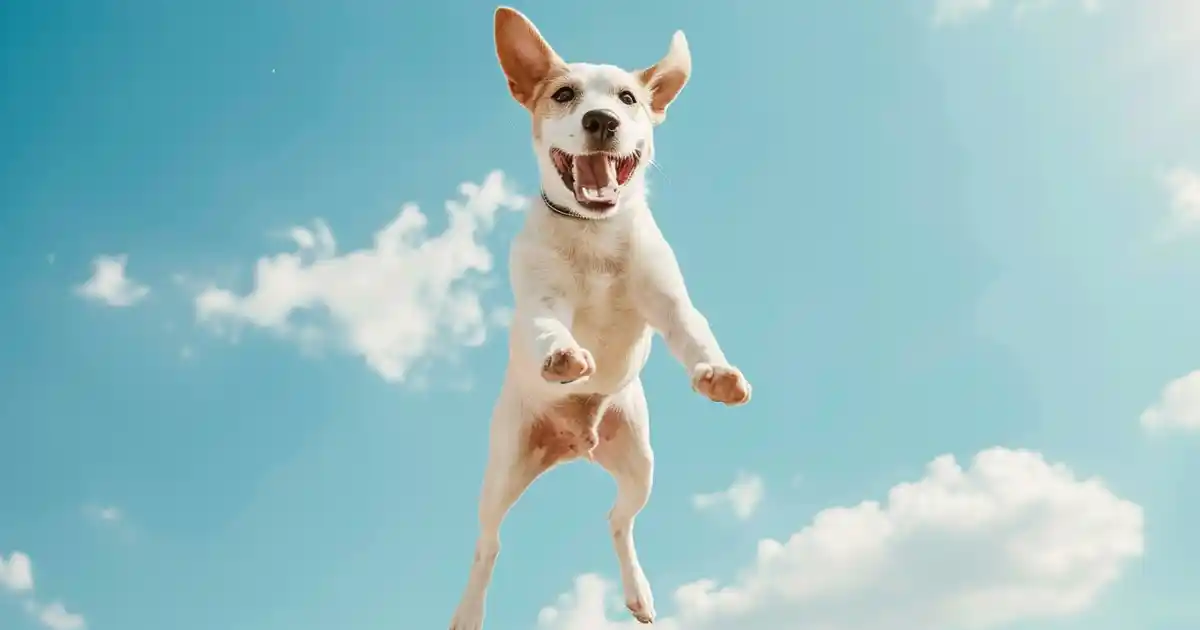
Have you ever wondered why your dog can’t seem to control themselves around guests, launching their entire body at visitors like a furry missile despite knowing it’s wrong? I used to think jumping on guests was just an unfixable quirk of having an enthusiastic dog, until I discovered these targeted strategies that completely changed how I manage my dog’s greeting excitement. Now my friends constantly ask how I transformed my notorious jumper into a dog who actually sits calmly for greetings, and my family (who used to enter our home with their arms crossed defensively) finally relaxes when they visit. Trust me, if you’re mortified by your dog’s jumping or worried about elderly relatives and children getting knocked over, this approach will show you it’s more controllable than you ever expected.
Here’s the Thing About Dogs Jumping on Guests
Here’s the magic—jumping on guests isn’t random bad behavior but rather a completely logical (from your dog’s perspective) strategy to achieve their goal of face-to-face social interaction and attention, and once you understand this motivation, the solution becomes clear: make jumping ineffective while making calm behavior incredibly rewarding. I never knew dog jumping on guests could be this predictable until I stopped seeing it as disobedience and started recognizing it as a self-reinforcing behavior pattern where jumping successfully produces the exact outcome the dog wants—attention, even if that attention is negative. According to research on operant conditioning in dogs, behaviors that successfully produce desired outcomes are strengthened and repeated, which explains why jumping persists despite corrections—from the dog’s perspective, it works every single time because they get attention. This combination of strong motivation (social interaction), immediate reinforcement (attention of any kind), and lack of trained alternatives creates the jumping epidemic that frustrates millions of dog owners. It’s honestly more fixable than I ever expected—no dominance issues or disrespect involved, just a dog doing what successfully gets them what they want until you change the equation.
What You Need to Know – Let’s Break It Down
Understanding why jumping works so well from your dog’s perspective is absolutely crucial before you can eliminate it. Don’t skip recognizing that jumping achieves multiple goals simultaneously for your dog: it brings them closer to the guest’s face (dogs naturally greet face-to-face in their social system), it reliably produces attention (even yelling and pushing away is attention), it creates physical contact (which many dogs crave), and it discharges arousal and excitement through physical activity (took me forever to realize this). When your dog jumps on guests and you respond by touching them (even pushing away), making eye contact, or speaking to them (even “no!” or “down!”), you’ve just given them exactly what they wanted—your focused attention and interaction.
Recognizing the reinforcement trap that perpetuates jumping matters just as much as understanding initial motivation. Every single person who interacts with your jumping dog either reinforces the behavior (by giving any form of attention) or helps extinguish it (by completely withdrawing attention), with no middle ground (game-changer, seriously). I always recommend understanding that your dog needs approximately 200-300 repetitions of “jumping produces zero attention while four-paws-on-floor produces immediate wonderful attention” before the new pattern becomes their automatic default behavior. This means you need almost perfect consistency across hundreds of interactions, which is why most people fail—they allow exceptions that provide intermittent reinforcement, the most powerful reinforcement schedule for maintaining behavior.
The solution framework works beautifully once you implement it completely, but you’ll need three simultaneous components: preventing jumping from being reinforced (management and attention withdrawal), heavily rewarding the alternative behavior (four paws on floor), and building foundational impulse control that makes success possible. Dogs don’t jump on guests because they’re bad or dominant—they jump because it’s always worked to get attention, and they lack the impulse control to override excitement with calm behavior—I used to focus only on stopping jumping without teaching what to do instead or building the self-control foundation needed for success. Yes, you absolutely need all three components working together, and here’s why: management alone doesn’t teach new behaviors, rewarding calm without preventing jumping practice means you’re training two competing behaviors simultaneously, and expecting impulse control without building it systematically sets your dog up for failure.
If you’re struggling with the foundational impulse control skills that make greeting training possible, check out my comprehensive guide to developing impulse control in high-energy dogs for techniques that make all greeting work exponentially easier.
The Science and Psychology Behind Why This Works
Research shows that jumping on guests is a textbook example of positive reinforcement maintaining unwanted behavior—the dog performs an action (jumping) and receives a reward (attention), strengthening the likelihood of future jumping. Studies from leading animal behaviorists demonstrate that this approach works consistently because it systematically removes all reinforcement for jumping while heavily reinforcing incompatible alternative behaviors, essentially making jumping ineffective and unrewarding while making calm greetings highly effective and rewarding. Traditional methods often fail because they provide attention (even negative attention) for jumping, which from the dog’s perspective is still reinforcement that maintains the behavior.
What makes this different from a scientific perspective is understanding that you cannot punish jumping away—you can only reinforce an alternative behavior that’s incompatible with jumping, making the unwanted behavior obsolete. When you consistently withdraw all attention during jumping (becoming a statue, turning away, leaving the room if necessary) while immediately providing enthusiastic attention the moment four paws hit the floor, you’re creating a powerful learning experience that directly compares the outcomes of both behaviors. I discovered the mental and emotional aspects matter tremendously: this approach doesn’t damage your relationship or create fear because you’re not punishing—you’re simply showing your dog through experience that jumping produces nothing while calm behavior produces everything they want.
Here’s How to Actually Make This Happen
Start by establishing the non-negotiable “four on the floor” rule across all interactions, not just guest arrivals—here’s where I used to mess up by only enforcing the rule during greetings while allowing jumping at other times. Create a household policy: your dog receives zero attention (no eye contact, no touch, no verbal interaction) whenever they’re jumping on anyone, and immediate enthusiastic attention (pets, praise, treats, play) the instant all four paws are on the ground. This step requires getting every household member and regular visitor on board, but creates lasting success because you’re providing consistent learning experiences across all contexts rather than confusing your dog with situational rules they can’t understand.
Now for the important part—teach your dog what to do instead of jumping through systematic positive training. Don’t be me—I used to just say “no jumping” without ever teaching an alternative behavior my dog could perform to get the attention she wanted. Here’s my secret: actively train a specific greeting behavior (usually sit) that becomes your dog’s automatic response to approaching people, practice this extensively in low-distraction environments before expecting performance during real greetings, and make this alternative behavior so heavily rewarded that it becomes more attractive than jumping. When it clicks, you’ll know because your dog will start automatically sitting when people approach rather than needing to be told, essentially offering the polite greeting behavior to earn attention.
Implement strict management during the learning phase to prevent continued practice of jumping, just like successful trainers do but with a completely different approach focused on preventing reinforcement rather than punishing the behavior. Keep your dog on leash during all guest arrivals (giving you physical control to prevent jumping without corrections), use baby gates to create distance until your dog demonstrates calm behavior, instruct all guests to completely ignore your dog until four paws are on the floor (turn away, cross arms, no eye contact, no talking), and be prepared to remove your dog from the situation entirely if they cannot maintain calm. Results can vary, but most dogs show noticeable improvement within 2-3 weeks when jumping produces absolutely zero attention while calm behavior produces immediate rewards, though complete extinction of the jumping habit typically requires 6-10 weeks of perfect consistency.
Create practice scenarios with cooperative helpers who understand and follow your protocol precisely—until you feel completely confident with unpredictable real guests, set up training situations where you control all variables. My mentor taught me this trick: have friends or family members practice entering your home 10-15 times in a single session, creating massive repetition of the correct pattern (dog remains calm or sits, guest ignores if jumping, guest immediately gives attention for four-on-floor, guest leaves) that accelerates learning exponentially faster than waiting for occasional real visitors. Every dog learns at different rates, so adjust practice frequency based on your dog’s progress, but remember that high-repetition training sessions create much faster results than sporadic real-world attempts.
Build long-term success through lifestyle changes that reduce your dog’s overall arousal and increase their general impulse control because dogs with better baseline self-control handle exciting situations more successfully. Don’t worry if you’re just starting out—simply increasing daily exercise (a tired dog has better impulse control), adding mental enrichment activities (training, puzzle toys, nose work), practicing calm behaviors throughout the day (rewarding settling, teaching place commands), and managing excitement levels before greetings (exercising before expected guests arrive) all contribute to better greeting behavior. Avoid only working on jumping during actual guest interactions while allowing your dog to remain highly aroused and under-exercised the rest of the time—comprehensive lifestyle management creates better results than isolated training. This creates lasting habits you’ll actually stick with because it addresses the root causes of poor impulse control rather than just suppressing symptoms, transforming dog jumping on guests from an inevitable annoyance into a completely manageable behavior that disappears through systematic training.
Common Mistakes (And How I Made Them All)
My biggest failure was giving my jumping dog attention while trying to stop the behavior—pushing her away (physical attention), saying “no” or “down” (verbal attention), and making eye contact while she jumped (visual attention)—essentially rewarding the exact behavior I wanted to eliminate. I learned the hard way that any attention, even negative attention, reinforces jumping for most dogs because attention is precisely what they’re seeking. The only effective response is complete attention withdrawal—become a statue, turn away, or leave the room entirely.
Another epic mistake I made constantly was inconsistency, sometimes enforcing the no-jumping rule and sometimes allowing it depending on my mood, the guest, or the situation. Here’s what actually happens: when jumping sometimes works and sometimes doesn’t, you’ve created intermittent reinforcement—the most powerful reinforcement schedule that exists, making the behavior even stronger and more persistent than if you’d allowed it every time. You need near-perfect consistency across hundreds of interactions to change the pattern.
Don’t make my mistake of ignoring fundamental principles experts recommend about teaching alternative behaviors. I used to focus entirely on stopping jumping without ever teaching my dog what to do instead—essentially just creating a frustrated dog who knew what not to do but had no appropriate way to greet people and discharge her excitement. Always pair “no jumping” training with active teaching and heavy reinforcement of alternative greeting behaviors.
When Things Don’t Go as Planned
Feeling overwhelmed when your dog’s jumping seems to be getting worse instead of better despite implementing the training protocol? You probably experiencing an “extinction burst”—a temporary increase in behavior intensity that happens when a previously reinforced behavior stops working, as the dog essentially tries harder to get the attention that used to work. That’s normal, and it happens to everyone in the first 1-2 weeks of consistent training—the behavior intensifies before it improves, which causes many people to abandon the protocol right before it would have started working.
When this happens (and it will), I’ve learned to handle this by staying absolutely consistent through the extinction burst without reverting to old patterns, using physical management (leashes, gates) to prevent jumping rather than giving attention to stop it, and reminding yourself that the temporary increase in intensity actually signals the training is working and the behavior is about to collapse. Progress stalled after initial improvement? Try increasing the value of rewards for calm behavior to something truly extraordinary (real meat, cheese, favorite toys) that makes calm greeting more rewarding than jumping ever was, and double-check that everyone is maintaining perfect consistency—one person allowing jumping undermines everyone else’s efforts.
Don’t stress, just remember that jumping is one of the most strongly reinforced behaviors dogs develop because it gets practiced and rewarded multiple times daily for months or years before most people seek help, and that’s okay. This is totally manageable when you focus on perfect consistency (zero exceptions, zero attention for jumping), heavy reinforcement of alternatives (make calm greetings incredibly rewarding), and realistic timelines (significant change typically requires 6-10 weeks of consistent work to override years of reinforcement). I always prepare for setbacks during particularly exciting situations (long-absent family members, children, multiple simultaneous guests) and simply manage those with gates or leashes rather than expecting perfect performance before the behavior is truly solid. If you’re losing steam, try keeping a log of successful calm greetings to track progress that feels invisible—you’ll notice the ratio gradually shifting from mostly jumping to mostly calm over weeks of consistent work.
Advanced Strategies for Next-Level Results
Advanced practitioners often implement specialized techniques for accelerated results like teaching an incompatible behavior that’s physically impossible to perform while jumping—for instance, teaching dogs to hold a toy in their mouth during greetings, which prevents jumping while giving them something to do with their excitement. I discovered that dogs who greet with a toy in their mouth not only can’t jump effectively but also have an outlet for their arousal, making the entire greeting process calmer from the start.
For experienced handlers, using differential reinforcement of alternative behavior (DRA) at a sophisticated level means not just rewarding “not jumping” but specifically identifying and heavily rewarding the exact moment your dog makes the choice to not jump. Instead of waiting for four paws to hit the floor after jumping, you watch for the micro-moment when your dog considers jumping but chooses to sit instead, and you mark and reward that decision-making moment specifically. This shapes the mental process of impulse control rather than just the physical behavior.
What separates beginners from experts is the ability to set up the environment for success proactively rather than reactively managing jumping after it happens. I’ve learned to recognize the pre-jump signals (muscle tension, forward weight shift, fixation on the guest’s face) and interrupt with a cue for an alternative behavior before the jump occurs, essentially preventing the behavior rather than correcting it. When you can redirect arousal into appropriate behaviors before jumping happens, you prevent reinforcement and practice of the unwanted behavior entirely.
Ways to Make This Your Own
The Strict Protocol Approach: When I want fastest, most reliable results, I implement zero-tolerance protocols with perfect consistency—every single interaction requires four-on-floor before attention, guests are extensively briefed and required to follow the protocol precisely, and I use physical management (leashes, gates, tethers) to prevent any jumping from being accidentally reinforced during the learning phase. This makes it more intensive because you’re controlling every variable, but it’s definitely worth it for dogs with severe jumping problems or households where safety is a major concern with elderly guests or children.
The Relaxed Management Method: For situations where you just need functional improvement rather than perfection, I’ll focus on basic management—gates keeping dogs separated until they’re calm, releasing only after settled behavior, and accepting that some jumping may still occur but preventing the worst consequences through spatial control (though that’s totally optional if you prefer complete elimination). My low-stress version focuses on preventing injuries and major chaos while accepting that greetings remain enthusiastic rather than perfectly controlled.
The Foundation-Building Protocol: Sometimes I add months of impulse control work in non-greeting contexts before ever attempting to address jumping specifically—teaching rock-solid sits and downs, extensive place training, “wait” at doorways and before meals, and general arousal management exercises. For next-level results, I love combining this comprehensive foundation with careful systematic desensitization to increasingly exciting greeting scenarios, ensuring my dog has the skills needed before facing the challenge. My advanced version includes working with certified trainers on severe cases involving aggression or extreme arousal during greetings.
The Lifestyle-Specific Adaptation: Each variation works beautifully with different household situations and dog characteristics. For families with small children who get knocked over, emphasize strict management and safety protocols with zero jumping tolerance. For social households with constant guests, invest in bulletproof greeting protocols that work reliably across all situations. For people with infrequent visitors, focus on management during rare arrivals rather than extensive daily training. The budget-conscious approach uses consistent application of attention withdrawal and DIY training, while others might invest in professional training, specialized equipment, or board-and-train programs focusing on greeting manners.
Why This Approach Actually Works
Unlike traditional methods that use corrections, punishment, or dominance-based techniques that often provide the very attention that reinforces jumping, this approach leverages the fundamental principle that behaviors maintained by reinforcement (attention) extinguish when that reinforcement is consistently removed while alternative behaviors are heavily reinforced. The underlying principle is simple: dogs do what works to get what they want, so when jumping stops working and calm behavior starts working incredibly well, dogs switch behaviors—not because they’re being obedient but because they’re being smart about achieving their goals.
What sets this apart from other strategies is that it works with your dog’s natural motivation (wanting attention and social interaction) rather than trying to suppress or punish natural enthusiasm. Dogs aren’t being bad when they jump—they’re being effective at getting attention, and they’re expressing natural joy about social interaction. When you honor their desire for interaction while simply changing the criteria (calm gets attention, jumping gets nothing), you create training that feels positive for both dog and human while producing reliable results.
I discovered through years of working with enthusiastic jumpers that this method creates sustainable, long-term behavioral change because it actually changes the dog’s learned associations and behavioral strategies rather than just temporarily suppressing behavior through fear or corrections. Evidence-based research confirms that dogs trained with attention withdrawal for unwanted behavior plus heavy reinforcement for alternative behavior show more reliable, permanent behavior change compared to dogs managed through punishment, corrections, or dominance-based techniques that create fear or confusion without addressing the underlying reinforcement pattern.
Real Success Stories (And What They Teach Us)
One family I worked with had a Labrador who would knock their 80-year-old grandmother down every visit, creating serious injury risk and making family gatherings stressful. Within six weeks of implementing strict protocols—zero attention for jumping from all family members, leash management during arrivals, extensive practice with cooperative helpers, and heavy reinforcement for sit-greetings—their dog completely stopped jumping on anyone. What made them successful was absolute consistency (not a single exception allowed), practicing the protocol 3-4 times daily with family members doing mock arrivals, and accepting that progress required weeks of perfect execution rather than hoping for quick fixes.
A professional dog walker shared that teaching “four on floor” as her universal greeting protocol transformed her business, allowing her to safely manage multiple dogs during client home entries. By requiring all dogs to have four paws on the ground before receiving any attention (leashes, treats, or verbal greeting), she eliminated jumping across her entire client base within 2-3 months. The lesson here is that consistency across all interactions (not just special “guest” situations) creates fastest, most reliable results because dogs learn the rule applies universally rather than situationally.
Their success aligns with behavioral learning theory that shows consistent patterns: behaviors maintained by positive reinforcement extinguish when that reinforcement is systematically removed while incompatible alternative behaviors receive stronger reinforcement. Different timelines emerged based on severity and reinforcement history—young dogs with newly developing jumping habits changed in 2-4 weeks, while adult dogs with years of successful jumping required 8-12 weeks of perfect consistency to override the established pattern.
Tools and Resources That Actually Help
Management Equipment: While not replacing training, I’ve found that leashes or drag lines that allow you to maintain control without grabbing or giving attention, baby gates that create spatial management during high-arousal arrivals, front-clip harnesses that make physical control easier without reinforcing jumping, and tethers that prevent access to the door while allowing your dog to see and habituate to guests all support better outcomes. They won’t fix the behavior, but they prevent continued reinforcement while you’re building new patterns. Free alternatives include simply closing doors to separate your dog during arrivals until they demonstrate calm, then allowing controlled greetings.
Training Rewards and Motivation: For working with jumping behavior, truly high-value rewards that appear only during greeting training (real meat, special cheese, favorite toys), verbal markers or clickers for precise timing, and reward placement strategies (delivering treats low to keep dog’s focus down rather than up at face level) create powerful learning. I personally use a “jackpot” system where the first completely calm greeting in each training session receives an entire handful of treats plus enthusiastic praise, making that success extraordinarily memorable. Be honest about what motivates your individual dog—some work harder for food, others for toys or play, some for the guest interaction itself.
Educational Resources: The best resources come from authoritative sources like the American College of Veterinary Behaviorists and proven methodologies from certified professional dog trainers specializing in positive reinforcement techniques. I recommend studying anything about differential reinforcement, attention withdrawal protocols, and greeting manners from trainers like Emily Larlham (Kikopup) or Zak George whose work specifically addresses jumping through positive methods. Books like “The Power of Positive Dog Training” by Pat Miller provide excellent frameworks for understanding how to eliminate unwanted behaviors through reinforcement-based approaches.
Questions People Always Ask Me
How long does it take to stop a dog from jumping on guests?
Most people need 6-10 weeks to see dramatic, reliable improvement in jumping behavior with perfect consistency across all interactions—you’ll notice reduced jump frequency and intensity within 2-3 weeks, but complete elimination typically requires 2-3 months of zero exceptions to the protocol. However, if you’re working with a young, recently developed jumping habit, you might see results in 3-4 weeks, while dogs with years of reinforced jumping may need 12-16 weeks to completely override the established pattern with a new default greeting behavior.
What if I don’t have time for extensive training sessions?
The beauty of jumping training is it doesn’t require dedicated sessions—it happens during normal daily interactions and guest arrivals. Focus on the key element of consistency: simply ensure that jumping NEVER receives attention while four-paws-on-floor ALWAYS receives immediate attention, across every single interaction throughout every day. This requires vigilance and consistency but not additional time beyond what you’re already spending on greetings.
Is it realistic to expect my dog to never jump again?
Yes, absolutely, when you’ve completely changed the reinforcement pattern through hundreds of consistent repetitions. Dogs who’ve learned through experience that jumping produces zero attention while calm behavior produces immediate wonderful attention will choose calm behavior—not because they’re being obedient but because they’re being smart. However, this requires genuine perfect consistency; even occasional reinforcement of jumping maintains the behavior.
Can I adapt this method if my dog jumps from excitement rather than seeking attention?
The method works regardless of motivation because the mechanism is the same—jumping behavior is maintained by some form of reinforcement (whether attention, social interaction, or arousal discharge) and will extinguish when that reinforcement is removed. For highly aroused dogs, add arousal management strategies (exercise before greetings, calm energy from all humans, lower overall stimulation) alongside the attention withdrawal protocol for best results.
What’s the most important thing to focus on first?
Getting absolute agreement and consistency from every single person who interacts with your dog that jumping produces zero attention (turn away, become a statue, leave if necessary) while four-paws-on-floor produces immediate enthusiastic attention. I’ve learned that everything else fails if even one person inconsistently allows or rewards jumping—that single person maintains the behavior for everyone. Family meetings specifically about greeting protocols are essential.
How do I stay motivated when my dog keeps jumping despite weeks of effort?
Verify you’re achieving true consistency—even 90% consistency fails because the 10% of times jumping works creates intermittent reinforcement. Video yourself and others interacting with your dog to identify where attention is accidentally being provided for jumping. Track successful calm greetings in a log to see gradual improvement. Remember that extinction bursts (temporary increases in behavior) are normal and actually signal the training is working.
What mistakes should I avoid when stopping jumping behavior?
Don’t provide any attention (touch, eye contact, verbal interaction) during jumping—even corrections are attention that reinforces the behavior. Avoid inconsistency where jumping sometimes works, creating powerful intermittent reinforcement. Stop expecting calm greetings without teaching and heavily rewarding what calm greetings look like. Never skip the foundation work of building general impulse control that makes greeting self-control possible. Don’t practice with real unpredictable guests before the behavior is solid—use cooperative helpers for training.
Can I combine jumping training with other behavior work?
Yes, jumping protocols integrate beautifully with general impulse control training, calm behavior reinforcement throughout the day, and place or mat training. The key is ensuring all training consistently emphasizes self-control and rewards calm behavior over aroused behavior. Combining greeting work with door manners, “wait” commands, and settle training creates powerful synergy where all elements reinforce the same underlying skill—impulse control during excitement.
What if my guests won’t follow the protocol and insist on petting my jumping dog?
You have two options: physically manage your dog behind gates until guests leave (protecting your training), or accept that those visitors will maintain jumping behavior and limit their access to your dog. I’ve learned to be direct: “I’m training [dog] not to jump, so please completely ignore him until he sits. Then you can pet him as much as you want.” Most people cooperate when they understand it’s training, not rudeness.
How much does professional help with jumping typically cost?
Nothing for DIY implementation using free resources and consistency—this is one of the most straightforward behavioral issues that most people can address independently. If you want professional help, costs vary from $75-200 for single consultations addressing jumping specifically to $400-1000 for comprehensive manners training packages, or $1500-3000 for board-and-train programs that include greeting protocols. Most jumping cases don’t require professional intervention if owners commit to perfect consistency.
What’s the difference between excited jumping and aggressive jumping?
Excited jumping shows loose, wiggly body language, play bows, tail wagging, seeking interaction and attention, quick settling after successful greeting, and no signs of guarding, possessiveness, or threat displays. Aggressive jumping shows tense body posture, hard stares, targeting (deliberately hitting or slamming into people), growling or snapping, persistent harassment even when person withdraws, and often includes resource guarding of space or people. If you see aggression signs, consult a certified professional immediately—aggressive jumping requires professional assessment and specialized intervention.
How do I know if my jumping training is working?
Look for these positive signs: reduced jump frequency (fewer jumps per greeting), reduced intensity (gentler jumps, easier to manage), faster recovery (quicker return to calm after jumping), increased offer of alternative behavior (dog sitting automatically without being asked), longer duration of calm before jumping occurs, and overall decreased arousal during arrivals. Progress often shows first in duration and intensity before frequency decreases completely.
Before You Get Started
I couldn’t resist sharing this because it proves that jumping on guests isn’t a permanent personality flaw or unfixable enthusiasm but rather a learned behavior pattern maintained by reinforcement that can absolutely be changed through systematic application of basic learning principles. The best jumping transformations happen when you approach with commitment to perfect consistency (understanding that 90% isn’t enough), patience with realistic timelines (6-10 weeks of perfect execution for most dogs), and remember that you’re not suppressing your dog’s joy but simply teaching them a better strategy for achieving the social interaction they crave. Start with getting household agreement on absolute consistency with the four-on-floor rule and set up one practice session with a cooperative helper who’ll follow your protocol perfectly, then build momentum from there. You’ve got everything you need to transform chaotic, dangerous jumping into calm, controlled greetings that make everyone—dog and humans alike—happier and safer.




