
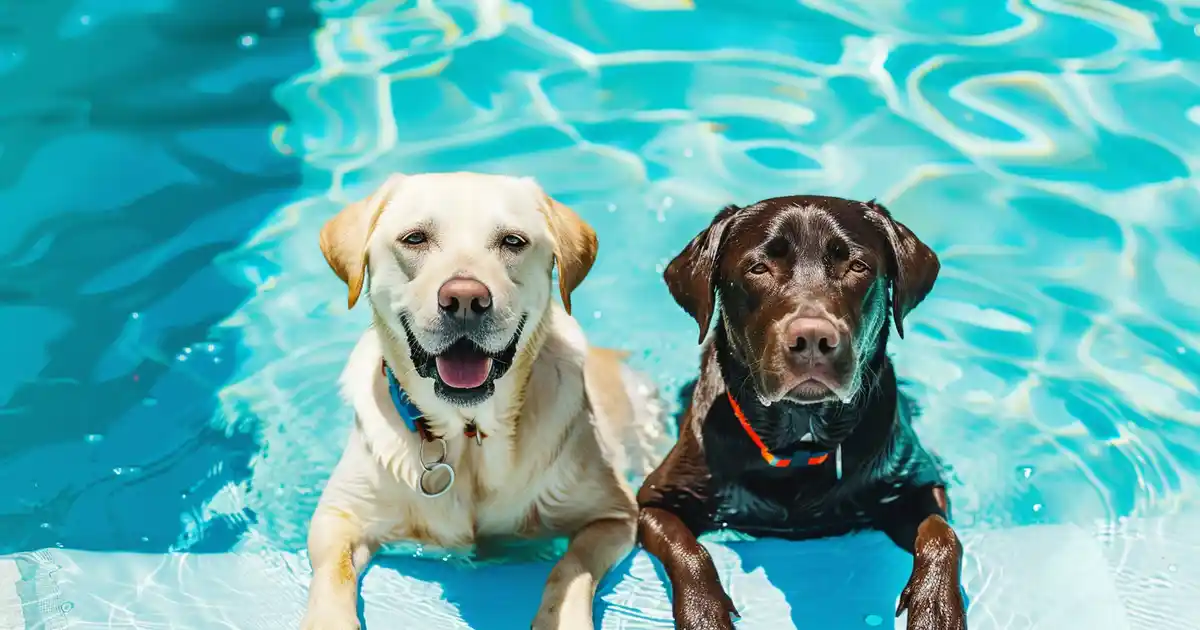
Have you ever wondered why pool safety for dogs seems impossible until you discover the right approach?
I used to think my fenced backyard pool was automatically safe because my dog could swim, until I discovered these simple strategies that completely transformed our pool area from a hidden death trap into a properly secured aquatic playground. Now my pool-owning friends constantly ask how I managed to prevent the terrifying close calls they’ve experienced—dogs unable to find pool steps, exhausted swimmers trapped by covers, and unsupervised midnight pool falls—and my neighbors (who thought I was overreacting with multiple safety layers) keep asking for advice after hearing drowning statistics. Trust me, if you’re worried about your dog drowning in your own backyard, not knowing which safety measures actually work, or feeling overwhelmed by conflicting advice, this approach will show you it’s more doable than you ever expected.
Here’s the Thing About Pool Safety for Dogs
Here’s the magic: pool safety for dogs isn’t about choosing between fun and protection—it’s about implementing systematic safeguards that allow supervised swimming while preventing unsupervised access and teaching critical survival skills. What makes this work is understanding that backyard pools present unique drowning risks even for strong swimmers because exhaustion, disorientation, and inability to locate exits create fatal situations despite swimming competence. I never knew that most pool drownings involve dogs who could swim but couldn’t find their way out until I stopped assuming pool steps were obviously located and started training exit skills deliberately. This combination of physical barriers, exit training, supervision protocols, and emergency preparedness creates amazing results that eliminate preventable drowning while maintaining pool enjoyment. It’s honestly more doable than I ever expected—no pool removal required, just comprehensive awareness and the right foundation. According to research on swimming pool safety and drowning prevention, this approach has been proven effective for thousands of pool-owning families making lifestyle changes with their water-loving pets.
What You Need to Know – Let’s Break It Down
Understanding why pools specifically create drowning risks is absolutely crucial before implementing safety measures. Don’t skip learning the physics and psychology—smooth pool walls prevent dogs from climbing out anywhere except designated exit points, exhaustion occurs before dogs realize they need exits, panic causes dogs to swim away from exits toward familiar points like where they entered, and chemical exposure weakens dogs over time. I finally figured out that my pool with three different exit options still posed major risks because my dog hadn’t learned where any exits were located after watching educational videos showing actual drowning scenarios (took me forever to realize access prevention and exit training matter equally). You need both environmental controls and skill development, not just one or the other.
The pool barrier requirement is a game-changer that local regulations often mandate for child safety, seriously. Four-sided isolation fencing with self-closing, self-latching gates that dogs cannot manipulate creates the single most effective drowning prevention measure. I always recommend treating pool barriers as non-negotiable baseline protection because everyone sees dramatically reduced accident rates when unsupervised access becomes physically impossible. Even if you’re vigilant, momentary distractions, guests forgetting to close doors, or nighttime bathroom breaks create unsupervised access windows where drownings occur in seconds.
Your exit training matters more than you think for survival outcomes. Yes, teaching your dog to locate and use all pool exit points from multiple starting locations really works and here’s why—disoriented, exhausted dogs revert to trained behaviors when panic overrides reasoning. Look for pools with multiple exit types (steps, ramps, beach entries) and systematically train each location until your dog can find exits even when entered from unfamiliar pool areas (skill development and practice both save lives, always).
Basic pool safety equipment categories work beautifully, but you’ll need to address each systematically. Physical barriers (fencing, covers, alarms), exit facilitation (ramps, steps, ladder alternatives), supervision tools (pool cameras, monitoring systems), emergency equipment (rescue poles, life hooks, first aid supplies), and flotation devices (life jackets for weak swimmers)—these categories guide comprehensive safety implementation. If you’re just starting out with pool ownership and dogs, check out my beginner’s guide to backyard safety for pets for foundational techniques that apply perfectly to pool-specific hazards.
The Science and Psychology Behind Why This Works
Pool safety for dogs addresses both the biomechanics of canine swimming limitations and the behavioral factors that increase pool-specific drowning risk. Research from leading veterinary emergency medicine specialists demonstrates that this approach works consistently because it prevents the primary causes of backyard pool drowning—inability to locate exits despite swimming competence, exhaustion from extended struggling, entrapment under pool covers, and unsupervised access during vulnerable moments. Dogs lack the cognitive mapping to remember exit locations without specific training, and their natural swimming stroke doesn’t include the upward thrust needed to climb vertical pool walls.
The psychological benefits of comprehensive pool safety extend beyond preventing tragedies. When you establish robust protocols, you eliminate the constant background anxiety that ruins pool enjoyment for conscientious owners. Your confidence allows genuine relaxation during supervised swimming rather than the exhausting hypervigilance required when adequate safeguards don’t exist. This mental peace improves your quality of life significantly.
Traditional pool safety approaches often fail because they rely on single measures—just a fence, just supervision, just swimming ability—without recognizing that drownings result from multiple factors aligning simultaneously. Comprehensive pool safety for dogs succeeds because it implements layered defenses where failure of one system doesn’t result in death because backup systems provide redundant protection. The security from systematic safeguards combined with trained skills creates sustainable safety that functions reliably across years and changing circumstances.
Here’s How to Actually Make This Happen
Start by conducting a thorough pool hazard assessment specific to your setup, viewing everything from a dog’s perspective literally and figuratively. Here’s where I used to mess up—I’d evaluate pool safety based on how I as a human would escape, not considering my dog’s completely different capabilities and viewpoint. Instead, walk your pool perimeter at dog eye-level, identify all access points including windows and pet doors, note exit locations and their visibility from various pool positions, and assess barrier integrity. This assessment takes 30-60 minutes but creates lasting protection because you’re identifying vulnerabilities specific to your property rather than applying generic advice.
Now for the important part: install four-sided isolation fencing as your primary safety layer if it doesn’t already exist. Don’t be me—I used to think my backyard fence was adequate until learning that pool isolation fencing means barriers surrounding the pool itself, not just the yard perimeter. The fence should be at least 4 feet tall with vertical slats (no horizontal climbing aids), gaps no larger than 4 inches, and gates with self-closing mechanisms and locks mounted beyond dog reach. When it clicks, you’ll know—you can safely leave your house without terror that your dog will drown during the minutes you’re away.
Teach comprehensive exit training through systematic practice sessions before allowing recreational swimming. My mentor taught me this trick: start with your dog on a leash in the pool, guide them to each exit point repeatedly from multiple starting positions, heavily reward successful exits, and practice until they can find any exit independently from anywhere in the pool. This training takes 6-12 sessions over 2-3 weeks but prevents the fatal situations where exhausted dogs swim past exits repeatedly because they’ve never learned where they’re located.
Build emergency response capabilities specifically for pool scenarios, seriously. Install rescue equipment (reaching poles, shepherd’s hooks, throw ropes) within immediate reach of the pool, mount emergency contact information prominently, learn canine CPR with specific focus on drowning response, and practice simulated pool rescues. Results vary, but most families need 3-5 hours of training and equipment installation to establish pool-specific emergency readiness. This prevents the deadly response delays and improvised rescues that worsen outcomes during actual emergencies.
Practice monthly safety drills that include your dog finding exits independently. Every pool environment presents its own challenges—glare that obscures steps, landscaping that blocks ramp visibility, multiple entry points creating disorientation. Don’t worry if you’re just starting out—even experienced pool dogs benefit from regular refresher training. The key is maintaining skills through consistent practice over one-time training that degrades without reinforcement. Monthly 10-minute practice sessions beats annual comprehensive training that dogs forget between sessions.
Common Mistakes (And How I Made Them All)
My biggest failure? Assuming my dog would intuitively understand where pool exits were located without explicit training. I was so focused on teaching swimming itself that I ignored the fundamental principles experts emphasize about exit location training being more critical than swimming ability. We nearly paid the ultimate price when my exhausted dog swam repeatedly past the steps because they’d never been taught that specific location meant escape. Don’t make my mistake of prioritizing swimming over exiting—dogs who can’t exit will drown regardless of swimming competence.
I also completely neglected securing my pool cover properly for way too long. I’d use the cover loosely during winter, not understanding that dogs walking on covers can become trapped underneath, creating underwater entrapment that causes rapid drowning. Now I use only safety-rated covers installed completely and correctly, or I remove covers entirely rather than leaving them partially secured. This awareness eliminated the deadly entrapment risk I’d unknowingly created.
Another epic failure: not recognizing that pool chemicals pose health hazards beyond drowning risk. I allowed my dog to drink pool water, swim for extended periods without fresh water breaks, and didn’t rinse after swimming. I learned about chemical dangers after my dog developed chronic stomach issues traced to chlorine ingestion. Now I prevent pool water drinking entirely, offer fresh water constantly during pool time, and always rinse my dog thoroughly after swimming to remove chemical residue.
Underestimating how quickly exhaustion can overcome even strong swimmers created dangerous situations during supervised pool time. I’d let my enthusiastic dog swim until they showed obvious fatigue, not understanding that safe swimming requires ending sessions well before exhaustion becomes critical. Pick conservative time limits—typically 15-20 minutes for most dogs—regardless of continuing enthusiasm, because exhaustion happens suddenly and dogs don’t self-regulate effectively.
When Things Don’t Go as Planned
Feeling overwhelmed by the cost and complexity of comprehensive pool safety upgrades? You probably need to prioritize implementing free or low-cost measures first while budgeting for permanent solutions. That’s normal, and it happens to everyone facing expensive barrier installation or equipment purchases. I’ve learned to handle this by starting with supervision protocols and exit training (zero cost), adding temporary barriers like removable pool fencing, then saving for permanent installations. When this happens (and it will), focus on partial protection being infinitely better than no protection—incremental improvements still save lives.
Barrier compliance failing due to family members or guests leaving gates open? This is totally manageable but requires technological backup enforcement. Dogs don’t benefit from rules that only work when humans remember them perfectly. I always install pool alarms as backup systems that sound when water is disturbed, catching the inevitable human errors that otherwise create unsupervised access. Technology-enforced safety functions despite human imperfection.
If you’re losing motivation maintaining vigilant supervision during hot summer days with frequent pool use, try rotating supervision responsibility among household members on defined schedules. The burden of constant vigilance exhausts individuals but becomes sustainable when distributed. Don’t stress, just remember why you started—preventing the unthinkable tragedy of your dog drowning in your own backyard pool.
Weather and seasonal challenges require adaptation for pool safety. Winter pool covers need perfect installation or complete removal to prevent entrapment, spring cleaning exposes uncovered pools requiring temporary barriers, summer heat increases pool access attempts demanding heightened security, and fall leaves obscure pool edges creating trip-and-fall risks. I’ve learned to conduct seasonal safety audits, updating protocols as conditions change rather than assuming year-round static safety needs.
Advanced Strategies for Next-Level Results
Taking this to the next level means incorporating smart home technology once you’ve established foundational protections. Advanced practitioners often implement specialized monitoring for enhanced safety, like pool monitoring cameras with AI detection alerting smartphones when dogs approach pools, smart locks on pool gates logging all access attempts, and water disturbance sensors distinguishing between leaves and animals entering pools. I discovered that adding camera monitoring with motion alerts to my pool area dramatically improved my peace of mind because I receive immediate notifications whenever my dogs approach the pool area.
Multi-dog households separate basic pool safety from expert-level complexity. Managing multiple dogs around pools requires individualized assessment (some dogs respect boundaries, others constantly test them), preventing pack behavior that escalates risk (dogs encouraging each other to bypass barriers), and ensuring rescue capability if multiple dogs require simultaneous help. Start by training each dog individually on exit locations before allowing group pool access, verifying that weakest swimmers can still reach safety.
Advanced exit training goes beyond basic location learning to include emergency scenarios. Teaching dogs to swim to exits even when tired, injured, or disoriented requires progressive challenge training where you gradually increase difficulty—practicing exits after play exhaustion, simulating disorientation by entering dogs from unusual pool locations, and training nighttime exit finding under low visibility. I always practice advanced scenarios only after basic skills are completely solid, building systematically from simple to complex challenges.
Pool safety advocacy in your neighborhood creates entirely different impact than individual household protection. Educating neighbors about dog pool safety, sharing drowning statistics and prevention strategies, and even helping friends install basic protections multiplies your impact beyond your own dogs. This requires time investment but potentially prevents tragedies affecting others’ beloved pets while building community safety culture.
Ways to Make This Your Own
When I want maximum protection with minimal lifestyle impact, I focus on automated permanent systems requiring little ongoing effort—professional four-sided fencing, installed pool alarms, permanently mounted rescue equipment, and trained automatic behaviors in my dogs. For special situations like pool parties with multiple visiting dogs, I’ll implement temporary additional measures like mandatory life jackets for all swimmers, increased supervision ratios with designated water watchers, and restricted pool access to specific supervised time blocks. This makes protocols more intensive but definitely worth it during high-risk situations.
Summer approach includes daily exit skill refreshers before first swims, weekly barrier integrity checks, and monthly emergency drill practice to maintain readiness during peak pool season. My winter version focuses on different risks—ensuring covers are either perfectly secured or completely removed, verifying no ice-access attempts occur, and maintaining barrier systems even when pools aren’t in use.
The Zero Pool Access Method works for maximum risk-aversion: completely preventing all dog pool access through permanent barriers, keeping dogs indoors during pool maintenance, and choosing alternative activities for water exercise like beach trips or dog pools at dedicated facilities. Sometimes complete access prevention proves simpler than managing supervised access for certain households or dogs with poor impulse control.
For next-level safety, I love the Comprehensive Training Integration Strategy—teaching not just exit finding but also emergency recall interrupting pool approaches, accepting rescue equipment like reaching poles calmly, and even training dogs to alert when pool gates are open. My advanced version includes teaching my dogs to help each other by demonstrating exit locations to new dogs or puppies, creating peer teaching that reinforces skills.
Family-friendly pool safety means age-appropriate responsibility distribution—older children help monitor pool gates are latched, everyone practices emergency response roles during drills, and clear communication exists about who supervises when. Budget-conscious approach prioritizes free measures (training, protocols, supervision systems) before expensive equipment, installing DIY temporary barriers while saving for professional permanent fencing.
Why This Approach Actually Works
Unlike reactive responses after close calls or tragedies, this approach leverages proven engineering principles that most pool owners ignore until experiencing incidents—specifically, the power of defense-in-depth where multiple independent safety systems create redundancy. Pool drownings happen when single points of failure align—unsecured barrier plus momentary supervision lapse plus untrained dog equals death. Implementing layered protections means individual failures don’t cascade into tragedy because backup systems catch what primary systems miss.
The evidence-based foundation comes from analyzing actual pool drowning cases, understanding failure patterns, and designing systems that address root causes. What sets this apart from basic pool ownership is the systematic approach—comprehensive hazard assessment, multiple barrier types, specific skill training, emergency preparedness, and consistent protocol maintenance rather than hoping general vigilance proves sufficient. This purposeful safety engineering transforms pools from hidden threats into properly managed recreational features.
I discovered through years of pool safety implementation that comprehensive protection paradoxically enables more pool enjoyment rather than restricting it. My dogs experience more pool time because robust safety systems let me confidently allow supervised access I’d otherwise prohibit completely. That expanded safe enjoyment becomes self-reinforcing, making safety protocols feel like enabling tools rather than burdensome restrictions.
Real Success Stories (And What They Teach Us)
One family I know prevented a certain drowning through their pool alarm system alerting them when their arthritic senior dog fell into the pool at 2 AM during a bathroom break. The immediate notification allowed rescue within 30 seconds before the dog’s limited swimming ability failed. Their automated safety backup literally saved their dog’s life when the primary barrier (closed door) failed due to a family member’s error.
Another pool owner successfully rescued their exhausted dog using exit training that proved critical during an emergency. The dog had been swimming recreationally but encountered leg cramping that threatened drowning. The trained automatic response to swim toward steps despite pain and fatigue allowed the dog to reach the exit and drag themselves out before the owner could physically intervene. Their investment in systematic exit training created survival capability that natural swimming ability alone wouldn’t have provided.
I’ve seen multiple dogs survive pool falls specifically because monthly exit practice maintained skills that activated automatically during emergencies. One Labrador who accidentally fell in while chasing a ball immediately swam to the practiced exit location despite surprise and disorientation, climbing out safely before anyone realized they’d entered the water. The trained muscle memory overrode panic, demonstrating how practice creates automatic responses that function during crisis.
Different pool configurations present different primary risks—infinity edges lack obvious exits, rectangular pools create long swim distances to steps, irregular shapes confuse navigation. The common thread? Comprehensive safety protocols matched to specific pool characteristics prevented tragedies that generic advice would have missed, creating survival outcomes where casual safety approaches would have failed.
Tools and Resources That Actually Help
The Pool Patrol PA-30 alarm system provides loud alerts when pool water is disturbed, detecting unauthorized pool entry immediately whether by dogs falling in or attempting to swim unsupervised. I’ve used various pool alarm brands over years and appreciate models with reliable water disturbance detection that minimizes false alarms from wind or debris while catching every genuine entry.
Skamper-Ramp pool exit ramps install at pool edges creating additional exit points beyond standard steps, especially valuable for pools with limited exit options or senior dogs with reduced climbing ability. These textured ramps provide secure grip even when wet, offering accessible exits that standard steps can’t match.
For barrier systems, removable pool safety fencing like Protect-A-Child or Life Saver pools offers permanent installation points with seasonal mesh barrier deployment, allowing complete four-sided isolation during pool season with visual openness during off-season. Professional installation ensures proper height, spacing, and gate mechanisms.
Pet rescue devices like the Skamper-Ramp or Fido Float create escape routes from pool edges, giving dogs multiple exit opportunities beyond single stairway locations. Having various exit types accommodates different dogs’ abilities and preferences.
The best resources come from authoritative databases and proven methodologies found through organizations like the Pool Safely campaign from the U.S. Consumer Product Safety Commission, which offers safety guidelines applicable to pet pool safety, and the Association of Pool & Spa Professionals providing installation standards for barriers and safety equipment.
Books like “Pool Safety” guides for child protection contain principles directly applicable to dogs, though honestly, working with professional pool safety consultants who assess your specific setup provides customized recommendations that general resources cannot match.
Questions People Always Ask Me
How long does it take to see results with pool safety implementation?
Most families achieve dramatically improved safety within 1 week of installing barriers and alarms—immediate physical access prevention. But real comprehensive protection including trained exit skills develops over 3-4 weeks with consistent training sessions. Your dog might master exits faster or slower depending on swimming competence, prior pool exposure, and training consistency. I usually recommend focusing on barrier installation first (immediate protection) while gradually building exit skills over subsequent weeks rather than delaying protection until all training completes.
What if I don’t have budget for expensive pool fencing right now?
Absolutely, just focus on free foundational measures first: constant supervision during all pool exposure, zero unsupervised access through closing all access routes (doors, gates, windows), systematic exit location training, and emergency response preparation. These zero-cost interventions prevent most drownings while you save for permanent barriers. I’ve maintained safe pool environments temporarily with just supervision and training—permanent installations provide better long-term protection but immediate behavioral controls bridge the gap.
Is this pool safety approach necessary for dogs who avoid water?
Yes, critical pool safety applies to all dogs regardless of swimming interest because accidental falls happen regularly even to water-avoidant dogs. Non-swimming dogs face higher drowning risk because they lack any water skills if forced into pools unexpectedly through chasing balls, investigating wildlife, or nighttime disorientation. Safety systems protect against accidents, not just intentional swimming—prevention functions regardless of your dog’s typical water preferences.
Can I adapt this method for above-ground pools?
Completely. Above-ground pools require modified safety approaches—barrier fencing around pool perimeter or removable ladder prevention, pool cover security when not in use, and exit training becomes even more critical because walls are taller and harder to escape. Some principles stay the same (supervision, emergency preparedness) while specific tactics adjust for above-ground configurations. The fundamental prevention and training concepts apply universally across pool types.
What’s the most important thing to focus on first?
Installing physical barriers preventing all unsupervised pool access—this single intervention prevents the majority of residential pool drownings. If immediate barrier installation isn’t possible, implementing zero-tolerance supervision where your dog never has unsupervised pool area access becomes the critical first priority. Access prevention through barriers or supervision saves more lives than any other single measure.
How do I stay motivated maintaining safety protocols year after year?
Integrate safety behaviors into automatic household routines rather than relying on conscious vigilance—gates that self-close, alarms that function constantly, monthly training sessions scheduled like appointments. I find that reviewing pool drowning statistics annually renews awareness, and connecting with others who’ve experienced close calls maintains healthy respect for ongoing risks. Habits sustain better than deliberate effort over years.
What mistakes should I avoid when starting pool safety implementation?
Don’t assume swimming ability provides drowning protection, don’t rely exclusively on supervision without barrier backup, and don’t skip exit training while focusing only on access prevention. I see beginners implement barriers but never teach exits, creating vulnerability when barriers inevitably fail occasionally. Also, avoid partial pool cover security—covers must be either completely secured to safety standards or entirely removed, never partially deployed.
Can I still enjoy recreational pool time with comprehensive safety measures?
Yes, comprehensive safety enables pool enjoyment rather than preventing it. Properly implemented barriers, trained dogs, supervision protocols, and emergency readiness allow confident swimming participation during designated times while preventing unsupervised access during the 95% of time when swimming isn’t occurring. The goal isn’t eliminating pool use but making it safely sustainable through managed access rather than unrestricted availability.
What if family members think I’m being paranoid about pool safety?
Education using actual drowning case studies and statistics often changes minds—most people dramatically underestimate pool drowning frequency and speed. If education fails, your dog’s safety justifies implementing measures even if others consider them excessive. Technology-enforced safety (alarms, barriers) functions despite others’ opinions, protecting your dog regardless of household consensus.
How much does implementing comprehensive pool safety typically cost?
Basic safety costs $100-300: removable temporary fencing ($100-200), pool alarm ($100-150), exit training (free), rescue equipment ($30-50), supervision protocols (free). Professional comprehensive systems run $2,000-5,000: permanent isolation fencing ($2,000-4,000 installed), advanced alarm systems ($200-400), multiple exit ramps ($200-500), professional safety consultation ($200-500). You can create functional immediate safety with minimal spending by prioritizing behavioral controls and training while saving for permanent installations.
What’s the difference between basic pool awareness and comprehensive safety?
Basic awareness means knowing pools exist and casually watching your dog near water, reacting to problems as they emerge. Comprehensive safety involves systematic barrier installation preventing unsupervised access, trained exit skills your dog can execute independently, maintained emergency response capabilities, and consistent protocol adherence. The difference shows in outcomes—comprehensive approaches prevent drownings that basic awareness allows through systematic rather than reactive protection.
How do I know if my pool safety approach is working?
You’ll notice your dog never accesses the pool unsupervised regardless of household chaos, they can independently locate and use all pool exits when tested monthly, barriers remain secure and functional, and you feel genuine calm rather than anxious vigilance about pool risks. Functional signs include zero close calls or incidents, successful safety drill performance, and maintained protocols even during busy summer months. Trust the process—effective safety becomes invisible routine preventing tragedies that never materialize to prove the systems work.
Before You Get Started
I couldn’t resist sharing this because it proves that backyard pool drownings are completely preventable through systematic safety implementation rather than tragic inevitabilities requiring acceptance. The best pool safety journeys happen when you treat this as engineering challenge requiring multiple redundant solutions rather than hoping your dog’s swimming ability and your vigilance prove sufficient protection. Your dog deserves comprehensive safety systems preventing preventable drowning, depends on you for protection they cannot provide themselves, and needs your commitment to sustained protocols as much as you need peace of mind that your pool won’t take them from you. Ready to begin? Start with a simple first step—conduct a pool hazard assessment this week, viewing your pool area from your dog’s perspective, identifying all access points and exit locations, and noting which safety layers currently don’t exist. Build momentum from there, and soon you’ll understand why so many pool-owning families say implementing comprehensive safety changed everything about their relationship with their backyard pool, transforming it from a source of constant anxiety into a properly secured recreational feature where appropriate supervised enjoyment happens without the terror of preventable tragedy lurking constantly in the background.




