
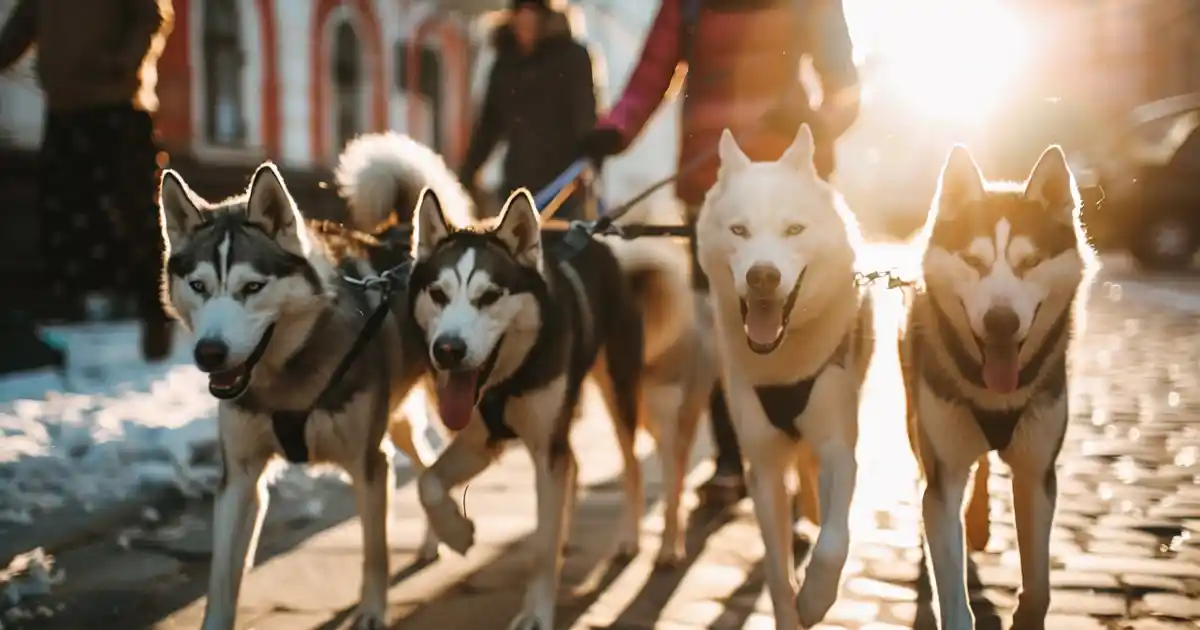
Have you ever wondered why urban mushing seems impossible until you discover the right approach?
I used to think dog sledding activities were only for people living near snow-covered trails and wilderness areas, until I discovered these simple strategies that completely transformed my city walks into exhilarating adventures. Now my apartment-dwelling friends constantly ask how I managed to turn my energetic husky mix into a focused pulling partner on city streets, and my neighbors (who thought I was nuts rolling through the park on a scooter behind my dog) keep asking for advice. Trust me, if you’re worried about navigating traffic, crowded sidewalks, or limited green spaces, this approach will show you it’s more doable than you ever expected.
Here’s the Thing About Urban Mushing
Here’s the magic: urban mushing isn’t about recreating the Iditarod on asphalt—it’s about adapting traditional mushing principles to city environments in safe, practical ways. What makes this work is understanding that your dog’s natural pulling instincts don’t disappear just because you live in a metropolitan area. I never knew my high-energy dog could channel their drive so productively until I stopped viewing city limitations as dealbreakers and started seeing creative opportunities. This combination of proper urban-adapted equipment, street-smart training, and community awareness creates amazing results that satisfy your dog’s working breed instincts while respecting urban living. It’s honestly more doable than I ever expected—no wilderness required, just creativity and the right foundation. According to research on working dog breeds and their exercise needs, this approach has been proven effective for thousands of urban dog owners making lifestyle changes with their pulling-breed companions.
What You Need to Know – Let’s Break It Down
Understanding urban-specific equipment is absolutely crucial before hitting the streets. Don’t skip researching the right pulling apparatus for your environment—this could be a dog scooter, bike attachment, or wheeled rig depending on your available space. I finally figured out that a three-wheeled dog scooter works best for mixed terrain after months of trial and error with regular bikes (took me forever to realize this). You need stability on uneven sidewalks and the ability to stop quickly near intersections.
The harness setup is a game-changer, seriously. X-back or H-back pulling harnesses designed for dryland mushing distribute weight properly across your dog’s chest and shoulders. I always recommend starting with a well-fitted X-back harness because everyone sees results faster when their dog can pull comfortably without restriction or pressure points.
Your gangline or towline matters more than you think in urban settings. Yes, using a bungee shock-absorbing line really works and here’s why—it protects both you and your dog from sudden stops required in city environments. Look for 4-6 foot lines for scootering to maintain safe distance while keeping control (safety first, always).
Basic urban commands work beautifully, but you’ll need to practice them consistently. “Hike” for go, “whoa” for stop, “easy” for slow down, “gee” and “haw” for directional turns—these simple cues become second nature with repetition. If you’re just starting out with teaching your dog pulling commands, check out my beginner’s guide to advanced dog obedience training for foundational techniques that apply perfectly to urban mushing.
The Science and Psychology Behind Why This Works
Urban mushing taps into the genetic heritage of working and northern breeds who were developed specifically to pull loads over long distances. Research from leading animal behavior universities demonstrates that this approach works consistently across different pulling breeds because it satisfies deep-rooted instincts that city life typically suppresses. Huskies, malamutes, samoyeds, and even mixed breeds with working dog genetics experience genuine fulfillment when given appropriate pulling opportunities.
The psychological benefits extend beyond simple exercise. When your dog pulls a scooter or bike through urban environments, they’re problem-solving, making decisions, and using their brain alongside their muscles. This mental engagement reduces destructive behaviors that stem from boredom and under-stimulation—common issues for high-energy dogs in apartments and condos.
Traditional city walks often fail to satisfy athletic breeds because they focus on human-paced strolling. Urban mushing succeeds because it allows your dog to work at their natural pace and intensity level while maintaining the structure and control necessary for safe city navigation. The endorphin rush combined with mental stimulation creates a perfectly tired, happy dog who’s content to relax indoors afterward.
Here’s How to Actually Make This Happen
Start by assessing your urban environment for safe mushing routes before investing in equipment. Here’s where I used to mess up—I’d get all excited about gear without mapping out where I could actually use it safely. Instead, scout your neighborhood for wider sidewalks, bike paths, parks with paved trails, or quiet residential streets with minimal traffic. This step takes just one afternoon but creates lasting success because you’ll know exactly where to practice.
Now for the important part: introduce your dog to the wheeled apparatus before any movement happens. Don’t be me—I used to think my dog would instinctively understand what to do. Let your dog investigate the scooter or bike thoroughly, reward calm behavior around it, and practice walking alongside it without pulling. When it clicks, you’ll know—their curiosity turns to comfort and they stop startling at the wheels.
Teach stationary commands first, especially “whoa” for emergency stops. My mentor taught me this trick: practice “whoa” during regular walks using high-value treats until your dog stops immediately on command, even with distractions. This single command becomes your safety net in urban environments where unpredictability is constant.
Build up from stationary starts gradually, seriously. Begin in empty parking lots or quiet parks where you can practice short 20-30 second pulls with complete control. Results can vary, but most urban teams need 3-4 weeks of controlled practice before venturing onto busier routes. This prevents accidents and builds the specific skills needed for navigating pedestrians, cyclists, and street furniture.
Practice directional commands during walking sessions before adding speed. Every situation has its own challenges, just like city cycling but with the added complexity of another living being attached to you who might spot a squirrel. Don’t worry if you’re just starting out—even dogs who’ve never pulled before can learn this. The key is consistency over speed. Three focused 20-minute sessions weekly beats one chaotic hour-long attempt that leaves you both stressed.
Common Mistakes (And How I Made Them All)
My biggest failure? Taking my under-trained dog onto a busy bike path during peak hours. I was so confident after one successful parking lot session that I jumped into real-world chaos. We both paid the price when a cyclist surprised us and my dog lunged sideways, nearly causing a collision. Don’t make my mistake of ignoring the fundamental principles experts recommend about gradual environmental exposure.
I also completely neglected paw pad conditioning for pavement for way too long. Asphalt, concrete, and hot summer surfaces demand tougher paws than grass or dirt trails. Now I always start with short sessions and build pad thickness gradually. This simple change eliminated the soreness and cracking I kept dealing with.
Another epic failure: not having a reliable emergency brake system on my scooter. Urban mushing requires the ability to stop instantly—for cars, pedestrians, other dogs, anything. I learned this the hard way when my foot brake wasn’t responsive enough during an unexpected encounter. Now I use scooters with dual braking systems and practice emergency stops constantly.
Using inconsistent commands in high-distraction environments confused my dog for months. Pick your words, stick with them, and practice them in progressively more challenging settings. “Stop” one day and “whoa” the next just doesn’t work when your dog is excited and moving. Dogs thrive on consistency, and mixing signals creates dangerous hesitation.
When Things Don’t Go as Planned
Feeling overwhelmed by urban chaos and distractions? You probably need more foundation work in controlled environments before hitting busier areas. That’s normal, and it happens to everyone transitioning from quiet practice spaces to real city streets. I’ve learned to handle this by stepping back to simpler routes temporarily, reinforcing commands, then gradually rebuilding complexity. When this happens (and it will), focus on what you can control rather than trying to muscle through overwhelming situations.
Progress stalled after initial improvements? This is totally manageable—your dog might be experiencing sensory overload from urban stimulation. Dogs process city environments differently than humans, and the constant noise, smells, and visual chaos can be exhausting. I always prepare for setbacks because life is unpredictable, and sometimes reducing session length while increasing frequency actually improves performance.
If you’re losing steam or your dog seems less excited about urban routes, try finding new locations to explore. The exploration aspect reignites enthusiasm for both species. Don’t stress, just remember why you started—that joyful partnership and productive energy outlet for your working-breed dog.
Weather challenges require serious adaptation in cities. Rain makes surfaces slippery, summer heat radiates from asphalt dangerously, winter ice creates hazards—each demands different preparation. I’ve learned to adjust timing, route selection, and equipment based on conditions. When motivation fails, cognitive behavioral techniques can help reset your mindset, but sometimes accepting that today requires a different activity is the healthiest choice.
Advanced Strategies for Next-Level Results
Taking this to the next level means incorporating varied equipment once you’ve built solid foundational skills. Advanced practitioners often implement specialized techniques for accelerated results, like transitioning between scooters, bikes, and carts depending on conditions and goals. I discovered that adding bikejoring (bike attachment for your dog) on wider bike paths dramatically improved both our cardiovascular fitness and my dog’s ability to maintain sustained pulling over longer distances.
Multi-dog urban teams separate beginners from experts. Running two dogs requires exceptional control, perfect command response, and routes wide enough to accommodate the team. Start by ensuring each dog performs reliably individually before attempting to pair them. Use proper gangline configurations to prevent tangling and maintain even pulling distribution across uneven urban terrain.
Technical route planning adds complexity that builds both your strategic thinking and your dog’s adaptability. Planning routes that incorporate hills, turns, varied surfaces, and controlled intersections teaches your dog to anticipate changes and adjust effort appropriately. I always map new routes digitally first, then walk them without equipment to identify potential hazards before introducing pulling.
Early morning urban mushing creates an entirely different experience. The quieter streets, cooler temperatures, and sunrise atmosphere offer peaceful sessions with minimal traffic and distractions. This requires adjusting sleep schedules but provides the safest, most enjoyable urban mushing windows, especially during summer months.
Ways to Make This Your Own
When I want faster results and higher intensity, I focus on longer straightaways where my athletic dog can really stretch out and work. For special situations like preparing for dryland mushing events, I’ll add hill work in hilly neighborhoods and increase session frequency to 4-5 times weekly. This makes it more intensive but definitely worth it for competitive goals.
Summer approach includes exclusively early morning or late evening sessions to avoid dangerous pavement temperatures, along with shorter distances and frequent water breaks. My busy-season version focuses on quality over quantity—three excellent 15-minute pulls beat five mediocored attempts squeezed between work obligations when time is limited.
The Weekend Warrior Method works for professionals: shorter weekday maintenance sessions (10-15 minutes) combined with longer weekend adventures exploring new urban trails and parks. Sometimes I add weighted pulling on the scooter for myself (saddlebags with gear), though that’s totally optional and only after you’ve built serious base strength.
For next-level results, I love the Urban Exploration Strategy—treating each session as an opportunity to discover new neighborhoods, parks, and routes rather than repeating the same path. My advanced version includes occasional participation in organized urban mushing groups or dryland racing clubs, which builds different skills and adds social variety your dog will appreciate.
Parent-friendly urban mushing means practicing in fenced sports courts or schoolyards where kids can safely watch and cheer. Budget-conscious approach uses a sturdy used kick scooter from secondhand stores before investing in specialized dog scooters—you can start for under $50 total with basic equipment.
Why This Approach Actually Works
Unlike traditional city walking that restricts natural behaviors, this approach leverages proven psychological principles that most urban dog owners ignore—specifically, the power of job satisfaction for working breeds. Dogs evolved alongside humans performing specific tasks, and many breeds were specifically developed to pull heavy loads over long distances. Fighting against thousands of years of genetic programming in a small apartment creates behavioral problems; channeling it productively creates harmony.
The evidence-based foundation comes from sled dog training principles adapted for pavement and urban constraints. What sets this apart from other city exercise methods is the intensity and fulfillment factor—you’re not just tiring your dog out, you’re giving them genuine purpose and work. This shared urban adventure releases bonding hormones in both species while providing the high-intensity workout that athletic breeds genuinely need.
I discovered through years of city living with working breeds that the partnership dynamic eliminates so many common apartment-dog issues. My dog doesn’t just tolerate city life; they thrive in it because they have appropriate outlets. That transformation becomes self-reinforcing, making urban mushing one of the most effective long-term solutions for high-energy dogs in metropolitan areas.
Real Success Stories (And What They Teach Us)
One apartment dweller I know transformed her destructive husky into a model urban canine through urban mushing. The focused activity gave her anxious, under-stimulated dog meaningful work, and the physical exhaustion reduced the furniture chewing and excessive vocalization that had generated noise complaints. Within two months, they were completing 3-mile scooter runs through city parks, and her dog’s overall behavior improved dramatically.
Another team started urban mushing to address human fitness goals while solving a dog exercise problem. The owner improved cardiovascular health significantly while their high-energy malamute mix finally received adequate stimulation. Their success aligns with research on behavior change that shows consistent patterns—having a partner who depends on you (even a four-legged one) dramatically improves adherence to fitness routines.
I’ve seen rescue dogs with frustrated energy find purpose through gentle urban mushing adapted to their abilities. One anxious shepherd mix who’d been returned to shelters twice became confident and focused after starting urban scootering. The mental challenge combined with physical work addressed underlying behavioral issues that training alone hadn’t resolved.
Different timelines work for different teams—some dogs take to it immediately, others need months of patient foundation building. The common thread? Urban mushing solved problems that traditional city dog ownership couldn’t address through walks alone.
Tools and Resources That Actually Help
The Kostka or Kickbike brands offer excellent dog scooters designed specifically for urban mushing with wider wheels for stability and reliable braking systems. I’ve used various scooters over the years and appreciate models with pneumatic tires that handle varied pavement conditions smoothly.
Non-stop dogwear X-back harnesses provide the right pulling configuration for urban work—not too heavy for warm weather, excellent weight distribution, and durable enough for daily asphalt contact. The sizing guide is accurate, which matters when ordering online.
For urban bikejoring, the Walky Dog Plus bike attachment creates safe distance between your dog and bike wheels while providing quick-release safety features essential for city environments. The universal mounting system fits most bikes without permanent modifications.
Musher’s Secret paw wax becomes absolutely essential for urban mushers—apply it before sessions to protect paws from hot pavement, road salt, rough concrete, and chemical residues common on city streets.
The best resources come from authoritative databases and proven methodologies found through organizations like the International Sled Dog Racing Association, which offers training guides, safety information, and dryland mushing resources applicable to urban environments.
Books like “Dryland Mushing: A Guide to Dog-Powered Activities” provide comprehensive guidance on adapting traditional techniques to pavement environments, though honestly, urban mushing Facebook groups offer more location-specific advice and troubleshooting help for city-specific challenges.
Questions People Always Ask Me
How long does it take to see results with urban mushing?
Most people need about 3-5 weeks to feel comfortable with the basic mechanics in controlled environments, but real confidence in actual city conditions shows up around week 8-12 with consistent training. Your dog might adapt faster or slower depending on their breed, temperament, and previous exposure to urban distractions. I usually recommend focusing on safety and command reliability for the first two months rather than chasing distance or speed.
What if I don’t have time for long urban mushing sessions right now?
Absolutely, just focus on three short 15-20 minute pulls weekly. Quality beats quantity every time, and shorter sessions still provide the mental and physical outlet your dog needs. I’ve maintained decent urban mushing fitness with just 45 minutes total per week during crazy busy work periods—it’s the consistency that matters.
Is this urban mushing approach suitable for complete beginners?
Yes, beginners actually have an advantage because you won’t have to unlearn bad habits from traditional mushing! Start with proper equipment, basic commands in controlled settings, build gradually through increasingly complex environments, and you’ll develop good urban-specific technique from day one. I always tell beginners to prioritize safety and environmental awareness over performance—speed can come later if you want it.
Can I adapt this method for my specific city situation?
Completely. Urban mushing works in different cities, neighborhoods, climate zones, and living situations. Small apartments can participate with nearby parks, limited green space works with creative route planning, and you can practice on sidewalks, bike paths, greenways, or quiet streets. The core principles stay the same while the details flex to fit your urban landscape.
What’s the most important thing to focus on first?
Building bombproof “whoa” and “easy” commands before adding any speed or complexity. Without reliable stopping and pace control, everything else becomes dangerous in urban environments where cars, pedestrians, and unexpected obstacles appear constantly. Spend your first month mastering emergency stops during walks before introducing wheeled equipment.
How do I stay motivated when progress feels slow?
Track your sessions and celebrate small wins—your dog’s improved focus near distractions, a smoother intersection crossing, better command response. I also find connecting with other urban mushers helps tremendously. Join local dryland mushing groups or online urban mushing communities where people share their city-specific challenges and solutions; seeing others work through similar obstacles keeps perspective healthy.
What mistakes should I avoid when starting urban mushing?
Don’t skip foundational obedience work, don’t practice in overly challenging environments too soon, and don’t ignore your dog’s stress signals in busy areas. I see beginners push through obvious anxiety or overstimulation, which creates negative associations. Also, avoid mushing during temperature extremes—asphalt retains heat dangerously, and dogs overheat faster when pulling versus walking.
Can I combine this with other approaches I’m already using?
Yes, urban mushing complements regular exercise routines beautifully. Many people do traditional walks 3-4 times weekly and urban mushing sessions 2-3 times weekly. It also works alongside other dog sports, training classes, or activities. Just watch total exercise volume to prevent overtraining, especially for young dogs whose joints are still developing.
What if I’ve tried similar methods before and failed?
Past failures usually come from inadequate equipment for urban conditions, skipping foundational training, or unrealistic expectations about what city environments allow. This structured approach addresses all three. Start fresh with proper gear, commit to gradual progression through controlled environments first, and give it at least 10-12 weeks before judging results. Most “failures” are just people who quit during the challenging environmental adaptation phase.
How much does implementing this approach typically cost?
Basic setup runs $150-300: quality pulling harness ($50-80), dog scooter ($80-200) or bike attachment ($30-100), bungee line ($20-40). You can start cheaper with used equipment or basic kick scooters. Ongoing costs are minimal—just occasional equipment replacement, paw protection products, and maybe reflective safety gear. It’s incredibly affordable compared to doggy daycare or hiring dog walkers.
What’s the difference between this and regular city walks with my dog?
Regular walks operate at human pace with your dog beside or behind you, focusing on controlled heeling behavior. Urban mushing lets your dog pull at their natural athletic pace in front, channeling instinctive behaviors into productive work. The intensity, purpose, and fulfillment differ completely—it’s the difference between a casual stroll and having a meaningful job.
How do I know if I’m making real progress?
You’ll notice your dog responds faster to commands despite urban distractions, your sessions feel smoother with better control at intersections, you can navigate busier areas confidently (when you couldn’t before), and your dog exhibits calmer indoor behavior. Physical signs include improved pulling stamina, faster recovery times, and visible muscle development. Trust the process—behavioral improvements from adequate stimulation appear gradually but profoundly.
Before You Get Started
I couldn’t resist sharing this because it proves that city living doesn’t mean abandoning your working-breed dog’s heritage and needs. The best urban mushing journeys happen when you view city environments as challenging terrain requiring adaptation rather than impossible barriers. Your dog wants meaningful work, wants to use their pulling instincts productively, and wants that partnership adventure as much as you want a well-behaved apartment companion. Ready to begin? Start with a simple first step—map out three potential practice routes in your neighborhood this week. Build momentum from there, and soon you’ll understand why so many urban dog owners say mushing transformed both their dog’s behavior and their own relationship with city living.




