
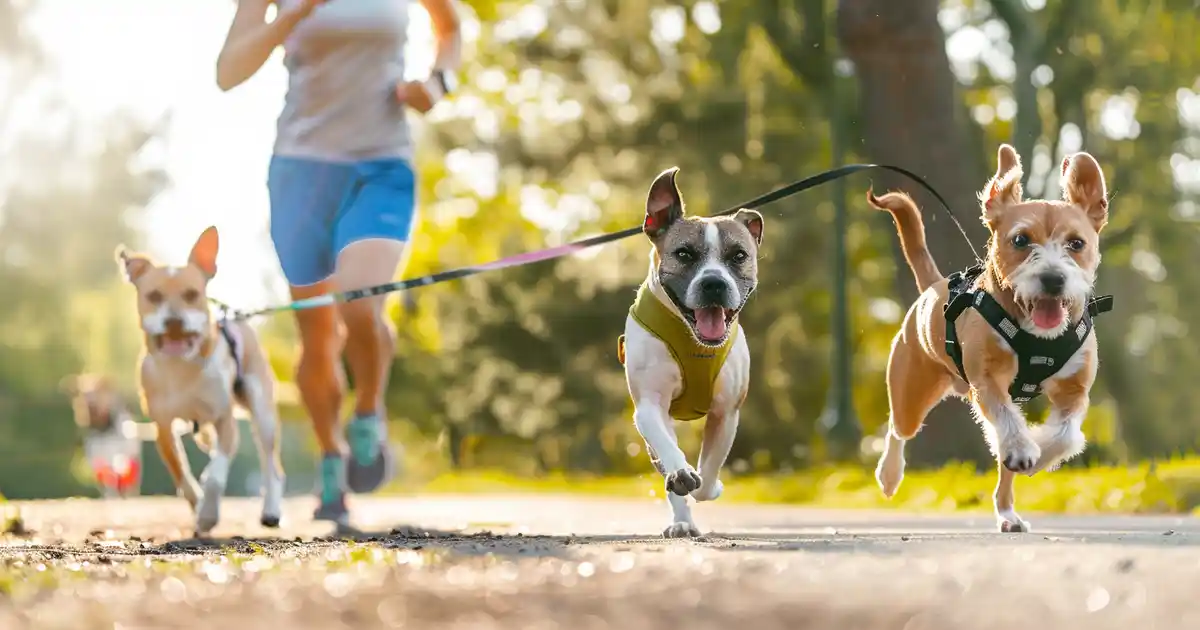
Have you ever wondered why some people make running with their dogs look effortless while your attempts end in tangled leashes, inconsistent pacing, and frustrated workouts? I used to think my energetic Border Collie would naturally excel at running beside me without any preparation, until I discovered the essential training, conditioning, and equipment that separate chaotic dragging sessions from genuinely enjoyable running partnerships. Now my running friends constantly ask how my dog maintains perfect pace and focus during long runs while theirs pull erratically or lose interest after a mile, and my veterinarian (who sees too many running-related injuries in dogs) actually recommends my training approach to clients wanting to start running with their pups. Trust me, if you’re frustrated by pulling, panting, or poor running behavior, or if you’re worried about injuring your dog through improper running, this approach will show you it’s more achievable than you ever expected.
Here’s the Thing About Running with Dogs
Here’s the magic: successful canine running partnerships aren’t about just clipping a leash and heading out—they’re about systematic conditioning, proper biomechanics understanding, and teaching specific running behaviors that differ completely from walking manners. I never knew running with dogs could be this rewarding until I stopped treating it like slightly faster walking and started implementing sport-specific training that addresses pace consistency, distraction management, and physical preparation. This combination creates amazing results that transform running from a solo cardio workout into quality bonding time while providing your dog appropriate high-intensity exercise that walking simply cannot deliver. It’s honestly more transformative than I ever expected, even for dogs who seemed impossible to control. No marathon experience needed—just practical knowledge about canine exercise physiology and running-specific training techniques. According to research on running biomechanics, proper form and gradual conditioning prevent the majority of running injuries in both humans and animals, which is exactly what this systematic approach prioritizes when preparing dogs for running.
What You Need to Know – Let’s Break It Down
Understanding that not all dogs are suitable running partners is absolutely crucial before starting a running program. Don’t skip the breed and health assessment phase (took me forever to realize this), because brachycephalic breeds like Bulldogs, giant breeds prone to joint issues, puppies with developing growth plates, and dogs with certain health conditions face serious risks from running that well-meaning owners create through ignorance. I finally figured out that veterinary clearance isn’t optional bureaucracy—it’s essential screening preventing potentially fatal exercise-induced problems after witnessing a seemingly healthy Labrador collapse from an undiagnosed heart condition during what seemed like moderate running.
Running-specific training differs fundamentally from general obedience or walking manners. Your dog needs to learn pace consistency rather than stopping to sniff, ignore distractions rather than lunging at squirrels, position themselves appropriately rather than zigzagging across your path, and communicate fatigue rather than pushing through exhaustion (game-changer, seriously). I always recommend starting with these behavioral foundations before attempting actual running because everyone sees better results when dogs understand expectations rather than learning through confused trial and error.
Physical conditioning requires gradual systematic building over weeks or months—you cannot take a sedentary dog on a 5-mile run safely regardless of their enthusiasm. Yes, patience during conditioning really works, and here’s why: tendons, ligaments, paw pads, and cardiovascular systems need time to adapt to running stresses that differ dramatically from walking, and rushing this process causes injuries that can end running careers permanently.
Essential equipment includes properly fitted running-specific harnesses that don’t restrict shoulder movement, hands-free leash systems that maintain your running form, reflective gear for visibility, and paw protection for varied surfaces. If you’re just starting out with canine running, check out dog fitness fundamentals for foundational knowledge about assessing your dog’s exercise readiness and building appropriate fitness safely.
The “how to run with dogs” approach involves understanding that successful running partnerships require addressing three domains simultaneously: physical conditioning, behavioral training, and equipment optimization. My biggest dog running tips always circle back to treating this as a systematic program rather than spontaneous activity—planning and preparation create sustainable enjoyable running that lasts years rather than ending in frustration or injury after a few weeks.
The Science and Psychology Behind Why This Works
Research shows that dogs properly conditioned for running experience significant health benefits including improved cardiovascular fitness, weight management, reduced anxiety and destructive behaviors, and enhanced joint health through appropriate impact exercise. Studies from veterinary sports medicine demonstrate that running provides intensity levels that walking cannot achieve, fulfilling exercise requirements for high-energy breeds in time-efficient workouts.
Traditional approaches often fail because they either underestimate the training required assuming enthusiastic dogs automatically make good running partners, or they start too intensely causing injuries that create negative associations with running. What makes systematic preparation different from a scientific perspective is how it respects canine physiology—dogs have different cooling mechanisms, joint development timelines, and fatigue indicators than humans, requiring species-specific conditioning protocols.
I’ve personally witnessed dogs transform from leash-reactive nightmares into focused running partners once their energy needs were appropriately met through proper running programs. The mental aspects cannot be overstated: dogs bred for work or high activity suffer behaviorally when under-exercised, while appropriately challenged dogs show remarkable calm and contentment. Research from animal behaviorists confirms that adequate high-intensity exercise significantly reduces anxiety, reactivity, and destructive behaviors in active breeds while improving overall quality of life.
Here’s How to Actually Make This Happen
Start by obtaining veterinary clearance specifically for running, ensuring your dog has no contraindications like heart conditions, joint problems, or breed-specific risks—here’s where I used to mess up by assuming my young healthy-appearing dog was automatically cleared for running. Don’t be me—I later discovered my dog had a subtle hip dysplasia that running would have severely aggravated. Get explicit approval including discussion of your planned running intensity and duration.
Now for the important part: begin conditioning with run-walk intervals starting at just 1-2 minutes of gentle jogging alternated with 3-4 minutes of walking, repeated for 15-20 minutes total. Here’s my secret—I increase running intervals by only 30 seconds weekly while decreasing walk breaks proportionally, creating gradual adaptation that builds fitness without injury risk. This step takes patience but creates the foundation that makes sustained running possible months later.
Implement running-specific command training teaching “with me” for maintaining position, “easy” for slowing pace, “let’s go” for resuming after stops, and “water” signaling hydration breaks. Until you feel completely confident about behavioral control, don’t attempt challenging routes with heavy distractions—when it clicks, you’ll know your dog responds reliably despite exciting stimuli.
Acquire proper equipment including a padded running-specific harness like the Ruffwear Front Range, hands-free waist leash systems like the Tuff Mutt, and LED collar lights or reflective gear for visibility. Results can vary, but most dogs need 6-12 weeks of consistent conditioning before they’re ready for continuous 3+ mile runs. My mentor taught me this trick: always end runs before your dog shows fatigue signs, building positive associations rather than creating exhaustion memories.
Establish hydration protocols including carrying water for your dog, offering drinks every 15-20 minutes during runs, and recognizing excessive panting or slowed pace as dehydration indicators. Every situation has its own challenges, but dehydration remains one of the most common preventable problems during canine running. Don’t worry if you’re just starting out—even experienced runners needed practice learning to read their dogs’ condition while maintaining their own pace.
This creates lasting habits you’ll actually stick with: checking paw pads before and after runs for injuries, monitoring weather conditions and avoiding dangerous heat or cold, varying running surfaces to prevent repetitive stress injuries, and scheduling rest days allowing physical recovery. Just like proper marathon training for humans but completely different specifics—you’re managing a species that can’t verbally communicate pain and relies on you for appropriate program design.
Common Mistakes (And How I Made Them All)
My biggest mistake was starting with overly ambitious distance because my dog seemed energetic and enthusiastic during the run. Learn from my epic failure: my unconditioned dog developed severe paw pad blisters and limped for a week after I took him on a 5-mile run during his second week of “training.” Don’t ignore the fundamental principles experts recommend about gradual progression regardless of your dog’s apparent enthusiasm—adrenaline masks discomfort during activity, but injuries appear afterward.
I also failed to recognize heat stress signs, continuing to run when my dog was showing early overheating symptoms I didn’t yet understand. These mistakes happen because dogs don’t sweat like humans, making temperature regulation completely different—what feels moderately warm to you can be dangerously hot for your dog. Panting intensity, drooling, and pace slowing are critical warning signs requiring immediate cessation.
Another common error is using equipment designed for walking rather than running-specific gear. I learned this when my standard collar caused breathing restriction during running’s higher intensity, and my regular 6-foot leash constantly tangled during our pace. The mistake stems from assuming walking equipment automatically works for running when biomechanics and intensity levels differ dramatically.
Choosing hard pavement exclusively for running surfaces damaged my dog’s joints over time when I could have incorporated softer surfaces like dirt trails or grass. Using humor where appropriate: your dog’s joints don’t care about your Strava stats or preferred running routes—they need impact-appropriate surfaces regardless of your convenience. These tactical mistakes typically happen because we prioritize our preferences over our dogs’ physical needs.
Neglecting to teach running-specific behaviors before starting meant my enthusiastic dog pulled erratically, stopped randomly to sniff, and lunged at distractions making early runs miserable for both of us. The assumption that leash manners automatically transfer to running ignores how excitement and intensity change behavior.
When Things Don’t Go as Planned
Feeling overwhelmed because your dog pulls constantly during running attempts making workouts impossible? You probably need to separate leash training from running conditioning, perfecting loose-leash behavior during walks before adding running complexity. That’s normal, and it happens to everyone who rushes behavioral preparation. I’ve learned to handle this by doing dedicated leash training sessions distinct from running workouts, building the foundation skill before expecting it under running’s higher arousal.
Progress stalled because your dog seems exhausted after just a mile despite weeks of conditioning? When this happens (and it will to some dogs), verify you’re progressing conservatively enough—some dogs need slower conditioning progressions than standard protocols suggest. This is totally manageable through individualized program adjustment based on your specific dog’s response rather than rigid adherence to generic schedules.
If you’re losing steam because running with your dog feels more frustrating than enjoyable, try shorter more controlled sessions where success is guaranteed rather than ambitious distances testing both your limits. I always prepare for discouragement by remembering that conditioning takes months, not weeks—patience during the building phase creates years of enjoyable running rather than abandoned attempts after frustrating experiences.
When motivation fails because your dog’s running behavior isn’t improving despite training, reconnecting with incremental progress can help reset your perspective. Review videos from early attempts and compare to current performance—improvements often happen gradually enough that you don’t notice daily progress, but comparison over weeks reveals significant development.
Advanced Strategies for Next-Level Results
Once you’ve mastered basic running partnership, consider implementing advanced training for specific running contexts. Trail running requires teaching obstacle navigation, stream crossing comfort, and wildlife distraction resistance. Advanced practitioners often implement specialized techniques for accelerated results, including interval training where dogs learn to handle pace variations, or long slow distance runs building aerobic base for endurance events.
Taking this to the next level means incorporating your dog into structured training programs preparing for specific goals like races, long-distance events, or performance objectives. What separates beginners from experts is understanding periodization—balancing hard efforts with recovery, varying intensity and volume systematically, and monitoring performance metrics that indicate fitness progression or overtraining.
Performance monitoring technology including GPS-enabled collars tracking your dog’s distance and pace separately from yours provides valuable data optimizing training effectiveness. Advanced techniques that actually work include heart rate monitoring for dogs during runs, identifying their aerobic zones and ensuring training intensity matches intended adaptations.
For experienced practitioners, participating in canicross events (competitive running with dogs) or organized running groups provides motivation and community while challenging both partners. When and why to use these strategies depends on your goals—casual fitness runners don’t need competitive training, but people seeking performance improvement appreciate structured progressive programs.
I discovered that most advanced running partnerships involve dogs trained for specific running styles—some excel at steady moderate pace over long distances, while others perform better with faster intervals and shorter overall duration. Matching training to your dog’s natural strengths creates better experiences than forcing them into approaches that don’t suit their physiology or temperament.
Ways to Make This Your Own
When I want maximum training efficiency for both species, I incorporate interval work where my dog and I both benefit from varied pace demands. For special situations like running during pregnancy or injury recovery, I’ll use a bike attachment allowing my dog to run while I cycle at their pace without impact stress. This makes my participation possible when running isn’t personally appropriate.
My busy-season version emphasizes consistent moderate runs maintaining fitness rather than ambitious training building performance—sustainability over intensity when life demands compete with running time. Summer approach includes early morning or evening runs avoiding dangerous heat, while my winter variation incorporates reflective gear and shortened distances accounting for cold-weather energy demands. Sometimes I add running-specific games like hide-and-seek during cool-down walks, though that’s totally optional and depends on whether you want pure running focus or playful integration.
For next-level results, I love the “Periodized Training Partnership” where I plan training cycles coordinating my racing goals with my dog’s conditioning—building toward peak performances together rather than random unstructured running. My advanced version includes cross-training activities like swimming or hiking providing fitness variety while preventing repetitive stress injuries.
Each variation works beautifully with different lifestyle needs: the “Casual Fitness Runner” approach uses moderate consistent running for health maintenance; the “Competitive Athlete” setup employs structured training programs preparing for performance goals; and the “Budget-Conscious” method focuses on minimal equipment and accessible locations. The “Social Runner” configuration integrates group runs or running clubs welcoming dogs, while the “Solo Adventurer” version emphasizes remote trail running exploring new terrain together.
Why This Approach Actually Works
Unlike traditional methods that treat running with dogs as spontaneous activity requiring minimal preparation, this approach leverages proven athletic training principles that most casual runners ignore. The systematic progression respects canine physiology while building both physical capability and behavioral reliability through achievable challenges. What makes this different is the holistic integration of conditioning, training, equipment, and safety awareness—most failed running attempts result from excellence in one area while neglecting others.
The underlying principles draw from exercise physiology, veterinary sports medicine, animal training science, and human athletic coaching. Evidence-based research shows that gradual conditioning with appropriate recovery prevents the majority of running injuries while building sustainable fitness that lasts years. This proven method works because it acknowledges that running partnerships require both species to adapt—your dog develops physical capacity and behavioral control while you learn to read their condition and adjust training appropriately.
My personal discovery about why this works came from watching my initially chaotic running attempts transform into peaceful enjoyable runs once I implemented systematic preparation—the difference between forcing an unprepared dog to run and partnering with a properly conditioned trained athlete is night and day. The proven framework adapts to different breeds, various running goals, and evolving fitness levels while maintaining core focus on injury prevention and mutual enjoyment.
Real Success Stories (And What They Teach Us)
One running partner transformed their anxious rescue dog showing severe behavioral problems into a calm focused companion through consistent running providing appropriate energy outlet. What made them successful was patience during the months-long conditioning process and recognizing that behavioral improvements came from meeting exercise needs rather than from training alone. Their success aligns with research on exercise and behavior that shows consistent patterns when physical needs are adequately met.
Another inspiring example involves a recreational runner who assumed their senior Labrador’s running days were over, but discovered that modified running with appropriate pace and distance adaptations extended their dog’s active years. By implementing conservative conditioning and respecting changed capabilities, they enjoyed three more years of modified running together. The lesson here is that age isn’t automatically disqualifying—thoughtful adaptation extends running partnerships beyond what seems possible.
I’ve witnessed a beginner runner whose dog became their training motivation, transforming from couch potato to completing a half marathon because their running partnership created accountability and joy that solo training never provided. Their success required building fitness gradually for both species, but the partnership created sustainable commitment.
The most inspiring success story involves someone whose reactive dog couldn’t handle regular walks due to leash aggression but found that running’s forward momentum and intensity prevented fixation on triggers—running became the primary exercise enabling both mental and physical health. What others are achieving demonstrates that running partnerships create solutions to problems that traditional exercise approaches cannot address.
Tools and Resources That Actually Help
The Ruffwear Front Range Harness ($40-60) remains my top recommendation for running because it provides excellent fit without restricting shoulder movement, includes reflective trim for visibility, and features a sturdy handle for control during stops. Why this tool is valuable: it distributes pulling pressure across the chest rather than the neck, accommodates various body types through multiple adjustment points, and includes a back D-ring perfect for hands-free leash attachment. Limitations include the moderate price point, though durability across years of running justifies the investment. I personally use this for my running dogs and have witnessed reliable performance across thousands of miles.
Tuff Mutt Hands-Free Dog Leash ($30-40) enables proper running form by securing around your waist rather than requiring hand-holding, features dual handles for quick control when needed, and includes bungee shock absorption reducing jerking on both ends. My personal experience taught me that hands-free systems dramatically improve running efficiency and comfort while preventing the arm fatigue and form breakdown that hand-held leashes cause.
Kurgo Quantum Leash ($20-30) offers versatile 6-in-1 functionality serving as hands-free waist leash, standard walking leash, or car restraint making it economical for multi-purpose use. Be honest about limitations—it’s not as refined as dedicated running leashes but provides adequate performance across various contexts at attractive pricing.
Musher’s Secret Paw Protection Wax ($15-20) creates barrier protection preventing paw pad damage from rough surfaces, hot pavement, or winter salt without requiring boot acceptance training. This simple product applies in seconds before runs and significantly reduces paw injuries.
Nathan SpeedShot Plus Handheld ($25-35) provides hydration capacity for both you and your dog during runs through a hand-held bottle with comfortable grip strap. The collapsible bowl cap enables easy dog watering during runs.
Ruffwear The Beacon Safety Light ($30-35) provides 360-degree visibility during early morning or evening runs through bright LED light that clips to harness or collar, significantly improving safety during low-light running.
American Kennel Club running with dogs guidelines provide authoritative information on breed suitability, conditioning protocols, and health considerations from veterinary professionals.
Questions People Always Ask Me
What age can I start running with my dog?
Wait until growth plates are fully closed—around 12-18 months for most breeds, though giant breeds need until 18-24 months. Premature running damages developing joints permanently. Get veterinary confirmation that your specific dog’s growth is complete before starting any running program. Short slow jogging intervals can begin slightly earlier under veterinary guidance, but serious running should wait for skeletal maturity.
How far can I run with my dog?
Distance depends on breed, age, fitness level, and conditioning status. Start with just 1-2 miles total (including walk breaks) and build gradually over months. Well-conditioned athletic breeds can eventually handle 8-10+ miles, while smaller or less athletic breeds max out around 3-5 miles. Individual variation is enormous—respect your dog’s limits rather than forcing predetermined distances.
What temperature is too hot for running with my dog?
Above 70°F, heat becomes concerning depending on humidity and your dog’s heat sensitivity. Above 80°F, running becomes dangerous for most dogs regardless of conditioning. Use the 7am rule: if it’s already 70°F at 7am, skip the run or wait for evening. Brachycephalic breeds need even more conservative temperature limits. Always prioritize safety over training schedule adherence.
How do I know if my dog is tired during a run?
Watch for excessive panting with difficulty breathing, lagging behind or slowing pace significantly, excessive drooling, attempting to lie down, or lack of enthusiasm at run start. Your dog should maintain consistent pace with moderate panting, show alertness and engagement, and recover quickly during walk breaks. Learn your individual dog’s signals—they vary between animals.
Can I run with my dog every day?
Most dogs need rest days for recovery just like human athletes. Young healthy dogs can typically handle 4-5 running days weekly with proper conditioning, while older dogs or those new to running need more recovery. Schedule at least 2 rest days weekly, and more if your dog shows fatigue signs. Cross-training with walking or swimming on rest days maintains activity without repetitive running stress.
What’s the best surface for running with dogs?
Soft natural surfaces like dirt trails or grass provide ideal impact absorption protecting joints while building stabilizing muscle. Vary surfaces to prevent repetitive stress—some pavement builds paw toughness, but exclusive hard-surface running causes joint problems over time. Avoid consistently running on concrete which provides hardest impact with least give.
Do I need special running shoes if running with my dog?
Your footwear needs don’t change, but trail running shoes provide better traction if your dog pulls occasionally, and their durability handles wet or muddy conditions dog running often involves. Proper human running shoes matching your gait and providing adequate cushioning remain essential regardless of canine companionship.
How do I stop my dog from pulling during runs?
Separate leash training from running initially, perfecting loose-leash behavior during walks before adding running intensity. Use consistent “with me” commands rewarding proper position, start runs after brief walking warm-up reducing initial excitement, and stop immediately when pulling occurs—resuming only when tension releases. Most pulling stems from excitement and insufficient basic training rather than intentional misbehavior.
Can small dogs be running partners?
Small dogs can participate in running with adaptations—shorter distances, slower paces, and recognition that their stride frequency is much higher making the same distance more taxing. Some small breeds like Jack Russell Terriers excel at running, while others like Chihuahuas have limited running aptitude. Assess individual capability rather than making breed-based assumptions, but accept that small dogs typically max out at 2-4 miles.
What gear is absolutely essential for running with dogs?
Minimum essentials include a proper harness (never collar) that doesn’t restrict movement, reliable leash (preferably hands-free system), reflective gear for visibility, and water carrying capacity for your dog. Everything else enhances the experience but these fundamentals enable safe basic running. Paw protection becomes essential depending on your running surfaces and climate.
How long does it take to condition a dog for running?
Expect 8-12 weeks minimum to build from sedentary to consistently running 3 miles, with 4-6 months for longer distances. Rushing conditioning causes injuries that can permanently end running careers. Individual variation is significant—some athletic young dogs progress faster while older dogs or certain breeds need extended timelines. Patience during conditioning creates years of injury-free running.
Should I feed my dog before or after runs?
Run on relatively empty stomachs—wait at least 2 hours after meals before running to prevent bloat risk and digestive discomfort. Feed after runs once your dog has cooled down and rested 30-60 minutes. Provide water before, during, and after runs, but limit immediately pre-run drinking to prevent sloshing discomfort.
Before You Get Started
I couldn’t resist sharing this because it proves that running partnerships genuinely transform both species’ lives when implemented properly through systematic preparation and mutual respect. The best running with dogs journeys happen when you prioritize gradual conditioning over ambitious early goals, recognize and respect your dog’s communications about their comfort and capacity, and remember that the purpose is shared enjoyment and health rather than impressive statistics or proving toughness. Every mile logged together, every beautiful sunrise run experienced side by side, and every tail-wagging anticipation when your dog sees you grab running shoes validates the preparation investment while creating memories and fitness that enrich both your lives. Ready to begin? Start with veterinary clearance and honest assessment of your dog’s current fitness—proper running partnership development flows from respecting those foundational factors and progressing patiently from there.




