
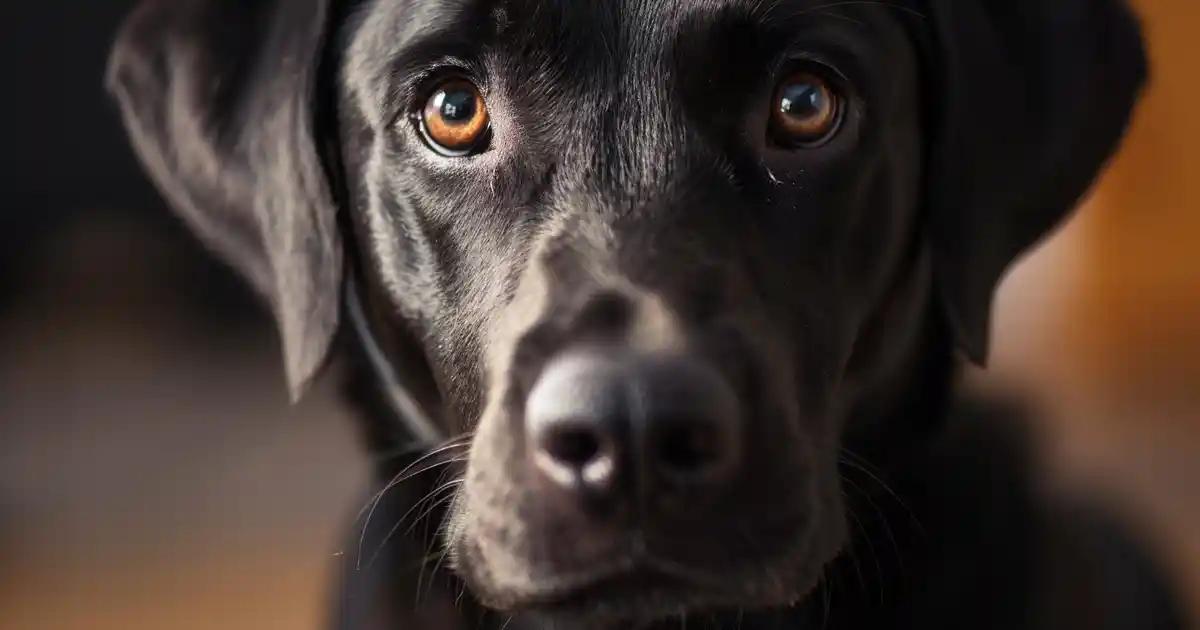
Have you ever wondered why understanding dog eye contact seems impossible until you discover what those intense stares, soft gazes, and averted looks actually mean? I used to think any eye contact from my dog meant he was paying attention or being defiant, until I discovered these crucial distinctions that completely changed how I interpret his emotional state, trust level, and intentions. Now my friends constantly ask how I can tell the difference between a loving gaze and a warning stare, and my family (who thought all eye contact was the same) keeps asking for advice after I explained why forcing eye contact with nervous dogs actually makes things worse. Trust me, if you’re worried about misreading those meaningful looks or accidentally creating stress through inappropriate eye contact, this approach will show you it’s more doable than you ever expected.
Here’s the Thing About Dog Eye Contact
Here’s the magic: your dog’s eye contact is like an emotional telegraph—constantly transmitting information about their trust level, stress state, social intentions, and bond strength through duration, intensity, and context of their gaze. What makes reading dog eye contact actually work is understanding that the quality, not just the presence, of eye contact communicates completely different messages that most people completely overlook. I never knew canine eye communication could involve such nuanced combinations of duration, pupil size, eye softness, and gaze direction until I started paying attention to these critical variables. This combination creates amazing results because once you understand what different types of eye contact mean, you can strengthen bonds, reduce stress, prevent conflicts, and communicate more effectively with your dog. It’s honestly more doable than I ever expected—no complicated systems needed, just awareness of context and quality. According to research on dog behavior, eye contact between dogs and humans triggers oxytocin release in both species, creating a unique interspecies bonding mechanism that doesn’t exist between dogs and other animals, making human-dog eye contact evolutionarily and neurologically significant.
What You Need to Know – Let’s Break It Down
Understanding the fundamentals of dog eye contact is absolutely crucial, and I’m going to break this down into clear categories (took me forever to realize this). Don’t skip learning about the difference between hard stares and soft gazes—this is the foundation everything else builds on. A direct, unblinking stare communicates completely differently than a gentle, relaxed gaze, and I finally figured out that intensity and duration matter more than the simple presence of eye contact after months of careful observation.
Soft, relaxed eye contact is your indicator of trust, affection, and bonding (game-changer, seriously). When your dog looks at you with soft eyes, relaxed facial muscles, and maybe even slow blinks, they’re expressing love and contentment. My dog’s soft gaze during quiet moments became my favorite confirmation of our bond, and recognizing this genuine affection has deepened our relationship immeasurably.
Hard stares with fixed gaze indicate challenge, threat, intense focus, or predatory interest depending on context. I always recommend learning to recognize hard stares immediately because everyone sees the safety implications faster when they understand this can signal impending aggression or extreme arousal.
Averted gaze or looking away works beautifully as a calming signal showing deference, stress reduction, or polite communication. Yes, dogs deliberately break eye contact to communicate peacefully, and here’s why: direct eye contact can be confrontational in dog language, so looking away says “I’m not a threat” or “let’s de-escalate.”
Whale eye (showing whites of eyes) signals stress, anxiety, discomfort, or guarding behavior when dogs look at something while keeping their head turned away. This position requires immediate attention (absolutely crucial to recognize).
Eye contact duration patterns reveal comfort levels and relationship dynamics. Brief glances indicate checking in or monitoring, while sustained gazes show either deep bonding or potential conflict depending on quality and context.
If you’re just starting out with understanding comprehensive canine communication signals, check out my foundational guide to interpreting dog body language cues for essential techniques that complement eye contact reading skills.
The Science and Psychology Behind Why This Works
Eye contact between dogs and humans represents a unique evolutionary development. Wild canids rarely make prolonged eye contact with humans, but domestic dogs evolved specialized communication using eye contact over thousands of years of coexistence. Research demonstrates that mutual gazing between dogs and owners triggers oxytocin release in both species—the same bonding hormone released between mothers and infants—creating a powerful neurochemical feedback loop.
Traditional approaches to dog training often fail because they misinterpret eye contact as simple attention or obedience rather than nuanced emotional communication. We demand eye contact during training without recognizing whether we’re seeing soft, willing engagement or hard, stressed compliance. That distinction changes everything about the learning experience.
The psychological aspect is fascinating: dogs use eye contact strategically and contextually. They make more eye contact with humans than with other dogs, they increase eye contact when seeking help or information, and they modulate intensity based on the relationship and situation. When you start reading these patterns accurately, you’re accessing your dog’s emotional state and intentions with remarkable precision.
Studies from canine cognition laboratories worldwide demonstrate that dogs understand human eye contact and gaze direction better than any other species, including great apes. Research from leading animal behavior scientists demonstrates that this approach works across breeds and individual dogs, though some breeds show stronger eye contact tendencies due to selective breeding for human cooperation.
Here’s How to Actually Make This Happen
Start by observing your own dog’s eye contact patterns during clearly positive situations—greeting you after absence, during gentle petting, while playing. Here’s where I used to mess up: I tried to interpret eye contact during stressful situations without knowing what happy, comfortable eye contact looked like for my specific dog. Spend time documenting your dog’s eyes during various emotional states—relaxed at home, excited about walks, uncertain around strangers, focused during training.
Now for the important part: learn to assess four key variables simultaneously—duration (brief glance versus sustained gaze), intensity (soft versus hard), pupil size (dilated versus constricted), and facial tension (relaxed versus tense). My mentor taught me this trick: eyes show the emotion, duration shows the intensity, and face shows whether it’s positive or negative. When it clicks, you’ll know, because suddenly confusing looks become readable messages.
Step three is practicing the mutual gaze exercise with your dog. This step takes just two minutes but creates lasting change in your bond and reading ability. Don’t worry if you’re just starting out—begin by sitting quietly with your dog and allowing them to initiate eye contact naturally. Notice how their gaze feels—is it soft and warm, or intense and demanding? Notice how long they maintain contact before looking away.
Here’s my secret: I video interactions from my dog’s perspective using a camera at his eye level to see what my eye contact looks like from his viewpoint. Results can vary, but this technique reveals whether I’m making soft, inviting eye contact or accidentally creating pressure through too-intense staring. Until you feel completely confident about the quality of your own eye contact, video feedback helps tremendously.
Learn to recognize “checking in” glances versus sustained bonding gazes. Don’t be me—I used to think all eye contact served the same function. Quick glances during walks or new situations mean “are you still there?” or “is this okay?” while sustained, soft gazes during quiet moments mean “I love you and feel safe with you,” just like the difference between a quick wave and a long embrace, but completely different in frequency and function.
Master distinguishing between “hard stare” warning signs and intense training focus. Every situation has its own challenges, but a hard stare includes fixed pupils, rigid facial muscles, unblinking eyes, and often accompanies threatening body posture. Intense training focus includes softer eye muscles, blinking, and accompanies engaged, anticipatory body language. The facial tension makes all the difference.
Practice appropriate eye contact initiation and breaking. If your dog looks away, respect that communication—they’re either being polite, reducing their own stress, or signaling discomfort. This creates lasting habits you’ll actually stick with because you’re engaging in two-way communication rather than demanding compliance.
Common Mistakes (And How I Made Them All)
My biggest mistake? Forcing eye contact during training without recognizing whether my dog was comfortable or stressed. I learned this the hard way when my dog’s training performance deteriorated because I was creating pressure through demanded eye contact. Don’t make my mistake of treating eye contact as obedience rather than communication—there’s a massive difference between willing engagement and stressed compliance.
Another epic failure: interpreting my dog’s averted gaze as “ignoring me” or being “stubborn” when he was actually displaying polite calming signals to reduce tension. When I stopped taking the lack of eye contact personally and started recognizing it as communication, our relationship improved dramatically.
I also ignored whale eye for way too long. When my dog showed the whites of his eyes while children approached, I thought he was “just looking at them” rather than recognizing this as a stress signal indicating discomfort. Learn from my experience: whale eye requires intervention, not reassurance to continue the interaction.
The trap of staring at nervous dogs nearly destroyed trust with a rescue I was fostering. Direct, prolonged eye contact from humans feels threatening to fearful dogs. I thought I was “bonding,” but I was actually creating stress. Allowing fearful dogs to initiate eye contact on their terms transformed the relationship.
The mistake of not recognizing that some breeds and individual dogs naturally make less eye contact led to unfair judgments. Northern breeds, livestock guardians, and some independent breeds show less human-directed eye contact not because they’re less bonded, but because they weren’t selectively bred for constant human cooperation like herding and retrieving breeds.
When Things Don’t Go as Planned
Feeling overwhelmed by interpreting quality and context simultaneously? You probably need more focused practice with clearly positive and clearly negative situations before attempting ambiguous ones. That’s normal, and it happens to everyone learning this skill. I’ve learned to handle this by first mastering soft eye contact during cuddle time and hard stares during resource guarding, then gradually working toward middle-ground situations.
Progress stalled on distinguishing soft from hard eye contact? When this happens (and it will), focus exclusively on the area around the eyes—the tiny muscles around the eye socket, the wrinkles or smoothness, the blink rate. This is totally manageable—soft eyes show relaxed surrounding muscles, frequent blinking, and often a slightly squinted appearance. Hard eyes show tension, wider eye opening, and infrequent blinking.
Your dog avoids eye contact entirely and you can’t establish connection? Don’t stress, just remember that some dogs find direct eye contact uncomfortable due to genetics, past experiences, or temperament. Respect their preference and build trust through parallel activities, side-by-side positioning, and allowing them to initiate when ready. Some of the strongest bonds exist with minimal direct eye contact.
If you’re losing steam, try focusing on one practical application: using eye contact quality to gauge training stress. When eye contact reading helps you recognize your dog is uncomfortable before they shut down or become reactive, that real-world welfare improvement reignites motivation better than any theoretical exercise.
Advanced Strategies for Next-Level Results
Once you’ve mastered basic eye contact types, start analyzing pupil dilation patterns and blink rate variations. Advanced practitioners often implement specialized observation techniques that reveal arousal level and emotional processing. For instance, rapidly dilating pupils during a situation indicate sudden stress or fear response, while slowly constricting pupils during petting indicate deepening relaxation.
Study breed-specific eye contact tendencies and genetic predispositions for next-level accuracy. My advanced version includes understanding how selective breeding affects eye contact frequency and quality. Border collies make intense, sustained eye contact during work, golden retrievers make frequent soft eye contact seeking interaction, while Akitas may show more subtle, less frequent eye contact while remaining deeply bonded.
Learn to read micro-expressions around the eyes—the tiny muscle movements lasting fractions of a second that reveal emotional shifts. For next-level results, I love catching the momentary eye softening when my dog sees me unexpectedly, or the brief eye hardening when something triggers concern before they consciously respond.
Master reading eye contact in multi-dog households where dogs use different eye contact styles with each other versus with humans. Taking this to the next level means recognizing that dogs reserve soft, prolonged gazes primarily for humans, while using brief glances and deliberate gaze aversion with other dogs to maintain polite communication.
Combine eye contact reading with oxytocin-building exercises that strengthen bonds through mutual gazing. Advanced relationship building includes intentional, consent-based eye contact sessions that deepen trust and attachment through the neurochemical feedback loop this triggers.
Ways to Make This Your Own
The Bonding-Focused Method: When I want to strengthen relationships quickly, I practice daily soft eye contact sessions during calm moments—just two minutes of mutual, relaxed gazing during petting or quiet time. This makes it more intensive on relationship building but definitely worth it for rescue dogs or new additions needing connection.
The Safety-First Approach: For households with children or in training contexts, I focus exclusively on recognizing hard stares and whale eye as critical warning signals requiring immediate intervention. My child-safety version includes teaching kids the “if the dog won’t look at you, leave them alone” rule.
The Video Analysis Track: Sometimes I add slow-motion video analysis of eye contact during various interactions to catch micro-expressions and pupil changes. For next-level results, I love comparing eye quality during positive training (treats, play) versus neutral training (repetitive commands) to ensure I’m maintaining engagement without creating stress.
The Breed-Specialist Adaptation focuses on learning normal eye contact patterns for specific breed groups—herding breeds that naturally make intense eye contact, hound breeds that make less frequent eye contact, guardian breeds that use eye contact more cautiously. Each variation works beautifully once you understand genetic predispositions.
The Professional Behaviorist Version includes systematic documentation of eye contact patterns during behavioral assessments, tracking changes in eye contact quality as interventions progress, and using eye contact as a primary indicator of emotional state during desensitization and counter-conditioning protocols.
Why This Approach Actually Works
Unlike simplistic interpretations that treat all eye contact as attention or obedience, this approach leverages the actual neurological and evolutionary basis of human-dog eye communication as a unique bonding mechanism. What makes this different is that you’re reading eye contact as emotional communication and relationship expression, not commands or compliance indicators.
The science backs this up: functional MRI studies show that mutual gazing between dogs and humans activates the same brain regions involved in parent-infant bonding. Hormonal studies demonstrate measurable oxytocin increases in both species during positive eye contact. This isn’t anthropomorphic projection—it’s documented biology proving eye contact creates genuine emotional connection.
My personal discovery about why this works came when I realized that dogs who received appropriate responses to their eye contact—engagement when offering soft gazes, space when avoiding eye contact, de-escalation when showing hard stares—actually communicated more clearly and confidently over time. That feedback loop proves eye contact serves intentional communication that strengthens when appropriately received.
Real Success Stories (And What They Teach Us)
One client completely transformed their fearful rescue dog’s confidence by respecting averted gaze and allowing the dog to initiate eye contact naturally. For the first month, they never directly stared, instead offering side-eye glances and peripheral attention. Within six weeks, the dog began seeking eye contact voluntarily, and within three months was making soft, sustained eye contact during cuddles—something the previous owner said “would never happen.”
Another success story involved a family who learned to recognize their dog’s hard stare at the baby as a warning sign, not protectiveness. That recognition allowed them to manage interactions safely, create positive associations through counter-conditioning, and eventually achieve relaxed coexistence. By not ignoring or punishing the hard stare but responding appropriately to the communication, they prevented potential bites.
A particularly inspiring example was someone working with a reactive dog who discovered their dog made brief eye contact approximately two seconds before lunging at triggers—a “checking in” glance that said “I see that thing, what do we do?” That advance warning provided by eye contact meant they could redirect attention and reinforce calm behavior before reactions occurred. Within weeks, the dog began making that checking-in eye contact earlier and holding it longer, essentially asking for guidance instead of reacting. Their success aligns with behavioral research showing that dogs actively seek human guidance through eye contact when uncertain, and building that communication reduces reactivity.
Tools and Resources That Actually Help
“The Other End of the Leash” by Patricia McConnell includes excellent chapters on eye contact differences between humans and dogs, explaining why our natural eye contact patterns can feel threatening to dogs and how to adjust our communication appropriately.
Close-up video recording focused on the eye area remains my most valuable tool. Recording your dog’s face during various situations, then reviewing at normal speed and slow motion, reveals eye softening, hardening, pupil changes, and blink rate variations that in-person observation misses completely.
Mirror exercises where you observe your own eye contact quality help tremendously. Practice making “soft eyes” versus “hard eyes” in a mirror so you can feel the muscle difference, then apply that awareness when interacting with your dog. This develops self-awareness about the quality of eye contact you’re offering.
Research articles from canine cognition laboratories provide scientific foundation for understanding eye contact’s role in human-dog communication. The best resources come from universities studying dog cognition and organizations like the International Association of Animal Behavior Consultants that maintain evidence-based educational resources about canine communication systems.
Oxytocin-building exercises and bonding protocols that incorporate intentional, positive eye contact help strengthen relationships systematically. These structured approaches create consistent positive associations with mutual gazing.
Questions People Always Ask Me
How long does it take to become proficient at reading dog eye contact?
Most people start distinguishing obviously soft versus obviously hard eye contact within 1-2 weeks of focused observation. Mastering subtle variations like pupil changes, blink rate differences, and micro-expressions typically takes 4-6 weeks of consistent practice. I usually recommend starting with your own dog during clearly positive situations (post-walk cuddles) and clearly negative situations (resource guarding) to establish reference points. The basics come quickly once you know what variables to observe.
What if my dog never makes eye contact with me?
Absolutely workable—some dogs avoid eye contact due to temperament, breed characteristics, past experiences, or because humans in their life have used eye contact punitively. Build trust through parallel activities (sitting together, walking side-by-side), respect their gaze aversion as communication, and allow them to initiate contact on their terms. Some incredibly strong bonds involve minimal direct eye contact. Focus on other connection indicators like proximity seeking, body orientation, and relaxation in your presence.
Is seeking eye contact from my dog suitable if I’m a complete beginner?
Yes, but start by offering rather than demanding eye contact. Make yourself available for eye contact by positioning yourself where your dog can see you, then reward any voluntary glances with soft praise, treats, or whatever your dog finds reinforcing. Don’t stare, don’t demand, don’t punish avoidance. Let eye contact become something your dog chooses because it predicts good things, not something they’re forced into.
Can eye contact meanings differ significantly between breeds?
Definitely, and you’ll need to adjust expectations based on breed history and genetics. Herding breeds (border collies, Australian shepherds) were bred to make intense eye contact during work and typically show more human-directed eye contact. Hound breeds follow scent trails independently and often make less eye contact. Livestock guardian breeds maintain environmental awareness and may seem less focused on humans despite deep bonds. What matters is change from that individual dog’s baseline.
What’s the most dangerous eye contact pattern to recognize immediately?
I always recommend learning the “hard stare with frozen body” combination first—fixed, unblinking eyes with dilated pupils, accompanied by body stillness and tension. This indicates extreme arousal, potential aggression, or predatory focus requiring immediate, calm intervention. Recognizing this pattern prevents bites, attacks on other animals, and dangerous situations more than any other single skill. Never stare back—break eye contact, turn sideways, and create space.
How do I stay motivated when subtle differences feel impossible to read?
Keep a photo or video journal specifically of your dog’s eyes during different emotional states with labels. Took me forever to realize this, but creating a reference library showing “happy eyes,” “stressed eyes,” “focused eyes,” “sleepy eyes” provides concrete comparison points. Review weekly and you’ll see your discrimination ability improve. That tangible progress shown through your own documentation maintains motivation beautifully.
What mistakes should I avoid when starting to read eye contact?
Don’t stare at fearful or nervous dogs—allow them to initiate. Avoid demanding eye contact during stressful training situations. Never punish averted gaze since it’s often polite communication. Don’t assume lack of eye contact means lack of bond or attention—some breeds naturally make less eye contact. And please, don’t ignore hard stares or whale eye hoping they’ll resolve on their own. Eye contact is critical information but must be read with context.
Can I combine eye contact reading with training approaches I’m already using?
Absolutely, and you should! Eye contact reading enhances every training method by revealing engagement quality, stress levels, and whether your dog is willingly focused or pressured into compliance. This works beautifully with positive reinforcement training, where you can reward genuine soft eye contact that indicates willing engagement rather than demanded staring that creates stress. Quality matters more than quantity.
What if I’ve tried reading eye contact but my dog’s looks still confuse me?
Most people struggle initially because they’re judging presence or absence of eye contact rather than quality. Try this different approach: for one week, ignore whether your dog makes eye contact and focus exclusively on what their eyes look like when they do—soft or hard, relaxed or tense, brief or sustained. Forget about demanding contact and just observe quality when it naturally occurs. Understanding quality transforms interpretation.
How much does learning to read dog eye contact typically cost?
The basics cost nothing except observation time and awareness. Free resources include watching your own dog, YouTube videos showing various eye contact types, and observing dogs in various emotional states. If you want structured learning, books on canine body language cost $15-30, comprehensive online courses range from $50-150, and private consultations with certified behaviorists focusing on communication cost $100-350+ per session.
What’s the difference between bonding eye contact and challenging eye contact?
Bonding eye contact appears soft with relaxed facial muscles, includes blinking, often accompanies physical closeness or gentle touch, involves oxytocin release creating warm feelings, and either party can break it comfortably. Challenging eye contact looks hard and fixed, involves minimal blinking, includes tense facial and body muscles, creates stress rather than warmth, and feels uncomfortable to break. The feeling it creates in both participants reveals its nature—bonding feels good, challenging feels tense.
How do I know if I’m making real progress reading eye contact?
You’ll notice you’re responding appropriately to your dog’s eye contact—engaging when they offer soft gazes, respecting space when they avert gaze, recognizing stress before escalation when you see whale eye or hard stares. You’ll catch yourself thinking “that’s a stress look” or “that’s a love look” before any other behavior appears. Friends might comment that you and your dog seem to communicate without words. Progress shows in appropriate responses and deepened connection, not just observation skills.
Before You Get Started
I couldn’t resist sharing this because it proves that understanding your dog’s eye contact transforms your entire relationship—from commands and compliance to genuine mutual understanding and deep emotional connection. The best eye contact reading journeys happen when you approach this as learning to receive communication rather than demanding attention, allowing yourself to see the nuanced emotional expressions your dog has been sharing all along. Remember, your dog’s eyes have been expressing trust, stress, love, and concern with remarkable honesty—now you’re finally learning to truly see what they’ve been showing you. Start this week by simply noticing when your dog looks at you and what their eyes look like in that moment—soft, hard, quick, sustained—without demanding or controlling it. Just observe and receive the communication they’re offering. Build momentum from there. Your dog will thank you in the language their eyes speak fluently—honest, immediate, vulnerable expression of how they feel about you and the world around them.




