
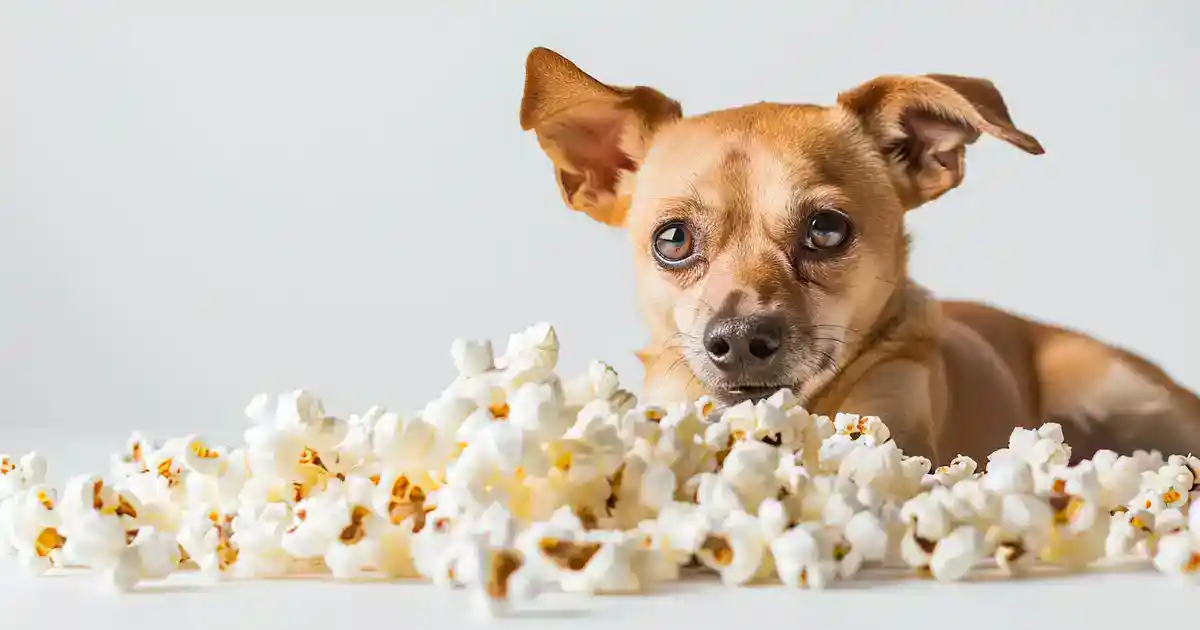
Have you ever settled in for movie night with a bowl of popcorn and wondered if those pleading puppy eyes mean you should share your snack?
I used to toss popcorn pieces to my beagle during movies until I discovered there’s a lot more to this question than a simple yes or no. Here’s the thing I learned after a scary choking incident and thorough research with my veterinarian: plain, air-popped popcorn in small amounts is generally safe for dogs, but most of the popcorn we actually eat is loaded with dangerous ingredients. Now my friends constantly ask whether their dogs can have movie theater popcorn or if microwave popcorn is okay, and my family (who thought I was overreacting about “just popcorn”) understands why I’m so careful now. Trust me, if you’re worried about choking hazards, butter and salt content, or whether that occasional kernel will harm your pup, this guide will show you exactly when popcorn is safe and when it’s dangerous.
Here’s the Thing About Dogs and Popcorn
Here’s the magic: plain, fully-popped, air-popped popcorn is actually a low-calorie, whole-grain snack that contains some fiber, minerals, and B vitamins. What makes this work is that when prepared correctly—without butter, salt, oil, or seasonings—popcorn can be an acceptable occasional treat for dogs. I never knew that the preparation method and toppings made such a massive difference until I researched what actually makes popcorn problematic. According to research on canine nutrition, dogs can digest many whole grains in moderation, and popcorn is essentially just corn that’s been heated until it pops. This combination creates a situation where the basic food is safe, but how we typically prepare it introduces multiple hazards. It’s honestly more nuanced than I ever expected—not a simple “yes” or “no,” but a “yes, but only if…” that requires understanding the risks.
What You Need to Know – Let’s Break It Down
Understanding the difference between safe and unsafe popcorn is absolutely crucial before you ever share this snack. Plain, air-popped popcorn without any additives is the only type that’s truly safe for dogs. Don’t skip learning about why other preparations are dangerous because the details literally save lives (took me forever to realize this).
I finally figured out that unpopped or partially-popped kernels are serious choking hazards after watching my dog nearly choke on one. These hard kernels can also break teeth or become lodged in gums, causing painful infections. The kernels dogs most commonly steal from our bowls are exactly the dangerous ones—the “old maids” at the bottom that didn’t fully pop (game-changer, seriously).
Yes, butter and salt really matter—a lot. Just one tablespoon of butter adds significant fat and calories, while salt causes excessive thirst, dehydration, and potentially sodium ion poisoning in large amounts. Movie theater popcorn, microwave popcorn, and kettle corn contain astronomical amounts of both, plus artificial flavors and preservatives that dogs shouldn’t consume.
I always recommend understanding that portion size matters tremendously even with plain popcorn. If you’re just starting out with sharing human foods safely, check out my beginner’s guide to safe human foods for dogs for foundational knowledge on which foods are safe, which are toxic, and how to introduce new treats responsibly.
The Science and Psychology Behind Why This Matters
The biology centers on several risk factors. Choking hazards are real—dogs often don’t chew thoroughly before swallowing, and popcorn’s irregular shape and size make it easy to inhale accidentally. Hard kernels pose particular danger because they’re exactly the right size to lodge in a dog’s throat.
Research from leading veterinary organizations demonstrates that high-fat, high-sodium treats contribute to obesity, pancreatitis, and other serious health conditions in dogs. What makes typical popcorn preparations different from a safety perspective is that they concentrate multiple risk factors—choking hazards, excessive fat, dangerous sodium levels, and potential toxic ingredients like artificial sweeteners or chocolate coatings.
I’ve learned through personal experience that the mental stress of watching your dog choke is something I never want to repeat. Traditional approaches often dismiss popcorn as “just a little treat,” failing to recognize that what seems harmless to us can be genuinely dangerous to dogs. Understanding the specific risks helps you make informed decisions rather than assuming all human snacks are equally safe to share.
Here’s How to Safely Share Popcorn (If You Choose To)
Start by accepting that plain, air-popped popcorn is the only safe option—seriously, this step eliminates 95% of the risks immediately. Here’s where I used to mess up: I thought “lightly buttered” or “just a little salt” was fine. It’s not.
Step 1: Choose Air-Popped Only Use an air popper or pop kernels in a brown paper bag in the microwave without any oil or butter. Skip microwave popcorn bags entirely—they contain oils, salt, and artificial flavors even before you add anything. When it clicks, you’ll know—you’ll taste how bland plain popcorn is and understand why this matters for dogs.
Step 2: Remove ALL Unpopped and Partially-Popped Kernels Before even considering sharing, meticulously sort through the popcorn and remove every single hard kernel. My mentor (my veterinarian) taught me this trick: run your hands through the bowl and listen for the hard “click” sound of kernels hitting the sides—those must be removed.
Step 3: Choose Fully-Popped Pieces Only Select only the completely popped, fluffy pieces. Now for the important part: avoid pieces with hard centers or partially-popped sections that could still pose choking risks.
Step 4: Offer Small Amounts as Occasional Treats Limit popcorn to just a few pieces (3-5 for small dogs, 5-10 for large dogs) as an occasional treat, not a regular snack. Results can vary based on your dog’s size and dietary needs, but popcorn should never constitute more than 10% of daily caloric intake—and realistically should be far less.
Step 5: Supervise Completely Never leave your dog alone with popcorn. Here’s my secret: I stay close enough to intervene immediately if my dog shows any signs of difficulty swallowing or breathing. Watch for coughing, gagging, or pawing at the mouth.
Step 6: Know the Emergency Response Don’t worry if you’re just starting out, but understand how to perform the Heimlich maneuver on dogs before ever sharing popcorn. This creates lasting preparedness that could save your dog’s life if choking occurs despite precautions.
Common Mistakes (And How I Made Them All)
My biggest mistake? Sharing movie theater popcorn with my dog thinking the butter and salt weren’t “that much.” Just like underestimating the cumulative effect of rich foods, I didn’t realize that even small amounts of heavily-seasoned popcorn cause digestive upset. I learned this when my dog experienced vomiting and diarrhea hours after our movie night.
Another epic failure: not removing all the kernels before letting my dog eat fallen popcorn from the floor. Don’t make my mistake of ignoring the choking hazards that experts warn about repeatedly. That terrifying moment when my dog started choking taught me that kernels are non-negotiable—every single one must be removed.
I also used to think microwave popcorn was fine since it “just added a little butter flavor.” Wrong. Most microwave popcorn contains excessive sodium, artificial butter flavoring (including diacetyl, which is harmful), preservatives, and sometimes toxic ingredients like xylitol in sweet varieties. Every situation has its own risks, and convenience products almost always contain ingredients dogs shouldn’t consume.
When Things Don’t Go as Planned
Feeling like your dog is obsessed with popcorn and begs constantly? You probably need to stop sharing it entirely and establish better boundaries around human food. That’s normal, and it happens to everyone who starts sharing snacks without considering behavioral implications.
If your dog accidentally eats buttered or salted popcorn: Monitor closely for signs of digestive upset including vomiting, diarrhea, excessive thirst, or lethargy. I’ve learned to handle this by ensuring fresh water is available and watching for 24-48 hours. When this happens (and it might), don’t panic unless symptoms worsen—contact your veterinarian if you notice concerning changes.
If your dog is choking on popcorn: This is a true emergency. Immediately check if you can see and safely remove the obstruction. If not, perform the Heimlich maneuver for dogs and get to an emergency vet immediately. This is totally manageable if you know the technique in advance—I always prepare by reviewing emergency procedures regularly.
If you’re losing motivation to be careful about popcorn safety: Don’t stress, just remember that the easiest solution is simply not sharing popcorn at all. I always prepare dog-specific treats for movie nights now so I’m not tempted to share inappropriate human snacks. When constant vigilance feels overwhelming, remember that dogs don’t actually need popcorn—there are safer treat alternatives that don’t require such careful preparation.
Advanced Strategies for Next-Level Safety
Once you’ve mastered basic popcorn safety (or decided it’s not worth the risk), consider these sophisticated approaches for treat management. Advanced practitioners often implement specialized techniques for creating safe treat protocols by establishing clear rules about human food sharing.
I’ve discovered that making air-popped popcorn specifically for my dog once a month as a special treat—completely separate from human popcorn—creates clear boundaries. This requires planning but dramatically reduces the risk of accidentally sharing seasoned popcorn. For households where multiple people might share food with dogs, creating a written list of absolutely-forbidden foods and posting it visibly creates the best safety outcomes.
My advanced version includes training a “leave it” command so strong that my dog ignores dropped popcorn entirely. This skill protects them not just from popcorn but from any dangerous food they might encounter. For next-level results, I love having a designated “movie night treat” for my dog that’s completely different from popcorn—like frozen blueberries or small pieces of apple—so they get something special without the risks.
What separates beginners from experts is understanding that preventing problems is easier than managing them. When and why to use these strategies depends on your household’s snacking habits, your dog’s food motivation level, and your commitment to maintaining boundaries.
Ways to Make This Your Own
Zero-Popcorn Approach: When I prioritize absolute safety, I simply never share popcorn and offer dog-specific treats instead during movie nights. This makes life simpler and definitely eliminates all popcorn-related risks completely.
Special Occasion Method: For households that occasionally share plain popcorn, I prepare a small separate batch in an air popper specifically for the dog with even more careful kernel removal. My controlled version focuses on making it truly special rather than routine.
Training Opportunity Style: I use fallen popcorn as practice for “leave it” and “drop it” commands, rewarding my dog with better treats for ignoring the popcorn. The parent-friendly approach includes teaching children never to share human snacks with dogs without explicit adult permission and preparation.
Complete Substitution Alternative: Instead of popcorn, I offer small pieces of air-dried sweet potato, apple slices, or carrot sticks during family snack times. Each variation works beautifully with different risk tolerances and household dynamics.
Why Popcorn Safety Matters So Much
Unlike hardy vegetables or dog-specific treats designed for safety, popcorn presents multiple simultaneous hazards that most people completely overlook. I never knew that something as seemingly innocent as popcorn could cause so many problems until I researched veterinary emergency statistics.
What sets popcorn apart from safer treats is the combination of choking hazards, potential toxins in flavorings, high fat and sodium content, and the ease with which dogs can access it when we’re eating. The underlying principle is simple: just because humans enjoy a food doesn’t mean it’s appropriate for dogs, especially when that food requires extensive modification to become safe. My personal discovery moment came when I realized I was creating unnecessary risk by sharing a snack that my dog didn’t even need. This understanding is evidence-based, practical, and positions you as a responsible owner who prioritizes safety over convenience.
Real Success Stories (And What They Teach Us)
One friend’s family had a tradition of sharing popcorn with their golden retriever during movie nights until the dog developed pancreatitis from the cumulative fat intake. After switching to dog-safe treats and eliminating buttered popcorn sharing, the dog’s health stabilized and the expensive veterinary interventions stopped. What made them successful was recognizing that small, repeated exposures to inappropriate foods create serious long-term consequences.
Another success story involves a household that taught their children about food safety by involving them in preparing plain, air-popped popcorn specifically for their dog on special occasions. The kids learned to carefully remove kernels and understand why most human food isn’t dog-appropriate. The lesson here is that safe food sharing can become an educational opportunity about responsible pet ownership.
I’ve seen diverse outcomes depending on how strictly people follow safety guidelines. Dogs who occasionally receive carefully-prepared plain popcorn rarely have issues, while those who regularly get seasoned popcorn or kernel-filled batches face higher risks of choking, obesity, and digestive problems. Their experiences align with research on canine nutrition that shows consistent patterns: treats should be simple, unprocessed, and constitute only a tiny fraction of a dog’s diet.
Tools and Resources That Actually Help
Air Popper Machine: I personally use a dedicated air popper for making plain popcorn without any oils or additives. These eliminate the temptation to add butter and make truly safe popcorn preparation simple.
Fine Mesh Strainer: After popping, I pour popcorn through a large strainer to catch and remove kernels that fall through. I’ve tried manual sorting exclusively, and honestly, the strainer makes the process faster and more thorough.
List of Dog-Safe Treat Alternatives: Having readily available alternatives prevents impulsive popcorn sharing. The best resources come from authoritative veterinary nutritionists and proven safe food lists.
Emergency Veterinary Contact Information: Keep your regular vet and emergency clinic numbers easily accessible. This single preparation step has given me peace of mind during multiple food-related scares.
Dog First Aid Manual: A comprehensive guide that includes the Heimlich maneuver for dogs and other emergency procedures belongs in every dog owner’s home.
Questions People Always Ask Me
Can dogs eat popcorn safely?
Plain, air-popped popcorn without butter, salt, oil, or seasonings is generally safe for dogs in very small amounts as an occasional treat. However, unpopped kernels pose serious choking hazards, and most popcorn we actually eat contains dangerous additives. I usually recommend skipping popcorn entirely in favor of safer treat options.
Is movie theater popcorn safe for dogs?
Absolutely not. Movie theater popcorn contains extremely high amounts of butter, salt, and artificial flavorings that are harmful to dogs. The sodium alone can cause serious health problems. Never share movie theater popcorn with your dog.
What should I do if my dog ate buttered popcorn?
Monitor your dog closely for 24-48 hours for signs of digestive upset like vomiting, diarrhea, excessive thirst, or lethargy. Ensure fresh water is available. If your dog consumed a large amount or shows concerning symptoms, contact your veterinarian immediately. Absolutely, just focus on observation and don’t panic unless symptoms develop.
Can puppies eat popcorn?
Puppies face even greater choking risks than adult dogs and have more sensitive digestive systems. I strongly recommend avoiding popcorn for puppies entirely and sticking to puppy-appropriate treats instead.
What happens if my dog eats unpopped kernels?
Unpopped kernels can cause choking, break teeth, or become lodged in gums causing painful infections. If your dog ate kernels, monitor for signs of distress including pawing at the mouth, excessive drooling, difficulty swallowing, or behavior changes. Contact your vet if you notice concerning symptoms.
What’s the safest way to share popcorn with my dog?
If you choose to share, use only air-popped popcorn with absolutely no additives. Meticulously remove every single kernel and partially-popped piece. Offer only 3-5 fully-popped pieces to small dogs or 5-10 to large dogs, and supervise completely. Everything else builds from these non-negotiable safety steps.
Is microwave popcorn safe for dogs?
No. Even “plain” microwave popcorn contains oils, salt, and artificial flavorings. Many varieties include butter flavoring with harmful chemicals or sweeteners like xylitol which is extremely toxic to dogs. Never share microwave popcorn with dogs.
Can dogs be allergic to popcorn?
While corn allergies exist in dogs, they’re relatively uncommon. If your dog shows signs of food allergy (itching, digestive upset, ear infections) after eating popcorn, discontinue immediately and consult your veterinarian about potential corn sensitivity.
What are safer alternatives to popcorn for dogs?
Many safer options exist including small pieces of apple, carrot sticks, blueberries, small bits of plain cooked chicken, or commercial dog treats. These provide satisfaction without the risks associated with popcorn.
How much popcorn is too much for a dog?
Even plain popcorn should never exceed 10% of daily caloric intake, but practically should be far less—just a few pieces as an occasional treat. More than that risks digestive upset and contributes empty calories that displace nutritious food.
Can popcorn cause pancreatitis in dogs?
Buttered or oil-popped popcorn contains high fat content that contributes to pancreatitis risk, especially with repeated exposure or in dogs already predisposed to this serious condition. Plain, air-popped popcorn in tiny amounts carries minimal risk.
Why do dogs love popcorn so much?
Dogs are attracted to the smell, crunch, and novelty of popcorn, plus they enjoy foods we’re eating as social bonding. Their enthusiasm doesn’t mean popcorn is good for them—it just means it smells appealing.
Should I train my dog not to eat popcorn?
Yes! Teaching a strong “leave it” command protects your dog from not just popcorn but all dangerous foods they might encounter. This training investment pays off in numerous situations throughout your dog’s life.
Before You Get Started
I couldn’t resist sharing this because it proves that responsible pet ownership means thinking critically about every food we share, even seemingly harmless snacks. The best treat-sharing experiences happen when you prioritize your dog’s safety over convenience and understand that dogs don’t need to eat everything humans eat to feel included in family activities. Ready to begin? Start by honestly assessing whether popcorn is worth the preparation effort and risks, or if safer alternatives would serve your dog better. That simple evaluation builds toward making informed decisions that keep your furry friend safe and healthy for years to come. You’ve got this!




