
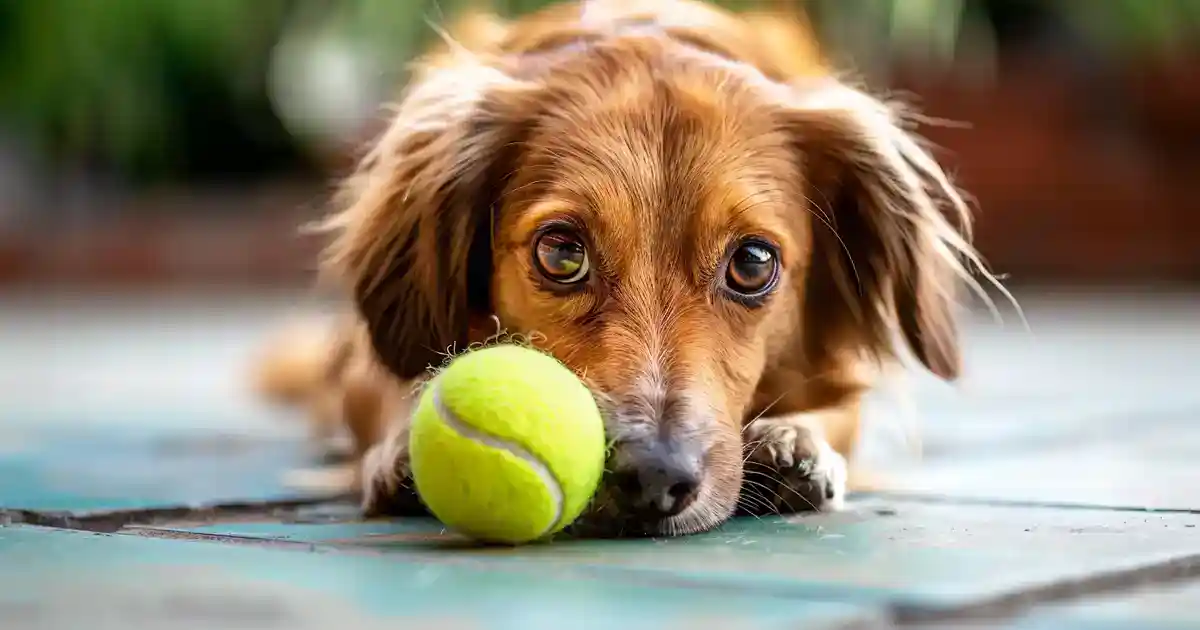
Have you ever watched your dog’s eyes light up at the sight of a tennis ball and wondered what makes that fuzzy yellow sphere absolutely irresistible?
I used to think my golden retriever’s tennis ball obsession was just a quirky personality trait until I discovered the fascinating science behind why nearly every dog goes absolutely bonkers for them. Here’s the thing I learned after years of endless fetch sessions and research: dogs aren’t just randomly attracted to tennis balls—there’s actual evolutionary biology, sensory stimulation, and psychological satisfaction driving this behavior. Now my friends constantly ask why their dogs ignore expensive toys but will chase a $2 tennis ball for hours, and my family (who couldn’t understand why we had 30 tennis balls scattered around the yard) finally gets it. Trust me, if you’ve ever wondered whether your dog’s ball obsession is normal or if there are safety concerns you should know about, this guide will show you it’s more fascinating than you ever expected.
Here’s the Thing About Dogs and Tennis Balls
Here’s the magic: tennis balls trigger multiple instinctual behaviors that dogs are hardwired to find rewarding. What makes this work is that tennis balls combine the perfect size, texture, bounce, and movement pattern to activate your dog’s prey drive. I never knew something as simple as a ball could satisfy so many canine instincts simultaneously until I learned about the psychology of play behavior. According to research on animal behavior, dogs have retained many hunting instincts from their wolf ancestors, and tennis balls mimic prey in ways that activate these ancient drives. This combination creates amazing satisfaction for dogs on multiple levels—physical exercise, mental stimulation, and the fulfillment of natural instincts. It’s honestly more complex than I ever expected—not just simple play, but a deeply satisfying experience that taps into your dog’s evolutionary heritage.
What You Need to Know – Let’s Break It Down
Understanding the prey drive is absolutely crucial to comprehending ball obsession. Dogs are descended from wolves, and even though they’ve been domesticated for thousands of years, they still retain the instinct to chase, catch, and “kill” moving objects. Don’t skip learning about this fundamental drive because it explains so much canine behavior (took me forever to realize this).
I finally figured out that tennis balls are the perfect size after watching different dogs with various toys. They’re large enough that most dogs can’t swallow them, but small enough to carry comfortably in their mouths. The fuzzy texture feels satisfying to grip, similar to how prey animals have fur. Tennis balls work beautifully for triggering chase instincts because they bounce unpredictably, mimicking the erratic movements of small animals trying to escape.
Yes, the bright yellow color really matters, though not for the reason you might think. Dogs don’t see colors the same way humans do—they see primarily in shades of blue and yellow. The bright yellow of tennis balls stands out clearly in their visual field, making them easy to track during play (game-changer, seriously).
I always recommend understanding that for many dogs, fetching and returning tennis balls isn’t just exercise—it’s mentally stimulating work that satisfies deep psychological needs. If you’re just starting out with understanding canine behavior and psychology, check out my beginner’s guide to dog play behavior and toy preferences for foundational knowledge on why dogs play the way they do.
The Science and Psychology Behind Why This Works
The behavior centers around something called “predatory motor patterns”—a sequence of behaviors that predators use when hunting. These include: searching, stalking, chasing, grabbing, killing, and dissecting. When your dog chases a tennis ball, they’re engaging the chase and grab portions of this sequence, which releases dopamine in their brain.
Research from leading animal behavior scientists demonstrates that play behavior in dogs serves multiple functions including practicing hunting skills, bonding with pack members (you!), and stress relief. What makes tennis balls different from a scientific perspective is that they provide instant gratification—the chase is short, the “capture” is successful, and dogs can repeat the behavior endlessly without the exhaustion of an actual hunt.
I’ve learned through personal experience with multiple dogs that the mental satisfaction my dogs get from fetching is as important as the physical exercise. Traditional approaches often focus only on exercise, failing to recognize that the repetitive chase-and-retrieve behavior can actually become compulsive in some dogs. Understanding both the benefits and potential downsides helps you manage play sessions healthily rather than letting them become obsessive.
Here’s How Tennis Balls Satisfy Different Dog Needs
Start by recognizing that different aspects of tennis balls appeal to different canine senses—seriously, this step takes just a moment but creates lasting understanding of your dog’s behavior. Here’s where I used to mess up: I thought all toys were basically the same to dogs.
Step 1: Visual Stimulation The bright color and movement trigger your dog’s visual tracking instincts. Dogs have excellent motion detection—their eyes are designed to spot moving objects even at great distances. When a tennis ball flies through the air, it activates these visual pathways intensely. When it clicks, you’ll know—you’ll notice your dog tracks the ball with laser focus from the moment it leaves your hand.
Step 2: Tactile Satisfaction The fuzzy felt covering provides textural feedback that dogs find incredibly satisfying. It feels similar to prey fur and provides grip resistance that makes carrying the ball rewarding. My mentor (a dog trainer) taught me this trick: watch how dogs will often “adjust” the ball in their mouth repeatedly, seeking the perfect grip sensation.
Step 3: Auditory Feedback Tennis balls make subtle sounds when bouncing and when dogs bite down on them—these squeaky, crunchy sounds mimic prey noises that dogs find stimulating. Now for the important part: some dogs become so focused on these sounds that they’ll obsessively squeak balls for hours.
Step 4: The Chase Reward The unpredictable bounce pattern keeps dogs engaged because they can’t predict exactly where the ball will go. This creates an exciting challenge rather than boring predictability. Results can vary, but most dogs find this uncertainty more engaging than toys that simply roll in straight lines.
Step 5: The Retrieval Instinct Many breeds were specifically developed to retrieve game for hunters. Bringing the ball back to you taps into these genetic traits and provides bonding opportunities. Here’s my secret: the return is often about seeking praise and connection with you, not just about the ball itself.
Step 6: The Repeat Cycle Don’t worry if you’re just starting out, but understand that successful retrieval creates a reward loop. Your praise + physical exercise + mental stimulation = satisfied dog wanting to repeat the experience. This creates lasting play patterns that can become a favorite activity for years.
Common Mistakes (And How I Made Them All)
My biggest mistake? Letting my dog play with tennis balls for hours without supervision or breaks. Just like any repetitive activity can cause injury, excessive fetch can lead to joint problems, exhausted muscles, and even torn ligaments. I learned this when my dog started limping after a particularly intense fetch session.
Another epic failure: not checking tennis balls for wear and tear. Don’t make my mistake of ignoring dental safety concerns that experts recommend addressing. Worn tennis balls can expose the rubber core, and dogs can potentially choke on pieces they tear off. The fuzzy covering also acts like sandpaper on teeth, potentially wearing down enamel over time with excessive chewing.
I also used to think any tennis ball was fine for any size dog. Wrong. Small dogs can’t comfortably carry standard tennis balls, while giant breeds might accidentally swallow them. Every situation has its own challenges, and matching ball size to dog size is crucial for safety. I once saw a large dog actually get a tennis ball lodged in their throat—terrifying and completely preventable with appropriate toy sizing.
When Things Don’t Go as Planned
Feeling like your dog has become obsessively fixated on tennis balls to an unhealthy degree? You probably need to introduce more variety and set boundaries around fetch time. That’s normal, and it happens to everyone whose dog develops compulsive play behaviors.
If your dog won’t drop the ball: Stop the game immediately. I’ve learned to handle this by teaching a reliable “drop it” command with positive reinforcement before problems escalate. When this happens (and it might with ball-obsessed dogs), don’t chase your dog or play tug-of-war—this turns it into a keep-away game that reinforces the wrong behavior.
If your dog seems exhausted but won’t stop: Some dogs lack the self-regulation to quit even when physically tired. This is totally manageable if you set time limits on fetch sessions and end the game while your dog still wants more. I always prepare for this by setting a timer—15-20 minutes maximum for most dogs.
If you’re losing motivation to play fetch daily: Don’t stress, just remember that dogs don’t need fetch every single day. I always prepare for busy weeks by teaching my dogs other forms of mental stimulation like puzzle toys or scent work. When daily fetch becomes overwhelming, remember that variety in activities often provides better overall enrichment than doing the same thing repeatedly.
Advanced Strategies for Next-Level Play
Once you’ve mastered basic fetch, consider these sophisticated approaches for maximizing benefits while minimizing risks. Advanced practitioners often implement specialized techniques for building healthier play patterns by incorporating training elements into fetch sessions.
I’ve discovered that using fetch as a reward during training sessions—rather than an endless standalone activity—creates better impulse control. This requires planning but dramatically improves your dog’s ability to self-regulate during exciting activities. For dogs prone to obsessive behavior, working with a certified dog trainer or veterinary behaviorist to develop structured play protocols that include mandatory rest periods creates the best long-term outcomes.
My advanced version includes rotating different types of balls and toys to prevent fixation on one specific object. This variety prevents obsessive behavior and reduces wear on joints from repetitive movements. For next-level results, I love incorporating commands like “wait,” “find it,” and directional cues into fetch games, transforming simple exercise into complex mental challenges.
What separates beginners from experts is understanding that fetch should enhance your dog’s life without dominating it. When and why to use these strategies depends on your dog’s personality, physical condition, breed predispositions, and existing behavior patterns.
Ways to Make This Your Own
High-Energy Breed Approach: When I work with herding or sporting breeds, I combine fetch with agility obstacles or have them retrieve through water for extra physical challenge. This makes it more intensive but definitely worth it for dogs with endless energy.
Senior Dog Adaptation: For older dogs with joint issues, I use soft, lightweight balls and throw them short distances on grass. Sometimes I roll the ball instead of throwing, though that’s totally optional based on mobility. My gentle version focuses on mental stimulation over physical exertion.
Multi-Dog Method: For households with multiple dogs, I teach individual fetch where each dog waits their turn. The parent-friendly approach includes using different colored balls so each dog has “their” ball, reducing competition and potential conflict.
Small Space Alternative: When outdoor space is limited, I use hallway fetch or teach “find it” games where I hide the ball and my dog searches for it. Each variation works beautifully with different living situations and environmental constraints.
Why This Tennis Ball Obsession Actually Works
Unlike arbitrary toy preferences that vary randomly, tennis ball attraction leverages proven evolutionary instincts that most people overlook. I never knew that understanding predatory behavior could explain so much about my dog’s play preferences until I stopped thinking of fetch as just exercise.
What sets tennis balls apart from other toys is the combination of multiple sensory rewards happening simultaneously—visual tracking, tactile satisfaction, successful “capture,” and social bonding with you. The underlying principle is simple: activities that fulfill innate drives create satisfaction and become self-reinforcing behaviors. My personal discovery moment came when I realized my dog wasn’t just playing with a ball—she was engaging in a simplified version of hunting that satisfied deep psychological needs. This understanding is sustainable, evidence-based, and positions you as a knowledgeable dog owner who recognizes the “why” behind behaviors.
Real Success Stories (And What They Teach Us)
One friend’s border collie was destroying furniture and exhibiting anxiety behaviors until they implemented structured fetch sessions twice daily. After channeling that intense energy into appropriate chase-and-retrieve activities, the destructive behaviors virtually disappeared. What made them successful was recognizing that the dog needed an outlet for natural herding and chasing instincts.
Another success story involves a rescue dog who was fearful and shut down. Their owner used tennis balls and gentle fetch games to build confidence and create positive associations with play. Within months, the dog transformed from terrified to joyful, all through the simple act of successful ball retrieval. The lesson here is that fetch provides more than exercise—it builds confidence, trust, and emotional wellbeing.
I’ve seen diverse outcomes depending on breed, personality, and how fetch is implemented. Dogs with strong retrieval instincts obviously take to it naturally, but even dogs from non-sporting breeds often develop tennis ball love through positive experiences. Their success aligns with research on canine behavior that shows consistent patterns: activities that fulfill natural instincts create happier, more well-adjusted dogs when managed appropriately.
Tools and Resources That Actually Help
Size-Appropriate Balls: I personally use Kong balls or Chuckit balls designed specifically for dogs rather than actual tennis balls for extended play. These eliminate dental wear concerns and come in sizes matched to different dog breeds.
Ball Launcher: A Chuckit or similar ball launcher saves your arm and allows longer throws with less effort. I’ve tried throwing by hand exclusively, and honestly, the launcher makes sessions more enjoyable for both of us. The best resources come from authoritative pet product testing organizations and proven safety standards.
Multiple Balls: Having 3-4 balls available prevents obsessive focus on one specific ball and keeps fetch games flowing smoothly. This single strategy has saved me from constant “where did the ball go?” searches in tall grass.
Treat Pouch for Training: When working on “drop it” and impulse control during fetch, having treats easily accessible reinforces good behavior immediately. Quick rewards strengthen the behaviors you want.
Timer or Phone: Setting time limits prevents overexertion and helps establish healthy fetch habits rather than endless sessions that exhaust your dog.
Questions People Always Ask Me
Why does my dog love tennis balls more than other toys?
Tennis balls combine the perfect size, texture, movement pattern, and sensory feedback to trigger multiple instinctual behaviors simultaneously. Most toys only activate one or two of these factors. I usually recommend observing which aspect your dog loves most—the chase, the texture, the sound—to understand their specific preferences.
Are tennis balls safe for dogs to play with?
For supervised, short play sessions, tennis balls are generally safe. However, the abrasive felt covering can wear down tooth enamel with excessive chewing, and pieces can become choking hazards. I recommend using dog-specific balls designed for safety rather than actual tennis balls for frequent or unsupervised play. Absolutely, just focus on monitoring wear and limiting chewing.
Can my dog’s tennis ball obsession become unhealthy?
Yes, when dogs become so fixated they ignore everything else, refuse to stop even when exhausted, or show anxiety when balls aren’t available. If you’re seeing these signs, you need to set boundaries, introduce variety, and possibly consult a veterinary behaviorist for compulsive behavior management.
How long should fetch sessions last?
Most dogs benefit from 10-20 minute sessions, with breaks for water and rest. Puppies and senior dogs need shorter sessions. Start by monitoring your dog’s energy and breathing—if they’re panting heavily or slowing down, it’s time to stop regardless of how much they want to continue.
Why does my dog bring me the ball but won’t give it back?
This is a common game dogs play called “keep away.” They want you to chase them, which is fun and rewarding. Don’t stress, just stop playing when they won’t drop the ball, and work on training a solid “drop it” command using high-value treats as rewards.
What’s the most important safety consideration with tennis balls?
Matching ball size to dog size to prevent choking hazards. A ball should be large enough that your dog can’t accidentally swallow it but small enough to carry comfortably. Everything else—from supervision to checking for wear—builds from this foundation.
My dog ignores tennis balls—is something wrong?
Not at all! Some dogs simply don’t have strong prey drive or retrieval instincts. I’ve learned that breed, individual personality, and early socialization all influence toy preferences. When your dog doesn’t like fetch, try other activities like tug, puzzle toys, or scent work that might align better with their natural inclinations.
Should I let my dog keep a tennis ball all the time?
No, extended chewing on tennis balls wears down teeth. These toys should be for supervised fetch sessions, then put away. This prevents both dental damage and the ball becoming so commonplace that it loses its special appeal. Make the ball appearance exciting by keeping it special.
Can playing fetch help with my dog’s behavior problems?
Sometimes yes! Fetch provides physical exercise and mental stimulation that can reduce anxiety, destructiveness, and hyperactivity. Always discuss behavior modification with a professional if problems persist, but appropriate fetch sessions often help channel energy constructively.
My dog gets possessive over tennis balls—what should I do?
This is resource guarding behavior that needs addressing through training. Most dogs benefit from trading games where you exchange the ball for high-value treats, teaching that giving up the ball leads to good things. If aggression is present, consult a certified dog trainer or behaviorist immediately.
How many tennis balls should I have for my dog?
I recommend having 3-5 balls in rotation. This prevents fixation on one specific ball, gives you backups when balls get lost, and allows proper cleaning and inspection. Having extras also lets you throw another ball if your dog won’t release the first one.
What’s the difference between tennis balls and dog-specific balls?
Dog-specific balls are designed without the abrasive felt covering, come in appropriate sizes, and are made from dog-safe materials without toxic dyes. They’re more durable and safer for extended play compared to actual tennis balls designed for court sports.
How do I know if fetch is appropriate exercise for my dog?
Most healthy adult dogs can enjoy fetch safely. Puppies under 12 months should have limited fetch to protect developing joints. Dogs with joint problems, breathing issues, or heart conditions need veterinary approval first. Track your dog’s response—appropriate exercise leaves them pleasantly tired, not exhausted or limping.
Before You Get Started
I couldn’t resist sharing this because it proves that understanding your dog’s tennis ball obsession doesn’t require a degree in animal behavior—just curiosity about the fascinating instincts driving this beloved activity. The best fetch experiences happen when you combine knowledge of canine psychology with safe play practices and appropriate boundaries. Ready to begin? Start by observing what specifically your dog loves most about tennis ball play—is it the chase, the texture, the return, or your attention? That simple observation builds understanding and helps you create the most rewarding play experiences possible. You’ve got this!




